By: Gidget Fuentes
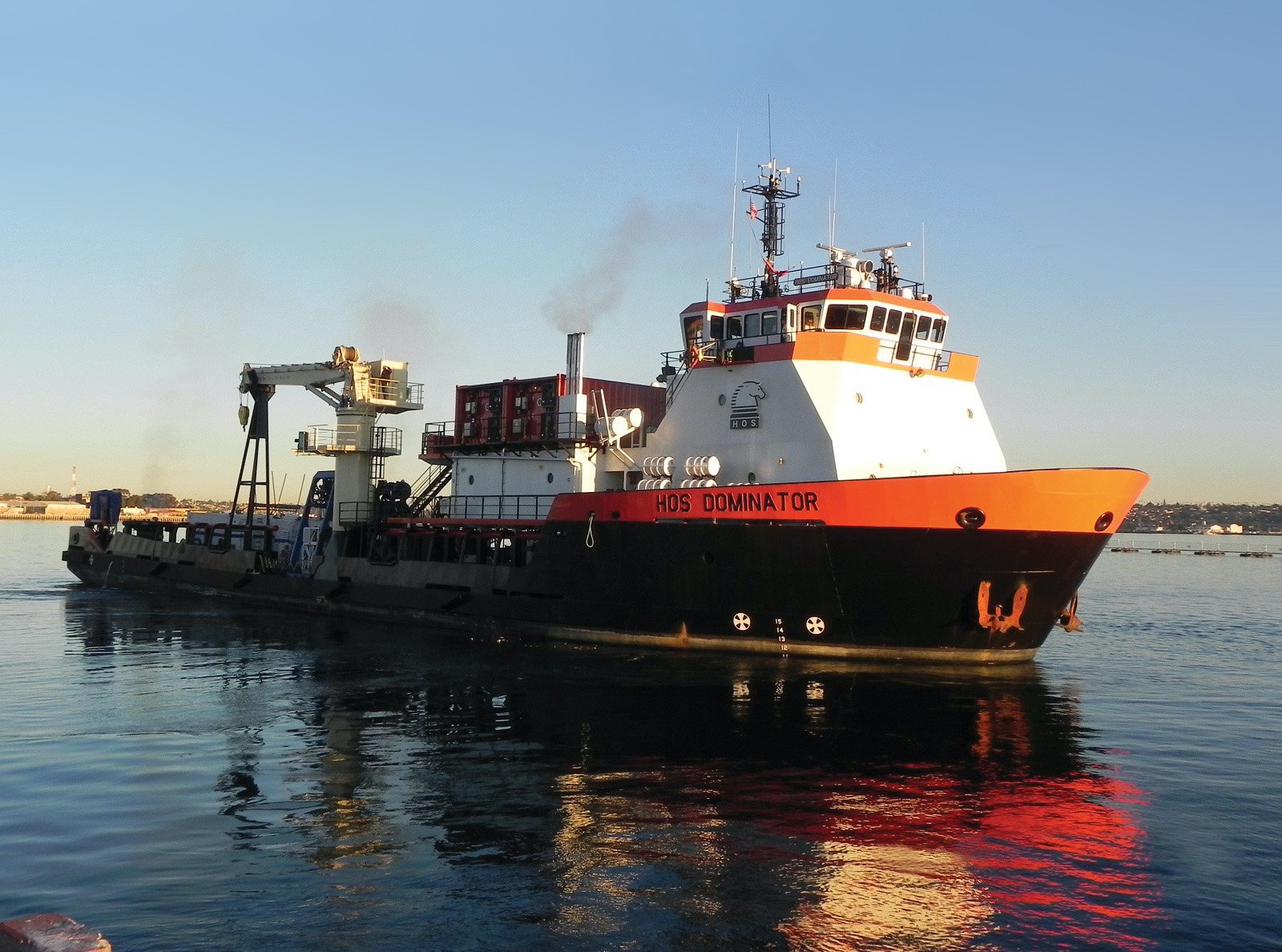
Undersea support ship HOS Dominator. MSC Photo
CAMP PENDLETON, Calif. – A Navy ship specializing in undersea search and rescue has joined the mission to find seven Marines and one sailor missing off the coast of Southern California after their amphibious assault vehicle sank on Thursday, USNI News has learned.
Submarine support ship HOS Dominator arrived on Friday to join Navy, Marine and Coast Guard assets looking for the missing service members, officials confirmed.
“We are continuing search and rescue operations,” Lt. Gen. Joseph D. Osterman, the I Marine Expeditionary Force commander, told reporters at a Friday press conference.
“We have not leaned into recovery operations. We are still looking for the seven Marines and one sailor who we have not yet found.”
Additionally, the Marines have paused AAV operations on the water until the service learns more about what caused the Thursday sinking of the amphibious vehicle, Marine commandant Gen. David Berger said at the same press conference.
The Marines and sailor, assigned to the 15th Marine Expeditionary Unit, had been training on San Clemente Island and were returning to amphibious warship USS Somerset (LPD-25), “when the AAV began to take on water,” Osterman said.
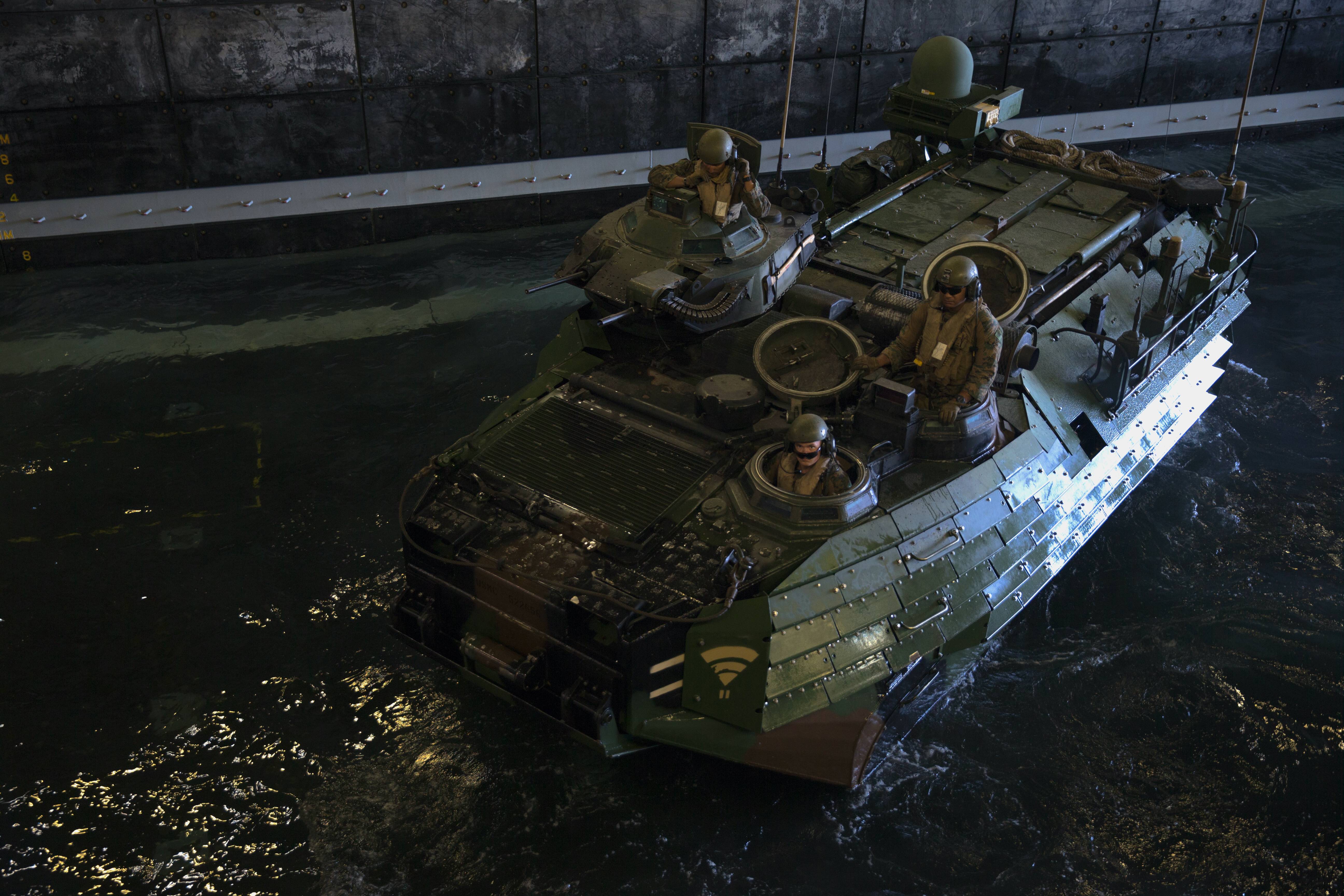
Marines with Bravo Company, Battalion Landing Team 1/4, 15th Marine Expeditionary Unit, operate AAV-P7/A1 assault amphibious vehicles while embarking the amphibious landing dock USS Somerset (LPD-25) on July 27, 2020. US Navy Photo
“An immediate response was provided by two additional [AAVs] that were with them…. as well as a safety boat,” Osterman said.
Eight Marines were rescued soon after the AAV started taking on water. One Marine later died from his injuries. As of Friday, two more Marines were in critical condition at Scripps Memorial Hospital in La Jolla, Calif. The other five returned to their unit.
The AAV sank off San Clemente Island’s northwest coast in about 600 feet of water, Col. Brad Bartelt, a I MEF spokesman, told USNI News. The island, 78 miles west of Camp Pendleton, is managed by the Navy. It’s home to live-fire gunnery and bombardment ranges, a naval special warfare training complex, an airfield and several beaches Marines use for amphibious assaults training.
“This mishap is under investigation. We will share the results of it once it is complete,” said Berger, who was visiting Camp Pendleton in part to attend I MEF’s change-of-command ceremony on Friday. Also there was new I MEF commander Lt. Gen. Karsten Heckl and Lt. Gen. Steven Rudder, who commands Marine Forces Pacific.
Heckl took command of I MEF from Osterman shortly after the press briefing in an abbreviated ceremony.
Search efforts underway
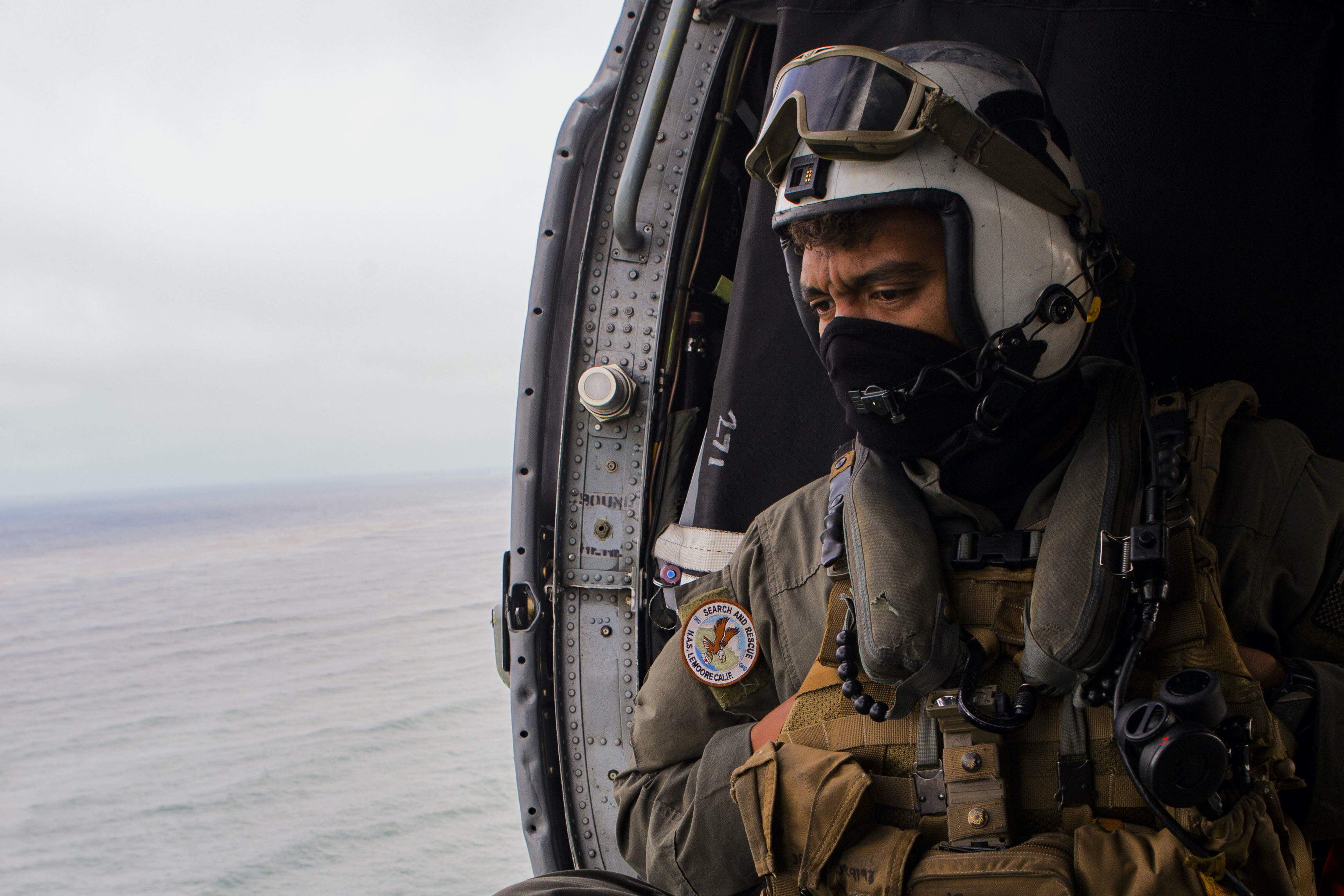
Naval Air Crewman (Helicopter) 2nd Class Joseph Rivera, a search and rescue swimmer assigned to the amphibious assault ship USS Makin Island (LHD-8), looks out of a U.S. Navy MH-60 while conducting search and rescue relief operations following an AAV-P7/A1 assault amphibious vehicle mishap off the coast of Southern California on July 31, 2020. US Marine Corps Photo
Search operations began immediately after the AAV sunk. Navy and Coast Guard helicopters joined the Makin Island Amphibious Ready Group, the 15th MEU’s, destroyer USS John Finn (DDG-113) and Coast Guard Cutter Forrest Rednour (WPC-1129) in the search.
Submarine support vessel Dominator joined the search effort on Friday, officials confirmed to USNI News.
Dominator is a ship contracted for use to San Diego-based Submarine Squadron 11 and the Navy’s Undersea Rescue Command, based at North Island Naval Air Station in Coronado, Calif.
“After the investigation is done, we’ll see as always if there are any trends, any linkages,” Berger added. “The first step, conduct the search and rescue and take care of the families, and that’s what the focus is today.”
Egressing from AAV
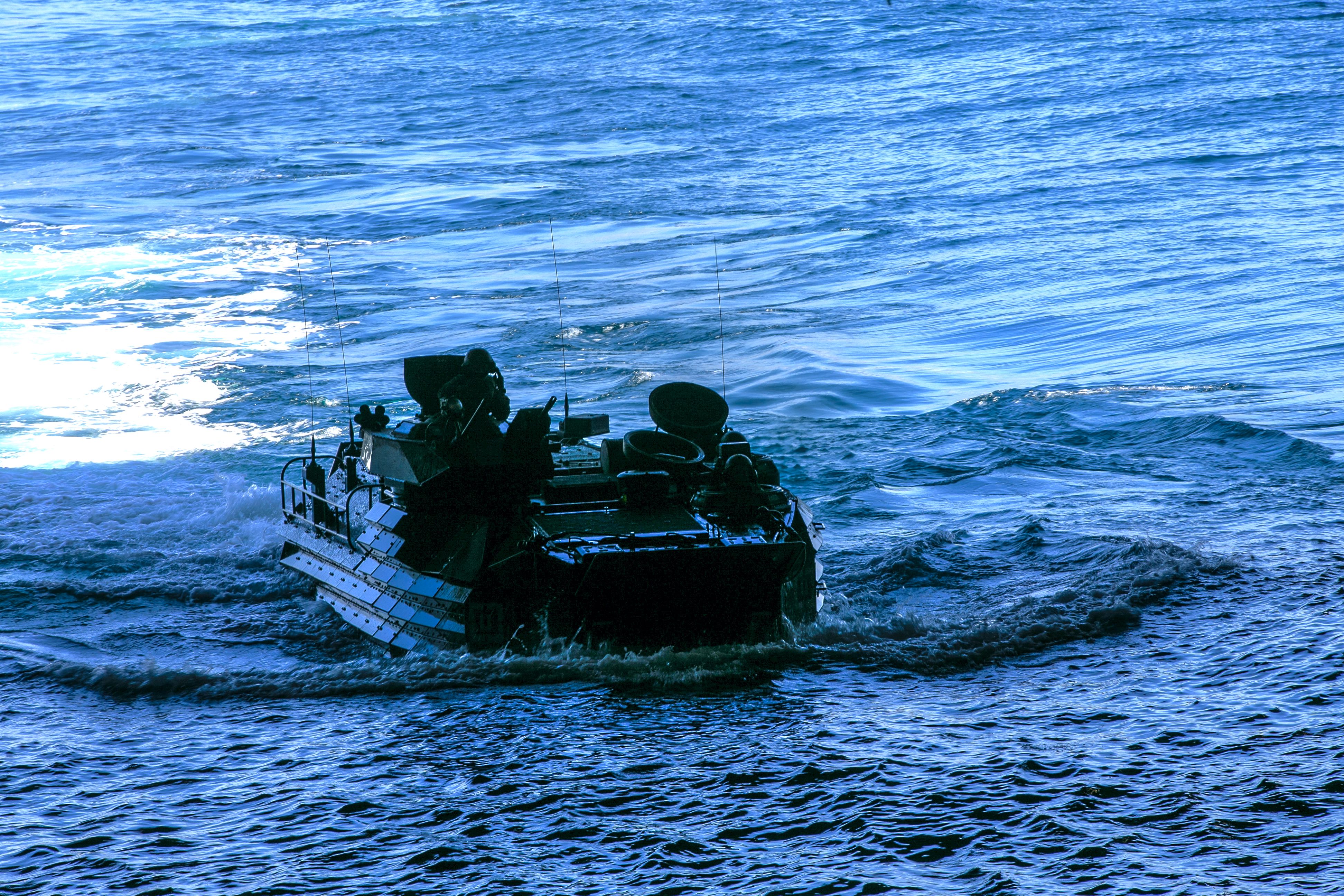
Marines with Bravo Company, Battalion Landing Team 1/4, 15th Marine Expeditionary Unit, operate AAV-P7/A1 assault amphibious vehicles onto the well deck of the amphibious landing dock USS Somerset (LPD-25) on July 27, 2020. US Marine Corps Photo
The mishap AAV was one of 13 in the water at the time, officials said.
The Marines were in their normal combat gear that includes body armor they’d use through the previous day’s training ashore, Osterman said. “They all had flotation, as well. That’s part of our equipment loadout,” he said, referring to inflatable vests they’d wear for waterborne missions. Those vests helped in rescuing some of the Marines, he added.
Each AAV holds up to 21 passengers, each with up to 285 pounds of gear, along with an operating crew of three. Getting out of a [AAV] has “an awful lot of dynamics involved in that,” he said.
Each 26-ton AAV has three water-tight hatches, Osterman said, and two large troop hatches in the rear. “It has a natural buoyancy to it, obviously, to be able to conduct amphibious operations,” he said.
Sea state, wave heights, currents, and other sea conditions dictate safe parameters to operate such amphibious vehicles. Officials haven’t said what the conditions were at the time the vehicle sunk. Surface and wave assessments are done before such type of missions.
“The overall conditions were acceptable at the time,” Osterman said.
Marines in the nearby AAVs marked the location where the amtrac sunk, but factors like water currents, temperature and drift would need to be taken into consideration in determining its location.
“The assumption is it went all the way down,” Osterman said.
from JC’s Naval, Maritime and Military News https://ift.tt/31e6b9n
via IFTTT
Discover more from JCs Royal New Zealand Navy Ships and New Zealand Defence, Also other World Defence Updates
Subscribe to get the latest posts sent to your email.

