TOP PICKS
News
In banning Huawei and ZTE, Sweden calls China a national security threat
21 Oct 2020

This Week in Asia
As India eyes US military deal, neutrality on China takes back seat
21 Oct 2020

Economy
Is China ramping up its de-dollarisation push in the face of US sanctions?
21 Oct 2020

News
China unleashed a ‘wolf warrior’ on Canada. It may have backfired
21 Oct 2020

This Week in Asia
Malabar drills: ‘it’s Australia, India, the US and Japan against China’
20 Oct 2020

This Week in Asia
‘If it weren’t so sinister, we’d laugh’: probe of China scholar raises fears in NZ
21 Oct 2020

News
US designates six Chinese media outlets as foreign missions
22 Oct 2020

News
China to overhaul military education to modernise troops
21 Oct 2020

Economy
How are US sanctions affecting China’s US dollar corporate bond market?
21 Oct 2020

News
China’s Taiwan warning to Indian media backfires
12 Oct 2020


India’s announcement on Monday that it would include Australia in its Malabar naval drill with the United States and Japan is likely to become a watershed moment in the geopolitics of the Indo-Pacific.
The decision marks a major change of heart for New Delhi, which until recently balked at choosing sides in the US-China rivalry.
Australia’s return to the annual war games, which will be held in the Bay of Bengal and Arabian Sea later this year, is also a big step towards turning the grouping, officially known as the Quad, into a US-led alliance targeting China.
While it is too early to tell if it will become an “Indo-Pacific Nato”, as Chinese Foreign Minister Wang Yi suggested last week, the emergence of an anti-China bloc on its doorstep is a nightmare for Beijing.
But it is perhaps not as surprising as it appeared initially.
It came just days after foreign ministers from the four countries met in Tokyo to discuss Australia’s participation in the exercise.
The US followed up with unusual speed by diplomatic standards, sending deputy secretary of state Stephen Biegun to India, where he said it was being “too cautious” over China.
EVERY OTHER SATURDAY
Many China watchers saw these developments coming after China reached a point where its aggressive diplomatic and military posturing was all but an admission that it wanted to dominate the region and displace Washington.
Australia first took part in the Malabar exercise in September 2007. But following pressure from Beijing, Canberra cooled on its participation.
The Quad, a concept first suggested by former Japanese prime minister Shinzo Abe in 2007 was reborn 10 years later as part of Donald Trump’s new Indo-Pacific strategy.
for fear of antagonising China.
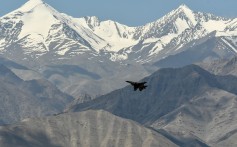
Things changed dramatically earlier this year when India became locked in a prolonged border stand-off with China.
In June at least 20 Indian soldiers were killed, and the country’s external affairs minister S Jaishankar said the ensuing public and political reaction had “left the relationship profoundly disturbed”.
At a time when Trump’s approval ratings in the region are at a historical low, it may not be helpful if China continues to blame the White House for its diplomatic crises rather than examining its own failings.
Despite their differences over trade and many other issues, deep suspicion and fear of China seem to have become the single most important factor binding its neighbours and the US together.
With the border dispute showing little sign of being resolved, and China’s relations with the US, Australia and Japan all in decline, the Quad looks likely to become the biggest challenge to China’s global aspirations in the years to come.
from JC’s Naval, Maritime and Military News https://ift.tt/34fjlFQ
via IFTTT
Discover more from JCs Royal New Zealand Navy Ships and New Zealand Defence, Also other World Defence Updates
Subscribe to get the latest posts sent to your email.

