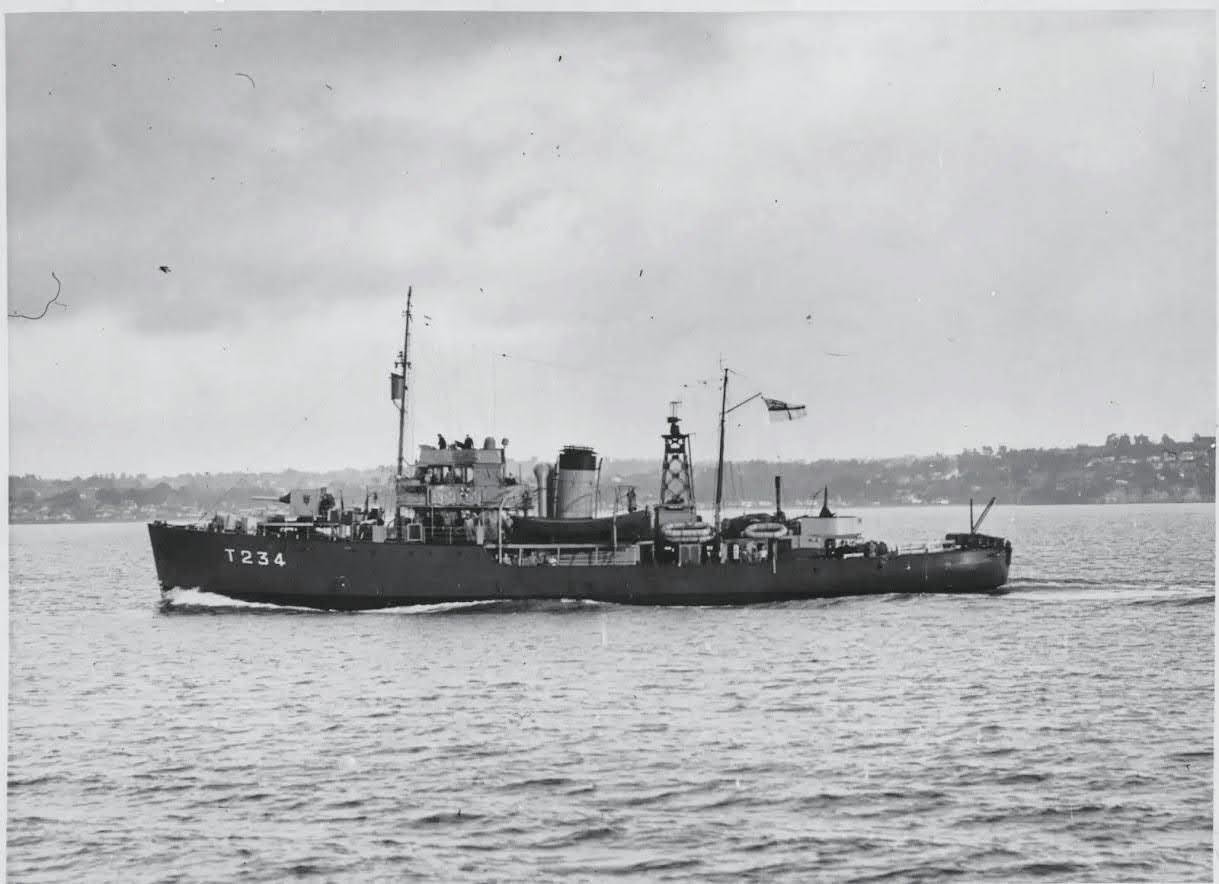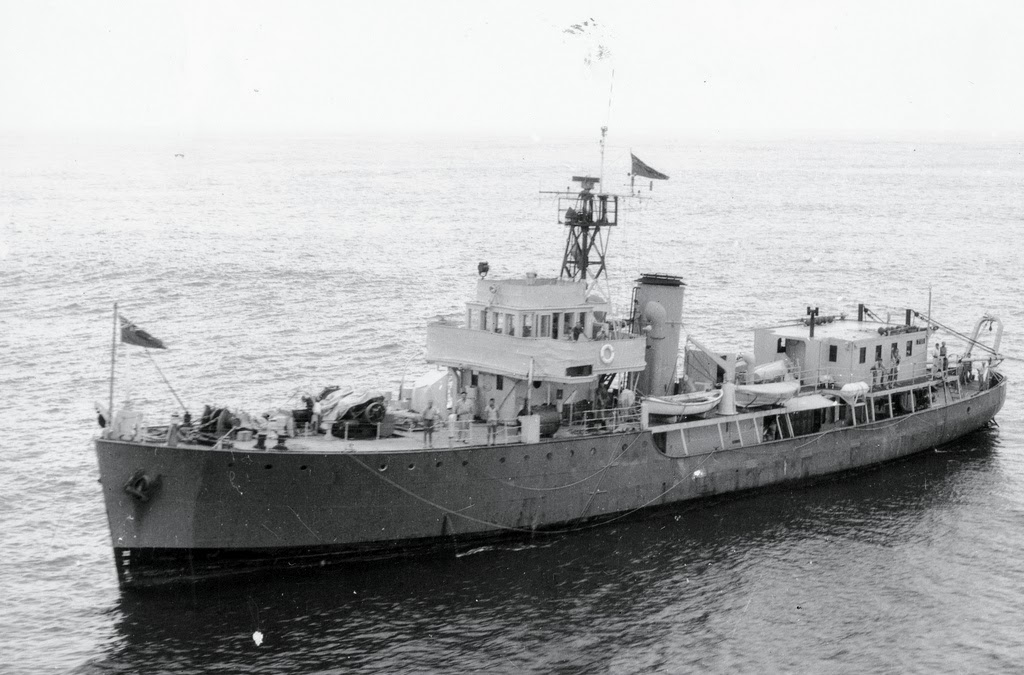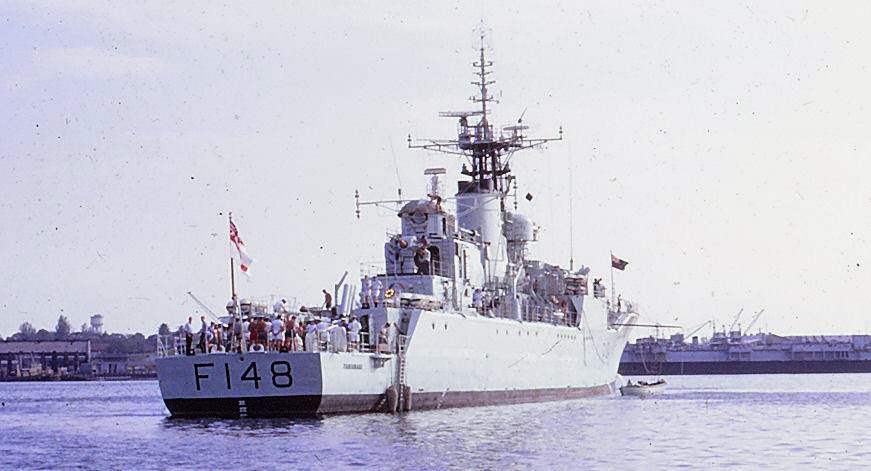
Police, including the national dive squad, and search and rescue crews have been joined by the Royal New Zealand Navy in the search today. (Source: istock.com)
Crews have continued the search for the remaining missing fisherman off the coast of Northland’s Pataua South, near Whangārei.
The man is one of two who were reported missing after their boat failed to return on time on Friday night.
The boat was found adrift on Saturday morning with no one aboard, followed soon after by the body of one of the men.
Police, including the national dive squad, and search and rescue crews have been joined by the Royal New Zealand Navy in the search today.
Detective Sergeant Paul Overton said the focus was on bringing the missing man home to his whānau.
“I would also like to like extend my thanks to all the other agencies involved in the search, as well as those members of the public who have been nothing short of generous with their time and support,” Overton said.
Police have asked the public to contact them on 111 if anything unusual is seen in the water.
An MC-12K King Air in Fiji, a first for RNZAF’s No 42 Squadron deploying the aircraft to the South West Pacific region. (Photo/Supplied)
A return trip to Fiji for maritime patrols by the Royal New Zealand Air Force’s (RNZAF) MC-12K King Air has provided a further opportunity to demonstrate the aircraft’s ability to operate in the South West Pacific region.
Aircrews on the MC-12K King Air regularly provide maritime patrols to detect and deter illegal, unreported and unregulated (IUU) fishing in New Zealand’s exclusive economic zone.
Earlier this year, an MC-12K King Air flew to Fiji in what was a first for RNZAF’s No 42 Squadron deploying the aircraft to the South West Pacific region.
A vessel spotted during IUU fishing patrols in the South West Pacific region. (Photo/Supplied)
The aircrew worked in support of the Fijian Maritime Essential Services Centre, conducting patrols searching for IUU fishing and also pleasure craft activity in Fijian waters as Fijian authorities strive to combat transnational organised crime in their region.
On the aircraft’s second deployment to Fiji, patrols were carried out in various locations including a small island chain approximately 150 nautical miles south of Nausori, and also over an area of approximately 9500 square kilometres spanning Yasawa to Kia Island.
Advertisement – scroll to continue reading
The recent return to Fiji enabled the aircrew to also demonstrate the aircraft’s capabilities to neighbouring Tonga. At the end of the Fijian operation, the crew and aircraft departed for its first visit to Tonga, and took two members of His Majesty’s Armed Forces, with experience in maritime surveillance operations, on board as the aircraft patrolled in the vicinity of Pangai Island in the Ha’apai group.
Air Component Commander, Air Commodore Andy Scott, said it was great to build on the success of the first deployment with another into the region.
“The South West Pacific provides an excellent operating environment for our crews and enhances the strong partnerships between New Zealand and our friends in the region.”
Squadron Leader Craig Graham, who was the detachment commander for the deployment, said the return visit to Fiji was also important for the crew as it provided an opportunity for more junior pilots to step up. Flight Lieutenant Jamie Hull deployed on both operations captaining patrols in Fiji and the international transit flights back to New Zealand.
Squadron Leader Graham said Flight Lieutenant Hull had only been flying in the MC-12K King Air for two years and this deployment provided an opportunity for him to gain valuable experience by leading his crew on a complex operation.
As the South West Pacific high-risk weather season from November to April gets underway, the New Zealand Defence Force (NZDF) is reinforcing preparedness of its response capabilities.
11 November, 2025
The frigate HMNZS Te Kaha and the multi-role ship HMNZS Canterbury and their crews, the Humanitarian Aid and Disaster Relief Task Unit consisting of land forces, and various Royal New Zealand Air Force aircraft are on standby to support humanitarian assistance and disaster relief tasks should they be required.
Two NZDF personnel have also joined the Brisbane-based Pacific Response Group (PRG) to help coordinate military response efforts to weather events.
The PRG is an initiative of the South Pacific Defence Ministers Meeting, designed to strengthen coordination and readiness, and improve the effectiveness of military contributions to humanitarian crises in the Pacific.
It brings together militaries from Australia, Fiji, France, New Zealand, Papua New Guinea and Tonga, with the aim of providing rapid humanitarian assistance and disaster relief options that complement local and international civilian efforts.
The New Zealand Army’s Warrant Officer Class 2 Don Mohr, right, with Pacific Response Group personnel undertake induction training aboard Australian Defence Force ship ADV Reliant.
Commander Joint Forces New Zealand, Major General Rob Krushka, said the NZDF was committed to standing with its Pacific whānau.
“Each year the high-risk weather season brings an elevated chance of cyclones and extreme weather in the Pacific.
“We always hope it doesn’t happen, but if it does, we are prepared to provide our expertise and assets to support our regional partners and civilian agencies in response.
“We remain ready, interoperable and working shoulder-to-shoulder with our partners when communities need us.”
In recent years, the NZDF has been called on to assist in the response to 2015’s Cyclone Pam which struck Vanuatu, Tuvalu and Kiribati, 2016’s Cyclone Winston which hit Fiji, and the Tongan volcanic eruption in 2022.
In November, 2005, the former HMNZS Wellington (F69), a Batch 3 Leander Class Frigate was sunk off the coast of Island Bay in Wellington.NZPA/Anthony Phelps
Below the waters of Houghton Bay is a warship – its forward guns intact, anchors in place, helipad empty. It is the HMNZS Wellington and it’s now a living reef.
The day it was scuttled – November 13, 2005 – stopped Wellington in its tracks.
In the single biggest public event ever seen in Wellington – Scuttling Day as it was known – meant thousands of cars were abandoned, parked along the roads of Ōwhiro Bay, Island Bay, Houghton Bay and Lyall Bay as spectators filled the area to watch.
The crowds in 2005 brought Wellington to a standstill as they gathered to see the sinking of the HMNZS Wellington.Marco Zeeman
The sinking itself took under two minutes – the traffic jam took hours to fade away.
Marco Zeeman, a former Wellingtonian of the Year, had seen trawlers and ships repurposed as reefs while in Hawaii.
On returning home, he helped with the sinking of the Waikato in late 2000 and knew the HMNZS Wellington had also been decommissioned. He set up the SinkF69 Trust – and literally made history.
The Leander-class frigate of the Royal Navy and the Royal New Zealand Navy was originally commissioned in 1969 and called Bacchante. It joined New Zealand’s navy in 1982 before being decommissioned in 1999.
The frigate had been extensively refitted – a four-year mission which included new fuel tanks, a new gunnery control system along with surface and navigation radar.
The Wellington had been to Fiji during the first coup there to help evacuate Kiwis and other foreign nationals, went to Sydney to take part in the Bicentennial Salute to mark the 200th anniversary of European settlement, went to Bougainville for peace keeping and to the Persian Gulf in 1995-96 supporting UN sanctions on Iraqi trade.
The SinkF69 Trust obtained resource consents in 2002 to buy the Wellington – for $1 – and sink it off Wellington’s South Coast.
The hull and propellers of F69, the former HMNZS Wellington, were cleaned as the frigate was prepared for scuttling off Wellington’s coast as a dive attraction.john selkirk
In 2005 the Wellington was towed fromAuckland’s Devonport Naval Base to Wellington where it sat at the Overseas Terminal as it was stripped. More than 100,000 people were able to visit the ship.
Holes were cut in the topsides and superstructure to allow the sinking and to allow access for divers.
A text competition was held by Telecom (now Spark) to be the person who would push the button setting off the explosives that would drop the ship.
Run over the 027 mobile network it was a text version of Battleships and at the end Auckland student Jo Smith won, beating off 115,000 entrants who sent 5.4 million text messages in a three-week period.
Zeeman said she was also the daughter of a crewman of the ship.
Originally scheduled for 3pm the previous day, the sinking was delayed by bad weather. Even on the day, strong winds slowed progress as tugs worked to position the ship.
Wellington city stopped to watch. The roads were blocked and boats took to the water – 236 according to the harbourmaster at the time’s count.
First came fireworks, smoke, and an explosion — then a ball of orange flame and a massive boom. The ship sank, settling upright about 20 metres down, its bow pointing into Cook Strait.
Former Wellington Mayor Kerry Prendergast sits on the now-silent guns of the frigate HMNZS Wellington in the waters off Island Bay after the warship was scuttled. She was one of the first divers to visit the ship.Dave Hansford
And just like that Wellington had a new attraction.
The wreck was then cleared by Police divers and later that day the first official dive took place.
The next year a huge storm caused the wreckage to break apart, the bow broke off and lay onto its side, secured by its 12-tonne mushroom anchor, with the hangar space collapsing under the pressure of the massive waves.
Some debris from the ship also washed ashore.
The Wellington now lies in two main sections on the seabed, close to where it was sunk. The bow rests on its side, 4.5″ guns intact, with the bridge and midship area nearby.
Pieces of the ship are all over Wellington – sold off when the ship was stripped – with the bell now at Wellington City Council, propellers in Cog Park, Houghton Bay and Waitangi Park while the capstan, the huge vertical winch used for pulling ropes or cables, is in Capstan Lane in Whitby.
HMAS Ballarat conducts a replenishment at sea with HMNZS Aotearoa in the South China Sea during Regional Presence Deployment 25-4. *** Local Caption *** The Royal Australian Navy is undertaking its fourth Regional Presence Deployment for 2025. From early September until early December, HMAS Ballarat will sail throughout the Indo-Pacific to conduct training, exercises and other engagements with regional navies. Regional Presence Deployments play a vital role in Australia’s security and prosperity by protecting our interests, preserving a rules-based international order, enhancing cooperation and relationships with partners and allies, and developing capability and interoperability.Ship’s Company HMAS Ballarat during a Replenishment at Sea with HMNZS Aotearoa in the South China Sea as part of Regional Presence Deployment 25-4. *** Local Caption *** The Royal Australian Navy is undertaking its fourth Regional Presence Deployment for 2025. From early September until early December, HMAS Ballarat will sail throughout the Indo-Pacific to conduct training, exercises and other engagements with regional navies. Regional Presence Deployments play a vital role in Australia’s security and prosperity by protecting our interests, preserving a rules-based international order, enhancing cooperation and relationships with partners and allies, and developing capability and interoperability.HMAS Ballarat conducts a replenishment at sea with HMNZS Aotearoa in the South China Sea during Regional Presence Deployment 25-4. *** Local Caption *** The Royal Australian Navy is undertaking its fourth Regional Presence Deployment for 2025. From early September until early December, HMAS Ballarat will sail throughout the Indo-Pacific to conduct training, exercises and other engagements with regional navies. Regional Presence Deployments play a vital role in Australia’s security and prosperity by protecting our interests, preserving a rules-based international order, enhancing cooperation and relationships with partners and allies, and developing capability and interoperability.
HMAS Ballarat continues her robust program of international engagements, conducting replenishments at sea (RAS) and helicopter cross-deck landings with HMNZS Aotearoa in the South China Sea.
Ballarat and Aotearoa conducted three RAS evolutions with concurrent helicopter cross-deck landings over seven hours, running late into the night on October 28.
Executive Officer Ballarat Lieutenant Commander Kane Stuart praised the crew for their conduct and professionalism throughout the important evolution.
“The team did a fantastic job supporting each other throughout the day to ensure we carried out each evolution safely, and to support Aotearoa in achieving her training outcomes,” Lieutenant Commander Stuart said.
“Cooperative activities like this also form an important aspect of Australia’s presence in the Indo-Pacific, working with our partners and allies to support security and stability in the region.”
This engagement forms part of Ballarat’s regional presence deployment, and a mission readiness workup for Aotearoa, which is deployed to the region under Operation Crucible.
Replenishments at sea are whole ship evolutions, and a team of combat systems operators who typically spend 12 hours a day on consoles in the operations room were excited to be involved.
“It’s great to get outdoors and experience evolutions like this in person,” Able Seaman Mike Obersnell said.
“This is my first overseas deployment so it’s really cool to experience working with other navies at sea.
“This also gives me a greater appreciation for the bigger picture and understanding why we’re here working with our partners and allies across the Indo-Pacific region.”
This engagement continues Ballarat’s strong sequence of international activities with nations and navies across the Indo-Pacific, which began on September 1.