Christian Lloyd, who led the Royal New Zealand Navy diving contingent in Samoa in the aftermath of the sinking of HMNZS Manawanui, is being recognised with a Chief of Defence Force commendation for his actions in dangerous and challenging conditions.
16 October, 2025
The Hutt Valley man, who went to St Patrick’s College Silverstream, transferred from the NZ Army in 2023. Since then, he’s been the Officer in Charge of the Survey, Search and Recovery (Diving) unit, which is part of HMNZS Matataua’s Mine Warfare and Clearance Diving capability.
On the evening of Saturday 5 October, 2024, Lieutenant Christian Lloyd received a phone call; Manawanui had run aground on a reef off the south coast of Upolu, the main island of Samoa, and the crew were about to abandon ship.
“I thought, is this really happening?” he says.
“Then the Executive Officer calls. ‘How quickly can you put a team together?’ And within half an hour, I was at the naval base with a small group I had managed to get hold of on that Saturday night. We quickly started loading all our equipment for deployment, raising comms with the rest of the team to get ready.”
Lieutenant Lloyd returned home in the early hours of Sunday morning to pack his bags.
“I told my partner, I didn’t know when I’d be back. That’s something I’ve never done before. Then it’s back to Devonport for briefings and final equipment checks. At this point the other divers are coming in.”
He said they were eager to go, but apprehensive.
“We had little information about the situation, and we didn’t know what state the crew were in. We had to expect a worse-case scenario.
“In 24 hours, we had arrived by a C-130 Hercules in Samoa and within 48 hours, we were in the water.”
By this time, the entire crew had been recovered safely. Manawanui had sunk and was lying on its starboard side at around 30 metres down.
“For the first 24 hours, it was all about helping local authorities with what they needed and being boots on the ground from New Zealand.
“But we needed to get on that ship, and with the help of some Australian Defence Force personnel and local government officials who knew the ground well, we found somewhere close, a beach on the southern coastline where we could launch our operations from.”
Lieutenant Christian Lloyd was the Officer in Charge of the Royal New Zealand Navy diving contingent in Samoa in the aftermath of the sinking of HMNZS Manawanui
Lieutenant Lloyd said basing operations in Apia wouldn’t have worked.
“The quickest travel route from Apia to the southern coast meant a huge change in altitude, over a mountainous range. This has major implications for us as divers. Going around the island would also hinder and prolong operations. We knew we had to stay at sea level, where we had efficient access to Manawanui.”
With the operating post established, Lieutenant Lloyd set up a safety framework and routines for his team. The first five weeks would involve surveying and monitoring of the wreck and the recovery of forensic evidence for the future Court of Inquiry.
“That was the most intense time. It was challenging, exciting and a lot of pressure. I take my hat off to my team – the divers, the logisticians, the engineers. They worked so hard.
“Manawanui had run aground and sunk in a very difficult spot. In some of that initial media footage, you see this idyllic lagoon from our launching site, but once outside the safety of the lagoon, in open water, it was very, very rough, with a heavy swell.
“And then underwater, you have the hazards that come with operating in and around a wreck. This is probably some of the most dangerous and challenging types of diving you can do. Everyone had to be switched on, the moment you got on the dive boat.”
He said everything was about risk assessment.
“To put it into context, one day you are working in or looking down a passageway or a compartment. The next day, you could dive to the same location, and it would have collapsed.
“We did that for five weeks, conducting diving operations every day. That shows just how well trained and professional the team were. I was very proud of what they achieved throughout the period of operations.”
Lieutenant Lloyd’s award citation credits his ability to remain calm and maintain the safety and wellbeing of his team in extreme conditions.
Things calmed down during subsequent deployments, he said.
The Navy dive team supported the Samoan agency responsible for sea water testing, transporting them out to the locations selected for sample collection. They also took over aerial monitoring and surveillance from Air Force personnel, launching uncrewed aerial vehicles (drones) from the beach.
“We had moved from that rapid reaction search and recovery phase – which we are really good at – to monitoring the site and supporting the contracted salvors. Once the salvors were on site, we were able provide them with information and formally hand over so they could do their job in extracting the diesel fuel.”
The experience was a huge learning curve, said Lieutenant Lloyd.
“It was intense and at times frantic, but everyone performed incredibly well. I had a really good team and I couldn’t have done it without them. Especially the range of experience and skill level from the junior rates right through to the senior divers. Everyone brought something valuable to the table.”
His commendation notes his outstanding leadership, dedication and courage, something he said all his team shares. He credits his skills to the time he spent both as a platoon commander in the NZ Army and integrating with the Navy’s Clearance Divers before service changing.
“I enjoy working with small, specialist teams. In many ways Matataua and the divers run very similar to land-based units, so it was a natural progression when I came across.
“It’s great to get a commendation. But for me, it’s recognition for the team as well. We thrived in that operationally high-risk environment and the effort by all involved was immense. We learnt a lot from the whole event. I hope it never happens again but if it ever did, we’d be ready to go.”
The Tonga Royal Navy has commissioned the newest landing craft VOEA Late in a ceremony held at the Masefield Naval Base.
Credit: Australian High Commission; Kingdom of Tonga via Facebook
The commissioning of VOEA Late is the latest demonstration of the enduring strength of the Australia and Tonga bilateral relationship and follows the recent signing of a Statement of Intent announcing a shared commitment to elevate ties between the two nations.
The vessel was provided under the Pacific Maritime Security Program (PMSP), Australia’s 30-year commitment to increase national and regional maritime security throughout the Pacific. The program builds on the three decades of success in the original Pacific Patrol Boat Program.
The handover ceremony of the landing craft was held in August this year.
The Royal New Zealand Air Force’s (RNZAF) T-6C Texan II fleet has reached a milestone with 40,000 flying hours – roughly equivalent to flying non-stop for four and a half years.
17 October, 2025
Since its introduction in 2015, the aircraft have been central to the RNZAF’s pilot training programme at No. 14 Squadron and are also flown by the Black Falcons aerobatic team.
Since the Texans’ arrival, 97 pilots have successfully earned their brevets. Of those, 91 were from the RNZAF and Royal New Zealand Navy, and six were from the Royal Australian Air Force.
Flight Lieutenant Corey Fothergill was on the first course, learning to fly the Texans in 2016. A decade on he is now an instructor on the same course.
Flight Lieutenant Corey Fothergill graduating as one of the first pilots to train in a T-6C Texan II
“It’s definitely a full-circle sort of moment, which is cool,” Flight Lieutenant Corey Fothergill says.
Recalling the moment he first sat in a Texan as a beginner pilot was “overwhelming”.
“It’s a very powerful training aircraft for someone who hadn’t done flying before. It was a humbling moment.”
Flight Lieutenant Fothergill went from the Texans to flying NH90 helicopters with No. 3 Squadron, which provided career highlights including flying in Australia and Solomon Islands, as well as being involved in search and rescues around the country.
“But being back at No. 14 Squadron for the past six months has been really rewarding.”
One of the squadron’s latest graduates, Flying Officer Robert Petch, received his Wings in June.
Flying Officer Robert Petch, one of the latest pilot graduates.
He described flying the aircraft as “learning to drive in a sports car”.
“No. 14 Squadron takes you from having zero aviation experience to navigating at 250 feet at speeds of 210 knots [389km/h].”
Ensuring the pin was pulled from his seat to enable ejection in case of an emergency was a sobering moment on his first flying day, Flying Officer Petch said.
The new pilot will now put his lessons into practice, also as an instructor at No. 14 Squadron, before moving to a frontline squadron in a couple of years.
Reaching 40,000 flying hours for the fleet was impressive and reflected the large number of sorties – about 18, but up to 24 – scheduled each day, he said.
Officer Commanding No. 14 Squadron, Squadron Leader Simon Isemonger said the serviceability rates of the aircraft were among the highest in the world.
“We’ve worked through several significant issues over the past 10 years that have been resolved by an amazing team.”
The aircraft was ideal as a training plane with its modern flight deck and multi-function displays, he said.
“It also has pretty decent range to get around New Zealand so that the pilots can experience what we have to offer at home in terms of different locations.
“It offers a broad spectrum of flying disciplines, preparing pilots well for their future employment on New Zealand Defence Force operational fleets, and also provides a capable platform for display flying by the Black Falcons.”
This milestone also highlights the strength of the squadron’s international partnerships with Textron Aviation Defence, for providing the training aircraft, engineering, and logistical support; Airbus, for ensuring fleet readiness through maintenance and support; and CAE, for delivering and taking care of the simulation and training systems.
A sailor whose mother reckoned the Navy wouldn’t work out for him has taken command of a Royal New Zealand Navy frigate nearly 30 years later.
17 October, 2025
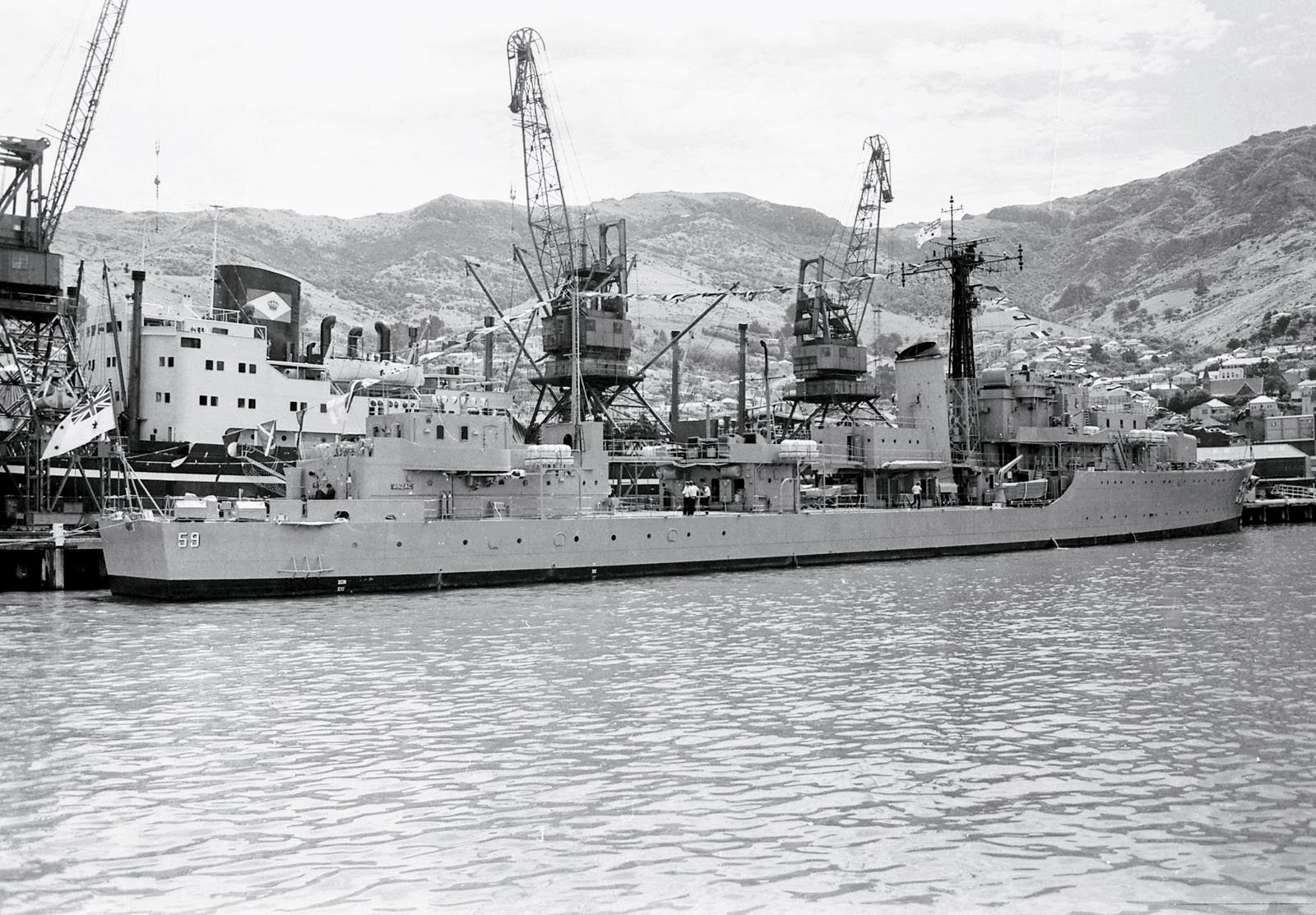
Commander Andy Hunt uttered the words “I have the ship” in a ceremony on board HMNZS Te Kaha at Devonport Naval Base, Auckland on 17 October, receiving the ship’s symbol of command from outgoing Commanding Officer Commander Fiona Jameson, overseen by Acting Chief of Navy, Commodore Shane Arndell.
This is his first command as he takes charge of one of the Royal New Zealand Navy’s two Anzac-class frigates.
Born in Nottingham, UK, Commander Hunt grew up in Portsmouth. He joined the Royal Navy in 1996, aged 20.
Prior to this he had been working in a sports shop and looking around for something a bit different. The Royal Navy seemed like a “why not” option, he says.
“I’d like to be able to say something about having ideals of defending the country, but it was more that I was only really interested in football and following Portsmouth FC around the country.
“I thought there could be more to life and I was looking for an outlet. My dad had worked as a civilian in the Royal Navy. My brother was in the Navy but got injured.
“My mum had no idea I had gone to see a careers officer and when I told her she said, ‘you won’t last five minutes in the Navy!’ And here I am, 29 years later.”
Commander Hunt says he loved being in the Navy, starting as a sailor and commissioning from the ranks in 2001.
While in the Royal Navy he served in Type 42 destroyers, Type 22 and 23 Frigates, Aircraft Carrier HMS Invincible, a minesweeper, and was fortunate enough to serve in HMS Victory, the oldest commissioned warship in the world.
“You get a real sense of belonging, a sense of purpose,” he says. “HMS Invincible was a fantastic opportunity, although I spent six months getting lost on board.”
As a family they moved to New Zealand in 2013, with CDR Hunt transferring to the Royal New Zealand Navy.
“I had two children at this point and we had never been to New Zealand – but we had talked about it for a long time.
“I had been on this course with someone from New Zealand, who was in the United Kingdom on an exchange. He talked about New Zealand and the culture and we kind of took a punt. We thought, why wouldn’t we try this out? It was a challenge for the whole whānau (family), but it’s worked out brilliantly.”
Commander Andy Hunt on HMNZS Te Kaha’s bow, holding a wahaika (Māori hand weapon), the ship’s symbol of command, named Te Kaha Nui A Tiki.
In New Zealand he has served aboard logistics ship HMNZS Canterbury and has been the Executive Officer of the RNZN’s Littoral Warfare Unit HMNZS Matataua. His most recent posting was to Combined Task Group 153 in Bahrain, tasked with international maritime security and capacity building efforts in the Red Sea.
When he got the phone call regarding his new command, he was blown away, he says.
“I am absolutely stoked. It’s a challenge I have never experienced before, and there’s the responsibilities and expectations that come with it. When you look at the work Te Kaha has done so far this year, I get to pick it up from there and get the ship ready for the next thing.”
In August Te Kaha completed a six-month deployment, which included monitoring of a Chinese Task Group near Australia, undertaking counter-narcotics and maritime security patrols in the Arabian Sea, high-end warfare scenarios and international training during Exercise Talisman Sabre in Australia and integrated operations with the HMS Prince of Wales Carrier Strike Group in the Indo-Pacific.
Commander Hunt says the support from his family makes this possible.
“All these things in my Navy career have been achieved because they have allowed me to do it. I’ve done some really exciting, fun things while my wife has taken command at home. I’ve been very lucky and very thankful to her.”
Japan Maritime Self-Defense Force ship JS Sazanami sails behind Royal New Zealand Navy ship HMNZS Aotearoa while conducting a dual-replenishment at sea with HMAS Sydney (left) and USS Howard (right) during a Multilateral Maritime Cooperative Activity (MCA)in the South China Sea. Picture: Department of Defence
10 hours ago
In his inaugural address on January 20 this year, US President Donald Trump declared that “America will soon be greater, stronger, and far more exceptional than ever before”, adding “America will be respected again and admired again”.
Nine months on, at least one of those promises, with its characteristic hyperbole, is being fulfilled.
America certainly is “far more exceptional” in its rhetoric and behaviour. What’s troubling, though, is that Washington directs this at allies as much as, if not more than, at adversaries.
Despite avowing China to be the biggest strategic threat to US interests, the Trump administration is hitting its Indo-Pacific partners with punitive tariffs; gutting aid programs throughout the region; sowing doubt about its commitment to Taiwan’s security; making nice with authoritarians from Pyongyang to Moscow; and pressuring allies, including Australia, to lift defence spending, preferably on American weapons and platforms.
The President’s speech to the UN General Assembly on September 23 was a litany of unsubstantiated boasts and grievances. His claim that America was “blessed with … the strongest friendships” sat awkwardly with his lambasting of Europe, the UN itself, and the retribution he pursues against those who criticise him or oppose his policies.
This aggravated American exceptionalism has long-term ramifications for Australia’s national security interests.
Through whim and volatility, and without obviously extracting any quid pro quo, America is surrendering the collective Western strategic bridgehead which, supported by staunch allies like Australia, it had fought hard and paid dearly to win and sustain for many decades.
This is the backdrop to Anthony Albanese’s first formal meeting with Mr Trump, on October 20. It underscores the need to switch from Australia’s traditional “gotcha politics” to more of a domestic “unity ticket” on defence and national security. This is logical, given the largely shared assessment of our deteriorating strategic circumstances that informed both the Coalition’s Defence Strategic Update 2020 and Labor’s inaugural National Defence Strategy 2024. The first biennial update of the latter is due by min-2026.
US expectations of us are the least of many compelling reasons to exert greater national effort to build sovereign defence capabilities and enhance our self-reliance, mindul that we cannot aspire to autarky. A genuinely bipartisan approach would give industry, investors, and our education and training sectors confidence to make the long-term commitments necessary to increase our industrial depth and sustain the workforce which our military and its related industrial ecosystem require.
We don’t have sufficiently sober and honest public conversations about the strategic threats we face and their implications for our national security and resilience. This is the prerequisite for the social licence government requires to spend what we must to ensure proper military and industrial preparedness, commensurate with the tasks we expect the Australian Defence Force to perform now, as well as in an ever more uncertain future. For some, the dissonance emanating from Washington is just the “outrage machine” of performative US domestic politics in overdrive, with America again bluntly exercising the economic and security leverage it has had, but not always applied, since the end of the Cold War.
But our adversaries are emboldened, reassured in their conviction that the West is in terminal decline and democratic governments are too timid to take hard and costly decisions that provoke short-term public discontent.
Even as they try to avoid disfavour in DC, governments across the region feel driven to hedge the risk of future US unreliability by increasing their economic and political engagement with China.
Among those attending last month’s Victory Day parade in Beijing – where the Chinese Communist Party distorted history by appropriating the nationalist Kuomintang-led struggle against Imperial Japan – were the presidents or prime ministers of Vietnam, Malaysia, Indonesia, and India.
Hefty US tariffs on India have cast doubt upon plans for a meeting of Quad leaders from Japan, India, Australia and the US this year. Meanwhile, a quartet of leaders from Russia, China, India and North Korea shared a platform as Chinese offensive military capabilities were ostentatiously on show in Beijing.
The US brand is tarnished. Exhorting anti-wokers of the world to unite, Washington is quitting forums and defunding programs that have helped project American global soft power since the end of World War II. Where American and allied voices once shaped the strategic narrative, there is a growing void, which Moscow and Beijing are filling with their hypocritical accusations of Western double standards and neo-imperialist ambitions.
In Australia, raucous AUKUS antagonism, spurred and blurred by anti-Trumpism, risks becoming a dishonest ideological pretext to jettison our most important and enduring security partnership. Those who assert that we are investing in a soon-to-be redundant capability seem to know better than the combined navies of 40 countries that operate submarines, including the six with nuclear-powered vessels (five of which are permanent members of the UN Security Council).
Pillar Two of AUKUS will expand the combined industrial base of the three nations, with benefits of scale, cost, more resilient and trustworthy supply chains, and increased interchangeability of common platforms and weapons systems. Even leading US defence companies acknowledge the constraints of their national manufacturing capabilities and are calling for swifter and less-encumbered sharing of technologies.
Although not as showy as nuclear submarines, this work is making progress and is vital to enhancing both the lethality and survivability of our respective forces and their industrial bases. However, while our militaries remain deeply intertwined, we cannot assume the old verities that have underpinned the alliance for seven decades will endure and suffice in future.
The political dalliance with “100 years of mateship” has run its course. Americans have always been hard-headed about their national security; we must adopt a similar attitude, reinforced by faith in our ability to bolster self-reliance and reinforce political and industrial partnerships with other accountable governments that share our strategic world view.
These partnerships are harder to build in the Indo-Pacific, which lacks the relative homogeneity of Europe and the longstanding unifying bonds that NATO and the European Union have provided for almost 70 years.
Nonetheless, Australia is forging stronger military-industrial ties with key regional players, including through the selection of Japan’s Mogami-class frigates and South Korea’s Huntsman self-propelled howitzers and ammunition carriers. This builds on our deepening political collaboration and joint military activities, in particular our combined naval transits in the South China Sea with a diverse array of allied navies, including Canada, The Philippines, Japan and France.
As we contend with Trumpian transactionalism, we must remind Americans and ourselves that Australia reliably has carried its weight in this relationship through multiple wars and conflicts.
Solid bonds of trust, forged in shared adversity and endurance, underpin the intensity and intimacy of our military interoperability, which rivals that of any of America’s allies.
Joint military facilities like Pine Gap served the vital security interests of both nations – and the collective West – throughout the Cold War. Even as the nature of conflict and contemporary security challenges evolves, they remain a strategic asset for the Alliance.
Our geography helps to disperse US forces and maintain a more persistent regional presence, with reliable access to repair, maintenance and overhaul facilities for their militaries for both the US and other allies.
This shared commitment to common strategic goals has enabled successive Australian governments, at comparatively modest cost to our GDP over many decades, to create a sophisticated and highly capable, if relatively small, professional military.
Consequently, all Australians have benefited from proportionally more spending on health, education and other priorities.
The government’s recent announcements of a $12bn investment in the HMAS Stirling naval base and Henderson naval precinct near Perth, as well as the $1.7bn for the Ghost Shark uncrewed underwater vehicle, are welcome and not before time. They should not be downplayed in the febrile fulminating which passes for public commentary about our defence. Even so, we are far from where we should be by the measures we have set ourselves.
Our biggest challenge is that of scale. A nation of 27 million people, with a professional military of roughly 60,000 people and a manufacturing base accounting for just 5 per cent of GDP, must think realistically about what can be achieved and how quickly, and at what sustainable cost.
The task of enhancing and protecting Australian sovereignty, national resilience and social cohesion increasingly must fall upon our own shoulders and wallets.
Better integrating our defence industry into regional and global networks is vital if we are to build and sustain greater self-reliance and contribute proportionally to the collective AUKUS industrial effort.
As British analyst Keir Giles wrote, having “hit the snooze button for a decade”, in the wake of Russia’s full-scale invasion of Ukraine in February 2022, Europe finally has woken up and is scrambling to bulk up its defence industrial base. The signals and rhetoric are encouraging, but the pace is slower than the urgency of the times demands.
Conclusion of the Australia-EU Security and Defence Partnership, possibly this year, will enable Australian business to bid in partnership with European companies for access to the new €150bn ($267bn) Security Action for Europe (SAFE) loan instrument for joint procurement.
European firms like Thales, Rheinmetall, Kongsberg, and SAAB are Australian defence primes, whose products are meeting not only Australia’s military needs, but are being exported to other countries. The EU became a strategic partner of ASEAN in 2020 and launched its EU Strategy for Cooperation in the Indo-Pacific in 2021. It signed security and defence partnerships with Japan and the ROK in 2024.
A new tier of innovative and resilient European nations, notably Poland and the Nordic and Baltic countries (the “NB8”), has crystallised. Deeply integrated into the Ukraine defence innovation ecosystem and, like Australia, having strong connections to the US defence base, they are outward-looking, activist, and clear-eyed on China and Russia.
We have much to gain from greater collaboration with them in military technologies like drones and other autonomous systems. We also can benefit from comparing our experience of authoritairans’ increasing efforts to subvert and suborn democracies and sabotage critical infrastructue.
The Partnership for Indo-Pacific Industrial Resilience, which was launched as an American initiative in 2024, supports greater collaboration between Europe and Australia. It aims to create a trusted ecosystem among industry, capital providers, and defence customers to foster information exchange, technical co-operation, supply chain resilience, and co-production and co-sustainment. Its 14 members span the Euro-Atlantic and Indo-Pacific regions and include key European countries and Australian partners like Japan and the ROK.
Regardless of the outcomes of the 2026 US congressional midterm and 2028 presidential elections, we should not expect the status quo ante to be restored. The task of enhancing and protecting Australian sovereignty, national resilience and social cohesion increasingly must fall upon our own shoulders and wallets.
So, as the Oval Office beckons for the PM, the question is whether we can rise above partisan politicking and unite society, investors, and industry in a properly funded, truly whole-of-nation effort to this end. If we can, allies and adversaries alike will take heed, and Australia will be the beneficiary.
Peter Tesch is a former deputy secretary of Defence and Australian ambassador to Russia and Germany. He is a Visiting Fellow at the ANU Centre for European Studies and holds similar positions at the ANU National Security College and the Australian Strategic Policy Institute.