U.S. sends new submarine-hunting jets to Japan amid East Asia tension

BY TIM KELLY

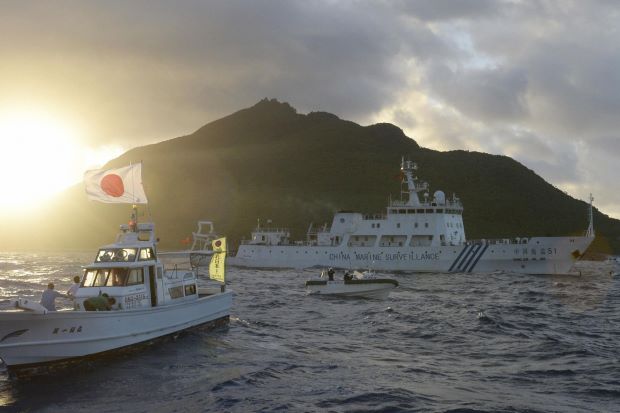
Chinese marine surveillance ship Haijian No. 51 (C) sails near Japan Coast Guard vessels (R and L) and a Japanese fishing boat (front 2nd L) as Uotsuri island, one of the disputed islands, called Senkaku in Japan and Diaoyu in China, is background, in the East China Sea in this photo taken by Kyodo July 1, 2013. REUTERS/KyodoChinese marine surveillance ship Haijian No. 51 (C) sails near Japan Coast Guard vessels (R and L) and a Japanese fishing boat (front 2nd L) as Uotsuri island, one of the disputed islands, called Senkaku in Japan and Diaoyu in China, is background, in the East China Sea in this photo taken by Kyodo July 1, 2013. REUTERS/Kyodo

TOKYO (Reuters) – The U.S. Navy’s first advanced P-8 Poseidon patrol aircraft has arrived in Japan, the start of a deployment that will upgrade America’s ability to hunt submarines and other vessels in seas close to China as tension in the region mounts.

The deployment, planned before China last month established an air defence zone covering islands controlled by Japan and claimed by Beijing, includes six aircraft to be delivered to Kadena air base on Okinawa this month.

The first arrived on Sunday, a spokesman for the U.S. Navy told Reuters. The mission in the waters west of Japan’s main islands will be the new aircraft’s first anywhere.

The jet, built by Boeing Co based on its 737 passenger plane, has been built to replace the aging propeller-powered Lockheed Martin P-3 Orion patrol aircraft, which has been in service for 50 years.

Packed with the latest radar equipment and armed with torpedoes and anti-ship missiles, the P-8 is able to fly further and stay out on mission longer than the P-3.

The arrival of the P-8 came a day before U.S. Vice President Joe Biden is due to arrive in Tokyo, a visit that is being overshadowed by the territorial spat in the East China Sea between Japan and China.

While taking no position on the sovereignty of the islands known to the Japanese as the Senkakus and to the Chinese as the Daioyu, it does recognize Japanese control and therefore part of territory it would defend under a security pact with Japan.

NZ navy officers’ bid to rid Solomon Islands of WWII explosive remnants

By Teuila Fuatai

7:10 AM Thursday Dec 5, 2013
The demolition of the WWII munition breaches the surface in the shallow bay

The demolition of the WWII munition breaches the surface in the shallow bay

New Zealand’s navy officers are combing through parts of the Solomon Islands in a bid to rid the country of World War II explosive remnants.

Four explosive ordnance disposal technicians from the navy’s operational diving team are working in the Solomons as part of a 150-strong Australian-led naval task force.

The New Zealand technicians, who have been working directly on unexploded ordnance, have also been aided in their search for ordnance by local community members.

Detachment leader Chief Petty Officer Rangi Ehu said it was important New Zealand had a presence in the task force.

“We were there in World War II, but for us New Zealanders the war finished 68 years ago, whereas the Solomon Islanders, who were unwilling participants in the war, have been living with the leftover explosive ordnance ever since. This operation gives us a great opportunity to make a contribution to the safety of those local communities and all the members of our team have been looking forward to this deployment,” he said.

The four Kiwis are due to return home tomorrow.

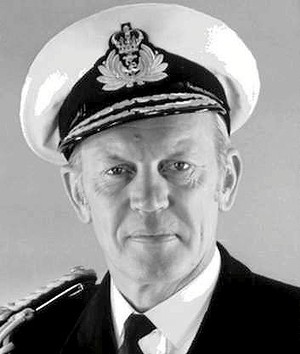
Rear-Admiral Ted Thorne Former Royal New Zealand Navy chief

Saw worst loss before rising in naval ranks

Date
December 5, 2013
Ted ThorneTed Thorne

Rear-Admiral Ted Thorne
Former Royal New Zealand Navy chief
29-10-1923 – 23-10-2013

Rear-Admiral Ted Thorne, who has died aged 89, witnessed the worst loss of female naval personnel of World War II.

Thorne, a New Zealander, was under training in the cruiser Hawkins off the Maldives when, on February 12, 1944, he saw ”a sheet of flames and grey smoke” rising from one of the ships of the convoy, the Khedive Ismail. The ship sank within two minutes; the 1511 aboard included 19 Wrens, 54 nurses and nine members of the First Air Nursing Yeomanry. Only 208 men and six women survived. The Japanese submarine I-27 was depth-charged as the survivors were still struggling in the water.

Thorne then returned to England, where he commanded a boat carrying dispatches around the invasion fleet at Spithead. He remembered going out one night to find all the ships had disappeared – it was the eve of D-Day.

Advertisement

Edward Courtney Thorne was born on October 29, 1923, near Wellington, New Zealand, and educated at Nelson College. He was inspired to join the navy when, in 1940, he saw the NZ-manned cruiser Achilles, fresh from her victory over the German pocket battleship Graf von Spee, in Wellington harbour.

Travelling to England in ”a dirty little tramp”, the Gorgiston, he was shocked to find a ”colour bar” in Kingston, Jamaica – his best friends at Nelson College had been Fijians and Maoris. On arrival he was accepted as a cadet at Dartmouth.

He joined the heavy cruiser Devonshire, which was sent to convey troops from Australia to the Middle East – one convoy consisted of several of the world’s greatest liners, the Queen Mary, Ile de France, Aquitania, Queen of Bermuda and Mauretania.

Aged 21, Thorne embarked in the destroyer Lamerton, which operated in the Adriatic, carrying supplies and special forces to Yugoslav partisans and bombarding enemy positions on the coast. A favourite target was the railway; in particular, they tried to knock out both ends of a tunnel while a train was inside. In March 1945, Lamerton returned to Britain to join the Harwich force defending coastal convoys against last-ditch attacks by enemy submarines.

For three decades after the war, Thorne helped to forge close links between the Royal Navy and the Royal New Zealand Navy. He served in the Mediterranean with the RN’s 2nd Minesweeping Squadron, which sometimes blew up a dozen mines in a single day. In New Zealand he served in Taupo, Bellona and Kaniere, and in 1951 helped to break a 151-day strike by waterfront workers.

On Christmas Eve 1953, Thorne was commanding the naval radio station at Waiouru when he heard that the railway bridge at Tangiwai had been washed away, causing the night express to crash, killing some 150 people. He led his sailors in the grim business of recovering bodies.

Later, as director of plans, he helped convince the New Zealand government to order the first of its purpose-built frigates, Waikato.

Thorne attended the Imperial Defence College in London, then he commanded Waikato on her trials, work up and delivery voyage to New Zealand. He was soon back in London as head of the NZ Defence Liaison Staff, before being promoted to rear-admiral and chief of naval staff of the RNZN in 1972. As chief, Thorne was involved in sending frigates to Mururoa as part of his government’s protest against the testing of French nuclear weapons in the Pacific.

Thorne was appointed CBE in 1972 and CB in 1975. In retirement, he was appointed the first commissioner of the newly unified New Zealand fire service.

He married, in 1949, Fay Kerr, and is survived by their three sons.

Telegraph, London
Read more: http://www.theage.com.au/comment/obituaries/saw-worst-loss-before-rising-in-naval-ranks-20131204-2yr4f.html#ixzz2mbcXqmZ3

S. Korea, U.S., Britain to hold drills in waters off Korean Peninsula

2013/12/05 17:07

BUSAN, Dec. 5 (Yonhap) — South Korea, the United States and Britain will jointly carry out previously planned naval drills in southern waters off the Korean Peninsula, military officials here said Thursday, amid an air defense zone dispute near the area.

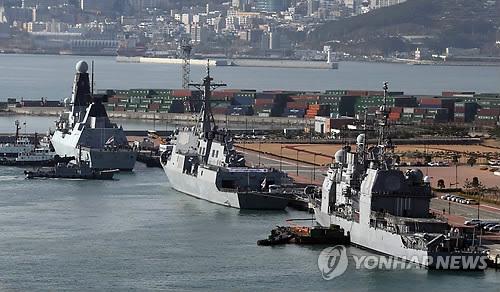
The two-day exercise, which is slated for Dec. 8-9, will mobilize South Korea’s 7,600-ton Aegis destroyer, America’s 9,800-ton Aegis cruiser Shiloh and the Royal Navy’s Daring-class 8,000-ton stealth destroyer, military authorities here said.

Naval ships of South Korea, the United States and Britain are anchored at the southern port of Busan on Dec. 5, 2013 before jointly carrying out naval drills in waters off the southern coast of the Korean Peninsula from Dec. 8-9. (Yonhap)


Ahead of the drill, American and British naval ships arrived at the southern port city of Busan earlier in the day.

Upon arrival, Adm. George Zambellas, the British Royal Navy’s chief, visited the Busan Naval Operations Base to participate in a welcoming event hosted by the South Korean Navy chief Hwang Ki-chul, the Navy said.

The trilateral drills will take place at a time of heightened regional tension triggered by China’s establishment of a new air defense identification zone over the East China Sea, raising speculation over its intentions.

Seoul’s defense ministry said the drill is not targeted at China, noting it had been timed to coincide with the British naval ship’s port call at the South Korean port.

“This drill has been scheduled well in advance, and it was not arranged to protest China’s recent declaration of the air defense zone,” ministry spokesman Kim Min-seok said in a briefing. “The joint exercise is aimed at capitalizing on the British naval ship’s visit.”

The last joint drill involving British troops took place in 2008, the Navy said.

The U.S. Forces Korea said the naval exercise is aimed at improving teamwork and interoperability between the three navies in security cooperation and humanitarian relief operations.

“This is an exceptional opportunity to bring together three navies that have historically worked very closely together as allies and close friends,” said Rear Adm. Lisa Franchetti, commander of U.S. Naval Forces Korea. “This exercise provides our navies a chance to work together and learn from each other so we may continue to fulfill our common interests in preserving a safe and secure maritime environment.”

ejkim@yna.co.kr

(END)

US military buildup in Arctic irks Putin

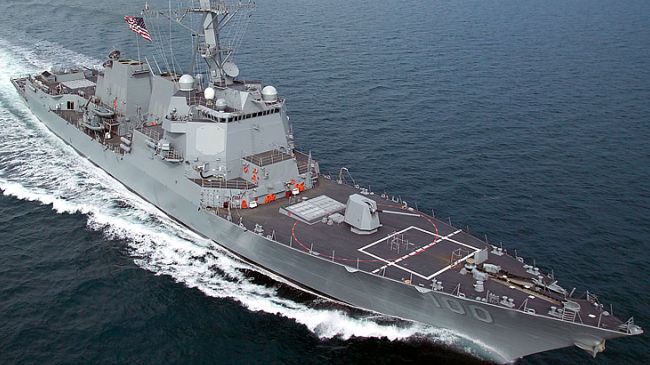
US DDG-100 destroyer
The US Navy’s military capability in the Arctic has worried Russian President Vladimir Putin who has ordered his armed forces to increase their presence in the region.

During a speech at the Moscow State University, Putin rejected the idea that his country abandoned Arctic territory to help protect the environment.

“Experts know quite well that it takes US missiles 15 to 16 minutes to reach Moscow from the Barents Sea,” Putin said on Tuesday.

“I proceed from the assumption that we will never engage in a global conflict, particularly with a country like the United States,” he was quoted as saying by the Associated Press.

“Just opposite, we must develop cooperation and partnership, and we have every opportunity for that despite arguments. But the submarines are there, and they do carry missiles,” the Russian president said.

The United States has nuclear-armed submarines in the Arctic region to patrol international waters.

Experts say the US has been tempted by what it has estimated to be 13 percent of the world’s undiscovered oil reserves and 30 percent of undiscovered gas deposits in the Arctic.

US Defense Secretary Chuck Hagel announced last month the Pentagon’s strategy to guide changes in military planning in the Arctic. Hagel said the military would “evolve” its infrastructure and capabilities in the region.

The Arctic was largely inaccessible in the past, but increased seasonal melting of the sea ice is opening the region and creating opportunities for oil and gas exploration and maritime shipping.

Territorial claims are among key issues for the eight Arctic countries, which include Russia and the United States.

According to a five-year assessment by the US in 2009, known as the “Arctic Roadmap,” the opening of the Arctic Ocean could lead to increased oil and gas development and reshape the global sea transportation system.

Putin also noted that the Arctic region is essential for Russia’s economic and security interests.

“There is a huge amount of mineral resources there, including oil and gas,” he said. “It’s also very important for our defense capability.”

In 2011, US President Barack Obama announced the rebalancing of American forces toward the Asia-Pacific region. Washington’s strategy is called “the pivot to the Pacific.”

Russia and China have expressed concerns about growing US military presence in the region.

AGB/HJ

JCs Royal New Zealand Navy Ships and New Zealand Defence, Also other World Defence Updates

Ships and Defence News Past and Present

Skip to content ↓