Bureau Veritas Classes World’s Largest Bilobe LNG Tanks

MarineLink.com

Tuesday, December 03, 2013, 3:12 PM
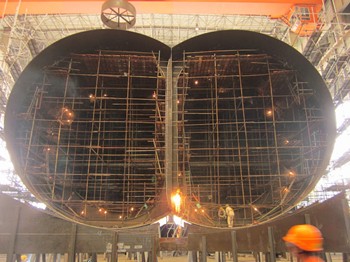
File 9,686 cu m bilobe Type C LNG tanks building at Sinopacific for Denmark
9,686 cu m bilobe Type C LNG tanks building at Sinopacific for Denmark’s Evergas and classed by BV

International classification society Bureau Veritas is classing the world’s largest bilobe gas tanks. They are nearing completion at China’s Sinopacific yard and will be installed in a series of four 27,500 cu m semi-refrigerated LNG/Ethylene carriers building for Denmark’s Evergas.

Each of the IMO Type C bilobe tanks has a capacity of 9,686 cu m. Two of the tanks in each vessel will be supplemented by a third conical Type C cargo tank and a smaller LNG fuel tank on the deck of the vessels.

Carlos Guerrero, manager gas carriers, Bureau Veritas, said, “These tanks are pushing at the frontier of small scale LNG transportation. They build on experience with ethylene transportation and can carry LPG or LNG at 5 bar pressure. That allows for the development of flexible ships which will meet the demands of the new LNG trades which are constantly emerging.”

Ralph Juhl, Vice President, Evergas, says, “We are really pleased with the way Sinopacific has built these world-beating tanks. Our new ships have to work in the roughest seas in the world so we wanted to build them tough and without a lot of deck clutter and exposed systems. These bilobe tanks enable us to have a flat main deck and they give us much better carrying capacity compared to cylindrical tanks in the same size ship. We are pleased to work with Sinopacific and Bureau Veritas to break new ground in gas transportation. Building bigger than ever before is always a challenge and the strength of the tanks must be calculated correctly, especially to allow for the increased liquid sloshing. The vessels’ stability and damage stability was also a matter of additional efforts on the drawing board.”

Evergas is building the ships at Sinopacific to BV class for 2015 delivery to service the trade between Marcus Hook, Philadelphia and Rafnes in Norway.

evergas.net

  • 9,686 cu m bilobe Type C LNG tanks building at Sinopacific for Denmark's Evergas and classed by BV9,686 cu m bilobe Type C LNG tanks building at Sinopacific for Denmark’s Evergas and classed by BV

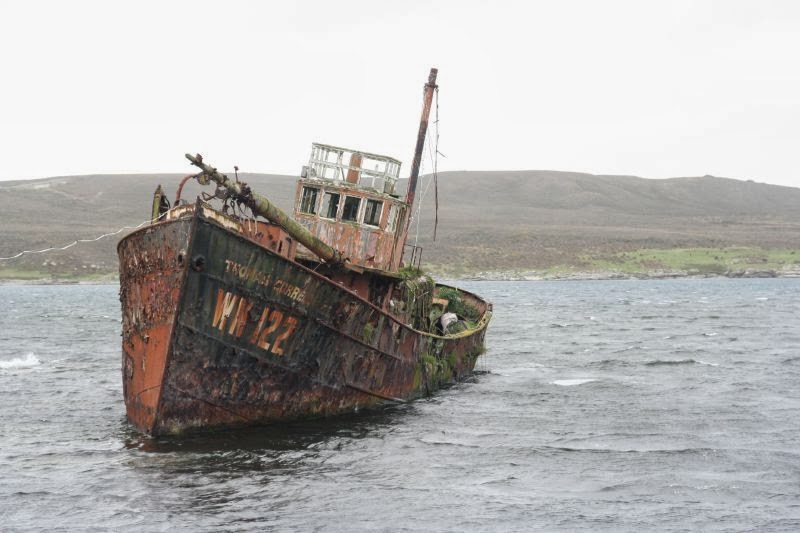
HMNZS Thomas Currell, auxiliary minesweeper , RNZN 1939-1945

Lying in slight disrepair at Port Hutt The Chathams –

HMNZS Thomas Currell (T11) 1941–1944 Functioned throughout World War II as a minesweeper vessel. Currently beached and deteriorating on the coast of Chatham Island.

Croatia, Ukraine Talk Military-Defence Cooperation

Naval Today >> The industry’s seaborne news provider by Naval Today  /  1h  //  keep unread  //  hide

Croatia, Ukraine Talk Military-Defence Cooperation1

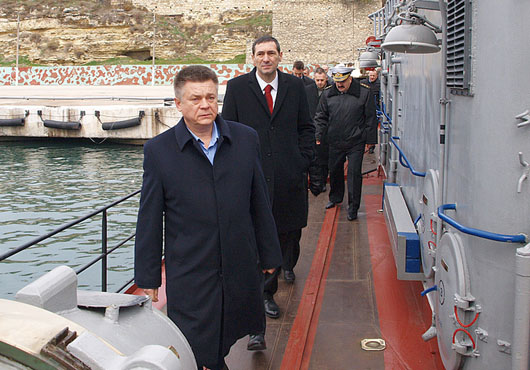
On November 30 and December 1, Pavlo Lebedev, Minister of Defense of Ukraine and Ante Kotromanović, Minister of Defense of Croatia, were on a visit in Sevastopol.

Ministers have already met in Zagreb during the official visit of Pavlo Lebedev to Croatia in late October.

On November 30, the delegations arrived to Sevastopol and visited the Sevastopol Aviation Enterprise of the Defense Ministry of Ukraine. Within the framework of the visit, they toured some institutions and enterprises of defense industrial complex in Kharkiv, Zaporozhie and Odesa.

Croatia, Ukraine Talk Military-Defence CooperationCroatia, Ukraine Talk Military-Defence Cooperation2Croatia, Ukraine Talk Military-Defence Cooperation4Croatia, Ukraine Talk Military-Defence Cooperation5On Sunday, December 1, the delegations visited the Ternopil corvette, which has recently returned from the Mediterranean Sea after participation in the Active Endeavors counter-terrorist operation.

According to Pavlo Lebedev, the Ukrainian-Croatian military technical cooperation is developing and will continue being developed in the future as well.

“It means employment for our citizens and state budget revenues,” he stressed. “During such meetings we share experience and knowledge concerning the Armed Forces reforms, establish military technical cooperation considering our capabilities. I would like to say that the Sevastopol Aviation Enterprise got the order for helicopters repair from the Croatian Armed Forces”.

Ante Kotromanović also spoke about the development of military technical cooperation of his country with Ukraine:

“We can state our first successes in this military technical cooperation, as in Ukraine we repair our aircraft and ships,” he said.

Press Release, December 3, 2013; Image: Ukrainian MoD
Follow Naval Today via:

Facebook

Twitter

RSS

Email

Linkedin

Visit Website

Share on Google PlusTwitterFacebookLinkedInBufferFacebookCustom Sharing Tool
Evernote

+TAG

Solomon Islands Rendered Safer

Another post on John’s Naval, Marine and other Service news

.

Solomon Islands Rendered Safer

Solomon Islands Rendered Safer

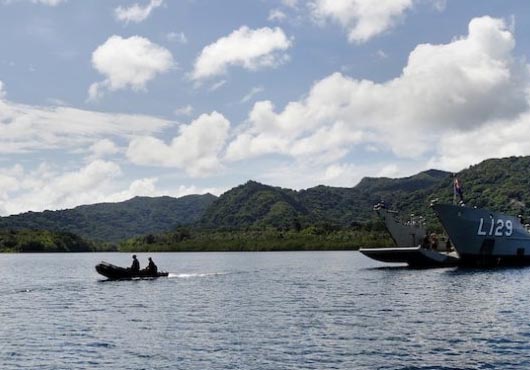
Operation RENDER SAFE, the Australian Defence Force (ADF) Explosive Ordnance Disposal (EOD) mission in Solomon Islands has been a “spectacular success” according to the head of the Task Force Commander, Commander Doug Griffiths.


Commander Griffiths said the team located more than 10,000 items of unexploded World War II ordnance in just three weeks, finishing on December 2.
The operation consisted of a Task Force of nearly 200 Explosive Ordnance Disposal specialists and support staff from the ADF, New Zealand Defence Force, Canadian Armed Forces, the United States Navy and the Royal Solomon Islands Police Force.
The 10,000 items located by the Task Force since October 29 ranged from 1000lb bombs down to individual hand and rifle grenades.
While the ordnance was predominantly US and Japanese, a range of other material was found including some French and British ordnance.
These items were “rendered safe”, usually by a controlled explosion, in location or at the Solomon Islands main EOD site near the nation’s capital Honiara.
Commander Griffiths said the results of the combined, Joint Task Force exceeded all expectations.

“I understand that the local Police deal with around 10,000 items per year, so for us to locate 10,000 in three weeks is a real credit not just to us but also the partnership we have had with the local Police and communities,” Commander Griffiths said.
“These extraordinary numbers are also a reflection of the high contamination of some parts of Solomons with unexploded ordnance – we are working here with global experts who estimate that some areas in Solomons have among the worst explosive ordnance contamination in the world – even more contaminated with unexploded ordnance than Laos or Cambodia.
“Given that these items have been here for around 70 years, the assistance we have had from local villages and communities in finding them has been critical.
“For instance, last week we had a Canadian team working in the mountains more than two kilometres away from the nearest logging track, while at the same time we had an Australian team working a few metres from the edge of Henderson Field airport in the capital of Honiara.
“In both cases it was information gained from the local community that led us to these sites.”

Commander Griffiths said ships and divers had also surveyed more than 25 square-kilometres of seabed, including 8km of beachfront near Honiara and numerous channels in the Russell Islands.

“Our Task Force members have no shortage of battlefield experience in Iraq, Afghanistan, East Timor, Bosnia, Burundi, Somalia, Sudan and a multitude of other conflict zones across most continents but the sheer volume of items in such a short period of time has certainly provided a challenge,” he said.
“Our teams were finding high explosive shells with pristine fuses still in their packaging so the threat of injury or death to the locals if they accidently set one of these off was, and still is, real.
“One of our clearance divers summed it up pretty well when he said that for us the war finished 70 years ago but Solomon Islanders have been living with it ever since.”

Commander Griffiths said Task Force members are now returning home to Australia, New Zealand, the United States and Canada knowing that they have freed up areas of land and seabed that are now safer for people to farm, build houses, fish and play.

“With the local population just passing 500,000 and growing rapidly these areas will be needed so that the Solomons can grow with confidence and safety,” he said.
“Along the way we have all had the opportunity to learn more about the Solomon Islands people and culture and I know all Task Force members have enjoyed that as much as they have enjoyed getting results on the job.”

Press Release, December 03, 2013; Image: Australian Navy
Follow Naval Today via:
Facebook
Twitter
RSS
Email
Linkedin

Visit Website

Share on Google PlusTwitterFacebookLinkedInBufferFacebookCustom Sharing Tool
Evernote 

+TAG
.

via Blogger http://www.h16613.com/2013/12/solomon-islands-rendered-safer.html

Solomon Islands Rendered Safer

Another post on John’s Naval, Marine and other Service news

.

Solomon Islands Rendered Safer

Solomon Islands Rendered Safer

Operation RENDER SAFE, the Australian Defence Force (ADF) Explosive Ordnance Disposal (EOD) mission in Solomon Islands has been a “spectacular success” according to the head of the Task Force Commander, Commander Doug Griffiths.


Commander Griffiths said the team located more than 10,000 items of unexploded World War II ordnance in just three weeks, finishing on December 2.
The operation consisted of a Task Force of nearly 200 Explosive Ordnance Disposal specialists and support staff from the ADF, New Zealand Defence Force, Canadian Armed Forces, the United States Navy and the Royal Solomon Islands Police Force.
The 10,000 items located by the Task Force since October 29 ranged from 1000lb bombs down to individual hand and rifle grenades.
While the ordnance was predominantly US and Japanese, a range of other material was found including some French and British ordnance.
These items were “rendered safe”, usually by a controlled explosion, in location or at the Solomon Islands main EOD site near the nation’s capital Honiara.
Commander Griffiths said the results of the combined, Joint Task Force exceeded all expectations.

“I understand that the local Police deal with around 10,000 items per year, so for us to locate 10,000 in three weeks is a real credit not just to us but also the partnership we have had with the local Police and communities,” Commander Griffiths said.
“These extraordinary numbers are also a reflection of the high contamination of some parts of Solomons with unexploded ordnance – we are working here with global experts who estimate that some areas in Solomons have among the worst explosive ordnance contamination in the world – even more contaminated with unexploded ordnance than Laos or Cambodia.
“Given that these items have been here for around 70 years, the assistance we have had from local villages and communities in finding them has been critical.
“For instance, last week we had a Canadian team working in the mountains more than two kilometres away from the nearest logging track, while at the same time we had an Australian team working a few metres from the edge of Henderson Field airport in the capital of Honiara.
“In both cases it was information gained from the local community that led us to these sites.”

Commander Griffiths said ships and divers had also surveyed more than 25 square-kilometres of seabed, including 8km of beachfront near Honiara and numerous channels in the Russell Islands.

“Our Task Force members have no shortage of battlefield experience in Iraq, Afghanistan, East Timor, Bosnia, Burundi, Somalia, Sudan and a multitude of other conflict zones across most continents but the sheer volume of items in such a short period of time has certainly provided a challenge,” he said.
“Our teams were finding high explosive shells with pristine fuses still in their packaging so the threat of injury or death to the locals if they accidently set one of these off was, and still is, real.
“One of our clearance divers summed it up pretty well when he said that for us the war finished 70 years ago but Solomon Islanders have been living with it ever since.”

Commander Griffiths said Task Force members are now returning home to Australia, New Zealand, the United States and Canada knowing that they have freed up areas of land and seabed that are now safer for people to farm, build houses, fish and play.

“With the local population just passing 500,000 and growing rapidly these areas will be needed so that the Solomons can grow with confidence and safety,” he said.
“Along the way we have all had the opportunity to learn more about the Solomon Islands people and culture and I know all Task Force members have enjoyed that as much as they have enjoyed getting results on the job.”

Press Release, December 03, 2013; Image: Australian Navy
Follow Naval Today via:
Facebook
Twitter
RSS
Email
Linkedin

Visit Website

Share on Google PlusTwitterFacebookLinkedInBufferFacebookCustom Sharing Tool
Evernote 

+TAG
.

via Blogger http://www.h16613.com/2013/12/solomon-islands-rendered-safer.html

JCs Royal New Zealand Navy Ships and New Zealand Defence, Also other World Defence Updates

Ships and Defence News Past and Present

Skip to content ↓