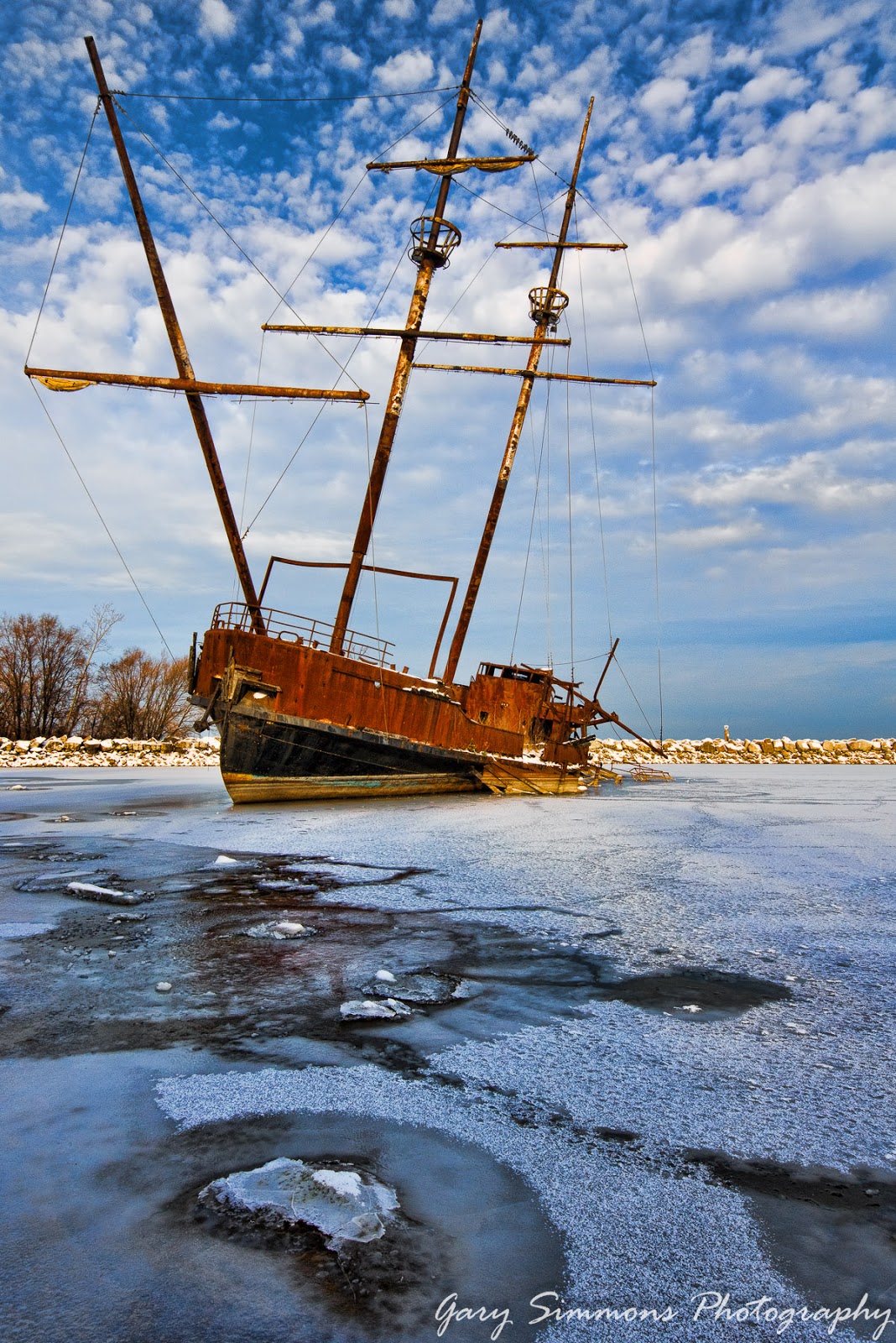
Ship at Jordan Harbour : One last look this morning for the Snowy Owl was unsuccessful……

Reshared post from +Gary Simmons

Ship at Jordan Harbour : One last look this morning for the Snowy Owl was unsuccessful… but I did get to shoot the ship at Jordan Harbour for the first time. 

The sky was beautiful when I made this shot, but within 5 minutes it was completely overcast. Light is a fickle thing.

With all there is to be thankful for this week, here's a reminder of those who…

Reshared post from +U.S. Navy

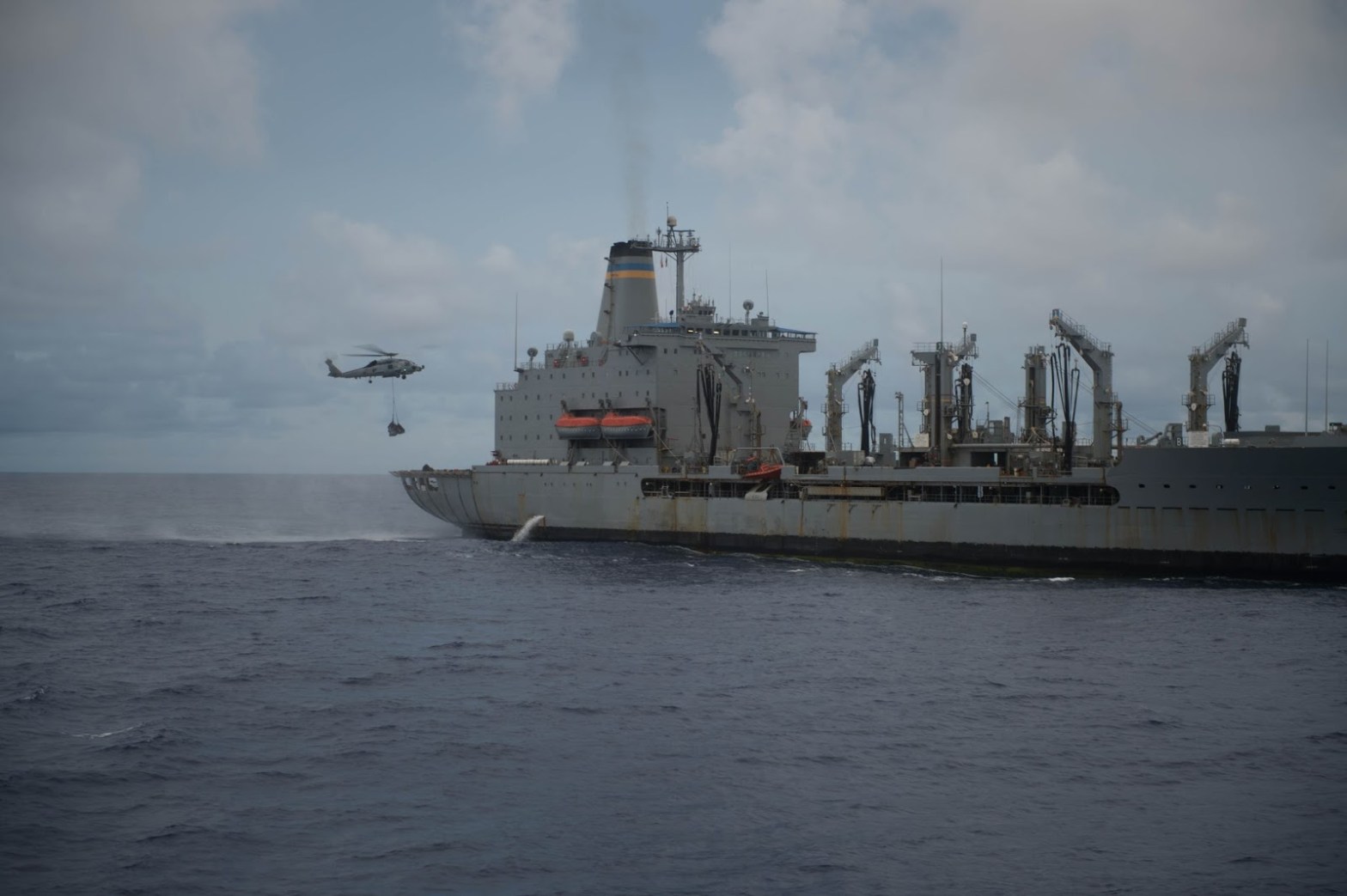
With all there is to be thankful for this week, here's a reminder of those who stood the watch deployed world-wide in the #USNavy as we celebrated our Thanksgiving. http://ow.ly/rhv9H

Celebrate our 100th Maersk Medley! Take a look at highlights from the past week here:…

Reshared post from +Maersk

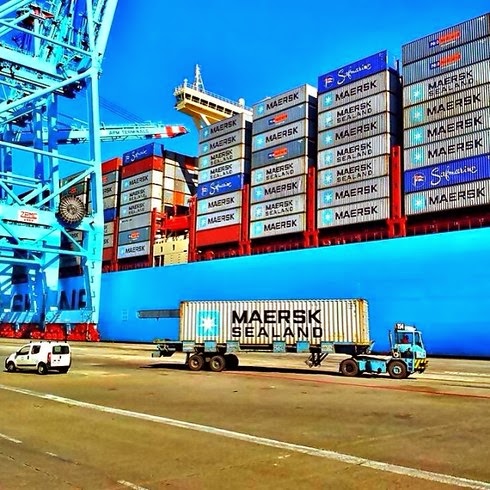
Celebrate our 100th Maersk Medley! Take a look at highlights from the past week here: http://mrsk.co/IyOFD3

US-Japan war games amid China 'zone' dispute

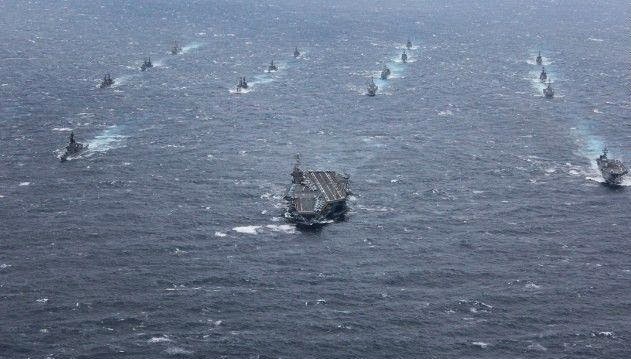
Led by the huge Nimitz-class carrier, this year's AnnualEX 2013 war games brought together dozens of warships.
Fri Nov 29, 2013 4:23PM GMT

Related Interviews:
‘US acts provocative in East China Sea’
US looking to create crisis in Asia
Related Viewpoints:
Nuclear agreement, victory for Iran
The United States and Japan are taking part in a huge naval exercise involving dozens of warships, submarines and aircraft off the island of Okinawa, amid heightened tensions with China.

The AnnualEx 2013 war games, which kicked off on November 25, are designed to increase the defensive readiness and interoperability of US naval forces and their Japanese counterparts, according to the US Navy. 

Led by the huge 90,000 ton Nimitz-class aircraft carrier, this year's AnnualEX 2013 war games brought together dozens of warships from both the US and Japanese navies to test their abilities. 

Also involved in the massive military exercise was the USS George Washington. With over 5,000 crew and 80 aircraft, the USS George Washington is the US Navy's only carrier deployed permanently outside the United States. 

But this year's war games have taken place in a high-pressure atmosphere in the region because of the new Air Defense Identification Zone announced by the Chinese last weekend. 

This new zone requires that all military aircraft flying over the East China Sea must report their flight plans to China, maintain two-way radio and clearly mark their nationalities on the aircraft. China has warned it will take "defensive measures" if their orders are ignored. 

The US, South Korea, and Japan have all rejected China's demand that all aircraft flying over the new zone should provide full flight plans. On Monday, a pair of American B-52 bombers entered the air defense zone without informing the Chinese government. 

The US has seen itself as the dominant power in Asia for long years and is now concerned about China’s growing influence in the region. Chinese officials however, say the zone is in line with the practice of other nations that have similar zones to protect their coasts. 

Earlier in the month, a US congressional panel, which advises lawmakers on the national security implications of the relationship between Washington and Beijing, warned that China could possess the largest fleet of modern submarine and combatant ships in the western Pacific by 2020. 

The US-China Economic and Security Review Commission said in its annual report that Beijing's military modernization is challenging decades of US pre-eminence in the region. 

AHT/ARA

HMAS Farncomb sails in company with ADV Ocean Shield from Fleet Base East with the…

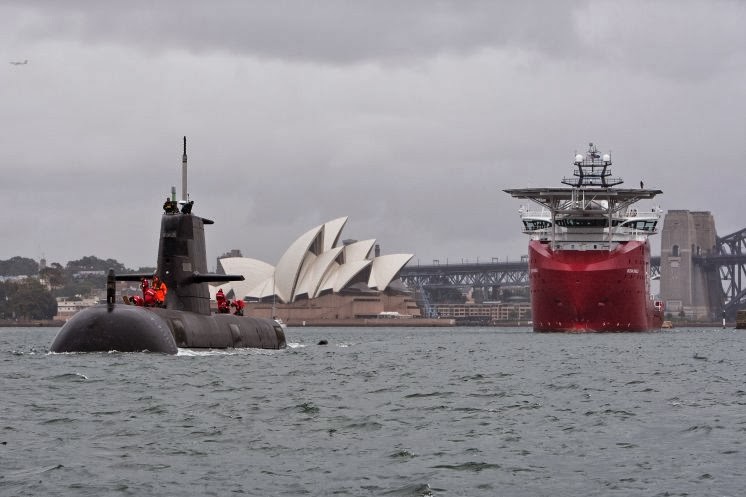
HMAS Farncomb sails in company with ADV Ocean Shield from Fleet Base East with the Sydney Opera House in the background, as both vessels make their way to the East Australian Exercise Area for Exercise Black Carillon 2013.
An intensive three week submarine escape and rescue exercise has drawn to a close off the east coast of Australia.

During Exercise BLACK CARILLON 2013, members of Navy’s Submarine Force simulated being evacuated from HMAS Farncomb, which was bottomed in 112 metres of water, in the James Fisher Rescue Service LR5 submersible.

The 21.5 tonne submersible was then lifted onto the deck of a rescue vessel, where its passengers were transferred into decompression chambers without being exposed to the outside air pressure.

The James Fisher Rescue Service LR5 Submersible was mobilised from its base at Henderson, WA, flown by RAAF 86 Wing C17 Globemaster to the east coast and then embarked on Australian Defence Vessel (ADV) Ocean Shield.

The LR5 submersible clears the water as it begins its recovery after a successful personnel transfer with HMAS Farncomb in the East Australian Exercise Area during Exercise Black Carillon 2013. 

The LR5 submersible clears the water as it begins its recovery after a successful personnel transfer with HMAS Farncomb in the East Australian Exercise Area during Exercise Black Carillon 2013.

Commander Submarine Force, Captain Mark Potter, RAN, said while it’s unlikely the equipment will be needed, maintaining the capability is essential.

“Submariners are an important part of naval capability. Should the unthinkable happen, it is essential that we have established and well practiced procedures in place to rescue personnel,” said Captain Potter.

“During BLACK CARILLON, Navy worked closely with defence partners and contractor James Fisher Defence to mobilise and test the equipment on the east coast. It was also the first time that ADV Ocean Shield was used as the mother ship. Her size and ability to dynamically position proved to be an invaluable capability during the rescue operation.

“Navy’s underwater medical specialists also played a vital part in the exercise. Type B decompression chambers were tested and life-saving medical techniques aimed at preventing and responding to decompression sickness were simulated,” said Captain Potter.

LCDR Daniel Booth views the operation of the LR5 submersible from inside HMAS Farncomb's control room in the East Australian Exercise Area during Exercise Black Carillon 2013. 

LCDR Daniel Booth views the operation of the LR5 submersible from inside HMAS Farncomb's control room in the East Australian Exercise Area during Exercise Black Carillon 2013.

This was the twelfth time the Royal Australian Navy had conducted a submarine escape and rescue exercise.

“By routinely testing our procedures, we provide confidence to our submarine workforce,” said Captain Potter.

Australia is also a member of the International Submarine Escape and Rescue Liaison Organisation, which would provide international support, should an Australian submarine be disabled.

Able Seaman Medic David Cusack sits in the Type B recompression chamber as part of familiarisation training onboard ADV Ocean Shield during Exercise Black Carillon 2013.

Able Seaman Medic David Cusack sits in the Type B recompression chamber as part of familiarisation training onboard ADV Ocean Shield during Exercise Black Carillon 2013.

More imagery is available at: http://images.defence.gov.au/S20132279
JCs Royal New Zealand Navy Ships and New Zealand Defence, Also other World Defence Updates

Ships and Defence News Past and Present

Skip to content ↓