HMS Queen Elizabeth – the Navy’s flagship of tomorrow – is now taller than…

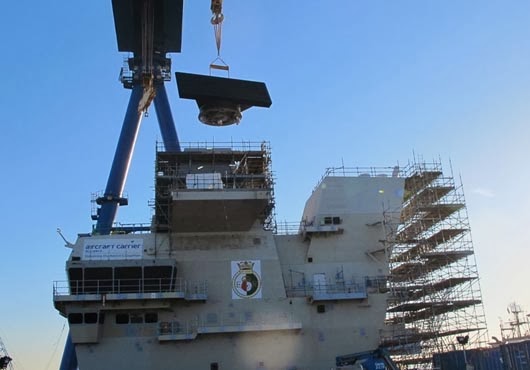
HMS Queen Elizabeth – the Navy’s flagship of tomorrow – is now taller than Nelson’s Column with the addition of the ship’s main radar. The large long range radar was craned into place on top of the carrier’s forward island.

 
A large black slab now sits atop Britain’s biggest warship as the huge radar antenna was fitted to the superstructure of HMS Queen Elizabeth.

The nation’s future flagship now stands 56 metres (183ft) tall – higher than Nelson’s Column – after the enormous Goliath crane lifted the 8.4-tonne long-range radar into place on top of the carrier’s forward island.

The radar – similar to those fitted on the Type 45 destroyers – safely arrived in Rosyth with its support, the mast cap, from Hengelo in the eastern Netherlands back in September.

Since then feverish work has been going on around Queen Elizabeth to complete her hull (finished earlier this month [NOV] with the addition of her ski ramp).

With the addition of the mast cap and black slab – officially an antenna, despite its size (32m2 or 344ft2) – all of the ship’s main structure blocks are now in place.

The radar, which provides a three dimensional, long-range picture not just of the skies around Queen Elizabeth but also the waters, sits 27 metres (88ft) above the flight deck, 50 metres (164ft) above the sea.

And that’s still not the highest point on Queen Elizabeth. When the communications pole mast is fitted next year it will be 70 metres (230ft) from tip to keel – which is almost as long as a River-class patrol ship.

As for the radar, it can track up to 1,000 contacts up to a range of 400km (250 miles) from the ship.

So, if fired up in Rosyth it could track every aircraft in UK skies as far south as Birmingham and Nottingham.

Or from Queen Elizabeth’s home base of Portsmouth (arriving over the winter of 2016-17) the radar’s eyes can see as far north as the Lake District, as far south as Nantes and as far east as Brussels.

It now falls to the weapon engineering department and Aircraft Carrier Alliance technicians to mesh the radar and the data it will gather in with the rest of the systems aboard.

It’s the first time the civilian and RN engineers have worked side-by-side on a shipbuilding project; traditionally, shipwrights complete the installation of kit, then hand over the finished product to the Navy.

In a ship’s company of 50 at present, the WE department is 21-strong – and will slowly rise to a full strength of 94 by 2015.

Given the size of Queen Elizabeth and complexity of her systems – billed as the Navy’s ultimate engineer challenge – the engineers (marine and weapon) are keen to encourage their branch brothers and sisters to join them on the Forth.
http://navaltoday.com/2013/11/29/hms-queen-elizabeths-radar-craned-into-place/

Press Release, November 29, 2013; Image: Royal Navy

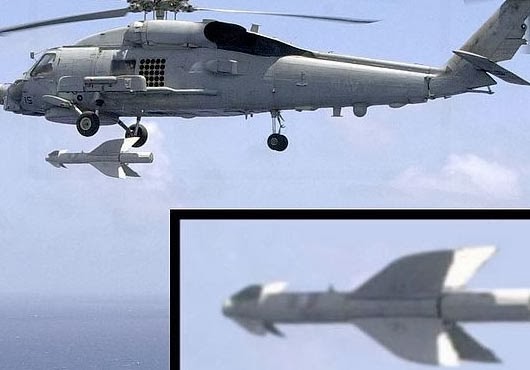
Kongsberg to Deliver Penguin Mk2 Mod 7 to New Zealand Defence Force

KONGSBERG has signed a contract with the New Zealand Defence Force for the delivery of Penguin Mk 2 Mod 7 anti-ship missiles and associated equipment. The missiles will be deployed on the Royal New Zealand Navy new Kaman SH-2G Super Seasprite maritime helicopters.
 
”This contract strongly confirms the Penguin missile’s position as the leading missile within its segment. The contract is for a limited number of missiles, however it is considered an important upgrade of New Zealand’s navy,” says Pål Bratlie, EVP Kongsberg Defence Systems.
http://navaltoday.com/2013/11/29/kongsberg-to-deliver-penguin-mk2-mod-7-to-new-zealand-defence-force/

Press Release, November 29, 2013; Image: Wikimedia

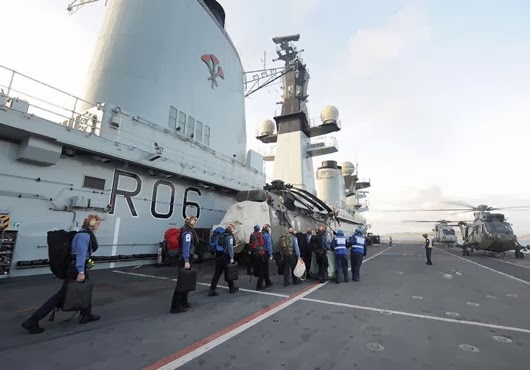
Helicopters from HMS Illustrious have begun to deliver aid, people and equipment…

Helicopters from HMS Illustrious have begun to deliver aid, people and equipment to small Philippine islands devastated by Typhoon Haiyan over a fortnight ago.

 
The Portsmouth-based helicopter and commando carrier arrived in the region to the north of Panay on Monday and immediately began surveying nearby islands to assess their needs.

Recce teams were sent to three islands – Calagnaan, Canas and Bayas – and found extensive damage to homes and local infrastructure with little in the way of long term food supplies.

Using her Sea King and Merlin helicopters, HMS Illustrious sent engineering teams of around 50 people to Bitoon in the south of Calagnaan to repair damage to a local school, clear routes of fallen trees and help repair battered fishing boats.

Operations battle captain, Captain Harry Hyslop, of the Royal Artillery said,

“We have a 30-man engineering team who have been helping to repair the school roof today and will continue tomorrow until lunchtime.

“There are also personnel looking at repairing the engines and hulls of the locals’ fishing boats so that they can start to recover their livelihoods and, also, a third team equipped with machinery such as chainsaws to clear debris away from access routes.”

Seven pallets of supplies were given to the community which included enough tarpaulin for 250 homes.

Weighing 10.5 tonnes, the Sea King helicopter also lifted in a food pack which contains products such as rice, biscuits, cooking oil, tin openers, sardines, tinned vegetables, pots and stoves.

As well as Calagnaan, which has also been receiving help from an international doctor and missionary, recce teams found that the 3,000 people living on Bayas island had just 48 hours worth of food supplies left.

“The village here asked for tarpaulins, wood, a disaster relief pack, water and a generator as theirs had been rendered unusable by the storm,”

said Capt Hyslop.

“This was a real success as we provided them with exactly what they needed to get back on their feet and then moved our team to the east to assess the needs of Sicogen island where they will now stay overnight.”

The disaster relief packs are being put together by the team on HMS Illustrious and include wheelbarrows, tarpaulins, rope, hammers, saws, nails, rubbish bags, wellington boots and dust masks.

Capt Hyslop is part of an Army attachment to 42 Commando Royal Marines which deployed with HMS Illustrious and HMS Bulwark for the annual Cougar deployment in the Gulf and Mediterranean.

The ship had been taking part in counter-piracy operations off the Horn of Africa when she was re-tasked to provide humanitarian aid and disaster relief in the Philippines.

HMS Illustrious took over from HMS Daring which had been in the Philippines for a week delivering immediate aid to islands that had not been heard from since the typhoon struck.

The helicopters are flying back and forth throughout daylight hours, with their air crew maintainers working during the night to ensure they are fully serviced for the following day.

To maintain the high operational tempo, the Merlin flight crew, which is normally made up of just 14 personnel has now been bolstered to 20 by four members of HMS Illustrious ship’s company and two maintainers from one of 829 Naval Air Squadron sister squadrons, who are also based at RNAS Culdrose.

“Having the added manpower from 820 NAS and the Air Engineering Department on board Lusty has allowed us to carry out maintenance at night, enabling us to fly all through the day,”

said the Flight’s Senior Maintenance Rating, Chief Petty Officer Rab Butler.

“We now have a two watch system which allows us to work around the clock and for as long as required.”
http://navaltoday.com/2013/11/29/royal-navy-starts-delivering-aid-to-philippines/

Press Release, November 29, 2013; Image: Royal Navy
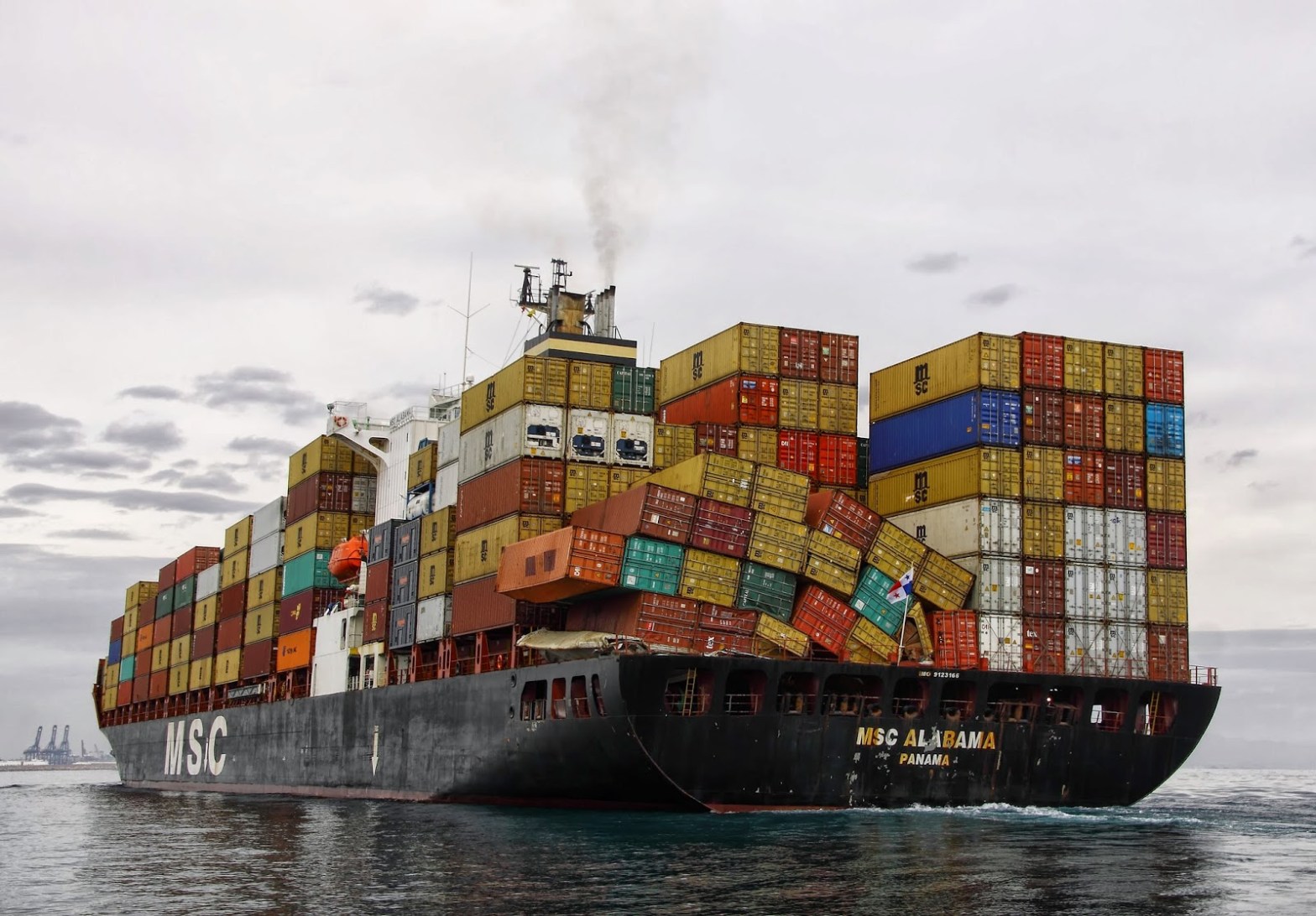
MSC Alabama from Pireos port to Valencia , 17/03/2013.

Reshared post from +Antonio Alcaraz

MSC Alabama from Pireos port to Valencia , 17/03/2013.

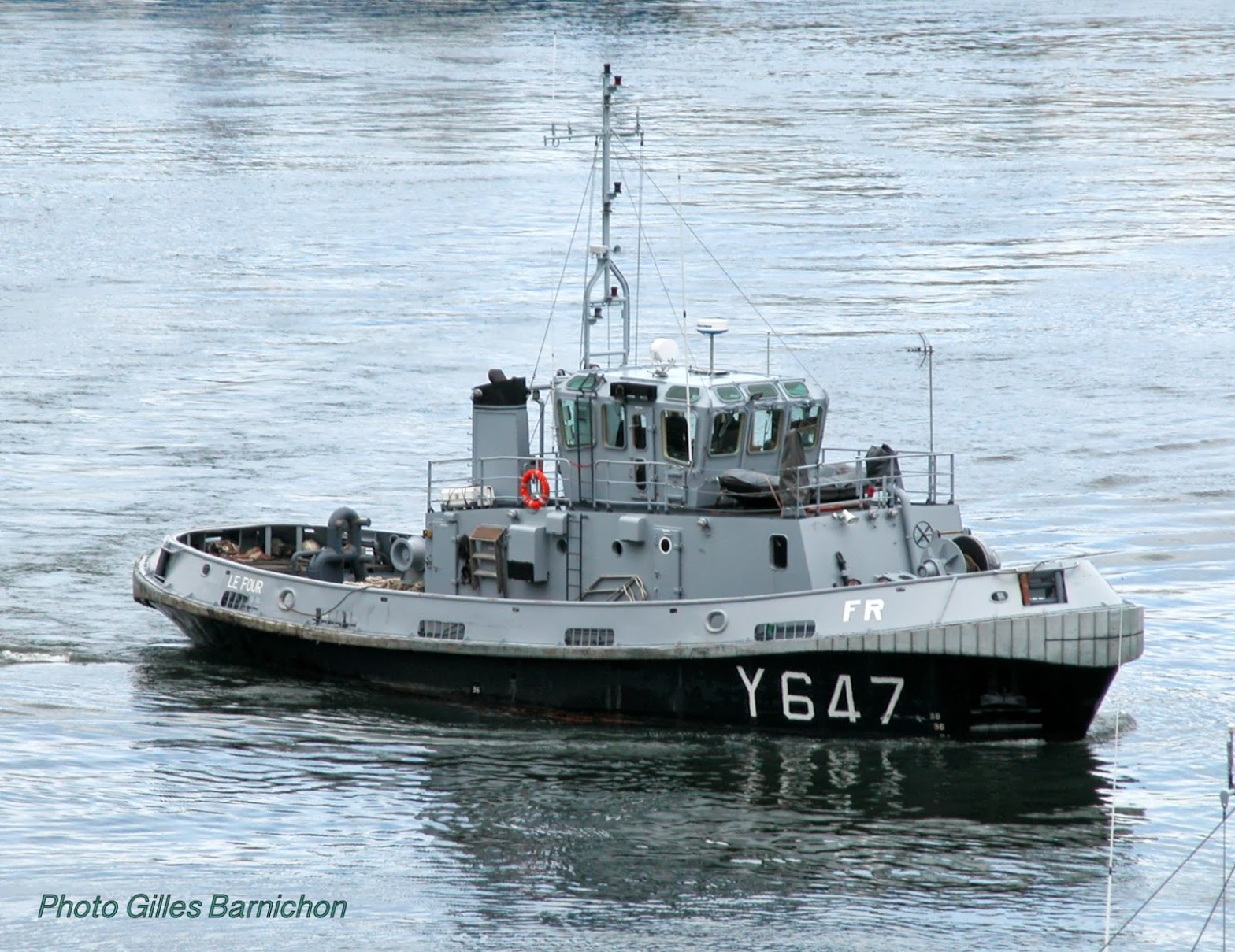
French Navy tug

Reshared post from +Gilles Barnichon

French Navy tug
Y647 LE FOUR
Brest, april 2009

#tug   #navies  

JCs Royal New Zealand Navy Ships and New Zealand Defence, Also other World Defence Updates

Ships and Defence News Past and Present

Skip to content ↓