Canadian navy may be shortchanged on ships because of budget problems: auditor

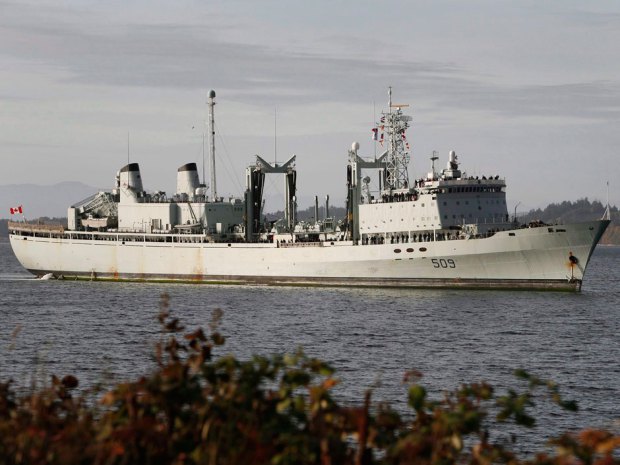
OTTAWA – Canada’s auditor general says the navy is at risk of shrinking in both size and capabilities unless the federal government injects more money into its multi-billion-dollar national shipbuilding plan.

In a report released Tuesday, Auditor General Michael Ferguson says the government has not budgeted enough money to replace the navy’s aging destroyers and frigates as promised.

He also notes trade-offs have already been made to keep the navy’s new resupply ships and Arctic patrol vessels on budget, and that future trade-offs are likely unless the feds are prepared to ante up.

As first reported by Postmedia News last week, the auditor general says the problem is that budgets for each of the shipbuilding projects were based on “rough estimates,” most of them derived years ago and never revised to reflect changed circumstances.

Those changed circumstances include rising costs for raw materials, labour and military components for ships, as well as the government’s decision to roll the projects together into one major shipbuilding strategy.

“The initial budget for each class of military ship was set years before construction will begin,” Ferguson’s report reads. “As such, the estimates were very imprecise and should be regarded as, at most, placeholders.”

It goes on to say that “it is not realistic to expect that the original budget cap will remain the same from a project’s conception to completion.”

“While budgets are a useful control,” the report concludes, “Canada may not get the military ships it needs if budgets are not subject to change.”

Compounding the problem is a lack of clarity from the government on exactly what it wants the navy to be able to do, the auditor general found.

The Conservative government has touted its Canada First Defence Strategy, unveiled in May 2008, as the centrepiece of its long-term vision for the military.

However, Ferguson’s report says that “while the (defence strategy) did outline the expected number of navy ships and the core missions for the Canadian Forces, it did not define the specific naval capabilities required to fulfil the government’s level of ambition.”

This appears to confirm critics’ suggestions that the defence strategy, which promised $490-billion of investments in the military over 20 years, is little more than a shopping list.

The auditor general praised the way the government selected Halifax and Vancouver as the main shipyards for the shipbuilding strategy, describing the process as “efficient” and “independent from political influence.”

New Zealand’s government sides with Texas oil giant, Anadarko, bans protests around its oil rig

Earlier this year, multinational oil companies convinced lawmakers to restrict demonstrators who oppose oil drilling surrounding the island nation.

New zealand anadarko offshore drilling protestENLARGE

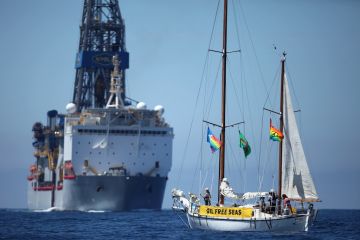
Sailing vessel Vega confronts the Noble Bob Douglas drilling ship on the site where oil giant Anadarko is starting exploratory drilling for deep sea oil. The drill site is over 100 nautical miles off Raglan, on the west coast of New Zealand, and in waters about 5,000 feet deep. ( /Courtesy)
Advertisement

PORTLAND, Maine — Located in the South Pacific, hundreds of miles from its nearest neighbor, New Zealand has a long history of peaceful protest — particularly at sea. And the country’s Bill of Rights guarantees freedom of speech and peaceful assembly.

But earlier this year, multinational oil companies convinced lawmakers to restrict seaborne demonstrators who oppose oil drilling surrounding the island nation.

This week, the law is likely to get its first big test as the two sides approach direct confrontation.

A six-boat “Oil Free Seas Flotilla,” is sailing to stop deep-sea drilling 120 miles off some of New Zealand’s most iconic surfing beaches, Piha and Raglan. On Nov. 16 the vessels arrived at the site where Texas oil giant Anadarko was about to sink an exploratory well into the ocean floor 5,000 feet below the surface of the Tasman Sea.

The drilling ship Noble Bob Douglas arrived three days later and immediately declared, via radio, that the controversial new law applied, requiring the boats to stay 500 meters (1,640 feet) away from the drill rig. The flotilla responded that its boats would not comply. It has regularly radioed the Noble Bob Douglas with requests to leave New Zealand waters.

The oil-friendly law is opposed by figures as prominent as former Prime Minister Sir Geoffrey Palmer, a legal scholar, as an unlawful limit on the rights of free navigation and free speech.

It also defies historical precedent in enviro-friendly New Zealand, which once sent its navy to protect protesters at sea.

In the late 19th century, long before Mahatma Gandhi wielded nonviolence against Britain, native Maori people at Parihaka sent dancing children to face English soldiers attempting colonization.

In the 1970s and 1980s, private boats crossed the South Pacific to protest nuclear testing inFrench Polynesia. Closer to home, vessels blockaded Auckland Harbor against nuclear-powered US Navy ships.

This time around, leading the anti-drilling flotilla is the Vega, a 38-foot vessel that pioneered seaborne nuclear-testing protests and helped make New Zealand a nuclear-free nation. Vega is co-captained by the head of Greenpeace New Zealand, Bunny McDiarmid. Each boat in the flotilla is flying a white Parihaka pennant representing “peace, justice, resistance, and solidarity,” according to an accompanying letter from community elders.

The controversial law that Anadarko has invoked to repel the flotilla was hurriedly passed by the New Zealand Parliament after significant, and secretive, lobbying of government ministers by the oil industry. Allowing boarding and takeover of private boats by police, it is seen as a response by the conservative government to protests against a 2011 offshore expedition byBrazilian oil giant Petrobras, which soon thereafter scrapped all its New Zealand drilling plans.

Since the radio warning, the 38-foot-long Vega has stayed about 800 to 1,000 feet from the 756-foot Noble Bob Douglas. At times, according to Anadarko New Zealand manager Alan Seay, they have been within 330 feet of each other. The Vega is operating primarily under sail. To remain that close, it must tack about every eight minutes, according to Anna Horne, a flotilla spokeswoman who has sailed on the Vega to protest nukes.

According to Prime Minister John Key, drilling began early Tuesday morning, Nov. 26. Nonetheless, the Vega has remained within the exclusion zone.

Steve Abel, a Greenpeace New Zealand campaigner, says there has not been any sign of any authorities, nor any word from them. During the Petrobras protest two years ago, police arrived aboard navy vessels.

The protesters object to the environmental danger. New Zealand’s current ocean-drilling industry operates in very shallow waters. The deepest is about 400 feet. The country’s three small spill-response boats are not ready for operations beyond sight of land, they contend. “We are woefully underprepared,” Abel said.

Seay admits that the rig’s safety procedures have not yet been made public. That is to happen “shortly,” he said, noting that there is an “enormous amount of design and planning work that goes in up front to ensure that we have a safe and incident-free operation.”

The risk may be statistically low, but if a spill or blowout occurs, the damage will be “catastrophic,” Abel said, covering the entire west coast of the North Island within weeks,according to models of the spill. It would threaten tourism, fishing, and agriculture — all vital sectors of the New Zealand economy.

Abel also noted that the Deepwater Horizon blowout in 2010 in the Gulf of Mexico was also in roughly 5,000 feet of water — and that Anadarko was involved in that disaster, ultimately paying $4 billion as part of the legal settlements of that cleanup. “It’s the same company, the same depth,” Abel said. Anadarko is one of the world’s largest publicly traded oil and gas exploration corporations.

Sharing those concerns, more than 5,000 protesters thronged the western beaches of New Zealand on Nov. 23. The demonstrations included a significant Maori presence. In fact, the Tainui tribe may issue a legal trespass notice to the Noble Bob Douglas, which is in their traditional fishing waters.

“In many ways, [the Maori] hold the last line,” said Horne, noting not only their moral and cultural tradition of “kaitiakitanga,” or guardianship, but also their legal rights to many natural resources under the 1840 Treaty of Waitangi, which shares sovereignty between the Crown and the Maori.

The 70-day drilling project was slated to begin Monday, but unspecified technical problems caused delays. Anadarko will leave enforcement of the exclusion zone to New Zealand authorities. Seay said “we respect the right to protest but ask in return that protesters respect our right to carry on our business free of interference.”

But the protesters have no desire for the oil giant to operate unobstructed.

New Zealand could be oil-free, and even the world’s first carbon-neutral nation, Abel said. The country already is home to the world’s biggest geothermal plant, Ngatamariki in the central North Island. It also has a strong forestry industry, whose byproducts could be used in place of petroleum derivatives, Abel said. “For us it’s not a hard ask” to get off fossil fuels.

In fact, Abel noted drily, “None of this oil, if it’s found, will ever land in New Zealand — unless there’s a spill.”

Jeff Inglis is managing editor of the Portland Phoenix. During the past 15 years, he has traveled extensively in New Zealand.

http://www.globalpost.com/dispatch/news/regions/asia-pacific/131125/surfing-kiwi-protesters-oil-drilling-anadarko
Sailors as Props

Home | Think Defence by Think Defence  /  30min  //  keep unread  //  skip  //  preview

Is this just a Royal Navy thing?

7341696626 d85b361794 z Sailors as Props

7156493605 94d908a99f z Sailors as Props

7156493327 b47729a1cf z Sailors as Props

10817185106 398a914fe5 z Sailors as Props

9397356965 ff457d6c8a z Sailors as Props

Surely they have better things to do

##Lights blue touch paper and retires##

The post Sailors as Props appeared first on Think Defence.

Visit Website

Spain: EODMU 8 Conducts Exercise Magre

Naval Today >> The industry’s seaborne news provider by Naval Today  /  4h  //  keep unread  //  skip  // preview

EODMU 8 Conducts Exercise Magre

Explosive Ordnance Disposal Mobile Unit (EODMU) 8, Det. Europe participated in trilateral field training Exercise Magre at Naval Station Rota, Spain, Nov. 18 – 22.

U.S., Spanish and German forces participated in the exercise that focused on improvised explosive device (IED)- related training including, using X-ray diagnostics, robots and other critical skill sets in combat environments.

“The focus of this mission is to basically learn from each other,” said Lt. Aaron Holdren, EODMU 8, det. Europe officer in charge. “As we grow in the joint combat environment, we find that we work together on a regular basis. This gives an understanding of how we all do our jobs and how we can do it better while working together.”

For members like Senior Chief Petty Officer Dirk Assmann, German navy explosive ordnance disposal technician, each visit to Rota offers a chance to learn a new tactical procedure.

“It is necessary to do this type of training,” said Assmann. “If you’re training on your own, it is hard to improve from your mistakes. This way we can share and compare our knowledge and later incorporate it in standard operation procedures.”

Assmann added that all units are very professional and knowledgeable concerning EOD tactics and procedures.

“We are always accepted with opened arms,” said Assmann. “We’re used to training with Spanish forces throughout Europe and [the German navy has] a long relation with the U.S. It is always a pleasant experience with them.”

The exercise concluded with a full mission profile; a final assessment that incorporated and tested the skills that were drilled throughout Exercise Magre.

“The great thing is we are all EOD techs, therefore we can learn from each other,” said Holdren. “We have a vast number of years of experience between us as well as field experience.

There is always something to be learned, and we can hone our skills and work better together. At the end of the day, when we are called upon, we are ready to go and can work together in the same fashion with an understanding on how to do each of our jobs.”

Press Release, November 27, 2013; Image: US Navy

Follow Naval Today via:

Facebook

Twitter

RSS

Email

Linkedin

Visit Website

Share on Google PlusTwitterFacebookLinkedInBufferFacebookCustom Sharing Tool
Evernote

+TAG

‘Guardians of the Reef’ Win Australian Accolade

‘Guardians of the Reef’ Win Australian Accolade

MarineLink.com
Wednesday, November 27, 2013, 2:30 AM
File Image courtesy of ARP
Image courtesy of ARP

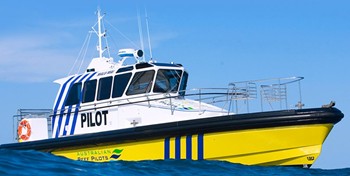
Australian Reef Pilots (ARP) popularly known as ‘Guardians of the Reef’ and the country’s leading pilotage company has won a national accolade for its work to protect one of the planet’s most sensitive and treasured areas – the Great Barrier Reef.

ARP picked up this year’s esteemed Australian Shipping and Maritime Industry Award (Safe Transport Category). Chief Executive Officer Simon Meyjes said the award recognised ARP’s unique world-class Safety Management System (SMS).“Our SMS gives access to real-time information on pilot schedules, histories and qualifications; customer ships; environmental factors; and regulatory requirements,” Mr Meyjes said.

“It automatically alerts staff to any aspects of a booking that may breach the company’s strict safety and fatigue management requirements. It involves extensive check lists with a focus on human error management as well as equipment and operational checks and balances.”

The prestigious awards also acknowledged ARP’s focus on pilot training and development. “ARP has created the only simulation model of the most complex section of Torres Strait, the Prince of Wales Channel and the reef,” Mr Meyjes said.

http://www.reefpilots.com.au

JCs Royal New Zealand Navy Ships and New Zealand Defence, Also other World Defence Updates

Ships and Defence News Past and Present

Skip to content ↓