Boskalis Orders Mega-Cutter Dredger

MarineLink.com

Wednesday, November 27, 2013, 2:33 AM
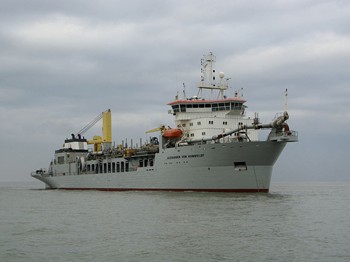
File A large dredger: Photo Wiki CCL
A large dredger: Photo Wiki CCL

Royal Boskalis Westminster N.V. (Boskalis) has ordered a new self-propelled megacutter from IHC Merwede. This self-propelled cutter suction dredger, with a total installed power of 23,700 kW and a pump ashore capacity of 15,600 kW, is a replacement investment. The total investment amounts to around EUR 170 million and construction of the vessel is expected to take more than three years.

Boskalis explain that a cutter suction dredger is a vessel that dredges while being held into place using spuds and anchors. This technique combines powerful cutting with suction dredging. Cutter suction dredgers are mainly used where the underwater surface is hard and compact. The dredged material is sometimes loaded into barges but is generally pumped to land through a pressure pipeline.

Royal Boskalis Westminster N.V. is a leading global services provider operating in the dredging, maritime infrastructure and maritime services sectors. The company provides creative and innovative all-round solutions to infrastructural challenges in the maritime, coastal and delta regions of the world with the construction and maintenance of ports and waterways, land reclamation, coastal defense and riverbank protection.

Naval Today >> The industry’s seaborne news provider by Naval Today  /  3h  //  keep unread  //  skip  // preview

HMS Northumberland to Visit Liverpool, UK

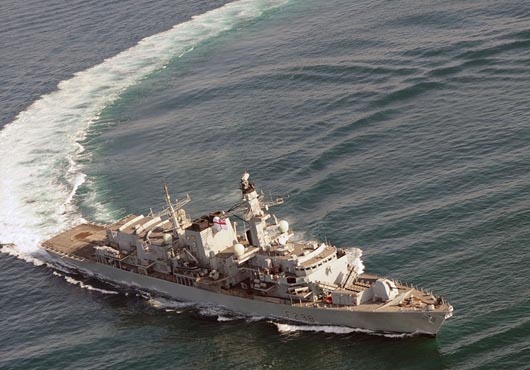
The Royal Navy’s Type 23 frigate HMS Northumberland will make a short visit to Liverpool. Arriving on the evening of Friday November 29, the 133-metre anti-submarine warship will go alongside at the Cruise Liner Terminal in the heart of the city.

Although not open to the public on this occasion, a number of local Sea Cadet units will be lucky enough to enjoy pre-arranged tours of the ship before she leaves the city again at midday on Sunday.

The Sea Cadets involved come from all over the North West and include Kirkby (TS Daring), Liverpool West Derby (TS Liverpool) and Huyton (TS Iron Duke) from Liverpool District, Ellesmere Port (TS Forward) from the Wirral District, Manchester District’s Tameside (TS Quontock), North East Lancs’ Middleton & Chadderton (TS Tremadoc Bay) and Kendal (TS Royalist) of the Cumbria District.

“This is a rather fleeting visit for us,” said HMS Northumberland’s Commanding Officer, Commander Tristram Kirkwood.

“But we are pleased that despite the brief time in port we will be able to host a number of local young mariners.

“I know that members of my ship’s company are looking forward to meeting the Sea Cadets and chatting to them about HMS Northumberland, her role of protecting the nation’s interests and about their experiences within the Senior Service.”

Councillor Wendy Simon, Assistant Mayor and Cabinet Member for Culture and Tourism, said:

“I am absolutely delighted to see the Royal Navy back alongside in Liverpool and I hope that HMS Northumberland’s sailors manage to enjoy a few hours of Merseyside hospitality during their all too brief visit.”

The 13 Type 23 – or Duke-class – frigates are the core of the front-line Fleet. They can typically be found east of the Suez Canal safeguarding Britain’s vital maritime trade routes, or interests in the South Atlantic.

Based in Portsmouth and Devonport, the ships were designed to counter the Soviet submarine threat – but in the 20 years since the fall of Communism, the frigates have proven their versatility by dealing with virtually every mission imaginable in the four corners of the globe, whilst maintaining the ability to hunt submarines, aided by the world’s finest sonar and either a Merlin or Lynx helicopter.

As befits her name, the ship was built in the north-east by the Swan Hunter yard. She was launched into the Tyne in April 1992 and entered service in late 1994. She’s based in Devonport

HMS Northumberland has recently returned from a seven month deployment to the Middle East and East Coast of Africa where they travelled 45,000 miles, crossed five time zones and visited 11 countries.

With the Merlin helicopter from 829 Squadron and embarked detachment of Royal Marines, the boarding teams from HMS Northumberland conducted 71 boarding operations, one of which resulted in the capture of bails of cannabis resin which had an estimated street value of £5.5million.
Press Release, November 27, 2013; Image: Navy

Follow Naval Today via:

Facebook

Twitter

RSS

Email

Linkedin
Visit Website

Share on Google PlusTwitterFacebookLinkedInBufferFacebookCustom Sharing Tool
Evernote

+TAG

US 4th Fleet, Chilean Navy Participate in ONC

Naval Today >> The industry’s seaborne news provider by Naval Today  /  2h  //  keep unread  //  skip  // preview

US 4th Fleet, Chilean Navy Participate in ONC

Delegates from U.S. 4th Fleet met with members of the Chilean navy Nov. 25-26 during the annual Operational Naval Committee (ONC) conference hosted by 4th Fleet at Naval Station Mayport.

The purpose of the ONC to discuss and plan upcoming maritime operations, exercises, and theater security cooperation events that the U.S. and Chile intend to conduct.

The ONC brings together representatives from the U.S. and Chilean navy so they may meet in person and share insights on their countries mutual goals of maritime security in Latin America.

Rear Adm. Sinclair M. Harris, commander, U.S. Naval Forces Southern Command/Commander U.S. 4th Fleet welcomed the Chilean delegates and talked about the importance of the ONC.

“This is a great opportunity for our navies to continue building on the close friendship, strong cooperation and mutual respect that is essential in our partnership of equals. Our navies have a very long history together in the Americas and beyond. And we are committed to enhancing stability and prosperity for both our nations,” Harris said.

The U.S. and Chile have a strong maritime partnership and have conducted several multinational exercises and operations together. In 2010, Chile hosted the Pacific phase of UNITAS 52, where USS Boone (FFG 28) and USS Thach (FFG 43) along with ships from four other countries participated in the two-week long multinational exercise designed to enhance security cooperation and improve coalition operations.

Teamwork South, a biannual exercise focusing heavily on Anti-Submarine Warfare (ASW) was also conducted in 2010 off the coast of Chile. The exercise allowed for joint ASW operations utilizing surface, air and underwater assets from the Chilean, French, Royal and U.S. navies. Additionally in October, a four-man team from MDSU 2 assisted Chilean officials as they searched for a Chilean aircraft that crashed off the coast of Chile.
In Feb. of 2013, the U.S. and Chilean navy participated in the Diesel Electric Submarine Initiative (DESI) and CHILEMAR IV.

DESI is a partnership that allows the United States and other partner navies to work together to train and test underwater warfare capabilities through engagement tactics, weapon system tests and close encounter operations. This particular training evolution helps the American and Peruvian navies train their crews and test capabilities while helping foster bilateral cooperation and further improve joint interoperability.

CHILEMAR is an annual bilateral exercise between the U.S. and Chile, which is designed to demonstrate interoperability between U.S. submarine rescue systems and Chilean submarines. The exercise also promotes greater understanding and cooperation between the U.S. and Chile.

U.S. Naval Forces Southern Command and U.S. 4th Fleet employ maritime forces in cooperative maritime security operations in order to maintain access enhance interoperability and build enduring partnerships that foster regional security in the U.S. Southern Command Area of Responsibility.
Press Release, November 27, 2013; Image: Navy

Follow Naval Today via:

Facebook

Twitter

RSS

Email

Linkedin

Visit Website

Share on Google PlusTwitterFacebookLinkedInBufferFacebookCustom Sharing Tool
Evernote

+TAG

USNS Mercy Returns to Reduced Operating Status

Naval Today >> The industry’s seaborne news provider by Naval Today  /  2h  //  keep unread  //  skip  // preview

USNS  Mercy Returns to Reduced Operating Status

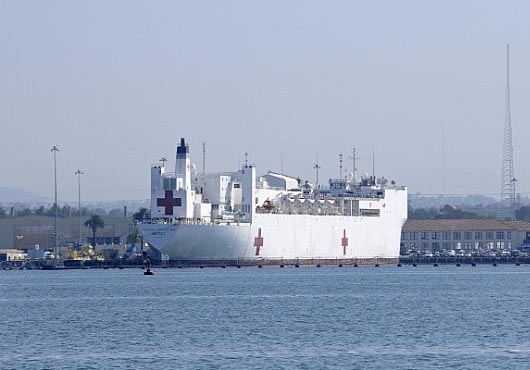
Adm. Harry B. Harris Jr., commander of U.S. Pacific Fleet, directed that the hospital ship USNS Mercy (T-AH 19) be returned to a reduced operating status Nov. 25.

Following a devastating typhoon in the Philippines, Mercy was activated Nov. 13 for possible deployment to support disaster relief efforts as part of Operation Damayan.

“Shifting Mercy from her normal reduced operating status to fully ready to deploy in a matter of days is a testament to the responsiveness and expertise of the Military Sealift Command, our Navy medical corps, and the shipyard civilian workforce in San Diego,” said Pacific Fleet spokesman Cmdr. Steve Curry.

Mercy was prepared for deployment as a prudent measure in the event that the scope and scale of the relief efforts in the Philippines necessitated the long-term, robust capabilities the hospital ship provides.

“Our friends needed our help, so we leaned forward to get Mercy ready to deploy early in the crisis, before the medical situation was completely known, due the time required to prepare the ship for sea, and transit to the Philippines,” said Curry. “The medical situation in the Philippines has dramatically improved over the last two weeks, with numerous U.S. and international care providers currently operating in impacted areas, so the ship will not deploy.”

Within six days of Typhoon Haiyan hitting the region, the U.S. Pacific Fleet had 10 ships and numerous aircraft on station delivering vital assistance to the government and people of the Philippines. In addition to two P-3 maritime aircraft from VP-26, USS George Washington (CVN 73), USS Antietam (CG 54), USNS Bowditch (T-AGS 62), USNS Charles Drew (T-AKE 10), USS Cowpens (CG 63), USS Emory S. Land (AS 39), USS Lassen (DDG 82), USS Mustin (DDG 89), USNS Richard E. Byrd (T-AKE 4), and USNS Yukon (T-AO 202) deployed with 21 helicopters and provided support during the initial stages of the disaster relief effort.

On Nov. 20, USS Ashland (LSD 48) and USS Germantown (LSD 42) arrived at the Philippines with embarked Marines as part of the Navy-Marine Corps team effort to provide humanitarian assistance. Subsequently, USS Freedom (LCS 1) also deployed in support of Operation Damayan.

Operation Damayan is part of the broader U.S. Government interagency effort led by the Department of State to support the Government of the Philippines’s request for humanitarian assistance.
Press Release, November 27, 2013; Image: US Navy

Follow Naval Today via:

Facebook

Twitter

RSS

Email

Linkedin

Visit Website

Share on Google PlusTwitterFacebookLinkedInBufferFacebookCustom Sharing Tool
Evernote

+TAG

New Asia-Pacific LNG Markets in Gazprom’s Sights

MarineLink.com

Tuesday, November 26, 2013
File LNG carrier: Photo courtesy of Gazprom
LNG carrier: Photo courtesy of Gazprom

Russian energy company Gazprom takes a look at its marketing policy in the international markets of small & large-scale LNG supply in line with its  updated LNG production and supply strategy, and decides to focus on the Asia-Pacific market.

Gazprom’s main efforts for expanding large-scale LNG exports are to be focused on the fast-growing Asia-Pacific market. The company says it will step up its presence in the new market primarily through increasing the production of its own LNG.

The company says that within quite a short period of time it has become a full-fledged participant of the global LNG trade, and at present it already supplies LNG to more than ten countries worldwide, which gives it additional competitive advantages, amongst other things, due to swaps and supply optimization.

They also point out that another important area of Gazprom’s new international LNG activities is organizing small-scale supply of LNG to be used as a motor and marine vehicle fuel as well as for household and industrial consumers.

JCs Royal New Zealand Navy Ships and New Zealand Defence, Also other World Defence Updates

Ships and Defence News Past and Present

Skip to content ↓