|
Naval Today >> The industry’s seaborne news provider by Naval Today / 50min // keep unread // skip // preview
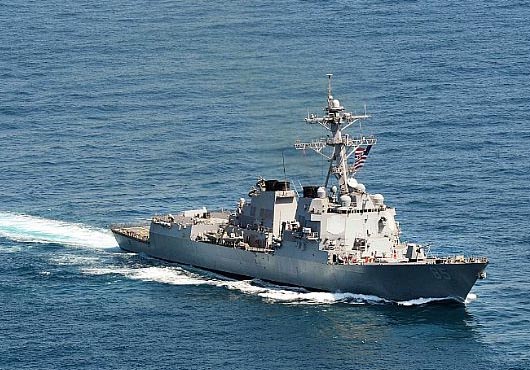
The Navy announced Nov. 26 that it successfully installed the first operational next generation tactical afloat network aboard the Arleigh Burke class guided-missile destroyer USS McCampbell (DDG 80).Based in Yokosuka, Japan, McCampbell completed its installation of the Consolidated Afloat Network and Enterprise Services (CANES) Nov. 6. Prior to that, the destroyer conducted sea trials in October to validate how the network would perform in an operational environment and that the network would meet mission needs. CANES represents a key aspect of the Navy’s modernization planning by upgrading cybersecurity, command and control, communications and intelligence systems afloat. The enhanced degree of standardization will reduce the number of network variants by ship class across the fleet. Installation of CANES is ongoing in various stages aboard eight guided missile destroyers, two carriers and one amphibious assault ship. Hardware refresh is planned and funded for every four years, with software refresh scheduled for every two years. This will enable the Navy to keep pace with technology, eliminate the challenges of multiple versions of hardware and software and decrease threats to the network. Information assurance is the foundation used to build CANES, which makes network protection easier and decreases the costs and complexity of training and sustainment. The network will be deployed to more than 190 ships, submarines and Maritime Operations Centers by 2021. As the Navy’s Information Dominance systems command, Space and Naval Warfare Systems Command (SPAWAR) designs, develops and deploys advanced communications and information capabilities. With more than 8,900 active duty military and civil service professionals located around the world and close to the fleet. SPAWAR is at the forefront of research, engineering, acquisition and support services that provide vital decision superiority to our forces at the right time and for the right cost. Follow Naval Today via:           
+TAG
|


Navy Addresses Problems Found on LCS 1’s Maiden Deployment
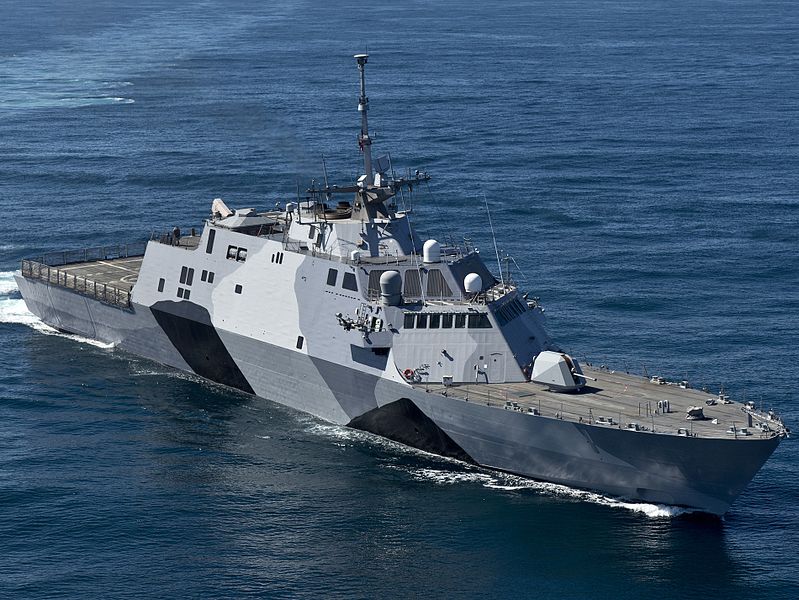

The Navy is making mechanical changes to its fleet of Littoral Combat Ships as a result of maintenance problems experienced during the maiden deployment of the USS Freedom, or LCS 1, service officials said.
The USS Freedom is finishing up its initial deployment, which included stops to Guam, Singapore and the South China Sea.
During the deployment, the USS Freedom experienced problems with its ship service diesel generators, or SSDGs, which resulted in a temporary power outage during a trip to Guam, this past summer. The Freedom also experienced problems with a corroded cable and faulty air compressor, said Capt. Dan Brintzinghoffer, program manager for LCS fleet introduction and sustainment.

The Navy hopes to build as many as 52 LCS ships, multi-mission littoral vessels configured with various “mission-package” technologies for countermine warfare, anti-submarine mission and surface warfare.
Navy engineers and program managers are optimistic that a series of adjustments will benefit the overall LCS fleet.
One such modification is the configuration of the diesel generators planned for LCS 5 and follow-on ships, so as to decrease the likelihood of generator problems persisting on future models.
“LCS 5 has a different configuration of the SSBGs because of the failures and the lessons learned,” said Brintzinghoffer.
He also said adjustments were made to the medium-pressure air compressor, the system on the ship that provides compressed air for various systems.
“The performance of this system has been unsatisfactory for the Navy to date. We made a decision on LCS 3 to change that system out — both the manufacturer and the make and model. So far, LCS 3, the USS Fort Worth, has had no failures of the new air compressor,” he said.
Recently, the USS Freedom also experienced a corroding cable on the ship that affected the steerable jets. The cable was fixed in Singapore a few weeks ago, a source said.
Unlike other ships, the LCS has a unique propulsion system, designed with four high-tech water jets able to control the angle, speed and direction of the ship, Brintzinghoffer said. There are no propellers or rudders on the LCS—just steerable water jets, giving the platform an ability to reach speeds greater than 40 knots.
The Navy also works at prepositioning parts and specific maintenance kits for key systems and equipment onboard the ship called preventive maintenance systems, or PMS, Brintzinghoffer said.
The LCS fleet relies on condition-based maintenance, a method of using sensors to monitor and compile data about the health and functionality of the systems on the ship. The advantages to this method are numerous, as it allows engineers to identify potential problems early in the process. The earlier problems are discovered, the easier it is to maintain a high degree of functionality onboard and keep repair costs low, Brintzinghoffer said.
In particular, the LCS uses a data-collection system that the Navy has put on the ships as part of a pilot program. Also, the LCS uses Oculus, a Lockheed-built system condition analyzer technology, designed to compile data of a ship’s operational systems.
Condition-based maintenance approaches are designed to recognize key trends for engineers and sustainment experts to analyze. While the technology for near real-time transmission exists, Brintzinghoffer said, there may be tactical circumstances wherein a ship may not want to maintain connectivity.
“You might not always want to have connectivity with the beach, but you need to be able to continue to collect the information so that when the pipes come back up, the data flows. We’re talking about trend analysis,” he said.
The LCS platform has been the subject of criticism and controversy from lawmakers, officials and analysts, due to questions about these types of maintenance problems, survivability questions and mission effectiveness. However, Brintzinghoffer pointed out that this was the ships first deployment and the Navy expected problems to occur and look to fix them.
“We were very successful in executing a 10-month deployment and establishing a forward presence. This is a new program and LCS 1 is a first-in-class surface combatant. We expected there to be some lessons learned. I’m satisfied with our ability to make changes quickly,” Brintzinghoffer said.
Tags: LCS, USS Freedom
Share this:

HMAS Tobruk arrives to support recovery in the Philippines
|
Navy Daily 1h // keep unread // skip // preview
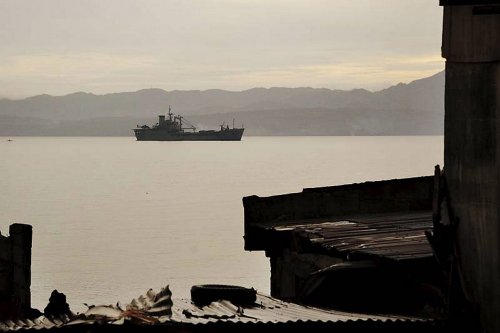
 HMAS Tobruk has arrived to commence recovery support operations in the Ormoc region of Leyte Island to assist the Philippines government repair the damage caused by Typhoon Haiyan.
+TAG
|
Share this:

Taiwan to send Navy vessel to deliver supplies to the Philippines


Another post on John’s Naval, Marine and other Service news

Taiwan’s tank-landing ship Chung He. (File Photo/Yang Chia-yu)
Taiwan will dispatch a Navy vessel on Monday to transport relief supplies to the Philippines’ Cebu city in the wake of Super Typhoon Haiyan, an official from the Ministry of National Defense (MND) said on Sunday.
The tank-landing ship called Chung He will travel four days at sea, 900 nautical miles from southern Taiwan’s Zuoying district to the Philippines, MND spokesman Luo Shou-he said, adding that the trip will mark the first time that Taiwan’s Navy visits the Southeast Asian country since the Vietnam War 38 years ago.
Following Typhoon Haiyan’s tearing through the central Philippines on Nov. 8, Taiwan has donated US$200,000 and sent 150 metric tonnes of relief supplies collected by charity groups by military cargo planes to support relief efforts in affected areas.
Taiwan sent C-130 military cargo planes on 18 flights to deliver relief supplies to the Philippines beginning on Nov. 12, and Minister without Portfolio Lin Jung-tzer arrived in the Philippines on one of the cargo planes on Thursday to check on how relief supplies from Taiwan are being distributed.
According to figures from the Ministry of Foreign Affairs, Taiwan’s government and civic groups have contributed funds and supplies worth more than NT$190 million (US$6.4 million) as of Thursday to help typhoon-battered regions of the Philippines.
Last time Taiwan’s navy visited the Philippines was to help transport Vietnamese refugees in Subic Bay in 1975.
.

via Blogger http://www.h16613.com/2013/11/taiwan-to-send-navy-vessel-to-deliver.html
Share this:

Taiwan to send Navy vessel to deliver supplies to the Philippines
Another post on John’s Naval, Marine and other Service news
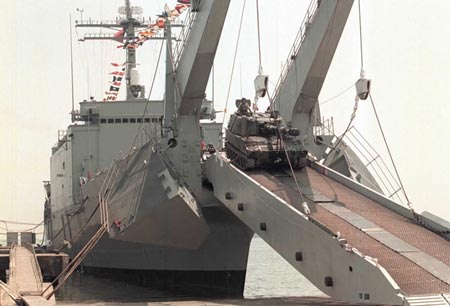
Taiwan’s tank-landing ship Chung He. (File Photo/Yang Chia-yu)
Taiwan will dispatch a Navy vessel on Monday to transport relief supplies to the Philippines’ Cebu city in the wake of Super Typhoon Haiyan, an official from the Ministry of National Defense (MND) said on Sunday.
The tank-landing ship called Chung He will travel four days at sea, 900 nautical miles from southern Taiwan’s Zuoying district to the Philippines, MND spokesman Luo Shou-he said, adding that the trip will mark the first time that Taiwan’s Navy visits the Southeast Asian country since the Vietnam War 38 years ago.
Following Typhoon Haiyan’s tearing through the central Philippines on Nov. 8, Taiwan has donated US$200,000 and sent 150 metric tonnes of relief supplies collected by charity groups by military cargo planes to support relief efforts in affected areas.
Taiwan sent C-130 military cargo planes on 18 flights to deliver relief supplies to the Philippines beginning on Nov. 12, and Minister without Portfolio Lin Jung-tzer arrived in the Philippines on one of the cargo planes on Thursday to check on how relief supplies from Taiwan are being distributed.
According to figures from the Ministry of Foreign Affairs, Taiwan’s government and civic groups have contributed funds and supplies worth more than NT$190 million (US$6.4 million) as of Thursday to help typhoon-battered regions of the Philippines.
Last time Taiwan’s navy visited the Philippines was to help transport Vietnamese refugees in Subic Bay in 1975.
.
via Blogger http://www.h16613.com/2013/11/taiwan-to-send-navy-vessel-to-deliver.html

