China carrier steams towards disputed South China Sea for drills

BEIJING Tue Nov 26, 2013 5:24am EST

Japan Maritime Self-Defense Force's PC3 surveillance plane flies around the disputed islands in the East China Sea, known as the Senkaku isles in Japan and Diaoyu in China, in this October 13, 2011 file photo. REUTERS/Kyodo/Files

Japan Maritime Self-Defense Force’s PC3 surveillance plane flies around the disputed islands in the East China Sea, known as the Senkaku isles in Japan and Diaoyu in China, in this October 13, 2011 file photo.

CREDIT: REUTERS/KYODO/FILES

(Reuters) – China sent its sole aircraft carrier on a training mission into the South ChinaSea on Tuesday amid maritime disputes with the Philippines and other neighbors and tension over its plan to set up an airspace defense zone in waters disputed with Japan.

The Liaoning, bought used from Ukraine and refurbished in China, has conducted more than 100 exercises and experiments since it was commissioned last year but this is the first time it has been sent to the South China Sea.

The Liaoning left port from the northern city of Qingdao accompanied by two destroyers and two frigates, the Chinese navy said on an official news website (navy.81.cn/).

While there, it will carry out “scientific research, tests and military drills”, the report said.

“This is the first time since the Liaoning entered service that it has carried out long-term drills on the high seas,” it added.

The timing of the drills is bound to raise eyebrows with its neighbors, given the overlapping maritime disputes. China has lodged formal protests with the United States and Japan after both criticized its plan to impose new rules on airspace over disputed waters in the East China Sea.

On Tuesday, Australia said it had summoned China’s ambassador to express concern over its imposition of the Air Defense Identification Zone.

China also claims almost the entire oil- and gas-rich South China Sea, conflicting with claims from Taiwan, Malaysia, Brunei, the Philippines and Vietnam.

That dispute is one of the region’s biggest flashpoints amid China’s military build-up and the U.S. strategic “pivot” back to Asia.

Though considered decades behind U.S. technology, the Liaoning represents the Chinese navy’s blue-water ambitions and has been the focus of a campaign to stir patriotism.

‘NOT OVERLY CONCERNED’

Rommel Banlaoi, executive director of the Philippine Institute for Peace, Violence and Terrorism Research, said he thought the Liaoning was still years away from representing a real threat.

“China is still developing its own model of carrier operations and its technology is (far) behind the United States,” he said. “Personally, I would not be overly concerned with an old diesel-powered aircraft carrier on a training mission.”

The navy did not specify exactly what training would be done, only noting that previous exercises involving aircraft landing and taking off had gone well.

Previously reported training exercises have mostly been in the Yellow Sea, between China and the Korean peninsula.

“Obviously the Chinese authorities have been adopting a series of measures to strengthen their claim on the sovereignty of the disputed territories,” said Joseph Cheng, a political science professor at City University of Hong Kong.

“You see Japan and Southeast Asian countries have also been making gestures and taking steps to strengthen sovereignty, so China has to respond.”

China’s navy said the mission was routine, adding that the Liaoning was still in a testing phase.

“This test visit to the South China Sea is part of normal arrangements for testing and training for the Liaoning,” it said.

“…Long cross-sea voyages are a necessary stage of experimentation and training to test equipment and troops under continuous work and different hydrological and meteorological conditions.”

(Reporting by Ben Blanchard; Additional reporting by Megha Rajagopalan, and Manny Mogato in MANILA; Editing by Nick Macfie)

News / Asia

US Role in Typhoon Relief Boosts New Military Deal with Manila

Four Ospreys from the U.S. Navy Ship (USNS) Charles Drew prepare to taxi on the tarmac of Tacloban airport in the aftermath of super typhoon Haiyan, Nov. 14, 2013.

Four Ospreys from the U.S. Navy Ship (USNS) Charles Drew prepare to taxi on the tarmac of Tacloban airport in the aftermath of super typhoon Haiyan, Nov. 14, 2013.

TEXT SIZE
Reuters

November 25, 2013

MANILA — Emergency relief provided by U.S. troops in areas devastated by typhoon Haiyan in the central Philippines makes a strong case for the two allies to clinch a new military accord, Manila’s foreign minister said on Monday.

The Philippines and the United States have been negotiating a new security agreement allowing wider and more prolonged access for the U.S. military at bases and other facilities in its former colony. It also provides for storage of equipment and supplies for humanitarian and maritime operations.

Last month, after four meetings, the talks stalled over legal and constitutional issues. Both sides, however, are committed to concluding a deal, a boost to the foreign policy of President Barack Obama’s administration focusing on Asia and the Pacific.

“What has been demonstrated in the central Philippines as a result of this typhoon and the assistance provided in terms of relief, rescue operation… is the need for this framework agreement that we are working on with the United States,” Foreign Affairs Secretary Albert del Rosario told reporters.

“It accentuates one of the main purposes of the framework agreement, which is to make humanitarian assistance and disaster relief and response a very major aspect of the agreement.”

The United States ran two military bases in the Philippines until the early 1990s, but abandoned them when the government refused to extend the necessary agreements.

The current talks are taking place as the Philippines is engaged in a long-running territorial dispute with China in the South China Sea. Tensions have periodically sharpened, with vessels from each side keeping close watch on the other.

  • Typhoon survivors board a Philippine Air Force transport plane in Tacloban, Nov. 21, 2013.

Fifty ships and aircraft 

The world’s biggest-ever storm to make landfall struck the central Philippines on Nov. 8, killing more than 5,200 people, displacing 4.4 million and destroying 24 billion pesos ($547 million) in crops and infrastructure.

Within days, the U.S. military sent some 50 ships and aircraft to help distribute food, water and other supplies and speed up delivery by reopening roads, ports and airports.

Washington has contributed nearly $52 million in relief and shelter materials, including about $30 million in direct aid from the U.S. Department of Defense, which sent the aircraft carrier USS George Washington and escort ships.

New Jersey Congressman Chris Smith, speaking to journalists after meeting del Rosario, said the storm “has brought all of us even closer together”.

“We realized that this is a jewel of a friendship. We must preserve it at all cost. So I think… all other ongoing negotiations will all be given a positive boost as a direct result of this.”

Smith said the United States was committed to long-term reconstruction, particularly housing. “There’s a colossal need,” he said. “We saw it first hand and that would be something that we take back because we want to be part of the solution.”

The U.N. humanitarian office said life saving assistance is still urgently needed, particularly food, water and shelter due to limited access and lack of long-term supplies. The U.N. says it needs to raise $348 million to address those needs.

China’s post-typhoon relief efforts were initially criticized, even by Chinese media, as inadequate, but Beijing last week sent a state of the art hospital ship to assist.

The head of China’s relief mission said there could be no notion of diplomatic disputes in times of humanitarian crises.

“We know that our neighbor is suffering from the… disaster. It is our duty to provide assistance in the fastest possible time,” Rear Admiral Shen Hao said on Monday aboard the 14,000-ton Peace Ark.

“In the eyes of the doctors and nurses there is no conflict, there is no problem. The only thing in their eyes is medical assistance.”


HMNZS Otago sets off for Southern Ocean

HMNZS Otago sets off for Southern Ocean

Home » News » National
Wed, 27 Nov 2013

 0  0 ShareThis
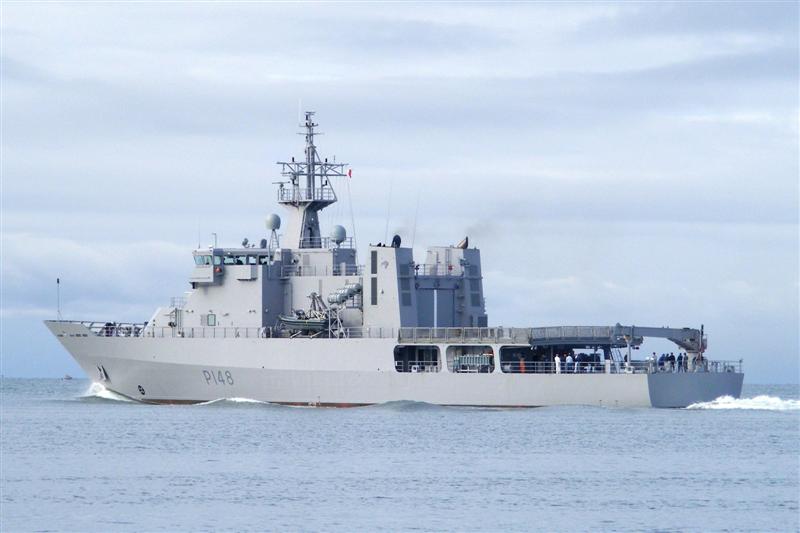
HMNZS Otago - P148

HMNZS Otago

The Navy’s offshore patrol vessel has set off again for the Southern Ocean to monitor fishing in the region.The Defence Force said the HMSNZ Otago would spend another season in the Antarctic waters, despite questions earlier this year about its ability to operate below the Furious Fifties.

A second patrol was canned last summer because of concerns that the $90 million vessel was not up to the task of sailing in waters 1500 nautical miles below New Zealand.

Defence Minister Jonathan Coleman said the 1900-tonne, 85-metre offshore patrol vessel had good experience in the Southern Ocean after three consecutive seasons there.

It would be accompanied by the Air Force Orion.

Foreign Affairs Minister Murray McCully said it was important that New Zealand played its part in the region as a member country of the Convention for the Conservation of Antarctic Marine Living Resources.

Lieutenant Commander Rob McCaw, the Otago’s commanding officer, said his crew had been training for six months for the trip to the Southern Ocean, which he said was the “most inhospitable place on the face of the planet”.

“Having deployed as Captain of the Otago to the Southern Ocean last summer season, I know what we have in store and I know how the team and I will be challenged – there is nothing I have done in my naval career to match it.”

Ministry for Primary Industries officials were on board the Otago and would inspect the fishing fleet – which included three New Zealand boats – for compliance.

The Navy patrol remained in place until the agreed catch limits were reached, usually in January or early February.

USS Monterey Finishes Port Visit to Limassol

Naval Today >> The industry’s seaborne news provider by Naval Today  /  9h  //  keep unread  //  skip  // preview

USS Monterey Finishes Port Visit to Limassol

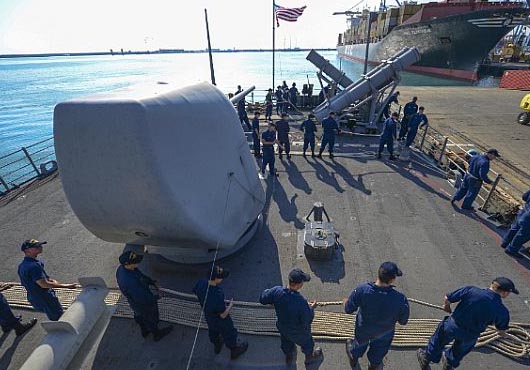
Guided-missile cruiser USS Monterey (CG 61) returned to her mission of supporting maritime security operations and theater security cooperation efforts in the U.S. 6th Fleet area of operations after completing a scheduled port visit in Limassol, Nov. 21.

The first day in port, Monterey conducted a change of command ceremony where Capt. Rick Cheeseman relieved Capt. Thomas Kiss as the ship’s commanding officer.

“Monterey had a very successful port visit in Limassol,” said Cheeseman. “An important aspect of deployed forces is the fact that liberty is a mission. Monterey’s Sailors portrayed themselves as perfect ambassadors for the U.S.”

Taking full advantage of the time in port, personnel improved the material condition of the ship by preserving and painting parts of the ship’s hull. Throughout the rest of the visit, Sailors engaged in community events and enjoyed some much deserved liberty.

Over two dozen of Monterey’s Sailors volunteered their time participating in a community service (COMSERV) project at the Theotokos Foundation, a school for children with special needs. Sailors spent five hours cutting grass and cleaning up areas in and around the school.

“Being able to give back to these communities is always a great feeling, especially when we are in a foreign port,” said Boatswain’s Mate 1st Class Shane Tiffany, the COMSERVs coordinator and a participant. “Monterey Sailors had done a great job making the surrounding areas of the Theotokos Foundation looks more appealing than it had been.”

While in port, the ship’s Morale, Welfare and Recreation (MWR) provided the crew with many affordable tours to explore the cultures and scenery, to relax and recharge for the next underway period.

“Crew morale goes hand in hand with this mission,” said Cheeseman. “Monterey Sailors are leaving this port refreshed and ready to meet any mission requirements put forth to them.”

Monterey is deployed in support of maritime security operations and theater security cooperation efforts in the U.S. 6th Fleet area of operations.
Press Release, November 26, 2013; Image: US Navy

Follow Naval Today via:

Facebook

Twitter

RSS

Email

Linkedin

Visit Website

Share on Google PlusTwitterFacebookLinkedInBufferFacebookCustom Sharing Tool
Evernote

+TAG

Australian Resupply Ship Delayed by Heavy Ice

MarineLink.com

Tuesday, November 26, 2013, 12:33 PM
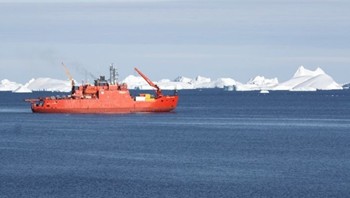
File The Aurora Australis two kilometers off station on a clear sunny day at resupply (Photo: Colin)
The Aurora Australis two kilometers off station on a clear sunny day at resupply (Photo: Colin)

The Australian Antarctic Division has rescheduled its early season voyages with the icebreaker Aurora Australis delayed in heavy ice conditions off the Antarctic coast.

The ship is in heavy ice about 180 nautical miles off Davis station, returning from resupplying the station and delivering summer personnel. Radar satellite images this morning indicated that while there may be some useful openings, the sea ice extends to approximately 60 nautical miles around the ship. Beyond that, less concentrated ice will be easier to navigate.

Australian Antarctic Division Director, Dr. Tony Fleming, said that Aurora Australis was due to return to Hobart on November 16.

“The ship, which left Hobart in mid-October, has enough supplies and fuel to last for some time with no risk of food or water running low. The 24 people on board are safe and well,” Dr. Fleming said.

“To ensure the Antarctic season can progress with minimal disruption, the Australian Antarctic Division has combined the next two voyages into one extended voyage visiting Macquarie Island and then proceeding to Casey station before returning to Hobart.

“This will preserve the work plans of the majority of projects scheduled for the Australian Antarctic program for the 2013/14 season. While some projects, mainly those scheduled for Macquarie Island, will be affected by the changes, the impacts are expected to be minor.”

These include pest eradication, vegetation monitoring, remediation, and building activities. All will arrive around 2 weeks later than planned and scheduled to return to Australia in March.

Projects that are no longer viable under the revised schedule include AAD audit inspections and human resources reviews, as well as a Tasmanian Parks management inspection on Macquarie Island.

However, major activities including the Aurora Basin North ice-drilling project as well as human impacts and remediation studies at Casey station, and ocean acidification and seabird studies at Davis station, as well as mid-season changeover for support crews will not be affected.

Dr. Fleming said that the Aurora Basin North and the Davis projects are already underway and expeditioners travelling on the extended voyage are for crew changeover. Consequently project viability isn’t affected by delay.

“Weather and ice are part of working in the Antarctic environment and contingencies are built into all work programs to allow for transport or weather delays.

“The Australian Antarctic flying program is continuing as planned allowing many projects not linked to sea transport to proceed as normal.”

Environment Minister, Greg Hunt, said “I’m getting regular updates from the AAD on progress of the work being undertaken by scientists in the field in the Antarctic.

“Scientists working in Antarctica really battle the elements on a daily basis and often need to adapt quickly to changes in circumstances.”

antarctica.gov.au

  • Aurora AustralisAurora Australis

JCs Royal New Zealand Navy Ships and New Zealand Defence, Also other World Defence Updates

Ships and Defence News Past and Present

Skip to content ↓