Australia Collins Class Submarines to be Updated

Australia Collins Class Submarines to be Updated

Posted by Greg Trauthwein
Tuesday, November 26, 2013, 5:36 PM
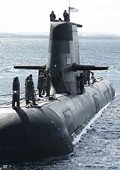
File (Photo Courtesy: http://images.navy.gov.au / ©Commonwealth of Australia)
(Photo Courtesy: http://images.navy.gov.au / ©Commonwealth of Australia)

Contract signed to upgrade Collins Class Submarines
Defence Minister Senator David Johnston announced the Defence Materiel Organisation has signed a multi-million dollar contract with ASC Pty Ltd to update the control management and monitoring system for the Royal Australian Navy’s Collins Class submarines.
Senator Johnston said the Integrated Ship Control Management and Monitoring System is a highly automated computerised system, which enables the crew of a Collins submarine to control, monitor and manage the large number of diverse and complex systems on board the submarines.
“Work under the $57 million contract will focus on updating electronic components and porting the software to operate on the new system,” Senator Johnston said.
“The current Ship Control Management and Monitoring System has performed effectively and reliably since the Collins class entered service in the 1990s.”
“However, it is essential to upgrade the current system to ensure the system can be maintained for the remaining service life of the Collins Class fleet.”
ASC is the Collins Class Submarine Platform System Integrator and they will be supported on the project by Saab Systems in South Australia.
The contract also covers design, development and manufacture of the hardware for two boats: the updating of the shore-based test facility and platform simulation trainer, and the installation of the updated system in the first boat.
Senator Johnston said the majority of the work will be performed in Outer Harbour and Mawson Lakes in South Australia.

USA: Warship Commemorates Its Heritage

Naval Today >> The industry’s seaborne news provider by Naval Today  /  3h  //  keep unread  //  skip  // preview

Warship Commemorates Its Heritage

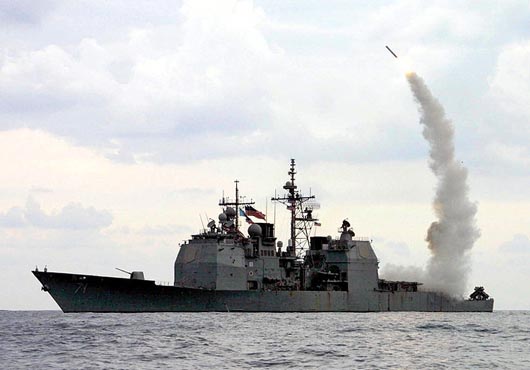
The Ticonderoga-class guided-missile cruiser USS Cape St. George (CG 71) commemorated the 70th anniversary of the battle for which it was named at Naval Base San Diego, Nov. 25.

The ship is named after the Battle of Cape St. George, which took place on Nov. 25, 1943, in the South Pacific off the island of New Ireland, during World War II.

During the battle, five American ships, led by then-Capt. Arleigh Burke, sank three of the five Japanese destroyers, and severely damaged a fourth while not sustaining any damage.

During the ceremony, Capt. Michael Doran, the commanding officer of Cape St. George, took a moment to thank the veterans of the battle who were present at the ceremony, including the guest speaker, Retired Capt. Charlie Steven Nelson, Sr.

“Among many of the reasons we won the Battle of Cape St. George, lies within the people who manned the ships,” Nelson said.

“Men, including boys who lied about their age at the time, from all over the United States, fought on those ships,” Nelson said. “They came from mansions, farms, factories and all walks of life.”

The crew of Cape St. George extended their gratitude to Nelson, presenting him with various gifts, including a personalized jacket embroidered with the ship’s name.

“His sacrifice is the reason we are all here today,” said Lt. Jonathan D. Rozendaal, who delivered the ceremony’s invocation.

After singing “Desron Twenty-Three,” a song written in honor of the ships that fought during the battle, Nelson shared some advice with the crew in his closing statement.

“Live long, live well, love a lot and may that love be returned.”

Press Release, November 26, 2013; Image: Wikimedia

Follow Naval Today via:

Facebook

Twitter

RSS

Email

Linkedin

Visit Website

Share on Google PlusTwitterFacebookLinkedInBufferFacebookCustom Sharing Tool
Evernote

+TAG

HMS Illustrious Arrives in the Philippines

Naval Today >> The industry’s seaborne news provider by Naval Today  /  3h  //  keep unread  //  skip  // preview

HMS Illustrious Arrives in the Philippines

Helicopter and commando carrier HMS Illustrious has arrived in the Philippines to begin to deliver humanitarian aid provided by the Department for International Development (DfID).

HMS Illustrious will take over from HMS Daring which has been distributing aid and assisting villagers in remote communities on islands to the north east of Panay for the past week.

Secretary of State for Defence, Philip Hammond said:

“The crew of HMS Daring have done a fantastic job in the Philippines and I am pleased that HMS Illustrious will be able to continue this good work by providing substantially increased helicopter capability ensuring relief reaches all those stricken by Typhoon Haiyan.

“I offer thanks to all of our Service personnel who have been involved in the relief effort so far; their willingness to help and the enthusiasm with which they have approached the task is a credit to the Armed Forces and should make all of us very proud.”

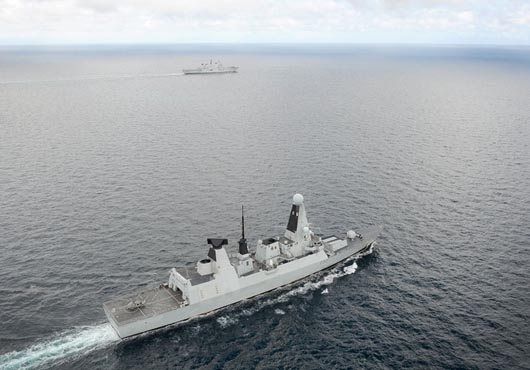
The Type 45 destroyer has now handed the baton to her fellow Portsmouth-based warship while she sails on to Tokyo to continue with her regional engagement programme.

Commanding Officer of HMS Daring, Commander Angus Essenhigh said:

“I am incredibly proud of my ship’s company – without their commitment, drive and determination to help we would not have achieved half of what we set out to do.

“There are communities on islands that had been cut off from help since the typhoon that now have repaired fishing boats so they can recover their livelihoods, tarpaulins to give them shelter as they rebuild their homes and fresh, clean drinking water.

“It has been a privilege to assist the people of the Philippines and my ship’s company can be rightly pleased with the contribution HMS Daring has made, the rapid adaptability of a Royal Navy ship and her crew has once again been proven.

“I’m sure HMS Illustrious will continue that good work on behalf of the Royal Navy, the British public and the UK government.”

HMS Daring covered 42,200 square nautical miles and visited over 70 islands, providing villagers with 498 shelter kits, over 7.5 tonnes of drinking water, 223 kitchen sets and repairing school roofs, generators and boat engines.

Specialist sailors also built a desalination plant for a local well and gave medical aid in the shape of 14 medics deployed by DFID and the ship’s own doctor Surgeon Lieutenant Sophie Butterworth.

HMS Illustrious is carrying around 500 tonnes of UK Aid which includes 12,500 blankets, 20,000 candles, 30,000 rice bags, 9,800 tins of sardines, 8100 tins of vegetables, 17,000 shelter kits, 1,000 jerry cans and 1900 water carriers. She has seven helicopters on board to help get the aid quickly into remote areas – three Sea King Mark 4s, one Merlin and three Army Lynx.

The carrier was around 6000 nautical miles away in the Horn of Africa on counter-piracy operations as part of the Royal Navy’s Response Force Task Group when she was re-tasked with the humanitarian aid operation.

Her Commanding Officer Captain Mike Utley said:

“The speed at which we have reorganised ourselves from counter-piracy operations to humanitarian relief in a completely different part of the world is testament to the flexibility of the Royal Navy and the enthusiasm and dedication of my ship’s company.

“We are fully prepared to be able to render whatever assistance is required to allow the people so very badly affected by Typhoon Haiyan to begin the process of recovery.”

Press Release, November 26, 2013; Image: Royal Navy

Follow Naval Today via:

Facebook

Twitter

RSS

Email

Linkedin
Visit Website

Share on Google PlusTwitterFacebookLinkedInBufferFacebookCustom Sharing Tool
Evernote

+TAG

Lost NZ Ferry Propeller Found 120m Down in Cook Strait

Lost NZ Ferry Propeller Found 120m Down in Cook Strait

MarineLink.com
Monday, November 25, 2013
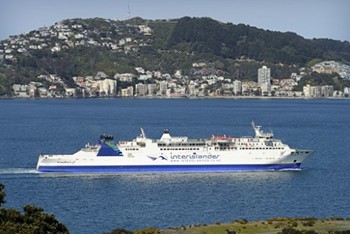
File Ferry Aratere: Photo courtesy of Interislander
Ferry Aratere: Photo courtesy of Interislander

The propeller had been lost earlier this month from the Interislander ferry, the ‘Aratere’, which is expected to be out of service for 6 months as a result, but the propeller has now been found in Cook Strait by Seawork Salvage Co., contracted by KiwiRail, reports Radio New Zealand.

The propeller was discovered about two nautical miles from Tory Channel, by using sonar equipment and an unmanned vehicle. Citing a Seawork spokesman, Radio NZ say that the company will probably use its survey vessel, the unmanned submarine [sic] and another ship to salvage the propellor.

KiwiRail spokesperson Sophie Lee informed the news channel that it will take about two weeks to prepare equipment for the retrieval, which would also depend on weather conditions. The propeller weighs around six tonnes and would cost around $200,000 to replace.

Source: Radio New Zealand

NEIC Holds Change of Command Ceremony

Naval Today >> The industry’s seaborne news provider by Naval Today  /  2h  //  keep unread  //  skip  // preview

NEIC Holds Change of Command Ceremony

Navy Expeditionary Intelligence Command (NEIC) held a change of command ceremony at Naval Air Station Oceana Nov. 22.

Cmdr. Benjamin Snell relieved Capt. Joe J. Johnson as commanding officer of NEIC.

“Today we recognize your (NEIC’s) outstanding achievements over the last few years as your new leader takes the helm,” said Adm. Bill Gortney, commander, U.S. Fleet Forces Command, guest speaker at the ceremony.

During the ceremony Gortney presented NEIC with the Meritorious Unit Commendation award for meritorious service from Jan. 1, 2010 to March 31, 2013.

Under Johnson’s command, NEIC saved lives of U.S. aid personnel and Afghan government officials, halted improvised explosive device (IED) attacks, seized more than $80 million in narcotics and 30 tons of weapons linked to terrorist organizations.

Gortney said, as commander, Johnson executed NEIC’s mission with pride and professionalism, and that he is confident Snell will support the mission just as well.

“I have no doubt that you’ll uphold the standards that were exemplified by NEIC’s outstanding outgoing commander, Joe Johnson,” said Gortney. “I can think of no finer officer to take over this wonderful command.”

Upon assuming command Snell spoke highly of Johnson as well as NEIC and its Sailors.

“You have much to be proud of; the bar has been set high,” said Snell. “I could not ask for a better command to be a part of. I’m humbled and honored to have the opportunity to lead you.”

Snell joined the Navy in 1982 and was commissioned in 1995 after graduating from the Navy Officer Candidate School. He was designated as a Naval Intelligence officer in 1996. Since then, Snell has spent the majority of his operational career deploying to, and operating in, the U.S. Central Command area of responsibility. He has served four tours in the U.S. Naval Forces Central Command, U.S. 5th Fleet, Combined Maritime Forces regions; served as Deputy Intelligence Officer to Carrier Strike Group Ten aboard USS Harry S. Truman (CVN 75); as Air Intelligence Officer aboard Patrol Squadron Four (VP-4); and as Deputy Executive Assistant to the Director of Naval Intelligence, as well as many other leadership assignments.

NEIC capabilities give expeditionary, maritime, joint and combined forces timely, relevant and actionable intelligence to deny the enemy sanctuary, freedom of movement, and use of waterborne lines of communication while enabling friendly forces to find, fix and destroy the enemy within the operation environment.
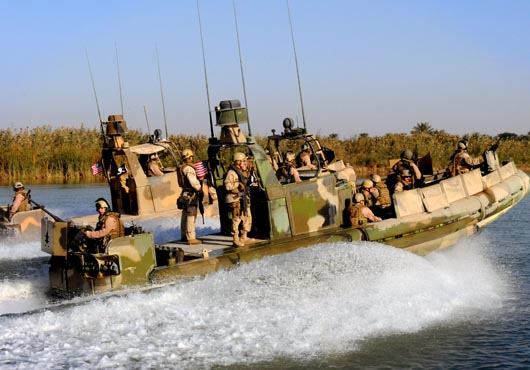
Press Release, November 26, 2013; Image: US Navy

Follow Naval Today via:

Facebook

Twitter

RSS

Email

Linkedin

Visit Website

Share on Google PlusTwitterFacebookLinkedInBufferFacebookCustom Sharing Tool
Evernote

+TAG

JCs Royal New Zealand Navy Ships and New Zealand Defence, Also other World Defence Updates

Ships and Defence News Past and Present

Skip to content ↓