
|
Naval Today >> The industry’s seaborne news provider by Naval Today / 2h // keep unread // skip // preview
After almost five months away, HMAS Waller graciously berthed back at her home port of Fleet Base West last week. As she arrived alongside, she was welcomed by crew member’s families and members of the Submarine Force. Her return marked the end of a series of exercise engagements and port visits in Australia and Asia.After departing Fleet Base West at the end of June, Waller visited Sydney prior to taking part in Exercise TALISMAN SABER. Then she headed to Cairns for a two week scheduled maintenance period. After Cairns, Waller conducted port visits to Guam and Yokosuka, before participating in Exercise PACIFIC REACH. After PACIFIC REACH, the submarine headed back to Yokosuka to avoid a typhoon. Once the storm had subsided, the crew participated in follow-on activities with Japanese forces. After leaving Yokosuka, Waller pulled into the Japanese port of Kure to avoid more typhoons. Soon after, she charted course for home and began the transit back to Fleet Base West. Waller also utilised the deployment to further international engagement and conduct various ceremonial activities. In the Saint Georges Channel, near Papua New Guinea, Waller’s crew conducted an HMAS AE1 Memorial Service at the last known position of Australia’s first submarine – at the spot where AE1 and her crew are thought to have perished. During the same service, Waller also committed the ashes of Mr Ric Ellam (a former Royal Navy submariner) to sea, on what would have been his 86th birthday. Commanding Officer HMAS Waller, Commander Michael Jacobson said the deployment was far from routine, with a variety of extreme weather conditions experienced.
Commander Submarine Force, Captain Mark Potter, was also pleased with the performance of Waller and crew throughout her various activities.
HMAS Waller will now undergo scheduled maintenance activities, allowing the crew some time alongside with their families. Follow Naval Today via:           
+TAG
|


USS Dallas Docks in Groton, Conn
|
Naval Today >> The industry’s seaborne news provider by Naval Today / 2h // keep unread // skip // preview
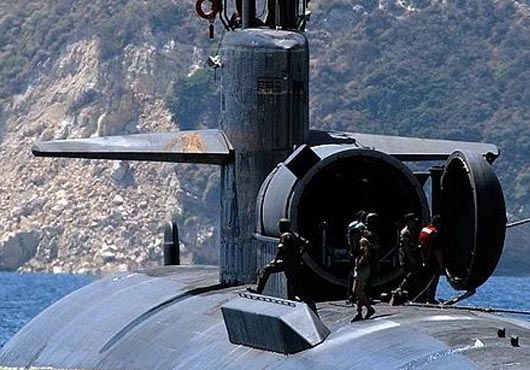
Los Angeles-class attack submarine USS Dallas (SSN 700) returned to Groton, Conn., Nov. 25, just in time for Thanksgiving and following its final scheduled deployment after more than 30 years in service.Led by Cmdr. Jack Houdeshell, Dallas transited more than 34,000 miles during a scheduled six-month cruise to operating regions in Europe and the Middle East.
The submarine’s crew of 140 Sailors departed Naval Submarine Base New London in May and made port calls to Bahrain, Diego Garcia, Spain and Portugal. Upon return to Groton, Machinist’s Mate Fireman (SS) Sebastian Lefever held his baby girl Rilynn for the first time. Lefever’s wife Kara gave birth to Rilynn on July 9 just as Dallas was leaving port in Bahrain.
Los Angeles-class attack submarines remain the backbone of the attack submarine force. They are equipped to hunt adversary vessels, attack land-based targets and support special forces. In addition, they are able to conduct intelligence, surveillance, reconnaissance and mine warfare missions. Dallas was the seventh out of 61 total Los Angeles-class submarines built. It was commissioned in 1981 and has deployed to every operational theater around the world ever since. The submarine circumnavigated the globe and transited the Panama Canal during a six-month deployment in 1984. It also participated in Operations Desert Shield/Storm in the early ’90s.
Williams said the crew’s identity is hard to explain in words, but they refer to it as the “Dallas Difference.”
Press Release, November 26, 2013; Image: Wikimedia Follow Naval Today via:
+TAG
|

Share this:

ESPS Meteoro Conducts SAR Exercise at Sea
|
Naval Today >> The industry’s seaborne news provider by Naval Today / 2h // keep unread // skip // preview
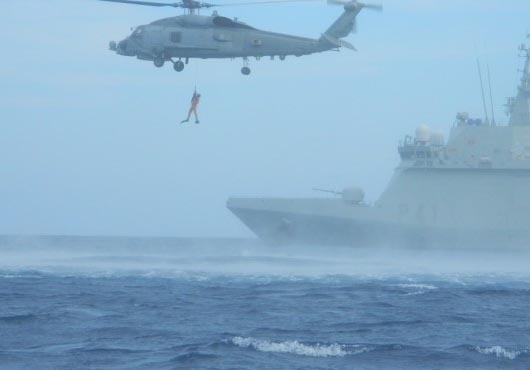
During the evening of November 22, a search and rescue exercise was conducted by ESPS Meteoro and her embarked helicopter. The exercise was part of an intensive air-sea training programme.During the exercise, two qualified rescue divers from the embarked air wing simulated two men who had been washed overboard. The Spanish warship’s SH-60B helicopter was quickly launched and ‘rescued’ them from the sea using a rescue hook. This type of exercise ensures that the ship’s company and the helicopter crew remain at the top of their game when on operations. ESPS Meteoro has been part of EU Naval Force’s Operation Atalanta since 15 August. The ship has sailed more than 20,000 nautical miles, conducted 79 friendly approaches with local seafarers and carried out 57 flying sorties with the embarked SH60B helicopter. Follow Naval Today via:
+TAG
|

Share this:

USS Freedom Delivers Supplies to Philippines
|
Naval Today >> The industry’s seaborne news provider by Naval Today / 1h // keep unread // skip // preview
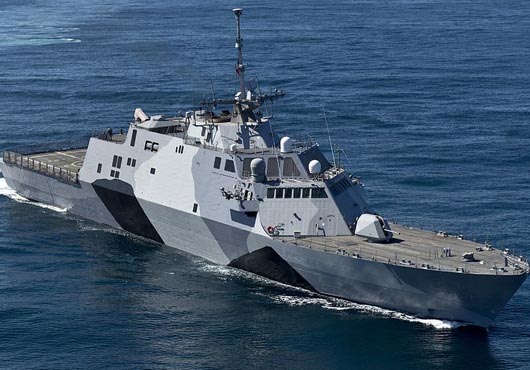
USS Freedom (LCS 1) delivered 10 pallets of humanitarian assistance and disaster relief supplies to officials from the Armed Forces of the Philippines Nov. 24.The delivery was part of Operation Damayan and occurred in Tacloban – one of the areas hardest hit by Typhoon Haiyan/Yolanda. Supported by U.S. Joint Task Force 505, the Armed Forces of the Philippines (AFP) is coordinating HA/DR efforts with multinational forces, local civilian authorities and non-governmental organizations. On scene to receive the materials from Freedom in Tacloban were Philippine representatives from AFP, the Office of Civil Defense (OCD) and Department of Social Welfare and Development (DSWD).
From her position 16 nautical miles off the coast of Tacloban, Freedom delivered the five pallets of hygienic supplies and five pallets of medical supplies with her MH-60R helicopter and one from USS Cowpens (CG 63). Like other U.S. Navy ships supporting Operation Damayan, Freedom’s helicopter is one of her most important HA/DR assets. Personnel from both nations unloaded Freedom’s supplies on Tacloban’s airfield, including much needed items such as hand sanitizer, baby wash, bandaids and disinfectant. As noted by Trinidad, the AFP will coordinate delivery of the supplies with OCD and DSWD. Freedom deployed to Southeast Asia with a Surface Warfare Mission Package to conduct maritime security operations with allies, partners and other 7th Fleet units, and as such, is not configured specifically for HA/DR missions. “That said, while HA/DR is not our primary mission, we were very happy to be able to help the people of Tacloban as we return from deployment, and it’s an honor to be part of this mission,” Fire Controlman 1st Class Sergio Pina explained. Loaded with the pallets in Singapore last week, Freedom joined the other U.S. Navy ships supporting Operation Damayan Nov. 23 after a brief port call in Brunei. The delivery in Tacloban occurred as Freedom was beginning her transit across the Pacific Ocean to return to her homeport in San Diego. Rear Adm. Cindy Thebaud, JTF 505′s maritime liaison officer and commander of the U.S. Navy’s Logistics Group Western Pacific, was the senior U.S. Navy official present during the delivery in Tacloban.
USS Freedom’s first rotational deployment to Southeast Asia began March 1, when the ship departed San Diego and commenced a Pacific Ocean transit that included port visits in Hawaii, Guam and Manila. Freedom used Singapore as a logistics and maintenance hub between April 18 and Nov. 16, during which she participated in the International Maritime Defence Exhibition, three phases of the bilateral naval exercise CARAT with Malaysia, Singapore and Brunei, and the multinational exercise Southeast Asia Cooperation and Training. During port visits, Freedom hosted thousands visitors from throughout Southeast Asia. Follow Naval Today via:
+TAG
|

Share this:

Operation Artemis: Boarding Parties Critical to Maritime Security (Canada)
|
Naval Today >> The industry’s seaborne news provider by Naval Today / 1h // keep unread // skip // preview
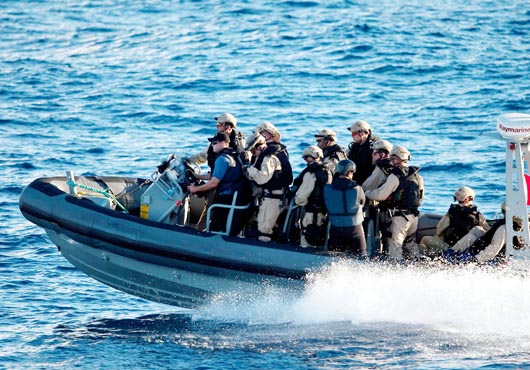
There are many factors that contribute to mission success on any given operation. Some are enablers which, when combined, set the stage for success and provide the command team with the necessary tools to achieve a positive mission outcome.Highly trained and effective personnel are critical to mission success. On board Her Majesty’s Canadian Ship (HMCS) Toronto, a frigate of the Royal Canadian Navy currently deployed on Operation Artemis in the Arabian Sea region, this is no exception – every crew member plays a key role. Some of the ship’s company also have the added duty of being a member of the naval boarding party (NBP), which enables Toronto to perform some of her assigned tasks, most notably maritime security and counter terrorism operations. The NBP provides an increased capability for the ship, which allows Toronto to perform full boarding operations.
The Canadian Armed Forces, like many other militaries around the world, use NBPs on board their ships. The primary role of a NBP is to conduct boardings of various classes of ships which intelligence teams have identified as being of interest. While deployed on Op Artemis, Toronto’s NBPs are expected to carry out tasks such as establishing the identity of a suspicious vessel and/or the legality of its cargo or passengers, and gathering information to determine if the cargo or passengers are linked to terrorism. Drug smuggling, for example, is often used as a means to financially support terrorist organizations. In the Royal Canadian Navy, NBP teams are not a specialized trade; the team is chosen from Toronto’s core crew. While some positions are required to be filled by specific trades on board such as a marine engineer or medical personnel, anyone may join the NBP, as long as they possess the required qualities and training. Some of the personal attributes required include initiative, motivation and the ability to perform in a team setting. NBP personnel should also possess a high physical fitness level with stamina and agility, as they may be exposed to extreme environmental conditions in the course of their duties. Additionally, they must be adept at handling an array of weapons. To ensure success during boarding operations, the team requires extensive training in areas such first aid, physical fitness, use of non-lethal force (pepper spray and ASP baton), shooting techniques for the Sig Sauer, C8, MP5 and shotgun, tactical movement, search techniques, intelligence gathering and handcuffing. As part of this training, NBP members often use Combat Enhanced Ammunition Simulation System (CEASS) rounds, which perform like paintball pellets to allow realistic tactical training. The process involved in a boarding is regimented and includes a set sequence of events to ensure Toronto remains compliant with direction from Combined Maritime Forces (CMF) and Combined Task Force 150 (CTF 150), as well as national doctrine and both domestic and international law. Toronto begins with a search for a contact of interest. Upon localizing the target vessel, the ship requests authorization from CTF 150 to carry out a boarding. The ship is then brought to boarding stations while the NBP verifies its equipment. Once its equipment is prepared, the NBP receives additional instruction and guidance from the ship’s commanding officer regarding the boarding. The rigid-hulled inflatable boat is then launched, taking Alpha wave (the first group) to the vessel to be boarded. The Alpha wave embarks the target vessel using a caving ladder. The team’s first action is to perform a security sweep. The entire vessel is searched for potential threats to ensure the subsequent safety of personnel. If it is determined that there are sufficient grounds, Bravo wave (the second group) is sent on board to conduct a more detailed search for signs of illegal activities. Upon the discovery of hidden or void spaces where narcotics, for example, could be hidden, the ship requests authorization from CMF through CTF 150 to perform keyhole searches. A keyhole search is a very small hole drilled into a space through which a camera is inserted to gain visual access to the hidden space while minimizing damage to the vessel. If the team sees something suspect that requires further examination or if illicit cargo is discovered but is not easily accessible, a request for destructive search is then sent to CMF through CTF 150. A destructive search allows the NBP to access the suspect area using more invasive means; however, any damage done has to be repaired prior to the NBP departing the vessel. Following the completion of the destructive search and the successful discovery of illicit cargo such as narcotics, authorization for disposal will be sought through CMF and Canadian Joint Operations Command. The narcotics will be embarked on board Toronto, and members of the ship’s company will perform intelligence gathering. Once that is completed, the narcotics are disposed of in the most expedient and efficient manner available, concluding the boarding operation. HMCS Toronto is currently deployed with 262 crew members, along with CH-124 Sea King helicopter and uninhabited aerial vehicle detachments on Op Artemis. The ship is part of CTF 150, a multinational maritime task force combating terrorism across the Red Sea, Gulf of Aden, Arabian Sea and the Gulf of Oman. Toronto and her coalition partners promote security, stability and prosperity in an area that spans over two million square miles and encompasses some of the world’s most important shipping routes, connecting the Far East to Africa, Europe and North America. Follow Naval Today via:
+TAG
|


