
FNS Prairia
Ships and Defence News Past and Present

|
Periscope photography by submarines was vital for Battle of Tarawa
Naval History Blog by NHHC / 9min // keep unread // skip // preview
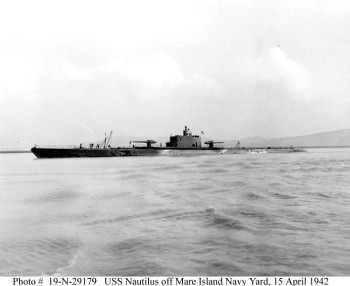
 This photo shows USS Nautilus (SS-168) off the Mare Island Navy Yard, Calif., April 15,1942, following modernization. This photo shows USS Nautilus (SS-168) off the Mare Island Navy Yard, Calif., April 15,1942, following modernization.Note her very heavy deck armament of two 6″/53 guns; also embrasure in her upper hull side, just in front of the forward gun, for newly-installed topside torpedo tubes. At least two torpedoes are on deck above this location, probably being prepared for stowage below. Photograph from the Bureau of Ships Collection in the U.S. National Archives. By the Naval History and Heritage Command For more than 113 years, submarines have been silently gliding under the water, stealthily scouting out coastlines, harbors and lagoons. But it was 60 years ago that attack submarine Nautilus (SS-168) would perform the first combat periscope photography leading to the capture of the Apamama Atoll in the South Pacific Nov. 19-24, 1943. The strip of land would later serve as a landing field for allied forces, perhaps the only atoll in history to be captured by a submarine. It was an early example of the effective use of submarines in recon and troop insertion, both of which are essential capabilities of today’s submarine force. In fact, just two weeks ago on Nov. 4, 2013, the newest boat in the Virginia-class submarine fleet was launched: USS North Dakota (SSN 784). And just like Nautilus, six decades earlier, these “crown jewels” of America’s defense continue to provide intelligence gathered by means of surveillance and reconnaissance” (Defense Science Board’s 1998 study “Submarine of the Future”). While maintaining much of the same mission as Nautilus, the Virginia-class boats are better in shallow water along the coasts, plus they can be easily configured to carry a contingent of SEALs for clandestine operations. New surveillance technology being developed for Virginia-class submarines includes both aerial and undersea unmanned vehicles. Cyber threats have only increased the submarine’s mission to own the undersea domain, according to Chief of Naval Operations Adm. Jonathan Greenert. “Today we are inextricably connected to the EM (electromagnetic) and cyber environment, and occasionally we conduct military operations in it. This situation parallels in many ways the period around the First World War, when submarines transited on the surface, preferred to submerge only to clandestinely move into firing position, and then surfaced to attack,” Greenert said in a July 2012 blog. “In subsequent years, submarines spent more time submerged, and with the advent of nuclear power, no longer need to surface or snorkel. As a matter of survival, we developed an understanding of underwater acoustics and the ocean environment, a culture of sound silencing, and a doctrine of operating under water – eventually turning the undersea environment into a primary warfighting domain.” Global warming may soon open sea lanes in the Arctic where U.S. submarines will be deployed to deter regional tensions and conflicts, according to the Nov. 2012 Design for Undersea Warfare guidance by Commander, Submarine Forces (COMSUBFOR). Besides being able to inflict attacks without support and assert U.S. sea control, the submarine fleet will depend upon new capabilities that “trick, jam or blind adversary sensors, disrupt cyber systems, cripple targets without killing them, destroy seabed targets, attack shallow and fast surface ships and permit time-critical strikes against distance targets,” the Undersea Warfare Guidance states. But back to our history lesson: The unprecedented use of periscope photography used by USS Nautilus (SS 168) helped provide some of the best intelligence gathered among an arpeggio of atolls that populated the Gilberts in the South Pacific. It was Nautilus’ successful sixth patrol mission that was the basis for similar submarine reconnaissance for the rest of the Pacific campaign. Tarawa was the largest of the atolls that populated the Gilberts in the South Pacific. The Japanese fortified it shortly after the attack on Pearl Harbor. Submarines, already used in landing teams of the Fifth Amphibious Corps to scout out enemy territory under darkness, were becoming vital in providing periscope photography. Up to that point, pictures shot through periscopes were used to document the sinking of ships. Rear Adm. Richard Turner and Marine Gen. Holland Smith determined periscope photography could provide panoramic sequence and topographic features. With the addition of aerial photographs, it would provide the best information possible for landing teams. The perfect submarine to achieve that goal was Nautilus, a large, mine-laying sub that had already performed a number of missions in the South Pacific. Under the leadership of Cmdr. William D. Irwin, the Nautilus was given orders in September 1943 to conduct periscope reconnaissance and photograph the beachheads of Tarawa, Kuma, Butairiari, Apamama (also known as Abemama) and Makin. After 18 days of periscope photography, Nautilus returned to Pearl Harbor to prepare for an operation called Boxcloth, in which the sub would land the first recon unit to perform amphibious reconnaissance in the Gilbert Islands. Knowing Japanese troops were on the island, Gen. Smith determined it was best to scope out the size and location of the troops before committing more Marines in taking Apamama Atoll. Nautilus returned to just outside Tarawa’s harbor, where reconnaissance discovered an 11-degree compass error in old British charts for the entrance into the Tarawa Atoll. The charts were adjusted, and that correction would later prove crucial for task forces headed toward the Nov. 20-23 battle. After performing periscope photography along Tarawa, Irwin received orders to look for a missing naval aviator shot down in the area. As Nautilus skimmed along the coast, she was fired upon by a Japanese shore battery, forcing her to dive. At this point, the rescue mission was called off and Nautilus ordered to proceed to Apamama, loaded with 5thAmphibious Reconnaissance Company and an Australian scout who spoke the Gilbertian language. While gliding on the surface, Nautilus made radar contact with an “unknown” vessel traveling at 25 knots. Irwin correctly assessed it wasn’t likely to be the enemy and since his oxygen and battery were low, he chose not to submerge. Unfortunately, word of the rescue mission being aborted didn’t reach the command of the cruiser Santa Fe (CL-60) and destroyer Ringgold (DD-500), from a nearby task force. Picking up Nautilus on radar and with low visibility, they fired on what they thought was a Japanese patrol vessel. A shell struck the submarine in the conning tower hatch, but luckily, the shell didn’t explode. Water poured into the tower, flooding the main induction and shutting down the gyroscope. After diving to 300 feet, repairs were made to the sub. After two hours, Nautilus continued on to Apamama Atoll. The submarine’s landing party began to wet-dock into six 10-man rubber boats under the cover of night and high tide, beginning at 11:53 p.m. Nov. 20. Despite squalls, currents and motors shutting down the boats, all of the landing parties made shore by 3:30 a.m. Nov. 21 and joined an earlier scouting party. The mission, while extremely successful, wasn’t without its tense moments. Unable to communicate with the submarine, the landing party would send messages to the sub by certain placements of four Navy mattress covers in the trees. The Gilbertian natives had no problem relaying information to the Americans about the Japanese, who had conscripted them into labor and treated them with contempt. Most importantly, the natives told the landing party that the Japanese knew they were there. While not high in numbers, the Japanese coast defenders were well fortified and protected in bunkers. But submarine shell bombardment Nov. 24, 1943, from the 6-inch guns held the enemy at bay while exacting losses from the Japanese . As the Americans steadily took command of the island, the last remaining Japanese garrison was located near a radio station. The Japanese captain gathered his troops to give a motivational talk to “Kill all Americans,” but his weapon accidentally discharged and killed him. The remaining troops, fearing what was to come, then dug their own graves, laid down and committed mass seppuku by shooting themselves. The Americans suffered their own losses: Two killed, two wounded and one injured. Nautilus would go on to conduct a total of 14 mission patrols before returning to Philadelphia May 25, 1945, where she was decommissioned. During her service, the sub earned the Presidential Unit Citation for aggressive war patrols in enemy-control waters and 14 battle stars, one for each mission. The next-generation of attack submarines will continue USS Nautilus’ legacy. And should diplomacy fail, as the Undersea Warefare Guidance states, submarines will be on the forefront “to deliver credible, decisive firepower from beneath the sea.”
|
|
FN MINIMI Adapts to New Operational Conditions
Home | Think Defence by Think Defence / 3h // keep unread // skip // preview
Read more  Wonder if we will be buying any?  FN Minimi MkIII FN Minimi MkIII
The post FN MINIMI Adapts to New Operational Conditions appeared first on Think Defence. |
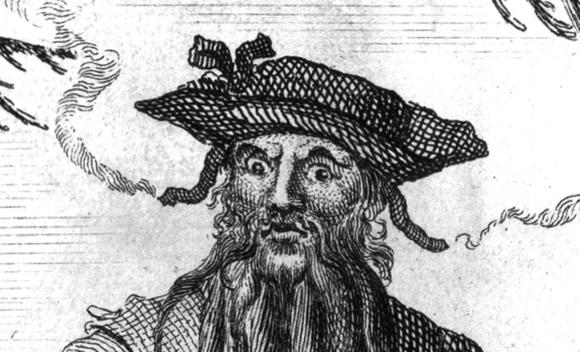
Two hundred-ninety-five years ago today, Royal Navy sailors from Hampton clashed with the notorious Blackbeard the Pirate in a hand-to-hand struggle off the remote Outer Banks island of Ocracoke.
Downing a bowl of strong liquor as they approached his ship on the morning of Nov. 22, 1718, the fiery brigand yelled, “Damnation seize my soul if I give you quarter or take any from you!”
But that was to be his last toast.
|
In a bloody back-and-forth struggle that might have gone either way, the determined band of sailors by Lt. Robert Maynard finally killed and decapitated the fearsome pirate chieftain just as he appeared about to take Maynard’s life.
Here’s my account of the expedition from “Out of the Sea Came Pirates! The Golden Age of Pirates in Hampton Roads.”
When news of one of history’s most notorious pirate gatherings reached Virginia in late 1718, it couldn’t have sparked more fear.
Just two days sail from Hampton Roads, the brutal Charles Vane and his second-in-command — Calico Jack Rackham — had joined the infamous Blackbeard in a week-long, rum-soaked cavort on Ocracoke Island.
And so menacing was this apparent alliance and the specter of a buccaneer stronghold looming so close to home that it transformed the head of a colony long regarded as a choice piratical hunting ground into a determined pirate killer.
Alexander Spotswood knew all too well that — just one year before — the vital channel through Capes Henry and Charles was closed for weeks by predatory sea rovers. Blackbeard himself had plundered nearly 50 ships in the Caribbean and Atlantic in only two years — and his notorious blockade of Charleston that spring made him an international villain.
Still, the secret expedition Spotswood organized in Williamsburg and Hampton finally eradicated this threat, leaving an indelible mark on the region.
Virginia became one of the most active combatants in the war against these brigands — and its triumph over the larger-than-life Blackbeard was a landmark blow that helped end the golden age of pirates.
“Like a lot of pirates, Blackbeard appeared out of nowhere after learning his trade as a privateer,” historian John V. Quarstein says.
“In a very short time, he exploited his talents for daring, deviance and debauchery in ways that made him an emblem of piracy — and the battle in which he met his end has become one of history’s most famous pirate battles.”
Despite a persistent campaign against piracy, Virginia’s geography combined with its rich tobacco fleets to turn the waters off the capes and the lower Chesapeake into a choice target.
Located near the northernmost reach of the Gulf Stream, the region was easily reached from as far away as the Caribbean — and the wealth of protected anchorages on its long coastline made it a haven for sea rovers intent on striking without being detected.
That’s one reason why so many plied the waters here after the end of Queen Anne’s War in 1713, when thousands of English privateers once employed against Spain and France turned to piracy. Even before ex-buccaneer Woodes Rogers became royal governor and drove them from the Bahamas in July 1718, they menaced Virginia and the East Coast in large numbers.
“Nobody paid any attention when they were raiding the Spanish,” says maritime historian Donald G. Shomette, author of “Pirates on the Chesapeake Bay.”
“But then it got of hand.”
No newly minted pirate stood out more than Blackbeard — aka Edward Teach or Thatch — who had shown courage and boldness as a privateer.
Tutored by the renowned Benjamin Hornigold, Blackbeard proved so adept at his new trade that he soon commanded an unusually large and well-armed ship of 40 guns and a fleet of smaller buccaneers. By the end of 1717, he had taken dozens of vessels, including a well-armed merchant ship that put up a lengthy battle.
That fearsome reputation and firepower panicked the port of Charleston when Blackbeard held it hostage in May 1718.
“This was a big tall man with long matted hair and a long black beard tied off in ribbons. So when he jumped on your deck armed with several braces of pistols as well as a sword — he was like a fury from hell,” Quarstein says.
“His ship — the Queen Anne’s Revenge — also was one of the most powerful pirate vessels and one of the most powerful ships in American waters at the time. So it’s no surprise that Charleston and the whole East Coast were so fearful. Blackbeard captured and plundered every ship that passed by for a week — and he held some of the leading citizens for ransom.”
Such daring and muscle might have enabled Blackbeard to defy two royal guardships roving the Chesapeake and spark similar panic in Hampton Roads.
But instead he sailed to the Outer Banks, where he beached his ship, abandoned most of his crew and made his way inland to accept a royal pardon.
Within weeks, however, Blackbeard had returned to his piratical ways. And his notorious October rendezvous with Vane and Rackham sparked such alarm that Lt. Gov. Spotswood — citing a plea for help from North Carolina merchants — stealthily hired two light, fast sloops manned by Royal Navy seamen and sent them to Ocracoke Inlet on Nov. 17.
“This was all Spotswood’s doing,” Colonial Williamsburg historian Linda Rowe says.
“And he was so afraid word might slip out that he kept it under wraps even from the Royal Council.”
Armed with information from Blackbeard’s former quartermaster, William Howard — who had been seized in Hampton earlier that year — Lt. Robert Maynard and his men located the pirate’s hidden mooring on Nov. 21. The next morning they slipped through the shoals toward his ship, which greeted them with curses and cannon fire.
“Damnation seize my soul if I give you quarter or take any from you!” Blackbeard yelled, as he downed a bowl of liquor in a toast to his opponents.
Hoisting his black death’s-head flag, the pirate swung his vessel into the hidden shallows and fired on his foes with simultaneous port and starboard broadsides. Nearly 30 Englishmen fell in the deadly barrage, after which all three ships ran aground.
Struggling to free his sloop, Maynard hurried to close with the pirate before another broadside could do him in. He then told his men to wait below deck with pistols and cutlasses ready.
Pirate grenades filled the air with smoke and confusion as Blackbeard pulled alongside, yelling “Let’s jump aboard and cut them to pieces!” But as the brigands lept aboard, Maynard’s men rushed out in a fierce hand-to-hand melee.
Breaking Maynard’s sword, Blackbeard was stepping in for the kill when he was struck in the neck and throat from behind. Blood splattered as he continued to fight, then fell to the deck after being stabbed and shot from all sides.
“He lived up to his legend fully,” Quarstein says.
“He took six pistol shots and more than 20 sword wounds before he died — and he was cocking a pistol as he dropped.”
Not until Jan. 3 — after rounding up Blackbeard’s accomplices in North Carolina — did Maynard return to Hampton with the severed head of the pirate swinging from his bowsprit.
Cheers and cannon fire saluted this grisly arrival, and the celebration in Williamsburg five days later was just as emphatic.
“Blackbeard was Public Enemy No. 1 — and now Spotswood had his head,” Quarstein says.
“So this was a big deal.”
For more stories on the Golden Age of Piracy in Hampton Roads, click here.
– Mark St. John Erickson
Copyright © 2013, Newport News, Va., Daily Press
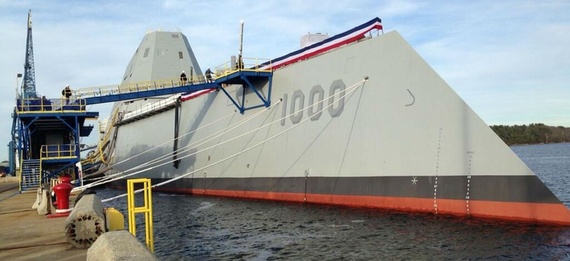

It doesn’t look like a ship. It doesn’t even feel like a ship.
The hallways are too wide. The ceilings are incredibly high. There’s barely an outdoor deck. No bridge tower. No lookout crow’s nests. Flat-screen TV mounts are everywhere. In fact, the only sign that this is a ship are the steep deck ladders and “knee-knocker” air lock doorways sailors and ironworkers duck through from bow to stern.
There’s also the relatively cavernous mission control room, which looks more like something from Houston than Groton, with large flat-screen displays at the front of the room, five rows of 18 work stations with even more flat screens at each station, and a rear loft for flag officers to oversee the entire operation.
Welcome aboard the Zumwalt, the Navy’s first DDG-1000 stealth destroyer.
Launched just last month, she is an impossibly spaceship-looking trapezoid tower jutting from the still water. The incredibly automated, totally electrical vessel will hold a smaller crew than any destroyer before her. She can house two helicopters that can land in higher seas than ever and then be automatically pulled inside a concealed hanger. There’s room for several drone aircraft. It can power a small city. And her two advanced guns on the forward deck can hit a basketball with a 155mm Howitzer-sized artillery shell from 63 miles away.
Eventually. For now, much of her interior has been bolted down, entire consoles and window panes are covered in plywood as the work continues to piece together the world’s most advanced naval destroyer ever built.
The menacing grey wedge of destruction that is sleeping eerily and dormant in a tranquil sliver of coastal Maine water is not scheduled for sea trials until 2015, and won’t be fully operational until at least 2016 — in the Pacific, of course, where the Pentagon has sent the bulk the fleet’s most advanced naval power. There, if ever needed, the Navy says the Zumwalt will be able to launch 600 shells from 63 miles away to an accuracy of within 30 inches.
Lest there be no doubt, she is a destroyer.

Defense Secretary Chuck Hagel visited the ship and the team of sailors and contractors working on her at Maine’s Bath Iron Works on Thursday. Shipyard workers took Hagel’s staff and reporters through the vessels insides, where no photography was permitted (Hagel’s official photographer’s shots had to be cleared for security leaks.) But here’s what it’s like inside.
There is industrial construction equipment everywhere, making it difficult to judge the size of open space. But even with the clutter of welding tanks, electrical lines, and scaffolding, it’s clear this is a ship built with room to move inside – especially on the hangar deck. Right up the middle is a track, where helicopters – two Sea Hawks, for example can land and then attach to a hook that pulls the aircraft inside. No need for sailors there. In fact, everywhere, from firefighting to lookouts, sailors are being replaced by technology.
Walking alongside the outer passageway on the hanger deck feels like walking along the inside wall of a giant tent, and is wide enough for a small fork truck to drive through. The ship has an external skin that shoots from the hull right up past what would be the top deck. So instead of chrome railings and a seaside view, a wall of grey protects the sailors inside.
At the mission control room, complete with new paint smell, one can still see the giant rivets where the 900 ton composite deck house — that top trapezoid thing — was bolted to the steel hull.
“That happened in December,” said Todd, who proudly showed off the build. “It was very cold – a very cold night,” he said, wistfully.
In fact about the only design element of the ship that resembles a battleship are her forward guns. But these are not your grandfather’s guns. In tests they have proven incredibly accurate, ship workers boasted, from more than 60 miles away. “If we missed by 30 to 40 inches, that was a bad shot,” said one industry official overseeing the ship, who asked to remain anonymous.
Hagel praised the workforce that gathered dockside in the chilly Maine wind and said the ship reflected the diversity of future threats the United States will face, as it heads to the Pacific. “Assigning this new ship to that rebalance is an important signal to the commitment that we are making to a part of the world.”
He didn’t say specifically which rival navies, or adversaries, she will face when she finally reaches the Pacific. But silently the Zumwalt held firm behind Hagel, the chop picked up across the water, and as the secretary left the shipyard workers scurried back to the ship, and the work still to be done.
Ships and Defence News Past and Present


