|
UK: HMS Blyth Finishes Sea Training Package
Naval Today >> The industry’s seaborne news provider by Naval Today / 11h // keep unread // skip // preview
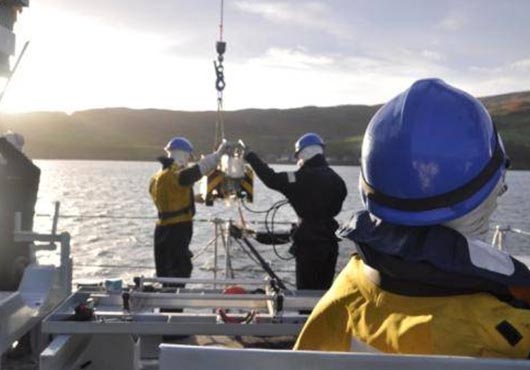
Having participated in the NATO exercise Joint Warrior, HMS Blyth began her Operational Sea Training (OST) package in late October.This meant undergoing a demanding programme of world renowned intensive training, designed to train crews in a series of realist challenging scenarios. The first two weeks were predominantly spent undergoing damage control assessments and dealing with an increasing capable asymmetric surface threat. Blyth’s mission in the fake scenario was to support regional stability in the region by ensuring the vital sea trade routes remained open to shipping. Blyth also underwent training to deal with various maritime emergencies. One of these scenario’s involved coming to the aid of a stricken vessel, saving both vessel and crew, another task dealt with towing a damaged cargo ship. Together with combating a hostile enemy threat, these tasks help highlight the many varied and diverse challenges the Royal Naval deals with on a daily basis. The OST package itself is tailored to check a crews competence as an adaptable and dependable force; the crew of Blyth hit the ground running and displayed a tremendous degree of initiative throughout. Having undergone numerous assessments, Blyth headed out to a live firing area where they successfully fired all the ships weapons systems at night. This turned out to be quite the firework display. After an initial two weeks of constant and demanding serials, Blyth began the Mine Warfare phase of OST. This involved ten days at sea, hunting for mines while the exercise built to a dramatic conclusion, finishing with a patrol exercise in which her skills, honed over the previous four weeks, were put to the test. In summary, Blyth has had a successful OST period and the crew anticipate a deployment in the New Year for which they have been extremely well prepared.
Press Release, November 22, 2013; Image: Royal Navy Follow Naval Today via:
|


Furgo’s New Geotechnical Drilling Vessel Begins Operation
Furgo’s New Geotechnical Drilling Vessel Begins Operation
Posted by Eric Haun
Friday, November 22, 2013, 11:14 AM

Furgo Voyager
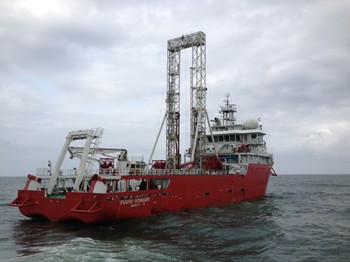
Fugro Voyager, a purpose built DP2 geotechnical drilling vessel, is entering service with Fugro’s Offshore Geotechnical Division to expand its operations in the frontier areas of the Asia Pacific region. Specifically designed and built to address the varied demands of the region’s deepwater markets, the new vessel has several features which will enhance overall productivity, Furgo said.
At 83 meters by 20 meters, with a twin tower drilling derrick over a centrally located moon pool, the vessel has automated pipe and tool handling equipment to promote safe drilling floor operations. Equipment includes both downhole and seabed sampling and testing systems rated for 3,000 meters water depth.
Fugro Voyager is equipped with a dynamic positioning station-holding capability (DP 2) and is built to Comfort Class COMF-V(3) standards with quarters for up to 60 persons that are outfitted to the highest standards. A large soil laboratory is centrally located next to the drill floor giving a unique open-plan working environment for the geotechnicians. Other areas in the vessel include client offices, a conference room, day rooms and a gymnasium.
The new vessel represents a significant investment in deepwater equipment for the frontier areas of the Asia Pacific region and demonstrates Fugro’s commitment to the region. “With our specialist resources we are well-placed to help customers reduce the risks associated with wells and infrastructure as they venture into these remote expanses,” explained Jerry Paisley, Managing Director, Fugro Singapore Pte Ltd. “By permanently stationing this purpose-built deepwater asset in the region we are improving availability for our Asia Pacific customers and providing better workability to meet their project requirements.”
December sees Fugro Voyager departing for her maiden contract off the northwest coast of Australia, where she will undertake work to aid foundation design for seabed infrastructure. She will be performing seabed in situ testing, large diameter piston cores, drilled borings and downhole in situ tests in water depths up to 1,350 meters.
Fugro Voyager is part of Fugro’s global fleet renewal strategy, where older tonnage is being replaced with new modern vessels, thereby differentiating the company from other offshore geotechnical providers.
furgo.com
Share this:

Photos from a bygone Era from RNZN Communicators Association

|
Photos from a bygone Era
RNZN Communicators Association by Frank Rands / 7h // keep unread // skip // preview
Here are some images I thought you might be interested to have a look at. Images are provided courtesy of the Naval Museum. Click on image to enlarge.
          
+TAG
|


Share this:

Tradition And Legacy From Battle of Chosin
|
Tradition And Legacy From Battle of Chosin
Navy Live by U.S. Navy / 5h // keep unread // skip // preview
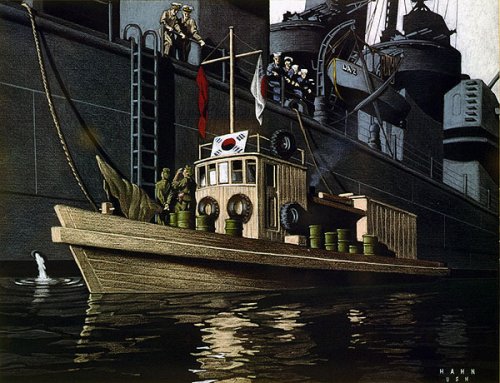
By Rear Adm. Rick Williams The Mid-Pacific (MIDPAC) guided-missile cruiser USS Chosin (CG 65) returns to its homeport of Pearl Harbor today from a six-and-a-half month deployment to the western Pacific. At nearly the same time this morning, we will welcome Republic of Korea Navy ships ROK Dae Jo Yeong and ROK Hwacheon, Commander, Cruise Training Task Group.  This small, ancient South Korean craft is dwarfed by the huge bulk of the cruiser USS Los Angeles (CA-135) during the Korean War 1950-1953. This small, ancient South Korean craft is dwarfed by the huge bulk of the cruiser USS Los Angeles (CA-135) during the Korean War 1950-1953.
Chosin is named for the Battle of Chosin Reservoir in the Korean War. The battle, fought by courageous Marines, mostly the U.S. 1st Marine Division, and other U.S. service members and allies, was some of the fiercest fighting in modern warfare. And it was fought during one of the coldest winters in recorded history on the Korean Peninsula in late November and early December in 1950. Looking back more than 60 years later, we know the Korean War preserved freedom and democracy for South Korea and provided a better way of life for millions of people over many generations. The U.S. Navy had a critical role in supporting Marines and UN Allies throughout the war. Naval forces provided the key strategic advantage. Our surface ships, submarines and aircraft provided sea control, effectively blockading North Korea’s coastlines and denying enemy shipments while ensuring mobility of sea lanes for our side. Aircraft from Task Force 77 carriers and escorts provided strikes and support. Cruisers, destroyers and other ships put a barrage of fire between our troops and the enemy. Pearl Harbor’s own Mighty Mo, battleship USS Missouri (BB 63), added the weight of her 16-inch guns to the fight.  Marines assigned to the Marine Corps Base Hawaii Rifle Salute detail stand in formation next to the battleship USS Missouri (BB 63) Memorial. Marines assigned to the Marine Corps Base Hawaii Rifle Salute detail stand in formation next to the battleship USS Missouri (BB 63) Memorial.
We demonstrated and reinforced fundamental naval principles in the Korean War, sea control, power projection, countermine warfare, controlled evacuation and interoperability. That legacy lives on in our maritime strategy today, which our ships and Sailors continue to carry out. We should remember this week, and every other week for that matter, the challenges associated with these deployments. The sacrifice and time away from home can be stressful for Sailors and their families. Work-ups are particularly challenging as our crews train for a myriad of contingencies, from humanitarian assistance and search-and-rescue to the full spectrum of combat. So let’s think about the significance of USS Chosin’s return to Pearl Harbor coinciding with our ROK partners’ visit today.  Sailors man the rails as the guided-missile Cruiser USS Chosin (CG 65) transits out of Sydney Harbor. Sailors man the rails as the guided-missile Cruiser USS Chosin (CG 65) transits out of Sydney Harbor.
USS Chosin’s deployment included a visit to Busan, Republic of Korea in July, where the U.S. Navy and ROK team participated in bilateral Aegis interoperability training. Chosin operated with other units in the U.S. 7th Fleet area of operation during high-tempo operations in the South and East China Seas. Visits to the Philippines, Singapore and Australia also provided an opportunity to continue building partnerships and conducting integrated operations with our allies and partners. Deployments like Chosin’s to the western Pacific matter, as history taught us in naval battles in Korea. Partnership-building matters. Today, we continue to see the impact of our efforts 60 years ago as we meet our ROK partners on the pier in Pearl Harbor.  Capt. Patrick Kelly, commanding officer of the guided-missile cruiser USS Chosin (CG-65) gives a tour of his ship to Rear Adm. Lee Byung-kwon, Republic of Korea (ROK) navy fleet deputy commander during an Aegis scenario interoperability training event. Capt. Patrick Kelly, commanding officer of the guided-missile cruiser USS Chosin (CG-65) gives a tour of his ship to Rear Adm. Lee Byung-kwon, Republic of Korea (ROK) navy fleet deputy commander during an Aegis scenario interoperability training event.
The brave veterans of the Battle of Chosin Reservoir take a special pride in their namesake on our waterfront: USS Chosin. As we welcome back Chosin from deployment and greet the ROK Navy today, we expect to have members of the “Chosin Few” pierside, veterans who fought fearlessly at the “Frozen Chosin.” These warriors can also be proud of their commitment to warfighting readiness in the Korean War. Those who fought for survival while operating forward earned a legacy of stability, freedom and prosperity for us and our allies and friends. USS Chosin and our other ships homeported here in Hawaii that operate forward are protecting that legacy today and for generations to come.
+TAG
|
Share this:

Your US Navy TODAY – Philippines, Greece, Mediterranean Sea, South China Sea, Atlantic Ocean

|
Your Navy TODAY – Philippines, Greece, Mediterranean Sea, South China Sea, Atlantic Ocean Navy Live by stanbailey / 5h // keep unread // skip // preview
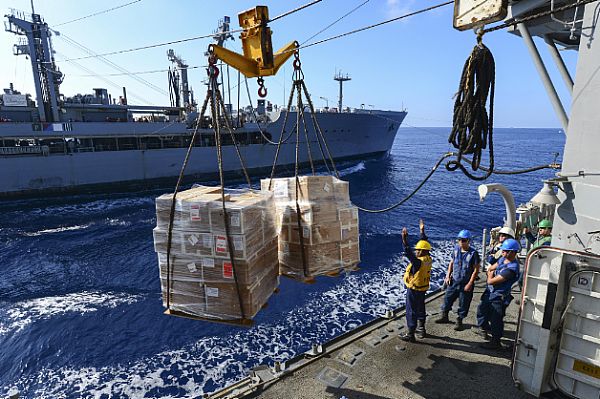
On any given day, in your Navy, our team of more than 600,000 professional Sailors and civilians are working together around the globe to perform our mission: deter aggression and, if deterrence fails, win our Nation’s wars. It is not possible to share every aspect of this global team but, through this blog, we offer you a glimpse of what these men and women do on a daily basis.
Which photo do you think best shows the Navy defending America and why?
Status of the Navy:
+TAG
|


