Clock ticking on Canadian navy, coast guard fleets

Clock ticking on Canadian navy, coast guard fleets

The federal government has awarded the Vancouver Shipyards a $3.3-billion contract to build 10 new Coast Guard vessels.

Photograph by: Handout/Fisheries and Oceans Canada , Postmedia News

OTTAWA — An auditor general’s report next week that the federal government’s national shipbuilding strategy will cost billions more than budgeted to buy new navy and coast guard ships is likely to prompt calls to revisit or scrap the whole plan.

What many may not realize, however, is the clock is already ticking on the country’s naval and coast guard fleets — with things about to get a whole lot worse before they get better. That means there’s little room for second-guessing and further delays.

Auxiliary Oiler Replenishment Vessels

A fancy name for the Royal Canadian Navy’s two 45-year-old resupply ships, HMCS Protecteur and HMCS Preserver. They are the navy’s largest vessels and have been deployed on numerous missions, including the first Gulf War, East Timor, and in support of operations in Afghanistan after 9/11. They carry fuel, food, ammunition and spare parts to support missions at sea and on land. They also hold three helicopters and have advanced medical and dental facilities.

Many of the ships’ systems are nearly obsolete, while repairs and maintenance costs are prohibitively expensive thanks in part to a shortage of spare parts. The vessels’ design does not meet many international environmental standards, which means they are barred from entering ports in the United States and Europe.

They were supposed to have been replaced by new joint support ships in 2012, but budget problems and delays have pushed the timeline for delivery of the first joint support ship to 2019 at the earliest. As a result, the Protecteur and Preserver have had to remain in service even longer. They have undergone refits and extended-life maintenance. Even then, they will be retired in 2017, meaning Canada will be forced to rely on its allies for resupply capabilities for at least two years.

Iroquois-class Destroyers

Built in the early 1970s to protect against Soviet submarines, they underwent a major upgrade in the 1990s so they could provide anti-aircraft defence as well as command-and-control capabilities for Canadian and allied naval task forces. They have been deployed to the Persian Gulf in support of Operation Desert Storm, the Indian Ocean after 9/11, and to Haiti following the January 2010 earthquake. Four were originally built, but only three remain.

The Iroquois-class destroyers are scheduled for replacement in the mid-2020s, if all goes according to plan. However, officials have previously indicated that the 40-year-old ships will have reached the end of their expected lifespan in 2017, and that they will not be replaced before retirement. That decision could be reversed, but extended and costly maintenance will likely be required. The navy’s 12 Halifax-class frigates can pick up some of the slack, but not having the destroyers will still limit the types of operations the navy can undertake.

Halifax-class Frigates

The Royal Canadian Navy’s workhorse. Built in the early 1990s, they carry a helicopter as well as weaponry to engage targets in the air and on the surface. They have been deployed on countless missions, including in support of the Persian Gulf war, Afghanistan, drug interdiction operations in the Caribbean, and counter-terrorism patrols in the Mediterranean and Indian Ocean. There are 12 of them.

The frigates have recently been modernized with new weaponry, sensors and other equipment to keep them in service until 2030. They are due to be replaced at the same time as the Iroquois-class destroyers in the mid-2020s, if all goes according to plan. The project to replace them is the most expensive — and complex — part of the national shipbuilding plan.

CCGS Louis S. St-Laurent

The Canadian Coast Guard’s largest icebreaker as well as its flagship. Launched in 1966, its main tasks are to escort vessels through the Arctic and support scientific research in Canada’s Far North.

The St-Laurent was to have been retired in 2000, but financial concerns delayed construction of a replacement and instead it underwent a refit that extended its life to 2017. The Conservative government announced a plan in 2007 to build a new heavy icebreaker, the CCGS John G. Diefenbaker, by 2017. However, the Diefenbaker now won’t be in the water until at least 2022. (Its budget was also recently increased from $720 million to $1.3 billion.) The St-Laurent is now expected to remain in operation until 2022, at which point it will be 56 years old.

lberthiaume@postmedia.com

Twitter.com/leeberthiaume

© Copyright (c) Postmedia News

Thales to Provide Full Mission Suite for Indonesian PKR Vessels

Thales to Provide Full Mission Suite for Indonesian PKR Vessels

Naval Today >> The industry’s seaborne news provider by Naval Today  /  5h  //  keep unread  //  trash  // preview

Thales to Provide Full Mission Suite for Indonesian PKR Vessels

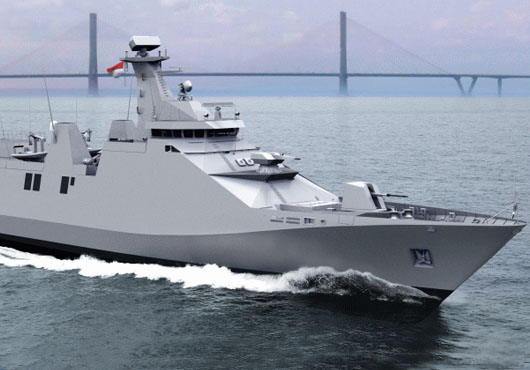
Thales has signed a contract with the Dutch shipyard Damen Schelde Naval Shipbuilding for the delivery and installation of a full mission systems suite for the 2 PKR class vessels under construction for the Indonesian Navy.

Thales will supply the latest release of the TACTICOS Combat Management System; SMART-S Mk2 surveillance radar; STIR 1.2 Mk2 EO fire control system; KINGKLIP sonar; LINK-Y datalink, as well as its naval communication and navigation systems. The first delivery is scheduled for the end of 2014. The programme is scheduled to end in 2017.

Thales will also increase its existing industrial cooperation with the Republic of Indonesia, with PT LEN Industri, developing part of the Combat Management System software suite. In addition to software development, Thales will continue to involve the local industry in service support and will continue to develop its long-term partnership with the Indonesian industry on future programmes in both the military and civil sectors.

This contract brings the number of SMART-S Mk2 radars systems up to well over 50.
Press Release, November 19, 2013; Image: Thales

Maersk Mega-Container Ships Coming Down the Stocks Fast

MarineLink.com

Monday, November 18, 2013
File Maersk Triple-E: Photo Wiki CCL
Maersk Triple-E: Photo Wiki CCL

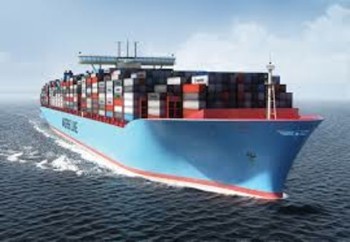
Daewoo Marine Shipbuilding and Engineering (DMSE) yard in South Korea continues to produce the new Triple-E ships for Maersk Line at a very high rate; the fifth ship of the series ‘Maribo Mærsk’, is to be officially named later.

Despite the ships’ record dimensions, DMSE has been able to deliver a new ship just a month-and-a-half apart.

The interest in Maersk Line’s new Triple-E container ships has been enormous, ever since the first image of the upcoming Maersk Mc-Kinney Møller, the first ship in the series, was published in the spring.

Maersk Line has ordered a total of 20 Triple-E ships from the South Korean shipyard.

Source: Maritime Denmark

Trimaran Averaged 22 Knots to Win Transatlantic Race

MarineLink.com

Tuesday, November 19, 2013, 12:04 AM
File Winning MOD70 Trimaran: Photo Transat Race
Winning MOD70 Trimaran: Photo Transat Race

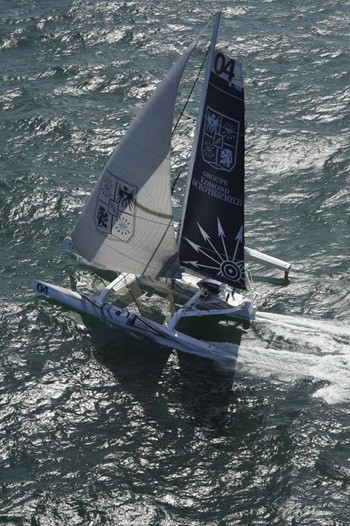
The seventy foot MOD70 trimaran ‘Edmond de Rothschild’, sailed by French duo Sebastien Josse and Charles Caudrelier broke the finish line of the 5450 miles Transat Jacques Vabre race this afternoon at 15hrs 03mins 57s local time (17h 03m 57h UTC GMT) to take overall line honours and win the MOD70 class.

After starting from Le Havre on Thursday 7th November at 13hrs local time, Edmond de Rothschildtook just 11 days, 5hours, 3 minutes and 54 second to cover the course. They sailed at a real average speed of 22.12kts for their actual distance that they sailed of 5952miles.

When Edmond de Rothschildcrossed the line to secure their victory under cloudy skies and in a light Easterly breeze second placed Oman Air Musandam, skippered by the Franco Irish duo Sidney Gavignet and Damian Foxall were approximately 60 miles behind them, having kept the pressure on the winning duo all the way to the final hours of the race.

The course is the longest yet raced by the MOD70s which are near identical, strict one design ocean racing trimarans which are normally raced offshore by a crew of six, and eight on inshore regattas. This Transat Jacques Vabre is the first time they have been raced by a crew of just two.

Before they left Le Havre, well informed predictions – including teams themselves – were anticipating a passage of between 12 and 14 days.

 Josse and Caudrelier maintained their lead throughout the course, taking control since leaving the coast of Brittany.


New Pilots Make First Launches, Traps Aboard USS Theodore Roosevelt

New Pilots Make First Launches, Traps Aboard USS Theodore Roosevelt

Nathan Shuey banks left as he prepares for his first aircraft carrier landing. The familiar feel of G-forces drive him down into his seat as he rehearses his rhythmic breathing. He flexes his grip to remind himself that he is in control, then he corrects his heading as he hears the air traffic controller granting him permission to land.

His aircraft rapidly approaches the carrier. The flaps go down. It’s a mile away. He pulls back slightly to slow the jet, never removing his eyes from the heads-up display. Seconds away from landing, Shuey eases off the throttle and drops altitude. He feels the thud of touchdown and slams the throttle forward. The “trap” tries to rip the aircraft from beneath him as it slows from 130 miles per hour to zero in just over a second. Shuey eases back the throttle and breathes. Success.

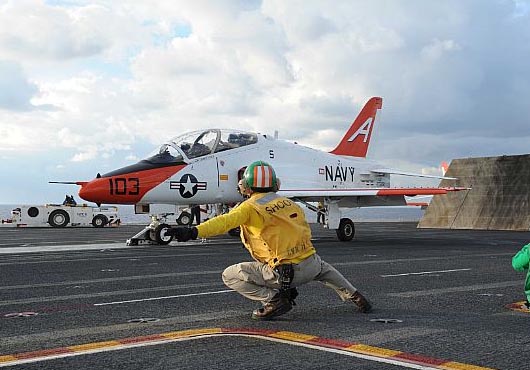
Lt. j.g. Nathan Shuey was among the pilots of Training Wing (TW) One and Two who completed take offs, landings and taxiing maneuvers onboard USS Theodore Roosevelt (CVN 71) Oct. 31, en route to their carrier qualifications. For the pilots of TW-1 and TW-2, it was an honor to make their first aircraft carrier landing on TR.

“The first pass was absolutely terrifying,” said Shuey of TW-1. “It was a touch and go and your nerves are so high you kind of forget what you’re doing.”

Pilots practice carrier landing and taxying on a simulator before flying out to a ship. The simulator is extremely lifelike, but it does not compare to the visceral experience of the real thing, said Shuey.

“The Landing Signal Officers always teach us to ‘fly the ball to touchdown’, which means keep your eyes on the lens and be aware of everything else. So, when you approach the wires, don’t follow them with your eyes. Don’t look down or try to catch a certain wire. Keep your eye on the ball until you slam forward in the cockpit. You honestly fly until your jet stops moving. I just kept saying to myself, ‘fly the ball to touchdown, fly the ball to touchdown,” said Shuey.

Being a pilot was always a dream, but Shuey never thought to actively pursue it until his senior year in college.

“I went to Naval Air Station Oceana for an event with Penn State [Reserve Officers’ Training Corps],” he said. “There was a squadron of F-18s there, and I got to ride in one. I knew from that point on that if I could make [flying] an occupation, I wanted to do it. That’s when I got really motivated to work towards it.”

The path to becoming a naval aviator is long and challenging.

“I actually trained with the Air Force for half a year and that was pretty challenging because I moved to a place that I never expected to be,” said Shuey. “I was in Oklahoma for that at Vance Air Force Base and that was pretty rigorous training. I chose to go there and was hoping it would set me up to fly jets, and it actually worked out but was really difficult.”

Pilots complete an aerobatics course designed to boost confidence and familiarize pilots with the aircraft’s limitations after more than a year of training.

“I’m sure every pilot can appreciate their first aerobatic solo or aerobatic flight,” said Lt. j.g. Daniel Knight, a helicopter pilot assigned to the Dragonslayers of Helicopter Anti-Submarine Squadron (HS) 11. “You are basically given the controls with a training pilot and are told to do flips and barrel rolls. Then you are told to go up and do it again alone. It’s meant to build your confidence as a pilot. It’s terrifying but also a lot of fun.”

Aviators receive their gold wings at the conclusion of their nearly two year training pipeline.

“It was a lot of relief knowing that I made it through the program and a good amount of pride knowing what I had accomplished,” said Knight. “Also knowing my family was there and that they had been looking forward to it for so long. It was a great sense of accomplishment, much more so than obtaining my bachelor’s degree. It wasn’t something someone told me to do, it was something I sought out and that made it much more rewarding.”

As he steps out of the cockpit, Shuey is reminded of the countless hours in a simulator, days of actual flight, weeks away from home and years of education and training that led him to this point. He fills with pride at the thought that soon he will join the ranks of elite naval aviators.
Press Release, November 19, 2013; Image: Navy

JCs Royal New Zealand Navy Ships and New Zealand Defence, Also other World Defence Updates

Ships and Defence News Past and Present

Skip to content ↓