Today in U.S. Naval history: November 18

MarineLink.com

Monday, November 18, 2013, 1:34 PM
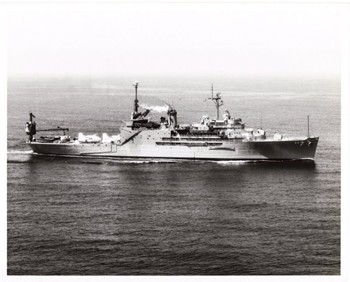
File USS Currituck (U.S. Navy Photo)
USS Currituck (U.S. Navy Photo)

Today in U.S. Naval history – November 18

1890 – USS Maine, first American battleship, is launched.

1922 – Cdr. Kenneth Whiting in a PT seaplane, makes first catapult launching from aircraft carrier, USS Langley, at anchor in the York River.

1962 – USS Currituck (AV-7) rescues 13 Japanese fishermen from their disabled fishing boat Seiyu Maru, which was damaged in Typhoon Karen.

For more information about naval history, visit the Naval History and Heritage Command website at history.navy.mil.

Tour the World’s Largest Thruster Factory Online

Tour the World’s Largest Thruster Factory Online

Posted by Eric Haun
Monday, November 18, 2013, 2:25 PM
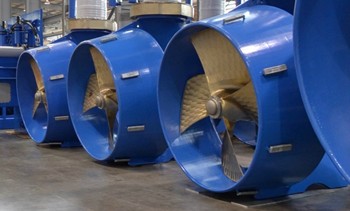
File Thrustmaster of Texas
Thrustmaster of Texas

Have you ever wanted to tour the largest dedicated thruster factory in the world located in Houston, Texas? Now you can. A peek behind the curtain of Thrustmaster of Texas, Inc. was typically available for customers and open day events but now this experience is available online. Thrustmaster of Texas, working with a partner of Google’s Business Photos has developed avirtual tour showcasing the scale of operation underway in the 200,000 square feet of manufacturing space.

The tour highlights the scope of the azimuth thrusters in the assembly area, the HPU’s (Hydraulic Power Units), CNC machining equipment in utilization for each thruster, as well as the one of the largest Zeiss CMM machines in the U.S. used for precision quality measurements of each part of the thruster.

Overhead you will find over eight cranes with a 55ft hook height and capable of lifting and moving loads ranging from 100 tons to 15 tons safely and quickly around the facility.

As Joe Bekker, President of Thrustmaster, explained in the opening ceremony of the facility in 2009, “What you are looking at is a large plant to build large thrusters. We are in the thruster business and we mean to stay here in the Thruster business for the long haul.” The investment in Thrustmaster’s expansion totaled $40 million.

In addition to our manufacturing and warehouse area, Thrustmaster’s Houston facility also has over 40,000 square feet of office space for our advanced engineering department and administration services.

Thrustmaster of Texas, Inc. manufactures heavy duty commercial marine propulsion and thrusters including deck-mounted propulsion units for barges, thru-hull azimuthing propulsion in the form of Z and L drives, retractable thrusters, transverse tunnel thrusters, and the patented Portable Dynamic Positioning System.

The factory and production of all thrusters is based out of Houston, Texas with sales offices in Rotterdam, Singapore, Dubai, Brazil and India. The company also has a service office in Houma, Louisiana to respond to our off-shore clients working out of that region.

Carnival Sunshine Embarks on Inaugural Voyage

Carnival Sunshine


Carnival Sunshine Embarks on Inaugural Voyage

MarineLink.com
Monday, November 18, 2013, 4:51 PM
File Carnival Sunshine in New Orleans
Carnival Sunshine in New Orleans

The totally transformed 3,006-passenger Carnival Sunshine – the largest Carnival Cruise Lines ship ever to be homeported in New Orleans — will sail this afternoon on its inaugural voyage from the Big Easy, embarking on a six-day cruise to Cozumel and Grand Cayman.

Earlier this year, Carnival Sunshine underwent a $155 million, 75-day makeover that added a variety of innovations that are part of Carnival’s groundbreaking Fun Ship 2.0 enhancement initiative, along with several features unique to this vessel and 182 new staterooms.

Today’s voyage kicks off a winter schedule of Caribbean departures from New Orleans that will further bolster the line’s position as the port’s number one cruise operator, carrying 330,000 guests annually on two year-round ships.

According to a study commissioned by the Cruise Lines International Association, Carnival and other cruise lines operating in the state of Louisiana account for $399 million in direct spending, generating 7,548 jobs and $294 million in income for the state’s workers.

Carnival Sunshine will provide consumers sailing from New Orleans with an unprecedented array of on-board features, including a stunning three-level Serenity adults-only retreat, an outdoor recreation area with a ropes course offering breathtaking views to the sea 150 feet below, and a massive water park highlighted by a 334-foot-long corkscrew water slide that is the longest in the Carnival fleet.

Dining choices include the Fahrenheit 555 steakhouse, a new full-service Asian restaurant called Ji Ji Asian Kitchen, the BlueIguana Cantina Mexican-themed eatery, and Guy’s Burger Joint, developed in tandem with Food Network personality Guy Fieri. Exciting new bar concepts were also added such as the cocktail pharmacy-themed Alchemy Bar, the EA Sports Bar, the largest RedFrog Pub in the fleet, Latin-infused Havana Bar, and two new poolside watering holes, RedFrog Rum Bar and BlueIguana Tequila Bar.  One-hundred-and-eighty-two cabins, including 95 new spa staterooms located adjacent to the totally renovated Cloud 9 Spa, were incorporated, as well.

Carnival Sunshine was officially named yesterday by godmother Lin Arison, a noted philanthropist and author, and wife of the late Ted Arison, founder of Carnival Cruise Lines. The invitation-only ceremony was attended by hundreds of travel agents, as well as local dignitaries and VIPs. During the ceremony, Carnival made a donation of $25,000 each to YoungArts and the New World Symphony, both of which are organizations founded by Ted and Lin Arison and dedicated to supporting young artists.

Following today’s six-day voyage, the ship will operate a series of seven-day cruises to popular Caribbean destinations through April. Three different week-long itineraries will be offered from New Orleans – an exotic western Caribbean route featuring Belize; Mahogany Bay (Isla Roatan), and Cozumel; a Bahamas/Florida schedule to Key West, Freeport and Nassau; and western Caribbean departures to Montego Bay; Grand Cayman; and Cozumel.

carnival-news.com

Remember the Maine, A First-of-its-Kind Warship

Remember the Maine, A First-of-its-Kind Warship

Naval History Blog by NHHC  /  1h  //  keep unread  //  trash  //  preview
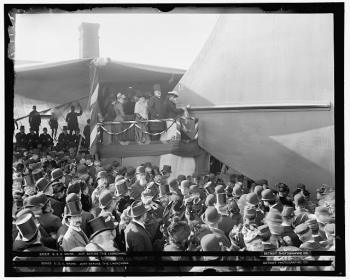
Launch on Nov. 18, 1890 of USS Maine from the Brooklyn Navy Yard.Launch on Nov. 18, 1890 of USS Maine from the Brooklyn Navy Yard.

Launch of the USS Maine - NHHCLaunch of the USS Maine on Nov. 18, 1890, at the Brooklyn Navy Yard, N.Y.

USS Maine Crew - Library of CongressCrew of the USS Maine.


From the Naval History and Heritage Command

The Navy has a long, proud history of leading in energy innovation and change, according to Secretary of the Navy Ray Mabus.
“From sail to coal to oil to nuclear and now to alternative fuels, the Navy has led the way,” he said during a speech Sept. 11, 2013, to the National Defense University.

Such was the case 123 years ago today, Nov. 18, 2013, when USS Maine was launched in New York. And with her, as with each new first-in-its-class ship since then, she featured some of the best technological advances of her time.

At the end of the Civil War in 1865, the Navy had only 600 ships, mostly wartime purchases made of timber. By 1879, the Navy had whittled down to 142 ships, where only 48 were available for service. The 48 ships that were available were outdated, wooden or ironclads.

With Congress concerned more about rebuilding the country after the end of the Civil War, little was done to maintain the Navy. That is until 1883, when a British-built warship called Riachuelo was delivered to Brazil that gave South America an edge in sea power.

Hilary A. Herbert, the chairman of the House Naval Affairs Committee in 1883, warned Congress: “if all this old navy of ours were drawn up in battle array in mid-ocean and confronted by the Riachuelo it is doubtful whether a single vessel bearing the American flag would get into port.”

President Chester Arthur began the Navy’s modernization and with the Navy Act of 1883, four new steel cruisers were authorized and then later the Navy’s first armored battleships, USS Maine and USS Texas.

A contest was held to pick a designer for the ships. For Maine, it was Theodore D. Wilson, who created a cross between the lighter armored cruiser and a heavier battleship. Similar to another armored cruiser, Great Britain’s HRM Inflexible, Maine’s turrets were en echelon, placed so either could fire and not affect the other, and were offset from the ship. Designed originally as an armored cruiser, at 6,682 tons, she became the first of a class of armored battleships with 60 tons of nickel-based steel on her hull.

Maine’s power plant was given the highest priority for its fighting strength, also a first for a U.S. capital ship. The ship’s two inverted vertical triple-expansion steam engines were a departure from previous ships that had their engines mounted horizontally so they could be protected below the waterline. Maine’s engines were more efficient, had lower maintenance costs and could produce higher speed. The ship’s high and low pressure cylinders were separated to give the ship greater flexibility when the ship was running under lower power, so the high and intermediate power cylinders could be run together as a single compound engine for economical running.

Originally designed with a three-mast rig in case of engine failure and for long-range cruising, one mast was removed in 1892 after the ship was launched, but before she was completed.

Upon her commissioning on Sept. 17, 1895, USS Maine was sent to protect American interests in Cuba, which was struggling to fight for independence from Spanish rule. It was there, in Havana harbor in 1898, where an explosion would bring down the Maine, killing most of her crew. Her sinking would become the tipping point for the beginning of the Spanish-American war.

Nearly 125 years later, the newest platform to hit the seas is the first-in-its-class aircraft carrier Gerald R. Ford (CVN-78), which was commissioned Nov. 9, 2013. The Ford-class aircraft carriers, like Maine in her time, employ the next generation of naval technology.http://navylive.dodlive.mil/2013/11/08/navys-most-advanced-aircraft-carrier-ready-for-christening/

Just as the Navy recovered from the stagnant growth of post-Civil War years, today’s Navy continues to adapt and adjust to the challenging budgetary times now.

“We have the most advanced platforms in the world, but quantity also has a quality all its own,” Mabus said at the National Defense University. “Twelve years ago, on 9/11 2001, our fleet stood at 316 ships. By 2008, after one of the great military build-ups in American history, that number had dropped to 278 ships.”

In 2008, the Navy put four ships under contract. Since then, another 60 ships have gone under contract and by 2019 the current plan will return the fleet to 300 ships, Mabus said.

“Initiatives to spend smarter and more efficiently through things like competition, and multi-year buys, and, frankly, by driving harder bargains on behalf of taxpayer dollars, have created the way to provide our nation and our Navy with the platforms we need to execute our missions.”

The U.S. Navy must be prepared not only for times of war, but more importantly, during times of peace, as evidenced with the quick deployment of USS George Washington to assist with humanitarian relief in the Philippines after the category 5 Typhoon Haiyan struck in the Pacific Nov. 7, 2013.

“In peace we will still deploy, day after day, year after year, just as we have for 238 years,” Mabus said. “We respond to every crisis when the nation calls, whether it’s in combat or in response to a natural disaster… Before the bell rings and long after the guns go silent, presence means we are where it counts, not just at the right time, but all the time.”

He added a strong and agile U.S. Navy assures America’s allies and partners that “we are there, and assure those who may wish our country and allies harm that we’re never far away. That is American seapower.”

USS Maine - Jeff AdamsUSS Maine – Jeff Adams

USS Fort Worth Launches First UAV

USS Fort Worth Launches First UAV

Naval Today >> The industry’s seaborne news provider by Naval Today  /  4h  //  keep unread  //  trash  // preview

USS Fort Worth Launches First UAV

USS Fort Worth (LCS 3) conducted dynamic interface operations on the Point Mugu Test Range Nov. 5-13 with the Navy’s Vertical Takeoff Unmanned Aerial Vehicle (VTUAV) known as the MQ-8 Fire Scout.

Although Fire Scouts have been used in the fleet onboard frigates, LCS is the first platform designed from the keel up to integrate and operate these unmanned helicopters.

“Everything from the consoles in MCC (Mission Control Center), the displays, and antennas to the flight deck and UCARS were made for us to interface with Fire Scout” said Lt. Mike Chesnut, the combat systems officer for LCS Crew 104, “The Juggernauts”, who are currently the “on-hull” crew for Fort Worth.

UCARS is the UAV Common Automated Recovery System, a present day “tractor beam” that locks on to the Fire Scout from miles away and brings it safely on deck without human intervention.

The Fire Scout, replete with the most modern electro-optical and infrared cameras, can extend the ship’s senor range and greatly increase maritime awareness by relaying information back to the ship via data link.

“It’s exciting to integrate new technology with LCS. That’s what this platform is about, flexibility and innovation,” said Cmdr. Kendall Bridgewater, Fort Worth’s executive officer.

Fort Worth is scheduled to deploy next year with “The Mad Hatters” of HSM-35, Det. 1, the Navy’s first “composite” Air Detachment which will include both a manned SH-60R helicopter as well as unmanned Fire Scouts.
Press Release, November 18, 2013; Image: Wikimedia

JCs Royal New Zealand Navy Ships and New Zealand Defence, Also other World Defence Updates

Ships and Defence News Past and Present

Skip to content ↓