Navy’s ‘USNS Bowditch’ Checking Philippine Pilotage Waters

USNS Bowditch[/caption]


Navy’s ‘USNS Bowditch’ Checking Philippine Pilotage Waters

MarineLink.com
Thursday, November 14, 2013
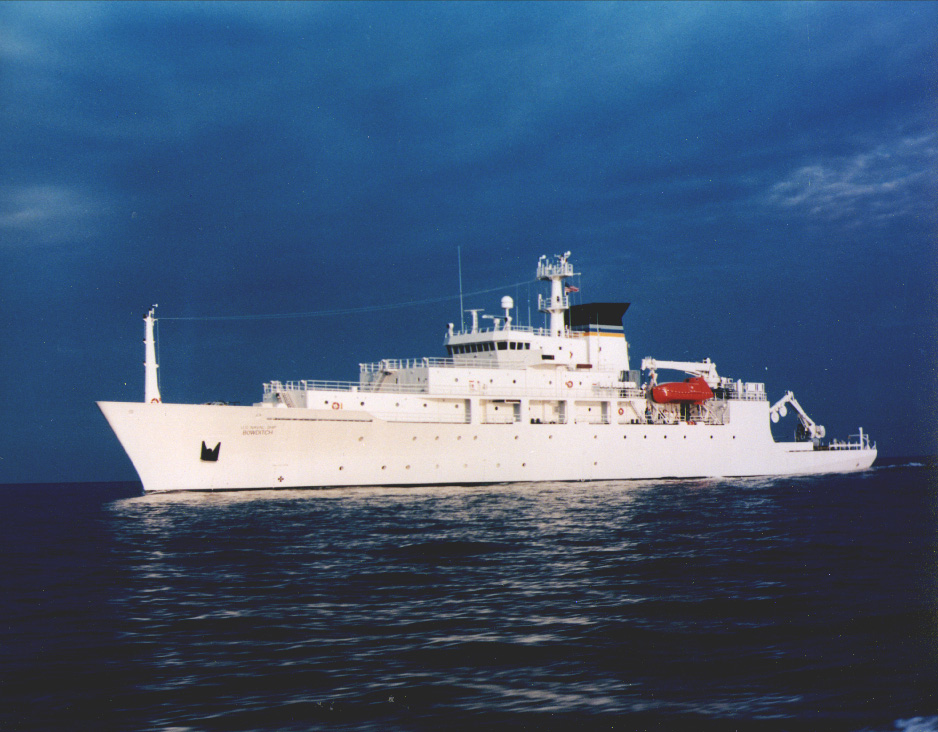
File USNS Bowditch lowering inshore survey boat: Photo credit USN
USNS Bowditch lowering inshore survey boat: Photo credit USN

As U.S. Navy assets steam towards the Philippines to provide humanitarian assistance and disaster relief to the victims of Typhoon Haiyan, Navy hydrographers are busy charting safe passages through potential navigation hazards created by the receding storm surge.
 ‘USNS Bowditch’, a Navy survey vessel, was one of the first ships on station and began immediately surveying the approaches to San Pedro Bay.

“In many natural disaster situations around the world, forward-deployed Navy and Marine Corps assets act as first responders for U.S. relief efforts,” said Chris Kent, deputy operations officer for the Naval Meteorology and Oceanography Command. “Natural disasters can compromise navigation approaches, making it difficult, even dangerous, to access the harbors. Our job is to identify those hazards.”

Kent explained that the storm surge that devastated so much of Tacloban City and other areas around San Pedro Bay typically carry significant debris out into the bay as the surge waters recede. Additionally, powerful forces like this storm surge can shift ocean bottom sediment around, rendering existing navigation charts useless.

Related news
Britain is sending the aircraft carrier HMS Illustrious to help, Prime Minister David Cameron has announced.

HMS Illustrious and her 900-strong crew is now moving to the Philippines, equipped with a large flight deck, seven helicopters, medical and engineering capabilities, and the means to produce fresh water. Its helicopters will be used to assist with the distribution of food and water to survivors stranded in remote locations.

An Antonov aircraft has also been deployed. It will carry and provide 100 tons of airfield handling equipment to enable offloading of relief supplies at airfields and equipment for rubble clearance.

The UK Government had now given more than £20 million in aid in response to Typhoon Haiyan.


HMS Illustrious: Photo MOD


‘Pirates Plunder W.Africa Oil & Gas Riches’ Says Analyst

File Photo credit EUNAVFOR
Photo credit EUNAVFOR

West Africa is experiencing a surge in piracy, with well-organised hijackers targeting the region’s growing oil and gas industries, writes national security expert Dr James Jay Carafano in ‘World Review’. Extracts by permission of ‘World Review’ follow:

Although efforts to combat crime at sea have been having an impact – for example hijackings off Somalia fell by half in 2012 compared with 2011 with only 14 ships successfully boarded – the International Maritime Bureau (IMB) reports a sharp rise in activity in West Africa in 2012 with 58 incidents off the Gulf of Guinea.

‘The most troubling aspect of these crimes is not the increase in the number of attacks and the spread of activity initially centred in Nigerian waters, but how piracy is expanding throughout the region,’ says Dr Carafano.

‘The Gulf and the surrounding coastal waters and wetlands include extensive oil and gas reserves, where petroleum extraction, transport and related activities are a lucrative target for personnel hijacking, disrupting activities, siphoning oil or stealing cargo,’ he says.

‘Furthermore, tanker traffic and pipelines are particularly dense in the area around Nigeria because the country is a major oil producer but lacks the capacity to refine petroleum products,’ he adds. ‘So in addition to its extensive exports it imports refined-petroleum products – all representing opportunities for piracy.’

The focus of the crimes is mostly in territorial waters. That means international naval operations would be less effective. And rather than a regional effort, anti-piracy operations will be driven by what each nation elects to permit and has the capacity to undertake.

‘The ability to mount effective anti-piracy operations is also hampered by poor governance and cooperation, and local politics,’ adds Dr Carafano.

In response to these threats there are efforts at increased interstate regional cooperation. The Economic Community of West African States and the Gulf of Guinea Commission drafted an anti-piracy code of conduct that was signed by 22 countries in June 2013.

‘While laudable efforts, these initiatives cannot address the core challenges within the states, particularly Nigeria, where governance, political, economic and security issues have created space for organised criminal activity to prosper,’ Dr Carafano says.

Read the full report at: http://www.worldreview.info/content/oil-and-gas-attract-pirates-gulf-guinea

Source: World Review

USCG About to Offload $40 Mln Cocaine at Port Everglades

USCG About to Offload $40 Mln Cocaine at Port Everglades

Naval Today >> The industry’s seaborne news provider by Naval Today  /  1h  //  keep unread  //  trash  // preview

USCG About to Offload $40 Mln Cocaine at Port Everglades

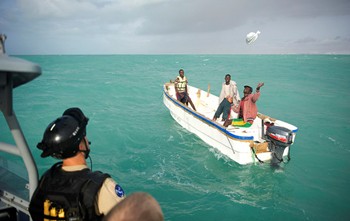
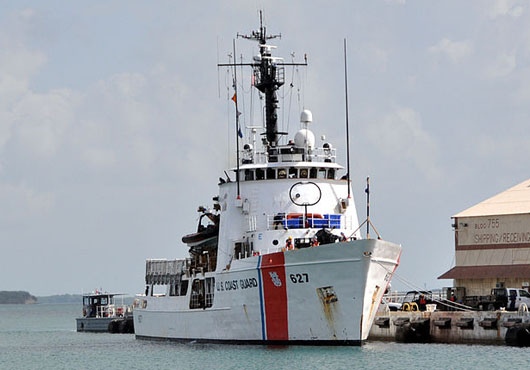
Crewmembers aboard the United States Coast Guard Cutter Vigorous are scheduled to offload approximately 1,212 kilograms of cocaine with an estimated wholesale value of approximately $40 million today at Port Everglades in Broward County, Florida.

The drugs are the results of two interdictions carried out as part of international Operation Martillo, which is one component in the United States government’s whole-of-government approach to countering the use of the Central American littorals as transshipment routes for illicit drugs, weapons, and cash.

During a patrol on November 2, a Coast Guard law enforcement detachment team (LEDET) aboard the Royal Dutch Navy’s HNLMS Amsterdam detected a go-fast vessel in the Caribbean Sea. After observing the suspected smugglers jettison suspicious packages the LEDET deployed a boatcrew to investigate. Upon arriving on scene, the boatcrew recovered 19 packages which later tested positive for cocaine.

During the same patrol, the Coast Guard LEDET aboard the HNLMS Amsterdam detected another go-fast vessel in the Caribbean Sea. The LEDET noticed the suspected smugglers on the go-fast jettison several packages during their attempt to flee from law enforcement. After employing warning signals, the HNLMS Amsterdam’s embarked helicopter crew was able to shoot a disabling round into the engine, causing the go-fast to stop.

The LEDET conducted a boarding on the suspect vessel and recovered 22 packages that later tested positive for cocaine. The three suspected smugglers were transferred to the HNLMS Amsterdam along with the contraband recovered from the go-fast and water.
Press Release, November 15, 2013; Image: Wikimedia

The commissioning ceremony will take place at Sevmash Shipyard, Severodvinsk on Saturday and the IRIGC-MTC meeting will take place in Moscow on Monday.

Commissioning of Russian-Built Warship for India on Saturday

Naval Today >> The industry’s seaborne news provider by Naval Today  /  9h  //  keep unread  //  trash  // preview

Commissioning of Russian-Built Warship for India on Saturday

The commissioning ceremony will take place at Sevmash Shipyard, Severodvinsk on Saturday and the IRIGC-MTC meeting will take place in Moscow on Monday.

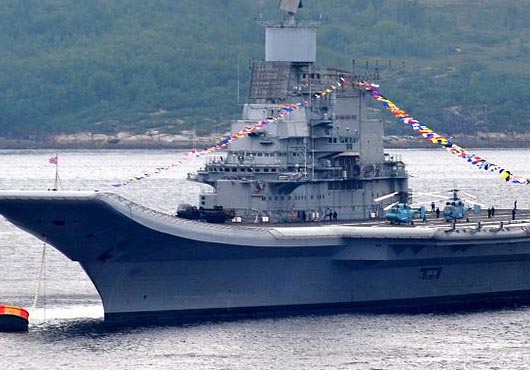
The Defence Minister Mr AK Antony leaves New Delhi tomorrow on a four day visit to Russia to commission the Indian Naval Ship Vikramaditya and also to co-chair the 13th Meeting of the India – Russia Inter-Governmental Commission on Military Technical Cooperation (IRIGC-MTC) with his Russian counterpart Mr Sergey Shoigu.

The carrier was purchased by India on 20 January 2004 after years of negotiations at a final price of $2.35 billion.

After several setbacks, the ship successfully completed her sea trials in July 2013 and aviation trials in September 2013.

Mr Antony will be accompanied by high level delegations for both the events. The Chief of Naval Staff Admiral DK Joshi and Defence Secretary Mr RK Mathur will be among those present at the commissioning of INS Vikramaditya. The Russian Deputy Prime Minister Mr Dmitry Rogozin and Defence Minister Mr Shoigu will also be there to witness the landmark event.

The Defence Minister’s delegation to the IRIGC-MTC will include Mr Mathur, Secretary, Defence Production Mr GC Pati, DG Acquisition Mr SB Agnihotri and senior officers of the Armed Forces.

At the IRIGC-MTC meeting a broad spectrum of issues related to on-going and proposed defence projects and defence cooperation between the two countries will be discussed. The two sides will also exchange views on regional and global issues of concern to both the countries.

IRIGC-MTC was established in 2000 with a view to strengthen defence cooperation between the two countries. Since then it has been meeting annually, alternately in India and Russia, at the level of the Defence Ministers of the two countries, to review and discuss matters relating to bilateral defence cooperation between the two countries.
Press Release, November 14, 2013; Image: Wikimedia

GE to Retrofit Gas Turbines on Eight U.S. Navy Vessels

LM2500GThangingangleshot2web-20192


GE to Retrofit Gas Turbines on Eight U.S. Navy Vessels

Posted by Eric Haun
Thursday, November 14, 2013, 9:37 AM
File LM2500 (Photo: GE)
LM2500 (Photo: GE)

GE Marine reported that the United States Navy has ordered eight Digital Fuel Control (DFC) kits for LM2500 marine aeroderivative gas turbines. The DFC kits provide for improved gas turbine reliability and maintainability, yielding lower maintenance and reduced long term costs.

The eight LM2500s, to be retrofitted, will power U.S. Navy DDG Arleigh Burke-class destroyers. The DFC kits incorporate the most state-of-the-art controls available for GE LM gas turbines – a technology now standard on new LM2500, LM2500+ and LM2500+G4 engines. Previous-generation LM2500s use a hydro-mechanical control system.

Over the past year, GE has provided nine DFC kits to the U.S. Navy for installation on select DDG 51 and CG-47 class ships. The kits are part of a U.S. Navy ship system modernization program. The first LM2500 equipped with the DFC technology was installed by the U.S. Navy in 1994 aboard the Watson-class large, medium-speed, roll-on/roll-off ships. The DFC technology, as part of the standard engine equipment, also has been delivered to international navies for LM2500 gas turbines applications, as well as on a variety of commercial projects where GE gas turbines are used to power cruise ships and fast ferries.

According to GE, additional benefits of the DFC technology include:

  • Updated control of fuel and air scheduling within the gas turbine provides more accurate fuel/air scheduling through electrical feedback and closed-loop control. In addition, fuel characteristics and variable stator vanes (VSV) positions can be recalibrated through the control software inputs.
  • Gas turbine control sensor redundancy is available for compressor discharge pressure, compressor inlet temperature and pressure, gas generator speed, VSV position, and fuel metering valve position.
  • Improved operator signals, alarms, and troubleshooting are provided by additional electrical sensors and actuator feedback. GE DFC kits also offer improved capabilities for data capture and condition monitoring.
  • Improved engine resistance to possible fuel contamination through oil actuation of VSV and the fuel metering valve.

Primary DFC retrofit kit components include a fuel metering valve and two VSV actuators, both with redundant electronic feedback.  An upgraded engine controller and shipboard wiring changes also are required to incorporate the DFC kit.

ge.com

JCs Royal New Zealand Navy Ships and New Zealand Defence, Also other World Defence Updates

Ships and Defence News Past and Present

Skip to content ↓