|
USA: CMPR 11 Changes Command
Naval Today >> The industry’s seaborne news provider by Naval Today / 8h // keep unread // trash // preview
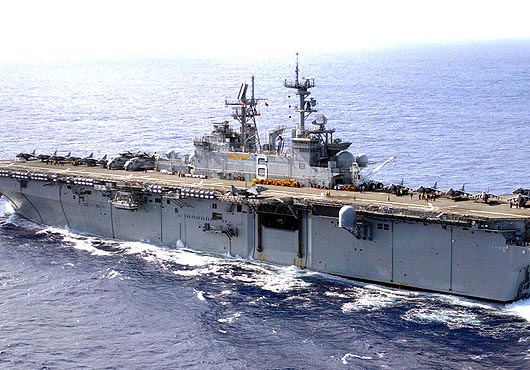
Commander Amphibious Squadron 11 (CPR 11) held a change of command ceremony aboard the forward-deployed amphibious assault ship USS Bonhomme Richard (LHD 6) Nov. 14.Capt. Heidi Agle relieved Capt. Cathal O’Connor as commander. Sailors, Marines, family members, distinguished guests from the community and leaders from the Japan Maritime and Ground Self Defense Forces attended the ceremony. O’Connor assumed command of CPR 11 Aug. 3, 2012. During his tenure, O’Connor led CPR 11 through several joint exercises with partner nations throughout the Western Pacific. He also oversaw the hull swap between USS Tortuga (LSD 46) and USS Ashland (LSD 48).
Agle previously served as the CPR 11 deputy commodore. Her previous tours include commanding officer of USS Oak Hill (LSD 51), executive officer of USS Pearl Harbor (LSD 52), and Joint Chiefs of Staff and Military Faculty at Command and Staff College, Marine Corps University.
The guest speaker for the ceremony was Capt. Walt Towns, deputy commander, Amphibious Force 7th Fleet, Expeditionary Strike Group 7 and Task Force 76.
Bonhomme Richard is the lead ship of the only forward-deployed U.S. Amphibious Ready Group and serves as the flagship for Combined Task Force 76, the Navy’s only forward-deployed amphibious force commander. Task Force 76 is headquartered at White Beach Naval Facility, Okinawa, Japan, with a detachment in Sasebo, Japan. |


Ingalls’ Newest Large-Deck Amphibious Ship Returns – USS America
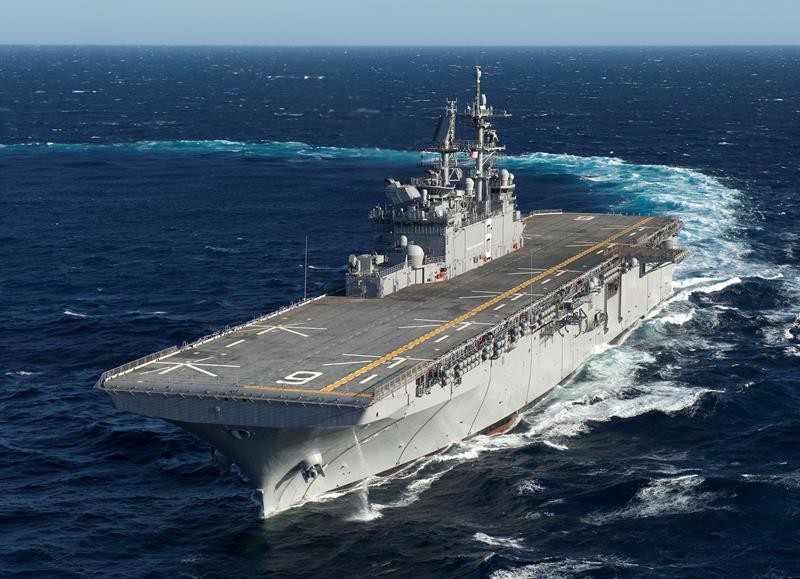
 USS America[/caption]
Ingalls’ Newest Large-Deck Amphibious Ship Returns
MarineLink.com
Thursday, November 14, 2013, 10:26 AM

“It’s an awesome feeling riding this ship, knowing the hard work that took place to get her ready for sea trials,” said George Jones, Ingalls’ LHA 6 program manager. “The LHA 6 team continued to work diligently during our time underway. The ship performed well, and our team will work to ensure LHA 6 will be prepared for her acceptance trials. We have confidence this will be a great opportunity for America to prove her mettle as she prepares to enter the U.S. Navy fleet.”
During builder’s trials, America performed all required sea trial evolutions, including the operation of the gas turbine/electric-powered propulsion system. Other tests included anchor handling, flight operations, and combat systems’ evaluations.
“America, designed to take sailors and Marines into harm’s way, proved her seaworthiness during builder’s trials,” said Richard Schenk, Ingalls’ vice president of test and trials. “The test and trials team implemented a rigorous schedule of testing, including a day of dock trials, before the ship left. The Ingalls team and the ship performed very well. We look forward to continuing the hard work on our company’s newest large-deck amphibious ship as our test group works with the LHA 6 program/ops team to prepare for acceptance trials.”
The ship will now prepare for acceptance sea trials in late January to demonstrate the same tests and operational success to the U.S. Navy’s Board of Inspection and Survey (INSURV).
When America enters the fleet, she will be the flagship of an Expeditionary Strike Group, strategically positioning Marine Expeditionary Units ashore across a full spectrum of missions, including humanitarian, disaster relief, maritime security, antipiracy and other operations while providing air support for ground forces.
America-class ships are 844 feet long and 106 feet wide and displace 44,971 long tons. The gas-turbine propulsion system drives the ships in excess of 20 knots. They will accommodate a crew of 1,059 (65 officers) and 1,687 troops. The America-class will be capable of carrying a Marine Expeditionary Unit, including Marine helicopters, MV‐22 Osprey tiltrotor aircraft and F‐35B Joint Strike Fighter (JSF) aircraft.
The newest class has an increased aviation capacity to include an enlarged hangar deck, realignment and expansion of the aviation maintenance facilities, a significant increase in available stowage for parts and support equipment, and increased aviation fuel capacity.
A video of the sea trials is viewable here:
http://newsroom.huntingtoningalls.com/Multimedia-Gallery/B-Roll-America-LHA-6-Builder-s-Sea-Trials-317.aspxShare this:

Maersk Orders Routing Software for 110+ Vessels
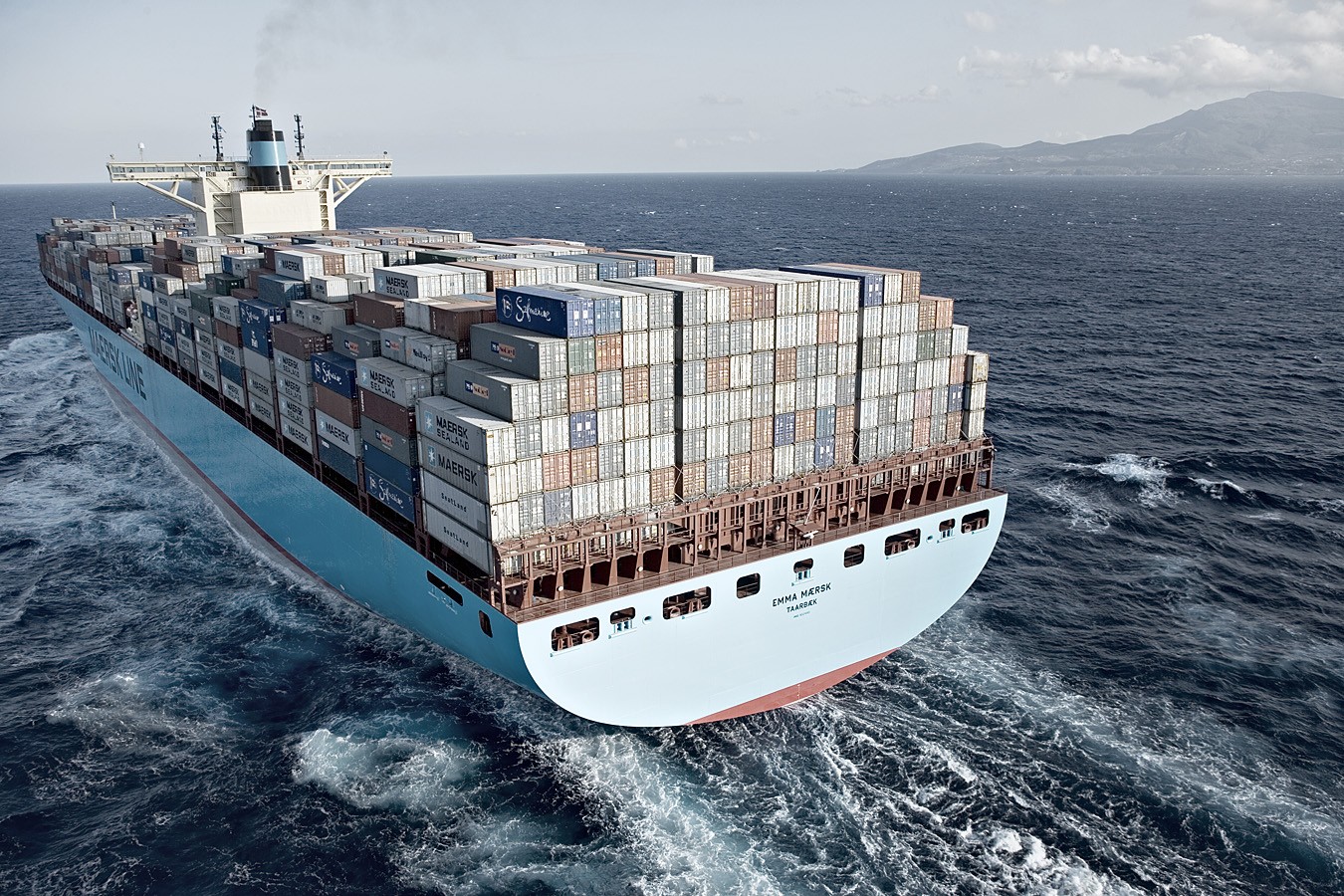
 Emma Maersk[/caption]
Maersk Orders Routing Software for 110+ Vessels
Posted by Eric Haun
Thursday, November 14, 2013, 1:11 PM

Emma Maersk
The Dutch weather routing software supplier Meteo Consult and Amarcon, have received an order from Maersk Line to equip a minimum of 110 Maersk Line container vessels with SPOS Seakeeping. The Seakeeping plug-in is a feature within Meteo Consults weather routing software SPOS. With this plug-in the user can define vessel loading conditions and motion threshold values based on the input of Amarcon’s OCTOPUS-Onboard. Amarcon, a fully owned subsidiary of ABB, provides monitoring and forecasting software solutions for performance and availability optimization of sea-going vessels, and is the leader in vessel motion prediction solutions.
In the SPOS Seakeeping chart, areas can be displayed where motions are expected to exceed the threshold values. In the route optimization, the motions are also calculated and the route optimization will automatically avoid areas where maximum motions will be exceeded. With the Seakeeping plug-in the routing advice for a vessel is far more precise and tailored to the individual vessel, because of the fact that not only environmental conditions like wind, currents and swell are taken into account, but the effect that these changing conditions have on the overall seakeeping behavior of the vessel.
In the coming months the software will be rolled out on a minimum of 110 vessels of the world wide operating cargo transporter Maersk Line. General Manager Leon Adegeest from Amarcon said, “We take great pride in delivering a response based routing advice together with our partner Meteo Consult to a company that is considered by Freight Forward Associates to be the best shipping company in the world.”
meteogroup.co.uk
amarcon.com
Share this:

Today in U.S. Naval History: November 14
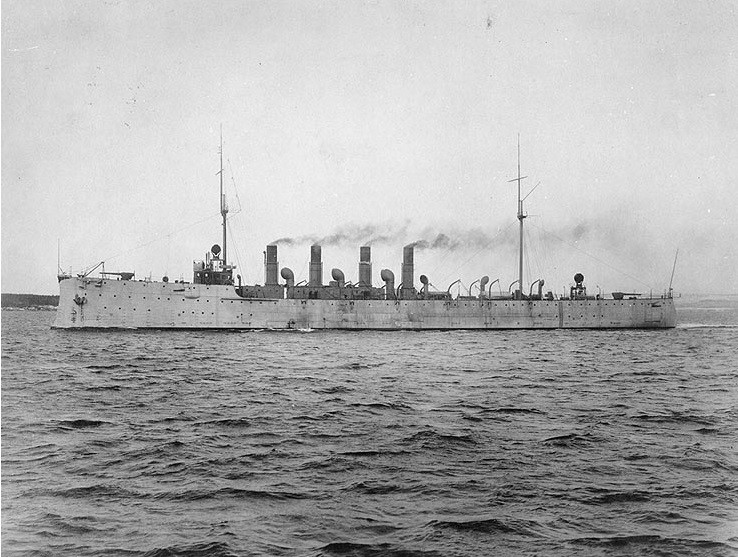
 USS Birmingham[/caption]
Today in U.S. Naval History: November 14
MarineLink.com
Thursday, November 14, 2013, 4:34 PM

USS Birmingham (U.S. Naval Historical Center Photograph.)
Today in U.S. Naval History – November 14
1846 – Naval forces capture Tampico, Mexico.
1910 – Civilian Eugene Ely pilots first aircraft to take-off from a ship, USS Birmingham (CL-2) at Hampton Roads, Va. He lands safely on Willoughby Spit, Norfolk, Va.
1941 – Order to withdraw Marines at Shanghai, Peiping, and Tientsin, China.
1944 – Carrier aircraft attack Japanese shipping in Philippines sinking five ships and damaging one.
For more information about naval history, visit the Naval History and Heritage Command website at history.navy.mil.
Share this:

New Zealand navy ship en route to join anti-piracy force in Gulf of Aden
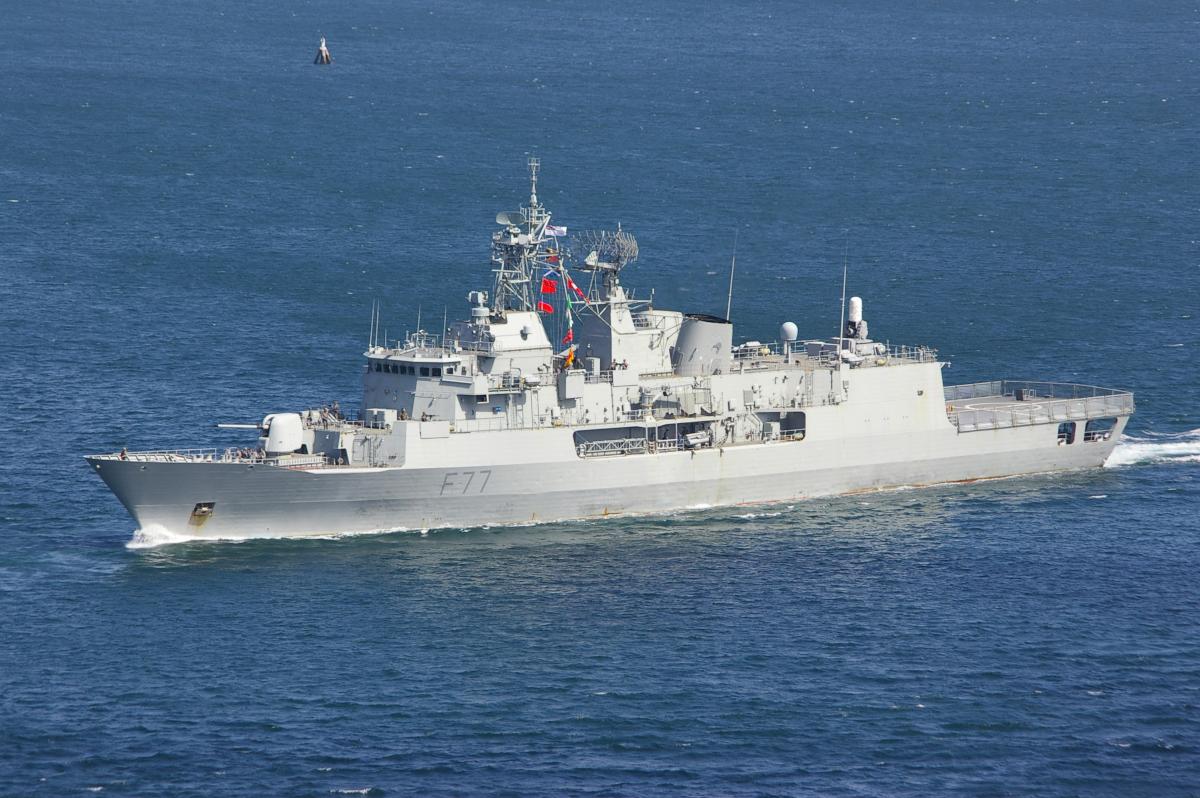

A New Zealand navy frigate on Thursday set sail to join the multinational counter-piracy task force in the Gulf of Aden, Defense Minister Jonathan Coleman said.
HMNZS Te Mana left Darwin after almost three months of specialist training in Australia in preparation for the deployment, Coleman said in a statement.
“A secure maritime environment is vital to economic prosperity and regional security. It is important nations work together to address the global challenges to maritime security,” said Coleman.
“New Zealand has a direct interest in supporting the Combined Maritime Forces (CMF) and protecting shipping lanes, with a large volume of our trade carried by shipping. Piracy affects all countries with shipping trade going through the Suez Canal.”
HMNZS Te Mana would operate as part of Combined Task Force 151 (CTF-151) for three months, returning to New Zealand in March next year.
The New Zealand Defense Force (NZDF) had four staff officers deployed to support CTF-151 headquarters, and three New Zealand navy sailors were also deployed on Australian navy vessel HMAS Melbourne, conducting maritime security patrols in the region.
Next year, the NZDF would deploy up to 14 staff officers to CTF- 151, two additional personnel to Headquarters CMF, and a P3-K2 Orion aircraft.
A New Zealand navy frigate was last deployed in 2008 to support counter-terrorism operations.

