American Hospital Ship to Support Philippines

Reshared post from +John Currin

American Hospital Ship to Support Philippines

Adm. Harry B. Harris Jr., commander of the U.S. Pacific Fleet, directed the activation of the hospital ship USNS Mercy (T-AH 19) Nov. 13 to be ready to support ongoing disaster relief efforts in the Philippines in the wake of Typhoon Haiyan.

 
Berthed in San Diego, USNS Mercy has been in a reduced operating status, which is normal for a hospital ship. Harris’ activation order accelerates Mercy’s ability to attain full operating status to include moving necessary personnel and equipment to the ship.

If ordered to deploy, Mercy would get underway in the next several days and could arrive in the Philippines sometime in December, joining other U.S. Pacific Fleet units already supporting Operation Damayan.

On Nov. 11 Secretary of Defense Chuck Hagel ordered the aircraft carrier USS George Washington (CVN 73) and her escort ships to depart early from a liberty port in Hong Kong and make best possible speed for the Philippines. George Washington, USS Antietam (CG 54), USS Cowpens (CG 63) and USNS Yukon (T-AO-202) will arrive off the coast of the Philippines the evening of Nov. 14 local time.

U.S. Pacific Fleet ships already operating in the Western Pacific were also immediately diverted. USS Mustin (DDG 89), USS Lassen (DDG 82), USS Emory S. Land (AS 39), and USNS Bowditch (T-AGS 62) are now on station and coordinating with the Philippine government. The U.S. Navy also has P-3 maritime aircraft already supporting the disaster relief effort led by the Government of the Philippines.

The amphibious ships USS Ashland (LSD 48) and USS Germantown (LSD 42) are departing Sasebo, Japan, Nov. 14 local time. After picking up Marines, equipment and relief supplies in Okinawa, the two ships will arrive at the Philippines in approximately one week. USS McCampbell (DDG 85) and USNS Charles Drew (T-AKE 10) are also heading to the Philippines.

This collection of ships and their complement of aircraft, to include much-needed helicopters, will provide food and water, the capability to move relief supplies to isolated areas, and to help move the badly injured for medical care.

The U.S. Navy persistently trains with numerous Pacific nations and military units, including the Armed Forces of the Philippines, to prepare for humanitarian assistance and disaster relief missions. In 2012, Mercy participated in the annual Pacific Partnership mission, which included working with Philippine authorities in the vicinity of Tacloban, the area hardest hit by Typhoon Haiyan. Because of the long-standing partnership between the two nations, the U.S., working through the Philippine government, is able to rapidly respond with critically needed capabilities and supplies in times of crisis.

The role of U.S. military forces during any foreign humanitarian assistance event is to rapidly respond to host nations’ requests for support to help mitigate human suffering, prevent further loss of life and mitigate property damage. The U.S. Navy-Marine Corps team has a particularly successful history of working with international relief organizations and host nations to respond to natural disasters.

Operation Damayan is part of the broader U.S. Government effort to support the Government of the Philippines’s request for humanitarian assistance. This joint team effort includes coordination by the U.S. Department of State and U.S. Agency for International Development, in constant consultation with Philippine authorities. To date, Philippine and U.S. personnel have transported more than 107,000 pounds of relief supplies.

Press Release, November 14, 2013; Image: US Navy

Ready to head out to the Gulf shortly to take over one of their two sister ships…

Reshared post from +John Currin

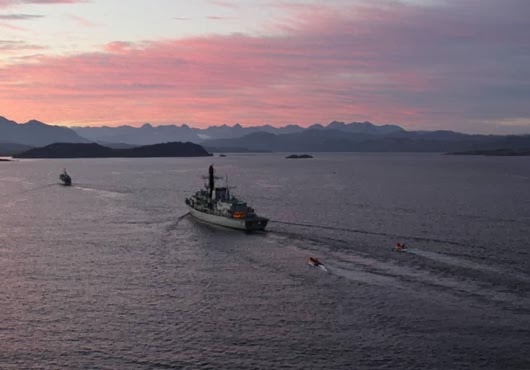
Ready to head out to the Gulf shortly to take over one of their two sister ships are the crew of Portsmouth minehunter HMS Cattistock.

 
The 45 sailors aboard the Hunt-class ship came through their two final major assessments with flying colours, first testing the ability of the small 750-tonne warship to deal with all eventualities on her own – then testing her ability to do the same in a larger group of warships.

Cattistock left behind the waters of the Solent she knows so well and decamped to Scotland for two months.

Faslane is home to FOST North – the exacting training organisation which determines whether a ship is ready for the rigours of deployment courtesy of Operational Sea Training.

Cattistock’s bridge team were tested in their ability to safely navigate and conduct pilotage in testing conditions both simulated and real world.

The marine engineers and executive department achieved a particularly high standard owing to experience and hard work, while the Seafox mine disposal system was launched and recovered on a record number of occasions.

“The rigorous training package put high demands on the ‘Catt’ and her crew and at times serials did not run smoothly,”

said Commanding Officer Lt Cdr Andy Smith.

“However over the period the crew developed their skills as individuals and as a team came together to achieve high standards across the board.”

For their efforts they received a ‘very satisfactory’ overall score from the FOST team (‘satisfactory’ is a pass – and the most common ‘mark’ given by the assessors).

Fresh out of OST and after a period of sonar trials, the ship was thrown into the demanding Joint Warrior exercise to help the fictitious embattled nation of Pastonia, which was ravaged by civil war.

Once again Seafox was used repeatedly, with the remotely-controlled submersible diving to depths of 60m in order to recover mines as well, while the ship was also called upon to lead a task force through a suspected minefield.

Throughout Joint Warrior, members of the Royal Naval Reserve were embarked across the fleet with LS(MW) Anthony Peacock joining Cattistock. He’s a software test analyst by day and hadn’t been to sea since 2002, when minehunters were still minesweepers, he said,

“It was really great to get up to speed with the modern methods of mine hunting and put into practice all the weekends and evenings that I have spent training with the RNR.”

With the two training exercises completed, Cattistock has returned to Portsmouth while her crew carry out final preparations for their Gulf deployment.

The Royal Navy maintains four minehunters in Bahrain permanently: two Hunts (experts in locating mines in deep water) HMS Quorn and Atherstone; and two Sandowns (designed to find mines in shallow seas) HMS Shoreham and Ramsey.

To maintain that long-term presence, crew rotate every six or seven months; the crew Cattistock’s current ship’s company replace will take over the ship on their return to the UK.

Press Release, November 14, 2013; Image: Royal Navy

UK: HMS Viligant Finishes First Patrol in Five Years after Massive RevampFive years…

Reshared post from +John Currin

UK: HMS Viligant Finishes First Patrol in Five Years after Massive Revamp

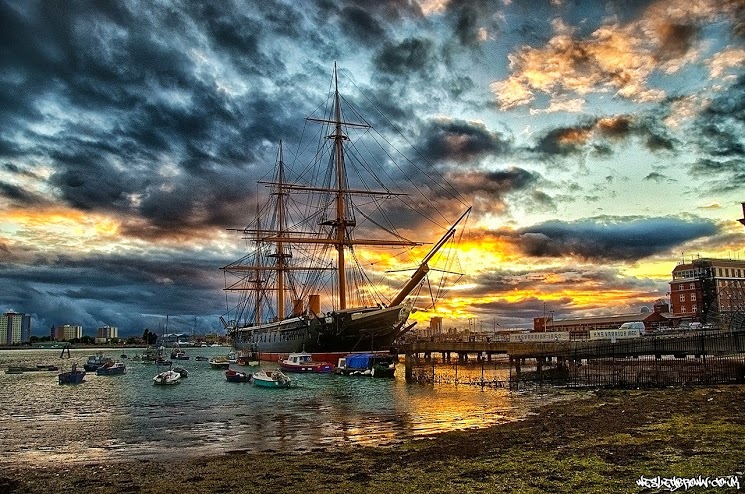
Five years of toil and training reached their apotheosis for HMS Vigilant as she completed her first mission since a massive overhaul. The nuclear submarine has returned to base on the Clyde following a three-month deterrent patrol – her first since a £333m revamp.

 
With the waters of the Clyde parting over her bow, the Navy’s most powerful warship returns to base after completing the nation’s ultimate mission.

HMS Vigilant has finished her first nuclear deterrent patrol, the pinnacle of a five-year and £333m programme to overhaul the submarine ready for operations into the mid-2020s.

For three months, the 16,000-tonne leviathan – one of four Vanguard-class boats charged with upholding the UK’s nuclear deterrent, Operation Relentless – lurked someone beneath the surface of the Seven Seas before emerging in the Clyde to be escorted back to Faslane.

Throughout the 14-week patrol, the boat remained submerged, with the crew’s only contact with home a weekly 120-word ‘family gram’ – to which they are unable to reply.

The submarine rejoined her two older sisters Vanguard and Victorious in the deterrent cycle earlier this year (boat No.4 Vengeance is in refit) after completing a £333m upgrade of her systems and the refuelling of her nuclear reactor.

In all some 2.3 million man hours (more than 37½ years) were spent revamping Vigilant before she sailed from Devonport to begin her regeneration – regeneration which culminated in the test firing of a dummy Trident II D5 missile off the Eastern Seaboard of the USA.

As well as living up to their motto – Vigilant and Resolute – during the patrol, the 130 crew aboard found they had time and money to donate more than £3,000 to charity.The submariners staged various events – an iron man competition, horse racing, even a golf tournament.

The cash raised is being distributed among Cancer Research UK, Dunfermline Youth Rugby Football Club, worthy causes on the Isle of Man (Vigilant’s affiliate) and the Sandpiper Trust, which supports life-saving care in rural Scotland.

“Whilst a noble sacrifice is made by all submariners whilst on patrol, the fundraising events not only provided some relief whilst away, but have helped us to support the community we serve,” said Lt Dean Ingram, Vigilant’s operations Officer.

His Commanding Officer Cdr John Livesey added:

“On patrol it is important to maintain morale while staying fully focused on the task in hand.

“I am delighted with the admirable generosity of my crew and the valuable charity work we are supporting.”

He was one of two members of the crew to earn their gold ‘bomber pins’ during the deployment, having completed their 20th deterrent patrol – equating to more than five years under the water.

And Vigilant herself celebrated her own milestone during the first patrol of her new commission: her 18th birthday (October 14). It was celebrated with a gigantic V-boat shaped chocolate cake.

Press Release, November 14, 2013; Image: Royal Navy

George Washington Carrier Strike Group Prepares for Philippine Recovery Efforts

Another post on John’s Naval, Marine and other Service news

.

George Washington Carrier Strike Group Prepares for Philippine Recovery Efforts

The George Washington Carrier Strike Group is en route to the Republic of the Philippines to support humanitarian assistance efforts in response to Typhoon Haiyan.

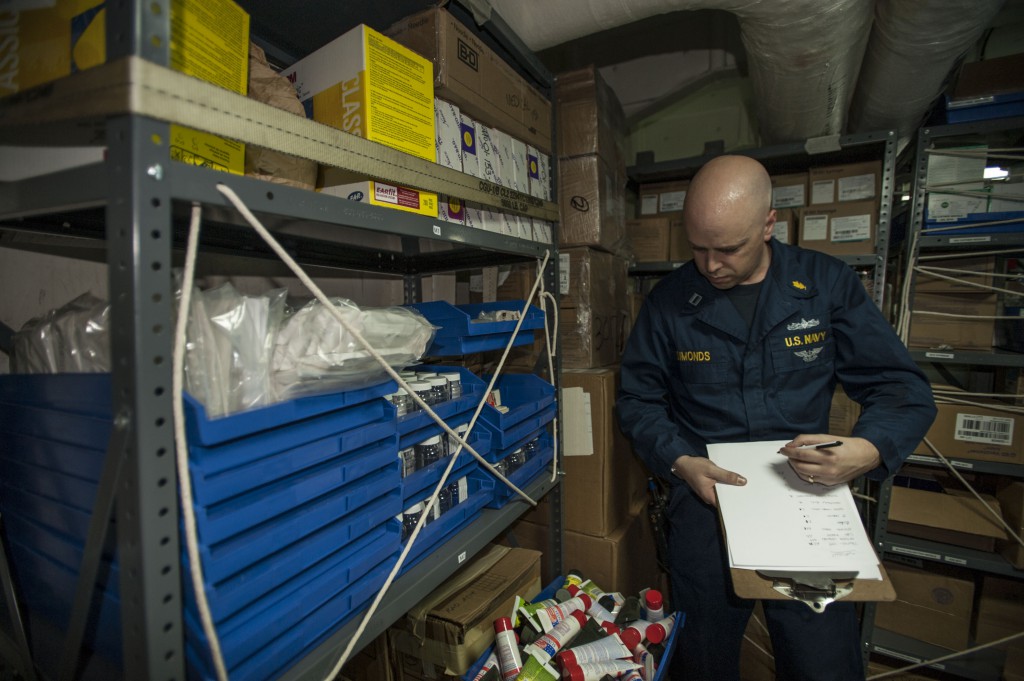
Lt. Wayne Simonds, medical administration officer aboard the aircraft carrier USS George Washington (CVN 73), inventories available medical supplies in the medical supply storage room, Nov. 13, 2013. The George Washington Carrier Strike Group is en route to the Republic of the Philippines to support humanitarian assistance efforts in response to Typhoon Haiyan. (U.S. Navy photo by Mass Communication Specialist Seaman Liam Kennedy/Released)Lt. Wayne Simonds, medical administration officer aboard the aircraft carrier USS George Washington (CVN 73), inventories available medical supplies in the medical supply storage room, Nov. 13, 2013. The George Washington Carrier Strike Group is en route to the Republic of the Philippines to support humanitarian assistance efforts in response to Typhoon Haiyan. (U.S. Navy photo by Mass Communication Specialist Seaman Liam Kennedy/Released)
Sailors assigned to the Saberhawks of Helicopter Maritime Strike Squadron (HSM) 77 remove equipment from an MH-60R Sea Hawk helicopter aboard the aircraft carrier USS George Washington (CVN 73) to make room for transport of cargo and personnel, Nov. 13. The George Washington Carrier Strike Group is en route to the Republic of the Philippines to support humanitarian efforts in response to Typhoon Haiyan. (U.S. Navy photo by Mass Communication Specialist 3rd Class Paolo Bayas/Released)Sailors assigned to the Saberhawks of Helicopter Maritime Strike Squadron (HSM) 77 remove equipment from an MH-60R Sea Hawk helicopter aboard the aircraft carrier USS George Washington (CVN 73) to make room for transport of cargo and personnel, Nov. 13. The George Washington Carrier Strike Group is en route to the Republic of the Philippines to support humanitarian efforts in response to Typhoon Haiyan. (U.S. Navy photo by Mass Communication Specialist 3rd Class Paolo Bayas/Released)

View more coverage of Operation Damayan’s humanitarian assistance efforts on the U.S. Navy’s Storify page.

.
.
.

.

from Blogger http://www.h16613.com/2013/11/george-washington-carrier-strike-group.html
via IFTTT

JCs Royal New Zealand Navy Ships and New Zealand Defence, Also other World Defence Updates

Ships and Defence News Past and Present

Skip to content ↓