Port of Kiel Gears Up Winter Preparations

MarineLink.com

Monday, November 11, 2013, 10:07 AM
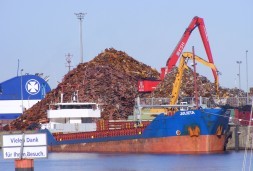
File Port handles ship öoad of gritting salt
Port handles ship öoad of gritting salt

Preparations are in full swing throughout the port of Kiel for the oncoming winter period as the 2,050 GT, 88m long and 13 m wide cargo ship Julieta arrived with a load of 3,200 tons of gritting salt from Morocco.

The Julieta docked at Berth 9 in the Ostuferhafen and was unloaded there by the firm of Burmann. Two giant grabs were used which are capable of offloading up to 400 tons of rock salt an hour.

Hans-Martin Burmann said, “It is both economical as well as ecologically sound to transport bulk cargo like this by ship. In doing so we are making a practical contribution to getting traffic off the roads and onto ships at sea and we want to make this kind of transport solution a permanent one for the transport of gritting salt.”

Most of the salt cargo was loaded directly onto trucks for further transport to the surrounding region. When they enter the port, the empty trucks first cross a weighbridge before being loaded and weighed again when they leave. In this way volumes can be monitored and can also be checked directly and on-line by customers. Part of the Julieta cargo was also taken to the Ostuferhafen’s Warehouse No. 2 for temporary storage and filling into big bags for customers with small-quantity needs.

Hans-Martin Burmann, Managing Director of Burmann Hafenlogistik, said, “This is a premiere for Kiel. For the very first time large quantities of gritting salt are being shipped through the port.”

The Managing Director of the Port of Kiel (SEEHAFEN KIEL GmbH & Co. KG) Dr. Dirk Claus said, “The Port of Kiel recognizes the traditional and important role it plays in supplying the regional market. Our port is universal and can handle nearly every kind of bulk cargo.”

Burmann Hafenlogistik is involved in handling, among other things, grain, wood pellets, splitt, pig iron and also roundwoods in the port. Bulk cargo last year accounted for about 20% of all handling in Kiel. The main commodities in the sector were fuels and building materials as well as agricultural products.

Japan: Experimental Floating Wind Farm Project

MarineLink.com

Monday, November 11, 2013, 10:29 AM
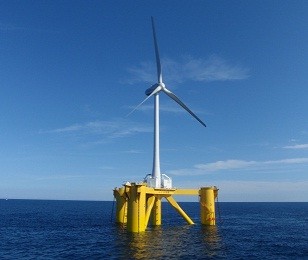
File 2MW Downwind-type Floating Wind Turbine                                          "Fukushima Mirai"                                                      (Floater: 4 Column Semi-Sub)tence with the fisheries
2MW Downwind-type Floating Wind Turbine “Fukushima Mirai” (Floater: 4 Column Semi-Sub)tence with the fisheries

A consortium comprising of Marubeni (project integrator), the University of Tokyo (technical advisor), Mitsubishi, Mitsubishi Heavy Industries, Japan Marine United, Mitsui Engineering & Shipbuilding, Nippon Steel & Sumitomo Metal Corporation, Hitachi, Furukawa Electric, Shimizu and Mizuho Information & Research have been participating in an experimental offshore floating wind farm project sponsored by the Ministry of Economy, Trade and Industry since March 2012.

At present, the installation work of 2MW downwind-type floating wind turbine, 66kV floating power sub-station, extra-high voltage undersea cable and the dynamic cable at the testing area (first phase) have been successfully completed and commenced operations.

The experimental study of 2MW downwind-type floating wind turbine, 66kV floating power sub-station commenced. The evaluation of safety, reliability and economic potential of the offshore floating wind farm through the collection and analysis of meteorological data, hydrographic data and performance data will be carried out during the experimental study. In addition, the experiment is aiming to establish the method of operation and maintenance of the offshore floating wind farm at the same time. At the second phase, the two unit of 7MW oil pressure drive-type floating wind turbine will be installed within fiscal year 2014 and the total capacity of the offshore floating wind farm will be 16MW, making it the world’s biggest floating offshore wind farm.

During this experimental study that will be carried out until the fiscal year 2015, the following are targets:

  • The creation of offshore wind-related industry
  • Development of offshore wind facilities as Japan’s new export industry
  • Coexistence with the fisheries

Nimitz Carrier Strike Group Returns to US 5th Fleet AOR

Naval Today >> The industry’s seaborne news provider by Naval Today  /  7min  //  keep unread  //  trash  // preview

Nimitz Carrier Strike Group Returns to US 5th Fleet AOR

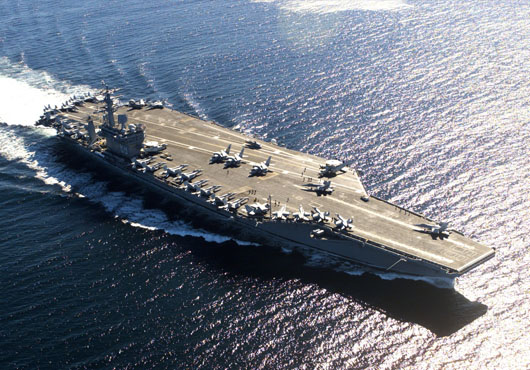
The Nimitz Carrier Strike Group reentered the U.S. 5th Fleet Area of Responsibility (AOR) after transiting the Suez Canal, Nov. 8.

The aircraft carrier USS Nimitz (CVN 68), along with embarked Carrier Strike Group (CSG) 11, Carrier Air Wing 11, and Destroyer Squadron 23, spent nearly three weeks in the U.S. 6th Fleet area of operations conducting exercises with NATO allies and making a port call in Naples, Italy.

While in the Mediterranean, Commander, U.S. 6th Fleet visited Nimitz where he hosted a luncheon reception for local officials to strengthen the already solid relationship between the U.S. and its NATO allies.

“This was a wonderful opportunity to return hospitality to our friends and allies in the region,” said Rear Adm. Mike S. White, commander of CSG-11.

The visit came as a surprise to many Sailors and Marines aboard the ship after spending nearly 80 consecutive days at sea in the U.S. 5th Fleet AOR.

“Having the opportunity to go to Naples was pretty amazing,” said Aviation Boatswain’s Mate (Equipment) 2nd Class Michael Peru. “It’s not common for a West Coast carrier to hit a European port so that alone was worth the experience.”

Nimitz left its homeport of Everett, Wash., March 30 for a scheduled Western Pacific deployment and is currently supporting maritime security operations and theater security cooperation efforts in the U.S. 5th Fleet AOR.
Press Release, November 11, 2013; Image: Wikimedia

Remembrance Day: Falmouth man’s memories of WWII onboard an armed steam trawler 3:00pm Friday 8th November 2013 in Cornwall

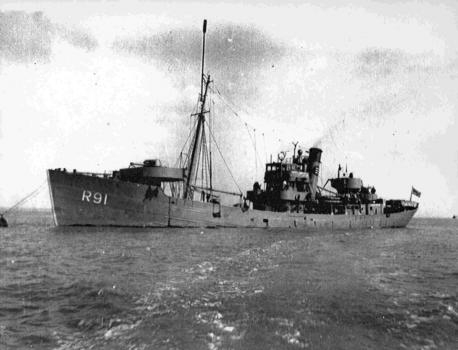
Kingston Turquoise was assigned to the Royal Naval Patrol Service (RNPS), also known as Harry Tate’s Navy, a name given by the Royal Navy to poke fun at the trawlers and drifters of the unit in World War IIKingston Turquoise was assigned to the Royal Naval Patrol Service (RNPS), also known as Harry Tate’s Navy, a name given by the Royal Navy to poke fun at the trawlers and drifters of the unit in World War II

“If you had arrived here a minute earlier my lad, you would have had a nice draft to the Royal Yacht, but you have not done bad. You are going to join HMS Kingston Turquoise,” joked a chief petty officer in the drafting office of HMS Europa, Lowestoft.

Tom Ellis, aged 92, of Conway Road, Falmouth, remembers that day well.

“I thought at the time that it was a posh sounding name for a naval ship,” he told me.

Little did he know she was a small converted trawler that was to be his home for the next two years.

Tom said: “I wanted to go on destroyers. Arriving in Portsmouth docks I spotted four destroyers moored alongside. I asked which one was Kingston Turquoise. A sailor pointed to this small trawler tied up astern.”

Born in the small village of Aston, near Sheffield, Tom, along with three close friends, decided to volunteer to join the Royal Navy in the event of war.

In May 1941, young Tom received his call-up papers. After initial training as a signaller, known in naval parlance as a “bunting tosser” he was drafted to the armed steam trawler. Crewed by some former fishermen she spent her time patrolling the Channel, off the Isle of Wight, looking for U-boats using her sonar equipment.

“If we had a contact we would fire off a depth charge.” said Tom.

Kingston Turquoise was assigned to the Royal Naval Patrol Service (RNPS), also known as Harry Tate’s Navy, a name given by the Royal Navy to poke fun at the trawlers and drifters of the unit in World War II.

Prime Minister Winston Churchill wrote to the Fourth Sea Lord in 1939: “I am told that the RNPS /Minesweepers men have no badge. If this is so it must be remedied at once. “ The finished design took the form of a shield upon which a sinking shark, speared by a marlin spike, was set against a background made up of a fishing net with two trapped enemy mines. This was flanked by two examples of the nautical knot and at the top the naval crown. Beneath the silver badge was a scroll bearing the letters M/S-A/S (Minesweeping Anti-Submarine).

Never before had one section of the Royal Navy been similarly honoured.

The RNPS suffered more than 250 lost vessels, more than any other branch of the Royal Navy.

Lord St Levan, who died this year, won a DSC whilst serving with the RNPS.

A modest, quintessential, Yorkshireman, Tom is very proud to wear the exclusive silver badge denoting his service with Harry Tate’s navy.

Tom’s next draft in 1943 saw him off to the USA to bring a new, wooden minesweeper BYMS 2041 back to the UK.

He and his shipmates boarded a cutter at Gourock that took them out to the liner Queen Mary. Later, Winston Churchill joined the Cunard leviathan at anchor, travelling under his code name of Colonel Warden. Churchill was on his way to the United States to meet President Roosevelt.

Tom said: “ We sailed from the Clyde with the Queen Mary travelling at top speed on zig-zag courses to avoid the U-boat menace. My job was to keep a lookout at night. Coming off the 12-4 watch one night I saw Winston Churchill on the promenade deck. He nodded and I nodded. I was chuffed.”

D-Day on June 6 1944 saw Tom in action off the Normandy beaches aboard the same minesweeper.

Recalling that historic day, Tom said: “Dawn came very slowly. This was the big one. What an amazing sight. To port, to starboard and astern an astonishing flotilla of ships of all shapes and sizes. What happened during the coming days is very hard for me to describe.

“We were minesweeping off the Sword Beach. Hunt class destroyers were bombarding the German gun emplacements. Shells from the battleship HMS Warspite further offshore whistled overhead. The noise was deafening. Scores of landing craft carrying thousands of very, very brave men headed towards the beaches. Some, as we know, paid the ultimate sacrifice for their king and country and, of course, our enduring freedom.”

From the now iconic beaches of Normandy, BYMS 2041 headed back to her base at Harwich before embarking with other ships on one of the most arduous and dangerous minesweeping operations of the war – clearing mines from 80 miles of the River Scheldt to open up the port of Antwerp, in Belgium.

In April 1945 Tom was Mentioned in Dispatches for his great gallantry and endurance for the role he played in clearing the estuary of the Scheldt of mines during the period of October to November 1944.

After the war, Tom and his family eventually moved to Falmouth. Apart from working on the construction of the Queen Elizabeth dry-dock in 1959 Tom managed to get a job as an ordinary seaman with the MFVs (Motor Fishing Vessels) operating out of the Submarine Pier with the Torpedo Trails Unit which eventually became the Admiralty Underwater Weapons Establishment.

A spell operating out of Plymouth saw Tom working on ammunition carriers dumping ordnance in the Hurd Deep in mid Channel The fleet tenders, Heaver, Headcorn and Clovelly, later replaced the MFVs.

Tom took charge of all three vessels that were based at Falmouth Wharves in 1977.

Tom and his wife Betty have been married for 67 years. They have four children – Roger, Norman, Elizabeth and Sally.

Retired for 30 years, Tom always remembers those who never returned from war.

Every year he has remembrance crosses placed in the memorial garden to honour fallen comrades but in particular to remember his uncle, Thomas Ellis, after whom he is named, who was killed in World War I in France during April 1918 at the age of 19.

His cousin Jean was killed in an air raid at Great Yarmouth and his friend, stoker Stanley Surgey, was lost when the destroyer HMS Aldenham blew up in the Adriatic with the loss of 130 lives.

US naval convoy crosses Egypt’s Suez Canal

In September, the US Navy increased its presence in the Middle East as talk of intervention in Syria heated up [Reuters]
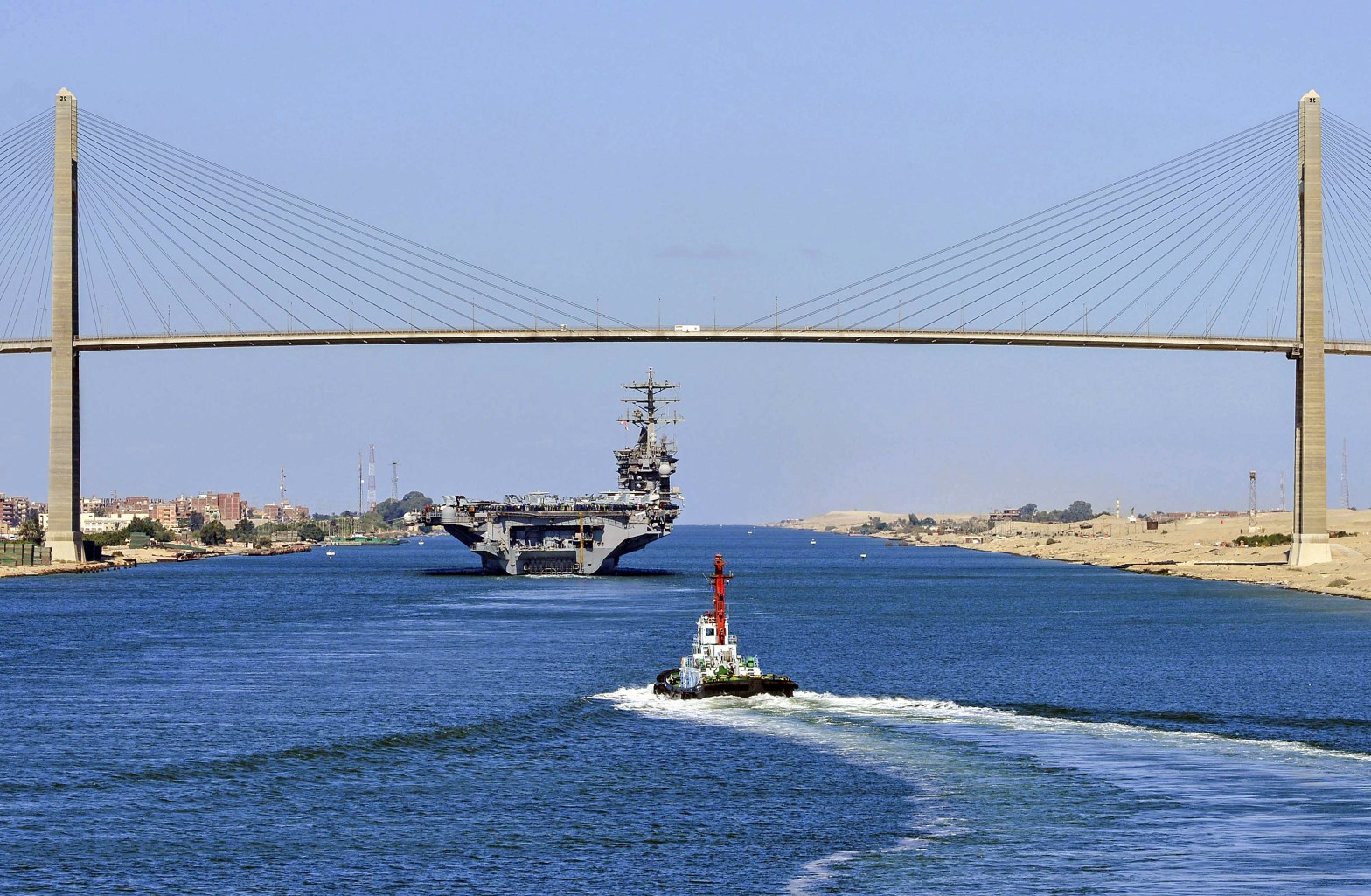
An official at Egypt’s Suez Canal says a US aircraft carrier and a destroyer have crossed the waterway from the Mediterranean Sea to the Red Sea.

The official says the US warships crossed on Friday after 14 hours of heightened security along the canal that included closing all roads near the canal and having Egyptian military helicopters provide air support.

The official said the aircraft carrier was the USS Nimitz, based in the US state of Washington. He did not identify the destroyer and spoke on condition of anonymity because he was not authorised to brief reporters.

The US is bringing the aircraft carrier back to the US from the Arabian Gulf region, said the US Defense Department, after keeping two of the warships there for months as the Obama administration considered a military strike against the Syrian government.

In September, the US Navy increased its presence in the Middle East to keep watch over Syria amid threats to strike the country over a chemical weapons attack there.

The decision to bring back the USS Nimitz underscores the shift from a pointed military threat against the Syrian government to a broader diplomatic approach. It comes as international experts work to meet a mid-2014 deadline to eliminate Syria’s chemical weapons program.

According to officials, the USS Nimitz moved through the Suez Canal and into the Red Sea, and is expected to be back at its home port on the west coast of the US before Christmas. The Navy destroyer, the USS Graveley, was also returning home.

The US sharply increased its naval presence in the region after a deadly August 21 chemical weapon attack on rebel-held suburbs of Damascus. Washington and its allies said the Syrian government was responsible for the attack.

The US spread cruisers and destroyers across the eastern Mediterranean, waiting for the command to launch missiles into Syria. But after threatening military action, President Barack Obama abruptly announced on August 31 that he would go to Congress for approval of a strike.

After vocal opposition in Congress and from the US public, increased diplomatic efforts ultimately secured the right for experts to inspect chemical weapons sites in Syria as part of a mission to destroy all facilities and machinery for mixing the chemicals into poison gas.

Syria is believed to possess around 1,000 metric tons of chemical weapons, including mustard gas and sarin.

The aircraft carrier USS Harry S Truman remains in the North Arabian Sea, and three US warships – the USS Stout and the USS Ramage, both destroyers, and the USS Monterey, a cruiser – are in the eastern Mediterranean.

JCs Royal New Zealand Navy Ships and New Zealand Defence, Also other World Defence Updates

Ships and Defence News Past and Present

Skip to content ↓