Remembrance Day: Royal Oak’s Royal Navy standard replaced by divers

8 November 2013 Last updated at11:15 GMT

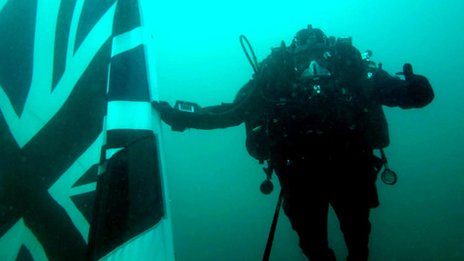
Diver with flagThe ceremony was said to have added poignancy this year

The Royal Navy white ensign on a battleship sunk at Scapa Flow in Orkney has been replaced by divers in time for Remembrance Day.

The Royal Oak was torpedoed by a German U-boat on Saturday 14 October, 1939, during WW2.

Most of the 1,200 crew were asleep below deck, and more than 800 – including many boy sailors – lost their lives.

Divers replace the standard annually as a mark of respect.

Diver William Millar said: “It is a rare and great privilege to have the opportunity to dive on such a symbol of naval heritage.

Royal OakThe Royal Oak wreck is an official maritime war grave

“It is extremely moving to be able to take part in a small act of remembrance to honour the great sacrifice that those before us made.”

He and his colleagues recovered the previous ensign, which will be presented to the Royal Oak Association.

Northern Diving Group’s commanding officer Lieutenant Commander Richard Osbaldestin added: “We must remember that when Royal Oak was sunk she was fully bunkered – carrying a significant amount of fuel and her magazines were also full.

“Eventually as the wreck breaks up over time the fuel and ammunition will present a potential hazard. Surveying the wreck each year provides an early indication of the rate of decay of this magnificent ship.”

The wreck is an official maritime war grave.

More on This Story

Related Stories

Related Internet links

The BBC is not responsible for the content of external Internet sites

The Royal Navy can still be fighting fit despite BAE job losses

Anger over BAE shipbuilding redundancies should not obscure the fact that Portsmouth remains a key naval base

Going under: the BAE redundancies are regrettable but understandable

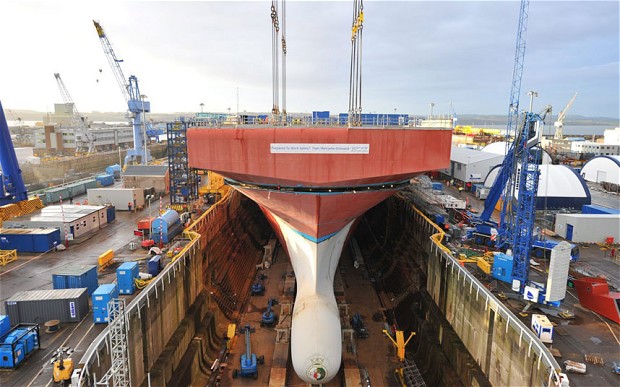
Going under: the BAE redundancies are regrettable but understandable  Photo: EPA

By Duncan Redford

8:11PM GMT 06 Nov 2013

Comments362 Comments

The news that BAE Systems is ending shipbuilding in Portsmouth with the loss of hundreds of jobs is a bitter blow to the city and the region. Once the two new Queen Elizabeth class aircraft carriers have been completed, some 940 BAE employees in the city will be made redundant.

Portsmouth naval base, and the activities of BAE Systems within it, is a major employer in an area that has pockets of poverty and unemployment to rival the worst inner-city areas, despite its seaside location backed by rolling chalk downland. More jobs will go in Glasgow, Rosyth and Filton, near Bristol, adding to the economic problems of those regions, too.

But BAE’s decision is an understandable one. Dreadful though the news will be for the affected employees, their families and the wider area, we must be careful not to lose sight of some fundamentals. The reason why BAE has made this decision is that there is insufficient demand for British-built warships – and its main customer is the Ministry of Defence. BAE must, in the final weighing-up of its decision, do what is best for the wider company, its employees and its shareholders, or in due course, there will be no BAE Systems.


It is also important to remember that Portsmouth as a naval port – and indeed a heritage centre with more than 500,000 visitors a year to the historic dockyard alone – is not closing. The Royal Navy remains in Portsmouth, and will continue to do so for the foreseeable future, and those ships – including the new aircraft carriers – will need refitting, repairs and maintenance.

Nor should we necessarily be that concerned about shipbuilding as an activity, odd – complacent even – though this might sound. BAE and many other defence companies are global multinationals; the equipment for modern warships can be – and is – made in many different countries, yet continues to carry the label of BAE Systems or General Dynamics or other big manufacturers. So worrying unduly about where the hull that all this high-technology equipment goes into is built is perhaps not that helpful, as it disguises the globalised nature of our defence procurement.

Many other countries have no problem buying foreign-built warships, so why should we? We already participate in collaborative defence projects or buy equipment off the shelf. Indeed, the Royal Navy’s new replenishment ships are being built in South Korea.

Better to worry about whether the Royal Navy has the ships and people it needs, rather than where the components are finally assembled into finished equipment. Better, indeed, for Britain to concentrate on the design and development of the high technology that goes into warships – the grey boxes that make up radars, sonars, communications systems and missiles, for this really is an area of national importance.

Will this week’s decision affect the Royal Navy, or Britain’s ability to project power – hard or soft – in support of British foreign policy? No, it will not. And it is perhaps timely to restate the importance of the Royal Navy to Britain’s security and its ability to influence and shape our world. The Navy might be small now, but it is still vital in giving politicians options rather than policy dead-ends.

The new aircraft carriers are an excellent example of those options. These ships, having survived concerted attempts to kill them off before, during and after the 2010 Strategic Defence and Security Review, are again facing criticism. The Daily Telegraph was not alone this week in criticising the rising costs of the aircraft carriers; and it has been suggested that we do not know how they will be used. But if the value of the carriers is compared with the costs of the RAF’s new Eurofighter, a very different picture starts to emerge.

The Queen Elizabeth class aircraft carrier project is now estimated to cost about £6.2 billion – this for a pair of mobile airfields that will be in service for at least 50 years. Meanwhile, the RAF’s share of the Eurofighter Typhoon project will be, according to the National Audit Office in 2011, at least £37 billion for around 100 aircraft.

The Eurofighter Typhoon can only be deployed to distant trouble spots at significant cost, as the Libya campaign demonstrated, with tanker support (another £12 billion or so for the RAF’s new tanker aircraft) and only if someone else will let them fly across their airspace and also let them use an airfield. With the ability to carry between 36 and 40 aircraft each, the Royal Navy’s two new aircraft carriers represent not just a very significant proportion of Britain’s deployable air power, they are better value for money than land-based air assets, and they do not need fixed and vulnerable bases in other people’s territory.

It is this ability to operate without need for a foreign land base that gives the Navy, its amphibious forces – and the vital aircraft carriers – their greatest strength. They can peacefully loiter off a trouble spot, over the horizon and invisible to all, without inflaming events ashore. They can, by their presence, deter, support or coerce as required, without “host nation support”. They can signal resolve without requiring the financial or political costs of deploying land-based aircraft and army units within a potentially hostile community. Today, military power does not always need “boots on the ground”.

It is also worth remembering that 95 per cent of the world’s population live within 500 miles of the sea, making the Royal Navy an excellent tool for exerting influence across, with its helicopter-borne Commandos from one of the Navy’s amphibious assault ships, or Tomahawk cruise missile-armed submarines. The sheer power available to the modern Royal Navy puts today’s frigates, destroyers, aircraft carriers and the rest at a far remove from the ships that fought at Jutland or Trafalgar.

But one fact technology can’t hide is that the Royal Navy is now very small. And while the hi-tech basis of modern warships means they can see and hit an enemy at ever longer distances, there is still the unavoidable fact that a ship can only be in one place at one time. The Royal Navy’s fleet, with its new aircraft carriers and its indispensable amphibious shipping, supported by the Royal Fleet Auxiliary, is the most strategically mobile and flexible force available to Britain, but it can’t be in two places at once.

Nor have the things we ask our Navy to do changed that much, despite the reductions to our fleet. Britain still has global interests that need protection and support and the Royal Navy is in the front line, as it has always been. Whether defending our trade (including our vital energy supplies), carrying out work against piracy and smuggling, supporting the Army ashore, acting as a base for interventions, raids and even larger military operations against hostile states or terrorist bases, there is little the Navy can’t do. It rescues and protects British civilians caught up in war zones and gives aid to regions hit by natural disasters, such as Haiti after the earthquake.

So sad though the news is that BAE Systems is making many hundreds of shipyard workers redundant, the Royal Navy will still be here to protect British interests from aggression almost anywhere in the world.

Duncan Redford is the senior research fellow in modern naval history at the National Museum of the Royal Navy in Portsmouth. His next two books, ‘The Royal Navy: A History Since 1900’ (with Phil Grove) and ‘A History of the Royal Navy: World War II’ will be published by I B Tauris in 2014

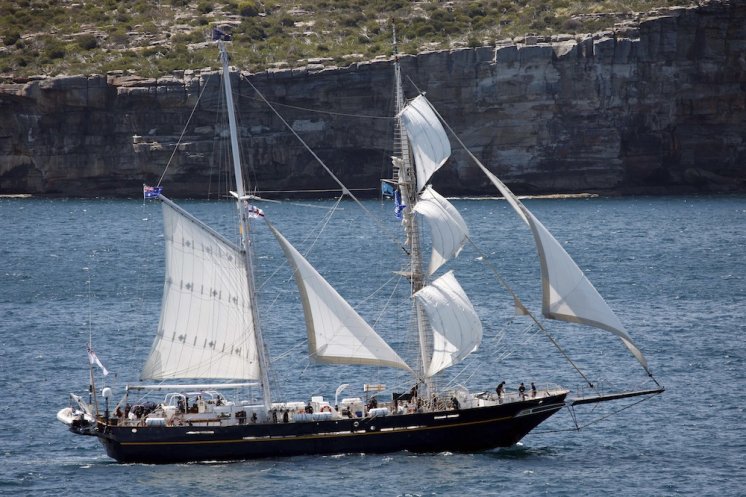
Set Sail Aboard Tall Ship Young Endeavour (Australia)

Naval Today >> The industry’s seaborne news provider by Naval Today  /  11h  //  keep unread  //  trash  // preview

Set Sail Aboard Tall Ship Young Endeavour (Australia)

Set Sail Aboard Tall Ship Young Endeavour

The ballot is now open for young Australians aged 16-23 to set sail for the voyage of a lifetime aboard the national Sail Training Ship Young Endeavour in 2014. A voyage in Young Endeavour is a unique experience and one which develops skills for life.

Successful applicants will join a crew of 24 youth from around Australia for an eleven day adventure at sea. They will set the sails, climb the mast, navigate using the ship’s charts and gain the confidence to take command, sailing Young Endeavour along the Australian coast.

Elspeth Mildren of Kergunyah, Victoria, was elected youth crew captain earlier this week and sailed Young Endeavour across Cook Strait in New Zealand.

”What a ride that was!” said Elspeth. “Our 24 hour command day was amazing – considering we all came together seven days ago with zero sail training and knowledge, to plan and execute this journey as successfully as we did was amazing”.

The youth development program delivered during each voyage builds self‑awareness, develops teamwork and leadership skills, and fosters a strong sense of community spirit.

Youth Crew are selected by ballot, and no sailing experience is required. Young Endeavour is operated by a professional Royal Australian Navy crew who ensure the highest standards of safety and care, and teach the youth crew everything they need to know to sail the ship.

18 year old Nicole Moran of Burnie, Tasmania, is also sailing Young Endeavour this week.

“If you had asked me a few months ago if I ever thought I would climb a (35m) mast I would have thought that you were crazy. Young Endeavour not only gives you the chance to do that, but also to develop your leadership skills, to build your confidence and to meet some pretty amazing people,” said Nicole.

“For me the best part about being on Young Endeavour is getting all these opportunities and being supported with all the decisions you make. I would recommend it to everyone”.

In 2014 voyages will depart from Victoria, New South Wales, Tasmania and Queensland. Travel assistance is available to applicants from Western Australia and the Northern Territory.

Australian Navy, November 8, 2013

Navy’s Most Advanced Aircraft Carrier Ready for Christening

Navy Live by Jason Kelly  /  10h  //  keep unread  //  trash  //  preview

Navy’s Most Advanced Aircraft Carrier Ready for Christening

By Rear Adm. Tom Moore
Program Executive Officer for Aircraft Carriers

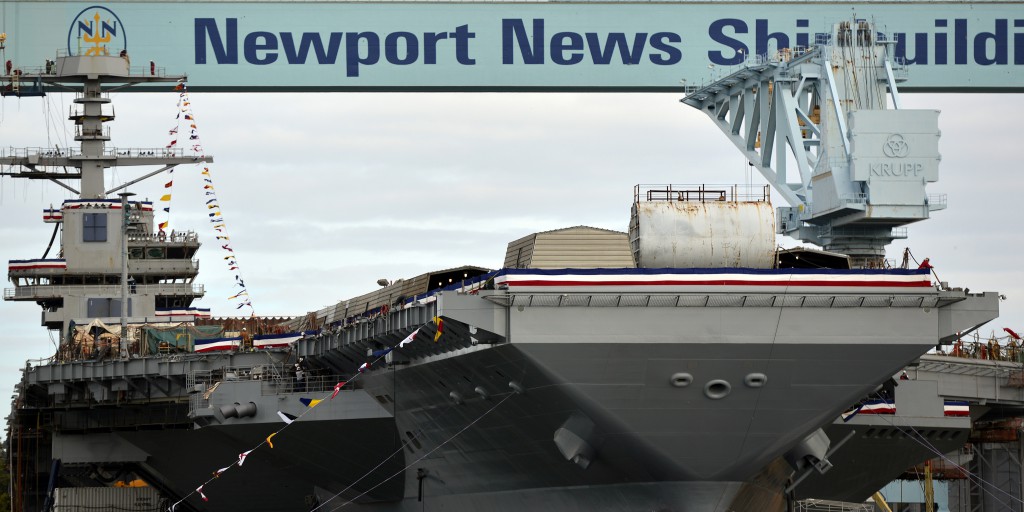
Gerald R. Ford (CVN 78) will be christened Saturday in Newport News, Va., by Mrs. Susan Ford Bales, CVN 78’s sponsor and daughter of the late president. The christening of the ship comes after more than 12 years of planning and construction preparation. While we are still 28 months from delivery, the thousands of Navy personnel, shipbuilders and contractors who have worked on the ship are beginning to see the fruits of their labors.

Newport News Shipbuilding employees decorate the aircraft carrier Pre-Commissioning Unit (PCU) Gerald R. Ford (CVN 78) in ceremonial attire for its scheduled christening Nov. 9.Newport News Shipbuilding employees decorate the aircraft carrier Pre-Commissioning Unit (PCU) Gerald R. Ford (CVN 78) in ceremonial attire for its scheduled christening Nov. 9.


I am extremely proud of this great ship and what we have been able to accomplish as a team. The coordination amongst the program office, the shipbuilder – Huntington Ingalls Industries at Newport News, the engineers at NAVSEA 05V, our resource sponsor at OPNAV N98, and the Congressional support and oversight, has been an integral part of building the next generation platform that is vital to our national defense strategy.

It’s no secret that we have faced challenges building the first new aircraft carrier design in 40 years. Her christening was delayed by four months to maximize the outfitting we could accomplish in the dry dock. In the shipbuilding industry, we use the term “1-3-8 Rule” to summarize the amount of time a task would take to complete; one hour in the shop, three hours in the dry dock, and eight hours tied to the pier. Those four extra months in dry dock provided us the opportunity to work in the most efficient manner, bringing the ship to 70 percent completion and 77,000 tons at launch. When we launched USS George H.W. Bush (CVN 77), she was less than 60 percent complete. CVN 78 will be the heaviest aircraft carrier at launch in history. The decision to delay launch and continue work in the dry dock will ensure the most affordable path to delivery.

CVN-78-Infographic-(Ready-for-the-Future)

CVN 78 incorporates multiple developmental systems. The Ford class is a total redesign of the Nimitz class, incorporating advances in technology such as a new reactor plant, propulsion system, electric plant, electromagnetic catapults, advanced arresting gear, machinery control, and integrated warfare systems. The Ford class brings a 33 percent increase in sortie generation rate, quality-of-life improvements, and reduced maintenance. Together, these efforts will reduce manning by more than 600 billets, improve operational availability and capability, and reduce total ownership cost over its 50-year service life by $4 billion compared with Nimitz class carriers.

I like to tell the folks here at PEO Carriers that for CVN 78, the easy part is behind us- now comes the hard part. She will begin a 28-month test period, in which all of these technologies will be integrated with the all new electrical plant for the first time. The Ford class carrier may look like the Nimitz class, but what is inside is much more complex. I look forward to delivering this ship to the fleet in 2016, and feel honored to be part of the government-industry team building this fantastic ship that will be the first ship of a class at the center of Naval Aviation for the next 100 years.

Editor’s Note: You can watch the christening ceremony live Saturday here on Navy Live.

Visit Website

TwitterFacebookLinkedInBufferMailCustom Sharing Tool
Evernote

+TAG

US Navy’s Amphibious Force Provides Solutions

Navy Live by Jason Kelly  /  8h  //  keep unread  //  trash  //  preview

Navy’s Amphibious Force Provides Solutions

By Rear Adm. Rick Snyder
Commander, Expeditionary Strike Group 2

In September, I returned to the amphibious force to serve as Commander, Expeditionary Strike Group 2. Since then, I have been fortunate to sit in the front row, again – to see first-hand the disciplined actions of our tailorable, versatile and highly trained amphibious force. The amphibious force continues to offer a range of unique capabilities – from combat power, to humanitarian assistance from a range of locations ashore, to the littoral, to long-term sea bases.

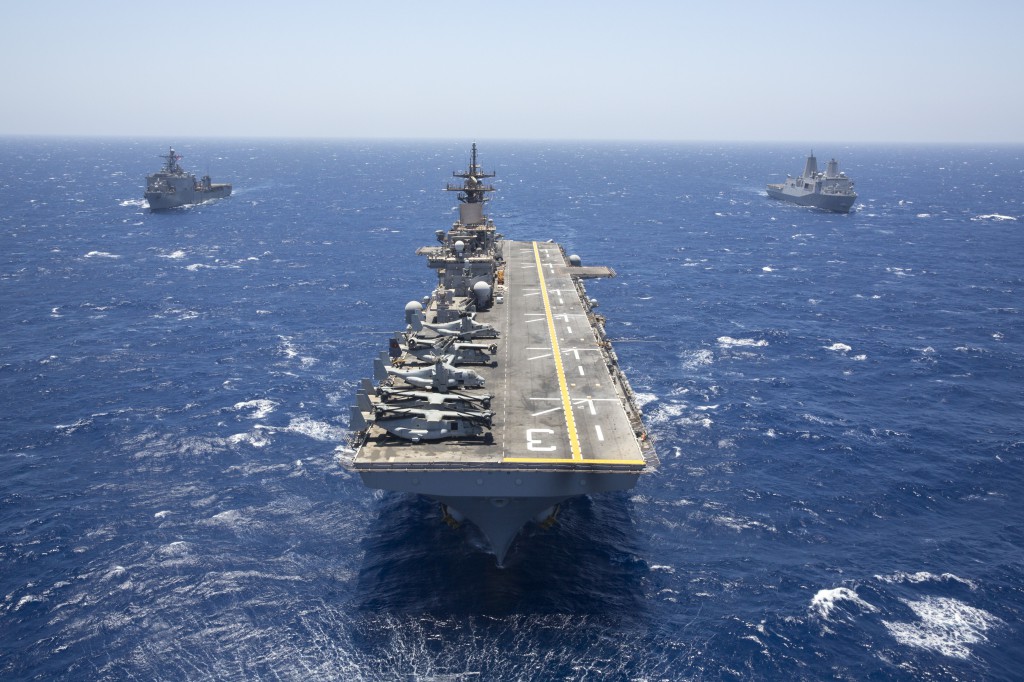
The amphibious assault ship USS Kearsarge (LHD 3), center, leads the amphibious dock landing ship USS Carter Hall (LSD 50), left, and the amphibious transport dock ship USS San Antonio (LPD 17) in the Red Sea, June 16, 2013. (U.S. Navy photo by Mass Communication Specialist 2nd Class Corbin J. Shea/Released)The amphibious assault ship USS Kearsarge (LHD 3), center, leads the amphibious dock landing ship USS Carter Hall (LSD 50), left, and the amphibious transport dock ship USS San Antonio (LPD 17) in the Red Sea, June 16, 2013. (U.S. Navy photo by Mass Communication Specialist 2nd Class Corbin J. Shea/Released)

Recently I was asked what my best time was in a 30-year Navy career. My answer – my best time is today. Today is a great day for our amphibious force. I want to share today with you; to give you a glimpse of the view from the front row.

The Navy-Marine Corps team remains unmatched in its ability to deliver a powerful ground force ashore, maintain freedom of the seas, and execute non-combatant and humanitarian operations to foster peace and stability where needed across the globe.

In partnership with ESG-3, ESG-7 and our Marine counterparts, we provide a visible, flexible, enduring presence and thus provide unique capabilities and solutions worldwide.

Electricians Mate 2nd Class Joe Gerolmo holds his daughter for the first time during a homecoming celebration for the amphibious assault ship USS Kearsarge (LHD 3) at Naval Station Norfolk, Nov. 7, 2013. (U.S. Navy photo by Mass Communication Specialist 1st Class Rafael Martie/Released)Electricians Mate 2nd Class Joe Gerolmo holds his daughter for the first time during a homecoming celebration for the amphibious assault ship USS Kearsarge (LHD 3) at Naval Station Norfolk, Nov. 7, 2013. (U.S. Navy photo by Mass Communication Specialist 1st Class Rafael Martie/Released)

Just this week, Kearsarge Amphibious Readiness Group returned from a successful deployment, operating within the U.S. 5th and 6th Fleet areas of responsibility.

The Sailors and Marines onboard USS Kearsarge (LHD 3), USS San Antonio (LPD 17),USS Carter Hall (LSD 50), along with elements of the 26th Marine Expeditionary Unit, completed an eight-month deployment to include the rescue of 128 stranded mariners of the coast of Malta and executing disaggregated operations in support of national tasking off the coast of Libya.  Even as the Kearsarge Amphibious Readiness Group approached home, they supported the U.S. Coast Guard in rescuing a man from a distressed vessel. They never stopped answering the call.

As we welcome one amphibious readiness group home, we are getting ready to send another one out the door. The Bataan Amphibious Readiness Group, consisting of USS Bataan (LHD 5), USS Mesa Verde (LPD 19), USS Gunston Hall (LSD 44), and elements of the 22nd Marine Expeditionary Unit are underway readying for deployment, conducting exercises off the coast of Virginia.

Last month, as part of a scheduled rotation of forward deployed assets, we welcomed USS Tortuga (LSD 46) home to Norfolk, after completing seven years forward deployed to Sasebo, Japan. While deployed, she took part in numerous multi-lateral training exercises and cooperation afloat events as a continuously forward-deployed amphibious ship. It’s good to have her back, and assuming her forward deployed watch is USS Ashland (LSD 48).

The same day we welcomed USS Tortuga back home, Amphibious Construction Battalion (PHIBCB) 2 was hard at work at the Ocean View beaches of Norfolk. In coordination with the Coast Guard, PHIBCB 2 assisted in the recovery of two buoys which washed ashore during recent heavy weather. As the only East-Coast based amphibious construction battalion, PHIBCB 2 offers a unique combination of dynamic small craft expertise and construction capabilities – they provide the amphibious force even greater capability and flexibility to answer our nation’s call.

Just to show our true range of capability, on the same day we welcomed home Tortuga and pulled buoys off beaches; the Bataan Amphibious Readiness Group, in company with two destroyers, conducted a live-fire missile exercise off the Virginia coast.

The multipurpose amphibious assault ship USS Bataan (LHD 5) fires a RIM-116 Rolling Airframe Missile (RAM) in the Atlantic Ocean, Oct. 22. The RAM provides ships with self-defense against anti-ship missiles and asymmetric air and surface threats. (U.S. Navy photo by Mass Communication Specialist 1st Class RJ Stratchko/Released)The multipurpose amphibious assault ship USS Bataan (LHD 5) fires a RIM-116 Rolling Airframe Missile (RAM) in the Atlantic Ocean, Oct. 22. The RAM provides ships with self-defense against anti-ship missiles and asymmetric air and surface threats. (U.S. Navy photo by Mass Communication Specialist 1st Class RJ Stratchko/Released)

As we carry out these missions, we have many things to consider given the dynamic environment in which we operate.  Our deployments are long, our budget is uncertain, and yet our Navy must still put warfighting first, operate forward, and be ready. We do this with innovative thinking like readiness kill chain analysis, optimized deployment cycles, flexible amphibious readiness group composition considerations, and optimizing use of our newest technology to include the LPD 17 class. Most importantly, we do this with the finest Sailors and Marines the world has ever seen.

As the commander of the East Coast amphibious force, I embrace these efforts so we can make decisions and take action to best meet the interests of our nation, our Sailors and our Marines.

Even as discussions about the structure and role of America’s military continue, the amphibious force will be on point, as we’ve always been. Just this week, eight of 14 East-Coast based amphibious ships conducted operations underway. Dedicated Sailors and Marines conducted exercises, sea trials and certifications in a range of warfare areas from aviation, to combat systems, to engineering. Highly skilled Sailors and Marines conduct these evolutions to ensure we remain more than operational; but relevant, effective and ready at a moment’s notice.

The amphibious force has a tradition of providing unique capabilities to offer solutions. I look forward to continuing that tradition.
JCs Royal New Zealand Navy Ships and New Zealand Defence, Also other World Defence Updates

Ships and Defence News Past and Present

Skip to content ↓