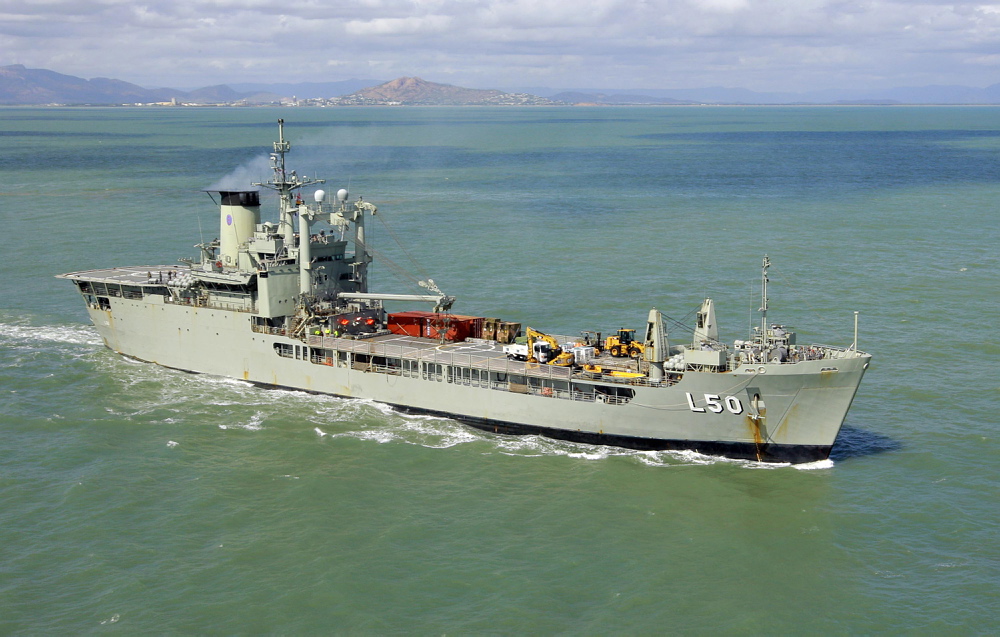
723 Squirrel joins HMAS Tobruk for Pacific deployment

Published on 05 November 2013 LEUT Harrison Ingham (author), CAPT Robert Knight (photographer)

<img alt="A Squirrel aircraft launches from HMAS Tobruk's aft flight deck during flying stations.
(photo: CAPT Robert Knight)” src=”http://news.navy.gov.au/images/cache/746×497/crop/images%7Ccms-image-000001272.jpg&#8221; width=”746″ height=”497″ />
A Squirrel aircraft launches from HMAS Tobruk’s aft flight deck during flying stations.

An AS350BA Squirrel flight from 723 Squadron recently joined HMAS Tobruk(CMDR Leif Maxfield, RAN) for the ship’s upcoming deployment to Townsville, Cairns and Pacific Islands.

As part of the deployment, Tobruk will take part in Operation SOLANIA, the Australian Defence Force (ADF) contribution to maritime surveillance within the Pacific Region, with the embarked Squirrel to undertake surface surveillance and maritime rescue, should it be required.

HMAS Tobruk’s Maritime Logistics Officer, LCDR Christina Ween, conducts duties as Helicopter Control Officer.

HMAS Tobruk’s Maritime Logistics Officer, LCDR Christina Ween, conducts duties as Helicopter Control Officer.

Tobruk has also been using the opportunity to conduct Deck Landing Procedures (DLPs), re-qualify Helicopter Control Officers (HCO) and Flight Deck Teams (FDT), and conduct internal training to keep members of the ship’s company current in aviation.

Tobruk’s Navigating Officer, LCDR Phillip Alley says the aircraft enhancesTobruk’s capability.

“The Squirrel has a proven track-record with ship born activities and provides a valuable asset whilst embarked,” said LCDR Alley.

“I am particularly impressed with the level of training they are providing the bridge team with, during both flying operations and off-watch briefs.”

“The Squirrel crew have also integrated superbly into the ship’s company. They have embraced every aspect of routine ship life with vigour,’ said LCDR Alley.

Upon arriving in Townsville, the Squirrel detached and proceeded to Cairns, whilstTobruk commenced training in vicinity of Magnetic Island and the Port of Townsville with Warhorse 110 and 211 – two Army Blackhawks from 5 Aviation Regiment. A number of day and night DLPs were conducted with the Blackhawks under the direction of Tobruk’s HCO LCDR Christina Ween.

“We’re conducting a lot of internal training, and its great exposure and valuable training not just for the ship, but for 723 SQN and Army,” said Tobruk’s Flight Deck Captain, Petty Officer Andrew Martin.

While ticking training boxes has been valuable, the opportunity to visit foreign ports is shaping up as a highlight for many of the ship’s company.

“We’re excited about the rest of the deployment and having the chance to visit ports in the South West Pacific. It’s not every day you get to explore Vanuatu and Noumea,” said Sub-Lieutenant Katherine Newson.

Your US Navy Operating Forward – Mediterranean Sea, Singapore, Strait of Malacca

CHIKAONYEKANNE

Right now your Navy is 100 percent on watch around the globe helping to preserve the American way of life. Whether it be operating and training off the coast of California or forward deployed to the Mediterranean Sea, the flexibility and presence provided by our U.S. naval forces provides national leaders with great options for protecting and maintaining our national security and interests around the world. The imagery below highlights the Navy’s ability to provide those options by operating forward.

MH-60S Sea Hawk helicopters assigned to the Indians of Helicopter Sea Combat Squadron (HSC) 6 perform flight operations off the coast of Naples, Italy.

MH-60S Sea Hawk helicopters assigned to the Indians of Helicopter Sea Combat Squadron (HSC) 6 perform flight operations off the coast of Naples, Italy.

Sailors from the littoral combat ship USS Freedom (LCS 1) conduct 11-meter rigid-hull inflatable boat operations in Changi Naval Base Harbor in Singapore.

Sailors from the littoral combat ship USS Freedom (LCS 1) conduct 11-meter rigid-hull inflatable boat operations in Changi Naval Base Harbor in Singapore.

Naval Aircrewman (Tactical Helicopter) 2nd Class Nathan James and Fire Controlman 3rd Class Douglas O’Neil are hoisted from the water by an MH-60R Sea Hawk helicopter from the Swamp Foxes of Helicopter Maritime Strike Squadron (HSM) 74 during a search and rescue exercise with the guided-missile destroyer USS Mason (DDG 87).

Naval Aircrewman (Tactical Helicopter) 2nd Class Nathan James and Fire Controlman 3rd Class Douglas O’Neil are hoisted from the water by an MH-60R Sea Hawk helicopter from the Swamp Foxes of Helicopter Maritime Strike Squadron (HSM) 74 during a search and rescue exercise with the guided-missile destroyer USS Mason (DDG 87).

Quartermaster Seaman Ryan Defillipo takes a bearing of a contact as the Arleigh Burke-class guided-missile destroyer USS McCampbell (DDG 85) enters the Strait of Malacca.

Quartermaster Seaman Ryan Defillipo takes a bearing of a contact as the Arleigh Burke-class guided-missile destroyer USS McCampbell (DDG 85) enters the Strait of Malacca.

Seaman Jonathan Keene, left, and Boatswain's Mate Seaman Apprentice Jordan Selig clear the flight deck of the guided-missile cruiser USS Monterey (CG 61) after attaching chocks and chains to an MH-60R Sea Hawk helicopter.

Seaman Jonathan Keene, left, and Boatswain’s Mate Seaman Apprentice Jordan Selig clear the flight deck of the guided-missile cruiser USS Monterey (CG 61) after attaching chocks and chains to an MH-60R Sea Hawk helicopter.

Ensign Timothy McDaniel, right, prepares to enter the water from a rigid-hull inflatable boat during a search and rescue exercise with the guided-missile destroyer USS Mason (DDG 87) and the Swamp Foxes of Helicopter Maritime Strike Squadron (HSM) 74.

Ensign Timothy McDaniel, right, prepares to enter the water from a rigid-hull inflatable boat during a search and rescue exercise with the guided-missile destroyer USS Mason (DDG 87) and the Swamp Foxes of Helicopter Maritime Strike Squadron (HSM) 74.


Which is your favorite photo? Tell us below and why. 

New post (USS Thach Decommissioned) has been published on http://www.navyandmarinenews.jcandmei.com/…

New post (USS Thach Decommissioned) has been published on http://www.navyandmarinenews.jcandmei.com/

1 Naval Today >> The industry’s seaborne news provider by Naval Today  /  4h  //  keep unread  //  trash  // preview
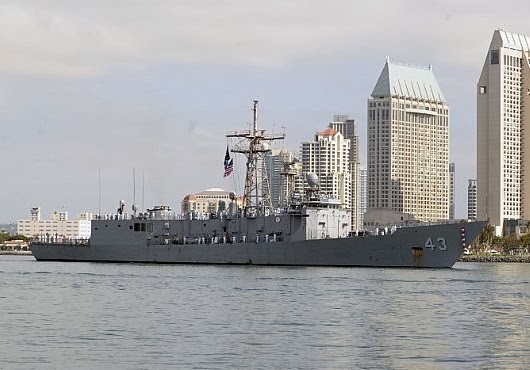
USS Thach Decommissioned

The Oliver Hazard Perry-class guided-missile frigate USS Thach (FFG 43) was decommissioned after more than 29 years of naval service during a ceremony on board Naval Base San Diego, Nov. 1.

The ship was named for Naval aviator Adm. John S. Thatch, the developer of the “Thach Weave” dogfighting tactic in World War II and former Commander, U.S. Naval Forces Europe from 1965-1967. He died in 1981 and the ship was commissioned into service March 17, 1984.
Several of the ship’s plankowners and dozens of former crew members, as well as many members of the Thach family, attended the ceremony alongside current crew members.
“Congratulations to all the of current crew and the wardroom for the fine work and Thach’s success; I understand you just got back from deployment,” said retired Navy Capt. Dale H. Moore, Thach’s first commanding officer who served as guest speaker for the ceremony. “I must say, lookingto my memory and the pictures I have from 30 years ago, the ship today looks as sparkly and new as it did then.”
Moore honored the plankowners that took part in the commissioning ceremony more than 29 years ago by having them stand and be recognized during the decommissioning ceremony. He also spoke about the technology aboard Thach nearly 30 years ago, including the limited number and use of computers at the time.
“To all of you, fair winds and following seas,” said Moore. “To Thach, wherever you may be, may you also have fair winds and following seas.”
During Thach’s final deployment earlier this year, the crew of 220 Sailors and Coast Guardsmen performed counter-illicit trafficking operations off the coasts of South and Central America. The ship disrupted shipments of more than 379 kilograms of cocaine and more than 1,100 pounds of marijuana totaling in excess of $10 million.
“From conducting counter-narcotics operations to maintaining freedom on the high seas, the ship has been through a lot in its 29 years of extraordinary service to our country’s Navy,” said Cmdr. Hans E. Lynch, Thach’s commanding officer.
Lynch said his tour as commanding officer has been very rewarding, especially during the ship’s final deployment conducting counter-narcotics operations in the U.S. 4th Fleet Area of Responsibility.
“I am grateful for the crew’s dedication to the mission,” said Lynch. “It is an honor to be the decommissioning commanding officer of a wonderful ship.”
Thach participated in a number of maritime security exercises and operations both independently and as part of carrier strike groups in U.S. 3rd, 4th, 5th and 7th Fleet areas of responsibility during nearly three decades of service.
Thach is the seventh U.S. Navy frigate to be decommissioned in CY-2013 following USS Underwood (FFG 36), USS Curts (FFG 38), USS Carr (FFG 52), USS Klakring (FFG 42), USS Reuben James (FFG 57) and USS Ford (FFG 54).

Press Release, November 04, 2013; Image: US Navy

Read more by clicking this link – http://www.navyandmarinenews.jcandmei.com/

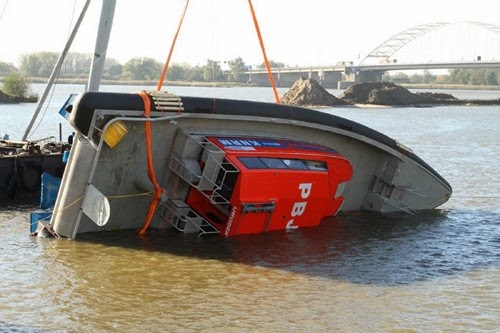
KNRM Rescue Vessel Passes Capsize Trials at Damen Shipyard

In album 2013-11-04

MarineLink.comMonday, November 04, 2013, 12:15 PM
 File Photo: Arie van Dijk
Photo: Arie van Dijk
The latest rescue vessel commissioned by the Royal Netherlands Sea Rescue Institution (KoninklijkeNederlandse Redding Maatschappij, KNRM) has passed an important trial at Damen Shipyards Group in Gorinchem before being entrusted to its crew. The capsize trials had to show that this youngest generation of rescue vessel is actually capable of righting itself. In four different tests, the rescue vessel righted itself to its normal position within a few seconds of capsizing – a life-saving feature in extreme conditions.

The KNRM’s rescue vessels, which have to be deployable in all weather conditions, are being designed to the most rigorous standards. Seakeepingand stability is the most crucial factors in safety. For the crew, however, comfort and user-friendliness are also key features. 

This NH1816 19-meter-long rescue vessel combines all of the technical, ergonomic and operational features the KNRM wanted in a remarkable new design.

Capsizing, then sailing on
The rescue vessel’s self-righting capability was created by the vessel’s low point of gravity and the air bubble in the wheelhouse, which enable the capsized ship to right itself quickly like a self-righting bath toy. The engines and equipment on board are designed to continue operating even after the vessel has capsized.

In its nearly 200-year history, the KNRM has lost 69 rescuers to drowning. Most of those drownings occurred when rescue rowboats capsized in the first 100 years. The advent of motorized, self-righting rescue vessels not only increased safety, but deplorability as well. Nowadays, rescue missions under weather conditions that would have forced rowboats to abandon their mission can simply continue. This means that risks have increased as well. 

Since 1990, at least twelve rescue vessels have capsized. Two of them, from Terschelling and Ameland, were examples of the largest category of rescue vessels and were able to handle extremely poor weather conditions. Thanks to their unique features, the rescue vessels were able to continue sailing and bring their crews of volunteers safely back to shore. 

The KNRM expressed its need for a completely new type of rescue vessel in 2008. Thanks to a donation to the KNRM from Dutch insurance company ‘Noordhollandsche 1816’ (NH1816), the design phase could begin in collaboration with Damen, the Maritime Technology faculty at Delft University and De Vries Lentsch Naval Architects.

Deployment
After completion the KNRM will deploy the SAR NH1816 from IJmuiden, with a permanent captain and an on-call crew. Sailors along the entire coast will carry out trials and familiarize themselves with the vessel. The rescue vessel is intended to be the future replacement for the current Arie Visser-class vessels. These ten 19-metre-long rescue vessels began being built in 1999 and they continue to deliver outstanding performance. Over the next 20 years, in order to keep the KNRM in line with the latest global developments in rescue work, these vessels will gradually make way for the new generation of rescue vessel.

damen.com

knrm.com
 

2 Navy Live by chikaonyekanne  /  8h  //  keep unread  //  trash  //  previewYour…

In album 2013-11-04

2 Navy Live by chikaonyekanne  /  8h  //  keep unread  //  trash  //  preview
Your Navy Operating Forward – Mediterranean Sea, Singapore, Strait of Malacca
Right now your Navy is 100 percent on watch around the globe helping to preserve the American way of life. Whether it be operating and training off the coast of California or forward deployed to the Mediterranean Sea, the flexibility and presence provided by our U.S. naval forces provides national leaders with great options for protecting and maintaining our national security and interests around the world. The imagery below highlights the Navy’s ability to provide those options by operating forward.

MH-60S Sea Hawk helicopters assigned to the Indians of Helicopter Sea Combat Squadron (HSC) 6 perform flight operations off the coast of Naples, Italy.

Sailors from the littoral combat ship USS Freedom (LCS 1) conduct 11-meter rigid-hull inflatable boat operations in Changi Naval Base Harbor in Singapore. 
Sailors from the littoral combat ship USS Freedom (LCS 1) conduct 11-meter rigid-hull inflatable boat operations in Changi Naval Base Harbor in Singapore.

Naval Aircrewman (Tactical Helicopter) 2nd Class Nathan James and Fire Controlman 3rd Class Douglas O’Neil are hoisted from the water by an MH-60R Sea Hawk helicopter from the Swamp Foxes of Helicopter Maritime Strike Squadron (HSM) 74 during a search and rescue exercise with the guided-missile destroyer USS Mason (DDG 87). 
Naval Aircrewman (Tactical Helicopter) 2nd Class Nathan James and Fire Controlman 3rd Class Douglas O’Neil are hoisted from the water by an MH-60R Sea Hawk helicopter from the Swamp Foxes of Helicopter Maritime Strike Squadron (HSM) 74 during a search and rescue exercise with the guided-missile destroyer USS Mason (DDG 87).

Quartermaster Seaman Ryan Defillipo takes a bearing of a contact as the Arleigh Burke-class guided-missile destroyer USS McCampbell (DDG 85) enters the Strait of Malacca.

Seaman Jonathan Keene, left, and Boatswain's Mate Seaman Apprentice Jordan Selig clear the flight deck of the guided-missile cruiser USS Monterey (CG 61) after attaching chocks and chains to an MH-60R Sea Hawk helicopter.
Seaman Jonathan Keene, left, and Boatswain’s Mate Seaman Apprentice Jordan Selig clear the flight deck of the guided-missile cruiser USS Monterey (CG 61) after attaching chocks and chains to an MH-60R Sea Hawk helicopter.

Ensign Timothy McDaniel, right, prepares to enter the water from a rigid-hull inflatable boat during a search and rescue exercise with the guided-missile destroyer USS Mason (DDG 87) and the Swamp Foxes of Helicopter Maritime Strike Squadron (HSM) 74.


Which is your favorite photo? Tell us below and why. 

JCs Royal New Zealand Navy Ships and New Zealand Defence, Also other World Defence Updates

Ships and Defence News Past and Present

Skip to content ↓