
Reshared post from +David Arkwright
This post has been reshared 1 times on Google+
View this post on Google+
Ships and Defence News Past and Present
Reshared post from +David Arkwright
This post has been reshared 1 times on Google+
View this post on Google+
|
1 Naval Today >> The industry’s seaborne news provider by Naval Today / 4h // keep unread // trash // preview
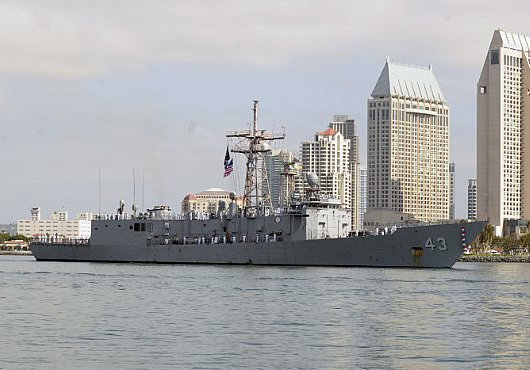
The Oliver Hazard Perry-class guided-missile frigate USS Thach (FFG 43) was decommissioned after more than 29 years of naval service during a ceremony on board Naval Base San Diego, Nov. 1.The ship was named for Naval aviator Adm. John S. Thatch, the developer of the “Thach Weave” dogfighting tactic in World War II and former Commander, U.S. Naval Forces Europe from 1965-1967. He died in 1981 and the ship was commissioned into service March 17, 1984. Several of the ship’s plankowners and dozens of former crew members, as well as many members of the Thach family, attended the ceremony alongside current crew members.
Moore honored the plankowners that took part in the commissioning ceremony more than 29 years ago by having them stand and be recognized during the decommissioning ceremony. He also spoke about the technology aboard Thach nearly 30 years ago, including the limited number and use of computers at the time.
During Thach’s final deployment earlier this year, the crew of 220 Sailors and Coast Guardsmen performed counter-illicit trafficking operations off the coasts of South and Central America. The ship disrupted shipments of more than 379 kilograms of cocaine and more than 1,100 pounds of marijuana totaling in excess of $10 million.
Lynch said his tour as commanding officer has been very rewarding, especially during the ship’s final deployment conducting counter-narcotics operations in the U.S. 4th Fleet Area of Responsibility.
Thach participated in a number of maritime security exercises and operations both independently and as part of carrier strike groups in U.S. 3rd, 4th, 5th and 7th Fleet areas of responsibility during nearly three decades of service. Thach is the seventh U.S. Navy frigate to be decommissioned in CY-2013 following USS Underwood (FFG 36), USS Curts (FFG 38), USS Carr (FFG 52), USS Klakring (FFG 42), USS Reuben James (FFG 57) and USS Ford (FFG 54). |
|
Naval Today >> The industry’s seaborne news provider by Naval Today / 4h // keep unread // trash // preview
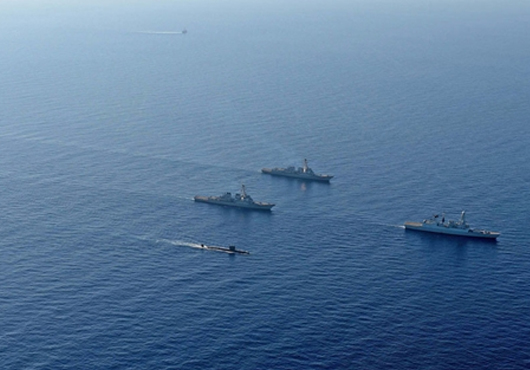
Anti-submarine warfare may not be the usual forte for a destroyer – an air defence warship – but HMS Dragon snapped up the chance to work alongside nuclear submarine HMS Talent.As both were working in the Eastern Mediterranean at the same time, the units practised advanced underwater training with HMS Dragon tasked with hunting Talent down. The Devonport-based submarine proved an elusive and very capable adversary for HMS Dragon, testing her underwater sensors that are as capable in that domain as her more visible radars are that sweep the skies for air threats. The vessels were then joined by units from the US 6th Fleet – the USS Gravely, Stout and Barry with their SH-60R Sea Hawk helicopters which can ‘dip’ ahead of the force, using their sonars to try and find nearby submarines. Ahead of the exercise, several personnel from Talent and Dragon had swapped places to gain an insight into the different ways the units hunt each other down. Among those was Marine Engineer Submariner (MESM) Michael Williams (25) from Plymouth. What was more poignant was the fact that onboard HMS DRAGON to host him was his brother, Leading Engineering Technician (Weapon Engineering) Stuart Williams, who he hadn’t seen in over eight months.
MESM Williams said:
Leading Engineering Technician (Marine Engineer) David Cantrell (29) of Portsmouth spent two days on board the submarine. He said:
Press Release, November 04, 2013; Image: Royal Navy |
|
Naval Today >> The industry’s seaborne news provider by Naval Today / 4h // keep unread // trash // preview
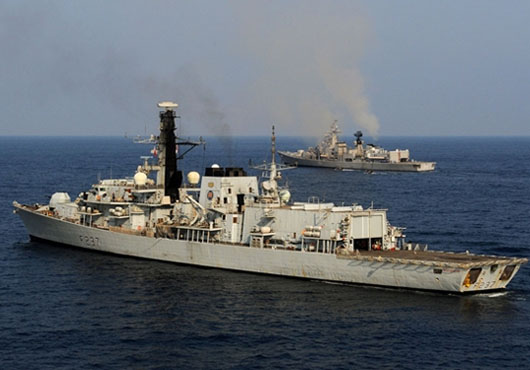
HMS Westminster has just visited Goa where the ship’s company had the opportunity to exercise alongside the Indian Navy.The Type 23 frigate took time out from her busy counter-terrorism and counter-narcotics operations in the Gulf for a workout with Indian Navy Ship (INS) Delhi and her company. Exercise Konkan is part of the long-term commitment shared by the United Kingdom and India to maintaining strong ties and developing the ability to work closely and efficiently together during operations. The exercise had two distinct phases. The first was conducted alongside in Goa where Westminster and Delhi berthed together. This presented an opportunity for a few friendly inter nation competitions including football and golf with Westminster winning the football 3-1 but going down in the golf 2-0. A series of lectures and ship’s tours were also held for some of Delhi’s crew onboard Westminster, the aim being to improve mutual understanding of different equipment and working practices. Lieutenant Simon Yates, HMS Westminster’s Flight Observer and the ship’s visit liaison officer, said:
Captain Hugh Beard, Commanding Officer, HMS Westminster called on Rear Admiral Balvinder Singh Parhar, Flag Officer Commanding Goa Area and Naval Aviation during the harbour phase. HMS Westminster later hosted an evening reception with ceremonial sunset which was attended by the Admiral, many of his senior staff, the Mayor of Goa and other local dignitaries.
HMS Westminster and INS Delhi rehearsed gunnery, an anti-submarine warfare, boarding operations, close manoeuvring and cross-deck flying: Westminster’s Lynx helicopter landed on Delhi’s flight deck whilst Delhi’s Chetak helicopter hopped across to be hosted by Westminster’s flight crew.
Captain Beard said he was pleased with how the exercise evolved:
HMS Westminster has now returned to maritime security operations in the Gulf region, where she will remain until early next year. |
|
Naval Today >> The industry’s seaborne news provider by Naval Today / 3h // keep unread // trash // preview
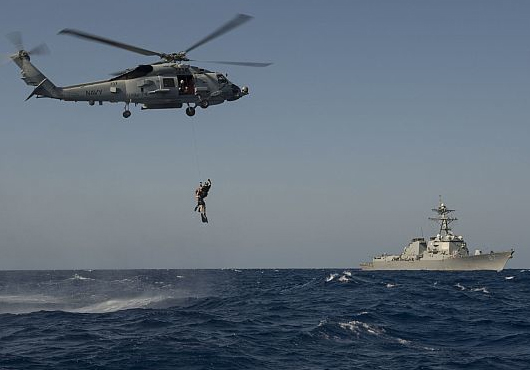
Surface rescue swimmers from guided-missile destroyer USS Mason (DDG 87) and aviation rescue swimmers from the Helicopter Maritime Strike Squadron (HSM) 74, “Swamp Foxes”, conducted a combined search and rescue (SAR) exercise in the Mediterranean Sea, Oct. 29.An MH-60R Seahawk helicopter from HSM 74 performed aerial searches and swimmer insertions while a rigid hull inflatable boat (RHIB) from Mason was used to deliver swimmers to recover simulated survivors more than two nautical miles from Mason.
HSM 74 showcased their SAR capabilities by recovering simulated survivors with a rescue strop and a two-person rescue basket extended from the helicopter hovering more than 50 feet above the sea.
Mason’s RHIB-based team successfully navigated the choppy water, deployed finned surface rescue swimmers and swam simulated survivors to safety.
Both surface rescue and aviation rescue swimmers go through a similar curriculum in order to earn their respective posts.
Given the teams’ performances and the benefits of an open-ocean SAR event, Mason and HSM 74 have already begun outlining plans for the next integrated training exercise.
Mason is currently deployed as part of the Harry S. Truman Carrier Strike Group supporting maritime security operations and theater security cooperation efforts in the U.S. 5th Fleet area of responsibility. |
Ships and Defence News Past and Present


