GE to Power Dynagas LNG Carriers

GE to Power Dynagas LNG Carriers

MarineLink.com
Monday, October 28, 2013, 1:46 PM
 
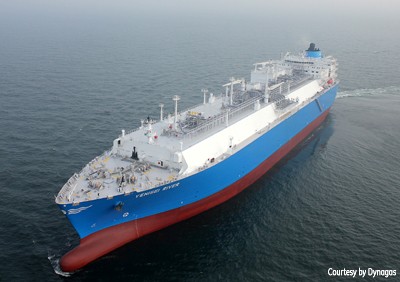
File Arctic Aurora (Courtesy Dynagas)
Arctic Aurora (Courtesy Dynagas)

Two new dual-fuel-powered LNG carriers just handed over to Greek shipping company Dynagas by Hyundai Heavy Industries (HHI)—the Arctic Aurora and the Yenisei River—are the first part of the latest and possibly clearest demonstration of the company’s intent to reach a cleaner environment through safe and efficient transportation of clean-burning liquid natural gas (LNG). Dynagas also will take delivery of five other LNG carriers over the next two years, all equipped with innovative and energy-efficient variable-speed electrical power and propulsion systems developed and constructed by GE’s Power Conversion business. 

For each vessel, GE will supply a fully integrated power and propulsion package that includes a MV7000-series induction motor, alternator, converter, transformers and switchboard. Each package is fully tested on a real-time simulator (RTS) that creates conditions at sea at GE Power Conversion’s Power and Control Integration System Centre of Excellence (PCIS COE) in Belfort, France, before being shipped for installation by HHI at its shipyard in Ulsan, Korea. 

“Dynagas recognizes its responsibilities to the industry to deliver its service in a safe, reliable and economically competitive manner,” Mr. Manos M. Migadis, new building project team manager at Dynagas says. He further says, “The goal of the company, the LNG shipping arm of the George Prokopiou group, is to grow in size and reputation and expand its ability to serve the industry.”

GE’s MV7000 drive technology delivers efficient and flexible control of electric power, which is some 30 percent more efficient than steam-based mechanical power and is now used across a broad range of applications and industries. The fully integrated package is backed up by a global team with technical expertise. 

gepowerconversion.com

Today in U.S. Naval History: October 28

Today in U.S. Naval History: October 28

MarineLink.com
Monday, October 28, 2013, 1:59 PM
 

Today in U.S. Naval History – October 28

1864 – Steamer General Thomas and gunboat Stone River destroy Confederate batteries on Tennessee River near Decatur, Alabama.

1882 – Orders issued for first Naval Attache (LCDR French Chadwick sent to London, England).

For more information about naval history, visit the Naval History and Heritage Command website at history.navy.mil.

Kiel-Canal Closed Due to Collision

Kiel-Canal Closed Due to Collision

MarineLink.com
Monday, October 28, 2013, 4:28 PM
 
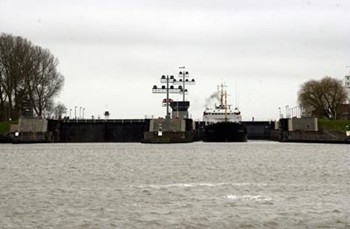
File Photo: Kiel Canal
Photo: Kiel Canal

Due to a collision of two vessels at Brunsbttel on the western end of Kiel-Canal between siding Kudensee and Brunsbüttel Innerharbour, the Kiel-Canal has been closed since 3:45 a.m. local time October 28 

Salvage operation are ordered, and westbound vessels presently inside the Kiel-Canal are stopped. The period of closure is presently unknown.

gac.com

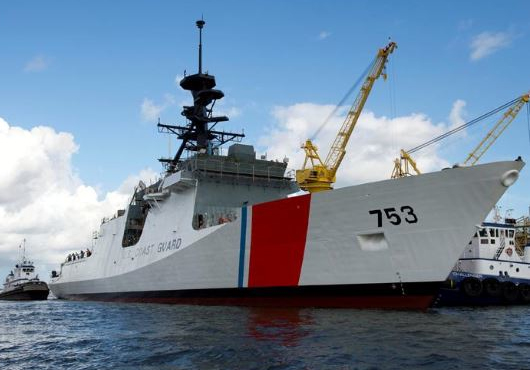
HUNTINGTON INGALLS INDUSTRIES’ INGALLS SHIPBUILDING DIVISION CHRISTENED, OCT. 26, THE NATIONAL SECURITY CUTTER (NSC) HAMILTON (WMSL 753) IN FRONT OF NEARLY 1,000 GUESTS. HAMILTON IS THE FOURTH NSC INGALLS HAS BUILT FOR THE U.S. COAST GUARD.

Naval Today >> The industry’s seaborne news provider by Naval Today  /  3h  //  keep unread  //  trash  // preview

USA: HII Christens NSC Hamilton

HII Christens NSC Hamilton

Huntington Ingalls Industries’ Ingalls Shipbuilding division christened, Oct. 26, the National Security Cutter (NSC) Hamilton (WMSL 753) in front of nearly 1,000 guests. Hamilton is the fourth NSC Ingalls has built for the U.S. Coast Guard.

The ship is named in honor of Alexander Hamilton, who is credited with establishing the Revenue Cutter Service, the forerunner of today’s U.S. Coast Guard. It is the third Coast Guard cutter to bear the name Hamilton.

HII President and CEO Mike Petters said the ship’s namesake “would be most proud of the fact that this ship is the product of a manufacturing company like HII, from a community like Pascagoula, and the result of an American industrial base that includes 649 suppliers from 39 states.”

NSCs are 418 feet long with a 54-foot beam and displace 4,500 tons with a full load. They have a top speed of 28 knots, a range of 12,000 miles, an endurance of 60 days and a crew of 110.

In the past decade, we’ve added to our 75-year legacy by building the most capable Coast Guard cutters in the world for the most capable Coast Guard in the world,” said Ingalls Shipbuilding President Irwin F. Edenzon. “We understand these great ships must be affordable. And the Coast Guard’s management of the NSC program has helped. Stable funding, timely contract negotiations and a disciplined appetite for change allow us to get learning from ship to ship. It gives both us and the Coast Guard the best opportunity to achieve our mutual objective: to keep building NSCs at an affordable price so we can build more NSCs. And not only do our shipbuilders know that the ships we build have to be affordable, they know who serves in them: Coast Guard men and women, sailors and Marines who are our friends, our neighbors, our sons, daughters, nieces and nephews—America’s heroes.”

NSCs are the flagship of the Coast Guard’s cutter fleet, designed to replace the 378‐foot Hamilton-class High-Endurance Cutters, which entered service during the 1960s. Ingalls has delivered three and has three more under construction, including Hamilton. Keel laying for Ingalls’ fifth NSC, James (WMSL 754), took place on May 17. The ship is currently 33 percent complete and will launch the spring of 2014. Ingalls has started construction on 28 of 45 units for NSC 6 and she will launch the fall of 2015. An advance long lead material procurement contract has also been awarded for a seventh NSC.

The Legend-class NSC is capable of meeting all maritime security mission needs required of the High-Endurance Cutter. The cutter includes an aft launch and recovery area for two rigid hull inflatable boats and a flight deck to accommodate a range of manned and unmanned rotary wing aircraft. It is the largest and most technologically advanced class of cutter in the U.S. Coast Guard, with robust capabilities for maritime homeland security, law enforcement, marine safety, environmental protection and national defense missions. This class of cutters plays an important role enhancing the Coast Guard’s operational readiness, capacity and effectiveness at a time when the demand for their services has never been greater.
Press Release, October 28, 2013; Image: HII

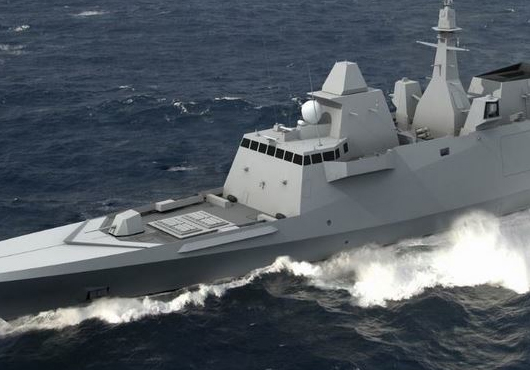
FREMM FRIGATE NORMANDIE, THE SECOND OF THE AQUITAINE CLASS FOR THE FRENCH NAVY, WAS PUT TO SEA FOR THE FIRST TIME ON 25 OCTOBER. THIS MILESTONE MARKS THE BEGINNING OF THE SHIP’S SEA TRIALS, WHICH WILL TAKE PLACE OFF BRITTANY AND ARE EXPECTED TO LAST SEVERAL WEEKS.

Naval Today >> The industry’s seaborne news provider by Naval Today  /  3h  //  keep unread  //  trash  // preview

France: FREMM Frigate Normandie Starts Sea Trials

FREMM Frigate Normandie Starts Sea Trials

FREMM frigate Normandie, the second of the Aquitaine class for the French Navy, was put to sea for the first time on 25 October. This milestone marks the beginning of the ship’s sea trials, which will take place off Brittany and are expected to last several weeks.

The main aim of these preliminary trials is to test the performance of the ship’s propulsion and navigation systems.

“This milestone represents the culmination of the combined efforts of many people working towards common goals, including DCNS personnel, teams provided by DCNS partners and suppliers, the French Navy crew and representatives of the French defence procurement agency (DGA) and the European Joint Armament Cooperation Organisation (OCCAr),” saidFREMM programme manager Anne Bianchi. “The construction of this second-of-class FREMM frigate for the French Navy is proceeding on schedule and on budget. FREMM frigates are among the most technologically advanced and competitively priced on the world market. Thanks to their many innovations, FREMM multimission frigates can respond to all types of threats with unparalleled flexibility and availability.”

Tests will be conducted at a sustained pace during the day and at night. The first three days will be devoted to the ‘familiarisation’ phase during which the crew and other personnel will test the ship’s safety systems and equipment, including fire-fighting, flood control and emergency response systems and evacuation procedures as well as manoeuvrability and mooring performance.

The following tests will focus on the propulsion system. The FREMM’s high-performance hybrid CODLOG (COmbined Diesel eLectric Or Gas) power package combines a gas turbine for mechanical propulsion at speeds exceeding 27 knots and electric motors for quiet, low-speed propulsion. This phase will also include extensive testing of the ship’s navigation (log, position, heading) and other basic systems.

On completing these preliminary trials, FREMM frigate Normandie will return to DCNS’s Lorient shipyard for several weeks of quayside work. In early 2014, the ship will put to sea for a second series of trials focusing on the combat system.
Press Release, October 28, 2013; Image: DCNS

JCs Royal New Zealand Navy Ships and New Zealand Defence, Also other World Defence Updates

Ships and Defence News Past and Present

Skip to content ↓