
|
U.S. Navy landing dock ship USS Pearl Harbor (LSD 52) recovered a bale of marijuana Oct. 23 found adrift while conducting training exercises off the Southern California coastline.Pearl Harbor was conducting underway training exercises when crewmembers spotted a suspicious object adrift near the ship. Upon recovery and inspection it was determined that the object was a bale of marijuana weighing approximately 49 pounds.
Upon confirmation, the bale was immediately placed in a secure location. The United States Coast Guard was contacted and arrangements were made for the transfer of custody of the marijuana.
Pearl Harbor is assigned as part of the Makin Island Amphibious Ready Group (ARG) stationed out of San Diego. Expeditionary Strike Group THREE commander, Rear Adm. Fernandez Ponds, sent his congratulations to the officers and crew commending them for their alertness and a job well done.
Pearl Harbor recently returned from a four-month deployment in the Oceania region in support of Pacific Partnership 2013; a mission focused on building sustained capacity, improving maritime security and stability in the Pacific region, as well as strengthening Humanitarian Assistance and Disaster Relief (HADR) preparedness while improving multilateral interoperability. Press Release, October 25, 2013; Image: Royal Navy |


US Pacific Fleet Master Chief Visits USS Texas
|
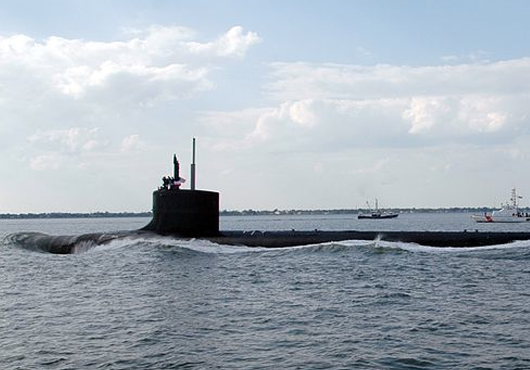
U.S. Pacific Fleet Master Chief Marco Ramirez paid a visit to the Virginia-class fast attack submarine USS Texas (SSN 775) on Joint Base Pearl Harbor-Hickam to talk with the crew, Oct. 23.Ramirez, the 16th Fleet Master Chief for the U.S. Pacific Fleet, said the purpose of the visit was to say hello to the Sailors, reinforce that they are doing a great job and to educate them on the current issues in the Pacific Fleet.
During his visit he talked about topics such as the mission of the Pacific Fleet, sexual assault, the lines of operation, drinking responsibly, leadership and what he expects from the Sailors. Ramirez thanked the Sailors for their service in the Pacific Fleet and listened to what issues they have as well.
One question came from Electronics Technician 3rd Class Michael Lacks who asked about Fleet Master Chief’s career progression and what it took for him to be a master chief petty officer. Another Texas Sailor, Electronics Technician 2nd Class Jonathan Day asked about Tuition Assistance in the Navy. During the visit, Ramirez held an E5 call before having lunch with the crew as well as talks with the E6s and the chief petty officers.
Prior to his selection into the Command Master Chief program, Ramirez served aboard USS Enterprise (CVN 65) Carrier Airborne Early Warning Squadron (VAW 110), and USS Carl Vinson (CVN 70). He became the 16th Fleet Master Chief for the U.S. Pacific Fleet on April 30, 2013. Press Release, October 25, 2013; Image: Wikimedia |

Share this:

AFP probers say US, not China, put concrete blocks in Bajo de Masinloc
AFP probers say US, not China, put concrete blocks in Bajo de Masinloc

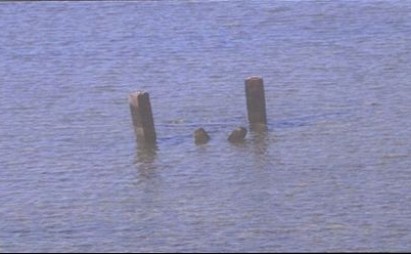
Photo taken on Sept. 2, 2013 shows two vertical posts at about north off the entrance of Panatag (Scarborough) Shoal. (Photo from Department of National Defense)

InterAksyon.com
The online news portal of TV5
The concrete blocks in Bajo de Masinloc, which Philippine defense and military officials last month accused China of putting there, may have actually been placed by the United States Navy decades ago, military sources said.
A military investigation found that the concrete slabs were covered by algae, an indication that they had been in the area for many years. The probe also found that the blocks had been used by the US Navy as “sinkers” to preserve the wreckage of old ships they used for target practice.
The information contradicts Defense Secretary Voltaire Gazmin’s statement at the congressional budget hearing in September in which he accused China of laying the foundation for structures similar to what it did in Mischief Reef in the Spratly Islands in 1995.
Gazmin released photos of some 75 concrete blocks scattered within Bajo de Masinloc, including a photo of two vertical posts at the shoal’s entrance. Philippine Navy Chief Jose Luis Alano had said they would remove the concrete blocks while Foreign Secretary Alberto del Rosario said the government would file a diplomatic protest with China. The blocks were never removed; the protest was never filed.
Bajo de Masinloc, known internationally as Scarborough Shoal, is 124 nautical miles off Zambales, which was home to the Subic Naval Base for more than 80 years. Subic was a major ship repair, supply, and rest and recreation facility of the United States Navy until 1991 when the Philippine Senate junked the RP-US Military Bases Agreement.
China claims the shoal, 467 nautical miles away from the mainland, as part of its territory with the name Huangyan Island.
Bajo de Masinloc is referred to as Panatag (calm in Tagalog) by Filipino fishermen who seek refuge in the area during stormy weather.
Sources said the US Navy used Bajo de Masinloc as an impact or bombing range. The concrete slabs were needed as “sinkers” to keep the balance of the old decrepit ships which were placed in the shoal for the US Navy’s shooting and bombing runs.
Over the years, however, the derelicts became the subject of “salvage operations by local salvors also known as kumbatseros.”
VERA Files sought a statement from the US Embassy but was referred to Gazmin’s office “for any clarification of his remarks.” VERA Files also asked for a statement from Gazmin’s office but did not get any response.
Military sources also said they interviewed a number of fishermen who had seen the concrete blocks way back in the late 1980s and even used them as step boards during high tide.
President Benigno Aquino III, speaking at the annual presidential forum of the Foreign Correspondents Association of the Philippines, shared the information that the concrete blocks “are very, very old concrete blocks. Some of them have barnacles attached to them. They are not a new phenomenon.”
Following Gazmin’s statement before Congress, China accused the Philippines of fabricating the photos, and released its own photos of Bajo de Masinloc without the concrete blocks.
The two vertical posts north of the shoal’s entrance turned out to be part of structures placed by the Philippine Navy in 1989, as part of the aborted plan to build a lighthouse there.
Aquino said he does not see any immediate need to remove the concrete blocks, which do not “present immediate danger to any of our vessels or even those that would transit in the area around Scarborough shoal.”
Despite the almost permanent presence of three Chinese ships in Bajo de Masinloc since April 2012, Aquino insists the Philippines has not lost the 120-square-kilometer strategically vital shoal because “we can still go there and we do have overflight missions,” adding that Filipino fishermen “are still in that area.”
The three-month standoff between the Philippines and China in Bajo de Masinloc last year triggered the filing by the Philippines of a suit before the United Nations Arbitral Tribunal. The Philippine government has questioned the legality of China’s 9-dash line that encompasses almost the whole of the South China Sea and encroaches on the exclusive economic zone of several countries in the Southeast Asia.
China has refused to participate in the UN suit.
(VERA Files is put out by veteran journalists taking a deeper look at current issues. Vera is Latin for “true.”)

Share this:

HMS Illustrious Sails through Strait of Hormuz
|
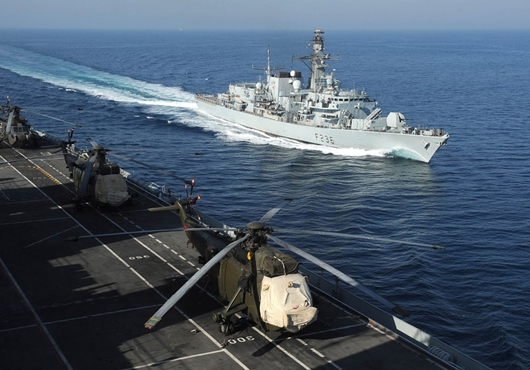
HMS Illustrious has been escorted through the Strait of Hormuz by frigate HMS Montrose as she continues on her Gulf deployment.The helicopter and commando carrier is due to begin exercises in the Gulf of Oman as part of Cougar 13 – the annual workout of the Royal Navy’s rapid reaction force known as the Response Force Task Group. The Strait of Hormuz is one of the world’s busiest and most strategically important shipping routes and, at its narrowest point, is only 21 miles wide. Over 20% of the world’s petroleum and around 35% of the petroleum traded by sea passes through this waterway and Royal Navy ships regularly exercise the right of lawful passage, ensuring that the waterway remains open and free for all to use.
The Cougar 13 deployment includes operations in the Mediterranean, Red Sea, Gulf, and Horn of Africa. It involves exercising with partner nations, and demonstrates the UK Armed Forces’ capacity to project an effective maritime component anywhere in the world. It is commanded by Commodore Paddy McAlpine from the Fleet Flagship HMS Bulwark which is also in the Gulf for Cougar. The RFTG sailed in August along with HMS Montrose and Westminster which have since taken on other regular tasking in the region. The RFTG is the United Kingdom’s high readiness maritime force, comprising ships, submarines, aircraft and a landing force of Royal Marines, which stand at short notice to act in response to any contingency tasking if required. The last time the RFTG was called into action was in Libya in 2011. Press Release, October 25, 2013; Image: Royal Navy |

Share this:

ITS Libeccio Conducts Friendly Approach with Local Seafarers
|
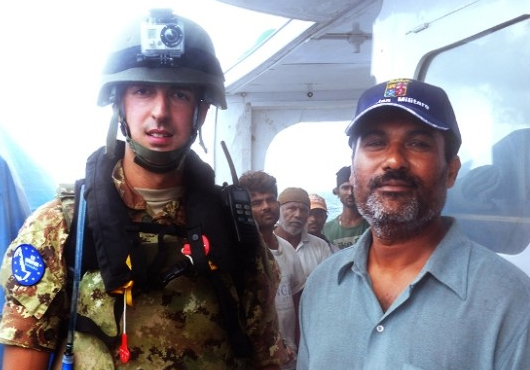
Italian frigate ITS Libeccio carried out a ‘Friendly Approach’ on Sunday 20 October. During the approach, the warship’s crew received information about the movements of maritime traffic in the area and strengthened relationships with local seafarers.The understanding between the maritime community in the area of operations is key to EU Naval Forces ability to conduct effective counter-piracy operations. The numbers of friendly approaches by EU Naval Force Warships has increased recently due to the increased number of skiffs and dhows in the Gulf of Aden following the end of the South West Monsoon. The improved sea conditions make it possible for pirates to launch skiffs from the beaches. After completing the Friendly Approach, Libeccio was tasked by the Force Commander of the European Union Naval Force to head at maximum speed towards a merchant vessel that had sent out a “May Day” because they thought they were under pirate attack. A Korean helicopter from ROKS Wang Geon searched the area and came to the conclusion that there wasn’t any threat. As a result, the Italian warship continued her counter piracy surveillance in the Gulf of Aden. Press Release, October 25, 2013; Image: EU NAVFOR Follow Naval Today via: |


