News


Ships and Defence News Past and Present

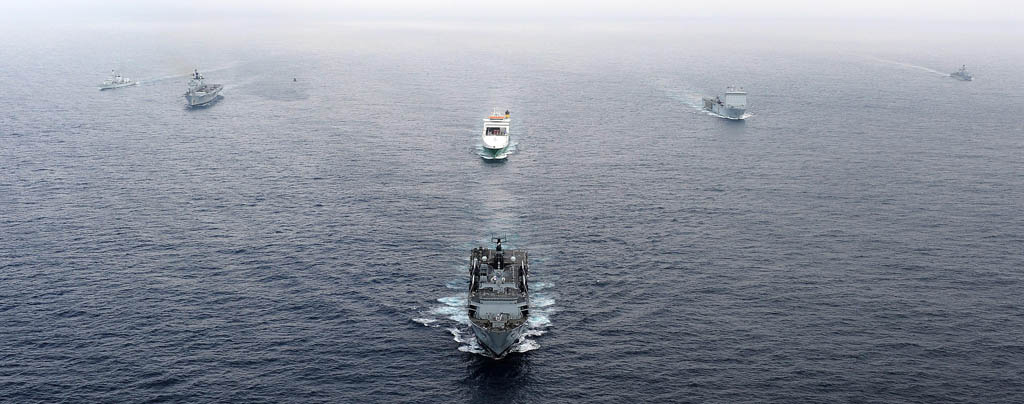
 This weekend will see a huge Navy presence in Gibraltar with over 1,100 sailors and marines using the Naval base as a forward mounting base. The deployment is knows as Cougar 12 and is a ‘long planned routine Royal Navy Response Force Task Group (RFTG) which will see ships transit through the western Mediterranean and Adriatic’.
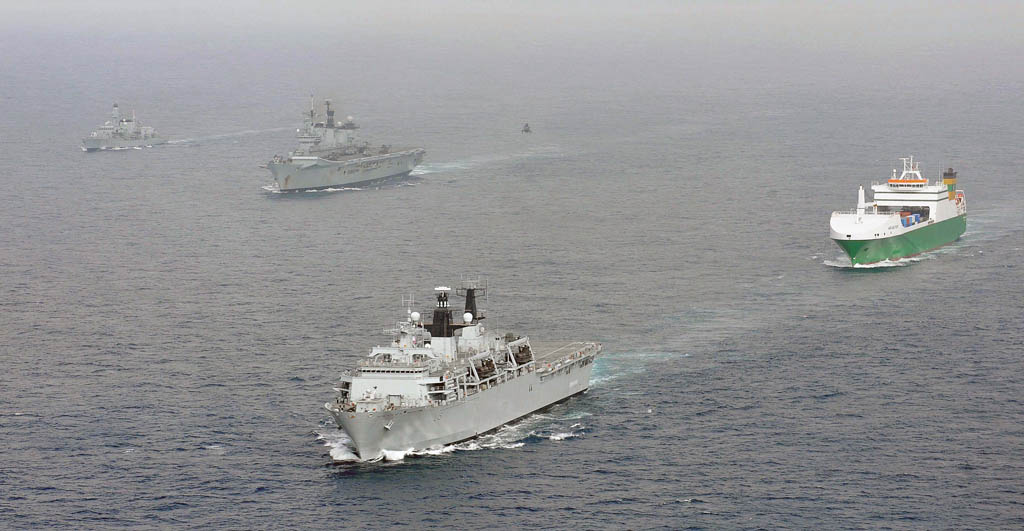
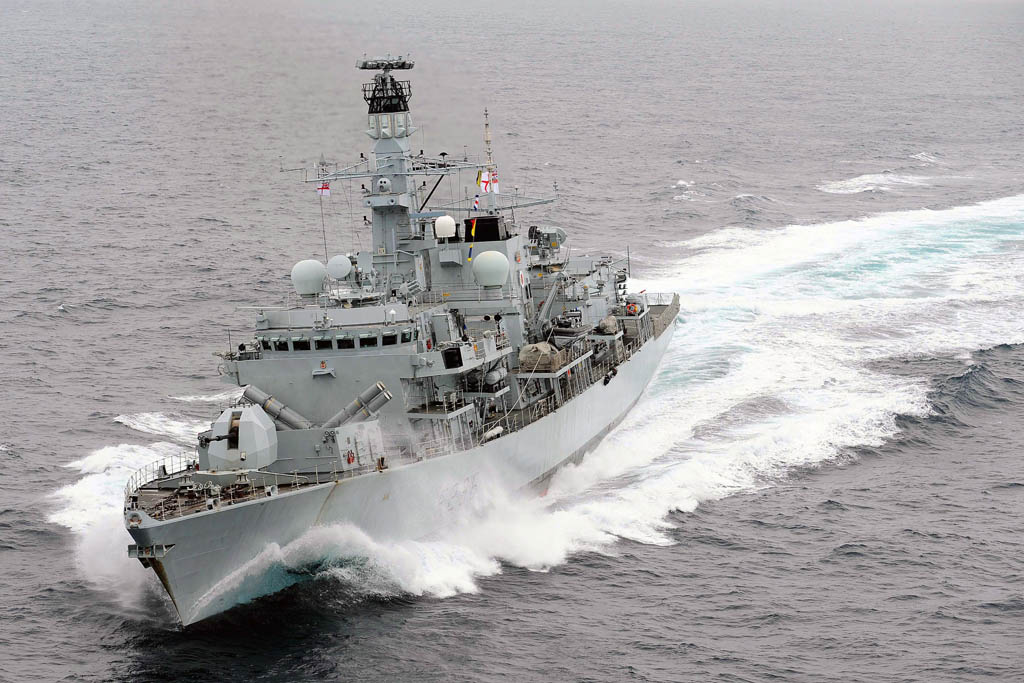
HMS Montrose, HMS Northumberland, HMS Bulwark and RFA Mounts Bay, will arrive in the Base on Saturday morning, to stay for a period of two days, as part of the deployment. The scheme is carried out annually and began as part of 2012’a Strategic Defence and Security Review initiative. It is held at very high readiness to respond to any unexpected global events.
‘The RFTG was formed to give the ships and their embarked Royal Marines the opportunity to develop their ability to respond to short-notice tasking across a diverse range of defence activities such as disaster relief, humanitarian aid or amphibious operations.
The RFTG will be working with Allies and Partners to develop mutual capability including the French, Albanian and American Forces.’
The deployment will be directed from the UK’s flagship, HMS Bulwark, by Commodore Paddy McAlpine, Commander UK Task Group and 3 Commando Brigade’s Brigadier Martin Smith.

A Royal Navy-led task force made up of warships, airpower and Royal Marine Commandos has now left UK waters and is heading for the Mediterranean for Exercise Cougar 12. The Response Force Task Group (RFTG), which is led by the Fleet Flagship HMS Bulwark, is a rapid reaction force that can be deployed to deal with unexpected world events.
Cougar 12 is an ideal opportunity for the Lead Commando Group to practice its core role – early entry operations at short notice and in unfamiliar environments.
Brigadier Martin Smith
On the exercise are four warships, one amphibious support ship, a giant transport ship, three commando units and helicopters and personnel from eight Fleet Air Arm, RAF and Army Air Corps squadrons.
Having taken part in amphibious exercises around the UK’s coastline for the last week, the 3,000 personnel have now left homeland waters to start training with French and Albanian maritime and land forces during exercises Corsican Lion, and Albanian Lion.
Corsican Lion will be the first major naval exercise that will test the maritime element of the recently formed Combined Joint Expeditionary Force (CJEF). Royal Navy units will be joined by the French aircraft carrier Charles de Gaulle and the French amphibious assault ship, Mistral.
The Lead Commando Group (LCG), made up of Royal Marines from 3 Commando Brigade, will work with French troops from the 9th Marine Brigade to exercise the land force element in an amphibious environment.

By combining carrier strike and amphibious operations the UK and France will maintain the flexibility to conduct military strike and intervention operations with the capability to project power into hostile land from the sea.
Commodore Paddy McAlpine, Commander UK Task Group, who is leading the maritime element of the Cougar 12 said:
“This is a great opportunity to test our capability and our interoperability with key allies including the French, American and Albanian maritime and land forces, and really provides the Lead Commando Group with superb training facilities in order that we can hone our aptitude as the UK’s high readiness maritime force.”
Brigadier Martin Smith, Commander of the LCG said:
“Cougar 12 is an ideal opportunity for the Lead Commando Group to practice its core role – early entry operations at short notice and in unfamiliar environments.
“The chance to exercise the land elements of the Response Force Task Group alongside our partners from the French Army, US Marine Corps and Albanian Army is particularly important as we see integrated multinational amphibious capability as a key element of our national security.”
Bulwark will be joined on the eight week deployment by Plymouth based ships HMS Northumberland, HMS Montrose, RFA Mounts Bay, and MV Hartland Point, as well as Portsmouth based HMS Illustrious.
WARSHIP labelled ‘the largest and most powerful’ ready for 600-mile coastline move from Glasgow to Rosyth.
THE Prime Minister told workers involved in building the largest warship for the Royal Navy that it is a “UK success story” as he visited the Scottish dockyard where it is being assembled.
David Cameron was speaking to construction workers in Rosyth, Fife, ahead of a meeting with First Minister Alex Salmond in Edinburgh where a deal is expected to be signed granting Holyrood the power to hold a referendum on independence.
Mr Cameron visited the Babcock facility to meet apprentices and staff building the aircraft carrier HMS Queen Elizabeth.
It is the first of two 65,000-tonne ships under construction for the Navy, and six shipyards around the UK are involved in building various parts of the vessel, which are ultimately being assembled in Fife.
It is due to be completed by 2016, with HMS Prince of Wales following later.
Around 200 workers gathered at the dry dock in Rosyth as Mr Cameron told them it made him “really proud” to see the “incredible result of British and Scottish engineering”.
He said: “I think this is the success story that the whole of the United Kingdom can take great pride in. Just as the Olympics showed what we can do when we come together, you’re showing it right here in Rosyth with this incredible feat of engineering.
“This has been and still is an immense task and, as soon as you have completed this aircraft carrier, the Prince of Wales will follow, and I am very proud to be standing here and to say thank you to you.
“As was said at the Olympics, we want to make sure ‘Made in the United Kingdom’ is a badge we can be really proud of and I believe that, with these aircraft carriers, you here in Rosyth are making it is absolutely clear that it is something we can all be really proud of.”
The 11,000-tonne hull section of the vessel is being prepared for its 600-mile journey from Govan Shipyard in Glasgow to Rosyth. The aft section is being loaded on to a barge today and will take five days to travel round the coastline to the Fife dockyard next month.
The vessels are being delivered by the Aircraft Carrier Alliance, a partnership between BAE Systems, Thales UK, Babcock and the Ministry of Defence.
Each of the carriers will be used by all three sectors of the Armed Forces and will provide a four-acre operating base which can be deployed worldwide.
When finished, the warship will be 920ft (280m) long, 230ft (70m) wide and 184ft (56m) high from keel to masthead, 13ft (4m) taller than Niagara Falls.
A team of 40 people yesterday moved the hull section across a specially reinforced surface at the Govan yard in less than three hours, using 450 remote controlled transporters.
The 80m (262ft) long and 40m wide (131ft) section, which houses a hospital complex, a dental surgery and 242 accommodation berths, will be joined up with the other parts of the ship constructed in Portsmouth.
Angus Holt, Queen Elizabeth Class block delivery director at BAE Systems, said yesterday: “Today marks the culmination of months of hard work and preparation and I am extremely proud of the team’s achievements in successfully loading out the aft section on time and built to an exceptional standard.
“The sheer size and complexity of the block both highlights the skill of the workforce here on the Clyde and the huge amount of progress which we continue to make on the programme to deliver the nation’s flagships.”
Project director Steven Carroll described it as “the largest and most powerful warship we’ve ever built for the Royal Navy”.
Ships and Defence News Past and Present