HMNZS Manawanui – New Zealand to pay Samoa $3.5m after its navy vessel ran aground and sank during reef survey

Emma Turton – 6th October 2025 at 10:41am
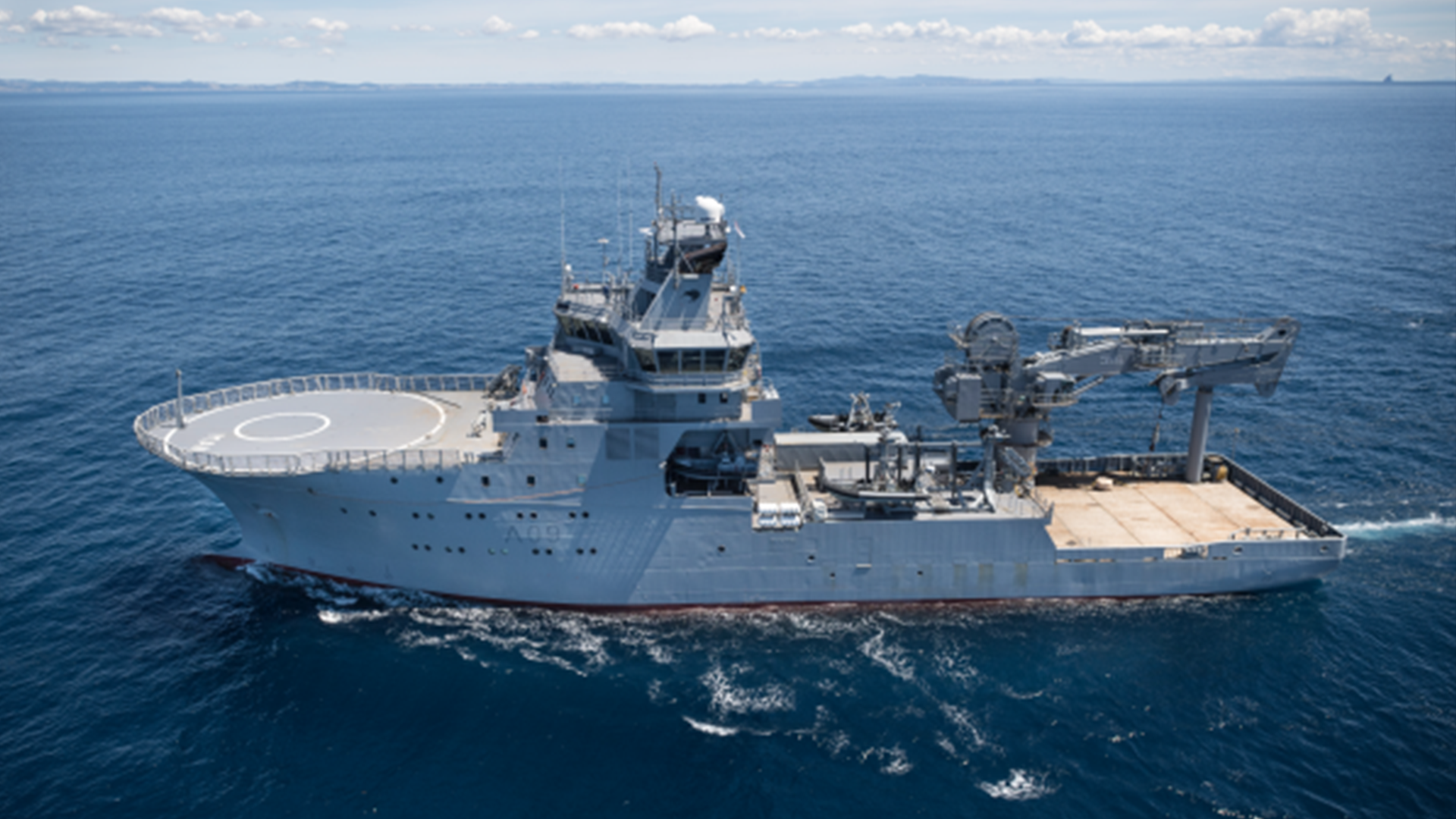
The investigation into the cause of grounding of HMNZS Manawanui is ongoing
The investigation into the cause of grounding of HMNZS Manawanui is ongoing (Picture: Royal New Zealand Navy)

New Zealand will pay Samoa 10 million tala ($3.5m) in compensation after one of its navy vessels sank off the island nation’s coast a year ago.

HMNZS Manawanui, a specialist dive and hydrographic ship, ran aground during a reef survey off southern Upolu in October 2024. The vessel later capsized and sank, although all 75 crew were rescued.

New Zealand’s Foreign Minister Winston Peters said in a statement the payment follows a request from the Government of Samoa and recognises “the impact the sinking has had on local communities and the disruption it caused”.

The ship remains on the reef, but fuel, oil, weapons, ammunition and containers have been removed. Mr Peters said New Zealand was working closely with Samoa on next steps, with “absolute priorities” of minimising environmental harm and supporting the response.
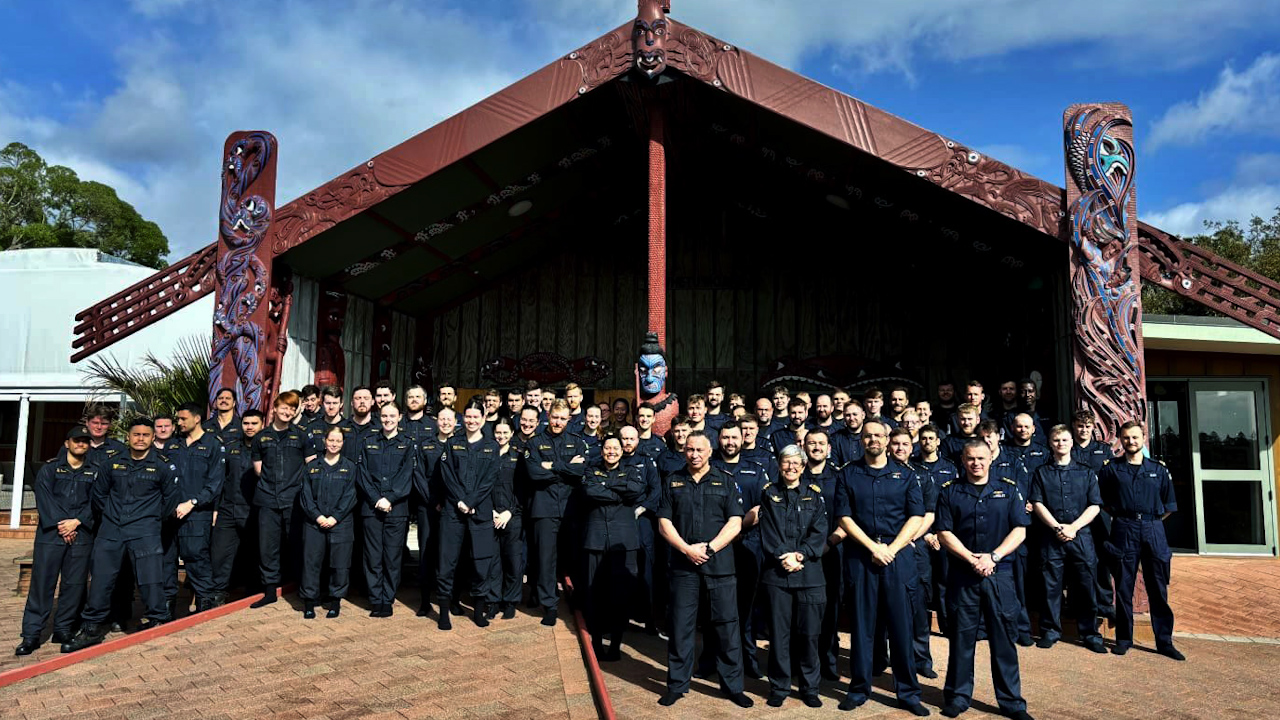
New Zealand thanked the UK and HMS Tamar for assisting with recovery efforts following the sinking of HMNZS Manawanui
New Zealand thanked the UK and HMS Tamar for assisting with recovery efforts following the sinking of HMNZS Manawanui (Picture: Royal Navy)

In April, a government inquiry found the vessel was doomed by several errors, highlighting inadequate training of crew and poor leadership.

A final court of inquiry report said that the crew did not identify risks related to the survey task carried out by the ship and that the supervision was not adequate.

At the time of the sinking, a former Royal Navy officer who now serves in the Royal New Zealand Navy was praised for her decision to evacuate everyone aboard the stricken Manawanui

Commander Yvonne Gray gave the order for all hands to abandon ship when it ran aground and caught fire off the coast of Samoa – it then listed heavily and 12 hours later was entirely submerged.

Chief of Navy, Rear Admiral Garin Golding, said she made the “right decision” to evacuate the 75 people aboard, which “saved lives”.

HMNZS Manawanui had been under the command of ex-Royal Navy officer Commander Yvonne Gray
HMNZS Manawanui had been under the command of ex-Royal Navy officer Commander Yvonne Gray (Picture: New Zealand Navy Today)

After the incident, “armchair admirals” were criticised for speculating on the cause of the sinking of the Royal New Zealand Navy vessel.

Social media in New Zealand was flooded with sexist remarks about “women drivers” and homophobic references to Cdr Gray’s sexuality.

At the time, New Zealand’s Defence Minister Judith Collins criticised a “deeply concerning misogynist narrative” that  “reared its head before our people had even made it home to New Zealand.”

“The one thing that we already know did not cause it is the gender of the ship’s captain, a woman with 30 years of naval experience who made the call to get her people to safety,” she continued.

“I’m appalled to see the comments online from these armchair admirals, people who will never have to make decisions which mean life or death for their subordinates,” she added.

Originally from Harrogate in Yorkshire, Commander Yvonne Gray took the helm of the RNZN’s dive, hydrographic and salvage vessel in December 2022.

In Memoriam – HMNZS Manuka Pennant numbers: T19, T401, WN82 – 73 years ago on 4 October 1952, while anchored in Port Hutt, Manuka sunk at her moorings. There was nobody aboard when she sank


HMNZS Manuka was one of three composite New Zealand-built Castle-class trawlers commissioned by the Royal New Zealand Navy during World War II.

Background

The vessel was ordered after the New Zealand government, facing a requirement for more minesweepers to operate in home waters, chose the Castle-class design because it was simple enough to be built with the country’s limited ship construction facilities at the time.[1]

Construction

Manuka was laid down on 21 October 1940 and was of a composite design, using Kauri wood due to a shortage of steel at the time. [2] Manuka was launched on 23 September 1941, being built by Mason Bros Engineering Co, located at Auckland.[3] Being the third naval ship launched in New Zealand for the Royal New Zealand Navy.

Operational history

Manuka was the third of four composite minesweepers constructed for the Royal New Zealand Navy and was commissioned on 30 March 1942. The others were HinauRimu, and TawhaiManuka served in the LL Group (later renamed to the 194th Auxiliary Minesweeping Division)[4] which was located at Auckland.

Post-war

In 1946, Manuka was leased to the Chatham Island Fishing Company, under the condition that she would only be used in New Zealand waters, and that she would be given back to the navy in case of an emergency.[5] Manuka would follow fishing fleets, working the coast that was sheltered.[6] At the end of the day the fishing trawlers would discharge their catches onto Manuka, where they would weigh, clean and process the fish. When she was full, she would sail to Wellington, often carrying radios for repair, and mail.[6] When the vessel returned it would carry supplies for the Chatham islanders.[6] As time went by while in service, there would be more and more problems with the boiler on Manuka. to the point where she would need a replacement.[6] Over the course of her career she would also run aground multiple times while fishing.[7] In 1950, Manuka was moored in Port Hutt, acting as a floating freezer, with local trawlers storing their catches onboard. [6] On 4 October 1952, while anchored in Port Hutt, Manuka sunk at her moorings. There was nobody aboard when she sank.[5]

References

  1.  “HMNZS Waiho Castle-Class Minesweeper”National Museum of the Royal New Zealand Navy. 6 October 2015. Archived from the original on 21 December 2009. Retrieved 7 November 2023.
  2.  “CHAPTER 12 — Minesweeping in New Zealand Waters | NZETC”nzetc.victoria.ac.nz. Retrieved 23 December 2023.
  3.  “THIRD MINESWEEPER”paperspast.natlib.govt.nz. Retrieved 25 January 2024.
  4.  “CHAPTER 18 — The Minesweeping Flotillas | NZETC”nzetc.victoria.ac.nz. Retrieved 7 November 2023.
  5.  Hodge, D. W (30 August 1977). “Light restoration brings memories”The Press. p. 31. Retrieved 11 November 2023 – via PapersPast.
  6.  Makarios, Emmanuel (1996). Nets, Lines and Pots: A history of New Zealand fishing vessels (2nd ed.). New Zealand: IPL Books. ISBN 9780908876013

New Zealand NH90 helicopters fly record distance across Tasman Sea

By Nick Lee-Frampton – Oct 1, 2025, 11:18 PM

Royal New Zealand Air Force NH90 helicopters fly in formation in this undated photo. (RNZAF photo)

WELLINGTON, New Zealand — Two Royal New Zealand Air Force NH90 helicopters have flown from Australia to New Zealand on a two-day, record-breaking journey for the aircraft, which each carried two 1,100lb external fuel tanks, according to the service.

The aircraft flew from Royal Australian Air Force Base Amberley, near Brisbane, via Norfolk Island, to RNZAF Base Auckland, a distance of 1,765 miles over water. The longest leg of the trip, 660 miles, took around four and a half hours.

Both of the 3 Squadron aircraft landed safely home at RNZAF Base Ohakea Sept. 30.

The flight broke the RNZAF NH90s’ previous over-water record, achieved at the end of last month, of 521 miles across the Coral Sea Basin between Australia and Papua New Guinea.

New Zealand’s air component commander, Air Commodore Andy Scott, said the long-distance flight was important because it demonstrated the utility of the aircraft and the ability for it to self-deploy over a vast area.

“These types of flights give our crews confidence in the system,” he said.

The squadron’s commanding officer, Wing Commander Chris Ross, said the flight gave crews the opportunity to gain valuable long-distance flying skills: “It’s a terrific achievement.”

The marathon flight had been a long time coming, with the capability signed off in 2023, but the opportunity hadn’t arisen until this year, said Squadron Leader Lachie Johnston, the NH90 flight commander.

“We knew the aircraft could do it and we knew the crews were appropriately trained,” Johnston said. “It’s not unheard of for helicopters to fly long trips, but this is a unique capability in the context of doing such long legs over large bodies of water.”

New Zealand defense leaders selected the European-designed NH90 in 2005 to replace the RNZAF’s UH-1 Iroquois, and eight have been in service since 2015, with a ninth serving as an extra.

About Nick Lee-Frampton

Nick Lee-Frampton is the New Zealand correspondent for Defense News.

HMNZS Endeavour (A11), center, refuels the Royal New Zealand Navy frigate HMNZS Te Kaha (F77), left, and the Republic of Korean destroyer ROKS Choi Young (DDH 981)

1

120720-O-ZZ999-017 PACIFIC OCEAN (July 20, 2012) The Royal New Zealand Navy fleet oiler HMNZS Endeavour (A11), center, refuels the Royal New Zealand Navy frigate HMNZS Te Kaha (F77), left, and the Republic of Korean destroyer ROKS Choi Young (DDH 981). Twenty-two nations, more than 40 ships and submarines, more than 200 aircraft and 25,000 personnel are participating in the biennial RIMPAC exercise from June 29 to Aug. 3, in and around the Hawaiian Islands. The world’s largest international maritime exercise, RIMPAC provides a unique training opportunity that helps participants foster and sustain the cooperative relationships that are critical to ensuring the safety of sea lanes and security on the world’s oceans. RIMPAC 2012 is the 23rd exercise in the series that began in 1971. (New Zealand Defence Force photo by LAC Amanda McErlich/Released)

from Blogger https://ift.tt/kg0yxwE
via IFTTT

Kiwi commended during Australian frigate exchange Royal New Zealand Navy officer Sub Lieutenant Nate Stainton, serving in Australian frigate HMAS Ballarat, has received a Commanding Officer’s commendation for his commitment and work ethic.


01 October, 2025

Sub Lieutenant Stainton is an Assistant Weapons Electrical Engineering Officer in Ballarat as the ship conducts a three-month regional presence deployment.

This is SLT Stainton’s second deployment with the Royal Australian Navy and will bring his two-year exchange to an end.

This month he received a Commanding Officer’s commendation, praising his professionalism and work ethic.

Nate joined the Royal New Zealand Navy in 2020 during the 2nd year of his degree in mechatronics at University of Canterbury in Christchurch.

After graduating, SLT Stainton completed a six-month posting to HMAS Cerberus to complete his Weapons Electrical Engineering Officer Application Course.

Following his time at Cerberus, SLT Stainton posted to Ballarat in Western Australia on a two-year Royal Australian Navy exchange. Ballarat is an Anzac-class frigate, the same class as Royal New Zealand Navy frigates HMNZS Te Kaha and HMNZS Te Mana.

“After training, me and five mates packed up and drove across the Nullarbor which was an amazing experience and something I never thought I would do,” SLT Stainton said.

“I wasn’t really sure what to expect because this was my first sea posting but Ballarat has great people that have been extremely welcoming and made me feel like any other member of the crew.”

Royal Australian Air Force F-35A Lightning II aircraft conduct a low pass over HMAS Ballarat while sailing off the coast of Malaysia during Exercise Bersama Lima 25.

Ballarat was on the hardstand undergoing maintenance and upgrades when SLT Stainton posted in.

This enabled SLT Stainton to focus on integrating with the crew and learning the ship, achieving his officer of the day qualification soon after joining.

Once back at sea, SLT Stainton was able to focus on consolidating his training as a Weapons Electrical Engineering Officer.

“The job of the Weapons Electrical department at sea is to maintain the ships weapons, communication systems, radars, sonars and lasers,” SLT Stainton said.

At one point SLT Stainton led the Weapons Electrical Engineering Department during the absence of the Head and Deputy head of department.

His commendation details his exceptional dedication and selfless commitment to Ballarat’s capability.

“Your approachable demeanour, combined with an unwavering work ethic, has made you a respected member of HMAS Ballarat,” said Commander Dean Uren, Commanding Officer.

SLT Stainton spoke highly of the opportunity to serve in an Australian warship.

“Having the opportunity to work alongside New Zealand’s ally and neighbour has been a really rewarding experience,” SLT Stainton said.

“Taking the ship from the hardstand, through major weapon systems upgrades, an operational deployment and now a regional presence deployment is really special.”

Regional presence deployments are Australia’s contribution to maintaining collective security in the Indo-Pacific, in collaboration with partner nations.

This deployment will mark the end of a memorable two years for SLT Stainton.

“I’ve learned a lot and gained a lot of experience during my time in Australia but it really is the people that make it,” SLT Stainton said.

“I’ve met some amazing people on this journey; friendships I’ll definitely have for life.”

SLT Stainton is studying to attain his Weapons Electrical Certificate of Competency which he hopes to achieve prior to returning to New Zealand in December.

from Blogger https://ift.tt/pNYmXHM
via IFTTT

JCs Royal New Zealand Navy Ships and New Zealand Defence, Also other World Defence Updates

Ships and Defence News Past and Present

Skip to content ↓