Hawke’s Bay naval officer hones his skills in the Pacific

Sub Lieutenant Zac Jenkins is looking forward to his return to Auckland on board HMNZS Canterbury on Friday, after nearly three months overseas.
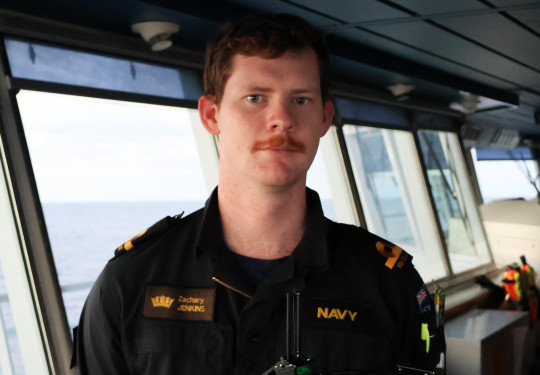
Zac Jenkins 1

27 August, 2025

The 23-year-old Waipukurau man initially worked as a butcher for three years after leaving Central Hawke’s Bay College, before joining the Royal New Zealand Navy (RNZN) in 2022.

“I have a history of family members serving in the Navy. My grandad was a Petty Officer Marine Technician, and all four great-grandfathers served in the Royal Navy and Merchant Marine during World War II. 

“I joined because the Navy gave me an opportunity to continue the family tradition and see parts of the world I wouldn’t have otherwise.” 

His latest deployment has taken him across the Pacific.

HMNZS Canterbury, the RNZN’s multi-role logistics vessel, played a key role for the New Zealand Defence Force in Exercise Talisman Sabre in Australia, transporting troops, vehicles, equipment and helicopters between Wellington, and Townsville and Gladstone.

The ship has also been to Noumea for a port visit and Suva where it unloaded two of the Navy’s new uncrewed surface vessels to assist with Fijian Navy-led border protection activities. The crew also supported the South West Pacific Maritime Heads Forum hosted in Fiji.
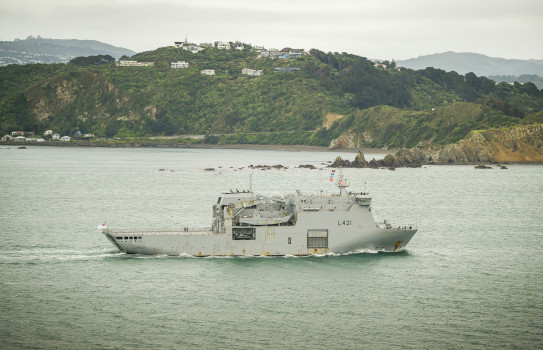
A grey ship sails past rocks and a hill with scattered houses on it.

HMNZS Canterbury, the Royal New Zealand Navy’s multi-role logistics vessel, enters Wellington Harbour

As a warfare officer on board HMNZS Canterbury, Sub Lieutenant Jenkins has used the time well, ticking off a variety of endorsements and qualifications and earning a promotion from Ensign.

“There are high expectations to be met with my work, so I am constantly aiming to meet these expectations to develop myself professionally,” he says.

“This deployment will set me up well for my future in the Navy.”

Sub Lieutenant Jenkins has previously served aboard HMNZS Taupo and HMNZS Matataua, the RNZN’s dive unit, using his warfare officer skills to remotely operate the Navy’s uncrewed surface vessels Rua and Tahi.

During his latest stint at sea, visited New Caledonia and North Queensland for the first time.

“It was a privilege to visit Noumea, as my grandfather was posted there during World War II. It makes me proud to be continuing a family tradition that spans over half a century.”

Sub Lieutenant Jenkins’ advice to those looking at the Navy as a career is to be prepared to be away from home at short notice.

“It’s been a long time away from home and my partner, and the longest I have been away from home while in the Royal New Zealand Navy,” he says.

“There are a lot of moving parts in the Defence Force, and a lot of cool opportunities to do things you wouldn’t normally do in civilian jobs. It takes a while to adapt to the lifestyle but the rewards are huge.”

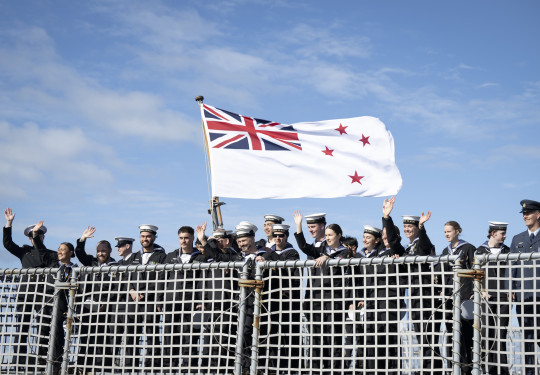
Frigate HMNZS Te Kaha welcomed home following seven-month deployment

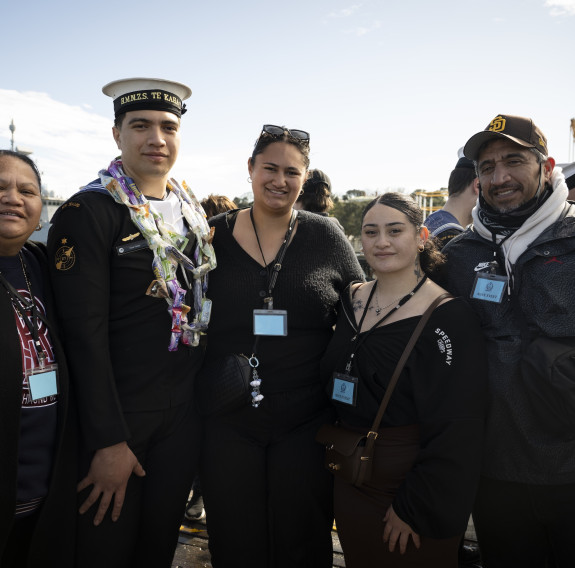
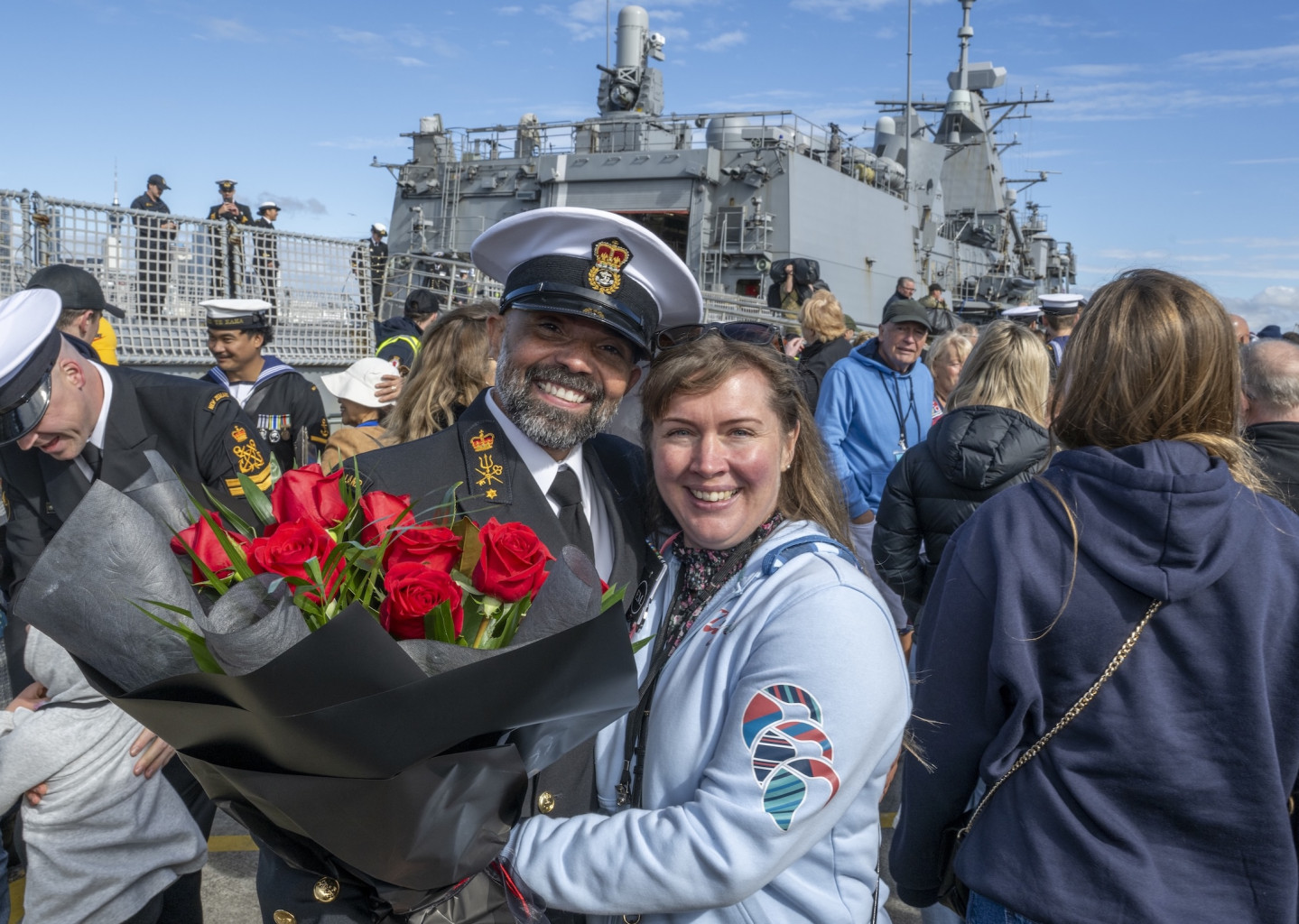
After almost seven months at sea conducting operations and exercises across the Middle East and Indo-Pacific, Royal New Zealand Navy (RNZN) frigate HMNZS Te Kaha returned home today to an enthusiastic welcome by hundreds of the crew’s friends and whānau.

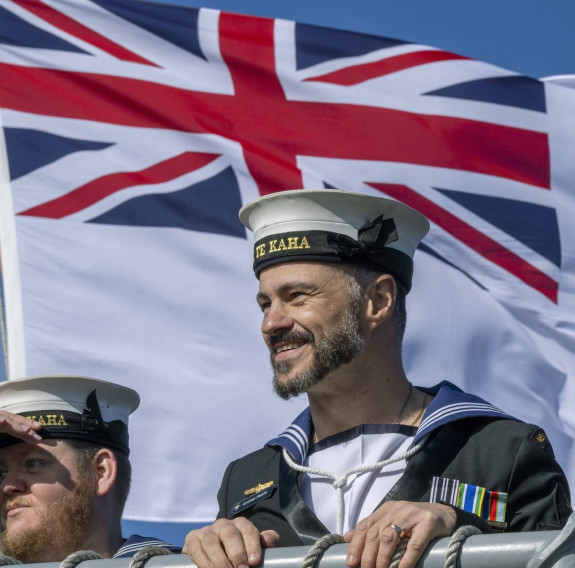
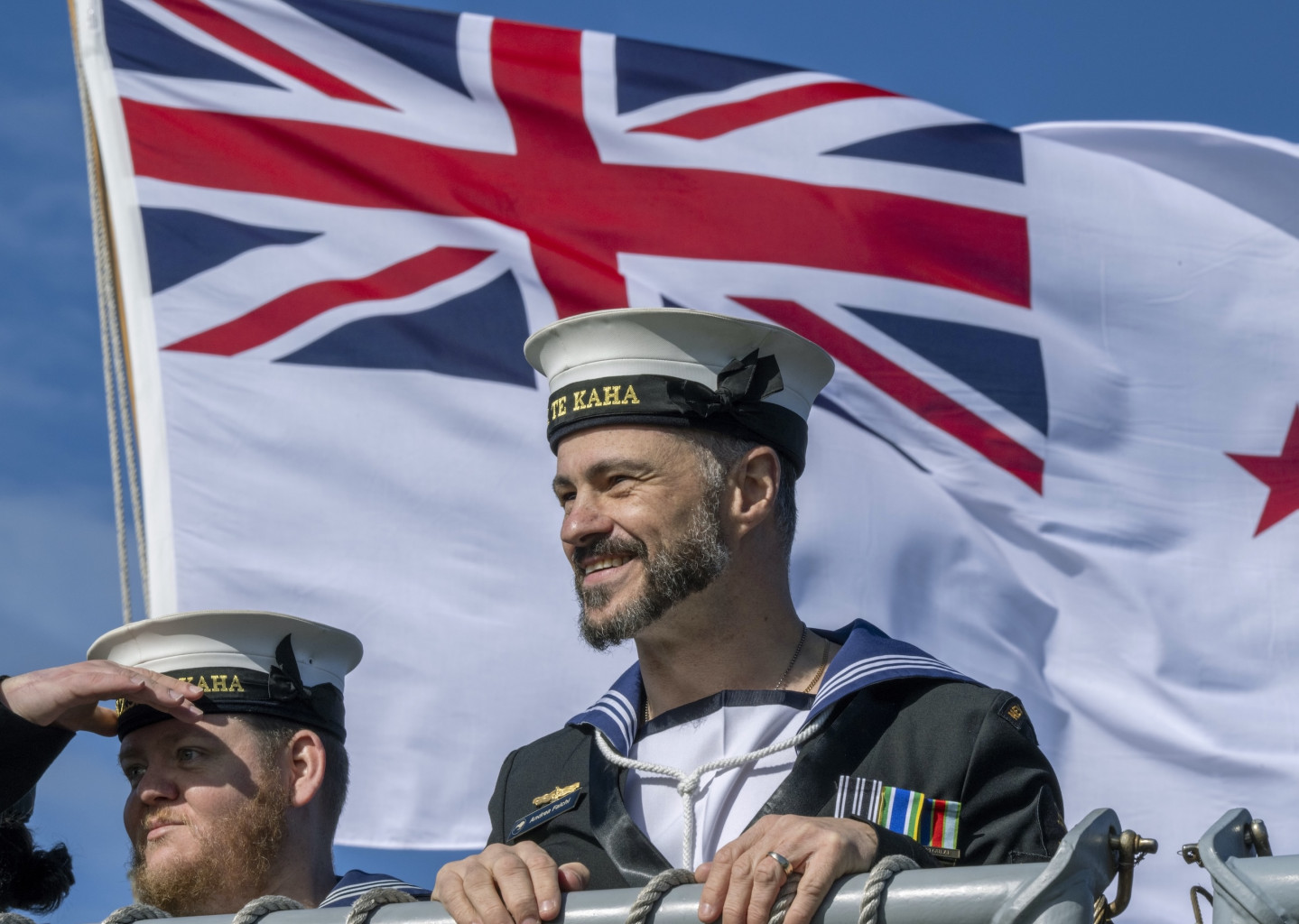
Sailors wave from behind a netted fence on a ship underneath the Navy flag as it blows in the wind. The flag has a Union Jack and four stars on it

24 August, 2025

Because HMNZS Te Kaha has been away for more than six months, the ship and crew are entitled to a Ceremonial Homecoming. 

The welcome included ceremonial gun salutes, stirring performances from the RNZN Band, haka from shipmates ashore and emotional reunions between sailors and loved ones.

Chief of Defence Force Air Marshal Tony Davies, Chief of Navy Rear Admiral Garin Golding, senior New Zealand Defence Force leadership, along with more than 800 friends and family were on hand to greet Te Kaha when the ship sailed into the Devonport Naval Base.

“Throughout its time away, Te Kaha and its crew have represented and advanced New Zealand’s interests to an exceptional standard,” Rear Admiral Golding said.

“This deployment underscores the vital contribution the Navy makes when operating with allies and international partners, and I am proud of what the ship and crew have achieved on the world stage.”

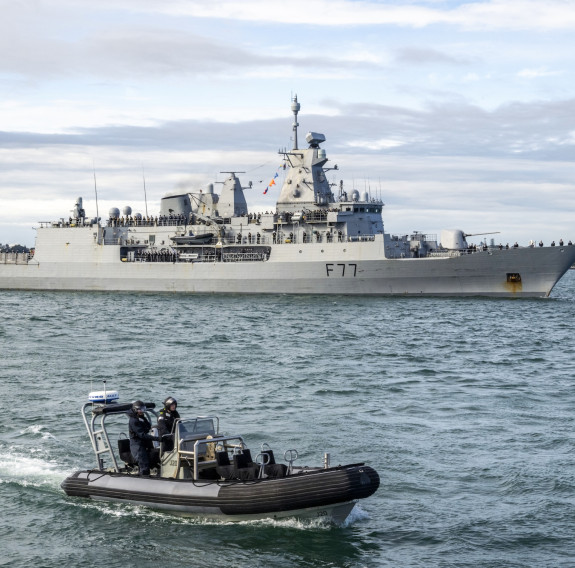
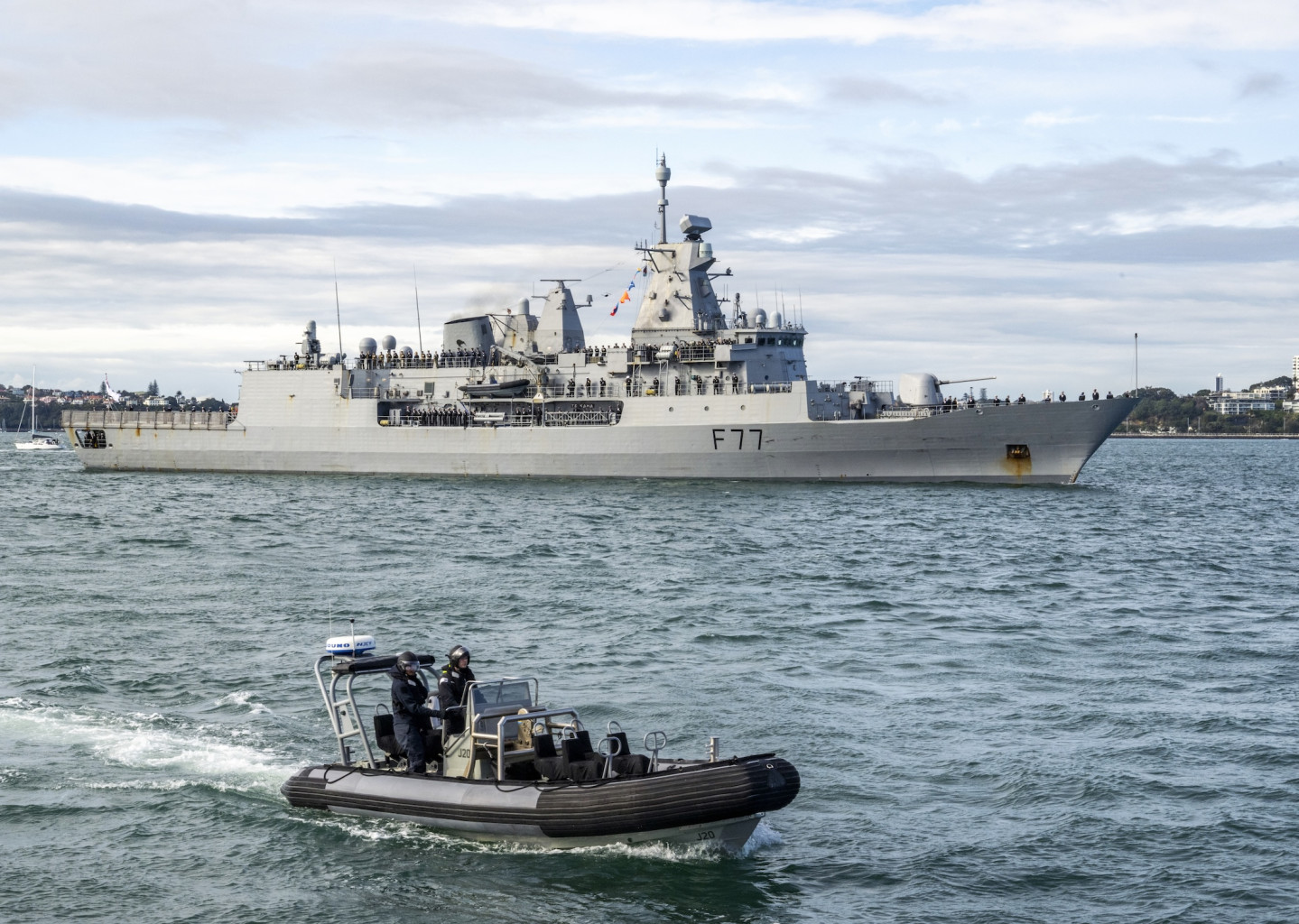
The ship’s work over the past seven months reinforced the importance of a capable, agile Navy in consolidating New Zealand’s security and prosperity, he said.HMNZS Te Kaha sails in with a smaller boat sailing alongside in the foreground.

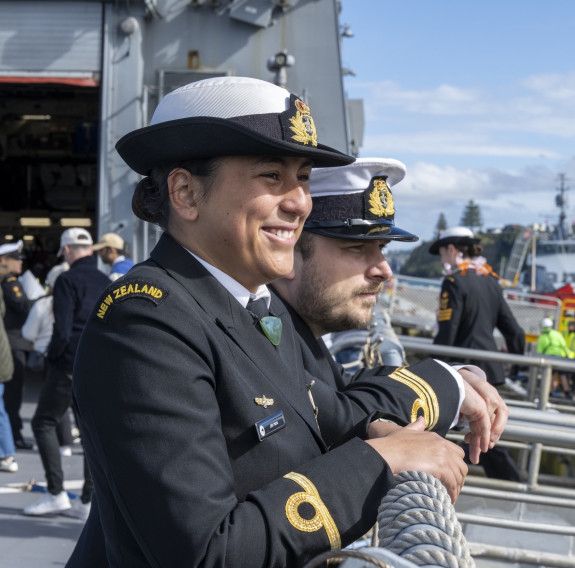
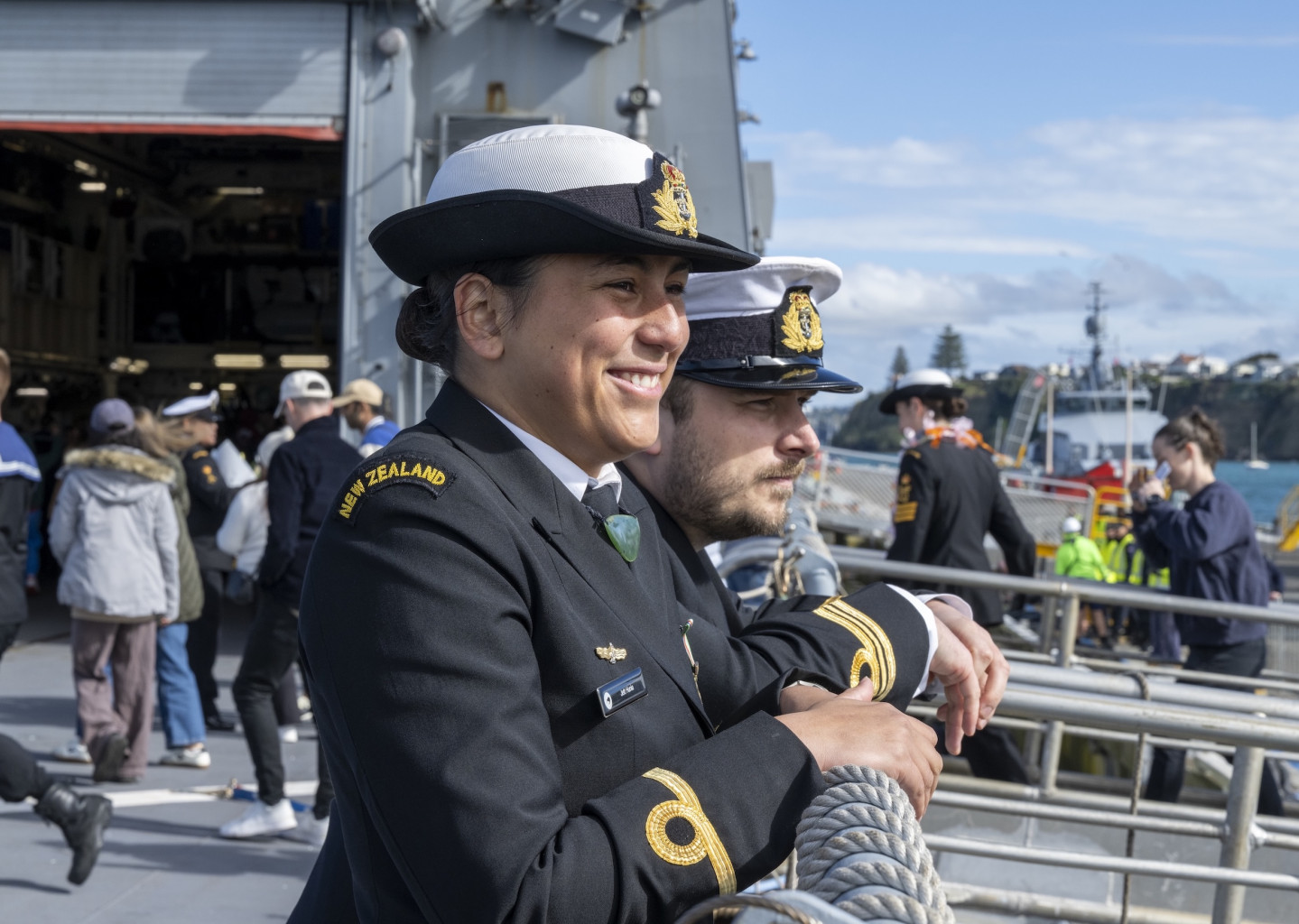
Royal New Zealand Navy frigate HMNZS Te Kaha returned home to an enthusiastic welcome by hundreds of the crew’s friends and whānau after almost seven months at sea.Two sailors watch reunions from the flight deck of the ship.

Royal New Zealand Navy frigate HMNZS Te Kaha returned home to an enthusiastic welcome by hundreds of the crew’s friends and whānau after almost seven months at sea.A sailor wearing the Navy uniform smiles as the ship arrives. The Navy's flag blows in the wind behind him.

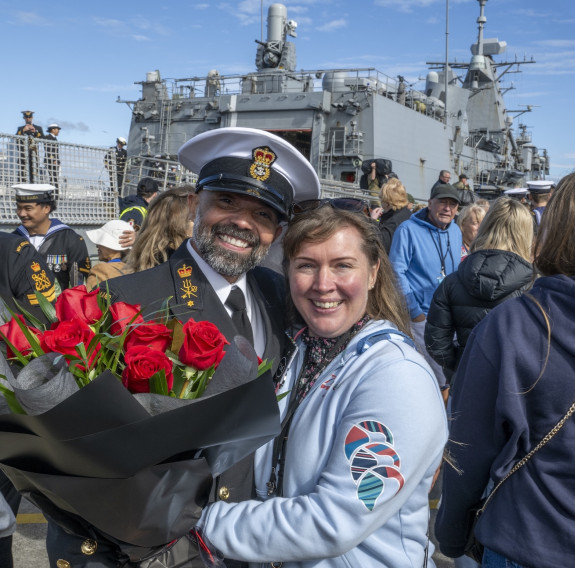
Royal New Zealand Navy frigate HMNZS Te Kaha returned home to an enthusiastic welcome by hundreds of the crew’s friends and whānau after almost seven months at sea.Sailors reunite with loved ones in front of the ship at Devonport Naval Base.

Royal New Zealand Navy frigate HMNZS Te Kaha returned home to an enthusiastic welcome by hundreds of the crew’s friends and whānau after almost seven months at sea.Sailors reunite with their family and friends.

Royal New Zealand Navy frigate HMNZS Te Kaha returned home to an enthusiastic welcome by hundreds of the crew’s friends and whānau after almost seven months at sea.Scroll to previous imageScroll to next image

Te Kaha’s deployment saw the ship operate at the forefront of international maritime security efforts. Some of the highlights included:

  • Monitoring a Chinese maritime task group that sailed through the Tasman Sea in February
  • Hosting a significant New Zealand Government trade and diplomatic delegation during a port visit in Mumbai, India
  • Conducting drug interdiction patrols in the Middle East designed to disrupt the operations of transnational criminal and terrorist networks. The ship supported the New Zealand-led Combined Maritime Task Force in the seizure of $NZ1.8 billion in narcotics
  • Integration with a UK Carrier Strike Group on Operation Highmast, demonstrating New Zealand’s commitment to working alongside close partners in complex multi-national maritime environments in the Indo-Pacific
  • Participating in Talisman Sabre, the world’s largest multi-domain military exercise, contributing to regional stability and security alongside a broad coalition of allies. 

Supporting the international rules-based order and safeguarding the global sea lanes through which New Zealand conducts 99% of its trade, are critical roles for the RNZN. 

Commanding Officer of HMNZS Te Kaha, Commander Fiona Jameson, said the deployment was both operationally demanding and personally rewarding for the crew. 

“We’ve operated across thousands of nautical miles, in multiple theatres, and alongside some of the most capable naval forces in the world. Our sailors have delivered every mission asked of them, and I couldn’t be prouder.” 

HMNZS Te Kaha was deployed for 193 days, sailed more than 36,000 nautical miles, visited six countries and conducted a number of high-profile maritime missions.

HMNZS Te Kaha returns to rousing welcome after seven-month deployment

By 1News Reporters – Sunday 6:32pm

See video here – click link below

https://www.1news.co.nz/2025/08/24/hmnzs-te-kaha-returns-to-rousing-welcome-after-seven-month-deployment/

HMNZS Te Kaha returns to rousing welcome after seven-month deployment

Gun salutes echoed across the Waitemata Harbour as the ship returned to Devonport Naval Base after 193 days.

https://imasdk.googleapis.com/js/core/bridge3.715.0_en.html#fid=goog_108015566Play Video

HMNZS Te Kaha returns to rousing welcome after seven-month deployment2:27

Gun salutes echoed across the Waitemata Harbour as the ship returned to Devonport Naval Base after 193 days. (Source: 1News)

After close to seven months at sea, Royal New Zealand Navy frigate HMNZS Te Kaha returned to Devonport Naval Base this morning to a hero’s welcome, greeted by hundreds of emotional friends and whānau.

The ship’s 193-day deployment included operations with Combined Task Force 150 (CTF 150), a multinational coalition focused on maritime security in the Red Sea, Gulf of Aden, and Indian Ocean.

Led by New Zealand for part of the year, the task force disrupted transnational criminal and terrorist networks operating in key shipping lanes.

One of the most significant achievements of Te Kaha’s deployment was its support in the seizure of narcotics valued at $1.8 billion NZD, a record-breaking haul that dealt a major blow to drug trafficking operations in the Arabian Sea.

“The tactics and procedures we contributed to have changed that region for the coming five years,” said Commander Fiona Jameson, Te Kaha’s Commanding Officer.

“There have been further drug busts since we left, based on our intelligence.”

The ship also participated in Operation Highmast, integrating with a UK Carrier Strike Group, and took part in Talisman Sabre, the world’s largest multi-domain military exercise.

Rear Admiral Garin Golding, Chief of Navy, said the deployment demonstrated New Zealand’s role as a responsible global partner.

“Deployments like these are us playing our part in good order and being a good global citizen,” he said.

Because the deployment exceeded six months, Te Kaha was honoured with a ceremonial homecoming.

Gun salutes echoed across the harbour, haka were performed both ashore and aboard, and cheers erupted as the ship berthed and the crew disembarked.

“It’s amazing, it’s been a long six months,” one family member told 1News.

“Very emotional seeing them—and this one jumping up and down,” added another.

“It doesn’t feel real. It feels like I’m dreaming.”

The deployment also included diplomatic engagements, such as hosting a New Zealand Government trade delegation in Mumbai and monitoring a Chinese maritime task group in the Tasman Sea.

After months at sea, many crew members were looking forward to simple comforts.

“KFC and a mince and cheese pie,” one sailor said.

“The first thing I’m doing is having a massive island feed,” said another.

More on this topic

Combined Maritime Task Force 150 was aimed at disrupting drug smuggling.

NZ-led naval taskforce wraps anti-drug operation with $1.8b haul

Wed, Jun 25

“Sometimes, being away from your wife for so long, you snuggle up to some of the guys for a cuddle—just to keep warm, of course!” one joked.

“It gets cold out at sea, doesn’t it? Yeah, especially in Oman!”

NZ Defence Helicopter, Plane Decisions Announced

Thursday, 21 August 2025, 3:12 pm
Press Release: New Zealand Government

Hon Judith Collins KC
Minister of Defence

Hon Winston Peters
Minister of Foreign Affairs

Seahawk helicopters and Airbus planes are set to replace aging New Zealand Defence Force aircraft in the first major investment decisions to be made as part of the Government’s Defence Capability Plan (DCP).

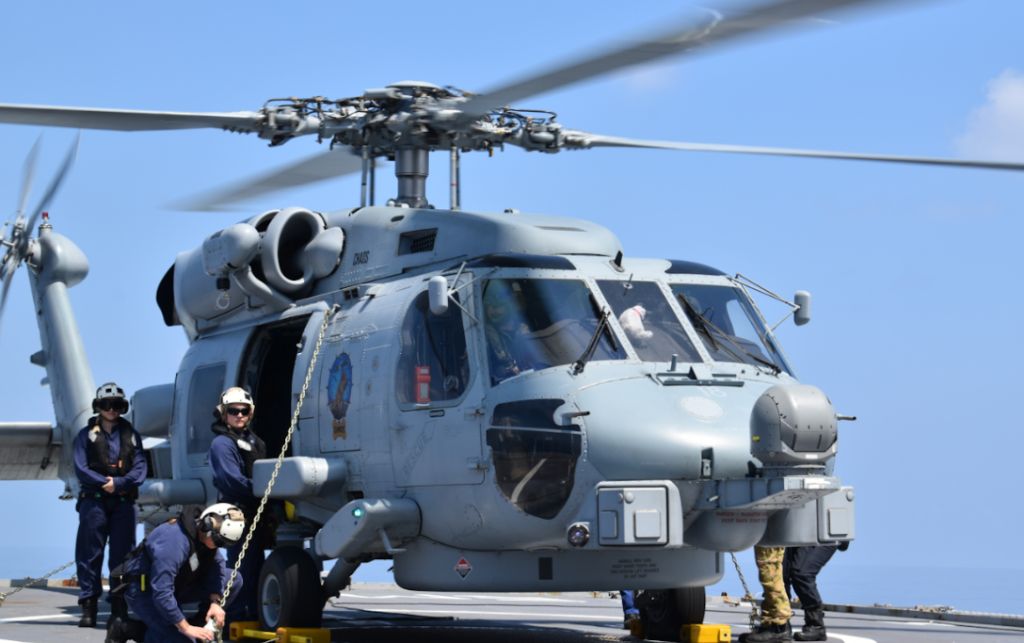
Royal Australian Navy MH-60R from HMAS Brisbane conducting deck landing on HMNZS Te Mana during Ex Bersama Lima 23. (Photo/ New Zealand Defence Force)

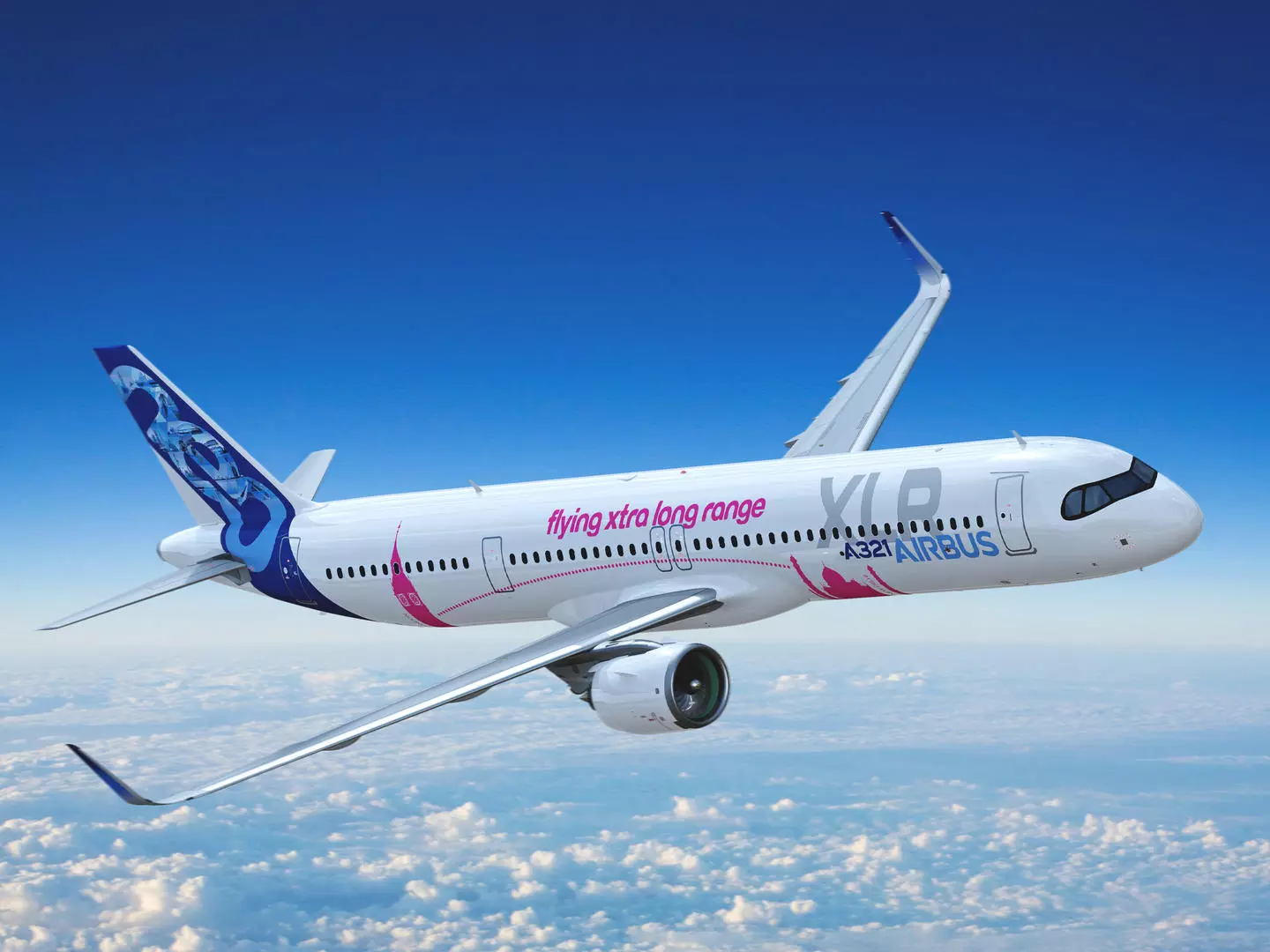
Defence Minister Judith Collins and Foreign Affairs Minister Winston Peters today announced investment decisions of $2.7 billion, with the MH-60R Seahawk the preferred option to replace the existing maritime helicopters. The Airbus A321XLR (extra long range) aircraft will replace the aging 757 fleet.

“This decision will ensure New Zealand has a critical combat capable, interoperable and dependable fleet,” Ms Collins says.

“The MH-60R Seahawk is a great aircraft for what New Zealand needs and fulfils our objective of having a more integrated Anzac force, and the new planes will give us reliable aircraft to deploy personnel and respond to international events.”

Mr Peters says these decisions show how the Government is responding to the sharply deteriorating security environment.

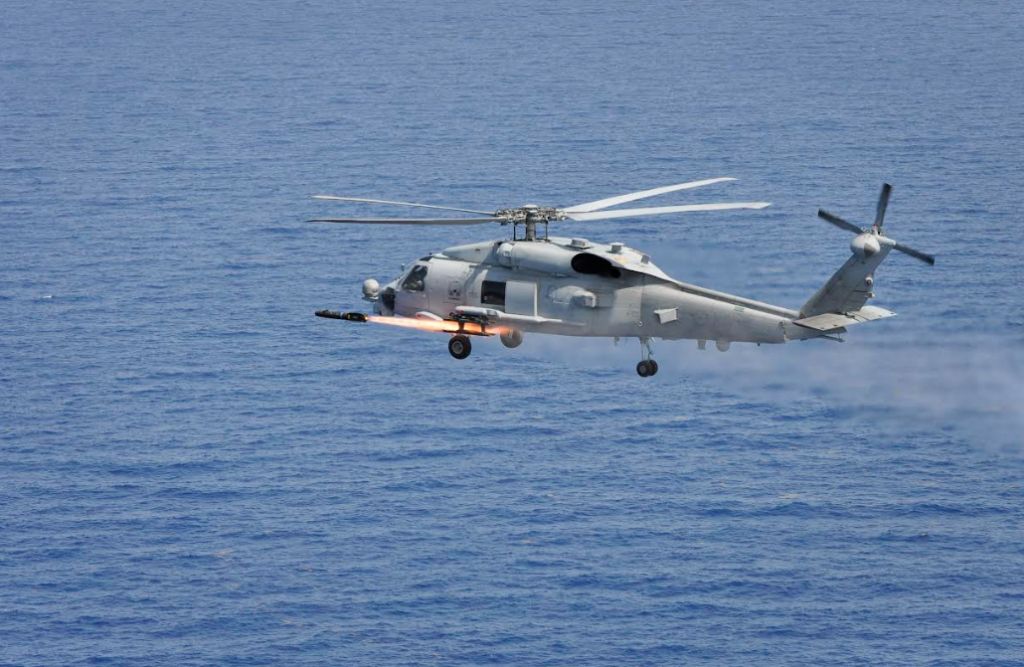
Royal Australian Navy MH-60R from 725 Squadron launching a Hellfire missile in Florida, United States. (Photo/Australian Defence Force)

“Global tensions are increasing rapidly, and we must invest in our national security to ensure our economic prosperity.

“The DCP provides the foundation for our uplift in defence spending, and two-yearly reviews of the plan will allow us to adapt to an ever-changing security environment.”

The $2 billion plus investment in maritime helicopters and $700 million investment in the new Airbus A321XLRs are both part of the $12 billion in planned commitments outlined in the 2025 DCP announced in April.

Ms Collins says the maritime helicopters are versatile and add combat and deterrent capability to our naval fleet.

“These five Seahawks will increase the offensive and defensive capability and surveillance range of New Zealand’s frigates and ensure we are interoperable with our ally Australia and other partner defence forces,” she says.

“We will now move at pace to procure helicopters directly through the United States’ Foreign Military Sales programme instead of going to a wider tender, with Cabinet expected to consider the final business case next year.

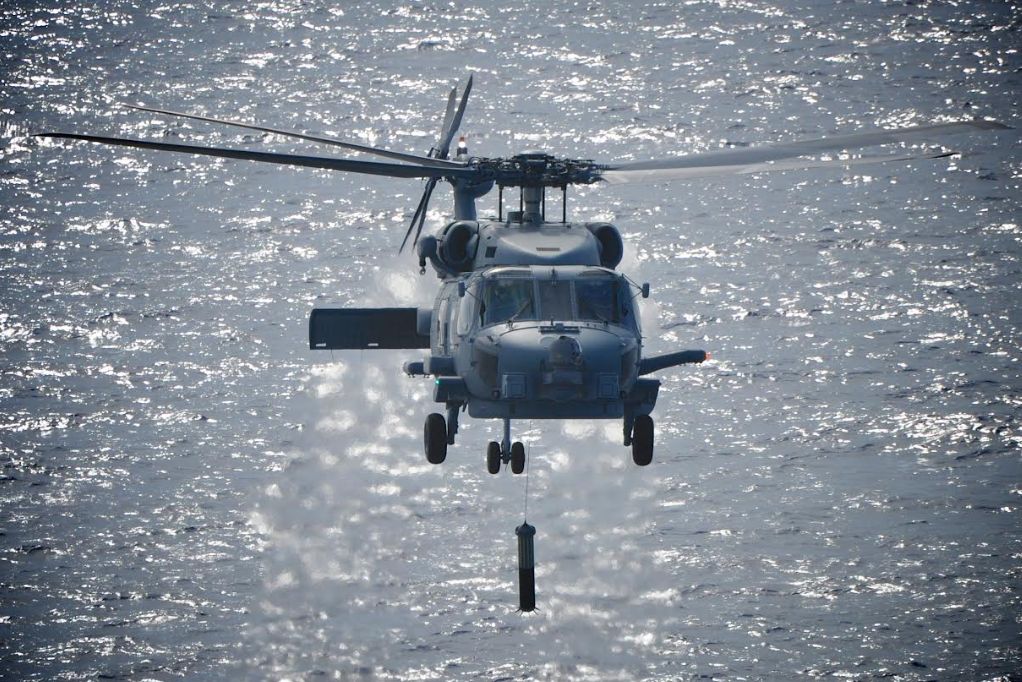
Royal Australian Navy MH-60R conducts anti-submarine warfare dipping sonar training in the East Australian Exercise Area. (Photo/Australian Defence Force)

“The two new Airbus A321XLR aircraft will be acquired on a six-year lease to buy arrangement, with capital costs of $620 million and four-year operating costs of $80.86 million.

“New Zealand needs reliable aircraft to deploy our personnel, deliver military equipment and humanitarian aid, support the evacuation of civilians, and transport government trade and diplomatic delegations quickly, over long distances, and often at short notice.

“The decision to acquire the extra long range aircraft reflects the importance of having an aircraft capable of such things as returning safely from Antarctica if it is unable to land due to conditions on the ice.

“Our Defence Force personnel have proven time and time again they do an outstanding job and we must ensure they have the tools that are up to the task.”

Notes:

MH-60R Seahawk technical specifications

Manufacturer: Sikorsky Aircraft Corporation (a Lockheed Martin company)

Length: 19.76m

Max Speed: 333km/h (180kts)

Range: 963 km (520 nautical miles)

Cargo: In utility mode it can carry 1500+ kg

Crew: Three

Weapon systems: Mk 54 anti-submarine torpedo, AGM-114 Hellfire air-surface missiles, crew-served machine guns; Advanced Precision Kill Weapon System (APKWS)

Airbus A321XLR technical specifications

Engines: Pratt & Whitney

Wingspan: 35.80 metres

Length: 44.51 metres

Height: 11.76 metres

Max cruise speed: Mach 0.78

Range: 8,700km (4,700 nautical miles)

Layout: standard commercial layout to accommodate 122 passengers.

Cargo (in cargo holds): Capacity 9,100kg or 42m3

Standard crew: Seven but can be as few as three or as many as 15 depending on mission type.

© Scoop Media

RNZAF deploys King Air to Fiji for international surveillance work for first time

The Royal New Zealand Air Force (RNZAF) for the first time deployed its MC-12K King Air aircraft to Fiji to conduct maritime surveillance patrols.

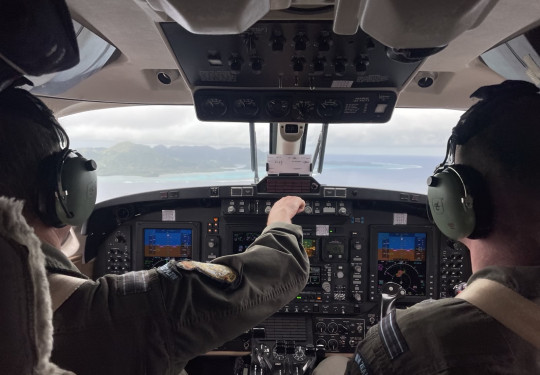
Two people in the flight deck of an aircraft, looking out the window. One of them is touching something on the panels.

19 August, 2025

New Zealand and Fiji engage frequently on challenges facing the region, and the New Zealand Defence Force (NZDF) deploys aircraft and ships to work with Southwest Pacific partners such as Fiji on maritime patrols.

The RNZAF’s No. 42 Squadron regularly conducts maritime patrols with the MC-12K King Air in New Zealand’s exclusive economic zone (EEZ), working with other government agencies to detect and deter IUU fishing.

Air Component Commander, Air Commodore Andy Scott said Fiji was an important security partner.

“By working closely together, combining assets and expertise, we hope to counter IUU activities and help protect Fiji’s fishing stocks. IUU fishing is of concern to all our Pacific neighbours as this impacts regional security, and people’s livelihoods,” he said.

“The MC-12K King Air is an extremely versatile aircraft in both training and for operational missions. Demonstrating our ability to deploy this aircraft to the Pacific and conduct patrols with Fiji’s officials in Fiji’s EEZ is another string to its bow. 

“It has been a busy period in Fiji, as the Royal New Zealand Navy also has two uncrewed surface vessels deployed to Fiji conducting border protection tasks on behalf of the Fijian Government. 

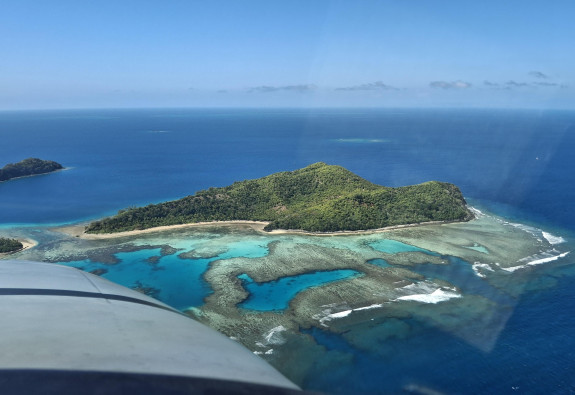
“Recently we also had a P-8A Poseidon aircraft deployed there patrolling Fijian waters and other areas of the Pacific. Our P-8A crews regularly deploy to the Pacific, conducting maritime patrols with Forum Fisheries Agency nations and conducting patrols of high seas pockets to detect and deter IUU fishing activities.”Image of an island taken in the sky, you can see part of the aircraft to the left of the photo. The island looks tropical with very blue water. There is blue sky.

The RNZAF, for the first time, deployed its MC-12K King Air aircraft to Fiji to conduct maritime surveillance patrols.

RNZAF Squadron Leader Craig Clark said the deployment of the MC-12K to Fiji was a major step forward in the squadron’s ability to project capability into the Southwest Pacific in support of wider NZDF efforts in the region.

“We expected our focus during the deployment to be mainly on fisheries, but the Fijian authorities are also very interested in pleasure craft activity in their waters as they strive to combat transnational organised crime in their region,” he said. 

“The MC-12K is ideally suited to investigating vessels in the vicinity of remote islands around Fiji, often tucked into small bays or inside reefs. The crew were quickly able to pivot to any task requested of them by Fijian authorities, who were impressed by the agility and effectiveness of the MC-12K.”

Over two weeks of maritime surveillance, the crew conducted six patrols, investigating and taking imagery of almost 100 vessels. They also took key Fijian leaders up in the MC-12K to demonstrate the capability on two further flights. 

“What was also incredibly valuable was having our geospatial intelligence analysts embedded alongside their Fijian counterparts during the deployment,” Squadron Leader Clark said. 

“Our analysts learned a great deal from the Fijian analysts, and vice versa. This kind of interoperability and cooperation is at the heart of our partnership with Fiji.”

Squadron Leader Clark said it was important New Zealand could support the security and resilience of Pacific countries and of the Pacific region as a whole.

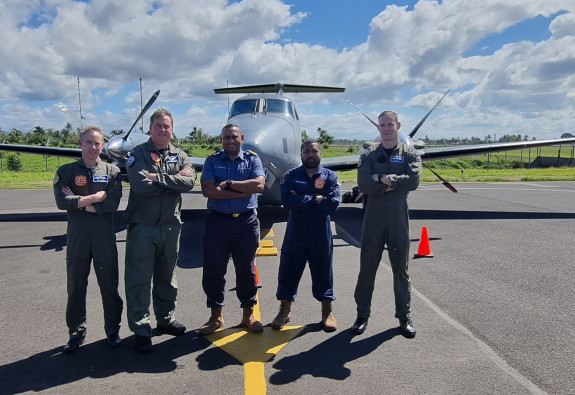
“What happens in the Pacific is important to us, and being familiar with the Southwest Pacific and our Pacific neighbours is essential, especially in the context of greater geostrategic competition and with the threat of climate change and trans-national organised crime being of great concern in the region.’’People standing in front of an aircraft - arms crossed on a sunny day with clouds.

Royal New Zealand Air Force and Republic of Fiji Navy personnel with the MC-12K King Air aircraft which has been conducting maritime surveillance patrols in Fiji.

JCs Royal New Zealand Navy Ships and New Zealand Defence, Also other World Defence Updates

Ships and Defence News Past and Present

Skip to content ↓