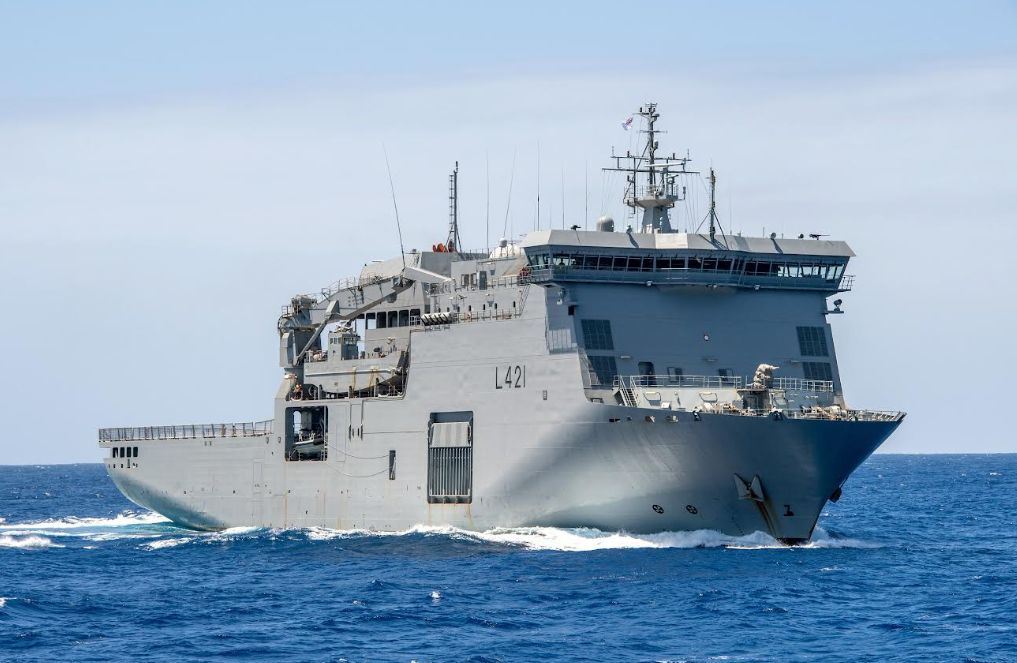
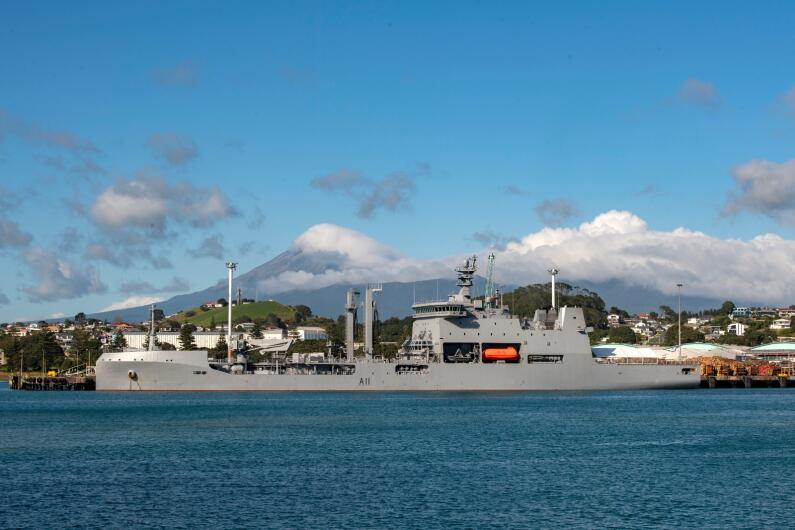
HMNZS Aotearoa returns to Taranaki today (Wednesday, 4 February) for a six-day visit that will include a public open day.
Port Taranaki is the ceremonial home port of HMNZS Aotearoa, which was put into service in 2020 and has visited Taranaki twice previously.
The 173m long, 26,000 tonne tanker and replenishment ship is the largest vessel in the Royal New Zealand Navy fleet. Her main job is to resupply ship and aviation fuel, dry goods, water, spare parts and ammunition to New Zealand and coalition maritime, land and air units, and United Nations security operations.
HMNZS Aotearoa will begin her entry into Port Taranaki approximately 2.30pm today, although this is subject to change, depending on sea and weather conditions.
The vessel is scheduled to depart at 10am on Monday, 9 February.
During her stay the crew will be involved in a number of events, including Waitangi Day celebrations.
“We’re thrilled to welcome HMNZS Aotearoa back to Taranaki and are looking forward to hosting the vessel, commanding officer Commander Rob Welford, and the crew at Port Taranaki,” Port Taranaki chief operating officer Alex Park said.
“Port Taranaki has had a long and proud association with the Royal New Zealand Navy (RNZN), so it’s fantastic this connection with our port and the community continues with these regular visits.”
The open day will be held on Saturday, 7 February, between 10am and 3.30pm.
“The navy is again kindly holding an open day with public tours of the vessel. When an open day was held on her first visit in 2021, there was immense interest from the public and, unfortunately, some people missed out.
“Therefore, we encourage those wishing to attend not to leave it late, as queues are expected for the buses that will take people to and from the vessel,” Mr Park said.
“As only limited numbers at a time can be transferred, there may be delays, so we ask that the public please be patient and prepared to wait. The waiting area for the buses will be in the tree-covered area near the children’s playground at Ngāmotu Beach, and we advise people to bring drinking water, particularly if it is hot, and wear sun protection,” Mr Park said.
As part of Maritime New Zealand requirements, all visitors over the age of 16 must have photo ID.
Public parking will be available in the grass reserve area on Ocean View Parade, across the road from the Ngāmotu Beach toilets.
“We thank the public for their support and look forward to a great week with the navy in the region.”
HMNZS Aotearoa public open day – 10am-3.30pm, Saturday, 7 February
· Tours of HMNZS Aotearoa will begin and end at Port Taranaki’s East Gate, on Ocean View Parade, adjacent to the New Plymouth Yacht Club.
· All visitors over the age of 16 must have photo ID.
· Buses will take visitors to and from the vessel.
· The waiting area for buses will be in the tree-covered area near the children’s playground at Ngāmotu Beach.
· Please be aware there may be delays as only limited numbers at a time can be transported to and from the vessel.
· Visitors are advised to wear covered footwear suitable for a tour of the ship (gripping soles), bring drinking water and wear sun protection.
· Public parking is available in the grass reserve area on Ocean View Parade, across the road from the Ngāmotu Beach toilets.
· Please note: The tour of the ship involves narrow access ways and a number of stairwells making access difficult for those in wheelchairs or with limited mobility.