Army Rugby Union head off for historic tour of Australia, New Zealand and Fiji hoping for glory

Julian Evans Kyle Dixon – 3rd July 2025 at 2:14pm
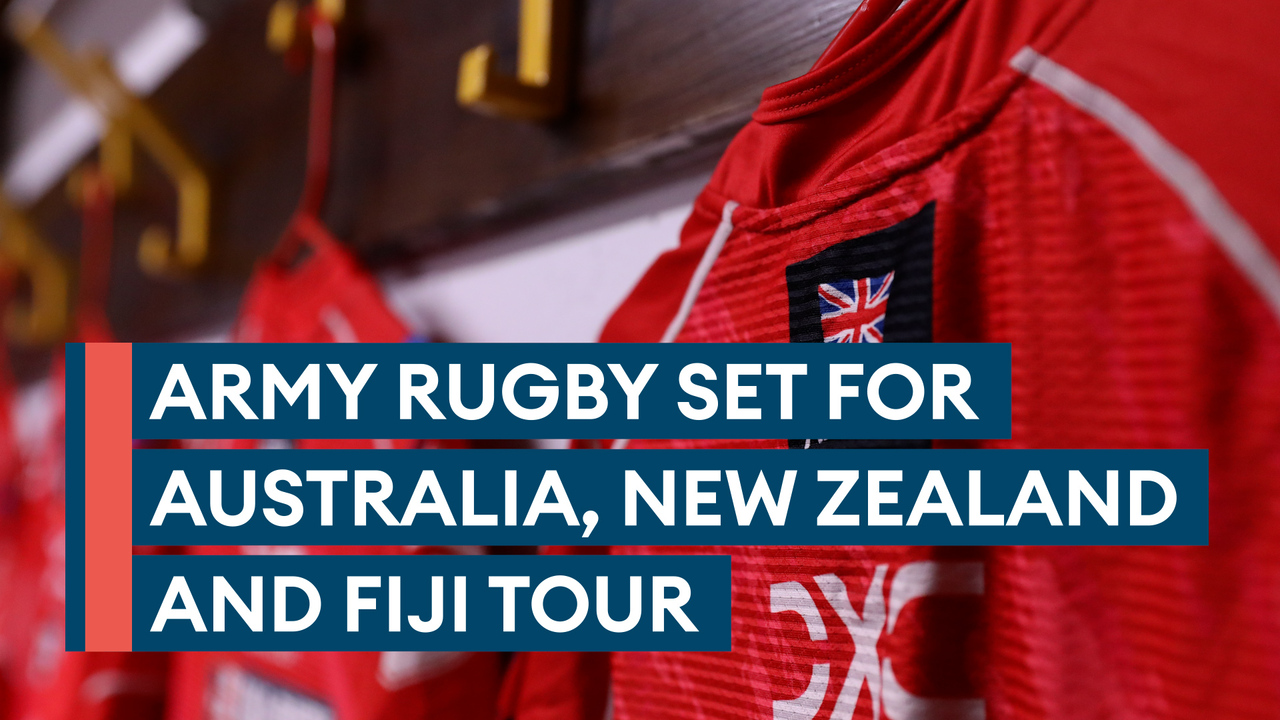
The British Army men’s rugby union team have jetted off for a history-making tour of Australia, New Zealand and Fiji.

Timed to coincide with the British and Irish Lions’ series down under, the Army are set for some important tests including a curtain raiser ahead of the big Lions v Australia match.

The Army have history with Fiji that goes back to the 2015 International Defence Rugby Competition but this will be the first time the service team have played in Fiji.

Army set for three key showdowns

The tour is based around three key clashes for the Army as well as a number of important training exercises during the tour.

It starts with a fixture against the New Zealand Army in Palmerston North, New Zealand, with a scheduled kick-off time of 13:30 NZST (02:30am BST) on 9 July.

From there, the team will head to Fiji for a monumental fixture against the Republic of Fiji Military Forces at Buckhurst Park 1 with a 12:00 FJT (13:00 BST) kick-off time on 12 July.

That match will also serve as a curtain-raiser for Fiji’s match against Scotland later in the afternoon.

The tour will finish in Australia with a fixture against Queensland Country/Wests at Wests Rugby Club on 19 July at 15:30pm AEST (06:30 BST).https://www.instagram.com/p/DLpB-5BoHz0/embed/captioned/?cr=1&v=14&wp=810&rd=https%3A%2F%2Fwww.forcesnews.com&rp=%2Fsport%2Frugby-union%2Farmy-rugby-union-head-historic-tour-australia-new-zealand-and-fiji-hoping-glory#%7B%22ci%22%3A0%2C%22os%22%3A2907.7999999970198%2C%22ls%22%3A1616.5%2C%22le%22%3A1970.8999999910593%7D

Testing themselves against Forces rugby’s big hitters

The matches against New Zealand and Fiji’s Forces teams will provide the Army with a stern test, which is their usual aim with fixtures against the French Army and USA Military already an important part of their season.

Head Coach Lieutenant Colonel Tim Osman said: “The aspiration was to generate more force on force, military against military fixtures as well as our own domestic competitions.

“This is pretty unprecedented to go to all three countries. I don’t think the Army have toured Fiji before. To go and play them over there is a fantastic opportunity and no mean challenge as well.

“Three games of that magnitude in such a short space of time will be very tough on the boys and their conditions, but it’s something we’re looking to embrace and get on with.”

A strong Army squad heading out on tour

Despite the time of year and work commitments, the Army are pleased to be taking a strong team out for the tour with the majority of the Inter Services squad on the plane.

That includes former England player Semesa Rokoduguni, who will be looking forward to playing in Fiji, the country where he was born.

“We know we have some really good superstars in there and a lot of experience,” said the Army and UK Armed Forces head coach.

“We were adamant that we take as strong a squad as we possibly could. I’m sure the welcome Roko gets in Fiji will be great.”

Carrier USS George Washington in Manila for Port Visit, U.K. Carrier Strike Group Sailing to Australia for Talisman Sabre

Dzirhan Mahadzir – July 3, 2025 5:00 PM

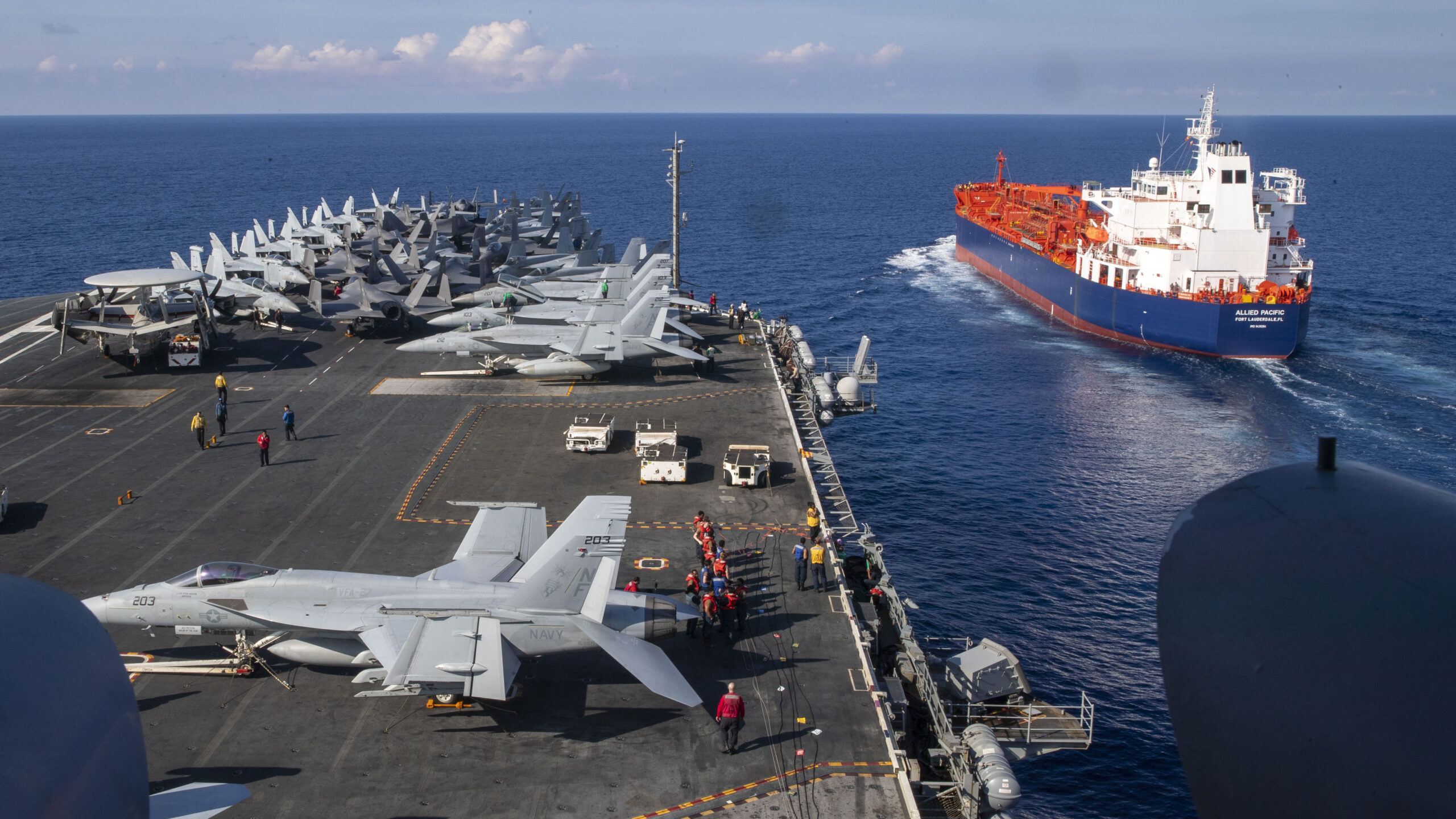
Nimitz-class aircraft carrier USS George Washington (CVN 73) readies to come alongside motor tanker Allied Pacific prior to a fueling-at-sea while underway in the Philippine Sea, June 28, 2025. U.S. Navy Photo

Aircraft carrier USS George Washington (CVN-73) arrived in Manila on Thursday for a port visit, the first since it departed Japan in June for its first patrol as a forward-deployed ship.

Philippine news channel ABS-CBN reported that George Washington was in Manila Bay for a port visit beginning Thursday. The carrier was in the Philippine Sea on Monday and in the South China Sea on Tuesday, when it hosted diplomats based in the Philippines from Australia, Canada, Japan, New Zealand and the U.K., according to a social media post by the U.S Embassy in the Philippines. The carrier then hosted Philippine media Wednesday.

The George Washington Carrier Strike Group includes carrier George Washington, cruiser USS Robert Smalls (CG-62) and destroyer USS Shoup (DDG-86). George Washington departed Yokosuka on June 10 to carry out carrier qualification training for its embarked Carrier Air Wing (CVW) 5, completing it on June 16, and immediately starting its summer patrol.

The George Washington CSG is currently the only U.S. Navy CSG operating in the Indo-Pacific since the Nimitz CSG departed for the Middle East. The America Amphibious Ready Group with amphibious assault ship USS America (LHA-6), amphibious transport dock ship USS San Diego (LPD-22), amphibious dock landing ship USS Rushmore (LSD-47) and the embarked 31st Marine Expeditionary Unit is the only ARG/MEU team operating in the Indo-Pacific. The America ARG is in the Coral Sea conducting operations ahead of its participation in the U.S.-Australian led multinational exercise Talisman Sabre ,which takes place from July 13 to Aug. 4 in Australia.

The United Kingdom Carrier Strike Group, led by Royal Navy aircraft carrier HMS Prince of Wales (R09), is now making its way across the Java Sea, sailing to Australia to take part in Talisman Sabre. RN destroyer HMS Dauntless (D33), Royal Australian Navy destroyer HMAS Sydney (DDG42), RN frigate HMS Richmond (F239), Royal Canadian Navy frigate HMCS Ville De Quebec (FFH332), Royal New Zealand Navy frigate HMNZS Te Kaha (F77), Royal Norwegian Navy frigate HNoMS Roald Amundsen (F311), Spanish Navy frigate ESPS Mendez Nunez (F-104) and fleet oiler RFA Tidespring (A136) is escorting Prince of Wales.

The U.K. CSG split off between Singapore, Malaysia and Indonesia, carrying out port visits with Prince of WalesDauntlessSydneyRoald Amundsen and Tidespring departing from Singapore on Sunday. In contrast, Ville De Quebec departed Port Klang, Malaysia, on the same day to rejoin the U.K. CSG. RichmondTe Kaha and Mendez Nunez departed from Tanjung Priok, North Jakarta, Indonesia, on Tuesday.

On Thursday, the People’s Liberation Army Navy Shandong Carrier Strike Group – carrier Shandong, cruiser CNS Yan’an (106), destroyer CNS Zhanjiang (165) and frigate CNS Yuncheng (571) – arrived in Hong Kong to carry out a port visit until Monday. The visit marks the carrier’s first visit to the city.

China’s other operational carrier, CNS Liaoning (16), visited the city in 2017. The Shandong CSG conducted dual carrier operations with the Liaoning CSG in the Philippine Sea in June, with both CSGs returning to their home ports after departing the Philippine Sea.

China has ramped up its aerial operations around Taiwan ahead of Taiwan’s annual military exercise Han Kuang, held from July 9-18.

On Wednesday, Taiwan’s Ministry of National Defense reported that from 6 a.m. Tuesday to 6 a.m. Wednesday, People’s Liberation Army aircraft conducting 53 sorties and eight PLAN ships were detected operating around Taiwan. Thirty-seven out of 53 sorties crossed the median line between Taiwan and China, entering Taiwan’s northern and southwestern Air Defense Identification Zone.

On Thursday, the MND reported that from 6 a.m. Wednesday to 6 a.m. Thursday, 41 PLA aircraft sorties and nine PLAN vessels were detected, with 30 out of 41 sorties crossing the median line and entering Taiwan’s northern, central, southwestern and eastern ADIZ. The ADIZ is a larger area than air space and is claimed by an individual state.

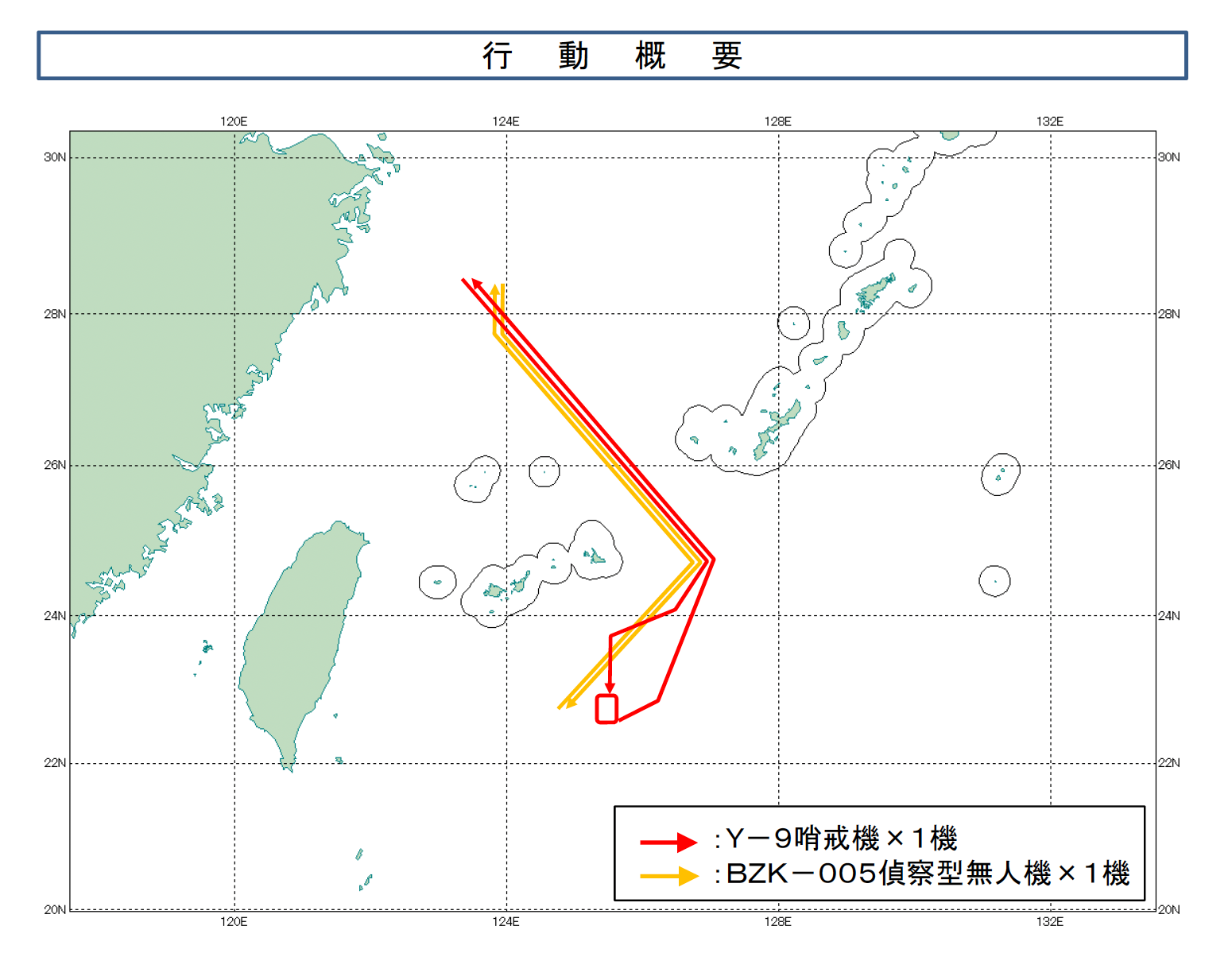
Japan’s Joint Staff Office issued a Wednesday news release on flights of suspected Chinese unmanned aerial vehicles, which appeared to be conducting surveillance flights over the Philippine Sea off Taiwan’s east coast.

Flight paths of suspected Chinese UAVs. Photo Courtesy of Japanese Ministry of Defense

On Wednesday morning, a presumed Chinese UAV had flown in from the East China Sea, passed between Yonaguni Island and Taiwan and subsequently flew over the Philippine Sea off Taiwan’s east coast, according to the release, which included a map showing the drone reaching a point parallel to the center of Taiwan’s east coast before turning back. The UAV flew back the same way and passed between Yonaguni Island and Taiwan to return to the East China Sea.

A presumed Chinese UAV flew in from the East China Sea, passed between Yonaguni Island and Taiwan, and flew over the Philippine Sea, according to the release. Fighter aircraft from the Japan Air Self-Defense Force scrambled in response.

The Republic of Korea Navy issued a Thursday news release saying it began operational service of its six P-8A Poseidon maritime patrol aircraft, which arrived in South Korea in June last year.

Over the past year, the ROKN completed all preparations for operational deployment, including crew and maintenance personnel training, day and night flight training, tactical training, and final evaluations, according to the release.

“The P-8A is expected to enhance the Republic of Korea Navy’s anti-submarine warfare capabilities and serve as a force that can respond quickly in the event of maritime operations,” reads the release.

NZ Reserve Force soldier learning the skills of de-escalation in hotspots

Whanganui’s Ray Stewart frequently deals with the results of vehicle collisions repair, but when he’s in uniform as a New Zealand Army Reserve Force soldier one of his skills is de-escalating disagreements between people.

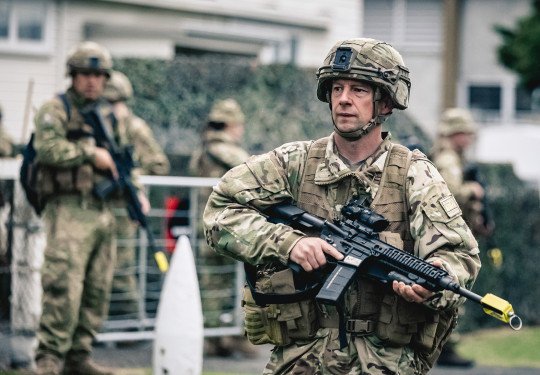
A soldier in full Army uniform and holding a weapon is in focus, while blurred in the background are more soldiers and a large bush in front of a building.

03 July, 2025

Corporal Stewart recently took part in Exercise Italy in Whanganui, where as part of the scenario, he and his infantry section were at the defensive end of a confrontation between village representatives. 

The NZ Army Reservist, who works in a Whanganui panelbeaters as a spray painter as his day job, needed to intervene swiftly and calmly to help de-escalate the scenario-based situation. 

Stepping into the potentially volatile discussion, section commander Corporal Stewart quietly de-escalated the situation so his platoon commander could continue with the key leadership meeting.

Corporal Stewart says the exercise offered a realistic glimpse into security and stability operations.

Establishing security to set up the forward operating base at 5th/7th Battalion, Royal New Zealand Infantry Regiment (RNZIR) Headquarters, patrolling streets, providing security to the ‘local’ community and leadership meetings, and de-escalating confrontations were some of the challenges the team faced.

“Some of the scenarios were challenging but the training is in a supportive and safe environment where we are encouraged to be put into situations we may not have experienced before.   

“As a section commander my priority is to give orders based on what the commander wants achieved, manage my section and ensure they are prepared for a variety of situations.” 

Corporal Stewart spent five years as a youth development specialist working at the Youth Development Unit (YDU) at Royal New Zealand Air Force Base Ohakea. 

This included working on the Limited Service Volunteer courses for unemployed 18-24 year olds who are not studying or training, and Services Academies within secondary schools, fostering skills and values to help senior students take positive roles in society.

“The communication skills I developed working at YDU have really helped in my role as a section commander and in dealing with customers at work. Serving in the NZ Army has helped my resilience, professionalism and adaptability in my civilian employment too.

“My family has been a big part of this journey, they have been really supportive, especially my wife Lisa and son William. Our unit has regular family gatherings which is a great support network for the family.”  

Officer Commanding West Coast Company, 5/7 RNZIR, Captain Peter Havell, says reservists can be put into challenging situations in an urban peacekeeping environment so it’s important to train for these scenarios. 

“The Reserve Force is expected to assist the Regular Force in sustaining land operations and this urban security training is part of that sustainability training.

“Combat engineers, medics and transport reservists are part of this exercise also.  The continuation and development of the training will be furthered on a large-scale Reserve Force exercise, Exercise Tauwharenīkau, held at Waiouru in July.”

Exercise Tauwharenīkau is an annual NZ Army Reserve Force training activity where up to 250 personnel from different corps and units around New Zealand take part.

The exercise enables Reserve Force personnel to train together to maintain and enhance their technical skills in a large-scale training activity utilising a range of weapons and capabilities used by the NZ Army.

Ukrainian minehunters prepare for end of the war when skills can be used for real

2nd July 2025 at 12:56pm

Ukraine’s minehunters are well trained but remain stuck until war is over

Four mine countermeasures vessels donated to Ukraine have reached Nato standards, as Ukrainian sailors take part in Exercise Sea Breeze near Weymouth. 

The ships include two former Royal Navy Sandown-class vessels, HMS Shoreham and HMS Grimsby, now renamed Cherkasy and Chernihiv.

They are joined by Mariupol and Melitopol, Alkmaar-class vessels recently donated by Belgium and the Netherlands.

The exercise involves minehunters and EOD divers from across the alliance, with 11 days of intensive training focused on preparing Ukraine for post-war demining operations in the Black Sea.

PKG Ex Sea Breeze CREDIT BFBS
There are thought to be hundreds of sea mines still drifting in the Black Sea

There are thought to be hundreds of sea mines still drifting in the Black Sea, laid by Russian forces in an effort to blockade Ukrainian ports and disrupt grain exports.

For a time, that strategy worked – but shipping has now returned to pre-war levels.

The UK says Ukraine’s mine countermeasures capability has played a key role in restoring maritime trade.

According to Nato personnel involved in the exercise, Ukraine has made effective use of remote and autonomous systems to establish freedom of navigation in the northwest Black Sea.

The Royal Navy has confirmed that the two UK-donated vessels and their crews have now been assessed and meet Nato operational standards.

However, the ships cannot currently enter the Black Sea. Under the 1936 Montreux Convention, Turkey has closed the Bosphorus Strait to all warships due to the ongoing war.

That means the vessels remain outside Ukrainian territorial waters.

For now, mine clearance in the Black Sea is being carried out by smaller vessels, drones and divers.

The first part of Exercise Sea Breeze, involving amphibious operations, took place in Romania earlier this year.

This second phase aims to ensure Ukraine’s growing mine warfare fleet is ready for the day it can return through the Bosphorus and help secure its waters.

Royal Navy Field Gun Competition: It’s tough, unforgiving – and spectacular

Tim Cooper – 2nd July 2025 at 8:35am

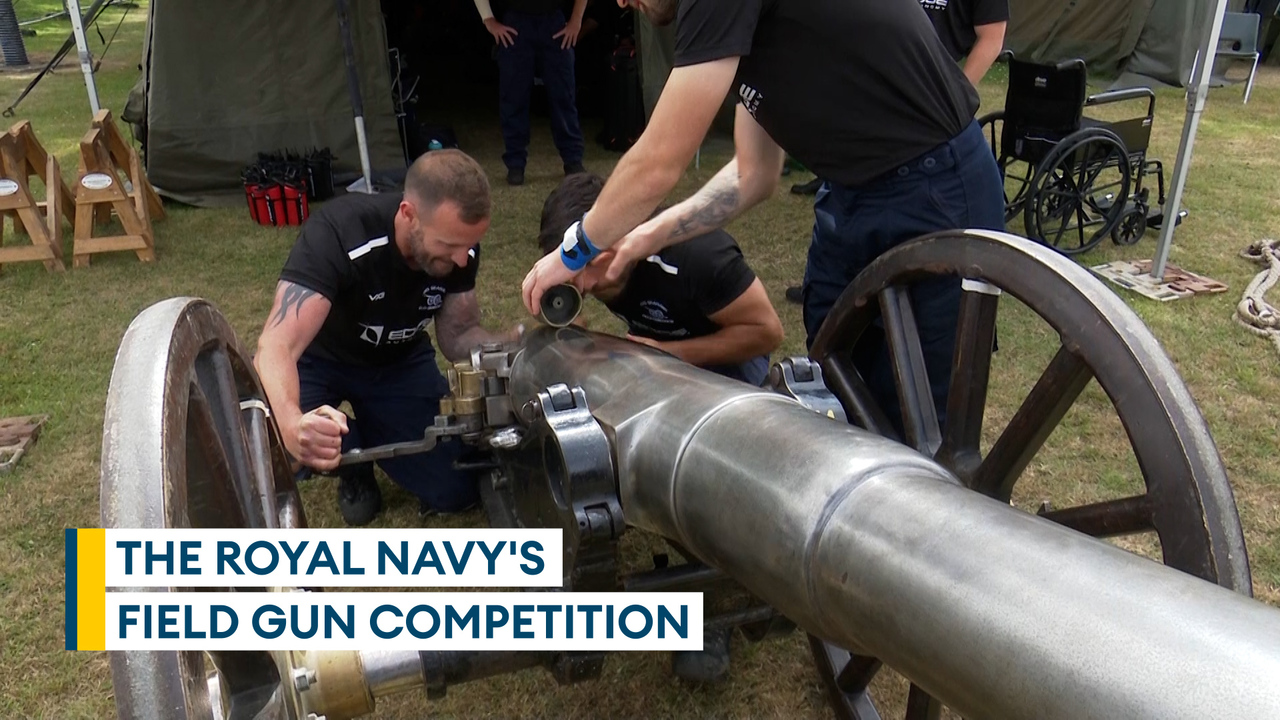
Behind the gun: The Royal Navy’s Field Gun Competition

Teams from across all three services and even abroad recently came together to compete in one of the Royal Navy’s proudest and most enduring traditions – the Field Gun Competition.

There’s honour at stake and it’s taken extremely seriously.

But have you ever wondered what it’s all about, how it started and why it still goes ahead today?

In order to find out I took a look behind the scenes and met some of those taking part.

My visit to HMS Collingwood began a day before the annual Field Gun Competition, which is officially called the Brickwood Trophy, took place.

Each element of the contest was gone through again and again – and the same happened in an area called the Field Gun Village.

Here, each team have their own space – a bit like a quaint version of an F1 paddock – and it’s usually kept very private, so it was a real treat for me to be allowed backstage, as it were.

I saw how all the field guns are lined up when the teams aren’t practising, and met the team from Joint Force Command (JFC) Naples, the Nato base.

Master Sergeant Lisa Owens opens the breech on the JFC Naples team gun

Almost a dozen nationalities were represented in this team, including Master Sergeant Lisa Owens from Samoa, who serves in the US Army.

She said: “I like the physical aspect of it. When we came here in ’22, we had never seen the gun before, so we had to learn all the drills within 48 hours.

“I fell in love with it – since day one.”

I saw how Lisa had really embraced it, motivating the team, keeping them all focused and ensuring that Naples has a team going into the future even after she returns home to Fort Knox.

MSgt Owens added: “Me and a few other girls that have left JFC, we’ve been pushing everyone at JFC.

“I mean, we even advertise it to our commander. He loves it because we do public runs on JFC.

“It’s helped give a realistic or holistic view of everyone and how we perform the drills on the gun.”

The competition harks back to an action where the Royal Navy brought some much-needed firepower to assist the Army

For those who don’t know, the competition is based on an action where sailors had to haul their naval guns from their ships to help relieve the British Army in the besieged town of Ladysmith during the Boer War in 1900.

Ever since, the competition has taken place in varying forms and styles.

Taking the gun apart and reassembling it is symbolic of what the sailors would have had to do to get their guns across the treacherous terrain of South Africa.

Lieutenant Commander Gary Nicholson explained: “This is a competition that we’ve been running since 1907.

“Two men or two women can lift this barrel off the ground and rip the wheels off.

“We then come back to the breech here, and the breech opens, and there is a blank shell, 5.56, that’s placed in here.

“It’s put up the spout, and there are six firings throughout the competition. The breech comes over, sets off the charge, and that’s one round that’s been shot.”

Lt Cdr Nicholson showed me the limber box. “This is where the gun shells are stored,” he explained.

“And on the completion of the run, all six are in here with the extractor, which is the tool that’s used to extract them from the gun barrel.

“The box is on the ground and it’s built up, and the wheels are placed on with the shackles, and the pin is inserted into the axle.”

The contest involves the rapid disassembly and reassembly of the gun, simulating what was required to get the weapon deployed and in action against the Boers back in 1900

There’s loads of respect here between the teams. Every time one goes to practise, warm applause ripples around the encampment.

The downtime, though, is also a time for healing.

Practice and competition see a heavy gun move about very quickly – and injuries are sadly a part of it.

Regular maintenance is needed for the competitors. So, given this, why do people want to do it?

Able Rate Connor Merrin is a new member of the HMS Seahawk team who have made good recently, winning three years in a row.

He said: “It’s my grandad. He was Navy, and he told me about it, and so I thought I’d do it for him as well. He loved the idea of me doing it.”

On the big day itself, tight units were built and comradeship forged.

And while it may be tradition, fun and exciting, Field Gun is of massive use for the modern military.

“We’re really testing our sailors and all the things that we need to see for them and when they’re operating at sea,” said Captain Tim Davey, Commanding Officer of HMS Collingwood.

“So the teamwork, the camaraderie, leadership, spirit, grit and discipline are all the things that we need to see.”

JCs Royal New Zealand Navy Ships and New Zealand Defence, Also other World Defence Updates

Ships and Defence News Past and Present

Skip to content ↓