The Royal Navy’s Pacific Test

HMS Prince of Wales Pacific is underway in a last series of test to prove the operational capability of the Royal Navy’s carrier strike group.
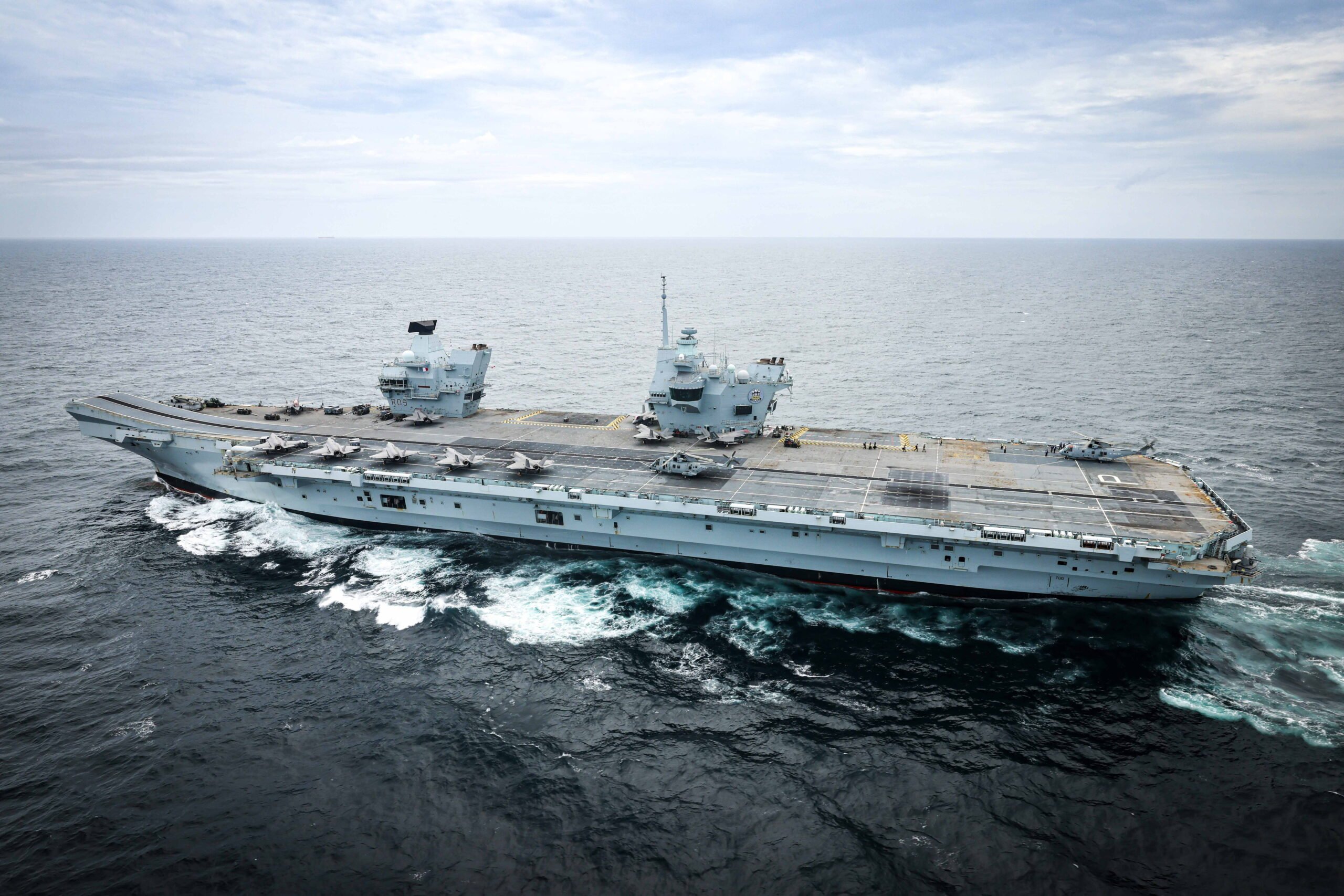
HMS Prince of Wales (R09)off the coast of India whilst on Op Highmast. Royal Navy Photo

Dzirhan Mahadzir

June 27, 2025 7:00 PM

ABOARD AIRCRAFT CARRIER HMS PRINCE OF WALES – The U.K.’s first Carrier Strike Group will operate for four months in the Indo-Pacific to complete the full operational capability milestone for the Royal Navy’s carrier strike group concept. The exercises, which are a part of Operation Highmast, also demonstrate the U.K.’s commitment to the region, strike group commander Commodore James Blackmore said on Tuesday.

“Highmast is about developing in three key areas for us: It’s about developing full operational capability of the U.K. Carrier Strike Group; it’s about partnerships and allies in the Indo-Pacific region, where we are right now; and there’s an element about NATO forces as well, particularly when we are back in the Euro-Atlantic region,” said Blackmore in a media session on the flight deck of Prince of Wales while docked in Singapore. He was joined by the commanding officer of Prince of Wales, Capt. Will Blackett and Capt. Colin McGannity, Commander Air Group.

Blackmore added that the first phase of the deployment in the Mediterranean and Atlantic was meant to build the capabilities the UKCSG would bring to the Indo-Pacific, culminating in Exercise Mediterranean Strike with the Italian Navy Cavour CSG. Following a port visit to Souda Bay, Crete, the UKCSG transited the Suez Canal into the Indo-Pacific region on June 12 and arrived in Singapore on Monday.

Transit through the Red Sea was quiet, “Just the way we hoped for,” said Blackmore. The ships and aircraft of the UKCSG maintained a full alert posture during the transit.
HMS Prince of Wales sails into Singapore on June 23, 2025. Royal Navy Photo

“All of our assets were deployed airborne and our ships were in a posture that you would expect them to be in. We had to, in some ways, expect the worst, but we planned for everything,” stated COMUKCSG. He added that he was pleased with all the UKCSG teams’ performance thanks to thorough training for potential Houthi attacks in the Red Sea. The UKCSG’s three embarked Merlin Mk2 Airborne and Control (ASaC) helicopters, known as “Crowsnest,” were deployed to provide the CSG with long-range, over-the-horizon air, sea and land surveillance, detection and tracking. Blackmore said the Crowsnest “provides us with an incredible airborne surveillance control function so we understand what’s going on in the air environment.”.

The UKCSG consists of the carrier Prince of Wales, RN destroyer HMS Dauntless (D33), RN frigate HMS Richmond (F239), Royal Canadian Navy frigate HMCS Ville De Quebec (FFH332), Royal New Zealand Navy frigate HMNZS Te Kaha (F77), Royal Norwegian Navy frigate HNoMS Roald Amundsen (F311), Spanish Navy frigate ESPS Mendez Nunez (F-104) and fleet oiler RFA Tidespring (A136). Richmond and Mendez Nunez are now in Jakarta on a port visit while Ville De Quebec is at Port Klang, Malaysia for a port visit with the rest of the UKCSG in Singapore. Royal Australian Navy destroyer HMAS Sydney (DDG42) will join the CSG as it departs Singapore on Sunday along with the other detached escorts rejoining the CSG. Then the group will head to Australia to participate in the U.S.-Australian-led multilateral exercise Talisman Sabre from July 13 – Aug.4.
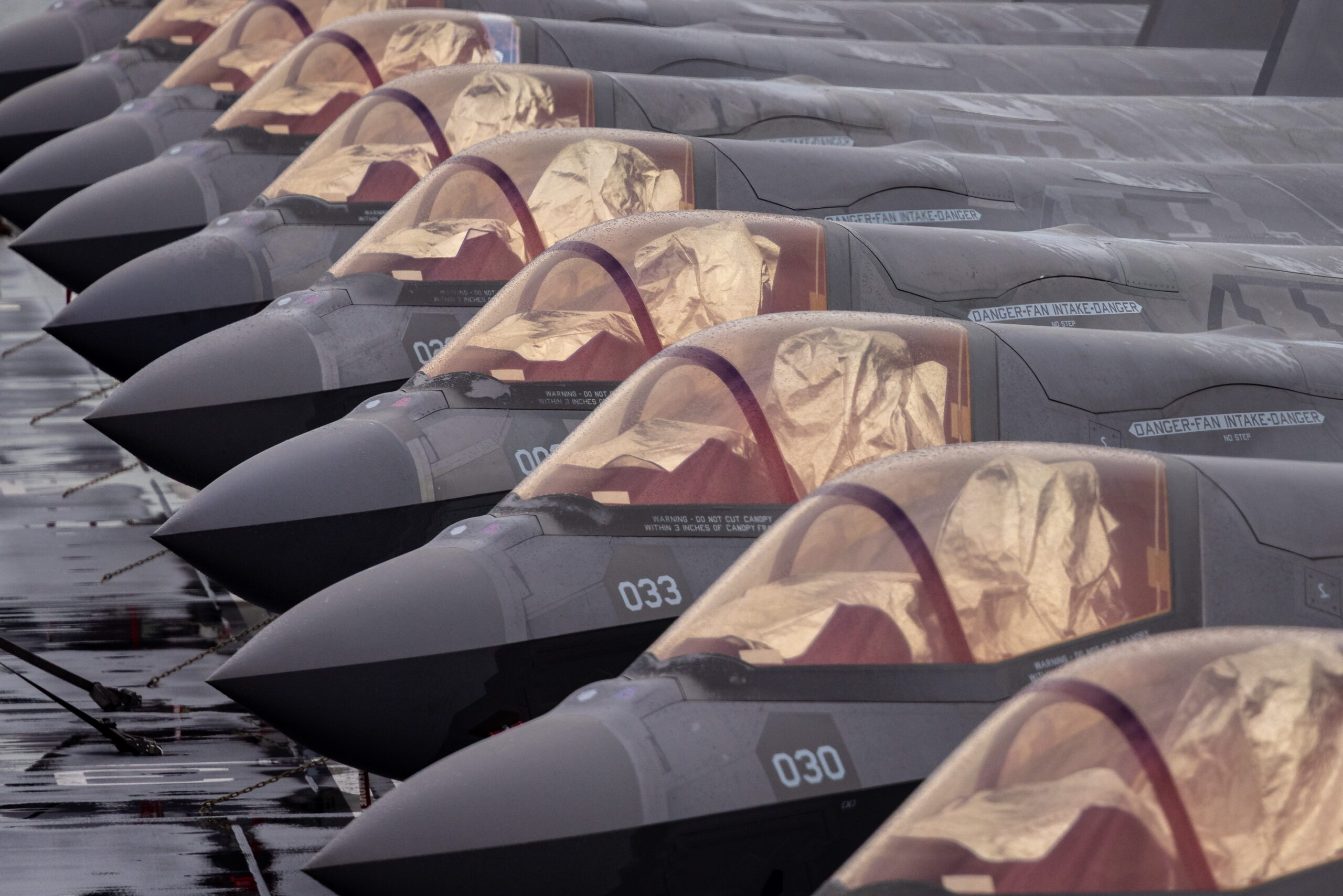
F-35 Lightning jets of 617 Sqn and 809 NAS line up on the deck as Aircraft Carrier HMS Prince of Wales sails into Singapore on June 23, 2025. Royal Navy Photo

“This will develop some of the key evidence towards our capability development of the Carrier Strike Group. It’s heavily focused on our fifth-generation F-35Bs,” said Blackmore.

Capt. Will Blackett, commanding officer of Prince of Wales, stated that a key point that separates navies is the ability to deploy anywhere globally.

“Anyone can do this in their backyard but being able to be truly global means being able to bring all that complexity to the other side of the planet, which is why Talisman Sabre is an additional challenge, as we had to go all that way to get there, and still maintain our capability, which I’m confident we can do,” said Blackett.

Capt. Colin McGannity, Commander Air Group, said that one of the Talisman Sabre objectives is to launch eight F-35Bs Lightning IIs at a single time along with other unspecified high-end activities. McGannity also said the UKCSG’s F-35Bs will also link up with the aircraft of other nations participating in the exercise, “So it is certainly not a sort of sovereign U.K. endeavour of eight of our jets going in and exercising. We’re expecting to see some really big large force packages where they are working together to achieve their training objectives,” he said.

The UKCSG’s carrier air wing is comprised of seven squadrons, totalling 750 personnel with two F-35B squadrons – the “Dambusters” of RAF Squadron 617 and the “Phoenix” of Naval Air Squadron 809 – with a total of 18 F-35Bs currently embarked. The number is set to grow to 24 when the UKCSG returns to the Mediterranean. The carrier air wing also has 16 helicopters, including Merlin Mk 2 Anti-Submarine warfare (ASW) and Merlin Mk. 2 ASaC helicopters of 820 Naval Air Squadron embarked on Prince of Wales, Merlin Mk 2 ASW helicopters of 814 Naval Air Squadron on escort ships, Wildcat maritime attack helicopters of 815 Naval Air Squadron on both Prince of Wales and the escorts and Commando Merlin HC4 assault helicopters of the Commando Helicopter Force on Prince of Wales. Rounding out the air wing are the Malloy and Puma unmanned air vehicles of Naval Air Squadron 700X.

Currently, the F-35B complement is short one aircraft because an F-35B diverted to Thiruvananthapuram airport, India, due to bad weather on June 14. The plane subsequently developed a technical fault and was stranded there. McGannity stated that the aircraft was one of three airborne at the same time that night. The other two aircraft made it back.
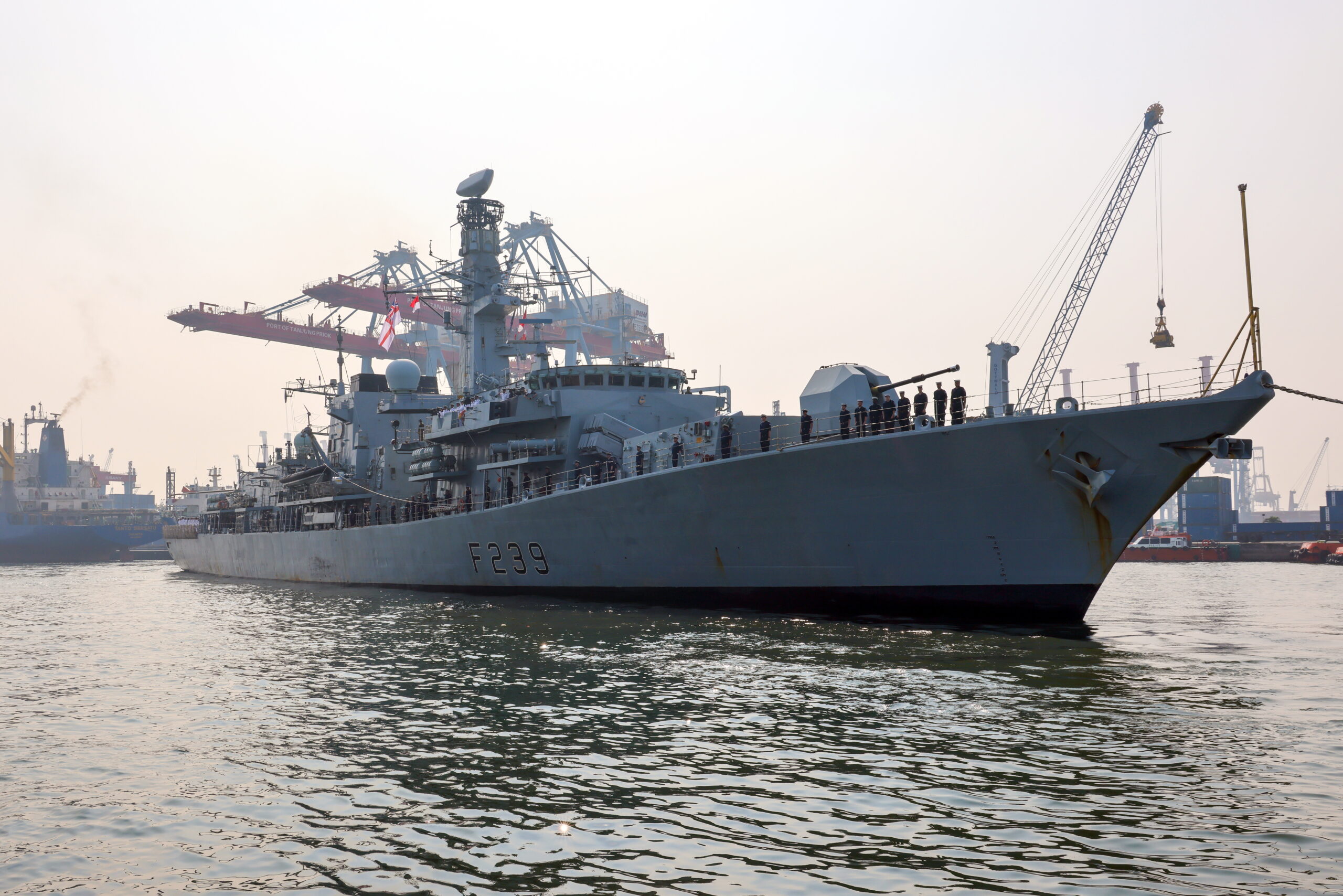
HMS Richmond sailed into Jakarta, Indonesia to take part in defence engagement and outreach programs with the Indonesian navy on June 25, 2025. Royal Navy Photo

“I’m really proud that the team that made the decision decided that the best thing to do was to put it ashore in India,” he said. After landing, it was determined the aircraft required maintenance to return it to operational status. McGannity stated the plane’s fate would depend on the technical team’s assessment, “I think for the moment, there are 17 plans on what could happen,” he quipped, adding that he was keen for the aircraft to rejoin the carrier.

Following Talisman Sabre and a port visit to Darwin, the UKCSG sails to Japan and South Korea for its next phase of operations.

“We’ll be working closely with the U.S. Navy, in particular,” he said, “and it’s where we’ll start to see many of the other strike groups come together, in particular the United States strike groups there but also some of the Japanese strike groups as well.”

When the Nimitz CSG departed for the Middle East, it left the George Washington CSG as the sole CSG in the region. Blackmore said that UKCSG would integrate with other U.S. strike groups in the Indo-Pacific region and the UKCSG would integrate with them along with Japan Maritime Self-Defense Force destroyer carrier JS Kaga (DDH-184). “In that respect, [I have] no concerns whatsoever,” said Blackmore.

He said that the UKCSG would integrate with F-35Bs of Marine Fighter Attack Squadron (VMFA) 242 ‘Bats.’ VMFA-242 conducted the first F-35B launches and landings for a JMSDF ship, deploying on destroyer carrier JS Izumo (DDH-183) in October 2021. Japan will receive its first F-35Bs at the end of the year, so the UK F-35Bs may have to conduct cross-deck landings and launches on Kaga as part of the JMSDF’s preparation for its own F-35B operations.

The UKCSG will carry out a maintenance and rest period in Japan before sailing back to Singapore to carry out the fifth phase of its deployment, taking part in the Five Power Defence Arrangements (FPDA) Bersama Lima exercise in September. FPDA member countries include Australia, Malaysia, New Zealand, Singapore and the U.K.. After Bersama Lima, Blackmore said the group will make a port visit to Singapore and then sail on to India for a series of exercises and a port visit to Mumbai.
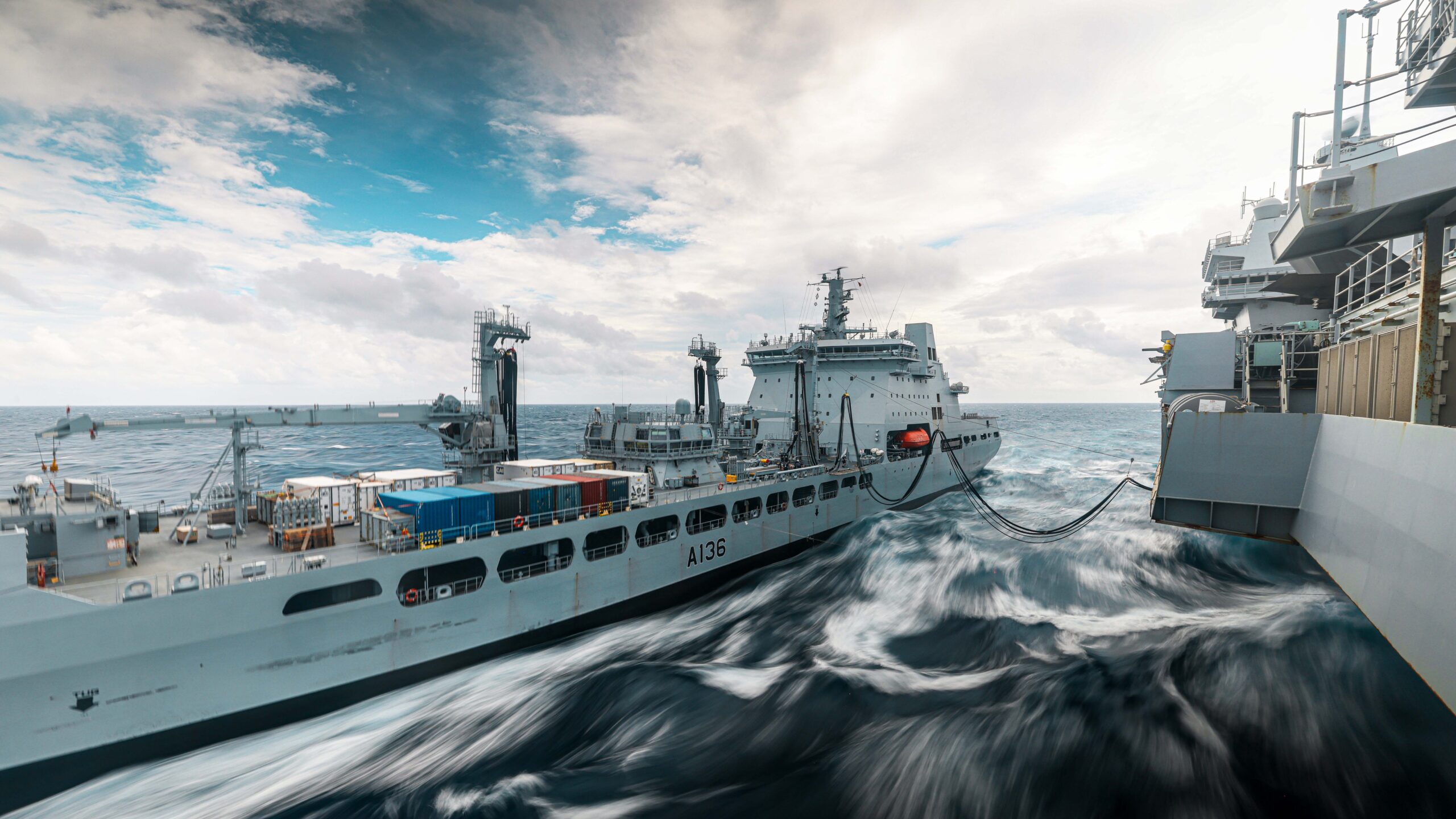
HMS Prince of Wales conducts a Replenishment at Sea, with Royal Fleet Auxiliary tanker, RFA Tidespring on June 12, 2025. Royal Navy Photo

The UKCSG will then sail through the Middle East and in the Mediterranean where it will carry out Exercise Falcon Strike, “Where we will be able to deliver the full operating capability back into the U.K. government,” said Blackmore.

Blackmore said he expected to encounter Chinese military and coastguard vessels given that the UKCSG would be operating in international sea and air spaces., “ I expect perhaps China comes and take a look at what we do, said Blackmore. “In fact, why wouldn’t they? They’ll be interested in the way we operate. We are a highly capable, well-trained task group. We’ll be operating in the Indo-Pacific. We’ll be operating in international waters, undertaking exercises with partners and allies, so I fully expect [an encounter], but I also know it will be safe and professional throughout in the way that we operate in the maritime environment.”

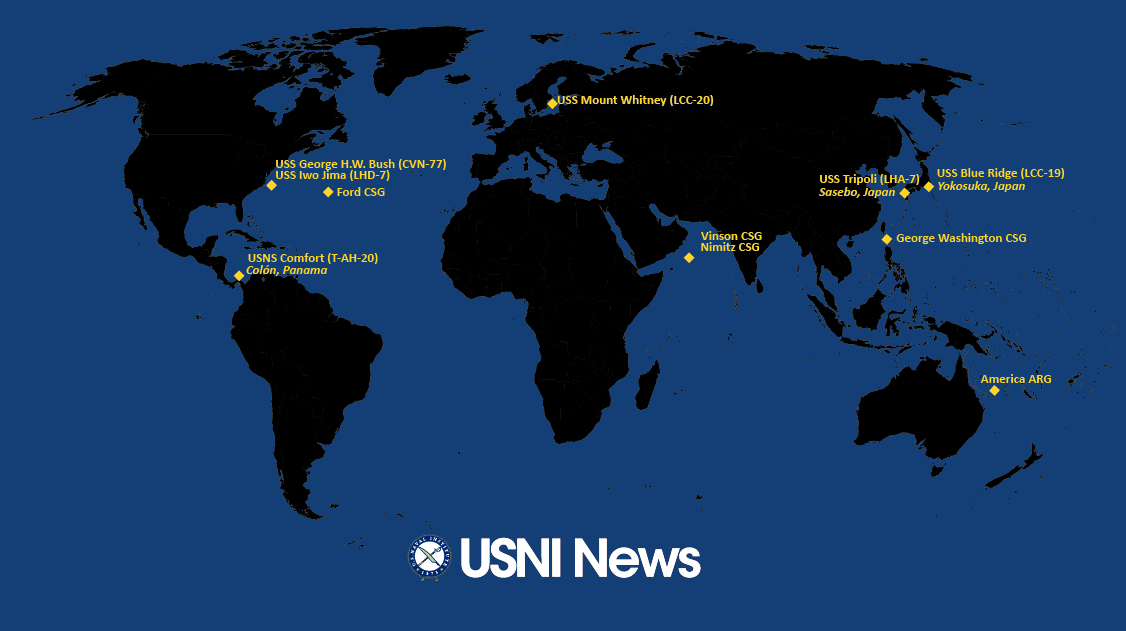
USNI News Fleet and Marine Tracker: June 30, 2025

U.S. Naval Institute Staff

June 30, 2025 3:21 PM – Updated: June 30, 2025 10:15 PM

USNI News Graphic

These are the approximate positions of the U.S. Navy’s deployed carrier strike groups and amphibious ready groups throughout the world as of June 30, 2025, based on Navy and public data. In cases in which a CSG or ARG is conducting disaggregated operations, the chart reflects the location of the capital ship.

Ships Underway

Total Battle ForceDeployedUnderway
293
(USS 234, USNS 59)
103
(USS 74, USNS 29)
86
(61 Deployed, 25 Local)

In Japan

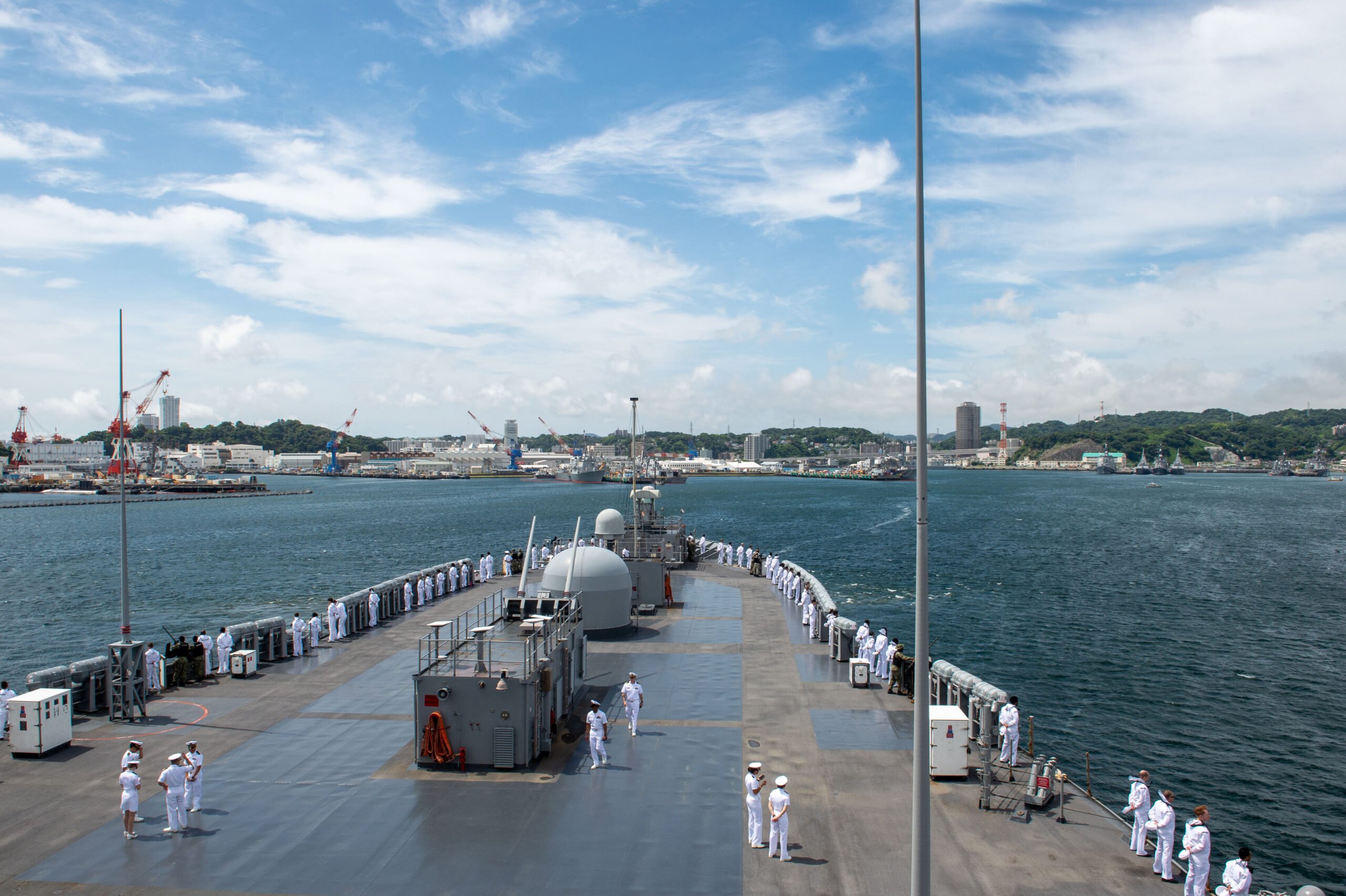
The U.S. 7th Fleet flagship USS Blue Ridge (LCC 19) arrives in Yokosuka, Japan after its summer 2025 patrol, June 23, 2025. U.S. Navy Photo

Amphibious warship USS Tripoli (LHA-7) is in port in Sasebo, Japan.

Command ship USS Blue Ridge (LCC-19) is in port in Yokosuka, Japan, after completing its summer patrol.

In the Philippine Sea

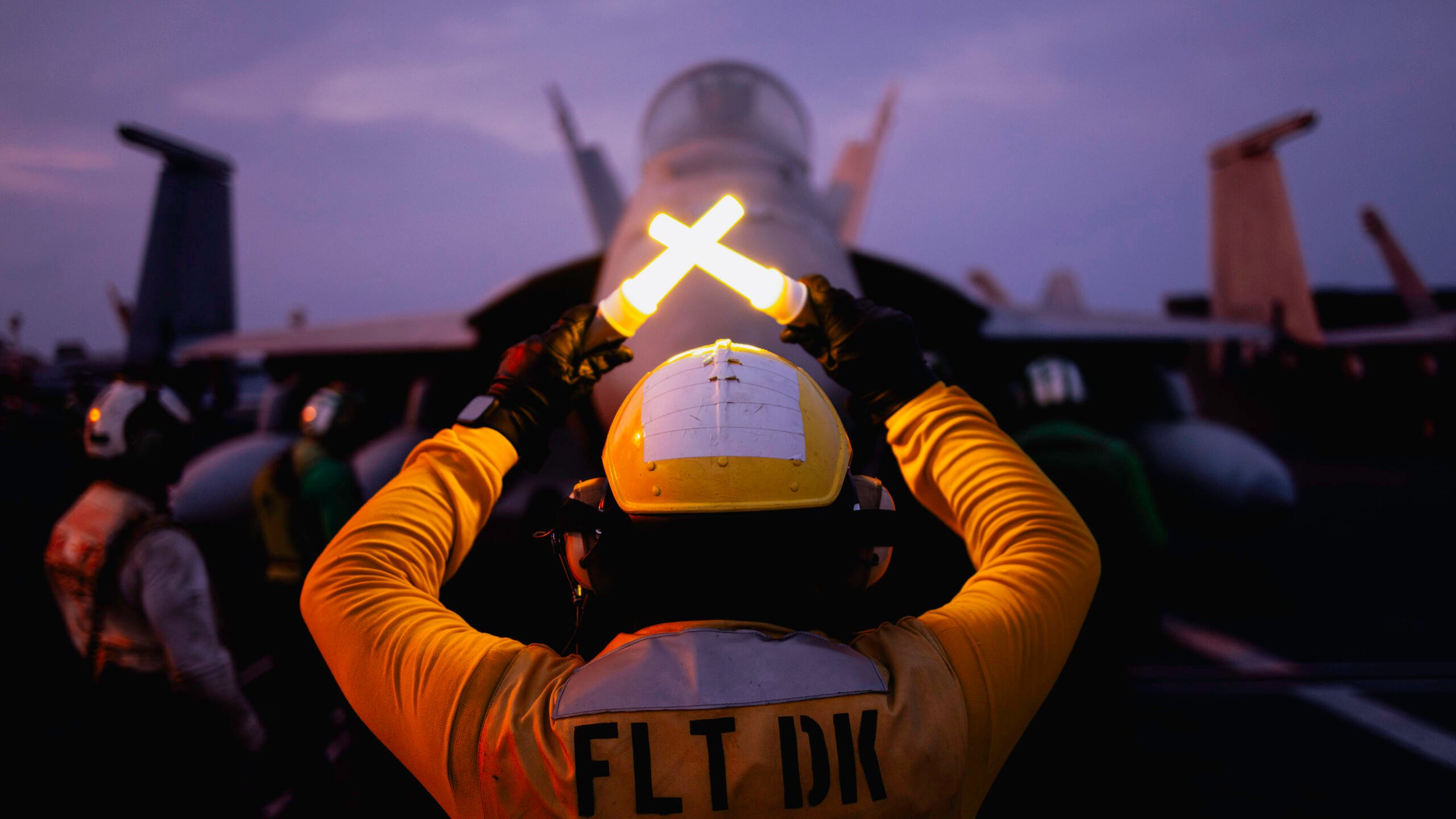
Aviation Boatswain’s Mate Aircraft Handling 1st Class Emmanuel Hernandez, from Los Angeles, assigned to air department’s flight deck crash and salvage division, directs an F/A-18E Super Hornet on the flight deck of Nimitz-class aircraft carrier USS George Washington while underway in the Philippine Sea, June 26, 2025. U.S. Navy Photo

Aircraft carrier USS George Washington (CVN-73) is underway on its first Western Pacific patrol following its homeport shift to Japan.

In the Coral Sea

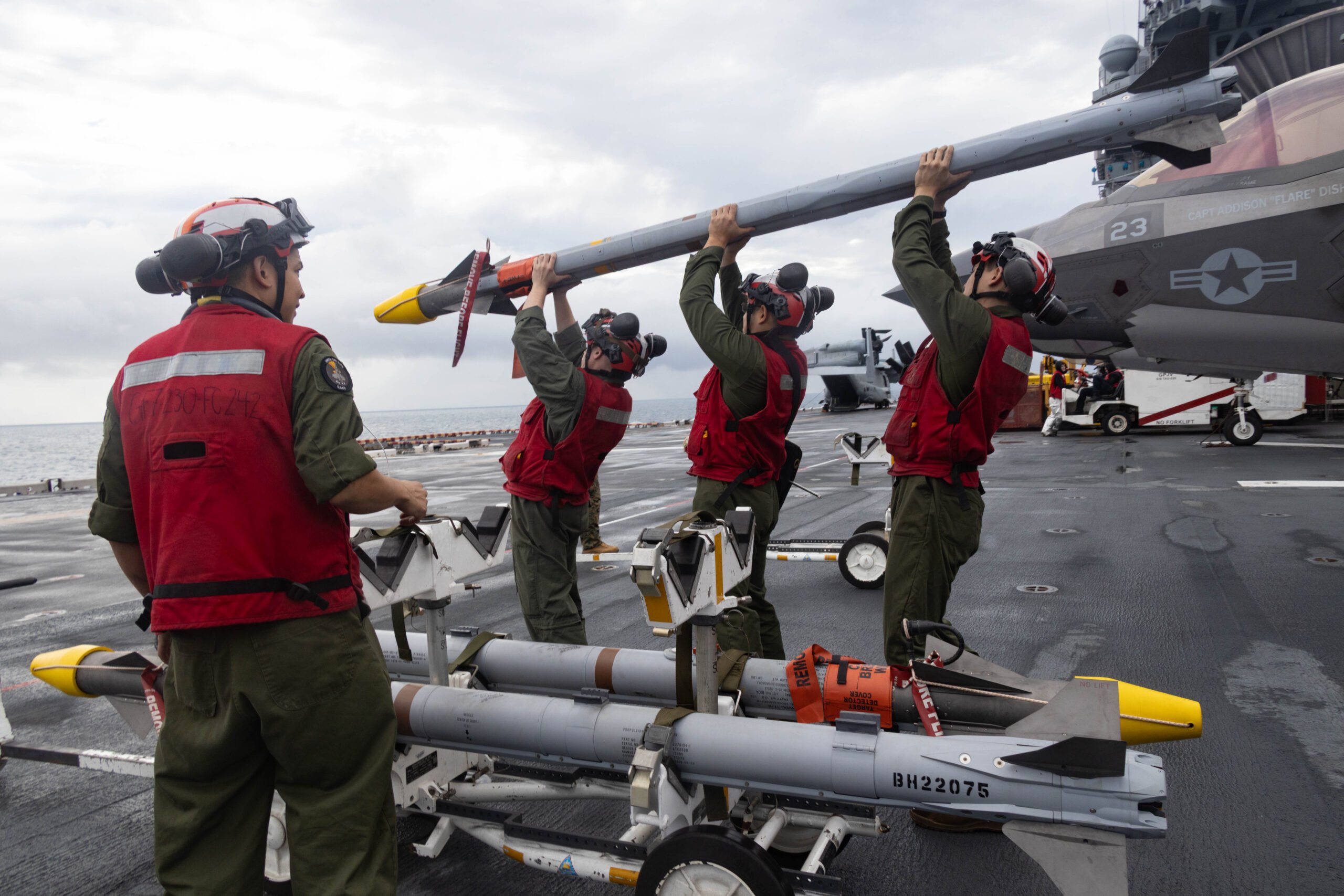
U.S. Marines with Marine Fighter Attack Squadron (VMFA) 242, 31st Marine Expeditionary Unit, prepare to carry an AIM-9X-2 missile during an ordnance load aboard the amphibious assault ship USS America, in the Coral Sea, June 29, 2025. U.S. Marine Corps Photo

Amphibious warship USS America (LHA-6) is conducting routine operations in the Coral Sea.

America is set to leave Japan and shift homeports to San Diego later this year. USS Tripoli (LHA-7) will replace America as the forward-deployed big-deck amphibious warship. The America Amphibious Ready Group includes the ships of Amphibious Squadron 11 and the embarked 31st Marine Expeditionary Unit based out of Okinawa, Japan.

Amphibious Squadron 11 ships include USS Rushmore (LSD-47), USS New Orleans (LPD-18) and USS San Diego (LPD-22).

In Colón, Panama

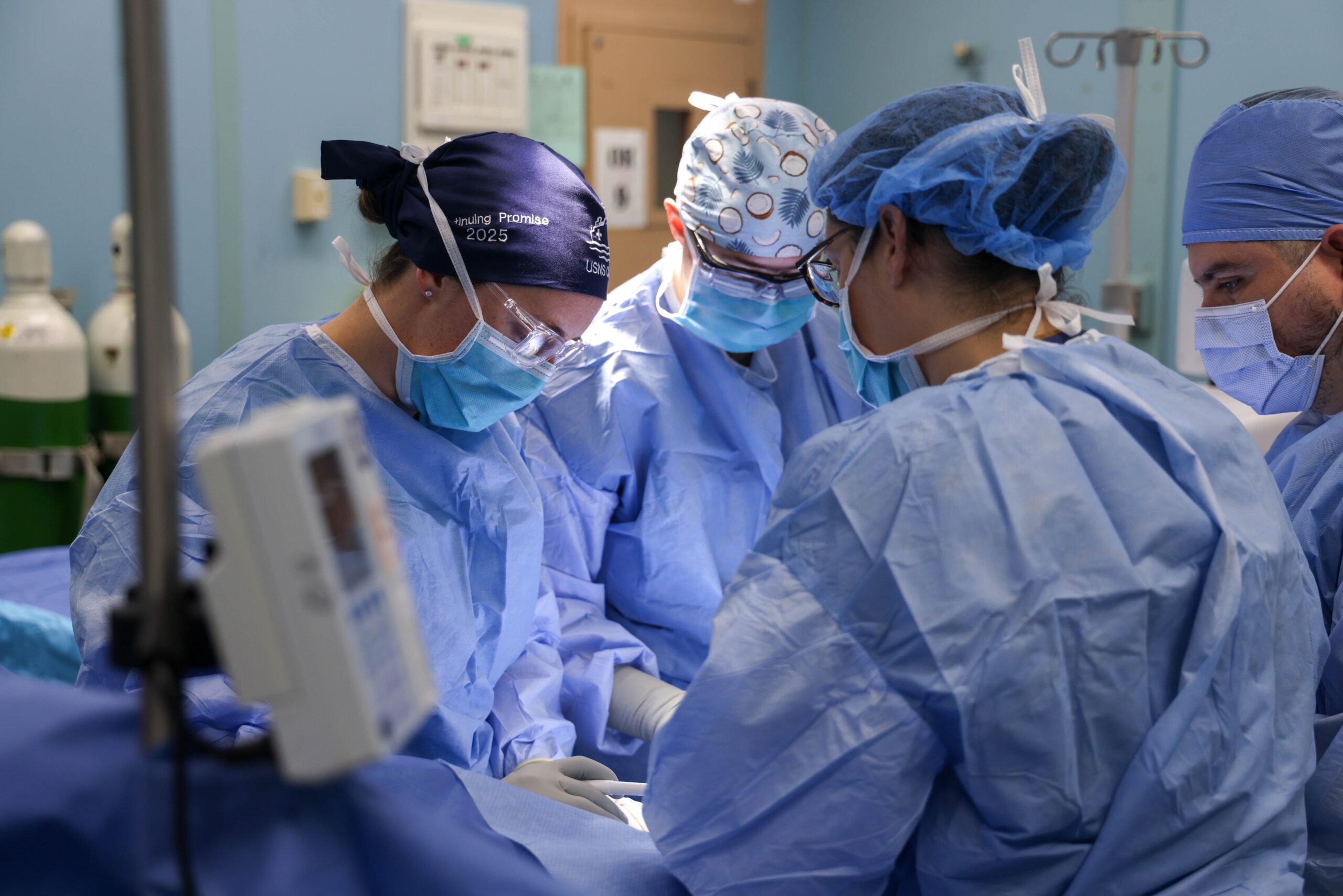
Surgeons aboard the Mercy-class hospital ship USNS Comfort (T-AH-20) perform a hernia surgery on a Panamanian patient during Continuing Promise 2025 in Colón, Panama, June 28, 2025. U.S. Army Photo

Hospital ship USNS Comfort (T-AH-20) arrived in Colón, Panama, on Wednesday to provide medical care, training and health education to those in need as part of Continuing Promise 2025. The Mercy-class hospital ship will also visit Colombia, Ecuador, Costa Rica and the Dominican Republic during its deployment.

In the Atlantic Ocean

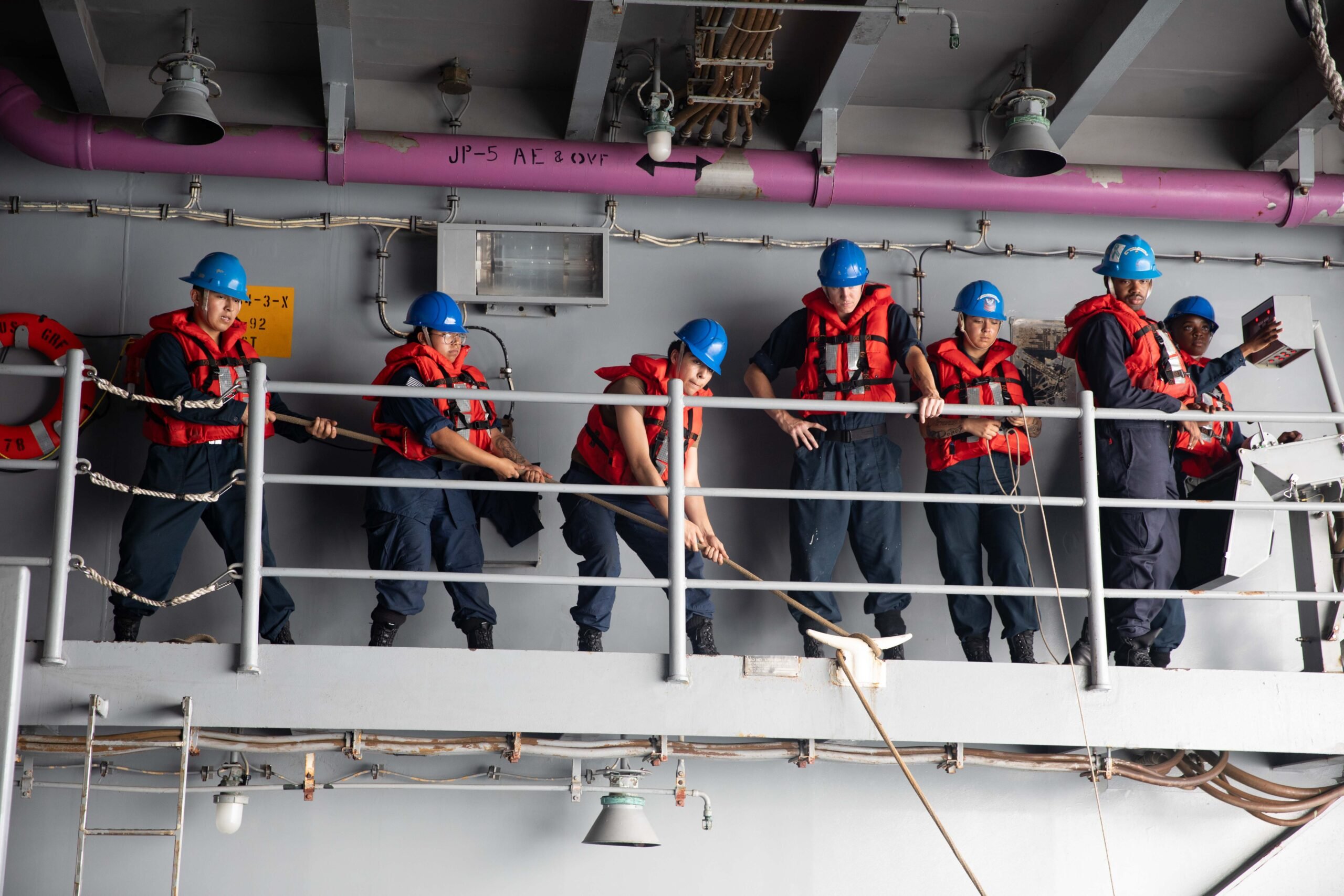
Sailors assigned to Deck department aboard the world’s largest aircraft carrier, USS Gerald R. Ford (CVN 78), handle line while recovering a Rigid Hull Inflatable Boat (RHIB) during a man overboard drill, June 25, 2025. U.S. Navy Photo

Aircraft carrier USS Gerald R. Ford (CVN-78) departed Norfolk, Va., on Tuesday to commence a regularly scheduled deployment.

Carrier Strike Group 12

Carrier

USS Gerald R. Ford (CVN-78), homeported at Naval Station Norfolk, Va.

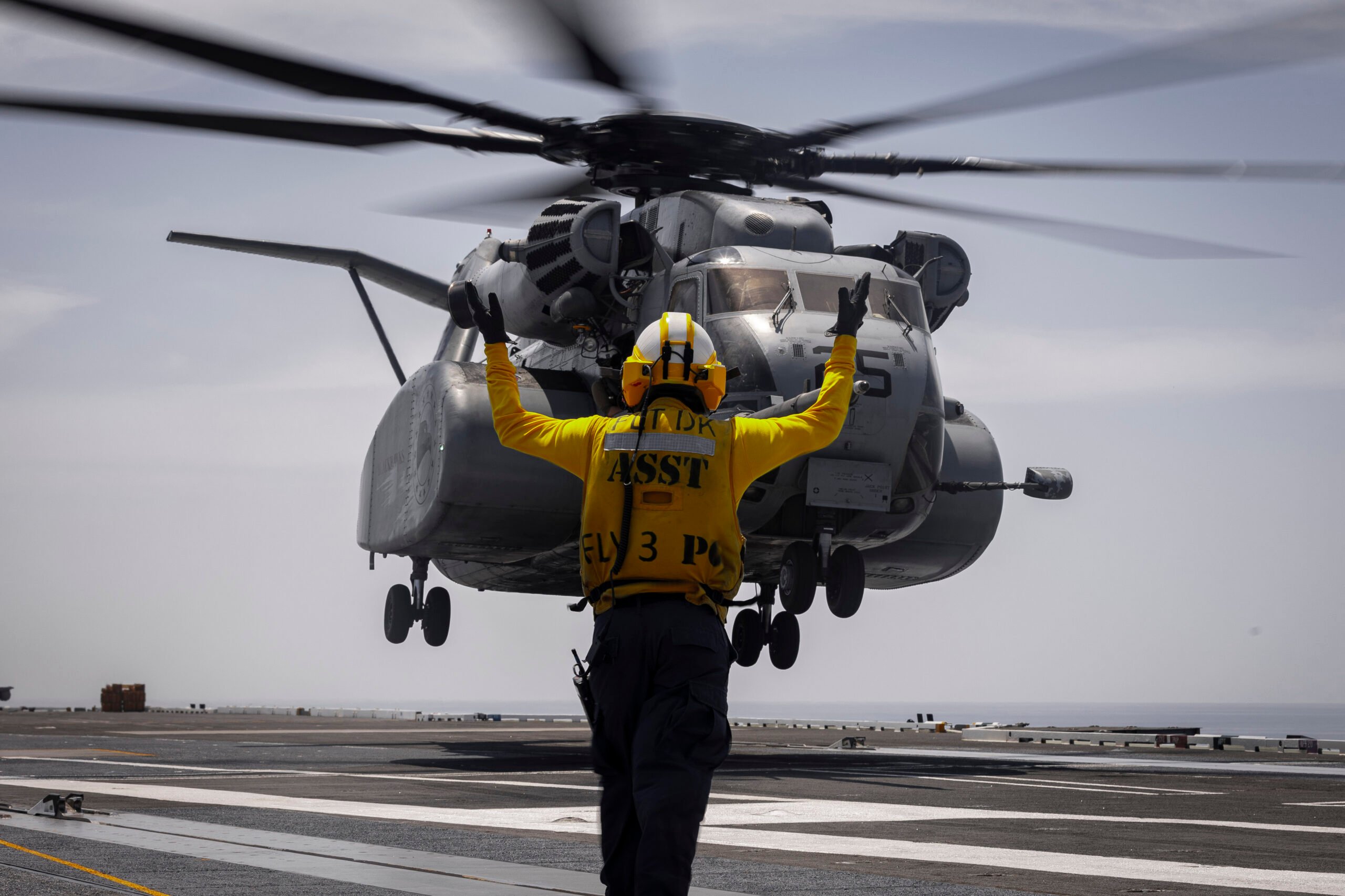
Aviation Boatswain’s Mate (Aircraft Handling) 2nd Class Trevon Smith, assigned to Air department aboard the world’s largest aircraft carrier, USS Gerald R. Ford (CVN 78), signals an MH-53E Sea Dragon, attached to Helicopter Mine Countermeasures Squadron 15, on the flight deck, June 25, 2025. U.S. Navy Photo

Carrier Air Wing 8

  • The “Tomcatters” of Strike Fighter Squadron (VFA) 31 – F/A-18E – from Naval Air Station Oceana, Va.
  • The “Ragin Bulls” of VFA 37 – F/A-18E – from Naval Air Station Oceana.
  • The “Golden Warriors” of VFA 87 – F/A-18E – from Naval Air Station Oceana.
  • The “Black Lions” of VFA 213 – F/A-18F – from Naval Air Station Oceana.
  • The “Gray Wolves” of Electronic Attack Squadron (VAQ) 142 – EA-18G – from Naval Air Station Whidbey Island, Wash.
  • The “Bear Aces” of Airborne Command and Control Squadron (VAW) 124 – E-2D – from Naval Air Station Norfolk, Va.
  • The “Rawhides” of Fleet Logistics Squadron (VRC) 40 Det. – C-2A – from Naval Air Station Norfolk.
  • The “Spartans” of Helicopter Maritime Strike Squadron (HSM) 70 – MH-60R – from Naval Air Station Jacksonville, Fla.
  • The “Tridents” of Helicopter Sea Combat Squadron (HSC) 9 – MH-60S – from Naval Air Station Norfolk.

Air Defense Commander

  • USS Winston S. Churchill (DDG-81), homeported at Naval Station Mayport, Fla.

Destroyer Squadron 2

Destroyer Squadron 2 is based in Naval Station Norfolk, Va., and embarked on Gerald R. Ford.

  • USS Mitscher (DDG-57), homeported at Naval Station Norfolk, Va.
  • USS Mahan (DDG-72), homeported at Naval Station Norfolk.
  • USS Bainbridge (DDG-96), homeported at Naval Station Norfolk.

In Stockholm, Sweden

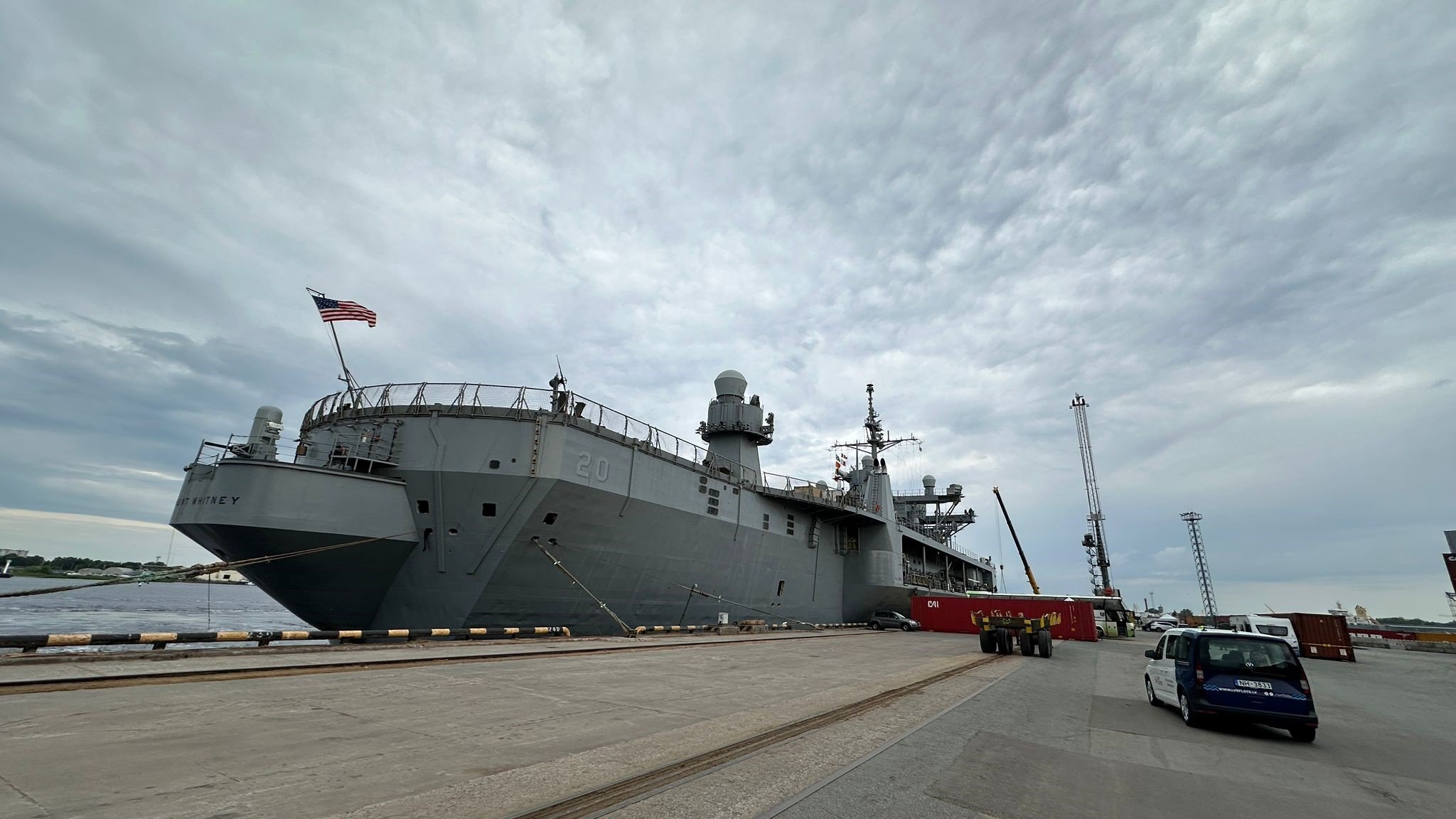
USS Mount Whitney (LCC-20) arrives in Riga, Latvia. U.S., June 27, 2025. Embassy photo

Command ship USS Mount Whitney (LCC-20) arrived in Riga, Latvia, on Friday, according to ship spotters. The ship is now in Stockholm, Sweden.

In the Mediterranean

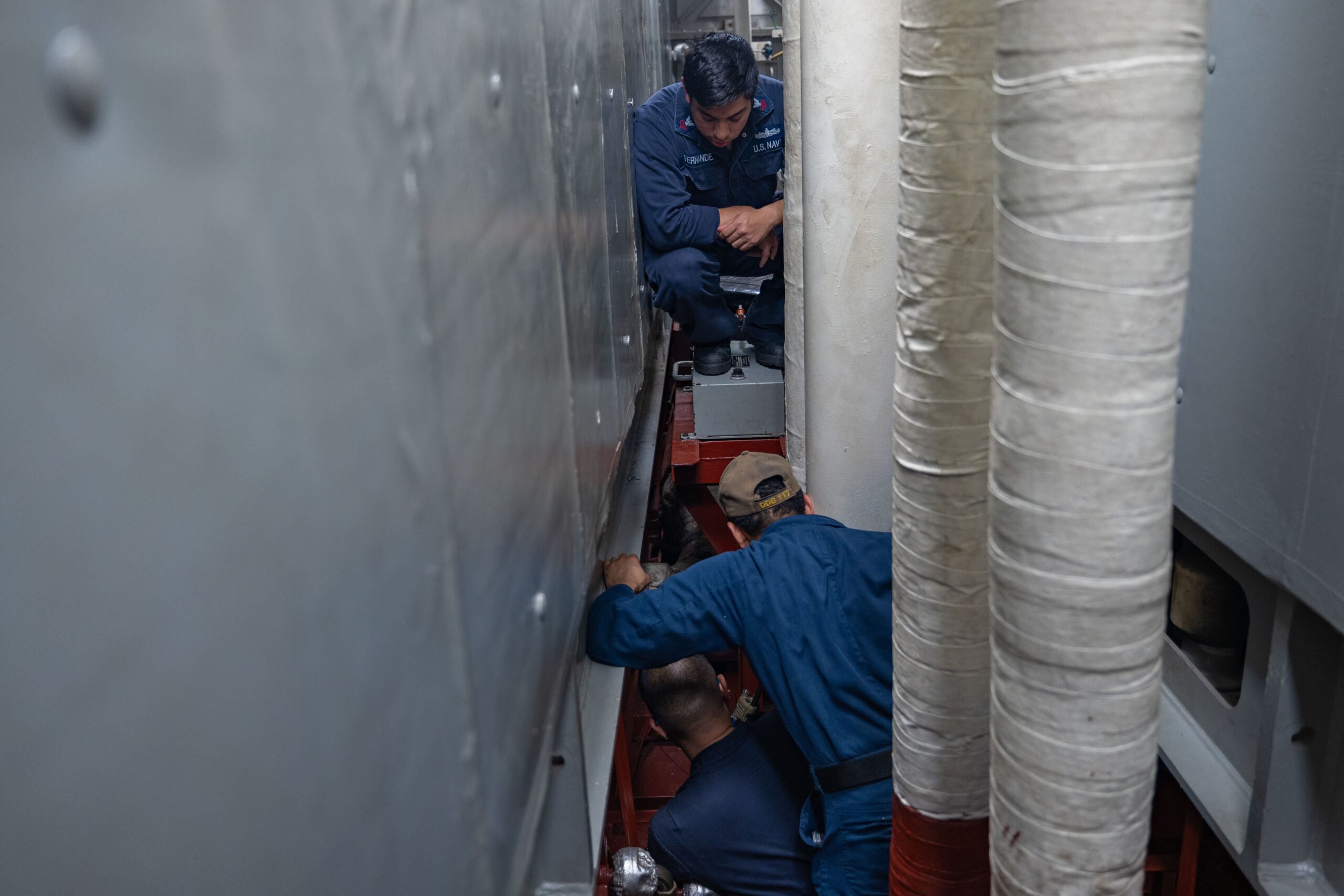
U.S. Navy Gas Turbine Systems Technician (Mechanical) 1st Class Isaiah Fernandez (top), assigned to the Arleigh Burke-class guided-missile destroyer USS Paul Ignatius (DDG-117), oversees Electrician’s Mate 3rd Class Anthony Cadle (middle) and Gas Turbine Systems Technician (Mechanical) Fireman Grifft Custodio (bottom), as they perform maintenance checks in one of Paul Ignatius’ engineering rooms, June 24, 2025. U.S. Navy Photo

There are four U.S. Navy guided-missile destroyers operating in the Eastern Mediterranean as independent deployers.

  • USS Thomas Hudner (DDG-116), homeported at Naval Station Mayport.
  • USS Arleigh Burke (DDG-51), homeported in Naval Station Rota, Spain, is in port in Souda Bay, Greece.
  • USS Paul Ignatius (DDG-117), homeported in Naval Station Rota.
  • USS Oscar Austin (DDG-79), homeported in Naval Station Rota.

USS The Sullivans (DDG-68), homeported at Naval Station Mayport, Fla., is now back in port in Rota, Spain.

In the Red Sea

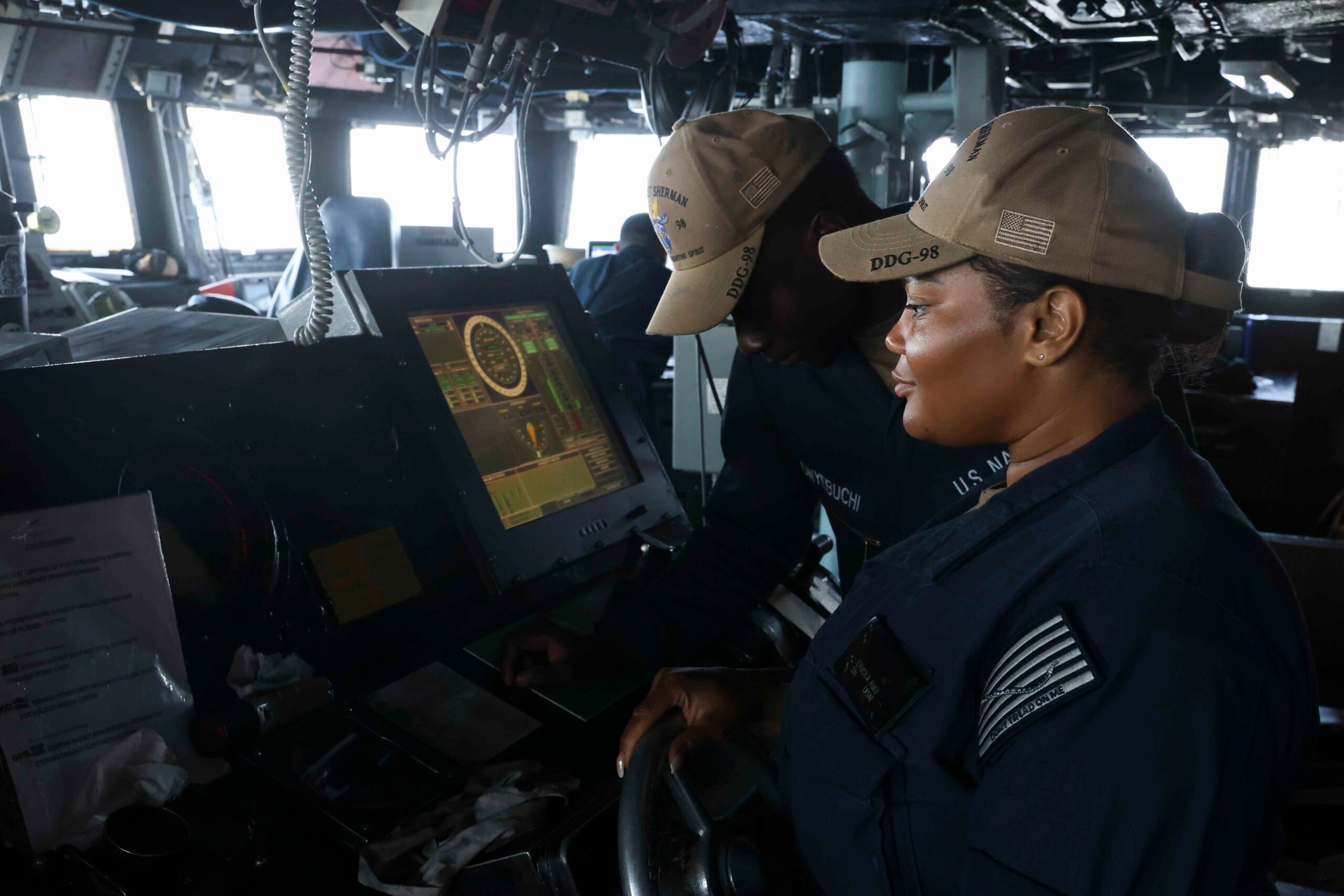
U.S. Sailors man the helm in the pilot house of the Arleigh Burke-class guided-missile destroyer USS Forrest Sherman (DDG-98) in the U.S. Central Command area of responsibility on June 25, 2025. U.S. Navy Photo

There are two U.S. Navy two guided-missile destroyers operating in the Red Sea as independent deployers.

  • USS Forrest Sherman (DDG-98), homeported at Naval Station Norfolk, Va.
  • USS Truxtun (DDG-103), homeported at Naval Station Norfolk.

In the Persian Gulf

Littoral Combat Ship USS Canberra (LCS-30), with the first operational mine countermeasure mission package, is operating in U.S. 5th Fleet on a rotational deployment.

USS Santa Barbara (LCS-32) and USS Tulsa (LCS-16) are expected to join Canberra later this year with additional mine countermeasure packages embarked. Eventually, the LCS will replace the Avenger-class MCM ships based in Bahrain.

In the Arabian Sea

Aircraft carrier USS Carl Vinson (CVN-70), with Carrier Air Wing 2 embarked, is operating in U.S. Central Command.

Carrier Strike Group 1

Carrier

USS Carl Vinson (CVN-70), homeported in San Diego, Calif.

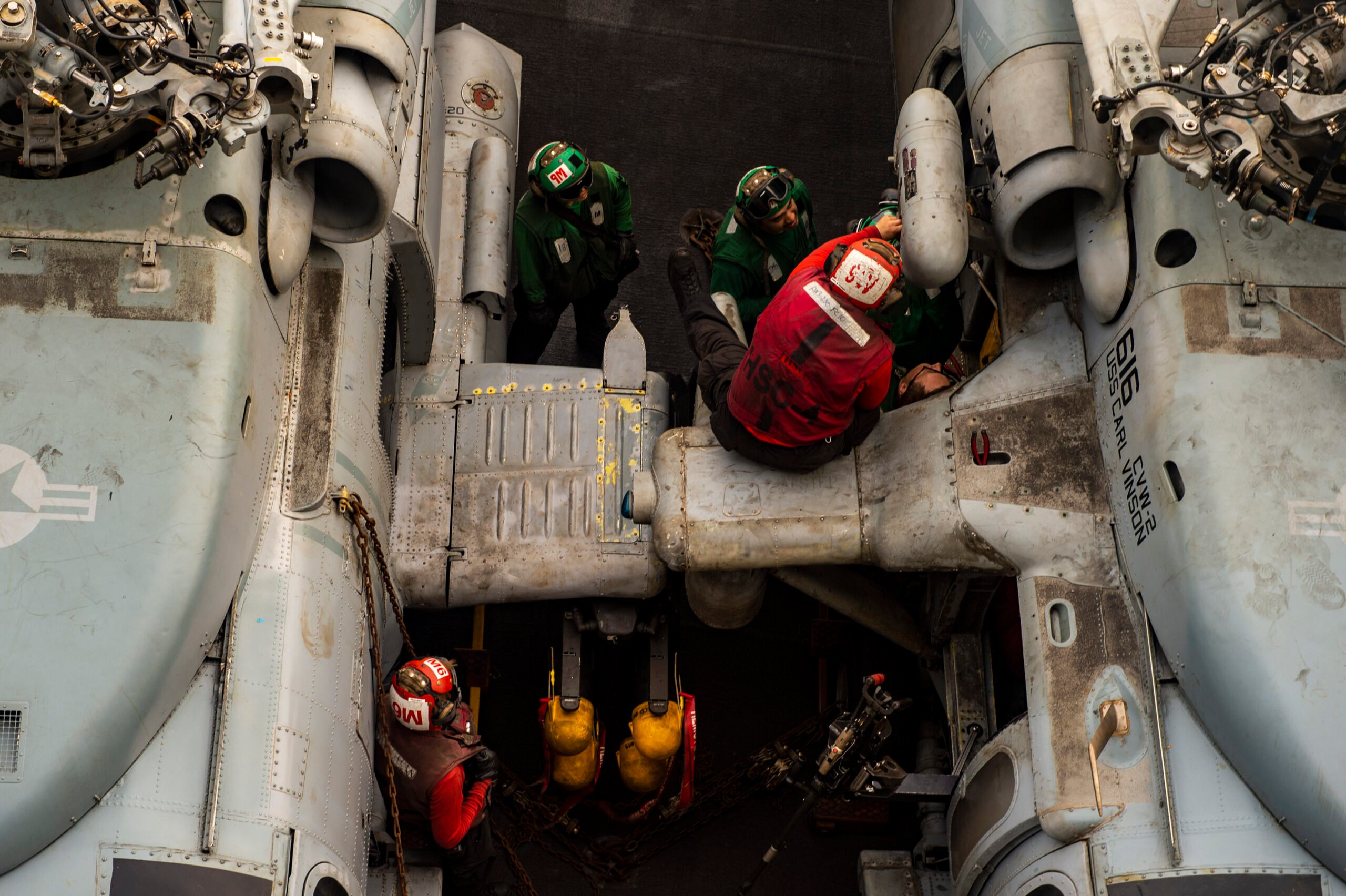
U.S. Sailors conduct preventative maintenance on an MH-60S Sea Hawk, attached to Helicopter Sea Combat Squadron (HSC) 4, on the flight deck of the Nimitz-class aircraft carrier USS Carl Vinson (CVN 70) in the U.S. Central Command area of responsibility on June 23, 2025. U.S. Navy Photo

Carrier Air Wing 2

  • The “Bounty Hunters” of Strike Fighter Squadron (VFA) 2 – F/A-18F – from Naval Air Station Lemoore, Calif.
  • The “Stingers” of VFA-113 – F/A-18E – from Naval Air Station Lemoore.
  • The “World Famous Golden Dragons” of VFA-192 – F/A-18E – from Naval Air Station Lemoore.
  • The “Warhawks” of VFA-97 – F-35C – from Naval Air Station Lemoore.
  • The “Gauntlets” of Electronic Attack Squadron (VAQ) 136 – EA-18G – from Naval Air Station Whidbey Island, Wash.
  • The “Black Eagles” of Airborne Command and Control Squadron (VAW) 113 – E-2D – from Naval Air Station Point Mugu, Calif.
  • The “Titans” of Fleet Logistics Multi-Mission Squadron (VRM) 30 – CMV-22Bs – from Naval Air Station North Island, Calif.
  • The “Black Knights” of Helicopter Sea Squadron (HSC) 4 – MH-60S – from Naval Air Station North Island.
  • The “Blue Hawks” of Helicopter Maritime Strike Squadron (HSM) 78 – MH-60R – from Naval Air Station North Island.

Cruiser

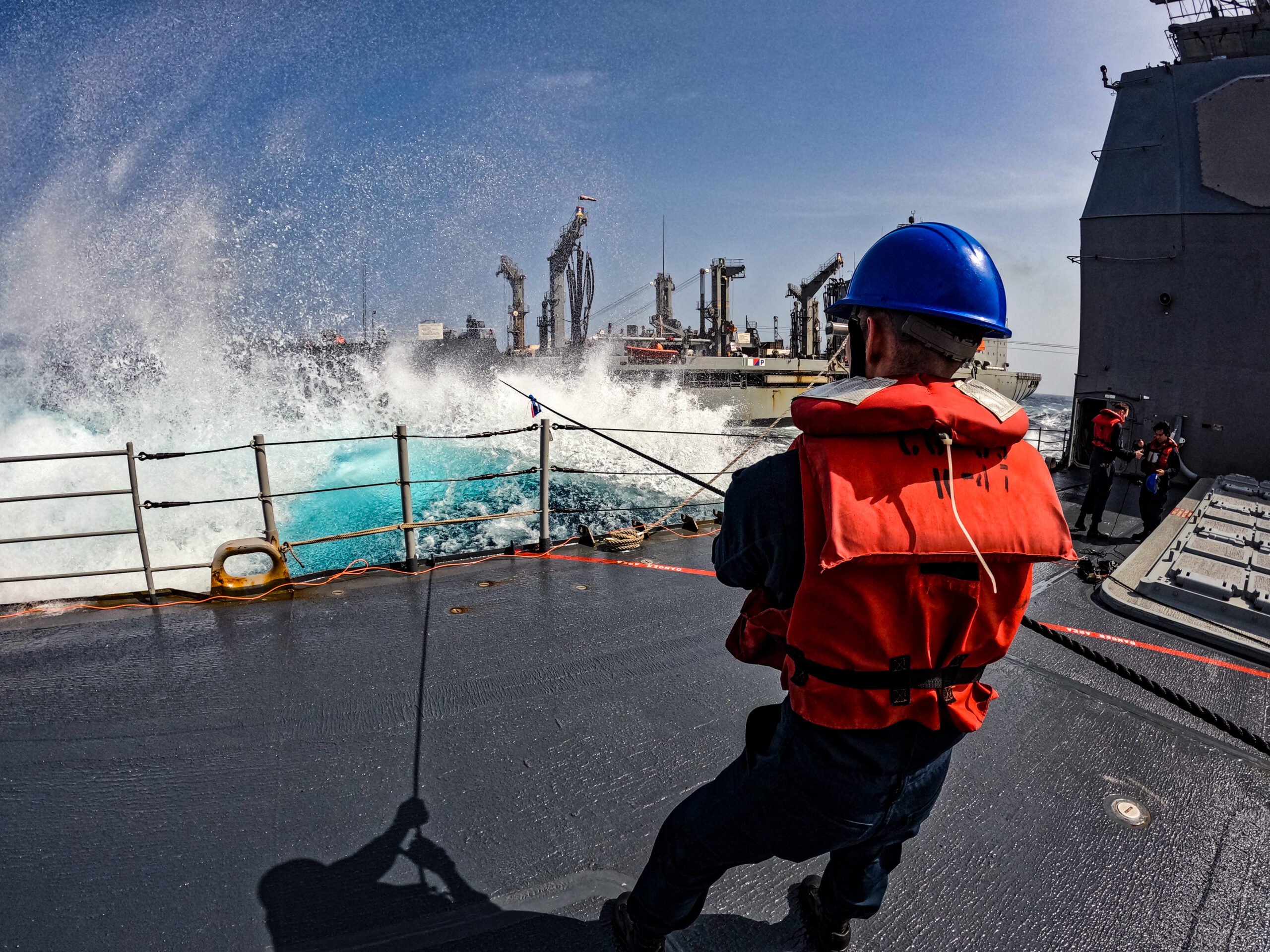
A U.S. Sailor mans a phone and distance line from the forecastle of the Ticonderoga-class guided-missile cruiser USS Princeton (CG-59) during a replenishment-at-sea with the Henry J. Kaiser-class fleet replenishment oiler USNS Guadalupe (T-AO-200) in the U.S. Central Command area of responsibility on June 16, 2025. U.S. Navy Photo
  • USS Princeton (CG-59), homeported at Naval Station San Diego, Calif.

Destroyer Squadron

Destroyer Squadron 1 is based in San Diego, Calif., and is embarked on Carl Vinson.

  • USS Sterett (DDG-104), homeported at Naval Station San Diego, Calif.
  • USS William P. Lawrence (DDG-110), homeported at Naval Station Pearl Harbor, Hawaii.

Aircraft carrier USS Nimitz (CVN-68), with Carrier Air Wing 17 embarked, is also operating in the U.S. Central Command area of responsibility.

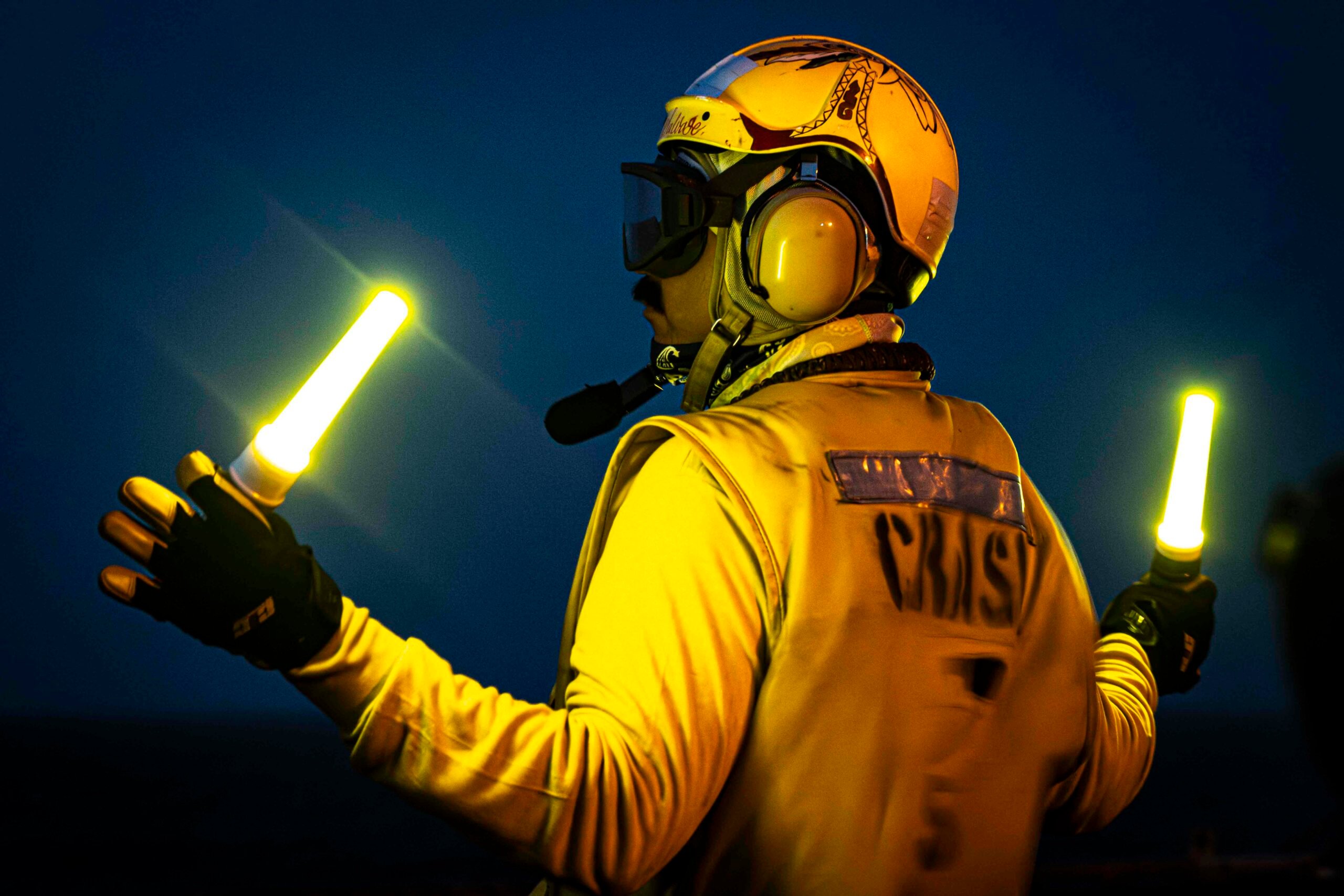
A U.S. Sailor directs aircraft during flight operations aboard the Nimitz-class aircraft carrier USS Nimitz (CVN-68) in the U.S. Central Command area of responsibility on June 25, 2025. U.S. Navy Photo

Carrier Strike Group 11

Carrier

USS Nimitz (CVN-68), homeported at Naval Station Bremerton, Wash.

An E/A-18G Growler, attached to Electronic Attack Squadron (VAQ) 139, launches from the flight deck of the Nimitz-class aircraft carrier USS Nimitz (CVN-68) during flight operations in the U.S. Central Command area of responsibility on June 27,2025. U.S. Navy Photo

Carrier Air Wing 17

  • The “Fighting Redcocks” of Strike Fighter Squadron (VFA) 22 – F/A-18F – from Naval Air Station Lemoore, Calif.
  • The “Mighty Shrikes” of VFA 94 – F/A-18F – from Naval Air Station Lemoore.
  • The “Kestrels” of VFA 137 – F/A-18E – from Naval Air Station Lemoore.
  • The “Blue Diamonds” of VFA 146 – F/A-18E – from Naval Air Station Lemoore.
  • The “Cougars” of Electronic Attack Squadron (VAQ) 139 – EA-18G – from Naval Air Station Whidbey Island, Wash.
  • The “Bluetails” of Airborne Command and Control Squadron (VAW) 121 – E-2D – from Naval Air Station Norfolk, Va.
  • The “Rawhides” of Fleet Logistics Squadron (VRC) 40 Det. – C-2A – from Naval Air Station Norfolk.
  • The “BattleCats” of Helicopter Maritime Strike Squadron (HSM) 73 – MH-60R – from Naval Air Station North Island, Calif.
  • The “Indians” of Helicopter Sea Combat Squadron (HSC) 6 – MH-60S – from Naval Air Station North Island.

Destroyer Squadron 9

Destroyer Squadron 9 is based in Naval Station Everett, Wash., and embarked on Nimitz. These are the destroyers that embarked on the initial deployment.

  • USS Gridley (DDG-101), homeported at Naval Station Everett, Wash.
  • USS Wayne E. Meyer (DDG-108), homeported at Naval Station Pearl Harbor, Hawaii.
  • USS Lenah Sutcliffe Higbee (DDG-123), homeported at Naval Station San Diego.

In the Western Atlantic

Sailors move a vertical replenishment net aboard the Nimitz-class aircraft carrier USS George H.W. Bush (CVN-77) on June 28,2025. U.S. Navy Photo

USS George H.W. Bush (CVN-77) is underway conducting routine operations in the Western Atlantic.

USS Iwo Jima (LHD-7) is underway conducting routine operations in the Western Atlantic.

In addition to these major formations, not shown are others serving in submarines, individual surface ships, aircraft squadrons, SEALs, Special Purpose Marine Air-Ground Task Forces, Seabees, EOD Mobile Units and more throughout the globe.

Arkansas (SSN 800) Launched at Newport News

By SeaWaves Magazine – Jul 2, 2025

HII photo

HII (NYSE: HII) announced today that Virginia-class submarine Arkansas (SSN 800) was recently launched into the James River at the company’s Newport News Shipbuilding (NNS) division.

Shipbuilders transferred the submarine from a construction facility to the floating dry dock, where it was launched and moved by tugboats to a submarine pier at the shipyard for final outfitting, testing and crew certification.

“We are committed to increasing submarine construction cadence and throughput for the U.S. Navy,” said Bryan Caccavale, NNS vice president of Navy programs. “Nuclear-powered submarines are critical to our national security and we’re proud to see Arkansas in the water.”

The ship’s sponsors are the six women of the historic group known as the Little Rock Nine, the first African American students to attend all-white Central High School in Little Rock, Arkansas, during desegregation.

Arkansas is the 27th Virginia-class submarine and will be the 13th delivered by NNS. The advanced capabilities of Virginia-class submarines increase firepower, maneuverability and stealth.

NTSB Report on ARM Cuauhtémoc Allision With Brooklyn Bridge

By SeaWaves Magazine – Jul 2, 2025

ARM Cuauhtémoc BE 01 after the contact. NTSB image.

This information is preliminary and subject to change.​​

Released: 30 June 2025

​​​On May 17, 2025, at 2024 eastern daylight time, the ARM Cuauhtémoc BE 01, a Mexican Navy tall ship with 277 crewmembers and cadets aboard, struck the Brooklyn Bridge after departing from Pier 17 in Manhattan on the East River in New York, New York, damaging all three of the ship’s masts. Two fatalities and nineteen injuries, ranging from minor to serious, occurred aboard the vessel; all injured personnel were evacuated and transported to local hospitals. The estimated damage is expected to exceed $500,000.

​The following morning, the US Coast Guard declared the accident a major marine casualty. The National Transportation Safety Board (NTSB) was named as the lead federal agency for the safety investigation and launched a full team to New York City, arriving on scene early that afternoon. The Coast Guard, McAllister Towing, New Jersey Sandy Hook Pilots Association, and the Harbor Pilots of New York/New Jersey were named as parties to the NTSB investigation. The NTSB coordinated with Mexican authorities to interview crewmembers and examine the vessel.

​1 Accident Events

1.1 Background

The Mexican Navy owned and operated the ARM Cuauhtémoc BE 01 (Cuauhtémoc) and used it as a training ship for naval cadets. The three-masted steel vessel was built in 1982 and was powered by a 1,300-hp (967-kW) diesel engine connected to a right-handed (clockwise) controllable pitch propeller. The vessel’s air draft (the distance from the vessel’s waterline to the vessel’s highest point) was reported at 158 feet (48.2 meters).

The vessel had departed Cozumel, Mexico, on May 3, 2025, and arrived in​ Manhattan, New York City, on May 13, where it docked port side to Pier 17. The vessel was conducting a 254-day training cruise with 22 port calls scheduled in 15 countries. After a 4-day port call in New York City, the crew of the Cuauhtémoc planned to transit from Pier 17 to an anchorage in Brooklyn for fuel and then transit to Reykjavik, Iceland. ​

The Brooklyn Bridge, a suspension bridge built in 1883, spans the East River and provides vehicle and pedestrian traffic a route between Manhattan’s east side and Brooklyn. According to the United States Coast Pilot, the bridge’s vertical clearance at mean high water was 127 feet (38.7 meters).

1.2 Accident Events

​On the planned departure day, May 17, a sea pilot boarded the vessel about 1902, and a local docking (harbor) pilot arrived about 1945. Both pilots conducted a master/pilot exchange with the ship’s captain. The pilots stated that the ship’s captain reported the propulsion and steering systems were in good order, and there were no deficiencies. The docking pilot stated that the time of the vessel’s departure was scheduled to coincide with slack tide (the time between ebb and flood currents at which the current was the weakest), which was to occur about 2011 that evening. Weather conditions were reported as westerly winds 10-15 knots, water temperature about 60°F, and air temperature about 77°F. Visibility was clear.

The National Oceanic and Atmospheric Administration Brooklyn Bridge (site NYH1920) station predicted slack water, with a depth of 8 feet, at 2012, and 0.13 knots of flood current at 2018.

At departure, the ship’s captain and both pilots were on the open conning deck directly above the vessel’s enclosed navigation bridge. The docking pilot used the sea pilot’s portable pilot unit (a portable navigation support system containing real-time navigation data and other features for guiding vessels) throughout the transit. For the East River transit, several Cuauhtémoc personnel were positioned in formation on each of the horizontal yards (spars crossing the masts from which the sails are set) on the foremast and main mast, as well as the horizontal boom below the mizzen (aft) mast, and the bowsprit. All the sails were furled in their stowed position.

The vessel’s six mooring lines were let go about 2016. About 2019, the 2,800-hp twin screw tugboat Charles D. McAllister assisted the Cuauhtémoc off the pier. The docking pilot gave astern commands to the captain on the conning deck, which were acknowledged by the captain, translated to Spanish, and relayed to another crewmember on the deck below, outside of the navigation bridge. This crewmember then relayed the orders to crewmembers within the navigation bridge, where commands were inputted.

Between 2020 and 2022, the Cuauhtémoc moved astern and away from Pier 17 at 2.5 knots. Once clear of the slip, the docking pilot gave a stop command, gave a dead-slow-ahead order, and directed the Charles D. McAllister tug to reposition on the starboard bow of the Cuauhtémoc.[1] As the crew of the tug took their line in, the docking pilot ordered additional commands in the ahead direction.

The Charles D. McAllister began pushing on the starboard bow of the Cuauhtémoc. The stern of the Cuauhtémoc began to swing toward the Brooklyn Bridge. At the order of the docking pilot, the Charles D. McAllister stopped pushing against the ship, backed away, and maneuvered toward the stern of the Cuauhtémoc along its starboard side. Between 2023 and 2024, the vessel’s astern speed increased from 3.3 knots to 5.1 knots, and the harbor pilot called for nearby tugboat assistance.

Starting at 2024:42, the upper sections of all three masts of the Cuauhtémoc contacted the underside of the Brooklyn Bridge, one by one. The mizzen mast contacted the bridge first, followed by the main mast, and then the foremast. The mizzen mast and main mast also struck the bridge’s no. 3 traveler (a moveable maintenance platform hung from traveler rails beneath the bridge deck that was used for workers to access areas of the bridge), which was positioned at its docking location near the Brooklyn Tower. The vessel was traveling about 5.9 knots astern when it contacted the bridge.

The Cuauhtémoc continued in the astern direction under the Brooklyn Bridge, and its stern contacted a seawall on the Brooklyn side of the East River. The Cuauhtémoc continued along, with its port side against the sea wall, and the vessel’s speed decreased. About 2027, the Cuauhtémoc came to rest against the seawall on the east side of the Brooklyn Bridge.

​Automatic identification system data shows that, about 2028, the vessel moved away from the seawall into the river between the Brooklyn Bridge and the Manhattan Bridge. The crew then deployed both anchors.

The Charles D. McAllister remained on scene. About 2030, New York City Police Department and New York City Fire Department boats arrived and transported injured crewmembers to local hospitals. Later that evening, the vessel was towed across the East River to Pier 36 in Manhattan.

1.3 Postaccident Events & Activities

Postcasualty examination of the vessel’s exterior above the waterline the following afternoon identified scraped paint along the port quarter. The rudder post was deformed, and the rudder was positioned perpendicular to the vessel toward the port side.

Inspectors from the New York City Department of Transportation (NYCDOT) assessed the damage to the Brooklyn Bridge. A preliminary assessment stated there was no significant structural damage to the bridge. The NYCDOT assessment identified impact points to the traveler rail and minor scrapes to the paint on a main bridge span. From the top of the deck, no distortion of the traveler rails was noted. Inspectors observed a loss of paint and potential damage to the galvanized coating on the wires to a suspender cable near the impact location but no fraying or broken wires. The assessment also noted damage to the docking platform of the no. 3 traveler, traveler rails, and components adjacent to the drive machinery. The NYCDOT assessment also noted that the traveler was still hanging securely from the traveler rails.

NTSB investigators have interviewed crewmembers on watch aboard the Cuauhtémoc at the time of the accident, the two pilots, and the crew (captain and two deckhands) of the Charles D. McAllister.

Both pilots and the captain from the tugboat were tested for alcohol and other drugs; all results were negative.

The Cuauhtémoc was towed to a local shipyard for repairs, examination, and documentation; NTSB investigators have been on board the vessel for a preliminary examination. The NTSB investigation of all aspects of the accident is ongoing; we are examining the propulsion system, operating control system, relevant crew experience and training, and operating policies and procedures.


​​Vessel propulsion/engine commands—such as stop, dead slow ahead, slow ahead, half ahead, full ahead, dead slow astern, slow astern, half astern, and full astern—are often given in fixed increments that correspond to a vessel’s engines and propulsion system thrust.

USS Frank Cable Departs from Hawaii

BySeaWaves Magazine Jun 30, 2025

Forward-deployed U.S. Navy submarine tender USS Frank Cable (AS 40) departed Pearl Harbor, Hawaii following a scheduled port visit June 27, 2025. Frank Cable is currently on patrol supporting U.S. 7th Fleet, providing critical maintenance and logistics support to sustain undersea forces across the Indo-Pacific region.

“Pearl Harbor is a living reminder of American resilience and our ongoing commitment to strength and stability in the region,” said Capt. Mike Thompson, commanding officer of USS Frank Cable. “The opportunity to embark on our deployment from the headquarters of U.S. Indo-Pacific Command was particularly special, as this prepared us—in both mission set and mindset—to deliver critical support to deployed submarines in furtherance of a free and open Indo-Pacific.”

While in port, Frank Cable’s repair department completed installation of a hybrid computer numerical control mill and an additive manufacturing (AM) unit. “These new additions utilize computer programming to enable precise fabrication of parts and allow the crew to manufacture components directly from digital designs,” said Cmdr. Jordan Klein, repair officer of USS Frank Cable. “As one of the first U.S. Navy vessels to have AM capabilities, Frank Cable is at the forefront of expeditionary repair with an expanded suite of tools ready to support deployed submarines.”

Frank Cable’s weapons department completed the offload of MK-48 heavyweight torpedoes, originally loaded in Guam for transport. “Weapons transfers require meticulous coordination and attention to detail to ensure the evolution is conducted safely and effectively,” said Gunner’s Mate 1st Class Conner Lawson. “It was a privilege to be part of this critical operation and to see it executed successfully from initial loading in Guam to final offload in Hawaii.”

During the port visit, several groups of Frank Cable Sailors volunteered in support of the local community, including assisting with cleaning and maintenance at Pearl Harbor National Memorial Visitor Center—a particularly special opportunity for many in the crew.

The national memorial includes the USS Arizona Memorial, located within Pearl Harbor, which honors the 1,177 crew members who lost their lives during the attacks on December 7, 1941. “I’m grateful for the opportunity to pay my respects, and supporting the preservation of naval history felt like a fitting way to conclude our time in Hawaii,” said Religious Program Specialist 3rd Class Wyatt Porter.

Frank Cable, forward-deployed to the island of Guam, provides expeditionary intermediate-level maintenance, services, and logistics support to deployed submarines and surface vessels in the Indo-Pacific region.

JCs Royal New Zealand Navy Ships and New Zealand Defence, Also other World Defence Updates

Ships and Defence News Past and Present

Skip to content ↓