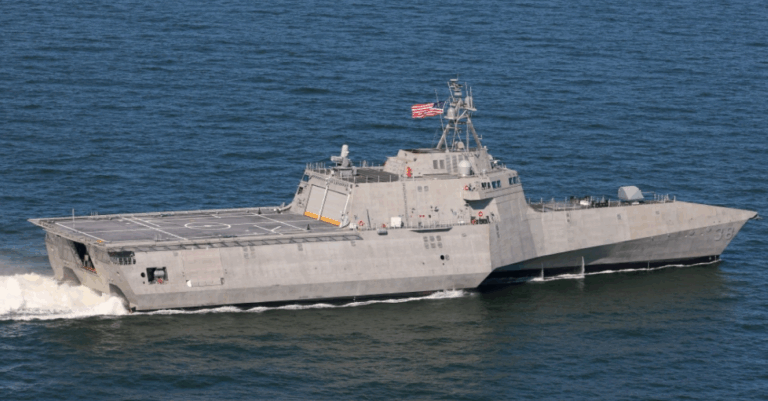
Austal USA has completed acceptance trials on the company’s 19th Independence-variant littoral combat ship (LCS), the last ship in the class.
Credit: Austal USA
As disclosed, the future USS Pierre (LCS 38) returned to port late on June 11 after conducting trials. Acceptance trials involve comprehensive testing conducted on the ship’s major systems and equipment in order to demonstrate their successful operation and mission readiness.
The US Navy’s Board of Inspection and Survey (INSURV) participated throughout the trials to validate the quality of construction and compliance with navy requirements.
Successfully completing sea trials requires test and activation/trials, program management, engineering, operations, site services, and supply chain management.
“The completion of LCS 38 sea trials marks the achievement of an important milestone at Austal USA, the last LCS to go out to sea under our control,” said Harley Combs, Austal USA Vice President of Surface Ship Programs.
USS Pierre will soon transition to its home port of San Diego. With the delivery of this LCS, Austal USA will have delivered 19 LCS to the navy, marking a significant milestone.
In addition to the LCS program, Austal USA is also constructing seven more US Navy and US Coast Guard ships as well as modules for both the Virginia- and Columbia-class submarine programs and aircraft elevators for the Ford-class aircraft carrier fleet.
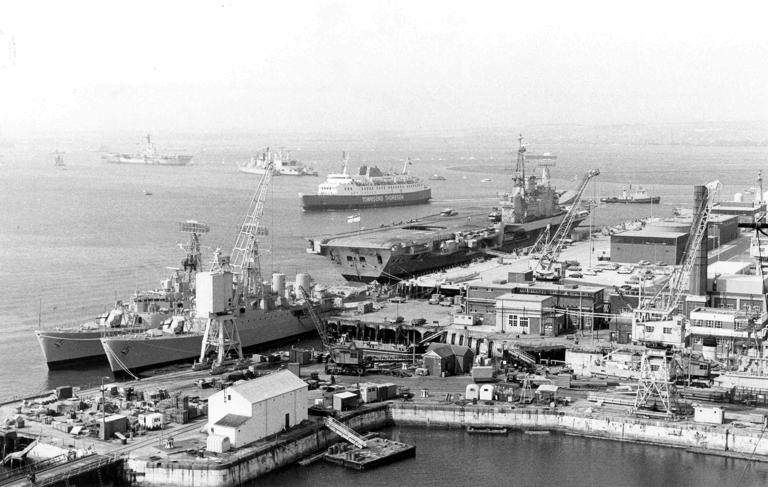
The city of Portsmouth was a central hub for Britain’s response to the Falklands conflict in 1982.
HMS Fearless served as one of two principal amphibious assault ships, deploying her four Landing Craft Vehicle Personnel and Helicopter deck to land Royal Marine Commandos at San Carlos Water. As the amphibious command centre, she housed Commodore Clapp’s headquarters and coordinated beach landings, logistic convoys, and special forces insertions. Despite constant Argentine air attacks, her Seacat missile system successfully defended the fleet. The ship’s critical troop deployment and command functions significantly enabled the British land campaign.
The city prepared key aircraft carriers that formed the Task Force sent to retake the islands.
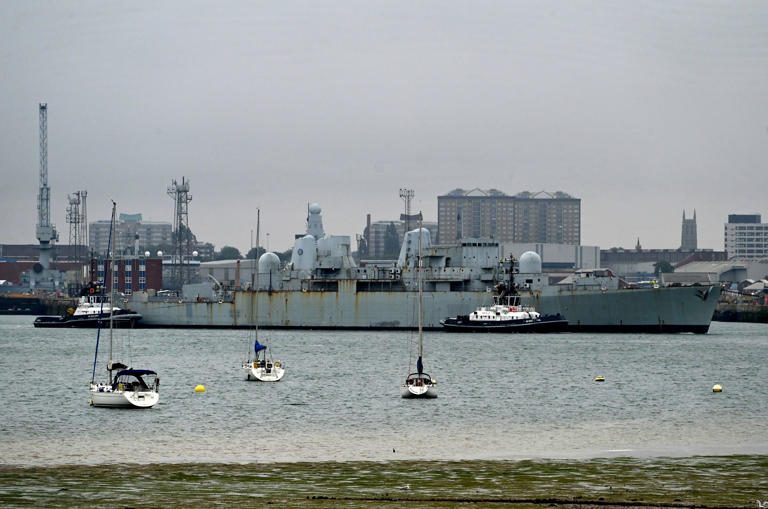
HMS Bristol, the solitary Type 82 destroyer, was recommissioned from Portsmouth and sailed late in April 1982. Equipped with Sea Dart, Ikara, and advanced communications, she served as flagship of the rearguard Task Group. Though not in frontline combat, Bristol coordinated resupply, logistics, and fleet movements. Following the sinking of HMS Coventry, she assumed flagship duties, maintaining cohesion across support vessels. Bristol’s command-and-control capability was indispensable for sustaining naval operations through the campaign’s conclusion.
Amphibious assault ships carrying Royal Marines and landing craft also departed Portsmouth. Destroyers and frigates deployed from the city provided escort, air defence and naval gunfire support.
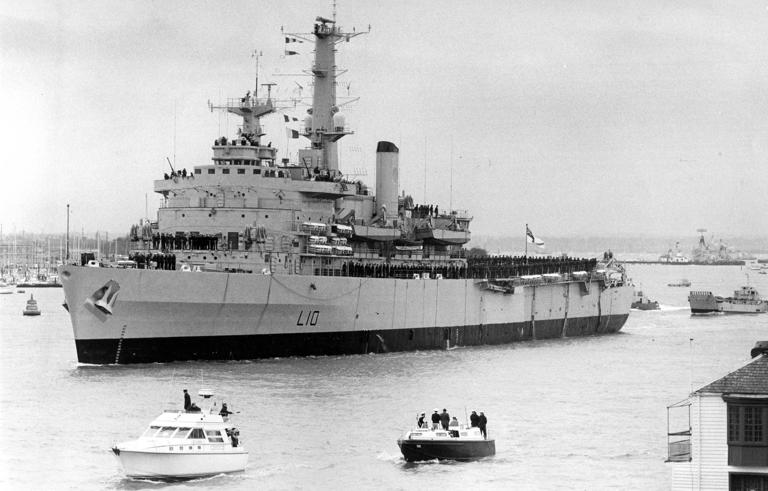
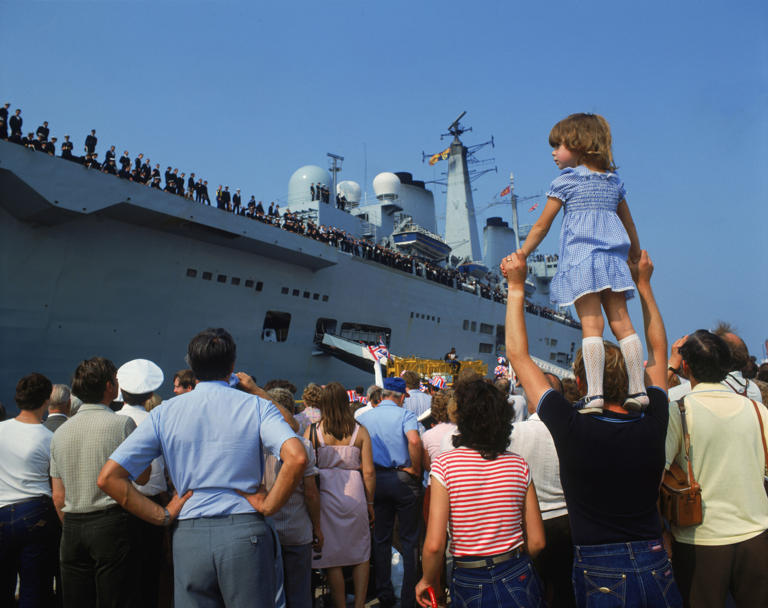
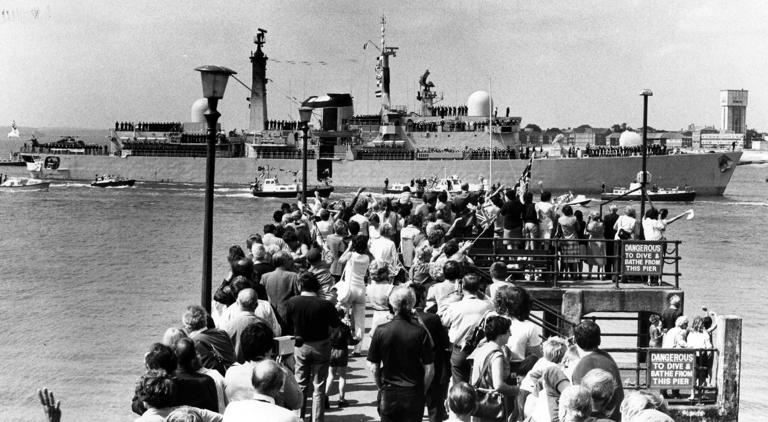
HMS Invincible, a light aircraft carrier, played a key role in the Falklands War as part of the Royal Navy’s carrier strike group. Embarked with Sea Harriers from 800 and 801 Naval Air Squadrons, she provided continuous air defence, strike missions, and reconnaissance. Operating alongside HMS Hermes, Invincible helped maintain air superiority over the islands. Her Sea Harriers downed several Argentine aircraft. Though under threat from submarines and missiles, she remained undamaged and vital to British control of the air throughout the conflict. Pictured: HMS Invincible returns to Portsmouth, carrying British troops home from the Falklands War,
NOW READ: Glorious pictures of Royal Navy ship HMS Bristol over the years, as she leaves Portsmouth for scrapyard
HMS Hermes, recommissioned from Portsmouth dockyard, became the Task Force flagship within three days of the invasion. Hosting Sea Harrier and Sea King squadrons, she launched air strikes, air defence patrols, and reconnaissance missions deep into Argentine territory. Positioned outside threat range, her Harriers maintained sustained air superiority. As the main carrier, Hermes enabled fleet protection, ground support, and maritime strikes — central to overall success in recapturing the islands.
Sign up for free Portsmouth News newsletters
HMS Exeter, a Portsmouth‑commissioned Type 42 destroyer, deployed with improved Type 1022 radar. On May 30, she shot down two low-level A‑4 Skyhawks and is credited with potentially intercepting an Exocet missile. Exeter’s enhanced detection and Sea Dart capability provided robust air defence, compensating for the losses of earlier destroyers. Her performance underscored the value of advanced radar systems in countering sea-skimming missile and aircraft threats.
Several Portsmouth-based ships were lost during the campaign. Memorials to their crews remain in the city.
HMS Andromeda, a Leander-class frigate homeported at Portsmouth, sailed with the “Bristol Group” and entered the Total Exclusion Zone on May 25. Acting as close escort for carriers, she provided anti-air and anti-submarine defence. Andromeda remained undamaged, and after the conflict supported operations around South Georgia before returning home. Her protective presence helped ensure safe carrier operations throughout the campaign.
Portsmouth’s dockyard played a wider role fitting out vessels, loading stores and converting civilian ships for military use.
HMS Minerva, a Leander-class frigate from Portsmouth, joined the Task Force later and arrived May 26. Assigned escort duties, she performed air-warning and radar surveillance. On June 1, her radar spotted an Argentinian C‑130, directing Sea Harriers which ultimately downed the aircraft. Minerva completed her deployment unscathed and returned to Devonport, contributing to ongoing South Atlantic presence post-conflict.
The city’s contribution to Operation Corporate, at sea and ashore, was central to the UK’s ability to mount and sustain the campaign in the South Atlantic.
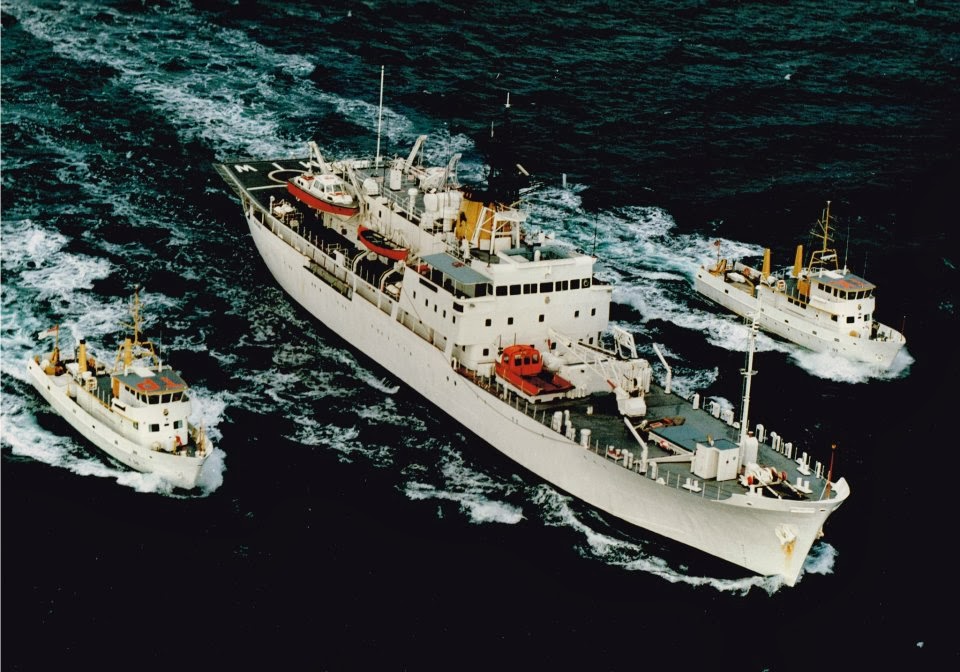
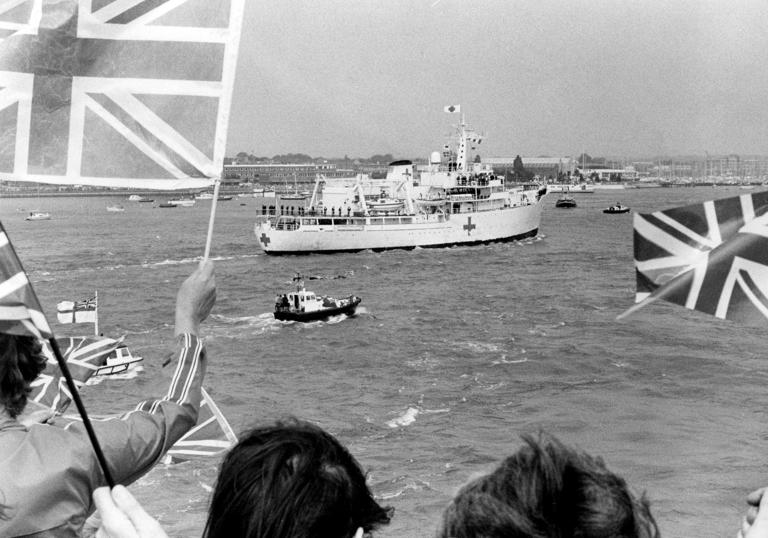
HMS Herald, a Portsmouth-based survey vessel, was deployed to the South Atlantic during the Falklands War. Though not a combatant, she undertook hydrographic surveys, charting waters for amphibious operations and safe navigation. Herald’s topographical mapping of seabed, channels, and landing zones was vital for amphibious landings and logistical routing, contributing to overall operational planning and mission safety.
Here are a selection of ships that served our country proud during the conflict with the Argentinian junta, from a range of different classes and capabilities.
HMS Glamorgan, a County-class destroyer homeported in Portsmouth, provided shore bombardment and air defence. Sailing south early, she delivered naval gunfire against Argentine targets. On June 12, she was hit by an Exocet missile fired from land, severely injuring crew and damaging her stern. The attack led to improved missile counter‑measures and marked Glamorgan as one of the few RN ships hit but surviving direct Exocet fire.
HMS Coventry, a Portsmouth‑based Type 42 destroyer, was deployed early alongside Sheffield and Glasgow to screen carriers. Using Sea Dart, she achieved three aerial kills. On May 25, she was overwhelmed by simultaneous air strikes and sank. Her loss, amid intense air assaults, highlighted the crucial yet vulnerable role of destroyers in fleet air defence.
John Batten sailed on the Royal Yacht Britannia, rubbing shoulders with royalty. Photo/ Tom Eley
“What is that?” That was the question former leading mechanical engineer John Batten had in 1956 when asked to serve aboard the Royal Yacht Britannia.
Built in Scotland, Britannia was launched in 1953 for £2.1 million, about $4m in NZ dollars at the time.
At 412 feet long, she served as the British royal family’s floating residence for more than 44 years before being decommissioned in 1997.
During her service, she visited more than 600 ports in 135 countries.
Batten, 89, said he believes luck landed him on board with Princess Margaret, Prince Philip, Duke of Edinburgh, and Queen Elizabeth II.
“I’ve been lucky my whole life,” said the Oropi resident.
He grew up in the small coal-mining community of Glen Massey, near Ngāruawāhia, and followed in the footsteps of his father and sister by joining the Royal New Zealand Navy.
He served aboard the Dido-class cruiser HMNZS Bellona, later travelling to Britain to help bring back another cruiser, HMNZS Royalist. But his course would soon change – leading him into the company of royalty.
Assigned to the refrigeration room, Batten said he “saw a pair of legs coming down the ladder”.
“It was Chief Pio Smith, and he said: ‘Would you like to go back to England?
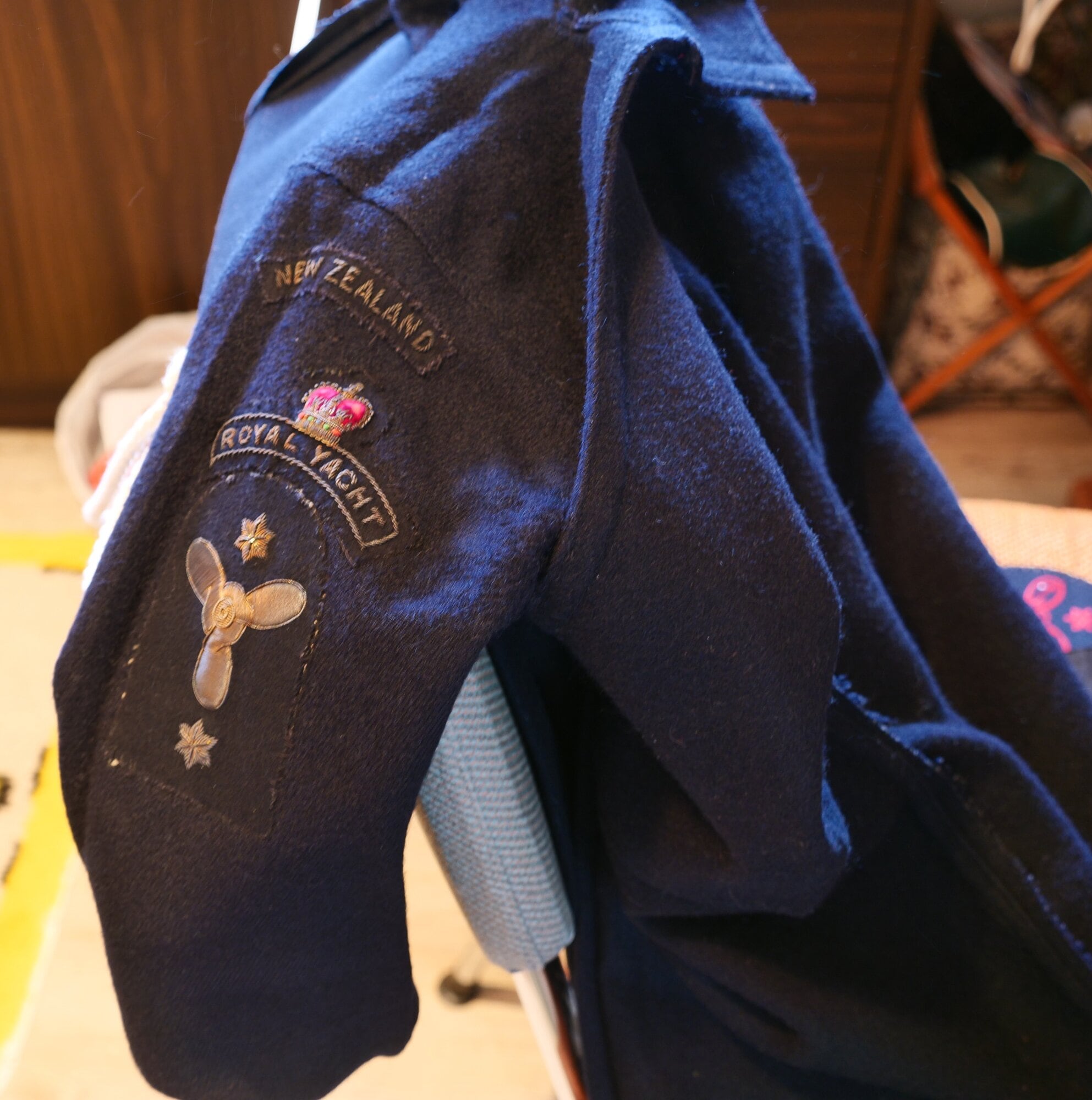
The royal yacht sailors “unusual uniform. Photo / Tom Eley
Within days, Batten said he was being measured for a new uniform.
The sailor’s new uniform was unusual: a serge top tucked into doeskin trousers, with a silk ribbon bow stitched on to the back waistband.
“Next minute, we were there – on the Britannia.”
He joined a crew of 200 Englishmen, four Australians and one other Kiwi, Able Seaman Bob Soper. After leaving the ship, Batten said they didn’t stay in contact.
The vessel travelled 39,550 miles, crossed the equator three times and remained at sea for 182 days.
Batten said the crew spotted 35 icebergs, drank 51,847 pints of beer and 4864 tots of rum, and smoked 1,234,385 cigarettes. “I was a goody-good and didn’t smoke or drink,” he said.
Though unsure why he was chosen for the assignment, Batten said he spent much of his time entertaining the royal family. “I used to do a lot of entertaining – mainly rock ‘n’ roll.”
He said he sang for Princess Margaret and shared soup with Prince Philip. “I got on quite well with Princess Margaret because she liked rock ‘n’ roll,” he said. “She was lovely.”
He described his duties onboard as easy but said standards were exceptionally high.
“You always walked around with a rag in your overalls pocket. If you saw a mark, you wiped it off.”
During the voyage, Batten travelled to South Africa, was at the opening of the Melbourne Olympics, and cruised to Antarctica.
The journey ended on February 24, 1957, in Portsmouth, and Batten was transferred to HMNZS Maori, marking the close of a remarkable chapter.
“We looked into the lives of many people all over the world, and in doing so, returned home richer for the experience.”
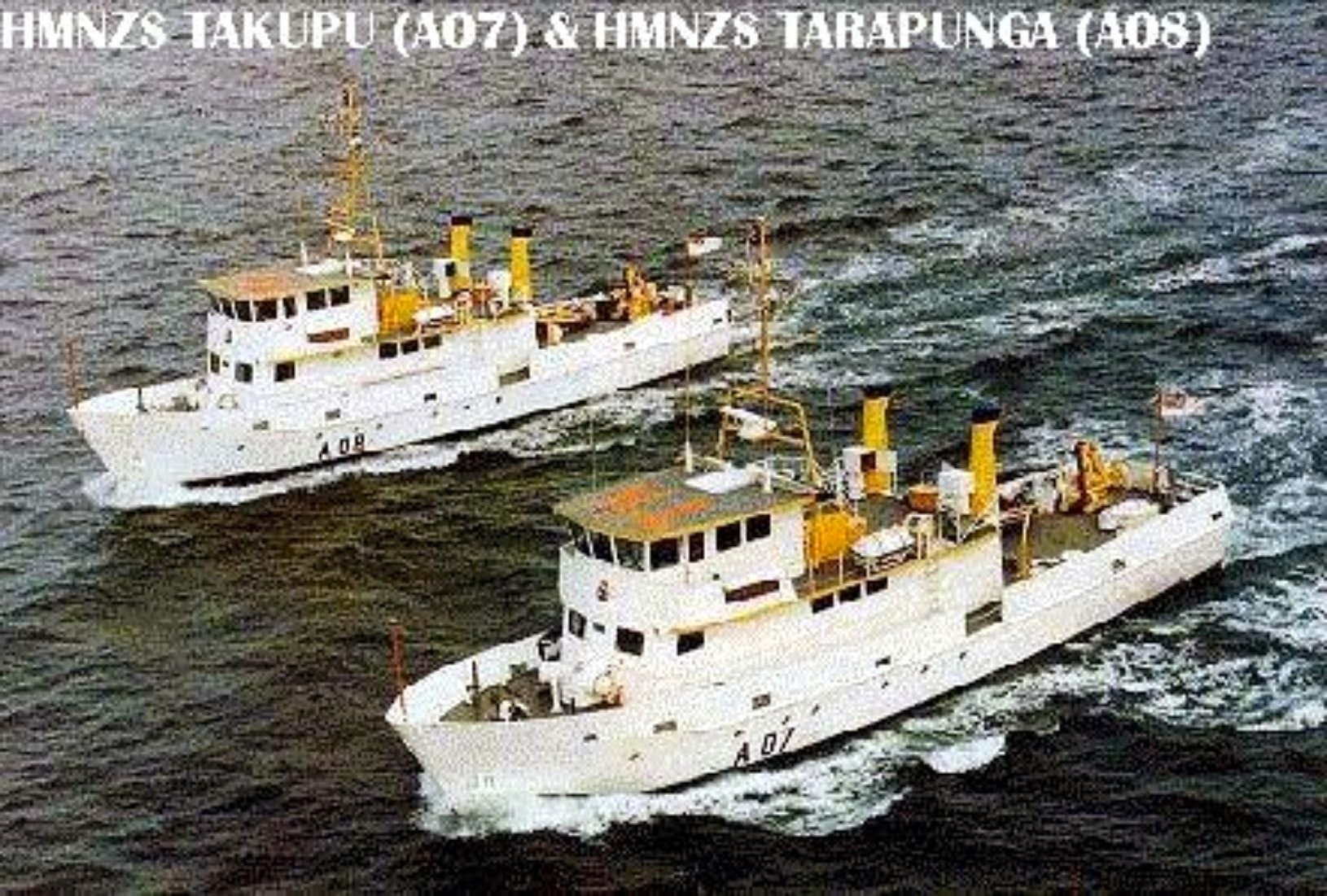
She was built by 1980 by the Whangarei Engineering and Construction Company as a version re-engineered for use as an inshore survey vessel.
HMNZS Takapu and HMNZS tarapunga
After decommissioning, she was purchased by North American owners and can be seen in Harper’s Island Episode 1, as the charter boat that brings the wedding party to the island.[1] Can also be seen in season 2, episode 9, of Psych, from 2007
Above: TARAPUNGA underway on the water. Photo via Freedom Marine Yacht Sales in Vancouver, British Columbia.
She was built by 1980 by the Whangarei Engineering and Construction Company as a version re-engineered for use as an inshore survey vessel.
HMNZS Takapu completed service in 2000 and was sold into private ownership. The vessel was converted for private use following an extensive refit. HMNZS Takapu was renamed Takapu 2 following her decommissioning from the New Zealand Navy.



.jpg)