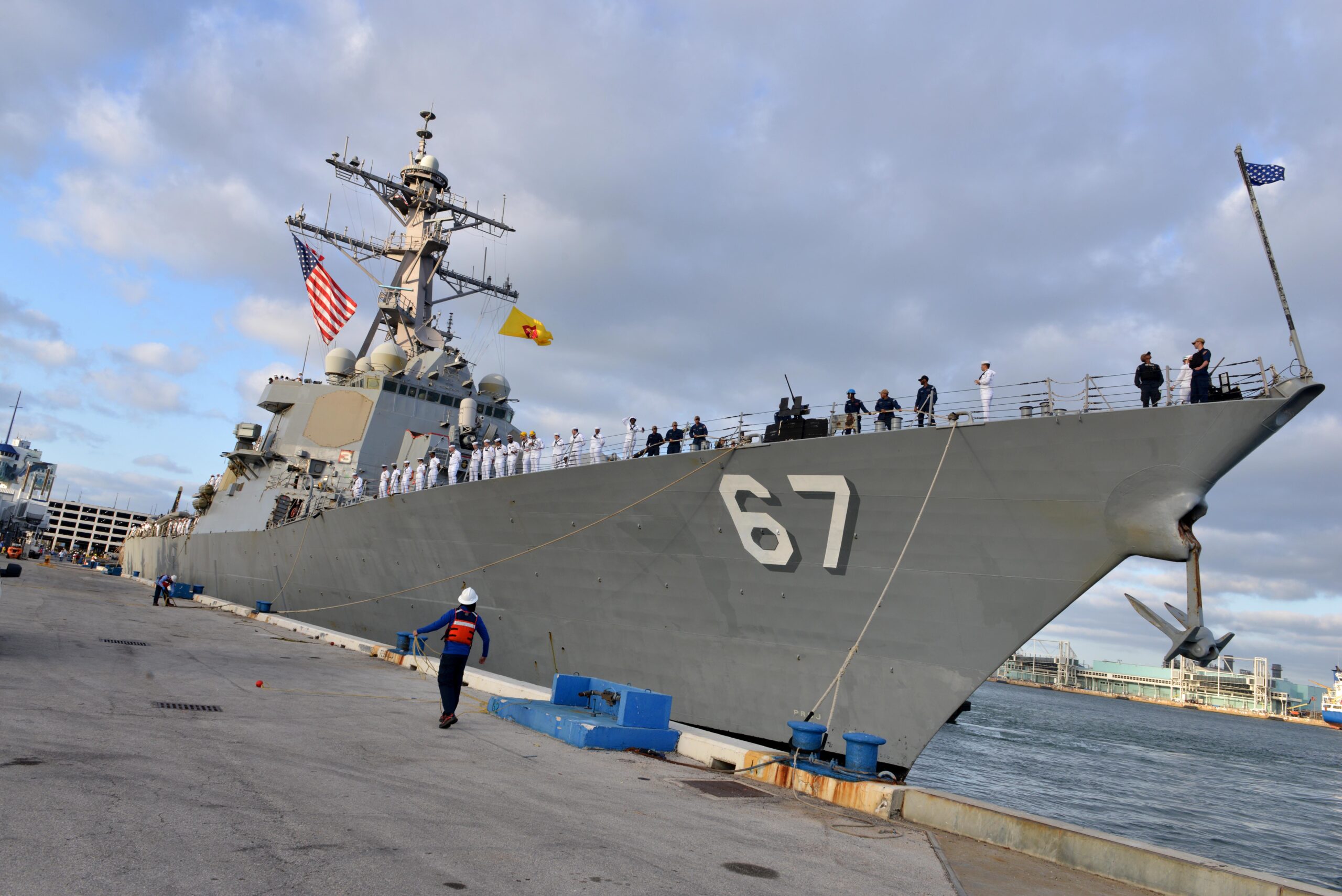
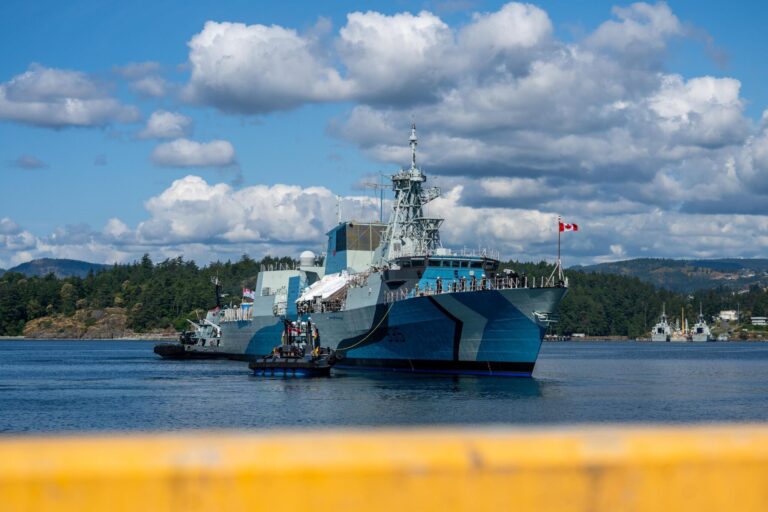
Seaspan Victoria Shipyards (Seaspan) has delivered HMCS Calgary back to the Royal Canadian Navy, marking the successful completion of the second full docking work period (DWP) under Seaspan’s Halifax-class work period (HCWP) contract.
Credit: Seaspan
As informed, HMCS Calgary received a wide range of engineering upgrades, equipment installations, preventative and corrective maintenance, and critical dry-docking activities.
This is all in support of the Royal Canadian Navy’s goal of ensuring the frigates remain operationally available and relevant through to the end of their service life.
“This DWP is a significant milestone for the entire Victoria Shipyards team, and underscores our commitment to quality, customer service, and to the Royal Canadian Navy,” said Tony Winter, Vice President and General Manager of Seaspan Victoria Shipyards.
HMCS Calgary arrived at Seaspan Victoria Shipyards on January 9, 2023, following a six-month project planning phase. Over the 28 months that followed, more than 1,000 trades personnel and office staff contributed to the project at various stages.
The next West Coast Halifax-Class frigate to undergo a Docking Work Period is HMCS Winnipeg, which arrived at Seaspan Victoria Shipyards in late 2024.
HMCS Calgary will now be transferred to the Royal Canadian Navy’s Fleet Maintenance Facility in Victoria, BC, where its staff will continue reactivating the vessel’s systems in preparation for future deployment.
“The DWP for HMCS Calgary represents the largest ever completed at Victoria Shipyards and stands as a testament to the coordinated efforts of Seaspan’s workforce and our partners at the Royal Canadian Navy, the Department of National Defence, and Public Services and Procurement Canada,” Seaspan concluded.
The Carrier Strike Group 25 recently regrouped in Oman after taking separate routes through different theatres.
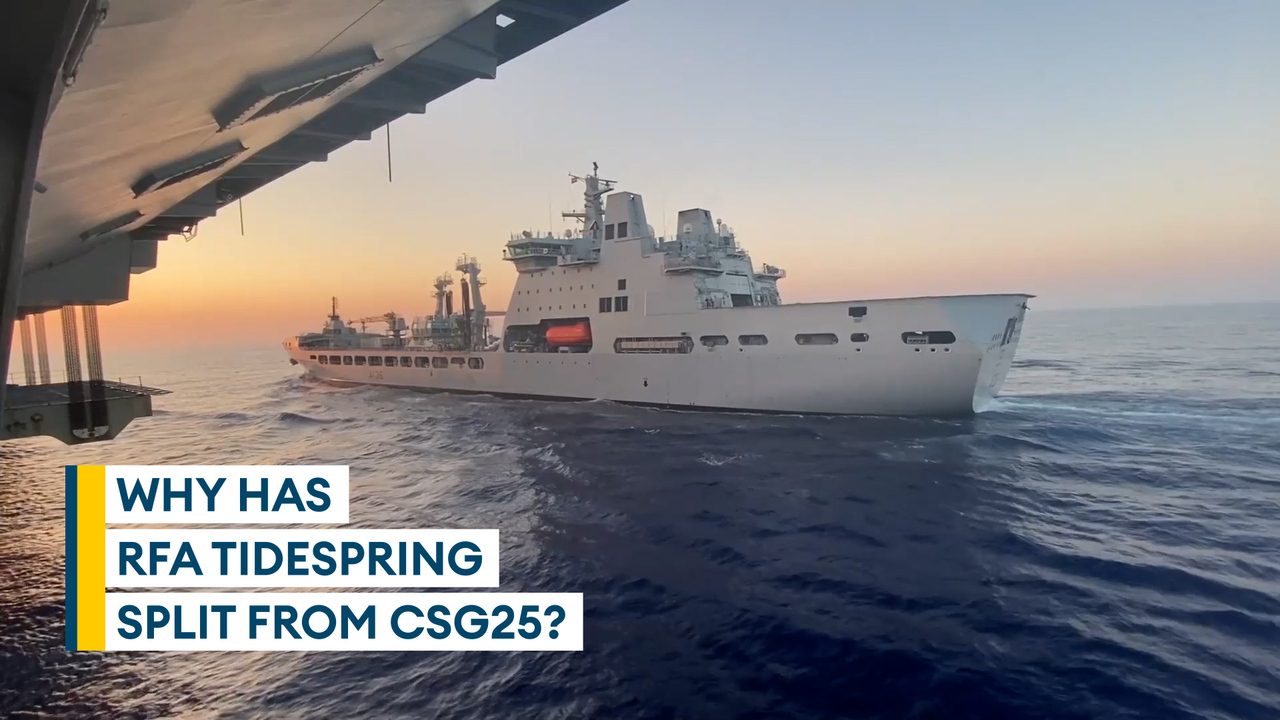
While aircraft carrier HMS Prince of Wales, HMS Dauntless and HMS Richmond transited the Suez Canal and Red Sea, RFA Tidespring took the longer route around the southern tip of Africa.
Why RFA Tidespring broke away from CSG25
The ships reunited last week at the UK Joint Logistics Support Base in Duqm, Oman.
RFA Tidespring spent only a short time alongside before heading back to sea, where she resumed operations with the strike group.
Its Norwegian counterpart, HNoMS Maud, had been supporting the deployment but detached from the group in the northern Red Sea and has since returned to the Mediterranean.
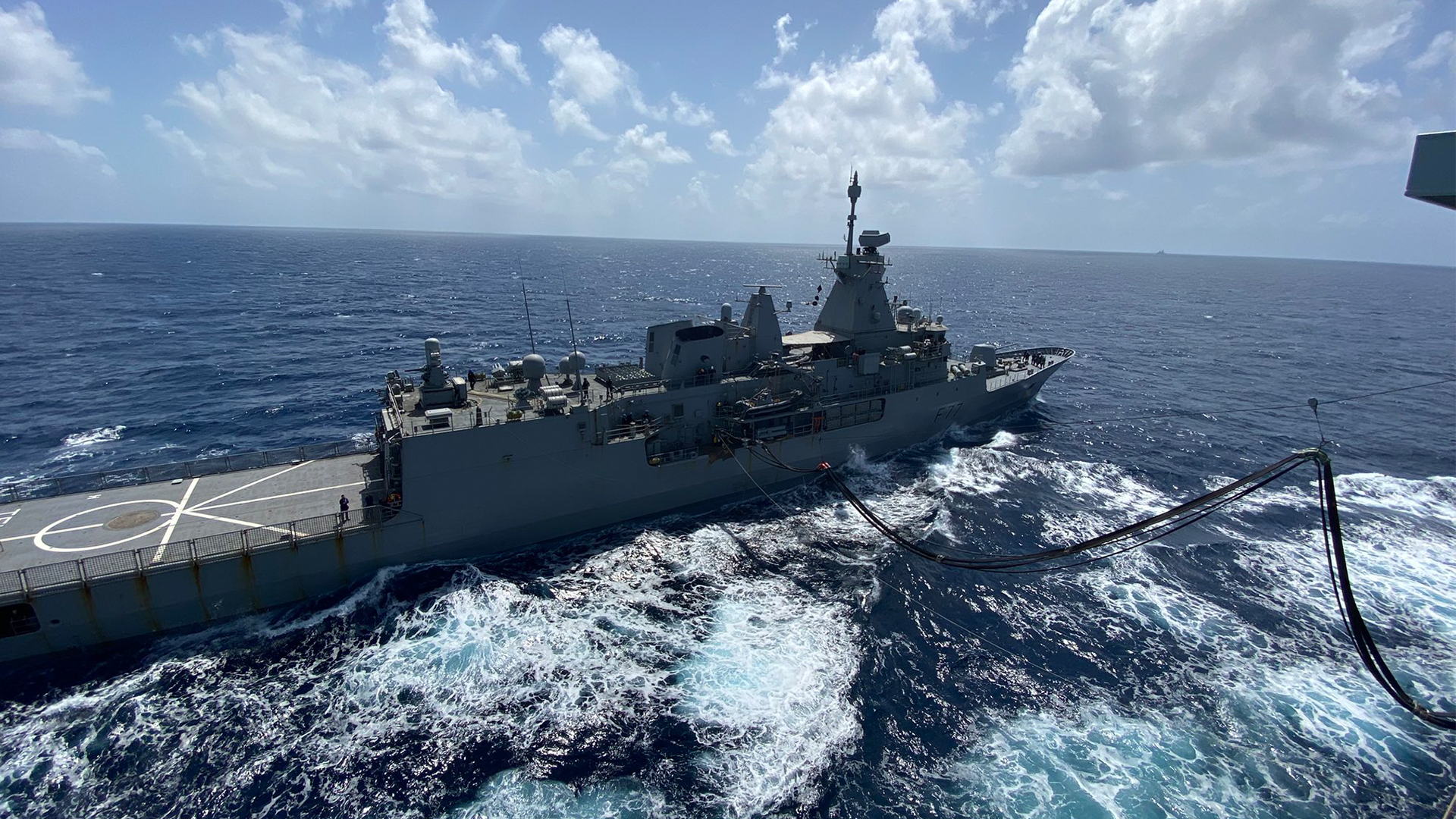
The replenishment at sea shows how the group maintains operational readiness across vast distances, with support vessels playing a key role in keeping warships fuelled and supplied during long deployments.
The CSG25 deployment, also known as Operation Highmast, involves around 4,500 British military personnel, including nearly 600 RAF and 900 soldiers alongside 2,500 Royal Navy sailors and Royal Marines.
For more reports about Carrier Strike Group 25, click here.
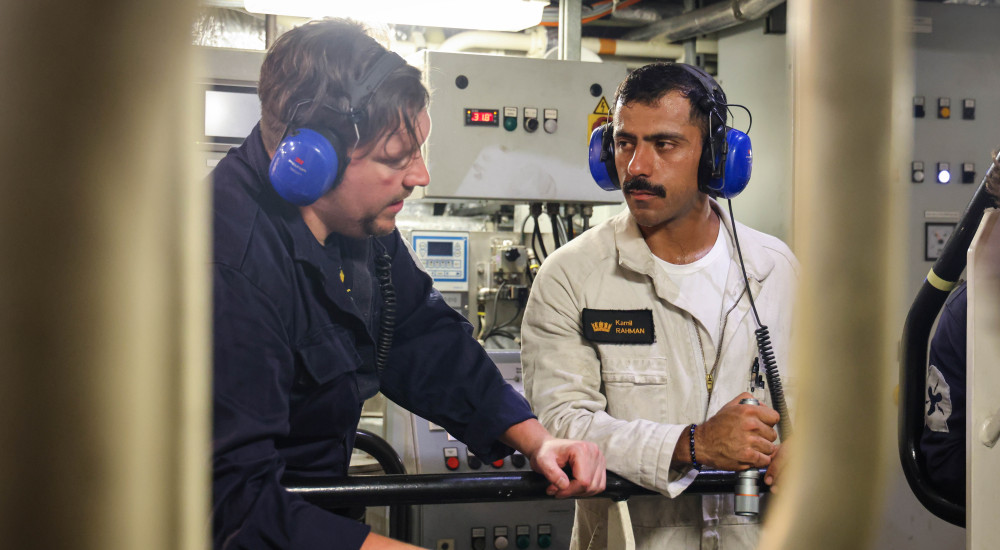
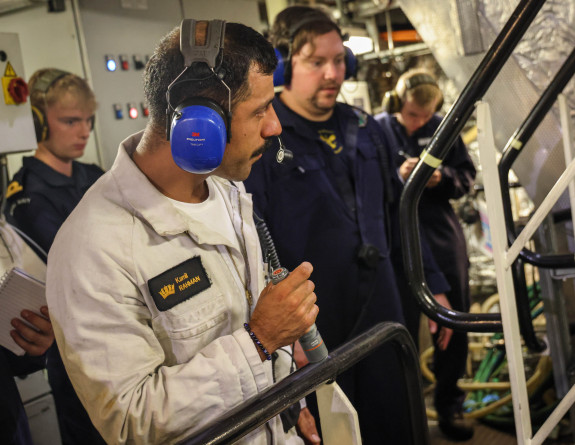
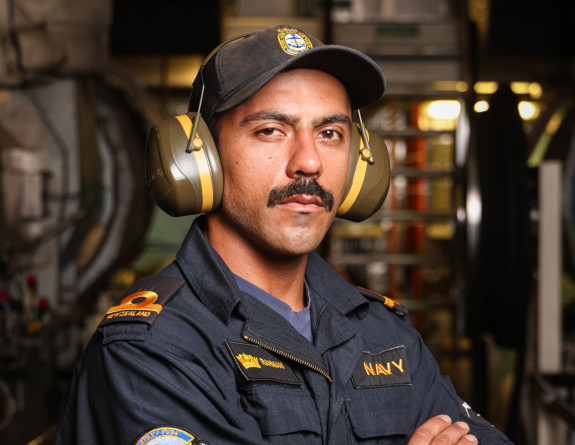
Royal New Zealand Navy engineer Sub Lieutenant Kamil Rahman says he learns best when he gets stuck in. He’s found that niche serving in a roving Royal Navy patrol vessel.
10 June, 2025
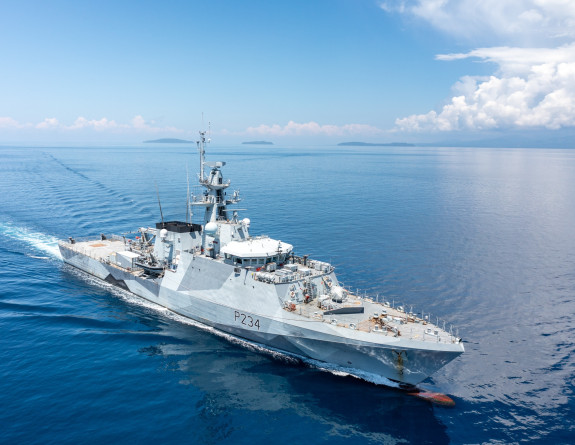
SLT Rahman is an Assistant Marine Engineering Officer aboard HMS Spey, one of two River-class Offshore Patrol Vessels on long-term deployment to the Indo-Pacific.
He’s been with the Royal Navy for five months as part of an 18-month exchange programme with the Royal New Zealand Navy.
And while he’s a long way from New Zealand, he says the Royal Navy’s similar processes, high standards and ‘getting jobs done’ attitude makes him feel right at home.
He got the posting after completing his Systems Engineering and Maintenance Course (SEMC) at training establishment HMS Sultan in the United Kingdom.
“I got to spend a bit of time in HMS Sutherland, a Type 23 frigate, and I specifically wanted to get in a small ship to get as many days sailing as possible. I tend to learn best by getting stuck right in.”
Aboard Spey, his role is a training position in the Marine Engineering (ME) Department, supplementing at the middle management level.
“This means I get involved in the hands-on jobs in the ME sections as well as learning from my mentors on how to manage the engineering department.
“It’s been busy and equally rewarding to be part of this department, experiencing the role and gaining perspective.
“I’ve been surrounded by lots of experienced sailors at all levels. The balance of banter and maintaining high standards is a commonality across every unit I’ve been attached to and I’ve seen this in my senior leaders all the way down to new joiners.”
SLT Rahman is an Assistant Marine Engineering Officer aboard HMS Spey, one of two River-class Offshore Patrol Vessels on long-term deployment to the Indo-Pacific.
There are many similarities with the two navies, but specialisation is a big aspect of the Royal Navy, he says.
“The RNZN has it as well, but the Kiwi attitude of being a Jack of all trades is something I notice and I appreciate about home. This experience on Spey has given me lots to reflect on.”
He was on board Spey for Exercise Bersama Shield in Malaysia and Singapore.
“During simulated war fighting serials the engineering department’s main output is ensuring the ship stays afloat while we’re at ‘war’. As a small vessel with a decent sized crew its impressive to see the coordination between all the departments.
“It’s quite a surreal feeling at times being on the upper deck or the bridge during joint sail passes and manoeuvres. You’re taking it all in and reminding yourself this is your place of work.”
He says the food on board is excellent.
“There’s a well-structured set of meals aligned with the days of the week. You’ve got Curry Wednesday, Fish Friday, Steak & Kiev Saturday and Roast Sunday. It has been close to 500 days since I’ve had a mince pie however, which is probably a personal best.”
Outside of his engineering duties he’s had opportunities for defence engagement with sailors from Malaysia, Singapore and Australia.
“The Commanding Officer of a Malaysian ship treated a group of us to a brunch of local cuisine and after some convincing I performed karaoke to our hosts, which is a Malaysian tradition. I sang a Crowded House song, of course. I also went aboard a Singaporean ship to facilitate exchanges of patches and coins. It’s been nice to connect with other nations, and I look forward to future exercises like these.”
SLT Rahman will eventually return to the classroom during this exchange to study for his Marine Engineering Qualification.
“This exchange has been about gaining insight into the role of the Marine Engineering Officer and how that role plays into the ecosystem of a Navy vessel. Plus it’s been a great opportunity – and very rewarding – to integrate into life at sea with a new group of sailors.”
During 1945, Lachlan was used during the opening of the Captain Cook Graving Dock; her bow was used to cut the ribbon across the drydock‘s mouth. In 1949, shortly before her decommissioning, she found the wreck of the SS Yongala, which sank with all 122 aboard in a cyclone in 1911. Her wreck was thought to be a shoal at that time. [1]
Lachlan was paid off on 31 May 1949. She was transferred to the Royal New Zealand Navy, renamed HMNZS Lachlan, and was a survey and Antarctic supply ship until February 1975. She was used as a “Refit Barge” with many workshops onboard until the late 1980s when she was sold to Chile to continue work as floating workshops for ships being refitted.[citation needed]
In 1948, the New Zealand government sought a survey ship to use temporarily until a new one could be built in Britain. After negotiations, Lachlan was offered on loan for an initial time of three years and on 31 May 1949 was paid off from RAN service and was immediately given to the Royal New Zealand Navy the next day. Following trials through September 1949, on 5 October 1949 HMNZS Lachlan was commissioned into the Royal New Zealand Navy.[2]
The ship was fully disarmed at the dockyard at HMNZS Philomel and the ship’s chart room enlarged for surveying. The ship was rushed into service so quickly that some of the finishing touches were done at sea. Her first survey was started on 18 November 1949 surveying the Wellington Harbour entrance, taking three weeks to complete with assistance of a survey motor boat from Australia. To assist with the creation of the hydrographic service, on earlier voyages part of the ships company included personnel from the Royal Australian Navy and Royal Navy.
HMNZS Lachlan and V bomber
HMNZS Lachlan as HMAS Lachlan shortly after the end of World War II
HMNZS Lachlan surveyed over fifty percent of New Zealand’s coastline over her twenty years in commission. Some of her service included surveys in Australia and the rest of the Pacific, and she helped clear mines around the Gilbert & Ellice Islands from World War II. Her bow was damaged in a collision with the Napier wharf in October 1954. In 1963 the New Zealand government purchased the vessel for £16,000. By 1970, she was due to be decommissioned but in May 1970 the Royal New Zealand Navy was ordered by the government by an extra five years.
In 1975, HMNZS Lachlan was painted all grey and docked at HMNZS Philomel to house ship’s companies whose frigates were undergoing refits. In September 1975, her engines were removed and sold, and in 1993 the hulk was sold to a Philippines company for scrapping.
The Arleigh Burke-class guided-missile destroyer USS Cole (DDG-67) arrives in port for Fleet Week Fort Lauderdale, Apr. 22, 2025. US Navy Photo
USS Cole (DDG-67) left Mayport, Fla., on Thursday as the latest Navy ship to participate in the Trump administration’s border mission.
Cole will replace USS Gravely (DDG-107), which sailed to the southern border shortly after returning home from its deployment in the Red Sea. Cole is the second ship this week to head to the southern border to replace ships finishing their U.S. Northern Command mission.
Gravely will return home to Norfolk, Va., – also Cole’s homeport – on Monday, according to a Navy news release.
While Cole will support NORTHCOM’s mission, it will deploy under U.S. Naval Forces Southern Command/U.S. Fourth Fleet. It will have an embarked Coast Guard Law Enforcement Detachment (LEDET), as did Gravely.
The embarked LEDET can perform vessel boardings and searches and seizures in both U.S. and international waters, according to the Navy release.
“With LEDET’s tactical expertise guiding interdiction efforts, the Cole will harness its advanced surveillance systems and mobility to locate and intercept suspect vessels, effectively extending Coast Guard authority through naval power to enhance maritime security operations. This collaboration ensures a robust, legally empowered response to maritime threats, strengthening U.S. border protection efforts,” reads the release.
Gravely deployed March 15, USNI News previously reported. It was one of the first destroyers sent to the waters around the Gulf coast.
P-8A Poseidons maritime surveillance planes from Naval Air Station Jacksonville, Fla., supported Gravely and its LEDET. The “Swamp Foxes” of Helicopter Maritime Squadron (HSM) 74 also embarked on Gravely.
At the end of May, Gravely and its LEDET seized approximately 860 pounds of illegal drugs from a vessel in the Caribbean Sea, USNI News previously reported.
USS Sampson (DDG-102) deployed Tuesday from San Diego to support NORTHCOM’s mission, USNI News previously reported. It’s relieving USS Charleston (LCS-18) and also has an embarked LEDET.




.jpg)