


Ships and Defence News Past and Present
BySeaWaves Magazine – Jun 4, 2025
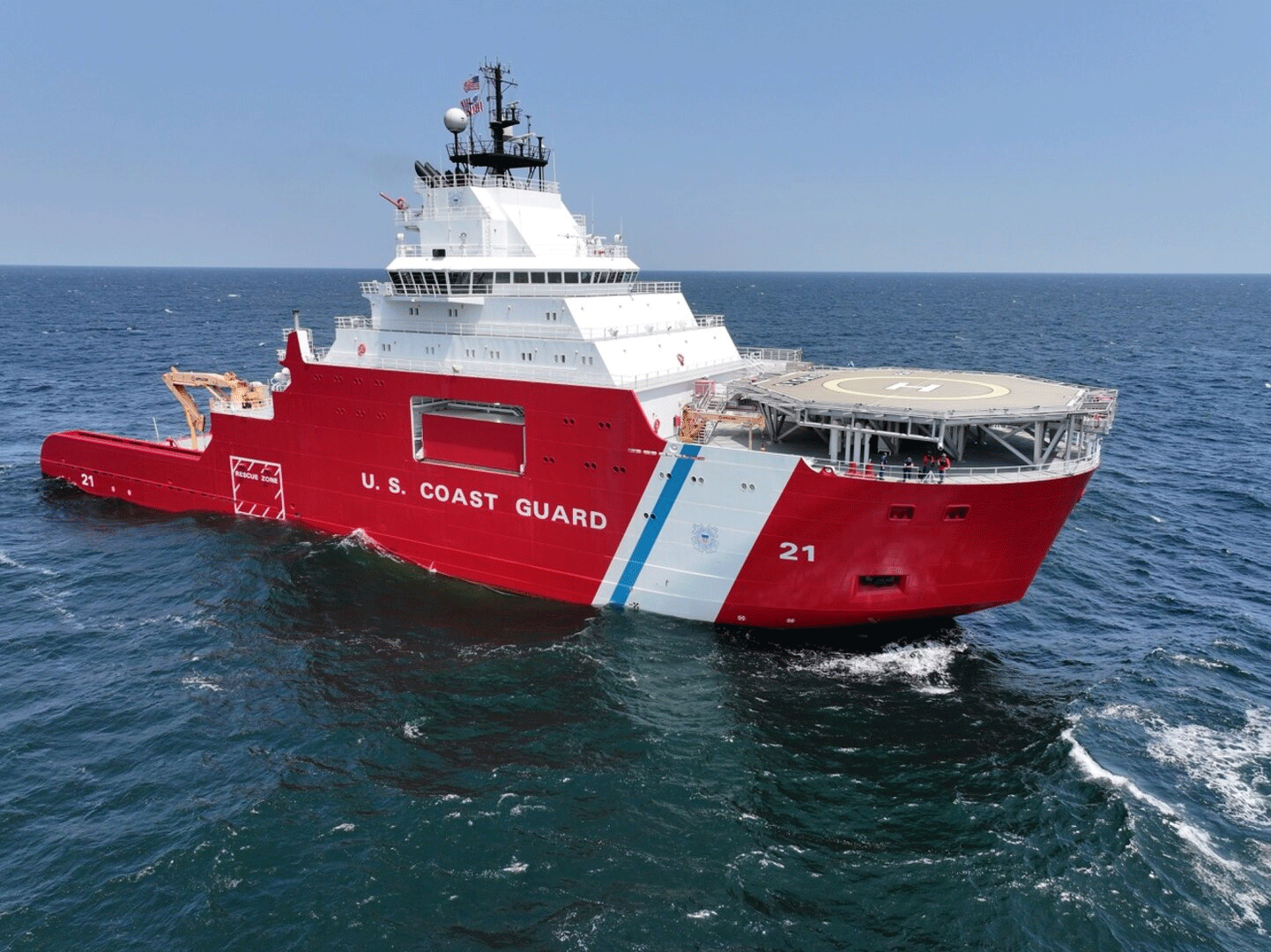
The U.S. Coast Guard Cutter Storis is shown here underway, June 3, 2025. The Storis is the Coast Guard’s first new polar icebreaker acquisition in 25 years and will expand U.S. operational presence in the Artic Ocean. Photos courtesy of Edison Chouest Offshore.
The U.S. Coast Guard Cutter Storis (WAGB 21), the Coast Guard’s first polar icebreaker acquired in more than 25 years, departed on its maiden voyage to safeguard U.S. sovereign interests in the Arctic and conduct Coast Guard missions.
Storis’ departure marks an early milestone in the Service’s transformation through Force Design 2028 (FD2028), which includes reforming Coast Guard acquisitions to rapidly deploy capabilities to execute the Coast Guard’s missions.
The motor vessel Aiviq, acquired Dec. 20, 2024, from an Edison Chouest Offshore subsidiary, was renamed Storis following modifications to enhance communications and self-defense capabilities. The vessel will expand U.S. operational presence in the Arctic and support Coast Guard missions while the service awaits the delivery of the Polar Security Cutter (PSC) class. The Coast Guard will continue evaluating the cutter’s condition and requirements to achieve full operational capability.
Storis is commanded by Capt. Keith M. Ropella who currently serves as chief of cutter forces at Coast Guard Headquarters in Washington D.C., and previously commanded Coast Guard Cutter Polar Star (WAGB 10), from July 2022 to July 2024.
The vessel is manned with a hybrid crew consisting of military cuttermen and civilian mariners. This is the second vessel in Coast Guard history to bear the name Storis. The original Storis, known as the “Galloping Ghost of the Alaskan Coast,” had a storied history conducting 64 years of icebreaking operations in Alaska and the Arctic before being decommissioned in 2007.
Storis will be commissioned this August in Juneau, Alaska, which will eventually be the vessel’s permanent homeport. Until the necessary shore infrastructure improvements are completed in Juneau, Storis will be temporarily berthed in Seattle, Washington, with the Service’s two other polar icebreakers.
The acquisition was made possible through the Don Young Coast Guard Authorization Act of 2022 and fiscal year 2024 appropriations. It does not affect the ongoing procurement of PSCs and is not part of the PSC program of record.
The Coast Guard operates the United States’ fleet of icebreakers to assure access to the polar regions to protect U.S. sovereignty. To fulfill this mission and meet operational needs in the polar regions, the Coast Guard requires a fleet of eight to nine polar icebreakers. In support of the President’s intent to acquire at least 40 new icebreakers, the Coast Guard is working to replace, modernize and grow its aging fleet of icebreakers, which currently includes 3 polar icebreakers, 21 domestic icebreakers and 16 ice-capable buoy tenders. As the United States’ third polar icebreaker, Storis will provide near-term operational presence and support national security as a bridging strategy until the full complement of PSCs is delivered.
By Boyko Nikolov On Jun 6, 2025
In a striking display of military cooperation, New Zealand’s HMNZS Te Kaha, a formidable Anzac-class frigate, is spearheading the nation’s participation in the sprawling Talisman Sabre 25 exercise, a biennial multinational operation hosted across Australia from July 13 to August 4.

The frigate, joined by over 680 New Zealand Defence Force personnel and a host of military assets, is en route to Queensland to engage in complex maritime, air, and land scenarios alongside 30,000 troops from 19 nations, including the United States, Japan, and the United Kingdom.
The exercise, designed to sharpen combat readiness and interoperability in the Indo-Pacific, underscores New Zealand’s commitment to regional security and its ability to integrate seamlessly with allied forces. With HMNZS Te Kaha at the forefront, the drills aim to prepare for real-world challenges in an increasingly tense geopolitical landscape.
The HMNZS Te Kaha, commissioned in 1997, is one of two Anzac-class frigates in the Royal New Zealand Navy’s fleet, built as part of a joint Australia-New Zealand project to bolster their maritime capabilities.
Measuring 387 feet in length and displacing 3,600 tons, the frigate is a versatile warship designed for multi-role operations, from anti-submarine warfare to air defense and maritime interdiction. Its primary armament includes a 5-inch Mark 45 Mod 2 gun, capable of delivering precise strikes against surface targets at ranges up to 15 miles.
For air defense, the ship is equipped with the RIM-7 Sea Sparrow missile system, housed in a vertical launch system, which provides protection against aircraft and incoming missiles. The frigate also carries two triple-tube Mark 32 torpedo launchers for engaging submarines with Mark 46 torpedoes, a critical capability in the submarine-heavy waters of the Indo-Pacific.
In close-range scenarios, the Phalanx Close-In Weapon System, a rapid-fire 20mm Gatling gun, serves as a last line of defense against missiles and small boats. The ship’s propulsion, a combined diesel or gas turbine system, delivers a top speed of 27 knots and a range of 6,000 nautical miles, allowing it to operate effectively across vast oceanic expanses.
Recent upgrades, completed in 2020 under the Frigate Systems Upgrade program, have modernized its radar and combat management systems, integrating the Lockheed Martin CMS 330 and the Thales SMART-S Mk2 3D radar, enhancing its ability to detect and track threats in complex environments.
The frigate’s role in Talisman Sabre 25 is pivotal, as it will lead New Zealand’s maritime contribution in a series of high-intensity scenarios in the Coral Sea and off Queensland’s coast. These exercises will test the ship’s ability to conduct maritime identification and interdiction operations, such as inspecting vessels for contraband or coordinating with allied ships to secure sea lanes.
The frigate will also participate in joint maneuvers with Australian and U.S. naval forces, including Australia’s Hobart-class destroyers and American Arleigh Burke-class destroyers, which boast advanced Aegis combat systems. The ability of HMNZS Te Kaha to integrate with these platforms highlights its modernized systems and the crew’s rigorous training.
With 178 personnel on board, including highly skilled navigators, weapons specialists, and engineers, the frigate is well-prepared to execute complex tasks, from tracking simulated adversaries to coordinating with air assets like New Zealand’s P-8A Poseidon maritime patrol aircraft.
The broader Talisman Sabre 25 exercise, the largest of its kind, brings together a diverse array of forces to simulate real-world contingencies. Held primarily in Australia’s Northern Territory and Queensland, with additional events in the Coral Sea and, for the first time, Papua New Guinea, the drills encompass amphibious landings, live-fire exercises, air operations, and logistics support.
New Zealand’s contribution extends beyond HMNZS Te Kaha, with the amphibious ship HMNZS Canterbury transporting 150 army personnel and 35 vehicles, including Light Armoured Vehicles and the newly acquired Bushmaster protected mobility vehicles, to Queensland. These troops will link up with the Australian Army’s 7th Brigade for preparatory exercises before the main event.
Three NH90 helicopters, a P-8A Poseidon aircraft, mine warfare divers, military police, medics, and logistics specialists round out New Zealand’s 680-strong contingent, showcasing the nation’s ability to deploy a comprehensive, multi-domain force.
Commander Joint Forces New Zealand, Major General Rob Krushka, emphasized the exercise’s value in a statement to the New Zealand Defence Force: “Talisman Sabre provides an invaluable opportunity for us to train with some of our closest defense partners in a realistic and demanding environment. Exercises like this ensure we remain a credible, capable, and combat-ready force, ready to respond to regional and global challenges.”
The emphasis on interoperability is critical, as New Zealand’s forces are designed to slot seamlessly into multinational operations, a capability honed through decades of cooperation with allies like Australia and the United States.
The HMNZS Te Kaha’s participation builds on a storied history of operational deployments. Since entering service, the frigate has been a workhorse for the Royal New Zealand Navy, conducting patrols in the Asia-Pacific, supporting counter-piracy missions in the Gulf of Aden, and aiding disaster relief efforts, such as the 2011 Christchurch earthquake response.
Its versatility has made it a cornerstone of New Zealand’s maritime strategy, particularly in a region where freedom of navigation and secure sea lanes are paramount. Compared to other regional navies, the Anzac-class frigate is smaller than China’s Type 055 destroyers, which displace over 12,000 tons and carry advanced hypersonic missile capabilities, but its compact size and modernized systems make it a nimble and effective platform for coalition operations.
For instance, while the Type 055 is designed for power projection, the HMNZS Te Kaha excels in interoperability, leveraging its upgraded sensors to coordinate with allied fleets in ways that larger, less integrated platforms might struggle to achieve.
The exercise itself is a testament to the deepening military ties among Indo-Pacific allies. Australia, as the host, has long been a linchpin in regional security, and Talisman Sabre serves as a platform to strengthen partnerships with nations like Japan, which is expanding its naval presence with Izumo-class helicopter carriers, and the United Kingdom, which has deployed its Carrier Strike Group to the region in recent years.
The inclusion of Papua New Guinea as a host for a specific event marks a significant step in broadening the exercise’s regional scope, reflecting growing concerns about stability in the South Pacific. The Coral Sea, a focal point for maritime drills, is a strategically vital area, with key shipping routes and potential flashpoints near contested regions like the South China Sea.
New Zealand’s involvement in Talisman Sabre dates back to the exercise’s inception in 2005, with the Royal New Zealand Navy consistently contributing ships, aircraft, and personnel. The HMNZS Te Kaha has been a regular participant, leveraging its experience to refine tactics and build trust with allies.
In 2019, the frigate conducted joint anti-submarine warfare drills with U.S. and Australian ships, demonstrating its ability to counter underwater threats—a skillset that remains critical given the proliferation of advanced submarines in the region, such as China’s Type 039A Yuan-class boats.
The frigate’s upgraded sonar suite, including the Thales UMS 4110 hull-mounted sonar, enhances its ability to detect and track such threats, making it a valuable asset in coalition operations.
The logistical effort to deploy HMNZS Te Kaha and supporting forces across the Tasman Sea is no small feat. The roughly 2,300-nautical-mile journey from Auckland to Queensland navigated at a cruising speed of about 20 knots, takes approximately five days, depending on weather and route.
This transit, while routine for the frigate’s experienced crew, underscores the operational demands of projecting power across vast distances. The ship’s ability to sustain itself at sea, supported by its robust supply systems and engineering team, ensures it arrives ready to engage in the exercise’s demanding scenarios.
As Talisman Sabre 25 unfolds, the HMNZS Te Kaha will not only test its own capabilities but also serve as a symbol of New Zealand’s commitment to collective security. The exercise’s focus on multi-domain operations—integrating land, sea, and air forces—mirrors the complexities of modern warfare, where threats range from cyberattacks to hypersonic missiles.
The frigate’s role in coordinating with air assets, such as New Zealand’s P-8A Poseidon, which can deploy sonobuoys to detect submarines, and Australia’s F-35A Lightning II jets, highlights the interconnected nature of these operations. The ability to share real-time data across platforms, enabled by the frigate’s modernized combat systems, is a force multiplier in such scenarios.
The broader implications of Talisman Sabre 25 extend beyond the exercise itself. The Indo-Pacific remains a region of strategic competition, with rising tensions over territorial disputes and maritime rights.
New Zealand, though a smaller player compared to powers like the United States or China, brings a unique perspective as a member of the Five Eyes intelligence alliance and a trusted partner in regional security frameworks. Its ability to deploy a capable warship like HMNZS Te Kaha, alongside a diverse array of forces, signals its readiness to contribute to coalition efforts in times of crisis.
From a U.S. perspective, the participation of allies like New Zealand in Talisman Sabre is a reassuring sign of solidarity. The U.S. Navy, which will deploy ships like the Ticonderoga-class cruiser USS Antietam and Virginia-class submarines, relies on partners to share the burden of maintaining a free and open Indo-Pacific.
The HMNZS Te Kaha’s compatibility with U.S. systems, facilitated by shared NATO-standard protocols, ensures it can operate effectively alongside American forces, whether in exercises or potential real-world operations.
As the HMNZS Te Kaha sails toward Queensland, it carries with it the weight of New Zealand’s strategic ambitions and the expectations of its allies. The frigate’s performance in Talisman Sabre 25 will be closely watched, not only for its operational prowess but also for what it signals about the Royal New Zealand Navy’s future.
In an era of rapid technological change and evolving threats, the ability to maintain a combat-ready, interoperable force is no small achievement. Yet, as the exercise tests the limits of coalition warfare, questions linger about whether smaller navies like New Zealand’s can sustain such capabilities in the face of growing regional challenges.
Royal New Zealand Navy’s (RNZN) Chief of Navy Rear Admiral Garin Golding, welcomed Chief of the Royal Australian Navy, Vice Admiral (VADM) Mark Hammond to Devonport Naval Base yesterday.
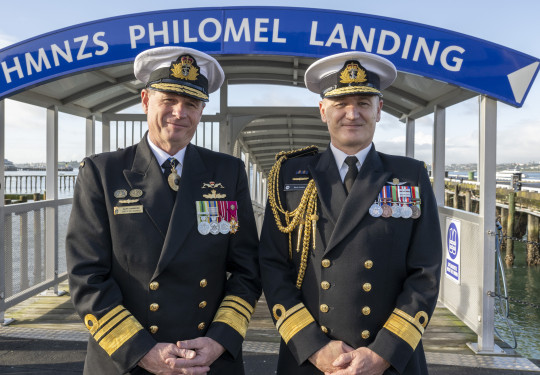
Following a ceremonial parade by Navy personnel, VADM Hammond then received the challenge at a formal powhiri at Te Taua Moana marae.
He also visited theTorpedo Bay Navy Museum, briefed the RNZN War Fighters Forum and was given a guided tour of HMNZS Matataua’s capability.
Both Chief’s took the opportunity to discuss topics around regional security, strengthening relationships and greater integration of resources.
This will continue in Wellington as both are engaged with the Freedom of Entry march on Saturday, 7 June by the ship’s company of HMAS Canberra.
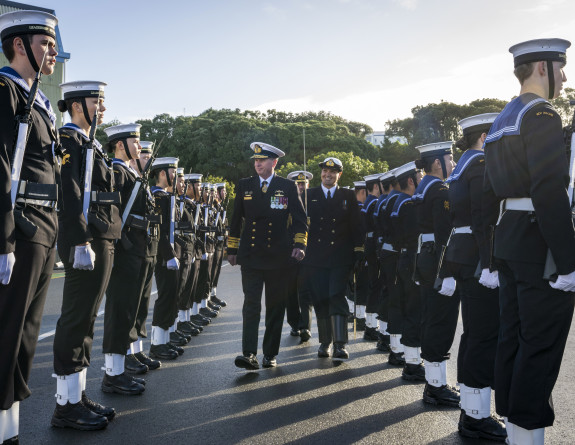
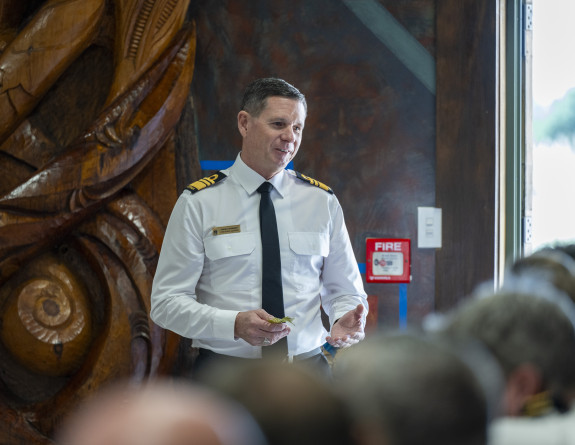
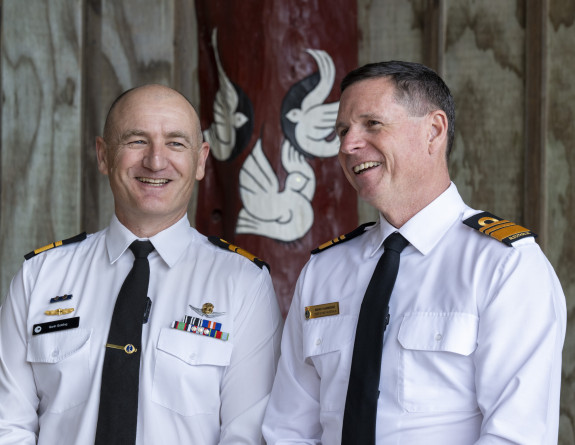
The Chiefs of Navy at Devonport Naval Base.
New Zealand Defence Force (NZDF) personnel and assets have begun to deploy to one of the largest multi-national military exercises in the world.
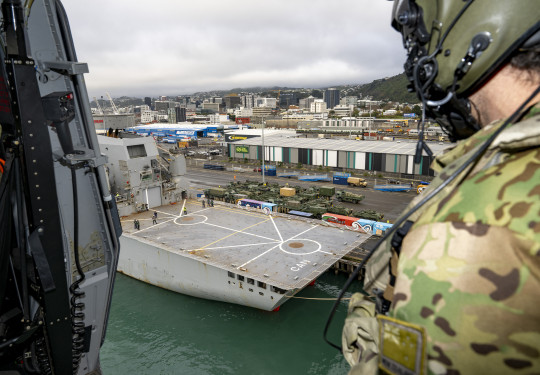
Featuring more than 30,000 military personnel and platforms from 19 nations, Exercise Talisman Sabre 25 is being held from 13 July to 4 August across Australia.
Held every two years, the exercise is designed to improve and strengthen interoperability and combat readiness in complex, multi-domain operations.
In preparation for the exercise, close to 35 New Zealand Army vehicles, including Light Armoured Vehicles (NZLAV) and the new Bushmaster protected mobility vehicles, along with 150 personnel, boarded HMNZS Canterbury today, ready for the transit to Queensland.
Once there, the NZ Army combat team will link up with the Australian Army’s 7th Brigade for a preparatory exercise to hone their interoperability in the build up to Talisman Sabre.
They will soon be joined by the frigate HMNZS Te Kaha, three NH90 helicopters, P-8A Poseidon aircraft, mine warfare divers, military police, medics, logistics and others to support a range of intense land, air, and maritime operations alongside key partners.
In total, more than 680 NZDF personnel will deploy on the exercise.
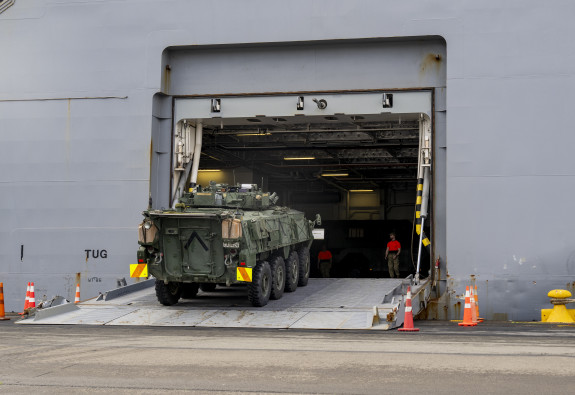
“Talisman Sabre provides an invaluable opportunity for us to train with some of our closest defence partners in a realistic and demanding environment,” said Commander Joint Forces New Zealand, Major General Rob Krushka.
“Exercises like this ensure we remain a credible, capable and combat-ready force, ready to respond to regional and global challenges.”
Participating alongside ally Australia and defence partners including the United States, Japan, the United Kingdom, and others, the NZDF’s involvement reflects New Zealand’s ongoing commitment to collective security, regional stability, and defence cooperation.
“One of our real capabilities is force integration,” Major General Krushka said.
“We have a well-proven ability to seamlessly embed our personnel and platforms into multi-national, multi-domain tactical forces and this exercise gives us another opportunity to demonstrate this.”
Talisman Sabre 25 will incorporate joint training scenarios including amphibious landings, maritime identification and interception, air operations, live-fire exercises, and logistics support across a vast training area in Australia’s Northern Territory and Queensland, and in the Coral Sea.
For the first time, Papua New Guinea will also be hosting an event.
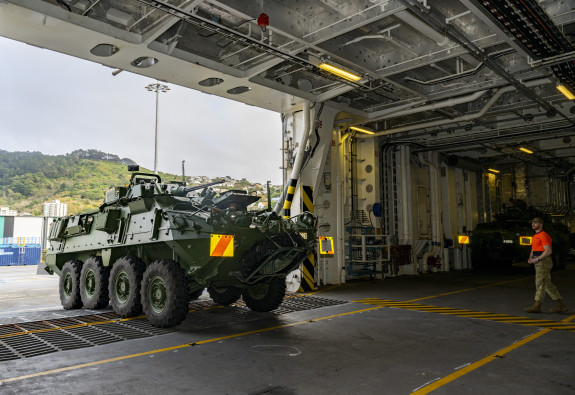
Ships and Defence News Past and Present


