HMNZS Monowai (A06) was a hydrographic survey vessel of the Royal New Zealand Navy (RNZN).

HMNZS Monowai

Built in 1960, the ship was originally used as a civilian supply and passenger vessel by the New Zealand Government, under the name GMV Moana Roa, before being acquired by the RNZN in 1977. She remained in RNZN service until 1997, performing various duties such as coastal surveying, resupply, and surveillance. After being decommissioned she was sold to civilian operators in Britain in 1998 for conversion to a cruise ship, but was found unsuitable for the role and eventually sent to Spanish shipbreakers in 2002.
Construction and design
The ship was laid down by Grangemouth Dockyard in Scotland in 1960. The ship displaced 3,900 tons at full load, was 90.8 metres (298 ft) in length overall and 82.3 metres (270 ft) long at the keel, had a beam of 14.1 metres (46 ft) and a draught of 5.2 metres (17 ft). Propulsion machinery consisted of two 7-cylinder two-stroke TAD 36 Clark Sulzer diesels, which provided 3,640 horsepower (2,710 kW) to the CP propellers The ship had a top speed of 14 knots (26 km/h; 16 mph). In RNZN service, the ship had a crew of 126 and after 1980 was armed with two 20 mm Oerlikons for self-defence. In 1982, she was fitted out to carry a single Wasp helicopter.[citation needed]

Operational history
After being completed, the vessel spent the first part of her operational life as the New Zealand Government Island supply/passenger vessel GMV Moana Roa.

HMNZS Monowai – previously Moana Roa

She was acquired by the Royal New Zealand Navy in 1975 and converted over a two-year period to replace her predecessor, HMNZS Lachlan.[2] Monowai was the second of two ships with this name to serve in the RNZN. She was named after the glacial Lake Monowai. Monowai is a Māori word meaning “channel full of water”.

HMNZS Monowai in Singapore

During her naval service she was known as the “Ghost of the Coast”,[2] as she quietly remapped most of the New Zealand coastline including the Chatham, Campbell, and Auckland Islands, as well as the many sub-Antarctic islands in New Zealand’s responsibility.

HMNZS Monowai with HMNZS Tarapunga and Takapu

She also acted as a resupply vessel carrying stores and equipment to Campbell and other sub-Antarctic islands and served as an “official residence” for VIPs and dignitaries at Pacific Island conferences.[citation needed]

Other tasks included monitoring Chinese missile splashdown tests, responding to the 1987 Fijian coups d’état to assist in the evacuation of New Zealand citizens,[3] participating in the ANZCAN cable route survey,[2] and assisting in international searches for sea mounts and shoals.[citation needed] She carried a helicopter and undertook rescue or aid missions, saving the lives of eight people during the New Zealand to Tonga Yacht Regatta.

HMNZS Monowai in Lowestoft Suffolk
HMNZS Monowai – London
HMNZS Monowai, London – alongside HMS Belfast
HMNZS Monowai in Monaco
HMNZS Monowai – Doubtful Sound
HMNZS Monowai

Decommissioning and fate
Monowai was replaced in 1997 by HMNZS Resolution, formerly USNS Tenacious.[2] She was sold to British buyers, Hebridean Island Cruises, for conversion into a cruise ship in 1998. She was laid up at Lowestoft in England after being found unsuitable for her intended use until 2002 when she was finally sent to Spanish shipbreakers

USS Tripoli forward deploys to Japan

03 June 2025 – From Courtesy Story

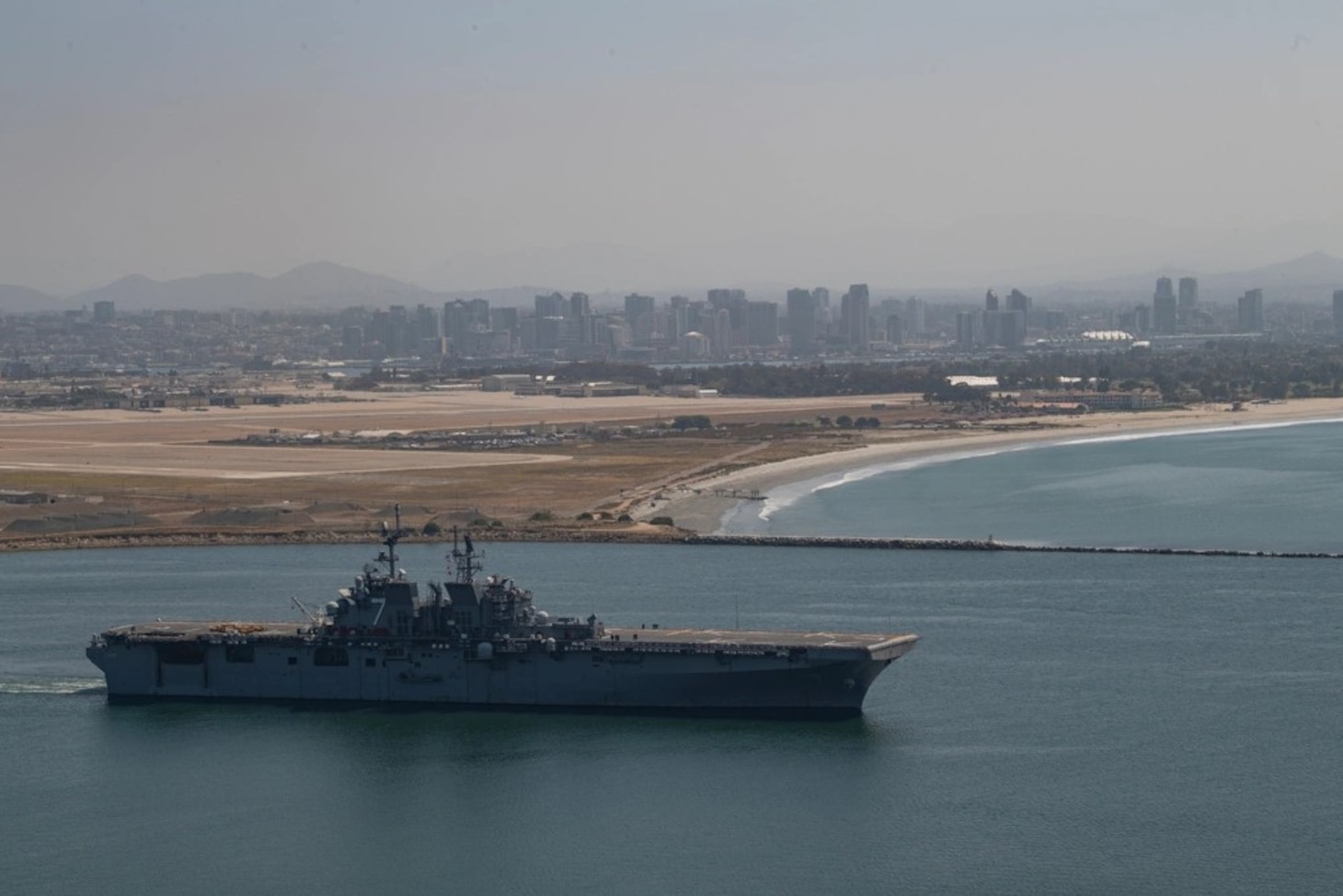
SAN DIEGO – The America-class amphibious assault ship USS Tripoli (LHA 7) departed Naval Base San Diego May 19 to forward deploy to Sasebo, Japan, as part of a scheduled rotation of forces in the Pacific.

Tripoli Departs San Diego

250519-N-EV253-1002 America-class amphibious assault carrier USS Tripoli (LHA 7) transits San Diego Bay, May 19, 2025. The ship departed Naval Base San Diego to complete a homeport change and join forward-deployed naval forces in Sasebo, Japan as part of a scheduled rotation of forces in the Pacific. (U.S. Navy photo by Mass Communication Specialist 1st Class Sara L. Eshleman)

The Tripoli will replace the amphibious assault ship USS America (LHA 6), which will depart Sasebo and move to San Diego.

“The Tripoli is ready to defend U.S. interests abroad and strengthen our long-standing partnership with Japan,” said Capt. Eddie Park, commanding officer of the Tripoli. “I am extremely proud to lead this hard-working and motivated team of Sailors and Marines overseas to support security, stability and prosperity in this vital region.”

The forward presence of the Tripoli supports the United States’ commitment to the defense of Japan, enhances the national security of the United States and improves its ability to protect strategic interests. The security environment in the Indo-Pacific requires the most capable ships to enable rapid response times for maritime and joint forces.

“The U.S. has a vital relationship with Japan, and their hospitality and professionalism are unmatched,” said the Tripoli’s executive officer (XO), Capt. Patrick Sullivan, whose previous assignment was deputy commander of Naval Surface Group Western Pacific in Sasebo. “I’m honored and excited to return as the XO of such a highly capable warship to honor our nation’s security commitment to Japan.”

San Diego has been the Tripoli’s homeport since September 2020. Since then, the Tripoli supported multiple exercises including Valiant Shield, Iron Storm, Kamandag, Steel Knight, and the 31st Marine Expeditionary Patrol 22.2. The ship also completed numerous maintenance availabilities and earned various fleet and type commander excellence awards.

“This crew has been diligently preparing to forward deploy since last year,” said Park. “I am fully confident in the crew’s abilities to execute any mission assigned to us.”

The Tripoli was commissioned July 15, 2020, and is the second America-class amphibious assault ship built for the United States Navy. The ship is named after the U.S. Marine Corps victory against Tripoli at the Battle of Derna during the First Barbary War in 1805.

The mission of Commander, Naval Surface Force, Pacific Fleet is to man, train, and equip the Surface Force to provide fleet commanders with credible naval power to control the sea and project power ashore.

Navy Deploys Destroyer USS Sampson to NORTHCOM

Sam LaGrone – June 3, 2025 11:13 PM

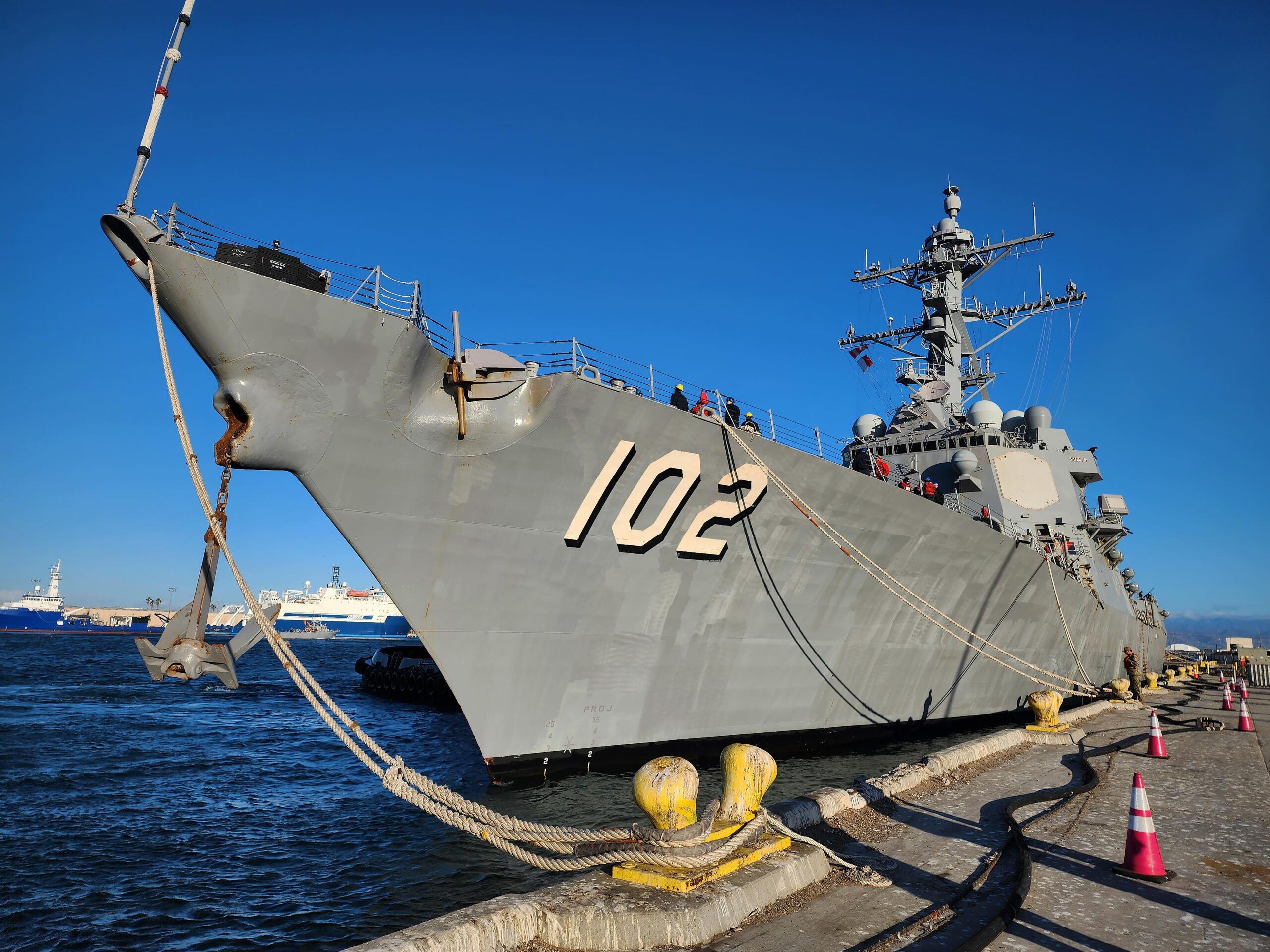
USS Sampson (DDG-102) conducts a routine port call onboard Naval Base Ventura County (NBVC) Port Hueneme on Nov. 15, 2024. US Navy Photo

A West Coast destroyer departed on Tuesday as the latest ship to deploy in support of operations in U.S. Northern Command, reads a statement from U.S. Fleet Forces.

USS Sampson (DDG-102) left from San Diego to relieve the Independence-class Littoral Combat Ship USS Charleston (LCS-18), “continuing the Navy’s role in maritime operations that support national security priorities,” reads the statement. “The deployment is part of the Department of Defense’s support to national objectives along the U.S. southern border, following Presidential directives and ongoing interagency efforts to improve border security and homeland defense.”

Sampson, like Charleston, has a Coast Guard law enforcement detachment during its deployment. Embarked LEDETs have been a centerpiece of Navy support for the overall anti-trafficking effort in U.S. Southern Command for decades as part of Campaign Martillo.

“As a surface combatant assigned to Destroyer Squadron 9, Sampson brings robust multi-mission capabilities to the task of defending U.S. sovereignty and supporting homeland defense operations in coordination with USNORTHCOM,” reads a statement.

Destroyers from both coasts have been dispatched to the border to support anti-trafficking and immigration operations.

Last week in the Caribbean Sea, USS Gravely (DDG-107) and LEDET 401 seized $13.5 million in cocaine, USNI News reported.

Hegseth orders renaming of ship named for gay rights icon Harvey Milk

By Lolita C. Baldor, The Associated Press – Jun 4, 2025, 09:25 AM

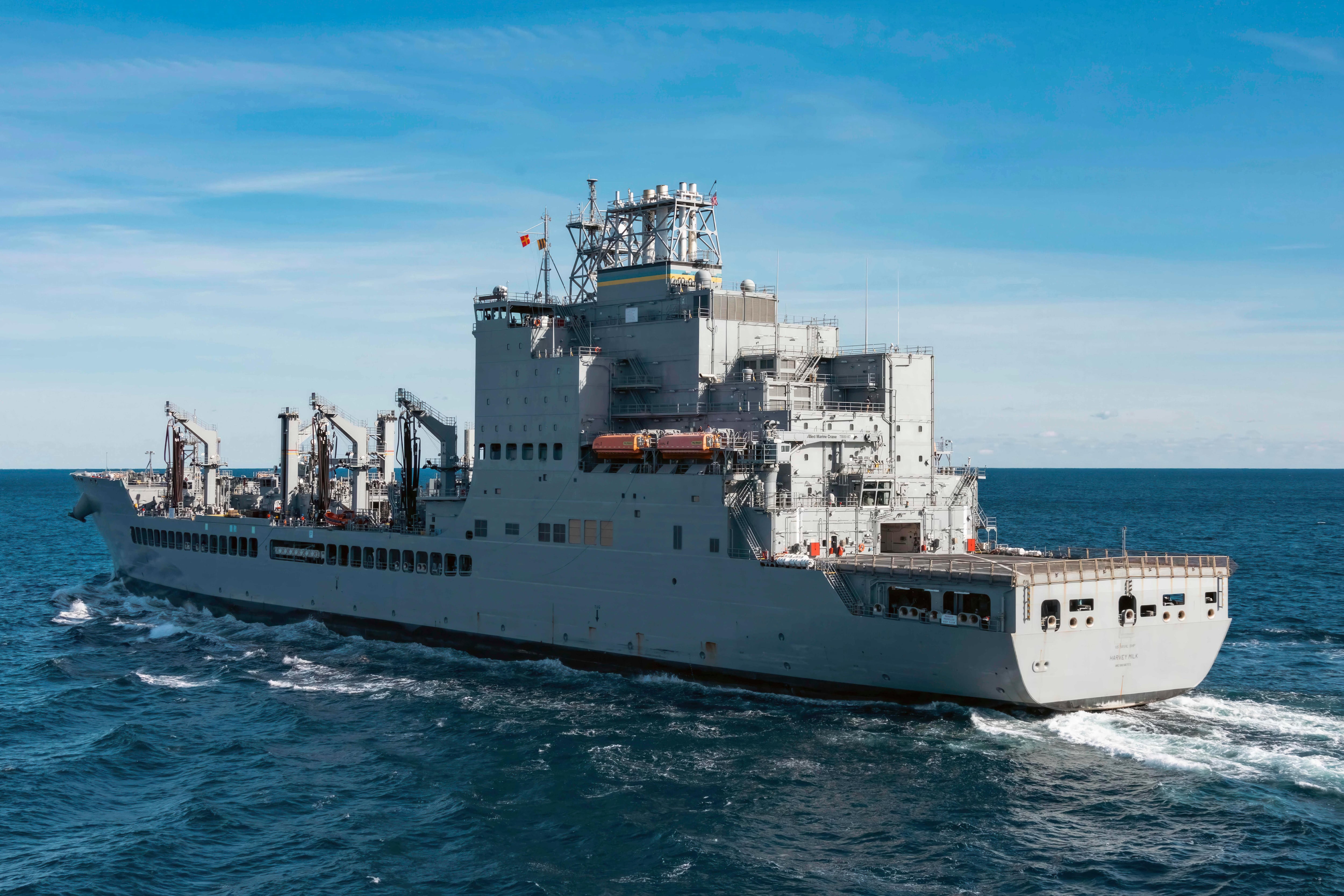
In this image provided by the U.S. Navy, the replenishment oiler Harvey Milk conducts a replenishment at sea in the Atlantic Ocean on Dec. 13, 2024. (MC2 Maxwell Orlosky/U.S. Navy via AP)

Defense Secretary Pete Hegseth has ordered the Navy to rename the replenishment oiler Harvey Milk, a highly rare move that will strip the ship of the moniker of a slain gay rights activist who served as a sailor during the Korean War.

U.S. officials say Navy Secretary John Phelan put together a small team to rename the replenishment oiler and that a new name is expected this month. The officials, who spoke on condition of anonymity to discuss internal deliberations, said the next name had not yet been chosen.

The change was laid out in an internal memo that officials said defended the action as a move to align with President Donald Trump and Hegseth’s objectives to “re-establish the warrior culture.”

RELATED
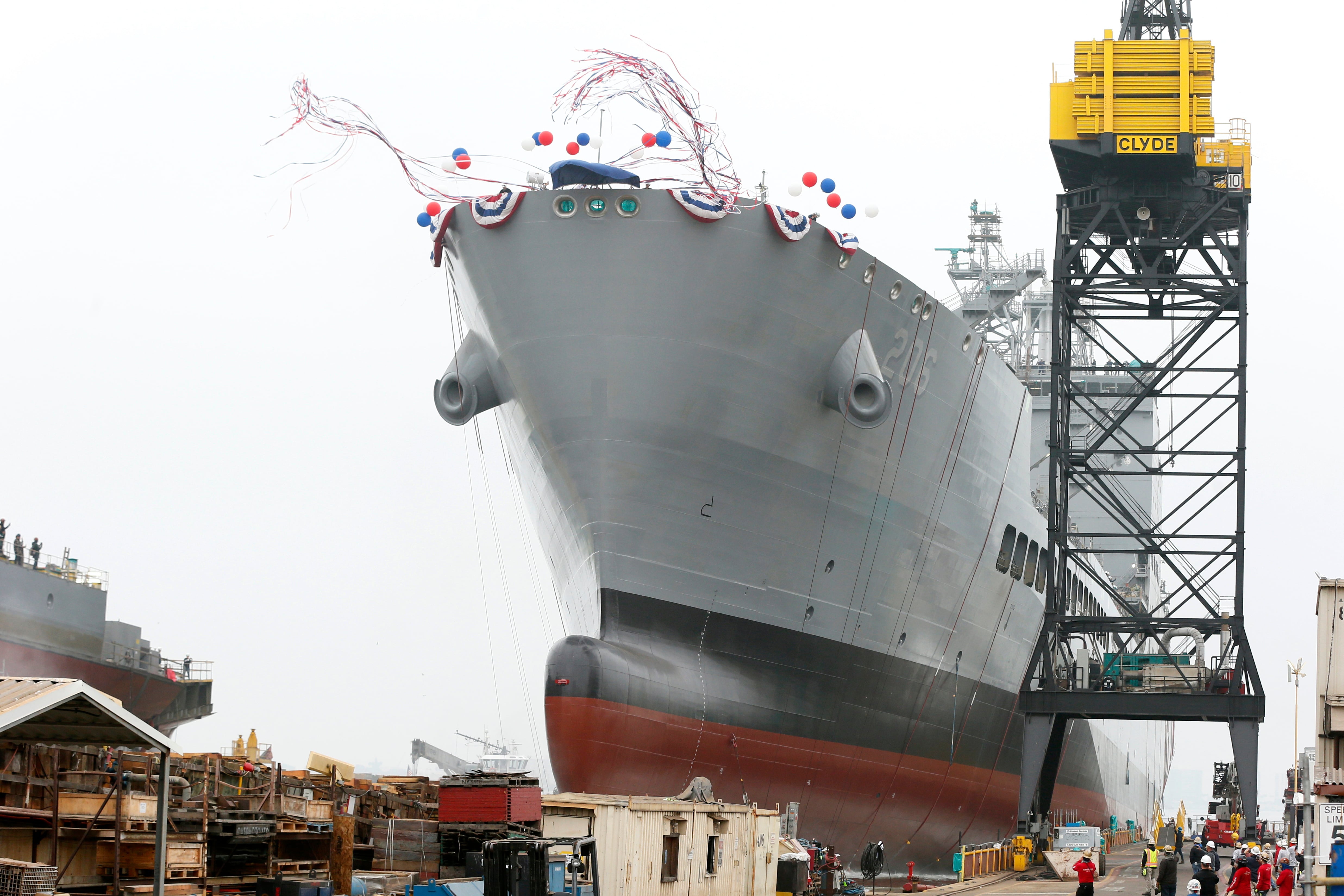
Navy launches ship named for gay rights leader Harvey Milk
Harvey Milk was one of the first openly gay candidates elected to public office.

It marks the latest move by Hegseth and the wider Trump administration to purge all programs, policies, books and social media mentions of references to diversity, equity and inclusion. And it comes during Pride Month — the same timing as the Pentagon’s campaign to force transgender troops out of the U.S. military.

“Secretary Hegseth is committed to ensuring that the names attached to all DOD installations and assets are reflective of the Commander-in-Chief’s priorities, our nation’s history, and the warrior ethos,” Chief Pentagon spokesman Sean Parnell said in a statement on the renaming. “Any potential renaming(s) will be announced after internal reviews are complete.”

The decision was first reported by Military.com. Phelan’s office did not respond to a request for comment.

The oiler Harvey Milk was named in 2016 by then-Navy Secretary Ray Mabus, who said at the time that the John Lewis-class of oilers would be named after leaders who fought for civil and human rights.

Milk, who was portrayed by Sean Penn in an Oscar-winning 2008 movie, served for four years in the Navy before he was forced out for being gay. He later became one of the first openly gay candidates elected to public office. Milk served on the San Francisco Board of Supervisors and had sponsored a bill banning discrimination based on sexual orientation in public accommodations, housing and employment. It passed, and San Francisco Mayor George Moscone signed it into law.

On Nov. 27, 1978, Milk and Moscone were assassinated by Dan White, a disgruntled former city supervisor who cast the sole vote against Milk’s bill.

The ship was christened in 2021, and during the ceremony, then-Navy Secretary Carlos Del Toro said he wanted to be at the event “not just to amend the wrongs of the past, but to give inspiration to all of our LGBTQ community leaders who served in the Navy, in uniform today and in the civilian workforce as well, too, and to tell them that we’re committed to them in the future.”

The ship is operated by Military Sealift Command with a crew of about 125 civilian mariners. The Navy says it conducted its first resupply mission at sea in fall 2024 while operating in the Virginia Capes. It continued to resupply Navy ships at sea off the East Coast until it began scheduled maintenance at Alabama Shipyard in Mobile, Alabama, earlier this year.

While the renaming is rare, the Biden administration also changed the names of two Navy ships in 2023 as part of the effort to remove Confederate names from U.S. military installations.

The Ticonderoga-class guided-missile cruiser Chancellorsville — named for the Civil War battle — was renamed the Robert Smalls after a sailor and former enslaved person. And the Maury, an oceanographic survey ship originally named after a Confederate sailor, was renamed the Marie Tharp after a geologist and oceanographic cartographer who created the first scientific maps of the Atlantic Ocean floor.

Maritime lore hints as to why renaming ships is so unusual, suggesting that changing a name is bad luck and tempts retribution from the sea gods.

Military Times editor Beth Sullivan contributed to this report.

Naval parade through Wellington as part of sister city celebrations with Canberra – HMAS Canberra in attendance.

June 2, 2025News from WCC

An MH-60 Black Hawk supporting Special Operations Command Pacific prepares to take flight after conducting a deck landing aboard HMAS Canberra off the coast of Queensland, Australia, during Talisman Sabre 21, July 26, 2021. TS21 supports the Indo-Pacific Pathways initiative to advance a free and open Indo-Pacific by strengthening relationships and building trust and interoperability with allies and partners. (U.S. Air Force photo by 1st Lt. Joshua Thompson)

Wellington will be celebrating its sister city partnership with Canberra this week.

Australian Capital Territory Chief Minister Andrew Barr will be leading a delegation to Wellington, to celebrate the partnership and cooperation between the two capital cities.

“This week’s celebration reflects the strength and significance of our city’s relationship with Canberra, further deepening the bonds of friendship and collaboration between us,” says Mayor Tory Whanau.

“Our partnership is a source of great pride and a key element in Wellington’s international engagements, fostering a continued exchange of ideas, culture, and goodwill.”

Chief Minister Andrew Barr said the visit was an opportunity to reaffirm the deep and growing ties between Canberra and Wellington.

“Our sister city relationship with Wellington is one of genuine friendship and mutual respect. It’s built on a shared commitment to sustainability, creativity, and inclusive growth,” says Mr Barr. “From climate action and urban planning to arts and innovation, our two capital cities face many of the same challenges and opportunities. This visit allows us to share knowledge, deepen collaboration, and celebrate what we’ve already achieved together.

“It’s also a chance to showcase the very best of Canberra – from our defence ties and creative industries to our thriving business and education sectors.”

HMAS Canberra, the Royal Australian Navy’s flagship, will take part in a series of events that includes a naval parade through the city, Ship’s company volunteering at a soup kitchen and in community clean-ups, and a rugby match against their New Zealand counterparts.

An agreement will be signed to foster closer cooperation between capital cities in the Pacific region, and a business mission from Canberra will meet with their New Zealand counterparts.

The programme of activities includes:

5-9 June: Visit by the amphibious assault ship HMAS Canberra.

5 June: A business delegation, including representatives from the Canberra Chamber of Commerce and the Canberra Convention Bureau (responsible for attracting business events to the Canberra region), will attend an economic briefing organised by the Wellington City Council.

6 June: Signing of a tripartite agreement on regional cooperation between Wellington, Canberra, and the Fijian capital, Suva.

6 June: Ship’s company from HMAS Canberra will volunteer at the Compassion Soup Kitchen from 10am to 12:30pm and participate in clean-ups from 12:30pm to 3:30pm at the Wellington Botanic Garden, Otari-Wilton’s Bush, Wellington Zoo, Wellington Harbour (near the tugboat), and Owhiro Bay.

6 June, 9:00am-12:00pm: AFL match between the Royal Australian Navy and the Royal New Zealand Navy at Rugby League Park, Newtown.

7 June, 10:00am-10:30am: Freedom of Entry parade through Wellington by around 250 Ship’s company of HMAS Canberra.

The parade begins at Queens Wharf Square, proceeds onto Jervois Quay, then turns onto Brandon Street. It continues down Lambton Quay, turning right and proceeding along Lambton Quay towards Parliament. Just before Bowen Street, the parade will be “challenged” by the Wellington District Commander of the New Zealand Police (a symbolic exchange where they will ask for identification and confirmation of permission, which will be provided via the Mayor’s charter). Following this, the parade will continue, with participants saluting VIPs on the dais at the Cenotaph. The route then continues along Bunny Street and Thorndon Quay, concluding near Pipitea Marae.

7 June, 1:30pm-3:00pm: Royal Australian Navy band concert at Pukeahu National War Memorial.

Under the sister city partnership agreement signed in 2016, Wellington and Canberra committed to promote business collaboration, tourism, educational and cultural exchanges, and the sharing of research and knowledge.

Regular visits and the signing of agreements between their business chambers, screen industry organisations, zoos, conservation eco-sanctuaries, indigenous artist exchange programmes, and botanic gardens have enhanced city-to-city relations since then.

JCs Royal New Zealand Navy Ships and New Zealand Defence, Also other World Defence Updates

Ships and Defence News Past and Present

Skip to content ↓