Royal Navy shadows Russian warships near UK in second mission this month

29th May 2025 at 12:07pm

HMS Dragon tracking Russian ship Yuri Ivanov (Picture: Royal Navy)

HMS Dragon, HMS Hurworth and HMS Ledbury have been involved in a five-day operation to track Russian naval activity near British waters.

Royal Navy warships and helicopters have once again been called on to monitor Russian activity around the UK – the second such operation this month.

Portsmouth-based HMS Dragon shadowed the Russian intelligence-gathering ship Yuri Ivanov as it lingered off the coast of the Outer Hebrides following Nato’s Formidable Shield exercise.

The Type 45 destroyer launched a Merlin helicopter to gather further information before the Russian vessel turned north for home in the Arctic.

Meanwhile, in the English Channel, HMS Ledbury, HMS Hurworth and a Merlin Mk2 from 814 Naval Air Squadron tracked the Russian corvette Stoikiy and two merchant ships, Sparta IV and General Skobelev, as they returned from the Mediterranean and transited east through the Channel.

HMS Hurworth kept close watch on the group, supported by Nato aircraft and warships, until it exited the North Sea.
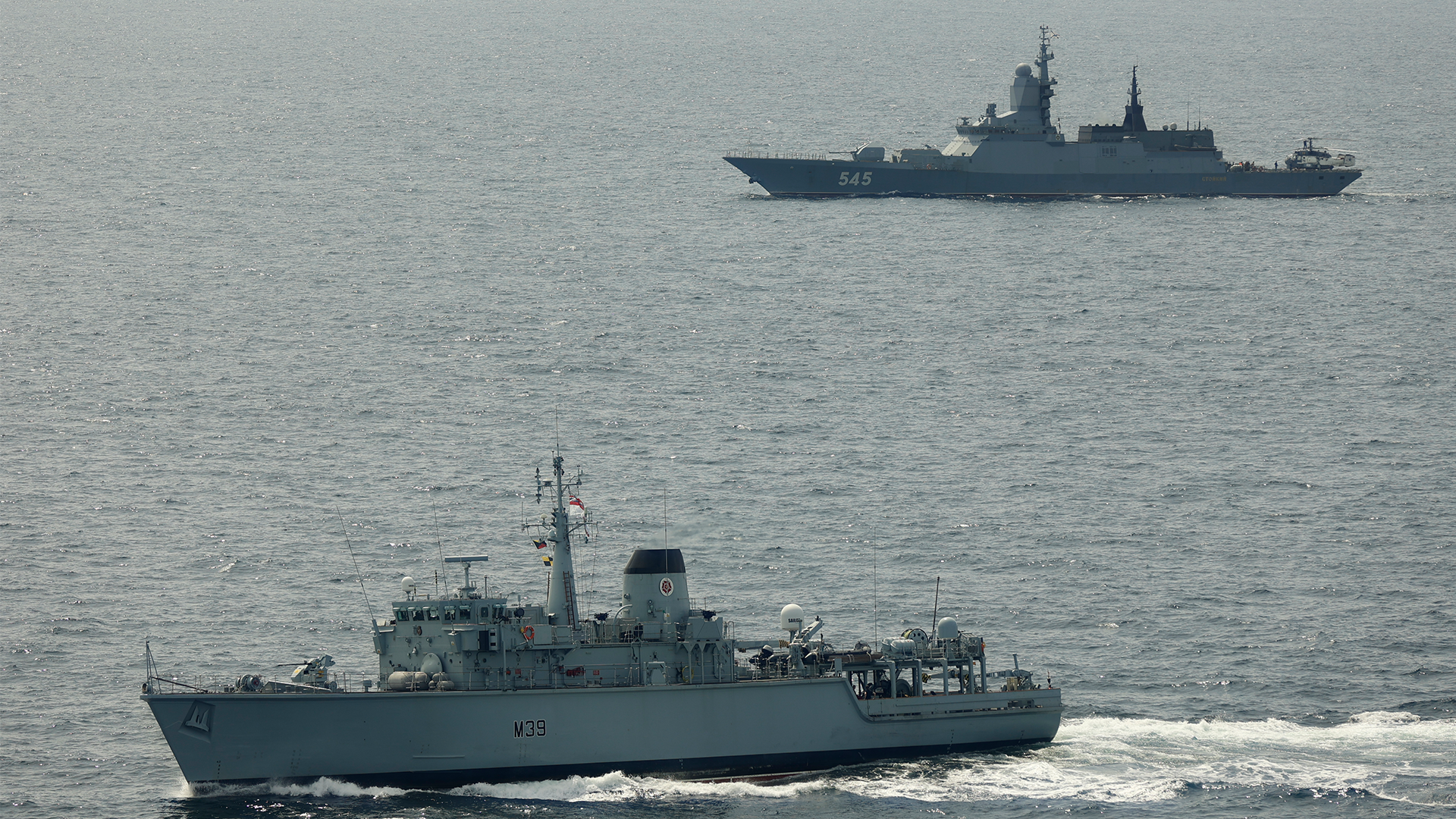
HMS Hurworth tracks RFN Stoikiy CREDIT ROYAL NAVY
HMS Hurworth tracks RFN Stoikiy (Picture: Royal Navy)

Lieutenant Commander James Bradshaw, Commanding Officer of HMS Hurworth, said: “Monitoring activity on the seas and seabed around the UK is one of the core roles of the Royal Navy’s 2nd Mine-Countermeasures Squadron.

“This operation was all in a day’s work for the ship’s company who have shown great professionalism.

“We have kept a constant watch to ensure the security and integrity of the UK’s critical sea lanes.”

The operation involved support from Nato aircraft and ships, with the Merlin helicopter from RNAS Culdrose tracking the Russian group during the eastbound transit.

It comes just three weeks after HMS Tyne was activated to monitor similar activity, and follows Prime Minister Sir Keir Starmer’s recent commitment to increase defence spending to 2.5% of GDP.

“Driving the ship close to the Russian vessels has been a new experience for me as a helmsman,” Able Seaman Mine Warfare Wayne Slater, from HMS Hurworth, said. 

“Everything has been safe and professional but we’re all trained to make sure we can respond to any aggression or incident whenever non-allied warships are operating near UK waters.”

Minefields no challenge for the Challenger 2 – thanks to the British Army’s Trojan

29th May 2025 at 10:59am

Minefields and anti-tank ditches no obstacle for the Trojan

Main battle tanks like the Challenger 2 rely on a combination of firepower, mobility and protection – all of which a potential enemy is well aware.

To slow down or halt the advance, the enemy can create anti-tank ditches and lay minefields – and even if the tanks avoid the mines they can end up being channelled into a kill zone where they can be targeted by artillery.

And that’s where the British Army’s Trojan armoured engineer vehicle comes in.

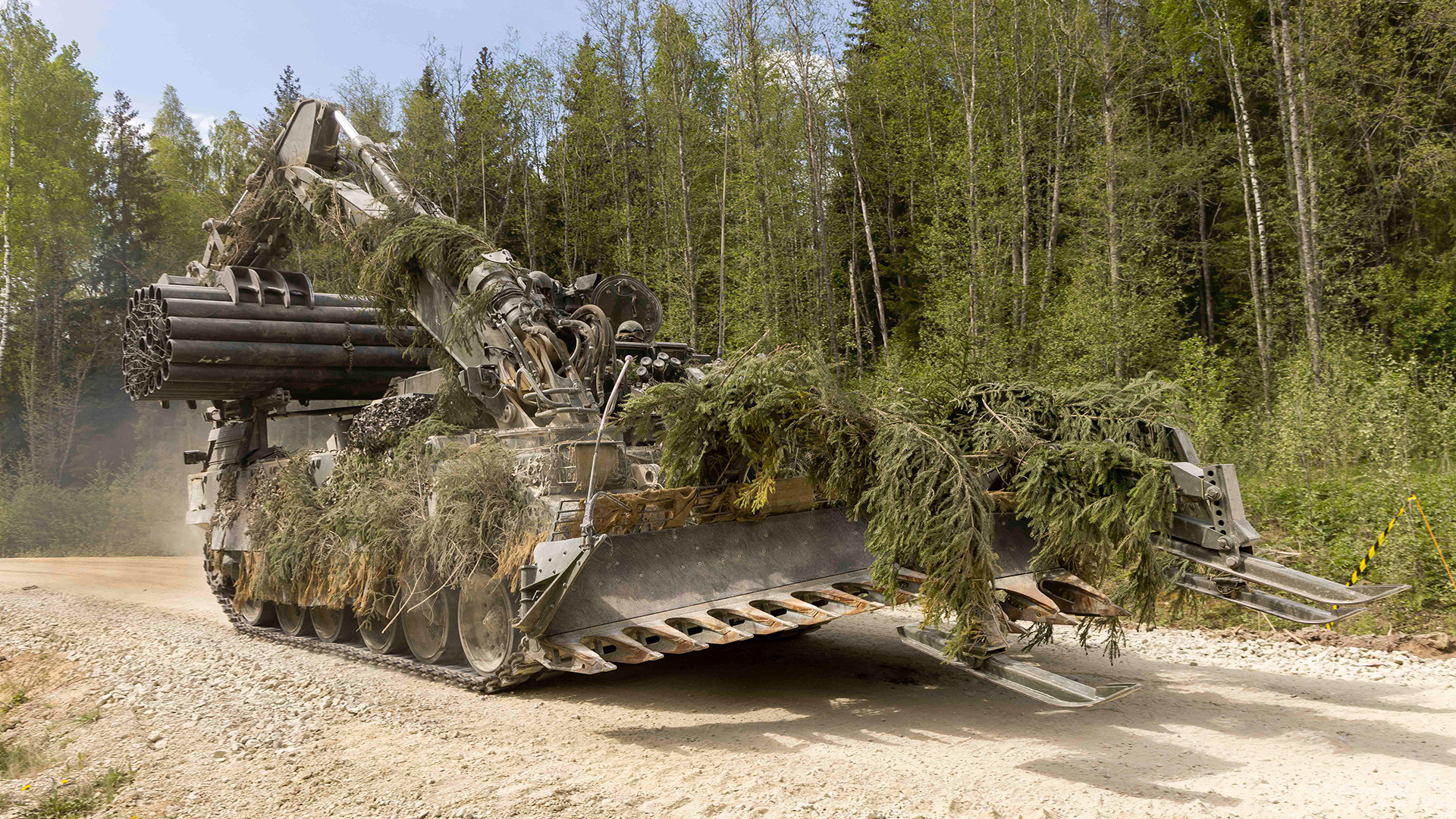
This vehicle is designed to open routes through complex battlefield obstacles and clear a path through minefields.

The Trojan Armoured Vehicle Royal Engineers is a combat engineering vehicle that was designed as a replacement for the Chieftain AVRE – the ChAVRE.

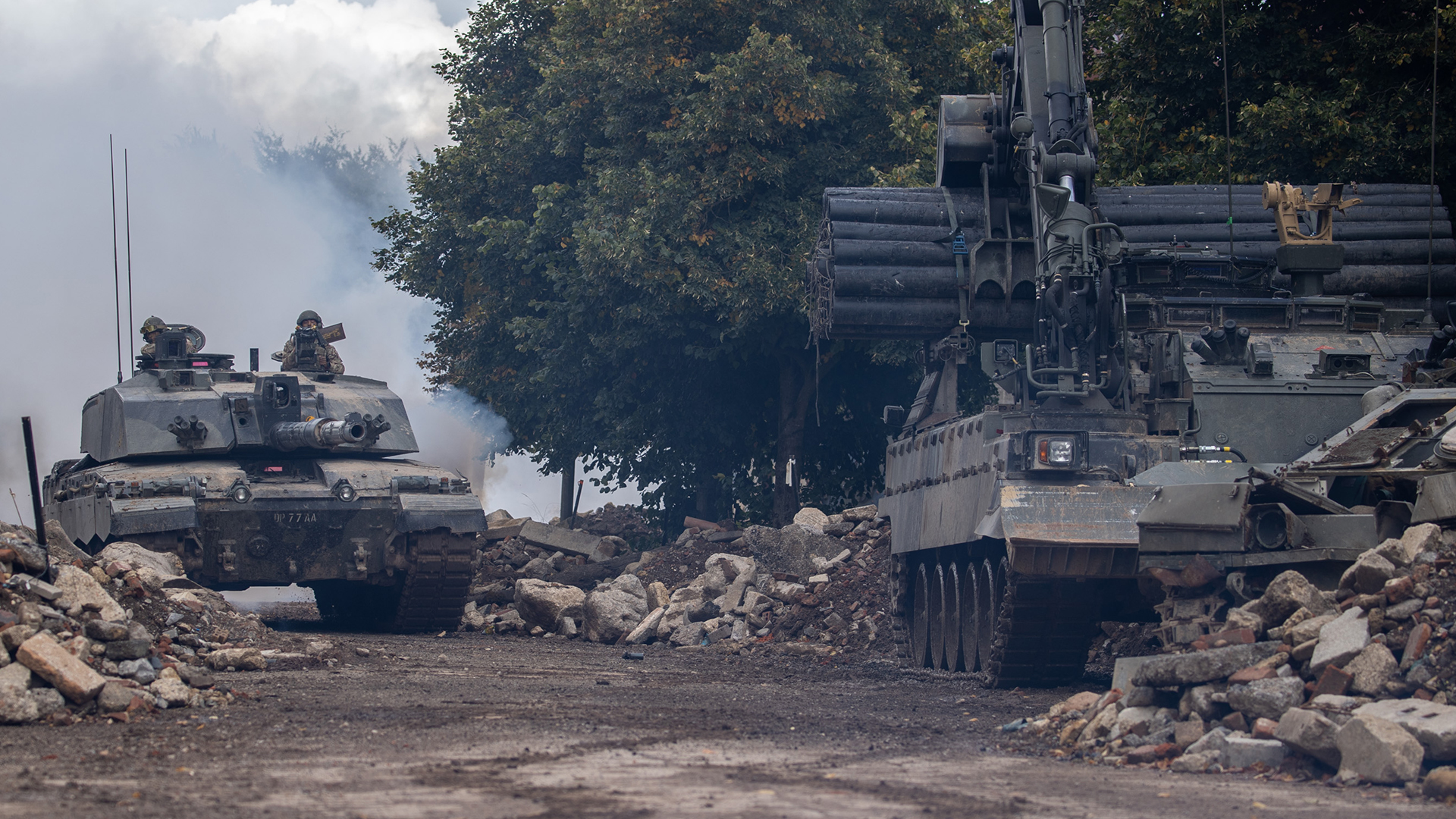
The Trojan is based on the chassis of the Challenger 2 it’s designed to support, and is powered by the same Perkins CV12 diesel engine.

While the Trojan is based on the Challenger 2 chassis, it's role is very different
While the Trojan may resemble the Challenger 2, it’s role is very different (Picture: MOD)

Its standard equipment includes a dozer blade, mine plough and an excavator arm, and a mine-marking system can also be fitted.

It can also carry fascines – a bundle of pipes that are dropped into a ditch, filling the gap so it can then be driven over.

The Trojan can also tow a trailer-mounted, rocket-propelled, mine-clearing system.

Although it has no turret – the Trojan is not a tank – all this dedicated kit gives it a combat weight of 62.5 tonnes, but it can nevertheless achieve a top speed of 59km/h.

Improved visibility is achieved by incorporating direct and indirect vision devices with low-light, image-intensifying and thermal imaging capabilities. It also has a CBRN protection system.

The Trojan is based on the Challenger 2 chassis, and works in conjunction with the main battle tank
The Trojan is based on the Challenger 2 chassis, and works in conjunction with the main battle tank (Picture: MOD)

Because it can free up an armoured advance, the Trojan is considered a high-value target. It has some means of protection, being armed with the 7.62mm belt-fed L7A2 GPMG.

But it relies on the very vehicle it’s there to support – the Challenger 2 – to protect it against threats such as enemy armour.

While it was designed for the battlefield, the Trojan has the flexibility to support a wide range of operations, including humanitarian missions.

Carrier Strike Group 25 passes through the Suez Canal, the Royal Navy reveals

Jonathan Moynihan – 29th May 2025 at 11:27am

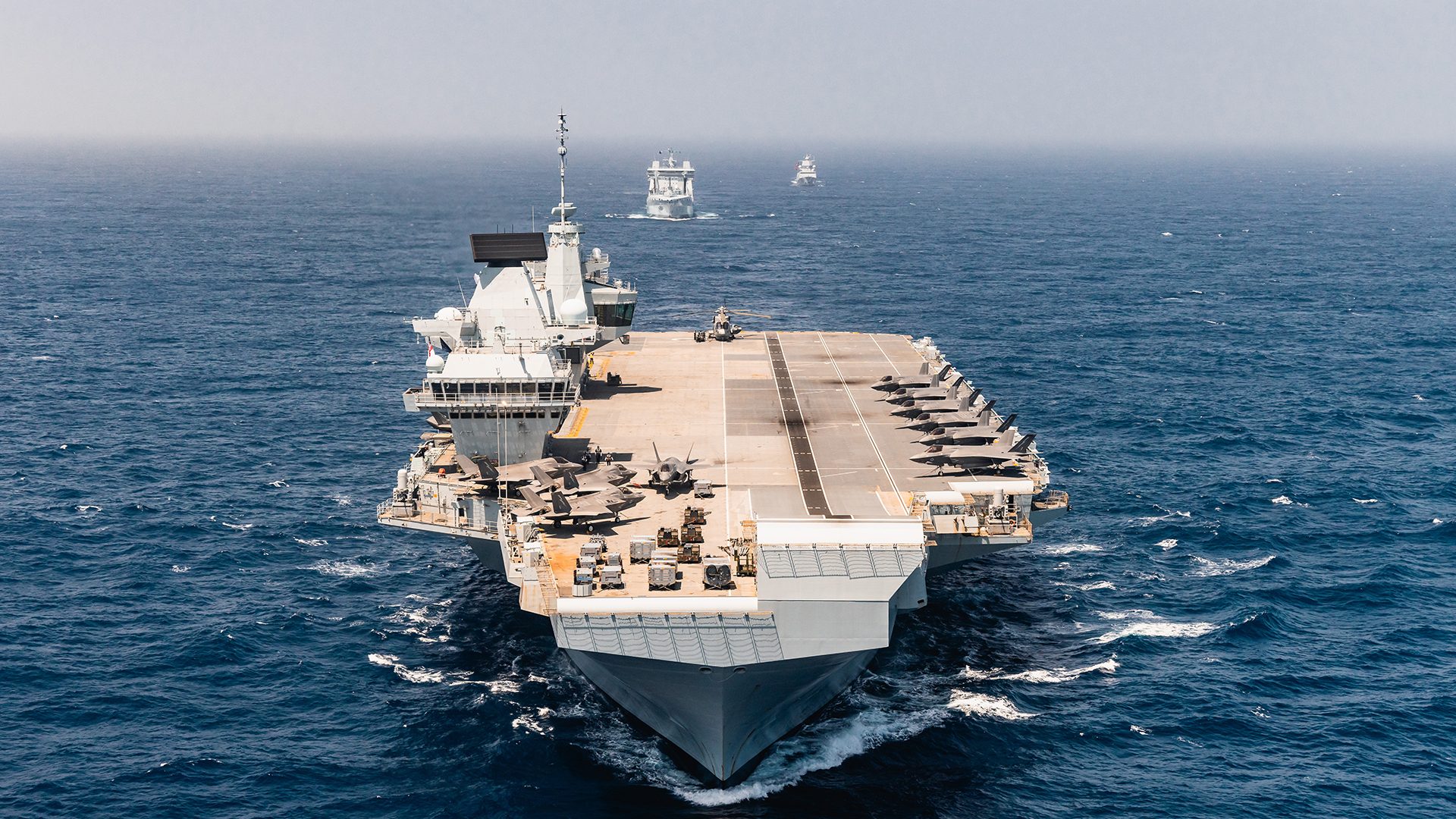
The CSG did not contain RFA Tidespring, as the tanker will travel south around the Cape of Good Hope (Picture: MOD)

Carrier Strike Group 25 has sailed through the Suez Canal as it continues its onward journey to Australia, the Royal Navy has confirmed.

Defence Secretary John Healey revealed that they had “gameplanned situations” in case the carrier strike group had to deal with an attack from the Iranian-backed Houthis, according to the Telegraph.

The UK resumed strikes on Houthi drone facilities ahead of the £3bn aircraft carrier’s passage through the canal.

“The Carrier Strike Group is in a high-risk area,” Mr Healey said during his visit to MOD Corsham, the UK’s military cyber headquarters.

“We know that, they know that, they are fully trained for that, and they are as well prepared and well protected as they can be, physically, militarily, and digitally, and in cyber.”

He added that “it will be a really dangerous high-risk passage”.

The CSG did not contain RFA Tidespring, as the tanker will travel south around the Cape of Good Hope before rejoining the vessels in the Indian Ocean.

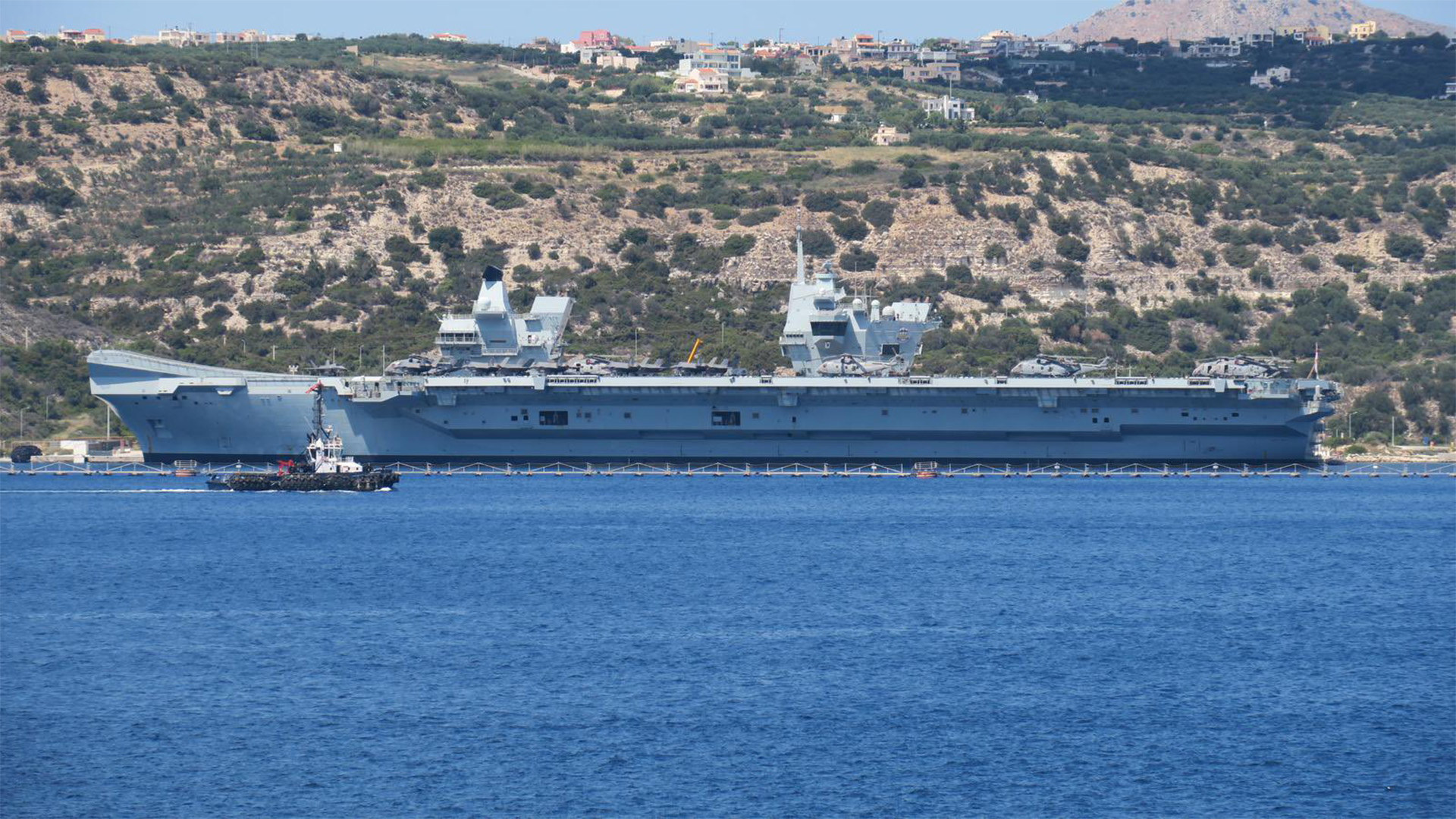
It comes after the personnel enjoyed some rest and recuperation in Souda Bay in Crete following Exercise Med Strike.

The CSG partnered with an Italian carrier strike group, led by flagship ITS Cavour, to take part in Exercise Med Strike.

The exercise involved 21 warships, three submarines, 41 fast jets, 19 helicopters, 10 patrol aircraft and 8,000 personnel.

UK and Italian F-35B Lightning jets flew day and night, while warships and submarines from both countries trained together, practising anti-submarine tactics.

It comes after the personnel enjoyed some rest and recuperation in Souda Bay in Crete following Exercise Med Strike (Picture: MOD)
The transit comes after the personnel enjoyed some rest and recuperation in Souda Bay in Crete following Exercise Med Strike (Picture: MOD)

The training was also a test of air defence skills, including dealing with aerial drone attacks.

There are 12 countries participating in the CSG deployment, known as Operation Highmast, which will last eight months and cover more than 30,000 miles.

The CSG will conduct further large-scale exercises with allies in the Middle East, Japan and Australia.

Over 4,500 British military personnel are involved, including nearly 600 RAF, 900 soldiers, and 2,500 Royal Navy sailors and Royal Marines.

For more reports about Carrier Strike Group 25, click here.

New Zealand-led task force seizes $1b of narcotics in Arabian Sea

Brett Kerr-Laurie

May 29, 2025Share

A New Zealand-led naval task force has made its most expensive drug bust of the year while patrolling the Middle East.

The British Royal Navy frigate HMS Lancaster seized 1000kg of heroin, 660kg of hashish and 6kg of amphetamine from a small boat in the North Arabian Sea late last week, the New Zealand Defence Force said in a statement.

The Lancaster is part of the multinational Combined Maritime Task Force 150 (CTF 150), which is under New Zealand command.

Based in Bahrain, the CTF 150 is focused on maritime security in the Middle East with an emphasis on disrupting drug smuggling.

More than 100 packages of drugs were secured by the HMS Lancaster.New Zealand Defence Force

Using it’s new Peregrine uncrewed aerial system, the Lancaster identified a cargo dhow [a small sailing vessel] “acting in a suspicious manner”, the statement said.

A Royal Marine sniper team, on a Wildcat helicopter, covered teams as they boarded the vessel.

The teams secured six crew on the dhow, then found 50 packages containing heroin and 55 packages containing hashish and amphetamine.

The drugs were taken back to the frigate for testing and disposal.

ADVERTISEMENT

Advertise with Stuff

Boarding teams secured six crew members before they found the drugs.New Zealand Defence Force

The Lancaster’s commanding officer commander Chris Chew said the ship’s latest success was the result of his crew’s motivation, commitment and dedication.

“This is another example of where Lancaster has delivered at range, in isolation, utilising her own organic assets.”

Task Force commander, Royal New Zealand Navy (RNZN) commodore Rodger Ward said it was the “largest value narcotics interdiction” the CTF 150 had made under NZ command this year.

He said the task force and its partners had now seized narcotics with a collective New Zealand street value of $1.8b.

“Furthermore we estimate that our presence and the intelligence collected from our operations has resulted in the disruption of nearly three times that amount.”

Boarding crews were covered by a sniper team in a Wildcat helicopter.New Zealand Defence Force

Ward acknowledged the 210-strong company of the Lancaster for “continuing to get amongst it day-after-day”.

“Everyone in the team can be proud of their efforts to disrupt the criminal and terrorist organisations that continue to use illicit narcotics to fund their activities and this is a significant blow to their revenue stream.

“Conducting maritime interdictions requires a team effort from the men and women here in the headquarters in Bahrain reaching through to those out on the oceans disrupting drug smuggling operations at the coal face.”

ADVERTISEMENT

Advertise with Stuff

The seizure was testament to the tenacity, training and professionalism of CTF 150’s Royal Navy partners, he said.

RNZN frigate HMNZS Te Kaha has also been deployed to CTF 150 over the past two months, conducting similar operations as the Lancaster as part of New Zealand’s commitment to collective security efforts in the region.

The CTF 150 and its partners have now seized narcotics with a collective New Zealand street value of $1.8b.New Zealand Defence Force

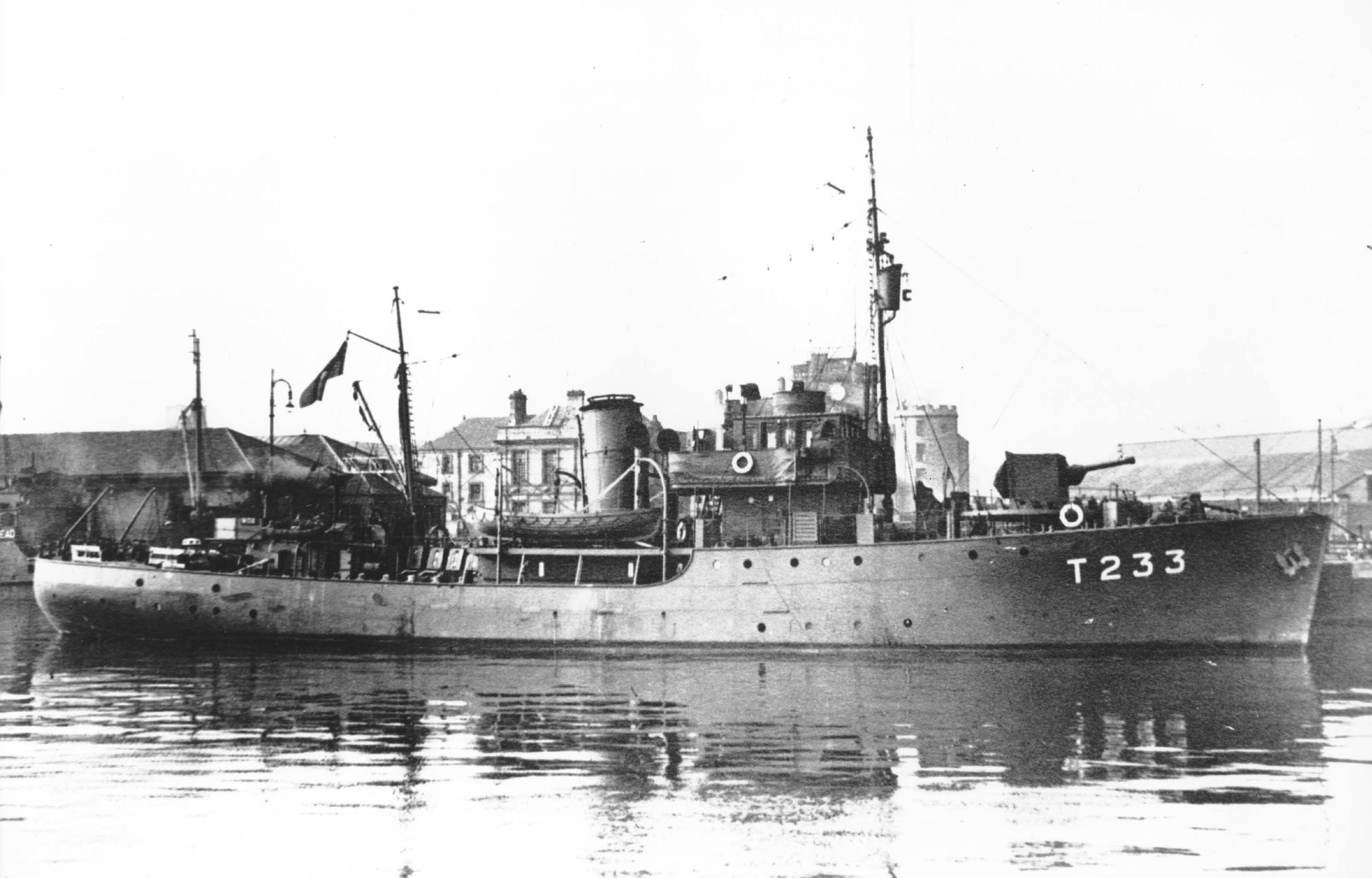
RNZN History – HMNZS Moa (T233) was a Bird-class minesweeper of the Royal New Zealand Navy (RNZN) that served during World War II.

HMNZS Moa (T233) alongside wharf at Leith, Scotland. 1943

Construction and design

The first of three Bird-class minesweepersMoa displaced 607 tons standard and 923 tons at full load. She was 168 ft (51 m) long overall, had a beam of 30 ft (9.1 m) and a draught of 15.3 ft (4.7 m). She had a top speed of 13 knots (24 km/h) and a crew of between 33 and 35 personnel. Moa‘s main armament was a single 4-inch Mk IX naval gun, which was supplemented by anti-aircraft guns. She also carried minesweeping equipment and 40 depth charges for anti-submarine operations.[3][4]

Operational history

Commissioned into the Royal New Zealand Navy on 12 August 1941, Moa was the first of two vessels with this name to serve in the RNZN and was named after a native bird from New Zealand.[5][6]

External videos
video icon HMNZS Kiwi and Moa versus submarine I-1: David versus Goliath at Sea – Drachinifel

On 29 January 1943, in concert with her sister ship KiwiMoa helped to ram and wreck the Japanese submarine I-1.[7] At the time Moa was under the command of Lieutenant Commander Peter Phipps, later to become a vice admiral.

The deck gun from Japanese submarine I-1 on display at the Torpedo Bay Navy 

In February 1943, Moa participated in Operation Cleanslate, the occupation of the Russell Islands. However, when the Moa put the forces ashore, local natives informed them that the Japanese had left ten days before.[9]

On 7 April 1943 Moa was refuelling from the USS Erskine M. Phelps at Tulagi Harbor when Japanese aircraft attacked.[10][11] Moa sustained two near misses and two direct hits from 500-pound (230 kg) bombs, one that passed through the ship before exploding in the water abeam to starboard,[12][13] the other passed through the captain’s cabin into the boiler room, where it exploded, effectively “breaking the ship′s back.”[14][15][12][13] Moa sank bow-first within about four minutes.[8] Five ratings were killed and seven were seriously wounded, including Phipps.[7][8] At some point in the interim following the sinking of the submarine I-1 and her own sinking, the Moa crew had acquired and mounted a 20 mm Oerlikon anti-aircraft gun on her very bow, with which the crew used against their attackers before they sank.[16] This 20mm gun could still be seen on her wreck in 2002.[17]

Postscript

[edit]

I-1‘s gun on display at the Torpedo Bay Navy Museum

Seventy-one years after her sinking, Moa‘s name plate was recovered by divers and is being restored for eventual display at the Torpedo Bay Navy Museum in Auckland, New Zealand.[4] The Torpedo Bay Naval Museum already has on display the main deck gun recovered from the wreck of the I-1.

JCs Royal New Zealand Navy Ships and New Zealand Defence, Also other World Defence Updates

Ships and Defence News Past and Present

Skip to content ↓