US Navy Orders Two Additional Virginia-Class Submarines

BySeaWaves Magazine – May 3, 2025
NAVSEA file photo

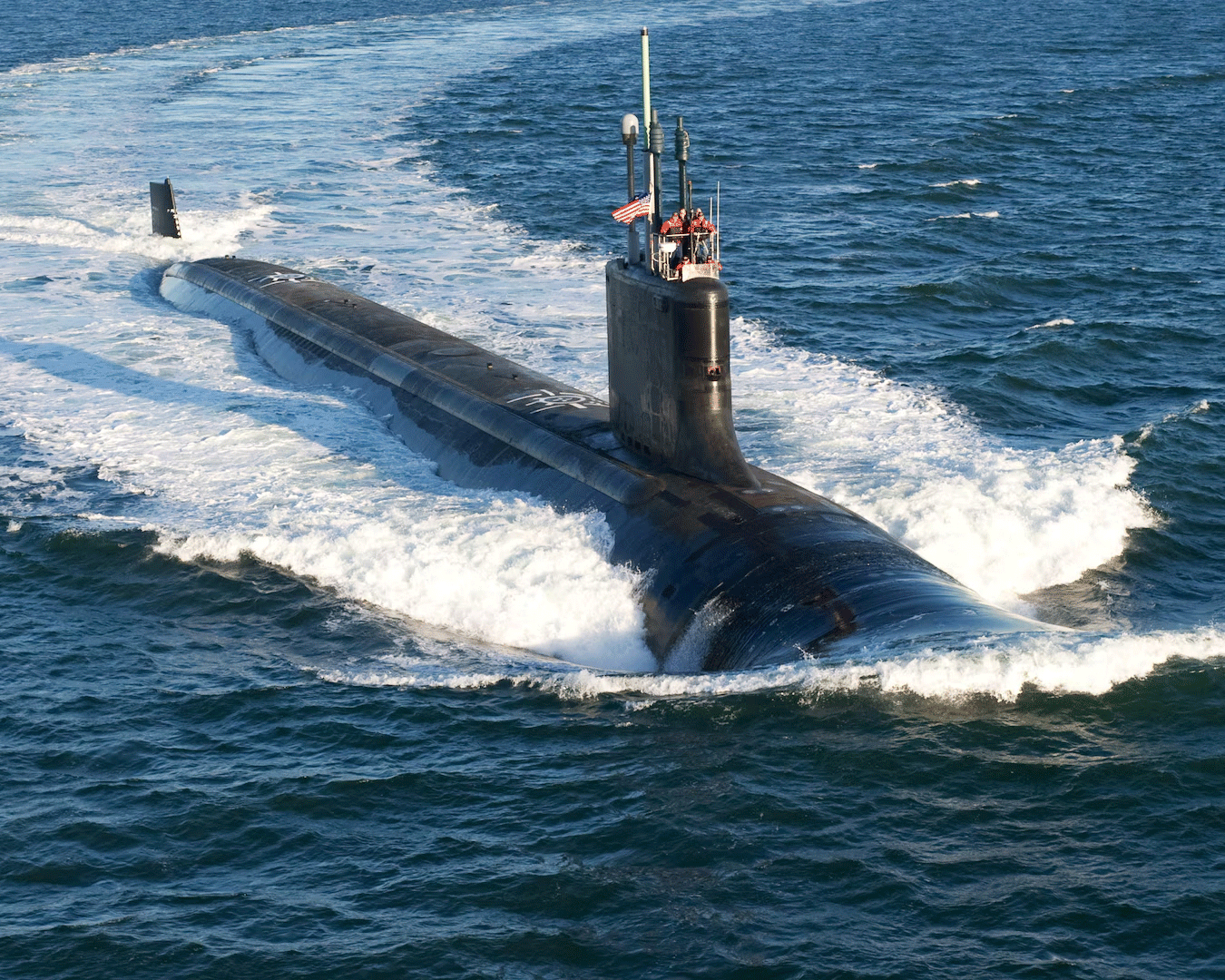
Naval Sea Systems Command has awarded a two-ship contract modification on the existing Virginia-class submarine Block V contract to General Dynamics Electric Boat (GDEB) for the construction of two FY 2024 Virginia-class submarines.

The award signals the Navy’s commitment to maintaining its warfighting advantage in the undersea domain and continues the Virginia-class’s teaming arrangement between prime contractor GDEB in Groton, Connecticut, and the major subcontractor Huntington Ingalls Shipbuilding, Newport News (HII-NNS) in Newport News, Virginia. To date, the Navy has taken delivery of 24 Virginia-class submarines, with an additional 16 now under contract.

“We recently re-negotiated the planned contract to deliver this critical capability, and appropriately share risk between the Navy and industry,” said Secretary of the Navy John C. Phelan. “We will be looking at all future contracts with a similar lens to ensure the appropriate level of risk sharing and value to the American taxpayer.”

Contract modifications were also awarded to both GDEB and HII-NNS, to increase workforce support and investment across nuclear shipbuilding programs.

“By investing in the nuclear shipbuilding workforce—which is a national strategic asset—we are working with our industry partners to deliver on this most critical future requirement,” said Dr. Brett Seidle, acting Assistant Secretary of the Navy for Research, Development & Acquisition.

“The contract award is the result of a highly coordinated contracting effort across the nuclear shipbuilding enterprise, to promote stability at critical suppliers as the submarine industrial base ramps up to meet a historic increase in demand for submarine production,” said Program Executive Officer, Attack Submarines, Rear Adm. Jon Rucker. “We are continuing to work closely with the shipbuilders to improve construction schedules to support the Navy’s need for a larger more lethal force.”

Capable of performing traditional submarine missions, dominating the littoral battlespace and adapting to future requirements, the Virginia-class submarine satisfies any assigned role well into the 21st century.

The French replenishment ship Jacques Chevallier (center) and the French and Italian multimission frigates Provence (left) and Carabinieri. European navies must stress wartime logistics conditions in complex exercises.

HMNZS Southland (F104) Leander Class – Ex HMS Dido (more photos on blog – https://rnznnews.com/ )

HMNZS Southland ex HMS Dido
HMS Dido was a Royal Navy (RN) Leander-class frigate. Entering service in 1961, Dido was involved in the Indonesia-Malaysia confrontation, served with NATO’s Standing Naval Force Atlantic on several occasions, and was one of the frigates used for the filming of the drama series Warship.
Following a defence review at the start of the 1980s, the ship was transferred to the Royal New Zealand Navy (RNZN), and was recommissioned as HMNZS Southland. Southland remained in service until 1995. After decommissioning, the frigate was towed to the Philippines, where her boilers were removed, then to India for scrapping.
https://en.wikipedia.org/wiki/HMS_Dido_(F104)

HMNZS Southland (ex HMS Dido) alongside HMS Lowestoft
HMNZS Southland at Port Adelaide 20 June 1986. Taken by the late David Key.

HMNZS Southland ex HMS Dido
HMS Dido was a Royal Navy (RN) Leander-class frigate. Entering service in 1961, Dido was involved in the Indonesia-Malaysia confrontation, served with NATO’s Standing Naval Force Atlantic on several occasions, and was one of the frigates used for the filming of the drama series Warship.
Following a defence review at the start of the 1980s, the ship was transferred to the Royal New Zealand Navy (RNZN), and was recommissioned as HMNZS Southland. Southland remained in service until 1995. After decommissioning, the frigate was towed to the Philippines, where her boilers were removed, then to India for scrapping.
https://en.wikipedia.org/wiki/HMS_Dido_(F104)

A fiery Five Eyes relationship is sparked

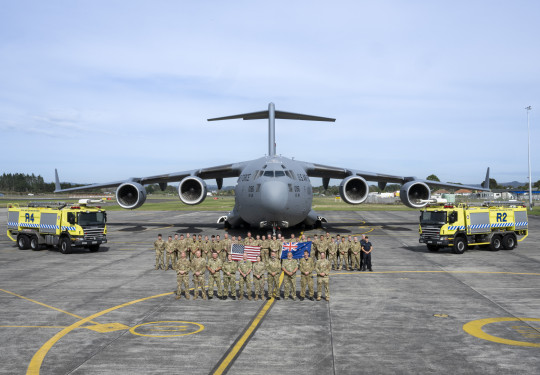
A chance conversation in Antarctica between a couple of firefighters more than a year ago has led to the United States Air Force Air National Guard arriving in New Zealand for a two-week firefighting exercise.

20250415 NZDF K1071142 007

07 May, 2025

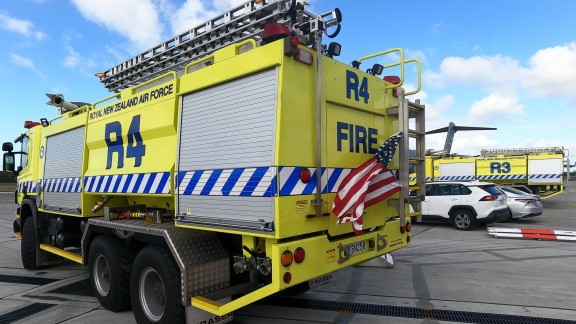
The exercise, Southern Steel, took place at Royal New Zealand Air Force (RNZAF) Base Auckland and the Fire and Emergency New Zealand Regional Training Centre at Mt Wellington recently. It involved more than 30 US Air Force Air National Guard Fire and Emergency Services Detachment personnel working on a number of firefighting training activities.

“RNZAF Aviation Rescue and Fire Fighter (ARFF) Fire Flights were invited to send representatives to observe and integrate with our US Air Force counterparts,” Flight Sergeant Hayden Bayliss said.

“It all started with a conversation between one of our deployed firefighters on Op Antarctica and a then US Air Force Air National Guard Staff Sergeant. Further talks between the two countries’ representatives at the Five Eyes Air Force Interoperability Council meetings, and other meetings, opened exercise planning over the next 12 months.”

GOPR0061

Watch Exercise Southern Steel | Royal New Zealand Air Force video

Exercise Southern Steel | Royal New Zealand Air Force

Having the US Air Force Air National Guard deploy to New Zealand and train at Base Auckland was the “missing piece of the puzzle” as it was one of the Five Eyes countries the RNZAF ARFF trade had minimal prior engagement with, Flight Sergeant Bayliss said.

The aim for the team of firefighters from Pennsylvania, Ohio and Hawaii, was to practice the deployment of a US Air Force Air National Guard to the Pacific region. Included in the exercise was competency training in a deployed environment, conducting combined firefighting training with Five Eyes partners and fostering and building key partner emergency services relationships.

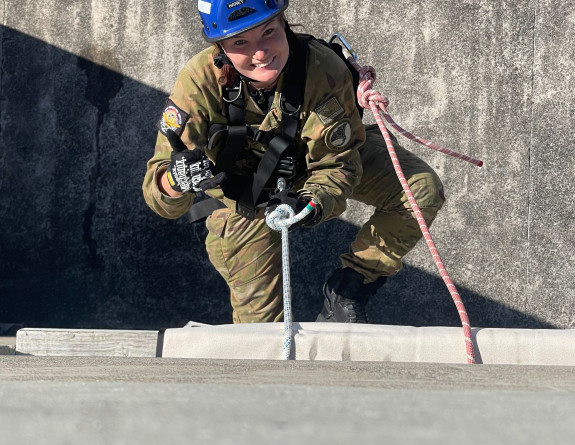
The training also involved mission readiness airmen training, aircraft familiarisation, ARFF training, vehicle stabilisation and rescue, HAZMAT, low and high angle rescue, and structural firefighting.

Firefighters use the jaws of life on a mock car wreck scenario.
A RNZAF aviator repels down the side of a building.
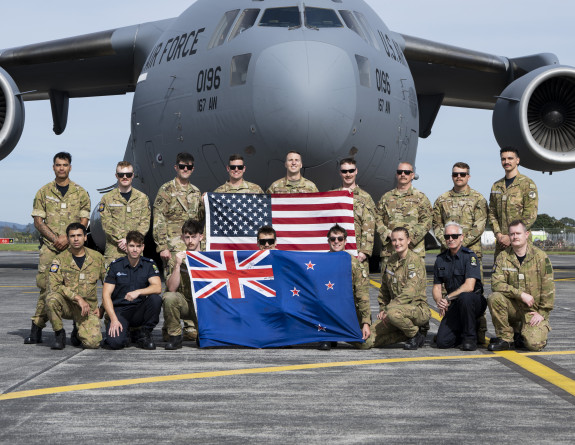
The USAF and RNZAF team hold their corresponding countries flag in front of a USAF aircraft.

RNZAF Aviation Rescue and Fire Fighter (ARFF) Fire Flights were invited to send representatives to observe and integrate with US Air Force counterparts.

“The RNZAF’s people, systems and culture are widely valued by our allies and partner nations. Enhancing Air Force interoperability and interchangeability with the US Air Force Air National Guard by leveraging collective expertise is important to resolving many challenges and, as such, must be enduring,” Flight Sergeant Bayliss said. 

Making up the US Air Force Air National Guard contingent were two Security Forces personnel, who with support from Air Staff ARFF representatives and units at Base Auckland, were able to join their RNZAF counterparts in a live-firing exercise at Kaipara Air Weapons Range.

“It went beyond just firefighting. The scope of the training grew organically and we achieved some really good collaboration,” he said.

“We would like to express sincere gratitude to all contributing units and personnel in what was a successful joint international engagement between Five Eyes partners.”

WWII ship accidentally sinks before US-Philippine ship-sinking drill

By Jim Gomez, The Associated Press – May 6, 2025, 05:34 AM

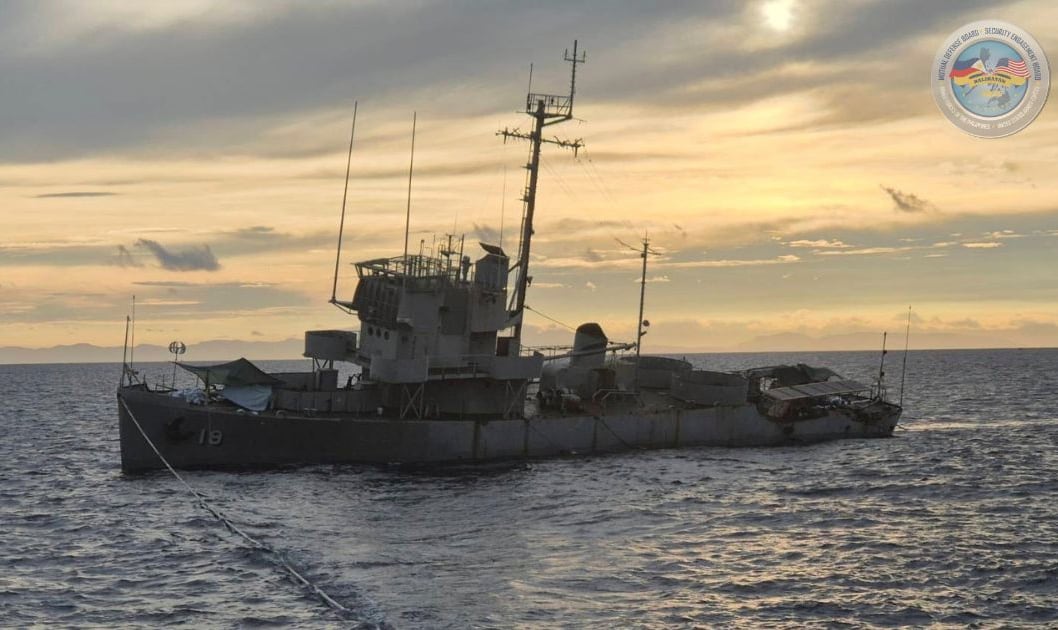
The BRP Miguel Malvar takes on water before sinking while being positioned as a target vessel as part of a joint US-Philippines military exercise on Monday. (Armed Forces of the Philippines PAO via AP)

MANILA, Philippines — A World War II-era Philippine Navy ship to be used as a target in a combat exercise by American and Philippine forces accidentally sank Monday hours before the mock assault, prompting the drill to be cancelled, U.S. and Philippine military officials said.

The BRP Miguel Malvar, which was decommissioned by the Philippine Navy in 2021, took on water while being towed in rough waters facing the disputed South China Sea and sank about 30 nautical miles off the western Philippine province of Zambales. Nobody was onboard when the ship listed then sank, the Philippine military said.

American and Philippine forces would proceed with other live-fire maneuvers off Zambales on Monday despite the premature sinking of the Malvar. The ship was built as a patrol vessel for the U.S. Navy in the 1940s and was transferred to Vietnam’s navy before the Philippine military acquired it, Philippine navy Capt. John Percie Alcos said.

“It’s an 80-year-old dilapidated ship and it wasn’t able to withstand the rough seas,” Philippine Lt. Col. John Paul Salgado told The Associated Press.

JCs Royal New Zealand Navy Ships and New Zealand Defence, Also other World Defence Updates

Ships and Defence News Past and Present

Skip to content ↓