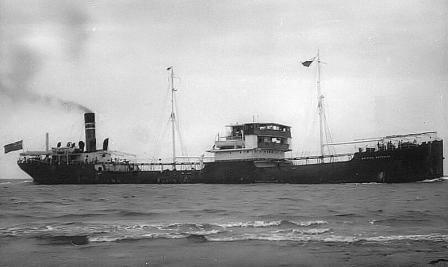
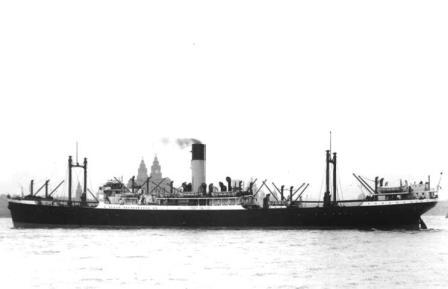
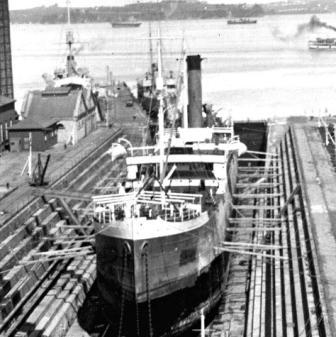
NZGSS Hinemoa was a 542-ton New Zealand Government Service Steamer designed specifically for lighthouse support and servicing, and also for patrolling New Zealand’s coastline and carrying out castaway checks and searching for missing ships. It operated in New Zealand’s territorial waters from 1876 to 1944.
Captain John Fairchild used the steamer to survey the Bounty Islands and Antipodes Islands in 1886,[1] and the Herekino Harbour and the Whangape Harbour entrance in 1889.[2] In 1891, while under the command of Captain Fairchild, the Hinemoa searched New Zealand’s subantarctic and outlying islands for traces of the missing ships Kakanui and Assaye. While no trace was found of the former, the Assaye was suspected foundered off The Snares.[3]
The Hinemoa provided assistance to the Sub-Antarctic Islands scientific expedition of 1907, a substantial scientific expedition sponsored by the Philosophical Institute of Canterbury, where important observations on the natural history of the islands were made. They were published as a two-volume work in 1909, edited by professor Charles Chilton.[4] The five members of the 1908 Kermadec Islands Expedition were transported to Raoul Island on the Hinemoa in December 1907 and returned to New Zealand on the same vessel in November 1908.
It had a sister ship, the GSS Stella, which carried out similar duties over the same time period.[6] After its decommissioning in 1944, it was rejected for scrapping due to an oversupply at the time.[7]
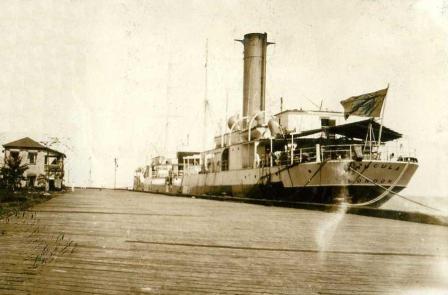
A 1919 photo album from the ship was found in a Danish antique shop and brought to Canterbury Museum in 2023. It is unknown how or when the album came to Denmark.[ This Hinemoa (1876-1944) was a Government Steam ship of 542 tons, built by Scotts Shipbuilding & Engineering Co, Greenock in 1876, for the NZ Government’s lighthouse service and Islands patrol. She originally had three masts, but the mainmast was removed c1880-1889. In Dec 1900 – Jan 1901, she was used for a cruise to NZ’s sub-Antarctic islands by the Governor-General, Lord Ranfurly. Used as a Government survey ship for the Sub-Antarctic Scientific Expedition to Campbell Island and the Auckland Islands in 1907 during which the crew rescued the survivors of the Dundonald. She was sold to a Southland company in 1925 for pleasure cruises to Milford Sound. Purchased in 1942 by RNZN and converted into a sullage (waste oil) barge for use by American ships under repair at Wellington. Dismantled in 1944 and sunk in Pegasus Bay, 60 miles NEof Lyttelton.
New Zealand is not exactly known as a major military power.
For decades the country has relied on its geographical isolation and the reassuring presence of the Australian Defence Force on its western flank, rather than building up its own forces.
But as the world becomes more perilous and uncertain, all that is changing rapidly.
Yesterday afternoon NZ Prime Minister Christopher Luxon unveiled perhaps the most significant boost to NZ’s defence spending in years — promising to almost double defence spending over the next eight years.
New Zealand’s Prime Minister Christopher Luxon believes the world has become a much more dangerous place. (Reuters: Kim Hong-Ji)
That will mean another $9 billion in new spending over the next four years, with more money being ploughed into developing a “modern, combat-capable” New Zealand Defence Force.
So what does New Zealand want to achieve with its new defence capability plan? What is driving this strategic shift and what are the implications for Australia and the broader Pacific region?
Why is New Zealand doing this?
Largely because New Zealand’s government believes the world has become a much more dangerous place.
Much of the strategic anxiety centres around China, which has been building up a huge navy and a formidable military arsenal.
Defence Minister Judith Collins opened her press conference on the new plan by specifically pointing to China’s intercontinental ballistic missile launch in the Pacific last year, as well as the Chinese naval taskforce which conducted live fire exercises in the Tasman Sea in February.NZ says China held second live-fire drill
Photo shows A grey navy ship sailing in the ocean
Sailors on the New Zealand Navy frigate Te Kaha observe live rounds being fired from a Chinese vessel’s main gun, a day after a similar exercise was conducted between Australia and New Zealand with little notice.
“Distance certainly is no longer any protection for New Zealand, not when we have an intercontinental ballistic missile launched in the South Pacific, not when ships with enormous strike power come into our backyard,” she said.
“This reality requires us not only to work with others who share our values and interests to reduce the possibility of conflict but also to prepare ourselves should the worst happen.”
The broader strategic chaos around the globe is also feeding into anxiety in Wellington.
New Zealand isn’t a treaty ally of the United States but much like Australia, it’s also worried about the Trump administration withdrawing from the Asia-Pacific.
All this at a time when New Zealand’s military strength has been steadily atrophying, with defence job cuts, three naval vessels idling because there are insufficient sailors to crew them, and the catastrophic sinking of the survey vessel HMNZS Manawanui off Samoa last year.
Last month Judith Collins said she wanted to take the NZDF “out of intensive care” and into the “ward”.
She struck a slightly more optimistic note yesterday, saying the new investments would get NZDF “out of the intensive care unit and not just growing, but growing where we need it to go”.
How much more are they spending?
New Zealand will jack up its defence spending from just over 1 per cent to about 2 per cent of GDP over the next eight years.
That means about $9 billion in new funding over the next four years, with more beyond that: the Prime Minister Christopher Luxon calls the current commitments a “floor not a ceiling”.
It’s not an earth-shattering sum.
For a point of comparison, Australia (which has a much larger economy than New Zealand) is already moving defence spending up beyond 2 per cent and will spend about $62 billion next financial year.
But for New Zealand — with an economy smaller than Queensland’s — it’s a significant announcement.
The Royal New Zealand Air Force’s C-130J-30 arrives at Base Auckland. (Facebook: NZ Defence Force)
It’s a particularly heavy lift right now because New Zealand’s economy has been struggling, and new cash is hard to come by.
It will also send an important signal to the country (and the region) that New Zealand is serious about investing more heavily in its own defence.
That is, of course, if the promises made by the prime minister and the defence minister are delivered.
Both NZ’s military top brass and others will be scrutinising the approaching budget to make sure the dollars which have been promised appear on the bottom line.
How will the money be spent?
There’s a long list of things that New Zealand wants to do (and buy) to make its defence more lethal and more capable.
Under the plan, two of the military’s ageing transport planes will be replaced, and a new fleet of maritime helicopters will be purchased to operate on its naval vessels.
More money will be ploughed into upgrading NZ’s two frigates, although there will be no replacement vessel for the HMNZ Manawanui.
New Zealand will also develop more sophisticated “strike capabilities” by deploying new missile systems which can target enemy forces — although it’s not yet clear if it will arm its frigates and reconnaissance planes with them, or develop new land based systems instead.
Chinese military actions in Tasman sea ‘unprecedented’ and ‘provocative’ | The World | ABC NEWS
There’s also a healthy investment in bolstering recruitment, in an effort to build up NZDF numbers once again.
On top of this, the military will look at buying drones (or “uncrewed aerial systems”) to deliver more bang for their buck.
Defence Minister Judith Collins said the plan would deliver “enhanced lethality” and a “deterrent effect” for the NZDF.
And the Luxon government hopes it will be able to develop a defence force which is able to pose more of a threat to any potential aggressors — as well as being able to do more to help in the face of natural disasters and other calamities.
What does it mean for the region?
New Zealand’s announcement is not going to send massive reverberations through the region and it’s hardly going to drastically alter the balance of power.
On a global scale, the new money is loose change.
New Zealand’s military forces will remain relatively small when compared to larger players like Australia, let alone behemoths like the US or China.
But that doesn’t mean the announcements won’t have an impact.
Australia has long complained about New Zealand refusing to pull its weight on defence spending, and Canberra will be happy to see this money flowing.
Judith Collins said she wanted to take the NZDF “out of intensive care” and into the “ward”. (Reuters: Caroline Chia)
Judith Collins has talked about the NZDF being a “force multiplier” for Australia, which remains its only military ally.
The new plan also emphasises building “interoperability” (the capacity of a defence force to seamlessly operate with that of another country) with the larger Australian military.
These phrases can stir a bit of opposition in New Zealand, which has a long and proud tradition of slightly ornery independence on defence and foreign policy.
But as the region faces an ever darker strategic outlook, both Australia and New Zealand are likely to instinctively pull closer together and share military resources.What Trump presidency means for Australia’s neighbours
Photo shows Donald and Melania Trump wearing floral necklaces.
Donald Trump has taken radical new stances on Greenland and the Panama Canal. What do experts predict he’ll do in the Pacific?
And these investments means that if Australia needs to call on New Zealand for help — whether for a natural disaster, to monitor a Chinese naval vessel in the region or to deal with a real military threat — then Wellington will have more to offer.
For the Pacific, the picture might be slightly more complex.
The Luxon government insists Pacific nations are delighted with the plan, and no doubt they’ll be glad to see NZDF building up capabilities which could help them deal with some of the escalating climate crises looming in the near future.
But the Pacific is also deeply worried about the way all powers, great and small, currently seem intent on ploughing more and more money into their increasingly lethal militaries.
New Zealand is a long way from the worst offender here, but yesterday’s announcement is another dashboard indicator blinking red — and another sign that the region is facing its most perilous times in recent memory.
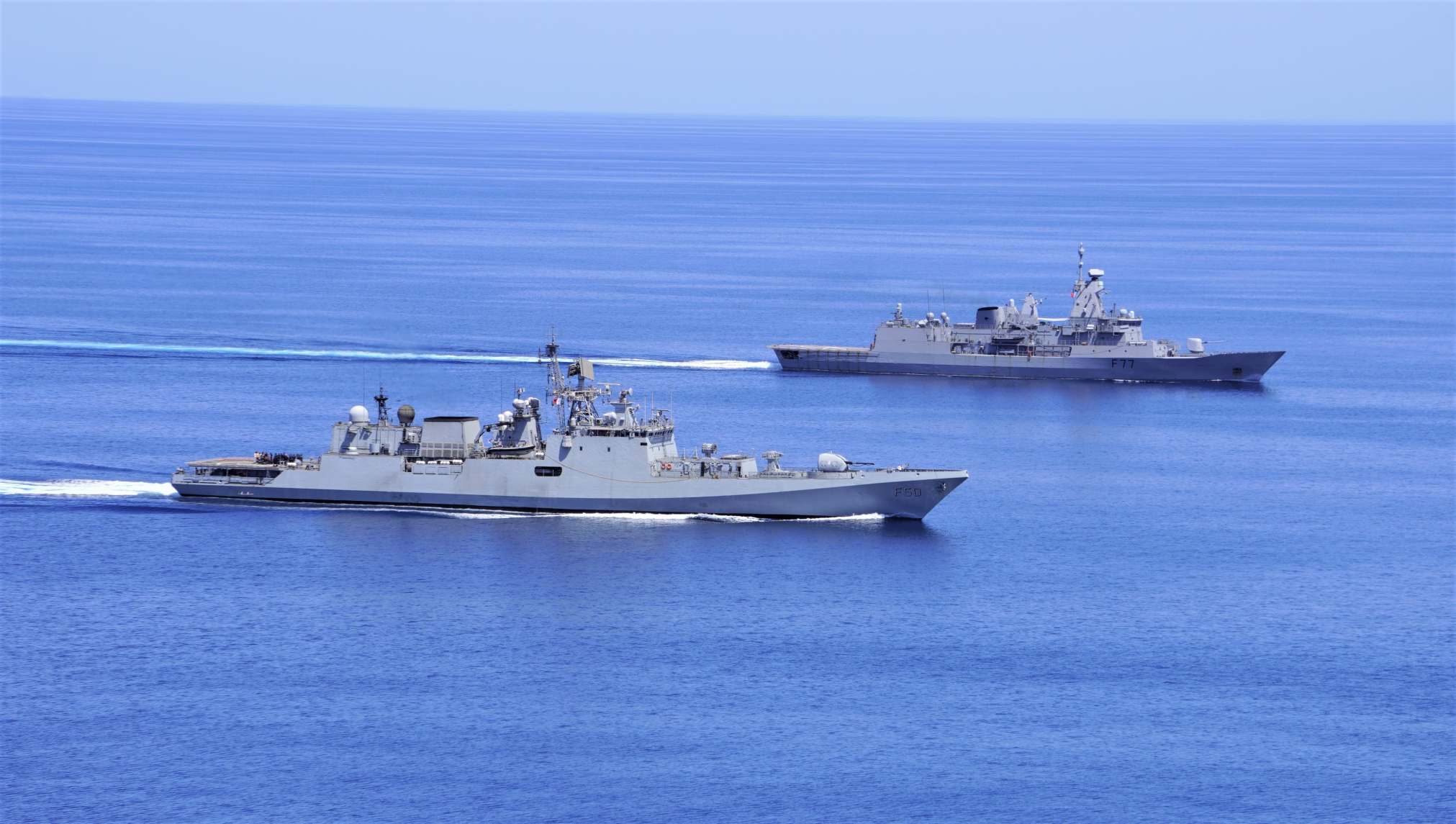
The Indian Navy’s stealth frigate INS Tarkash participated in a PASSEX with the Royal New Zealand Navy’s Anzac-class frigate Te Kaha on 04 Apr 25 in the Gulf of Aden. This exercise marked the culmination of the New Zealand led CTF 150 Joint Focused Operation ANZAC Tiger (27 Mar – 04 Apr 2025), a Combined Maritime Forces (CMF) operation in which INS Tarkash was mission deployed.
The PASSEX involved a range of interoperability drills, including cross-deck landings, cross boarding, Sea Rider exchanges, and tactical manoeuvres, all integrated with communication procedure exercises. This provided a valuable opportunity for the two navies to exchange best practices, further strengthen their bilateral maritime cooperation and enhance interoperability.
Conducted in the strategic Indian Ocean Region, this event underscores the strong and enduring relationship between India and New Zealand, reaffirming the Indian Navy’s role as a key and preferred security partner committed to regional maritime stability.
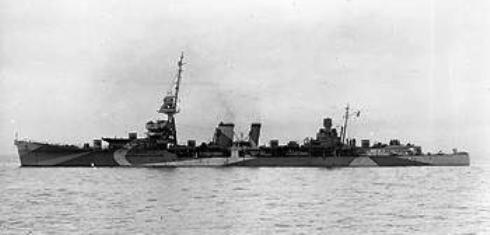
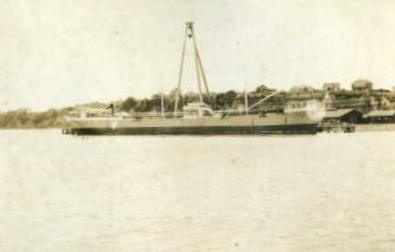
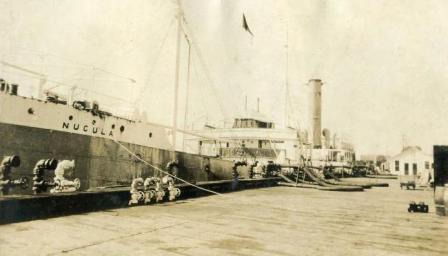
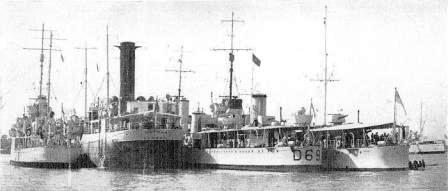
HMS Philomel at the Training Jetty and RFA Nucla (oiler) alongside. Unknown in dock.Devonport Naval Base, Auckland Possibly 1933
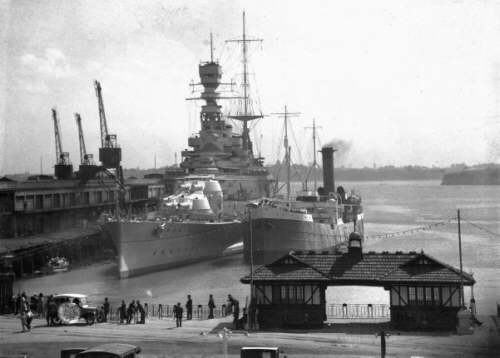
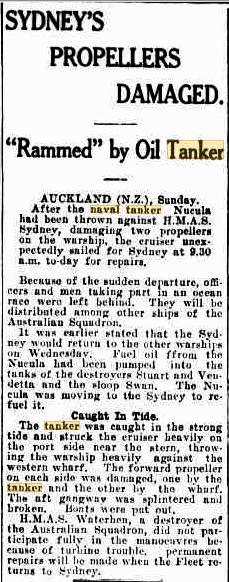
The NZ Division, of the Royal Navy. – RFA Nucula, 17 April 1937 at Auckland, New Zealand while going alongside HMAS SYDNEY to refuel her she was caught heavily by a rip tide and hit the cruiser causing damage to HMAS SYDNEY’s port side propeller and forcing her into the wharf causing further damage to her quaterdeck. Nucula was not damaged.1
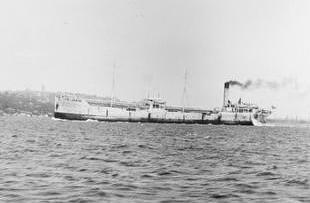
RFA NUCULA (Royal Fleet Auxiliary ship) is pictured leaving Sydney on 17 January 1931. This photograph was taken by Frederick Wilkinson while travelling on a ferry between Bradley’s Head and Rose Bay.
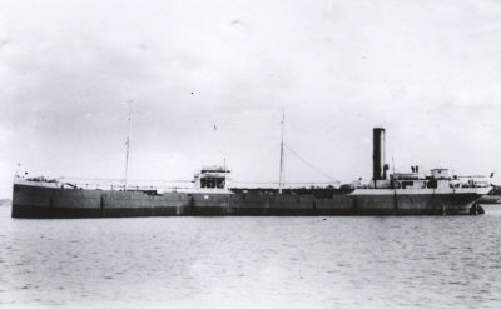
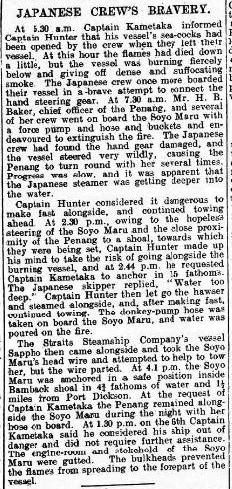
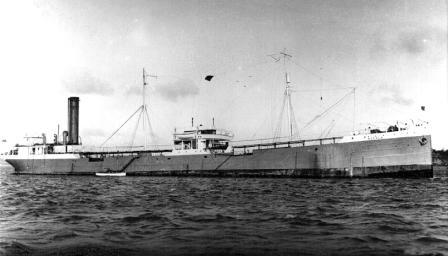
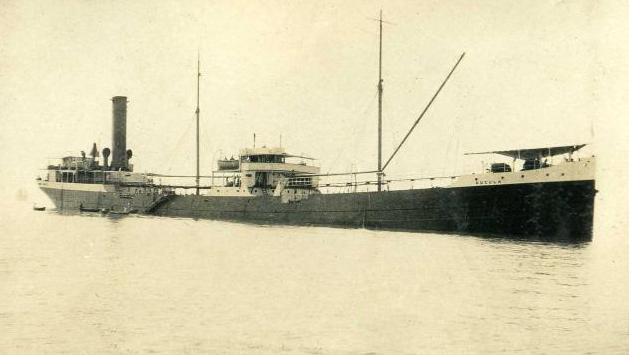
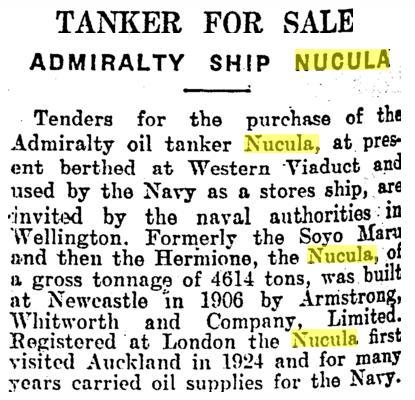
RFA Nucula, a tanker was built as the s.s. Hermione and completed in Newcastle by Armstrong, Whitworth & Co in September 1906 for C T Bowring & Co Ltd of London. She was completed as coal burning but converted in October 1907 to oil-fired. By April 1908 she was sold to the Japanese company Toyo Kisen Kaisha and her name was changed to Soyo Maru when Bowring had a new tanker named Hermione completed. She carried oil from California to Japan.
RFA Nucula, a tanker was built as the s.s. Hermione and completed in Newcastle by Armstrong, Whitworth & Co in September 1906 for C T Bowring & Co Ltd of London. She was completed as coal burning but converted in October 1907 to oil-fired. By April 1908 she was sold to the Japanese company Toyo Kisen Kaisha and her name was changed to Soyo Maru when Bowring had a new tanker named Hermione completed. She carried oil from California to Japan.
In 1915, she was passed back to British service and the Admiralty gave her the name RN Oiler No.73 and she served as a fleet tanker in European waters. In 1917 she was bought by the Anglo-Saxon Petroleum (now known as Shell Oil) who changed her name to Nucula as it was their practice to name their ships after seashells. She remained in commercial service until 1922 when she became a Royal Fleet Auxiliary and the civilian crew were replaced by RFA personnel. RFA Nucula was posted to the China Station as a Fleet Attendant Oiler based at Hong Kong. From September to November 1923 she was based at Nagasaki to act as a base oiler during the earthquake relief operations.
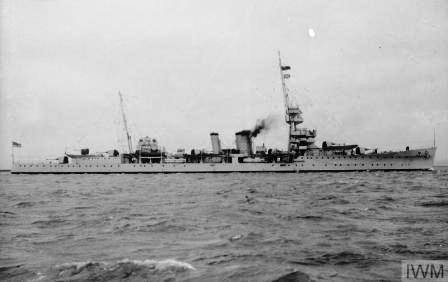
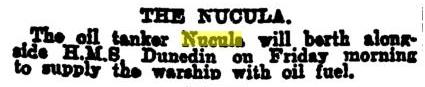
With the change from coal powered to oil-fired warships the New Zealand Division (hereafter NZDiv) of the Royal Navy required replenishment support for its new cruisers HMS Diomede and Dunedin. With the imminent arrival of HMS Dunedin on station in 1924 the New Zealand Government negotiated for an oiler to enable navy controlled supplies of fuel oil. On 27 May 1924 RFA Nucula was transferred to NZDiv control as a Fleet Attendant oiler and hired by the New Zealand government. The formal handover took place at Suva where she had stopped on a voyage from Singapore to Auckland. RFA Nucula arrived at Auckland on 5 June 1924. Due to her design, she could not undertake replenishments at sea or underway oiling. She would act as a supply ship for the sloops HMS Wellington and Leith along with the two cruisers. When they would depart on the island cruises, a feature of the interwar period in the South Pacific, Nucula would refuel the vessels in sheltered ports and anchorages.
Her designated task was to maintain supplies of fuel oil at the naval base at Devonport, Auckland. To do so, she undertook two to three seven-week voyages to California a year to load supplies of fuel. In 1934 three voyages were made to Abadan in the Persian Gulf. Some oil was also supplied to the Royal Australian Navy base at Sydney. In June 1934 during one of the voyages back to New Zealand she nearly sank in huge seas off the south-eastern coast of Australia during a cyclone. She suffered damage to the superstructure that needed extensive repairs upon reaching Auckland.
The second task the Nucula was hired to complete was to extend the range of the cruisers operation from New Zealand into the South Pacific and so there were refuelling rendezvous with Diomede and Dunedin at such ports as Suva, Bora Bora and Apia. During the Depression of 1930 it became necessary to man the Nucula with a Royal New Zealand Navy crew to collect another supply of fuel oil.
When Diomede and Dunedin left New Zealand service it brought about the redundancy of RFA Nucula. Her last voyage from America with a cargo of oil was completed on 10 June 1937 and so she was laid up as a storage hulk with effect from 5 July 1937 in Shoal Bay, Waitemata Harbour. Nucula remained in this role through out World War 2. She was sold for disposal in March 1947 and was partially dismantled. On 24 October 1947 she was towed to a position eleven nautical miles ENE of Cuvier Island in the Hauraki Gulf where she was scuttled in a depth of 183m where she remains to this day.
(With thanks from the Royal New Zealand Navy Museum staff).
Other early history –
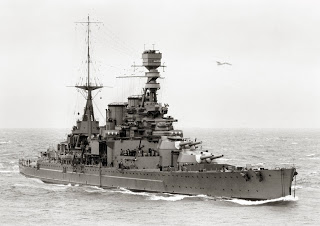
RFA Nucula along side HMS Renown in Auckland Harbour, New Zealand
Laid down: Builder: Armstrong Whitworth & Co. Launched: 24 July 1906 Into Service: 1922 (as an RFA) Out of service: 10 June 1937 Fate: Scuttled
Items of historic interest involving this ship: –
Background Data: Acquired from commercial owners in the early Twenties, this tanker had a very short life with the Admiralty before being transferred to the New Zealand Government as their Navy’s first oiler to provide afloat support for their new cruisers HMNZS’s DIOMEDE and DUNEDIN. Her main use was in transporting fuel oil from San Pedro in California to Auckland
24 July 1906 launched by Armstrong, Whitworth & Co Ltd, Newcastle as Yard Nr: 776 named HERMIONE for Oil Tank Steamship Co Ltd (C.T. Bowring & Co Ltd, Managers) Liverpool
September 1906 completed
16 October 1906 sailed Penarth for Philadelphia
31 October 1906 arrived at Philadelphia from Penarth
18 November 1906 the Lloyds Signal Station on St Catherine’s Point, Isle of Wight reported that the ship, on passage from Philadelphia to London, was five miles south east of the Signal station flying a signal ‘Not Under Control’
15 December 1906 sailed Philadelphia for the UK
26 December 1906 off Fernando Noronha, Brazil
3 January 1907 sailed Las Palmas for Liverpool
27 February 1907 sailed Newport, Wales for Philadelphia
18 March 1907 sailed Philadelphia for Plymouth
8 July 1907 sailed London for Philadelphia
27 August 1907 arrived at Monte Video from Liverpool
11 November 1907 arrived at Liverpool from the River Plate
14 December 1907 sailed from Liverpool for the River Plate
1908 purchased by Toyo Kisen Kaisha, Yokohama and was renamed SOYO MARU
13 January 1908 berthed at Pacific Street Wharf, San Francisco on first voyage from the UK for her new owners carrying 7,600 cases of champagne. She had come under the charge of British Officers while her Japanese Officers remained onboard as passengers. All the ships tankers were filled with freight. One tank was filled with pebbles in sacks as ballast. A serious accident occured when a temporary tackle which had been rigged to assist in the removed of the sacks of ballast through the open tank lid. The hook attached to a block fell and hit the head of George Greeves, a long shoreman who sustained a fractured skull. Reported at length in the newspaper ‘The San Franciso Call’ of 14 January 1908
5 February 1908 legal action in the San Francisco Courts against the owners of the Soyo Maru for damage caused to part of the cargo which had been off loaded on her arrival at San Francisco
9 February 1908 sailed from Gaviota, California with a cargo of oil for Japan
10 March 1908 arrived at Yokohama, Japan
19 May 1908 arrived at Gaviota, California from Yokohama
27 May 1908 sailed Gaviota, California for Japan
19 June 1908 arroved Yokohama from Gaviota
1 October 1908 arrived at Port Arthur, Texas from Yokohama, Japan
5 December 1908 sailed Philadelphia for Avonmouth Dock
20 December 1908 arrived Avonmouth Dock
24 December 1908 sailed Avonmouth Dock for Kustendje
5 February 1909 arrived at Payta from Yokohama
5 March 1909 berthed at Honolulu, Hawaii from Lobitos, Peru for bunkers
6 March 1909 sailed Honolulu, Hawaii for Japan
6 July 1909 berthed at Honolulu, Hawaii from Lobitos, Peru for bunkers. Carrying a cargo of 5,913 tons of crude oil
9 July 1909 sailed Honolulu, Hawaii for Japan
18 January 1910 arrived Honolulu from Peru
23 June 1910 arrived at Colombo from New York for Yokohama
3 September 1910 sailed Teneriffe for Liverpool
15 May 1911 arrived at Port Said
8 October 1912 suffered an engine room fire in the Malacca Straits about 160 miles north of Singapore. The cargo, passengers and crew were safe – reported in the Hong Kong Telegraph of 11 October 1912
11 November 1912 the Globe (an English newspaper) reported that –
6 December 1912 – Hong Kong press reports indicate that the fire damage (see above) is extensive around the poop
14 February 1914 sailed Southampton for Port Arthur, Texas
7 April 1915 requisitioned by the Shipping Controller (F.C. Strick, Managers) and was renamed NUCULA and served as R.N. Oiler Nr: 73 until 15 August 1915
RFA Nucula
29 September 1917 managers became Anglo Saxon Petroleum Co Ltd, London and served as R.N. Oiler Nr: 220. with name unchanged
13 April 1918 berthed at New York having sailed from Liverpool. Captain Bernard Charles Wilton as Master with 56 crew
10 September 1918 berthed at New York having sailed from Plymouth Captain George William Ferris as Master with 56 crew
23 November 1918 berthed at Galveston from New York
13th December 1918 sailed Gravesend for Philadelphia
8 January 1919 at Marus Hook, Philadelphia Fireman Yin Leong discharged dead from natural causes. He had signed on on 7 November 1917 at Singapore
January 1919 was stated to be in very poor condition and was recommended for disposal by the Director of Transport. The Admiralty approved expenditure of £50,000 to refit her for retention and she was purchased on their behalf by Anglo Saxon Petroleum Co Ltd, London, remaining under their management
11 January 1919 sailed Philadelphia for Falmouth
23 March 1919 arrived at New Orleans from London
18 April 1919 passed the Lloyds Signal Station on the Lizard sailing east
19 April 1919 arrived at Falmouth from New Orleans (reported in the New York Tribute newspaper on 20 April 1919)
18 July 1919 sailed Gravesend via Grangemouth to Philadelphia
12 August 1919 reported by radio to Lloyds at Lerwick passing drifting mines at 69°55N 13°40E and at 65°05N 12°11E
25 September 1919 passed the Lloyds Signal Station on the Lizard sailing east
23 October 1919 and 24 October 1919 at Port of Spain, Trinidad moored alongside HMS RENOWN to refuel her – supplied 3,709 tons of FFO
8 December 1919 arrived at Trinidad from Thames Haven
17 March 1920 in Channel Dry Dock at Newport
19 May 1920 arrived at Galveston, Texas from Port Talbot
13 June 1920 arrived at Sheerness from Galveston
5 July 1920 arrived at Port Said from Sheerness
11 August 1920 at Suez Chief Steward J E Smith discharged dead – drowned
29 October 1920 arrived Suez from Abadan. RFA WAR BHARATA also arrived the same day and also from Abadan
10 November 1920 at Suez Fireman Ah Sang discharged dead with beri beri. He signed on at Singapore on 14 October 1920
28 December 1920 Lloyds Telegrams reported that Nucula was in collision with the British steamer British Emperor outside of the Bussorah Bar, Euphrates. Damage was reported to be serious
ss British Emperor
25 February 1921 sailed Port Said for Thameshaven
31 March 1921 sailed from Sheerness for Port Arthur, Texas
25 April 1921 sailed Port Arthur, Texas to the Clyde
16 May 1921 arrived at Greenock from New Orleans
21 May 1921 sailed Glasgow in ballast for a Texan port
11th June 1921 arrived at Port Arthur from the Clyde
26 July 1921 sailed the Clyde for Port Arthur
10 August 1921 berthed at Port Arthur, Texas
16 August 1921 arrived at Beaumont, Texas
19 August 1921 sailed Beaumont, Texas for Devonport
7 September 1921 arrived at Queenstown, Ireland for Haulbowline from Port Arthur
12 September 1921 sailed Queenstown for Beaumont, Texas
3 October 1921 arrived at Port Arthur, Texas from Queenstown, Ireland
7 October 1921 sailed Port Arthur, Texas for Sheerness
29 October 1921 arrived at Sheerness from Port Arthur, Texas
6 December 1921 sailed Sheerness for Beaumont, Texas
30 December 1921 arrived at Port Arthur from Sheerness
29 January 1922 berthed at Portsmouth Harbour
3 February 1922 sailed Portsmouth for Port Arthur, Texas
26 February 1922 arrived at Port Arthur, Texas from Portsmouth
10 March 1922 berthed alongside at Bermuda Dockyard
15 March 1922 sailed Bermuda Dockyard
22 March 1922 arrived at Port Arthur, Texas from Bermuda
25 March 1922 sailed Port Arthur, Texas for Devonport
2 May 1922 shortly after arrival from Port Arthur, Texas extensively damaged from a collision with the British m.v. CALCHAS off Old Kilpatrick on the River Clyde
ss CALCHAS
10 May 1922 sailed Old Kilpatrick for Port Arthur
June 1922 transferred to Admiralty management for service as an oiler on the China Station
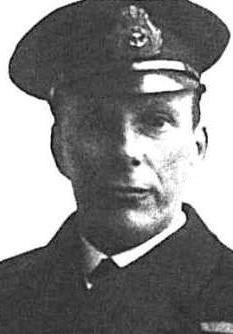
14 June 1922 Captain John R Gorrie RFA appointed as Master
LEAD Technologies Inc. V1.01
Captain John R Gorrie RFA
20 June 1922 Radio Officer Arthur R Winter RFA signed on this day. He had previously sailed as a Radio Officer on RFA RUTHENIA
LEAD Technologies Inc. V1.01
Radio Officer Arthur R Winter RFA
22 June 1922 berthed at Devonport Dockyard
`5 July 1922 sailed Plymouth
24 July 1922 when on passage to Yokohama passed Malta this day
4 August 1922 arrived at Aden sailing the same day for Yokohama
10 September 1922 berthed at Hong Kong. The Officer of the Guard from HMS BLUEBELL boarded
11 October 1922 it was reported in the Straits Times of this date in Singapore that NUCULA had taken over from RFA PEARLEAF (1) and that PEARLEAF would be returning to England
RFA Nucula in dry dock
26 March 1923 at Hong Kong with HMS MOTH berthed alongside
28 March 1923 at Hong Kong with HMS TARANTULA berthed alongside to refuel
12 April 1923 at Hong Kong
21 April 1923 arrived at Wei-Hai-Wei
11 May 1923 at Wei-Hai-Wei berthed alongside HMS DURBAN
HMS DURBAN
15 June 1923 at Wei-Hai-Wei alongside HMS DURBAN to refuel her
16 June 1923 at Wei-Hai-Wei alongside HMS DESPATCH to refuel her
20 June 1923 sailed Wei-Hai-Wei
1 August 1923 at Wei-Hai-Wei stores party from HMS DURBAN working onboard
14 August 1923 arrived at Wei-Hai-Wei. A working party from HMS DESPATCH came onboard
1 September 1923 while at Wei-Hai-Wei a signal was received which ordered her to Nagasaki to act as the Base Oiler there during the Yokohama Earthquake Relief Operations
8 September 1923 arrived at Wei-Hai-Wei and berthed on HMS CARLISLE to refuel her. Later moved and anchored
9 September 1923 at Wei-Hai-Wei with HM Submarines L5, L15, L19 and L33 berthed alongside to refuel
11 September 1923 sailed from Wei-Hai-Wei
29 September 1923 at Nagasaki, Japan with HMS DESPATCH berthed alongside – supplied the warship with 120 tons of FFO
November 1923 returned to Hong Kong on completion of Relief Operations at Nagasaki following the Yokohama Earthquake
19 November 1923 at Hong Kong secured to No: 2 buoy
3 December 1923 Captain Richard D Williams RFA appointed as Master
Captain Richard D Williams RFA
11 January 1924 at Hong Kong with HMS DIOMEDE berthed alongside
22 January 1924 at Hong Kong with HMS DESPATCH berthed alongside – supplied the warship with 535 tons of FFO
13 February 1924 arrived at Hong Kong and secured to No: 2 buoy
17 February 1924 at Aden
22 February 1924 at Bombay, India
23 February 1924 Mr Richard M Marrack RFA appointed as Chief Engineer Officer. He had previously served on RFA DREDGOL
25 February 1924 at Colombo, Ceylon
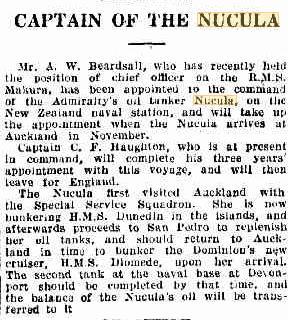
1 March 1924 Captain Cyril F Haughton RFA appointed as Master. The ship was at Singapore
LEAD Technologies Inc. V1.01
Captain Cyril F Haughton RFA
24 March 1924 at Hong Kong
5 April 1924 sailed from Singapore
The ships dog – ‘Boy’
Image donated by James Fryer
1924 fuelled ships of the Special Service Squadron led by the Battle Cruiser HMS HOOD on their world tour and accompanied them to Australia and New Zealand
RFA Nucula at anchor off Singapore on 12 April 1924
Image donated by James Fryer
24 May 1924 at Suva, Fiji alongside HMS HOOD refuelling her – supplied 1,049 tons of FFO to the warship
26 May 1924 at Suva, Fiji alongside HMS REPULSE to refuel her
HMS REPULSE
RFA Nucula alongside at Suva, Fiji in May 1924
Image donated by James Fryer
27 May 1924 transferred to the New Zealand Government at Suva as a Naval Oiler, and was converted for European manning at a cost of £2,500. Was transferred at a rate of £16,500 per annum. Her name was unchanged
5 June 1924 arrived Auckland for the first time. Between 06/09/24 and 23/10/47 she visited Auckland 28 times
11 June 1924 the New Zealand Herald reported …
1 July 1924 berthed at Melbourne, Australia from Auckland
3 July 1924 sailed Melbourne, Australia for Singapore
24 July 1924 the New Zealand Government budget presented to the New Zealand parliament recorded the fee for the hire of the Nucula charged by the Admiralty was £16,500 per annum
7 September 1924 berthed at Auckland, New Zealand from Suva
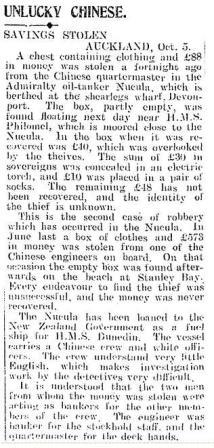
September 1924 a wooden chest the property of a member of the crew was stolen from the ship while it was berthed at the Sheerlegs Wharf, Devonport, Auckland. The chest was found floating in the harbour with part of its contents missing
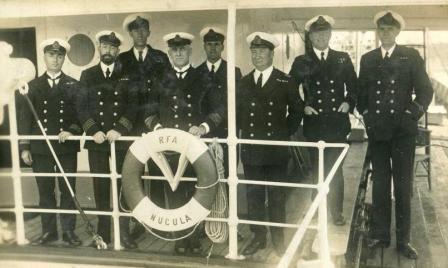
The Master and Ships Officers at Auckland, New Zealand in November 1924
Image donated by James Fryer
Refit at Devonport, New Zealand in March 1925
Image donated by James Fryer
LEAD Technologies Inc. V1.01
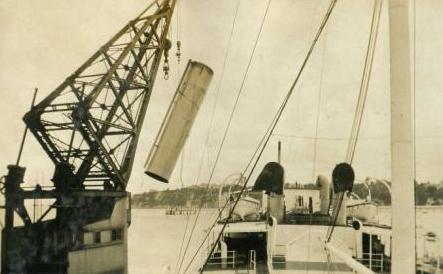
RFA Nucula funneless under the Sheer Legs at Devonport, New Zealand in March 1925
Image donated by James Fryer
Alongside the Standard Oil Wharf, San Pedro, California loading cargo in October 1925
Image donated by James Fryer
9 May 1925 sailed Auckland, New Zealand for San Pedro, California
11 June 1925 sailed San Pedro, California
9 July 1925 berthed at Auckland, New Zealand
10 July 1925 the New Zealand Herald reported …
2 October 1925 the Sydney Daily Telegraph reported …
21 November 1925 at Auckland, New Zealand Chief Engineer Officer Richard Marrack RFA discharged dead – heart failure
22 November 1925 Mr Harold R Bullimore RFA appointed as Chief Engineer Officer
30 November 1925 Captain Arthur W Beardsall RFA appointed as Master
12 May 1926 the New Zealand Division of the Royal Navy advertised in the New Zealand Evening Post for a 3rd and 4th Engineer Officers – the advert was similar to that pictured below (1936)
17 September 1926 berthed at Auckland, New Zealand from San Pedro
16 October 1926 sailed from Wei-Hai-Wei
2 November 1926 sailed Auckland, New Zealand for San Pedro
21 March 1927 and the 5 April 1927 the New Zealand Division of the Royal Navy advertised in the New Zealand Evening Post for a 2nd Officer – the adverts were similar to that pictured below (1936)
29 April 1927 berthed at Auckland, New Zealand from San Pedro
16 July 1927 at Nukuhiva refuelled HMNZS DUNEDIN
22 July 1927 the ship’s quartermaster Richard Jessup was seen to throw himself overboard while the ship was on passage from Papeete after receiving bad news concerning a serious medical condition. A three hour search failed to find him – discharged dead
27 October 1927 the Auckland Star newspaper reported …
28 December 1927 sailed San Pedro for Auckland, New Zealand
18 January 1928 arrived at Auckland, New Zealand from San Pedro
23 February 1928 at Samoa in support of HMNZS DUNEDIN and HMNZS DIOMEDE. The warships mission was to round up troublesome Mau Suva for Auckland, New Zealand
3 April 1928 arrived at Auckland, New Zealand from Suva
2 September 1928 at Suva
4 September 1928 sail from Suva for Auckland, New Zealand
6 July 1929 sailed Sydney, NSW, Australia for New Zealand having refuelled HMNZS’s DUNEDIN and DIOMEDE
22 August 1929 at Auckland, New Zealand HMNZS alongside and refuelled
1930 the Admiralty approval was given to the New Zealand Government to sub-charter her to commercial firms for time or voyage charters
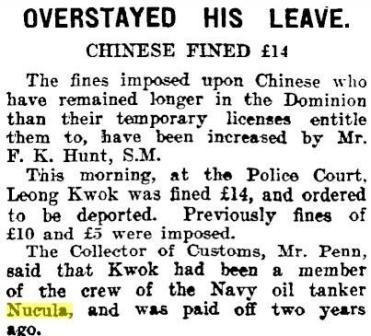
14 November 1930 crew members refused to sign new ships articles
17 November 1930 the crew walked off the ship in dispute over manning levels. They were replaced by RNZN sailors from the Naval training ship HMNZS PHILOMEL
1 January 1931 her transfer rate was reduced to £3,250 per annum
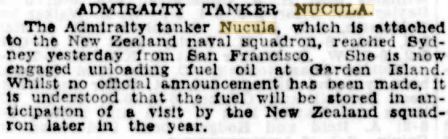
15 January 1931 berthed at Garden Island, Sydney, NSW Australia from San Francisco to discharge – this was reported the next day in the Sydney Morning Herald newspaper –
RFA NUCULA sails from Sydney, NSW, Australia
23 January 1931 arrived at Auckland, New Zealand from sydney, NSW, Australia
2 May 1931 berthed at San Franciso, Calafornia from Auckland
16 June 1931 arrived at Auckland, New Zealand from Sydney, NSW
13 July 1931 Captain G Attwood RFA appointed as Master
15 July 1931 sailed for Bora Bora, Society Islands to refuel HMS DIOMEDE
15 September 1931 berthed at Auckland, New Zealand
16 September 1931 sailed Auckland, New Zealand for San Francisco, USA to load
30 June 1932 sailed Los Angles CA for Wellington, New Zealand
5 August 1932 floated out of dry dock at Auckland
8 December 1932 at Auckland members of the crew saw a yacht ‘Ramona’ overturn. A signal was sent to HMS DIOMEDE who lauched a sea boat and rescued the yacht’s crew
14 January 1933 entered Devonport for refit and the Auckland Star newspaper reported
17 March 1933 in Calliope Dry Dock, Auckland, New Zealand
4 July 1933 sailed Auckland
11 July 1933 at Suva, Fiji alongside HMNZS DUNEDIN refuelling her
HMS DUNEDIN
3 August 1933 sailed San Francisco, USA for Auckland, New Zealand
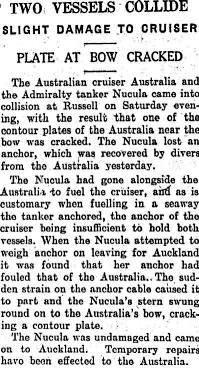
26 August 1933 in collision with HMAS AUSTRALIA and lost an anchor while alongside the cruiser refuelling her at Russell. The anchor was recovered by divers and the Nucula suffered no damage. HMAS AUSTRALIA suffered hull damage which required dockyard repairs
30 August 1933 the New Zealand Herald newspaper reported …
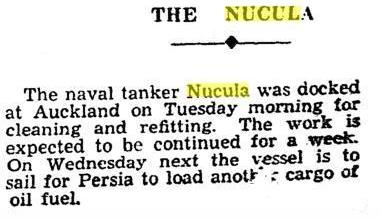
4 April 1934 sailed Auckland for Colombo and the Persian Gulf to load
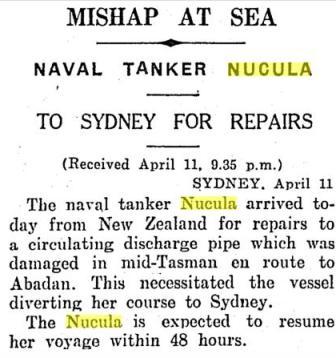
11 April 1934 suffered engine troubles while en-route from New Zealand to Abadan. Diverted to Sydney, NSW for repairs
12 April 1934 the New Zealand Herald reported …
12 April 1934 sailed Sydney, NSW to continue to Abadan
15 May 1934 sailed Abadan for Auckland, New Zealand
June 1934 during a voyage from Abadan to Auckland, she suffered major damage to her superstructure off the NE coast of Australia in a cyclone and nearly sank in the huge seas. Extensive repairs were required on arrival Auckland
17 July 1934 arrived at Suva, Fiji from Auckland, New Zealand
2 October 1934 arrived at Sydney, NSW from Borneo – arrival reported in the Sydney Morning Herald of 3 October 1934
18 October 1934 berthed at Auckland for self maintenance
20 October 1934 The Press newspaper reported …
27 October 1934 sailed Auckland, New Zealand for the Persian Gulf
11 November 1934 at Syndey, NSW off Garden Island
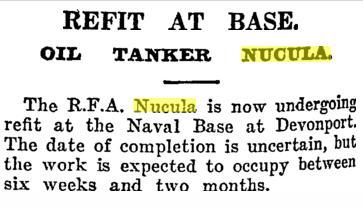
10 May 1935 entered refit at Auckland
4 July 1935 sailed San Fransico California
13 July 1936 arrived at Suva, Fiji from San Pedro, CA
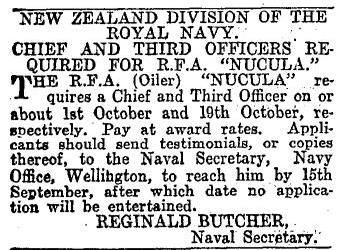
31 July 1936 the New Zealand Division of the Royal Navy advertised in the New Zealand Evening Post for a Chief Officer and a Third Officer
19 August 1936 refueled HMNZS ACHILLES at Nuhuhiva in Marquesas
2 September 1936 sailed Los Angles for Auckland
20 January 1937 berthed mid stream at Auckland
7 April 1937 berthed at Auckland from San Pedro
17 April 1937 at Auckland, New Zealand while going alongside HMAS SYDNEY to refuel her she was caught heavily by a rip tide and hit the cruiser causing damage to HMAS SYDNEY’s port side propeller and forcing her into the wharf causing further damage to her quaterdeck. Nucula was not damaged.
Also refuelled alongside HMAS’s SWAN, VENDETTA and STUART
HMAS’s Swan alongside to port, HMAS’s Vendetta and Stuart alongide to starboard
19 April 1937 the Tasmanian Advocate newspaper reported –
16 May 1937 sailed Los Angeles California for Auckland
10 June 1937 arrived Auckland from California for the last time as a seagoing concern as the cruisers HMNZS DIOMEDE and DUNEDIN were about to leave NZN service so NUCULA became redundant
6 July 1937 laid up and used as a storage hulk at Shoal Bay, Waitemata Harbour.
13 April 1938 berthed at Devonport
16 October 1940 the New Zealand Evening Post reported …
28 May 1943 at Auckland, New Zealand with USS Bridge (AF1) alongside
31 May 1943 at Queens Wharf, Auckland, New Zealand USS Hunter Liggett (APA14) alongside to refuel – supplied with 5,129 barrels of fuel oil
USS Hunter Liggett (APA14)
January 1947 her remaining fuel was pumped ashore and she was offered for sale
April 1947 purchased by A.C. Radcliffe Ltd, Auckland for £1,520 name unchanged
23 October 1947 after being stripped of all re-usable equipment, she was towed out to sea by the tugs WILLIAM C DALDY and CORALIE
24 October 1947 the tug YTL 622 towed her to position 36°20S 176°00E and scuttled eleven miles ENE of Cuvier Island in the Hauraki Gulf, New Zealand in deep water
June 1940 requisitioned for the RNZN and converted to a minesweeper.
Reported to be an examination vessel 1942-45 and in January 1944 a gate vessel 1945 Harbour Service and Liberty Boat to HMNZS Tamaki (Motuihe Island) December 1946 reduced to a hulk and beached in Boulder Bay, Rangitoto Island.
HMNZS Duchess, and a very fine ship indeedDuchess pre WW2 at Kawau Island
HMNZS DUCHESS – Type: Auxiliary Minesweeper/Examination Vessel Pennant No.: T07 Built: 1897 Mackie & Thompson Scotland Type: Auxiliary Minesweeper/Examination Vessel Pennant No.: T07 Displacement: 314 tons gross, 137 tons net Length: 133.6 ft. /40.7 m Beam: 26 ft./7.9 m Draft: 10.3 ft./3.1 m Propulsion: Steam reciprocating 650 ihp, single shaft, coal Speed: 12 knots Complement: 17 as MS, 24 as Exam. Vessel Armament: 1 light MG
Duchess was a passenger ferry operating in the Hauraki Gulf. In 1934 the ship was charted for 12 weeks, converted and commissioned as HMS Duchess II for five weeks of MS trials. She was then returned to her owners.
She was requisitioned on 24 June 1940 and commissioned on 8 July, temporarily in the first instance, as an additional sweeper at Auckland, although questionably suitable. In April 1941 she was reduced to care and maintenance on a mooring In November she was taken in hand for conversion to an examination vessel, a duty she performed at Auckland until the service ceased in September 1944.
After a further spell on the moorings, Duchess performed as a supply ship to HMNZS Tamaki from February 1945 until September 1946 when she was paid off and placed on sale. She was sold in December to F. Appleton of Penrose for breaking up. The hull was stripped , towed away and beached in Boulder Bay, Rangitoto Island.


(1)HG6D.jpeg)
(1)JVD3.jpeg)
NMJX.jpeg)


.jpg)
.jpg)