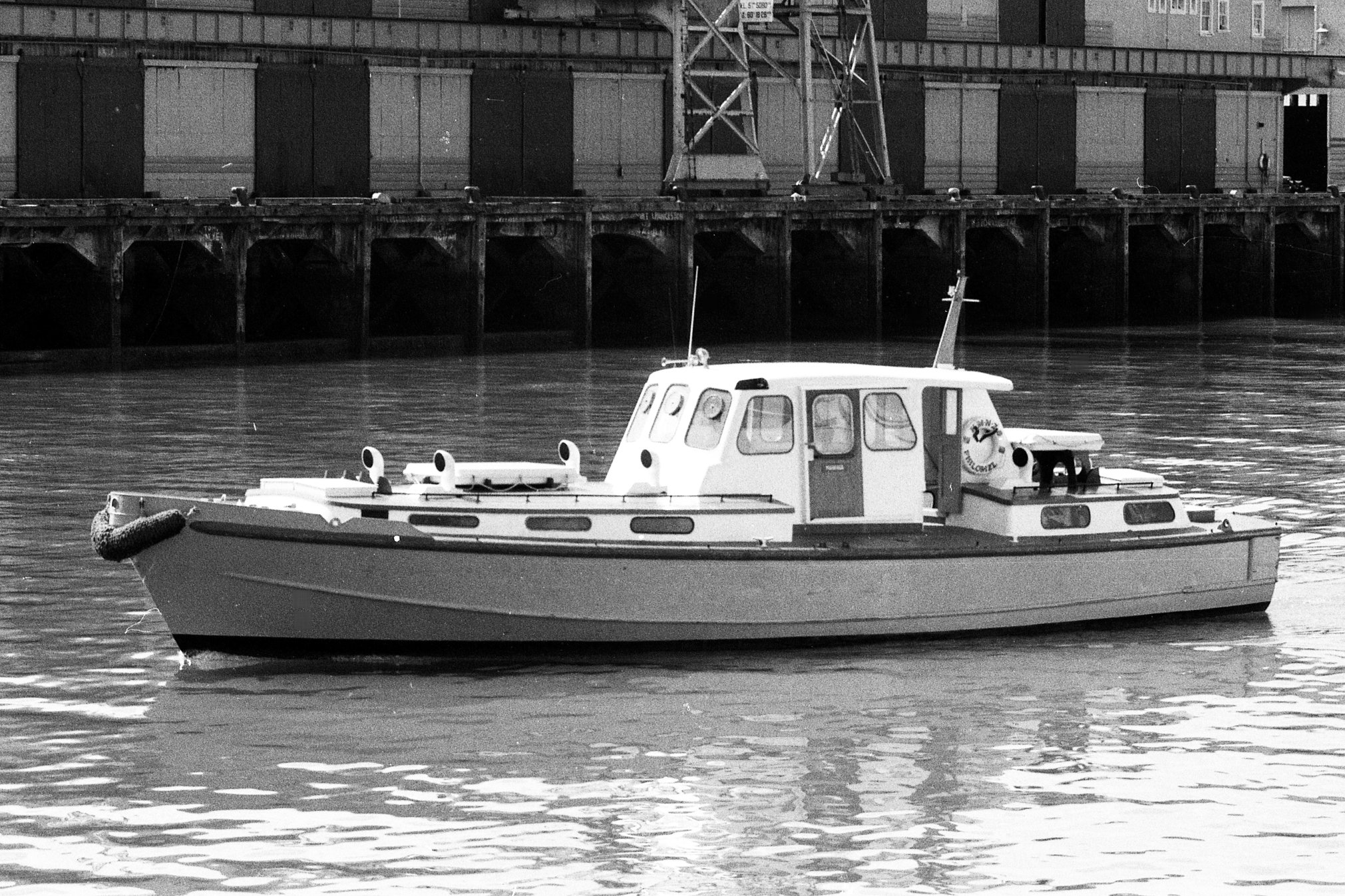
RNZN Liberty Boats – Mahanga – HMNZS Philomel liberty boat – Mahanga (Not confirmed)
Ships and Defence News Past and Present
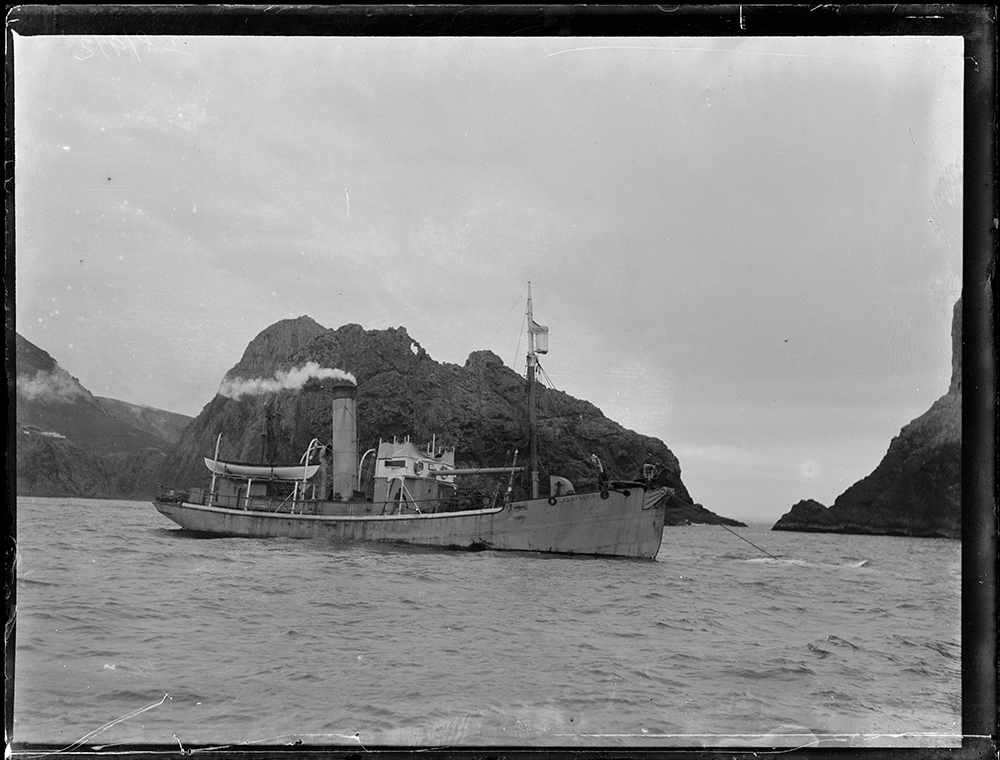
Mine sweeper – Hananui II.
She entered service very late in feb 1919
This was owned by Messers Jagger and Hardy of Auckland and a Charter Agreement, similar to those for the other two vessels (Simplon and Janie Seddon) was drawn up.
Unlike the other vessels, there were no naval personnel on board for sweeping operations, probably because of a lack of suitable personnel in Philomel.
Hananui II began operations in the latter part of February 1919.
Having swept the field without finding any mines it returned to Auckland at the end of April, landing the minesweeping equipment at Devonport and was returned to its owners.”

Looks to have run aground
Some other info:
Today I realised one of my long-held ambitions – a visit to Ryans Beach, where the rusted ruin of the 127 ton steam ship Hananui II still lies. The beach is not open to the public, so I had begun to despair of ever bringing the fascinating story of this ship to you, but I was luckily able to obtain permission to view the wreck from Penguin Place who manage the area. The only condition was that I was to make it very clear that there is absolutely no public access to this beach. So please don’t trespass here!
I took a leisurely morning drive out past Portobello, saluting Pudding Island and Harbour Cone as I passed. The rising sun was in turns both beautiful and directly in my eyes. At Harwood I followed the sign up Pakihau Rd and soon arrived at Penguin Place.
Typical Dunedinite that I am, I’ve never actually been here. I’d always imagined it to be a slick tourist trap but in fact it’s a rustic friendly little place with a clear focus on conservation. The income provided by tourist visitors funds the conservation program, allowing the control of predators and rehabilitation of sick birds among other things. There is a huge old stump with a viewing platform carved into it which allows visitors to look out over the harbour and out to Aramoana.

Unsure what to do next, I approached the first person I saw, who happened to be Brian, a member of the McGrouther family which owns the land and set up the Penguin Place conservation project in 1985. He kindly offered to take me down to the beach, so I hopped in his truck alongside his two excitable Jack Russells, Gemma and Lucky.
We trundled off into the reserve and over the hilly paddocks. This is still a working sheep farm, and the conservation effort is designed to work in harmony with the farming business – challenging the common idea that farmers and conservationists are naturally opposed in their goals.
We parked above the beach and scrambled down the steep slope to the sand below. The beach was pristine on this sunny morning, with the remains of the Hananui II shadowed by the imposing bulk of Quoin Cliff above. Having seen the name “quoin” applied to both this and another headland further south, I wondered if it was the name of an early settler, but it turns out that a quoin is a building term for a large block at the corner of a wall. And it’s pronounced “coin”, not “kwo-win” as I’d been foolishly calling it.

Being closed to the public, the beach was absolutely untouched by human feet, but it was apparent that non-human feet had visited this quiet sanctuary. About a dozen penguins had emerged from the dunes and made their way down to the sea, judging by the evidence they’d left behind. The declining penguin population needs this secure place to breed without being disturbed by pesky people.

Further down the beach was the distinctive scuffy trail of a seal.
But now let’s turn to the true reason for our visit! It is a long and winding tale that brought the Hananui II to her final resting place on this quiet little beach, and it began with third generation whaler Herbert Francis Cook, born in Russell. He decided in 1910 to build a whaling station at Whangamumu, just outside the Bay of Islands, and travelled to England to order the Hananui II which was built at Middlesborough.

In her first season she took thirteen whales. In order to more quickly despatch the poor beasts, each harpoon fired from the gun at the prow was equipped with a bomb which would detonate when it struck. Even so many whales took some time to die and the boat would often be tossed around considerably, being not much larger than the average whale. Six whales were harpooned but managed to escape. This all sounds horrifying to our modern ears, but a hundred years ago this was lauded as a great success.

Four years later saw the outbreak of the First World War, and our government faced a dilemma when the German raider SMS Wolf laid two minefields off the New Zealand coast. No minesweeping equipment or personnel existed in New Zealand at the time, and the mines sunk two ships before decisive action could be taken.
Only four suitable vessels could be found in the country, one of them being the Hananui II. Due to the absence of trained personnel her usual crew had to be used, and in February 1919 she was the third ship sent out to search for the deadly bombs. She found no mines in her three months of service, although ironically her crew had found one in 1918 prior to being called into service. It was carefully towed into port in Russell where it could be detonated. Captain Herbert Cook received a medal for his contribution to the war effort.

Military interlude over, it was back to the business of whaling. The whaler’s best year was 1925, when she captured 74 whales. But the trade became less profitable as whales became scarcer and the value of whale oil declined. The whaling station closed and the Hananui II was sold in 1935 to interests in Bluff for the purpose of oyster fishing. After the closure of the Whangamumu station, whaling in New Zealand effectively came to an end.
It seems she never plied the oyster trade and was instead converted into a fishing trawler. In 1937 she was bought by the National Mortgage & Agency Company Ltd. and brought to Port Chalmers. Now instead of an innovative new whaling gun, she was equipped with an innovative new trawling net.
Having weathered one World War (as an active participant no less!), the Hananui II was fated to meet her doom in the midst of another. On the dark and foggy night of December 2 1943 she was returning from a fishing trip off Wickliffe Bay. Her master, Captain John Black, believed he was making for the harbour entrance when he instead struck the sandy beach at about 5am. It was pure luck that he did not instead hit the rocky headlands at either end of Ryans Beach, and so the ten crew members were all able to land safely and walk over the hills to Portobello.
The first re-floating attempt seemed promising but just as the ship began to lift from the sand the tow line snapped and she settled firmly back down. Further attempts were unsuccessful and she was eventually abandoned, her cargo of fish thrown overboard and as much as possible of her equipment salvaged. Captain John Black was fined £25 for failure to make adequate precautions for the weather and inability to keep track of his position. However, he was not disqualified from captaining ships in the future.

What an embarrassing end for a ship that had battled sea monsters and tangled with minefields. Still there is a sort of poetry in the fact that a vessel that once terrorised creatures of the deep is now being slowly overcome by the sea, providing a home for barnacles and limpets. On the mast where whale spotters once scanned the sea for their prey, sea birds now perch and preen.
Having seen the wreck, perhaps for the only time in my life, it was time to climb the steep slope back up to the truck.

As we headed back we took the opportunity to muster the sheep into another paddock. Soon they will be having their scans to see who is carrying lambs and who will be having twins. Any sheep that aren’t carrying lambs will have an uncertain future, so good luck sheep!

Then I got another treat, a detour up on to Quoin Cliff to look at Ryans Beach from above! It’s a magnificent view that extends to Victory Beach (where another unfortunate steamship resides) and Mount Charles beyond. The wrecked Hananui II looks tiny from up here.

Returning I got a good view over the replanting efforts behind Pipikaretu Beach which will eventually provide shelter for the penguins and protection for the delicate dune formations. On the way I spotted several pukeko, a kingfisher, a hawk and also a lone seal lumbering towards the rocks. The wildlife was certainly on full display today, even if the penguins were all out fishing.

Back at the car park I farewelled my trusty guide. Many thanks to Brian and Lisa and the rest of the Penguin Place crew for providing this wonderful wildlife sanctuary and for allowing me to visit the historic wreck.
References:
Story: Cook, George Howe and Cook, Herbert Francis
DECLINE IN WHALING New Zealand Herald, Volume LXXII, Issue 22144, 25 June 1935, Page 10
NEW TRAWLING SYSTEM Press, Volume LXXIII, Issue 22050, 25 March 1937, Page 23
TRAWLER ASHORE Evening Post, Volume CXXXVI, Issue 134, 3 December 1943, Page 4
STRANDING OF TRAWLER Press, Volume LXXX, Issue 24174, 5 February 1944, Page 6
Otago Daily Times, December 2-10 1943

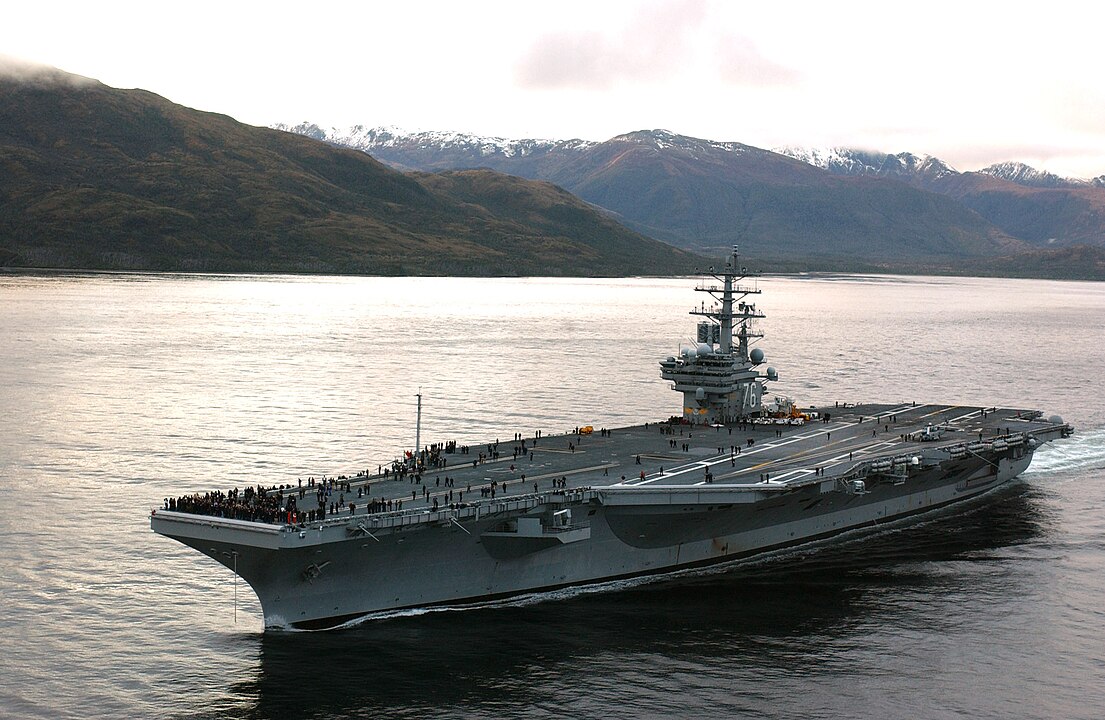
USS Ronald Reagan (CVN-76) is a Nimitz-class, nuclear-powered supercarrier in the service of the United States Navy. The ninth ship of her class,[6] she is named in honor of Ronald Reagan, President of the United States from 1981 to 1989. She was built at Newport News Shipbuilding in Newport News, Virginia, and was commissioned on 12 July 2003.
Ronald Reagan made five deployments to the Pacific and Middle East between 2006 and 2011 while based at Naval Air Station North Island. In October 2015, Ronald Reagan replaced USS George Washington as the flagship of Carrier Strike Group 5, the only forward-based carrier strike group homeported at Yokosuka, Japan, as part of the United States Seventh Fleet.[7] Since 2016, Ronald Reagan has embarked on short annual summer patrols of the Western Pacific in the United States Seventh Fleet area of operation.
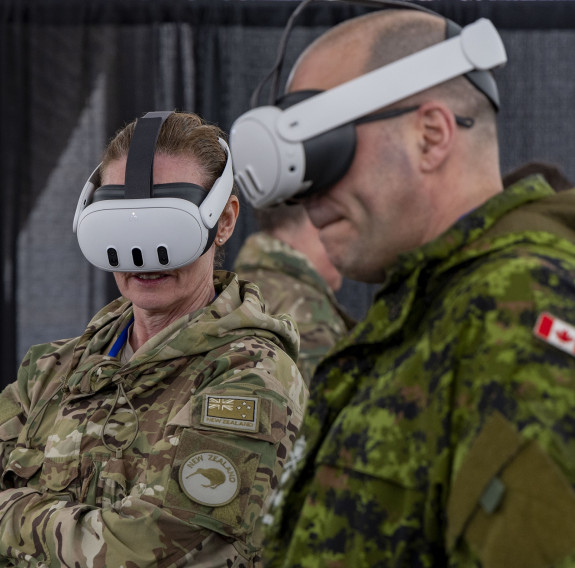
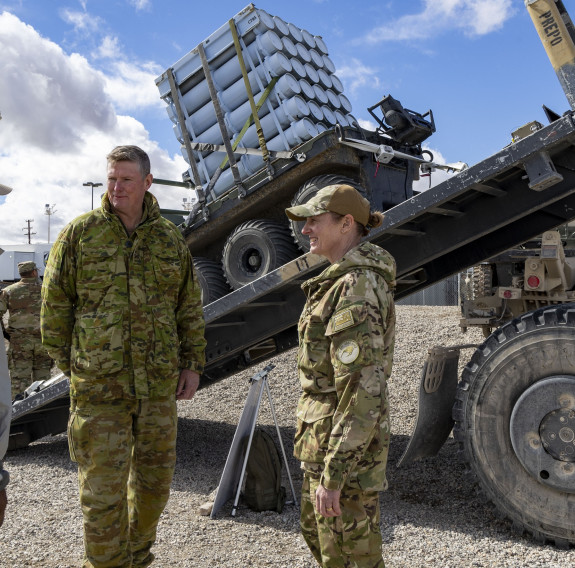
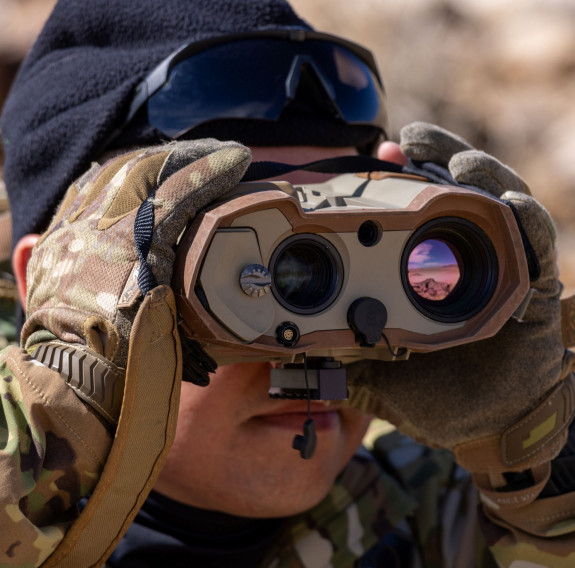
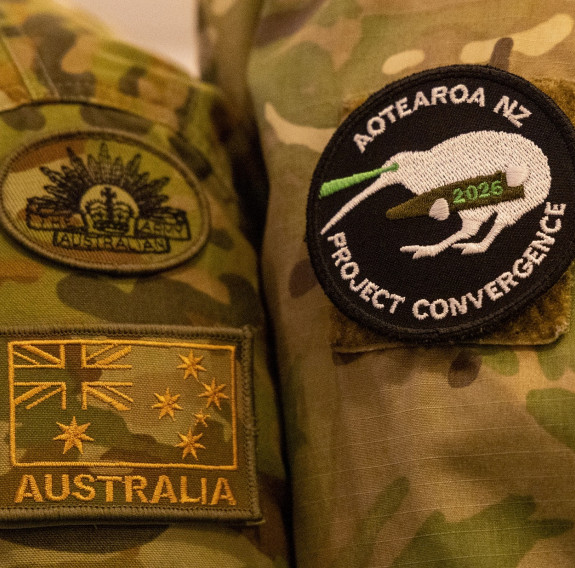
Just over 200 kilometres outside Los Angeles in the Mojave Desert, the US Army’s Fort Irwin National Training Centre has once again played host to the largest military experimentation exercise of its kind, Project Convergence Capstone 5 (PCC5).
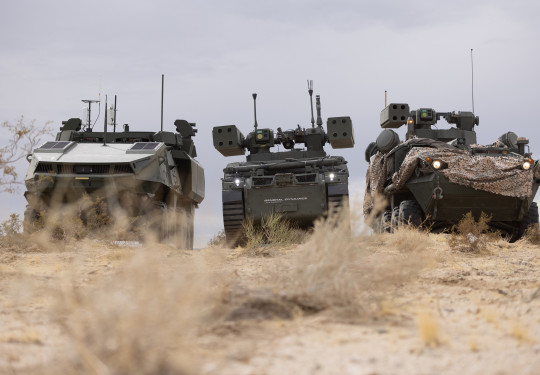
Led by the US Army it included all branches of the US military (Army, Navy, Air Force, Marines, Special Forces and Space Force) as well as personnel representing our Five Eyes partners and France.
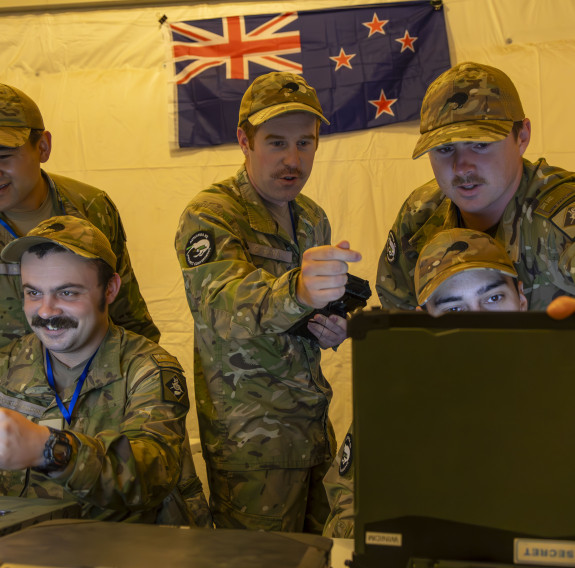
The New Zealand Army had a contingent of around 30 personnel participating in the first scenario of PCC5, predominantly across information, communication and fires roles.
The first scenario of the activity focused on the next generation of Command and Control, and Fire Control Systems in a simulated environment and included a particular focus on human-machine integration.
New Zealand’s Senior National Officer at the exercise, Lieutenant Colonel Richie Appleton says our participation at these sorts of activities is vital.
“Threats to our region are now present from greater ranges than ever before due to the proliferation of new technologies, the extended reach of lethal fires and ubiquitous surveillance. It means the need to be armed with the latest military knowledge and capabilities is more important than it has been for decades,” said Lieutenant Colonel Appleton.
PCC5 is a critical proving ground for emerging technologies and concepts that are crucial to enabling a data-centric and networked fighting force, and offers the NZDF the chance to observe and learn from our partners and take those lessons learned back home.
“It puts us at the cutting edge of military experimentation and gives us the opportunity to participate and observe exercises at a scale we can’t replicate at home.”
“Whether it’s on the tools, or as observers, our presence at PCC5 is well-received by all our partners, and we are respected by militaries the world over as having highly-trained personnel who can add value to these multi-national efforts.”
Scroll to previous imageScroll to next image
The New Zealand Defence Force’s (NZDF) Land Component Commander, Brigadier Jason Dyhrberg, says Project Convergence also provides an invaluable opportunity to keep testing our interoperability and partnerships with other nations.
“PCC5 is an opportunity for us to further enhance our interoperability with our ally Australia, particularly as it relates to communications and electronic warfare.”
“Continually testing and enhancing our interoperability with Australia across all areas of our forces in turn supports our commitment to each other’s security in the South Pacific, and our shared focus on the security and stability of our wider region,” Brigadier Dyhrberg said.
“To that end, PCC5 is also a great build-up and test of that level of partnership ahead of Exercise Talisman Sabre later this year, which will see a significant contingent of NZDF personnel and platforms deployed.”
The New Zealand Defence Force’s (NZDF) Land Component Commander, Brigadier Jason Dyhrberg, says Project Convergence also provides an invaluable opportunity to keep testing our interoperability and partnerships with other nations.
“PCC5 is an opportunity for us to further enhance our interoperability with our ally Australia, particularly as it relates to communications and electronic warfare,” Brigadier Dyhrberg said.
“Continually testing and enhancing our interoperability with Australia across all areas of our forces in turn supports our commitment to each other’s security in the South Pacific, and our shared focus on the security and stability of our wider region. To that end, PCC5 is also a great build-up and test of that level of partnership ahead of Exercise Talisman Sabre later this year, which will see a significant contingent of NZDF personnel and platforms deployed
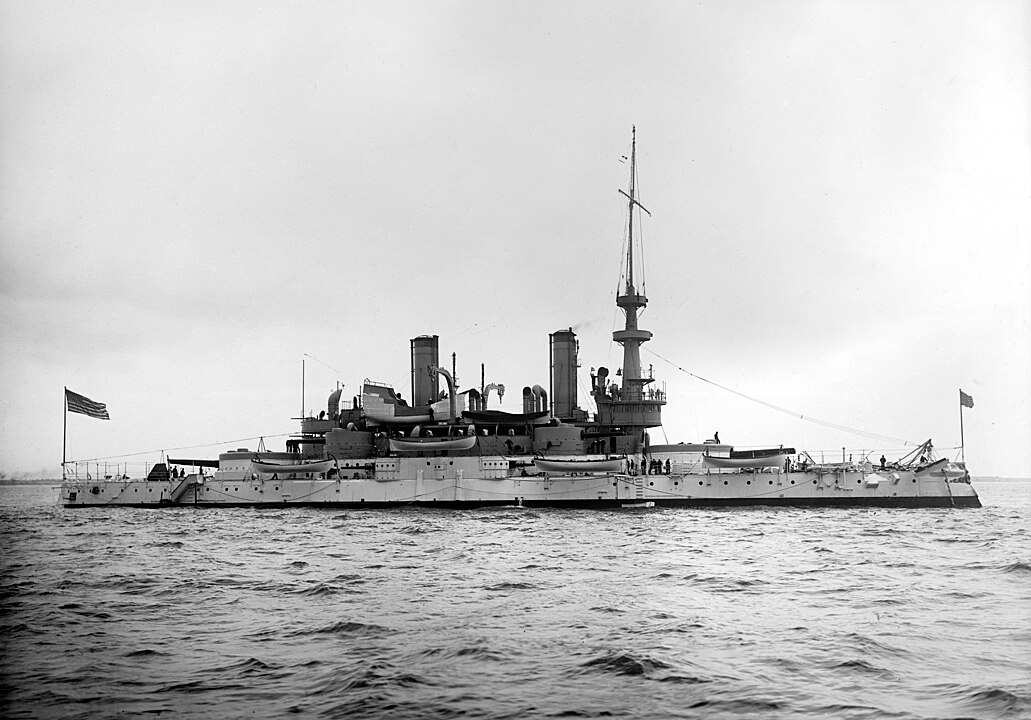

USS Indiana was the lead ship of her class and the first battleship in the United States Navy comparable to foreign battleships of the time.[5] Authorized in 1890 and commissioned five years later, she was a small battleship, though with heavy armor and ordnance. The ship also pioneered the use of an intermediate battery. She was designed for coastal defense[6] and as a result, her decks were not safe from high waves on the open ocean.
Indiana served in the Spanish–American War (1898) as part of the North Atlantic Squadron. She took part in both the blockade of Santiago de Cuba and the Battle of Santiago de Cuba, which occurred when the Spanish fleet attempted to break through the blockade. Although unable to join the chase of the escaping Spanish cruisers, she was partly responsible for the destruction of the Spanish destroyers Plutón and Furor. After the war, she quickly became obsolete—despite several modernizations—and spent most of her time in commission as a training ship or in the reserve fleet, with her last commission during World War I as a training ship for gun crews. She was decommissioned for the third and final time in January 1919 and was shortly after reclassified Coast Battleship Number 1 so that the name Indiana could be reused. She was sunk in shallow water as a
Ships and Defence News Past and Present


