US Military –US Battleships – USS Texas (1892)

Main article: USS Texas (1892)

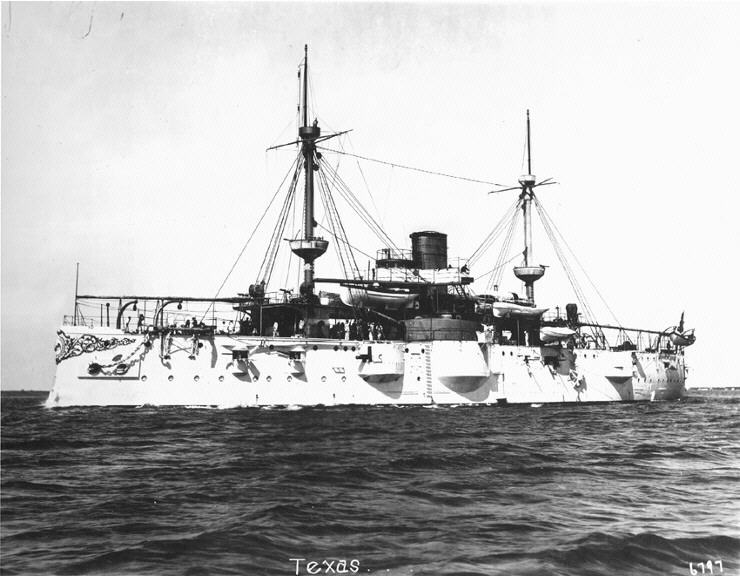
Photograph of the USS Texas at sea
USS Texas

The acquisition of modern, European-built warships by ArgentinaBrazil, and Chile had alarmed the United States. The straw that broke the camel’s back was Brazil’s commissioning of the battleship Riachuelo, which suddenly made the Brazilian Navy the strongest in the Americas. Congressman Hilary A. Herbert, chairman of the House Naval Affairs Committee, said of the situation, “if all this old navy of ours were drawn up in battle array in mid-ocean and confronted by the Riachuelo it is doubtful whether a single vessel bearing the American flag would get into port.” Facing the possibility of enemy ironclads operating in American coastal waters, the Naval Consulting Board began planning a pair of ironclads of their own, which would be able to use all major American naval bases and have a minimum speed of 17 knots (31 km/h; 20 mph). The first of these two was USS Texas, 308 feet 10 inches (94.13 m) long, sporting an armor belt 12 inches (305 mm) thick, displacing 6,316 long tons (6,417 t), sailing at a top speed of 17.8 knots (33.0 km/h; 20.5 mph), and armed with two 35-caliber 12 in (305 mm) primary and six 30-caliber 6 in (152 mm) secondary guns.[10]

Texas was authorized by Congress on 3 August 1886, but construction lagged until she was laid down on 1 June 1889. She was launched in the presence of the granddaughter of Sam Houston on 28 June 1892, and commissioned on 15 August 1895.[11] Texas‘s early service revealed a number of structural issues, which was addressed via some reinforcement of various parts of the ship,[12] and she ran aground near Newport, Rhode Island, in September 1896.[13] This in turn revealed even more faults with Texas, as massive flooding easily disabled her in the shallow waters where she ran aground.[14] After repairs, she joined the North Atlantic Squadron, briefly leaving for a Gulf Coast visit to Galveston and New Orleans that saw her beached on a mud bank off Galveston, an event whose aftermath gave Texas her nickname, “Old Hoodoo.”[15][16] After repairs, she returned to the North Atlantic Squadron and her patrols of the Eastern Seaboard. In the Spring of 1898, Texas‘s near-sister ship USS Maine (ACR-1) (the other of the two original coastal defense ships) was destroyed by an explosion in Havana‘s harbor, and the United States went to war with the Spanish Empire. An American fleet including Texas was at Key West, and was part of the Flying Squadron in its engagements with Spanish fortifications on the Cuban coast. She saw real surface fleet combat on 3 July at the Battle of Santiago de Cuba alongside USS IowaUSS Gloucester, and USS Indiana against the fleet of Pascual Cervera y Topete as it tried to escape the American fleet and emerged with only light damage.[11][17] After the war, Texas was decommissioned and refitted on two occasions before finally be declared obsolete in 1911 and permanently decommissioned and converted into a target ship in the same year.[18][19] On 15 February 1911, Texas was christened as San Marcos to free the name up for the dreadnought USS Texas (BB-35),[11] and was then sunk in the waters of Tangier Sound by USS New Hampshire‘s guns. The remains of the San Marcos continued to be used for gunnery practice after her sinking until January 1959,[20] when vast quantities of explosives were used to bury her remains

US Military –US Aircraft Carriers – USS Ronald Reagan goes into dry dock, expected to emerge in late 2026

By GARY WARNER STARS AND STRIPES • April 2, 2025

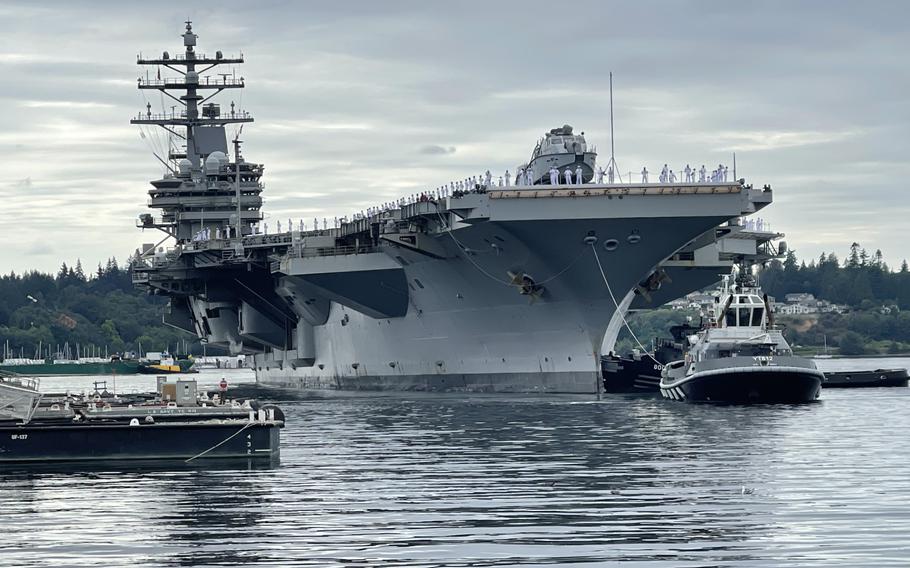
The USS Ronald Reagan arrives at Puget Sound Naval Shipyard in Bremerton, Wash., in August 2024. The aircraft carrier went into a 17-month maintenance at the shipyard in March 2025. (Gary Warner/Stars and Stripes) BREMERTON, Wash. — The Nimitz-class aircraft carrier USS Ronald Reagan has begun a maintenance stint that will keep it from deployment for 17 months, Navy officials said. The Reagan, commissioned in July 2003 was homeported at Yokosuka, Japan, from 2015 to 2024 to bolster U.S. forces in the eastern Pacific region and counter Chinese naval expansion. The carrier moved to Naval Base Kitsap, Wash., in 2024, with the USS George Washington replacing it in Japan. For the overhaul, the Reagan is moved to dry dock at Bremerton, where all the water is drained out, allowing workers access to the hull, propellers and other machinery that is normally submerged. Upgrades and repairs are completed incrementally. Of the 11 aircraft carriers in the Navy, the Reagan and the USS John C. Stennis are unavailable now for sea duty. The Stennis has been at HII-Newport News Shipbuilding, Va., since 2021 undergoing maintenance that includes modernization and the time-consuming refueling of the nuclear reactors to allow for an additional 25 years of operations on the ship’s 50-year projected service lifespan. The Stennis overhaul has been plagued by workforce and material delays in what is usually a four-year process. But the Stennis is not expected to emerge from the shipyard until as late as 2027. Under Navy plans, the USS Harry S. Truman would be the next carrier to have that kind of multiyear overhaul, which is only done at the Newport News facility. It would be followed by the Reagan and the last Nimitz carrier to be built, the USS George W. Bush. The Reagan shares Kitsap as a homeport with the USS Nimitz, which is operating in the eastern Pacific for what is expected to be its final deployment before returning briefly to the West Coast and then traveling to Norfolk Naval Station, Va., by April 2026 to begin its retirement. The Nimitz is the oldest carrier in the fleet. It was commissioned in May 1975. Capt. John Hale, commander of Naval Base Kitsap, said the base could accommodate the ship’s approximately 2,800 crew members in local housing. An auxiliary personnel lighter, which is a floating apartment and work complex on a barge that the Navy has used in the past for temporary housing of sailors when their ships are under maintenance, will be available for day use, offices and storage, he said. But it will not be used for overnight stays. During the 17 months at the shipyard, the crew of the Reagan will perform some duties on the ship but are also routinely assigned additional work around the base. Sailors recently took part in a cleanup effort around the Bremerton complex at the sprawling 12,000-acre base, which also includes ballistic-missile and attack submarine squadrons based at Bangor. Under a Navy plan proposed last week, the USS John F. Kennedy, the second of the new Ford-class aircraft carriers, would homeport at Kitsap beginning in 2029. The Kennedy is scheduled to be commissioned into the fleet in the summer. Because of the significantly higher electrical needs of the Ford-class carriers, Kitsap must undergo a $300 million overhaul of its substations and wiring to the dock areas to accommodate the ships. The Kennedy would remain on the East Coast at Naval Base Norfolk undergoing post-commissioning sea trials until the work at Bremerton is completed. Two additional Ford-class carriers, the future USS Enterprise and USS Dorris Miller are under construction at Newport News. Earlier this year, the Navy announced two more Ford carriers would be built and named after presidents — the USS William J. Clinton and USS George W. Bush.

Read more at: https://www.stripes.com/branches/navy/2025-04-02/reagan-aircraft-carrier-kitsap-dry-dock-17345149.html?utm_source=Stars+and+Stripes+Emails&utm_campaign=Daily+Headlines&utm_medium=email
Source – Stars and Stripes

NZ Naval Bases/Dockyards – HMNZS Matataua is a land-based unit

Matataua show their skills in Middle East

Royal New Zealand Navy divers and hydrographers have been working with the best in the Maritime Counter Measures (MCM) profession during a recent exercise in Bahrain.

8876055

01 April, 2025

In February, 20 MCM specialists from HMNZS Matataua joined a MCM task group within International Maritime Exercise (IMX) 2025, working alongside colleagues from the Royal Navy, French Navy, Royal Bahraini Naval Force, United Arab Emirates Navy and the Japan Maritime Self-Defense Force.

The exercise included locations in the Arabian Gulf, Gulf of Oman, Arabian Sea, Indian Ocean, Gulf of Aden and Red Sea.

As part of Combined Task Group 3, Matataua personnel focused on ‘Break Out’ mine countermeasures in Bahrain territorial waters, where they had to locate and ‘dispose’ of sea mines.

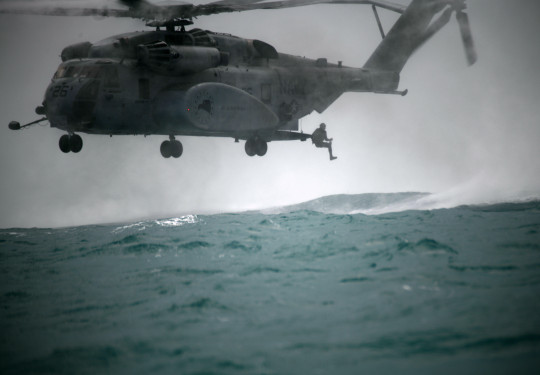
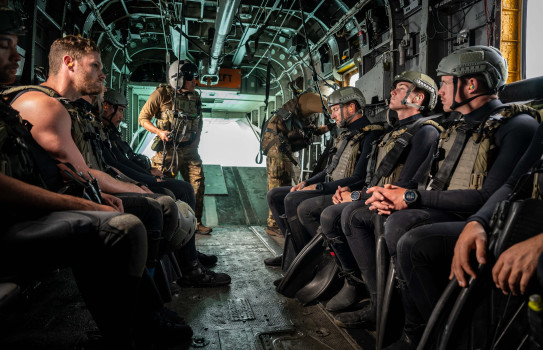
Able Diver Karaitiana-Hay said they conducted emergency drill operations, including lift bag diving where a bag is inflated to make a ground mine buoyant and pouncer operations, where divers jump into the sea from a helicopter to neutralise a floating mine.

“The water had a decent visibility of five metres. On one of the dives we encountered a friendly but venomous sea snake!”

There were differences in procedure – the height of the jump from the US Navy helicopter was happily less than other pouncer operations the New Zealand divers have experienced, he said. But Matataua’s approach to MCM was found to be very similar to the Royal Navy, with a focus on technology and modular autonomous systems to achieve the mission.

250218 N FF029 1080

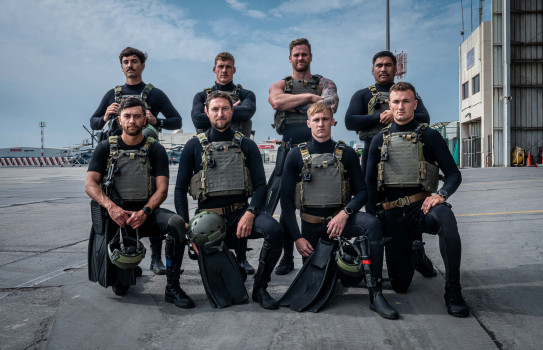
HMNZS Matataua divers pose for a photo prior to insertion. Photo: US Navy

8876039

HMNZS Matataua divers prepare to jump from an MH-53E Sea Dragon helicopter during cast and recovery drills. Photo: US Navy

An important aspect of the MCM cycle is the search and locate function, undertaken by hydrographers who deploy Autonomous Underwater Vehicles (AUV) with sonar to locate mine-like objects.

Leading Hydrographic Survey Technician Teao said their team was given a zone to search and clear.

“We were fortunate to experience how the Royal Navy, French Navy and United States Navy operated their AUVs,” he said.

“On one occasion the USN used four REMUS 100 AUVs concurrently, which is a very cool situation for any AUV team.”

“My favourite interactions were between the French and myself, trying to ask each other questions and trying to understand each other’s answers.”

He says he benefitted from seeing the different software being utilised across different nations.

“It’s all stimulating my passion for AUV knowledge.”

Lieutenant Commander Miles Amery, Matataua’s Operations Officer, said the exercise showcased the highly deployable, modular and adaptable nature of Matataua’s mine countermeasure abilities.

“Tactically, it was an opportunity to exercise our MCM capability and train our personnel in a realistic mine threat environment,” he said.

This exercise mainly involved mines on the seabed, but Matataua could be asked to deal with moored, drifting or attached mines, detonated by contact, acoustic, magnetic, pressure or by remote.

“These exercises not only build our experience and interoperability with international coalition partners, but fosters our close defence relations with them. After all, you can’t surge trust in a time of crisis.”

NZ Naval Bases/Dockyards –HMNZS Matataua is a land-based unit

Littoral Manoeuvre Craft

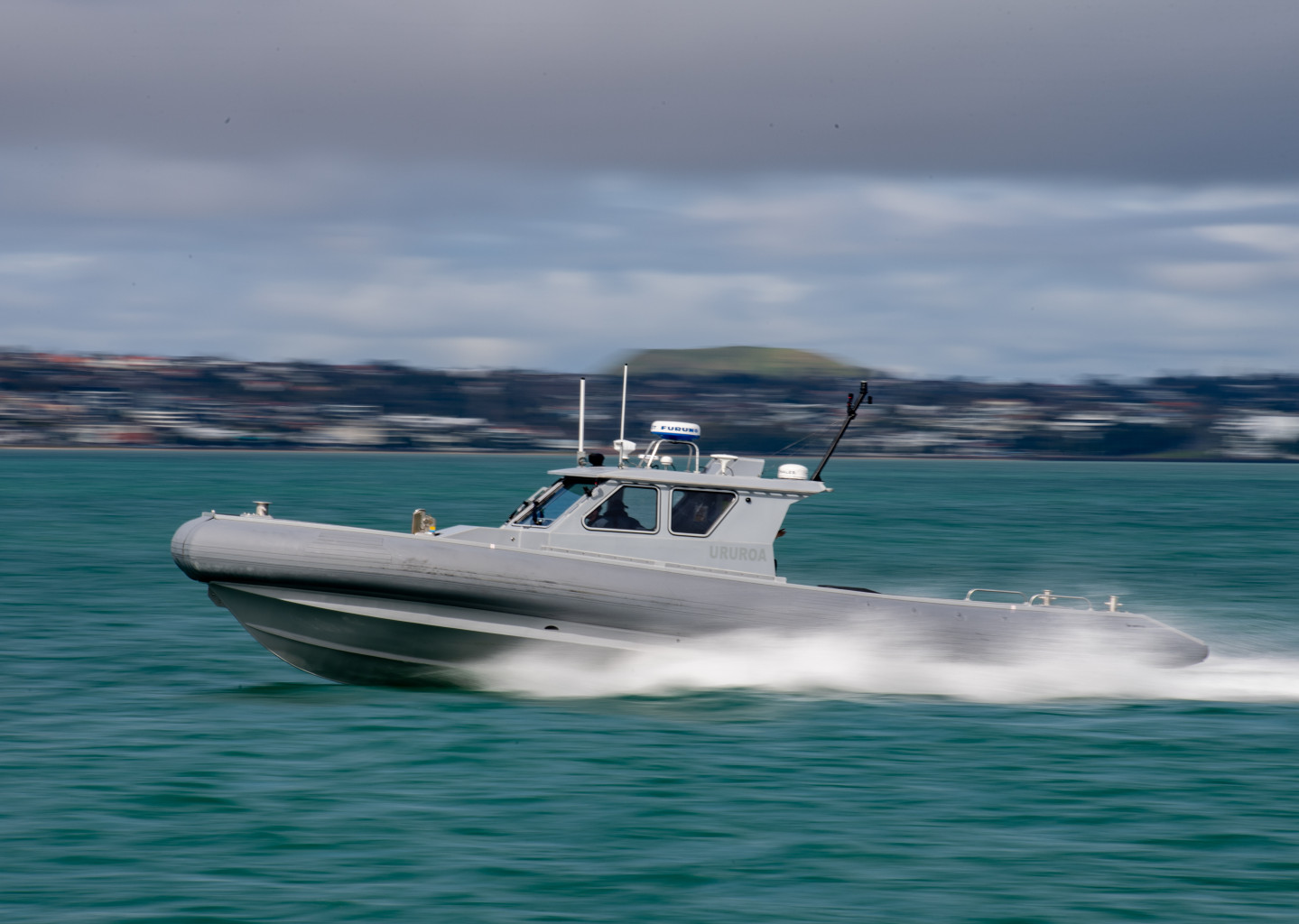
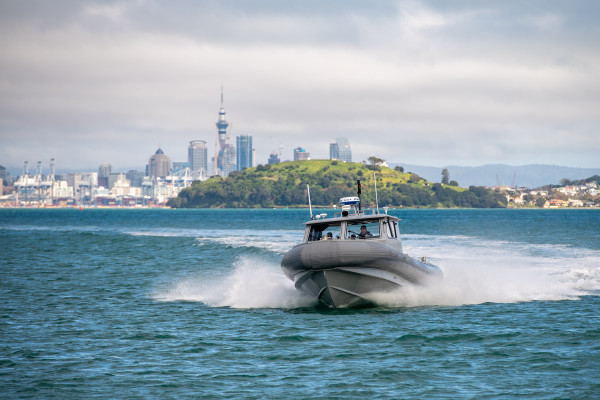
HMNZS Matataua utilises three high-speed Littoral Manoeuvre Craft (LMC) for the Royal New Zealand Navy

Specifications

Make/modelPFG Sentinel Boats – The Sentinel 1250
Hull materialPlastic HDPE
Length12.6 meters
BEAM3.73 meters
Speed40+ knots
ENgine powerTwin Cummins QSB6.7 rated at 550hp each
DriveTwin HJX29 Hamilton Jet Units
crew3
passengers10
  • 10+ Tonne Fully loaded
  • Able to be transported, launched and recovered
  • Able to transport, launch and recover a RNZN 5.3m Zodiac

HMNZS Matataua was a land-based unit (a stone frigate) commissioned in 2017 (previously the Littoral Warfare Support Force, the Littoral Warfare Support Group, and most recently the Littoral Warfare Unit) with two operational groups, one for military hydrographic survey and the other clearance diving, and a logistics support group.

 Detachments from Matataua embarked on Manawanui when the ship was conducting survey and/or diving operations. Matataua was responsible for ensuring access to and the use of harbours, inshore waters and associated littoral zones through shallow water and coastal survey, mine-countermeasures and explosive ordnance disposal, beach survey and reconnaissance in support of amphibious operations, and underwater engineering.[32] Matataua also provided underwater search and recovery support to the NZ Police,[33][34] and other government and civil agencies as requested and approved through Headquarters Joint Forces New Zealand.

HMNZS Matataua

Matataua provides deployable maritime capabilities to conduct operations that safeguard access to the harbours, inshore waters and littoral zones of New Zealand and wherever NZDF deployed forces are required to operate. Matataua is based on small, deployable, mission-based detachments utilising a wide range of equipment, platforms and tools to achieve its objectives. It is capable of being rapidly deployed by air, sea and land into operational areas. Specialist teams within the groups can be quickly assembled into a composite force. The groups are:

  • The Military Hydrographic Group (MHG)
  • The Clearance Diving Group (CDG)
  • The Logistics Support Group (LSG)

In 2017, the unit officially became HMNZS Matataua. It was previously known as the Littoral Warfare Unit. Matataua means ‘Eyes of the Warrior’ – a fitting name for a unit of divers, hydrographers and surveyors, who go before the main force to identify and contain any dangers that lie ahead.

Matataua is able to operate off our dive and hydrographic vessel, HMNZS Manawanui and from two Rapid Environmental Assessment (REA) boats Takapu and Tarapunga.

NZ Naval Bases/Dockyards – HMNZS Tasman – Lyttelton

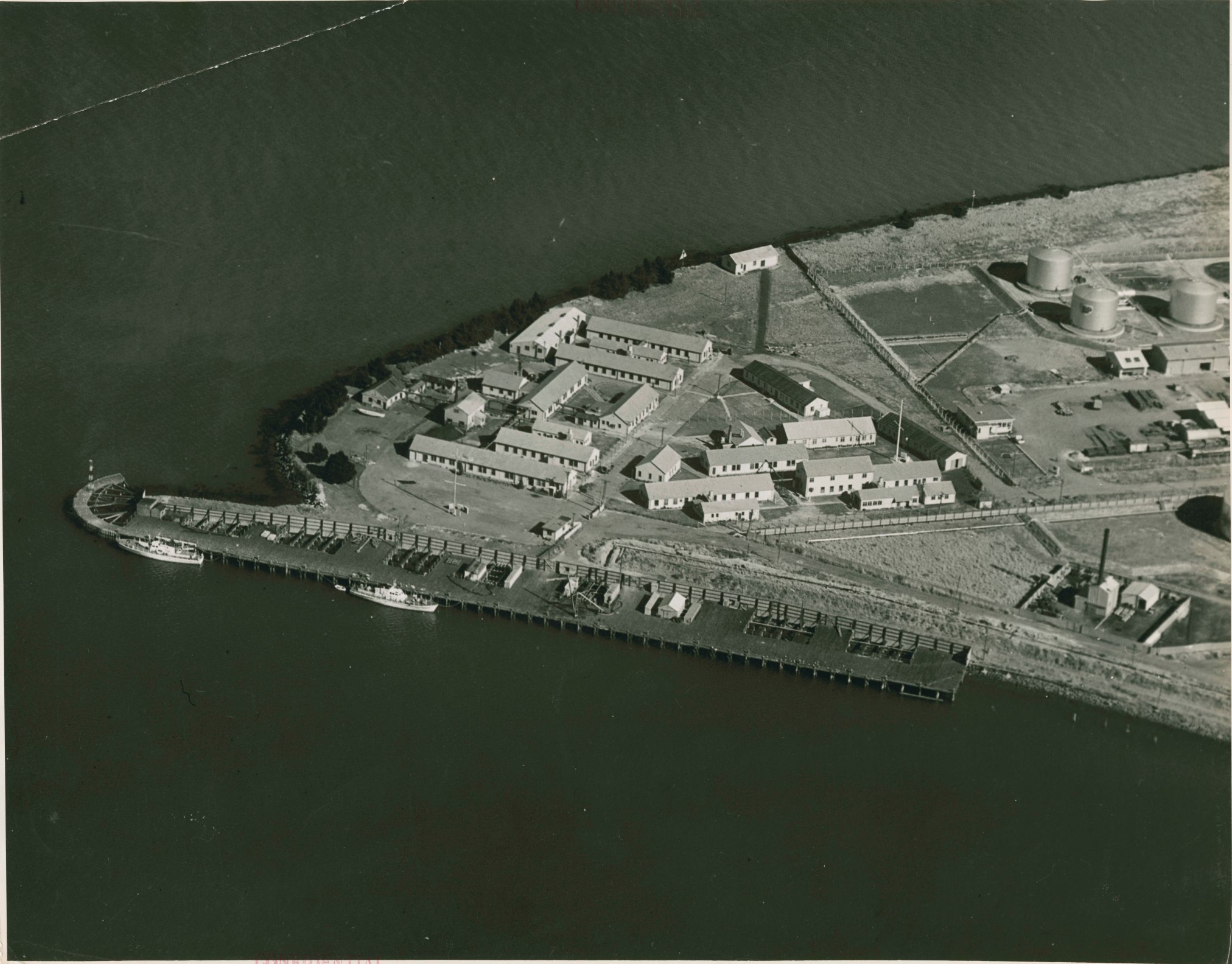
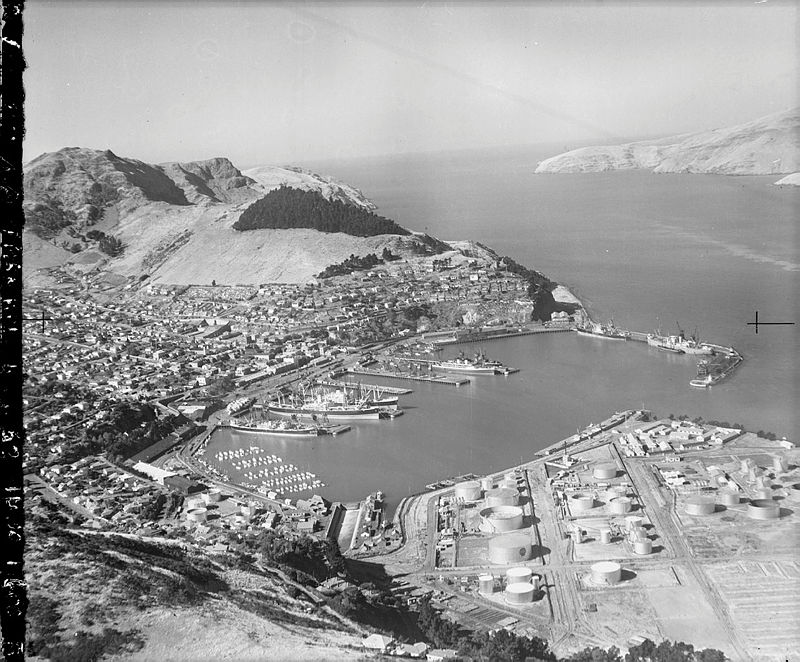
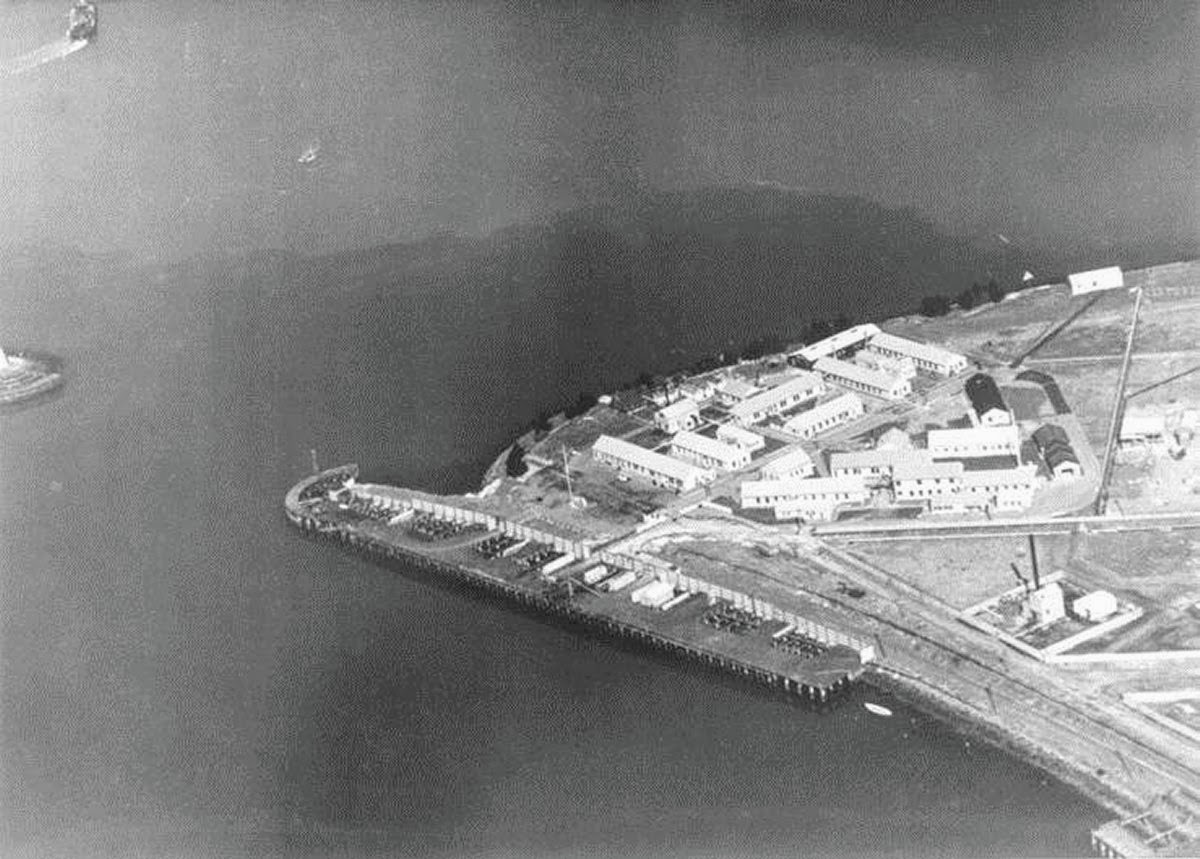
A naval barracks with accommodation for 200 officers and ratings was built at Lyttelton where the oil storage facility is currently and commissioned on 20 January 1944 by Commander T.S. Critchley, NOIC Lyttelton as HMNZS Tasman. It was used by the RNZN as a training facility for telegraphists and anti-submarine warfare.

HMNZS Tasman [RNZN Museum]

HMNZS Tasman [RNZN Museum]History

A naval barracks with accommodation for 200 officers and ratings was built at Lyttelton where the oil storage facility is currently and commissioned on 20 January 1944 by Commander T.S. Critchley, NOIC Lyttelton as HMNZS Tasman. It was used by the RNZN as a training facility for telegraphists and anti-submarine warfare. The defence South Island dental facility was located here. It was used as a training establishment for telegraphy and to hold a pool of ratings in Lyttelton. After its opening the training of telegraphist was transferred to HMNZS Tamaki. In replacement, the training school for signalmen that was set up in June 1943 was transferred from Dunedin.[1] At the conclusion of the Second World War it was closed down as a naval establishment but used as a base for demobilisation of the 2NZEF personnel returning home to the South Island. In September 1946 work commenced on converting the base to a torpedo AS and electrical school but the planned commissioning was deferred until December 1955. In April 1956 the decision was made to close the base and it was formally decommissioned in 1957.[2] The name Tasman was reused in June 1975 for an advanced training establishment within HMNZS Philomel. It was paid off in 1979 and responsibility for all training schools at Naval Base assumed by HMNZS Tamaki.[3] There was also some confusion with the Royal Navy’s submarine Tasman which was launched in February 1945. As a result the submarine was renamed in April 1945 HMS Talent.[4]

Ships associated with the Base:

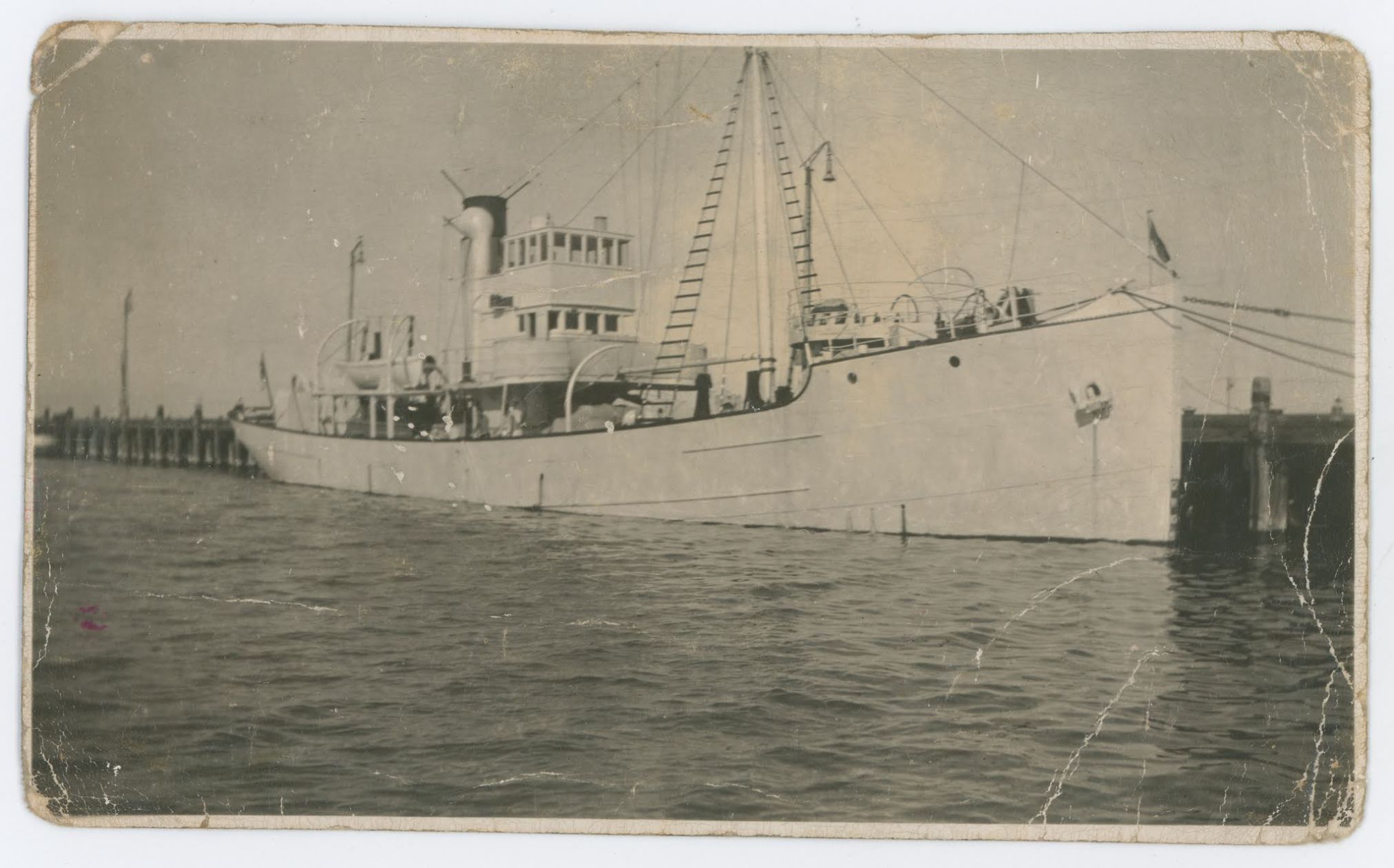
When Tasman was commissioned the examination vessel, a launch named Wairangi, was renamed Tasman and retained for harbour duties. She had been taken over in 1939 hurriedly by the authorities in Lyttelton earning a rebuke from Wellington. She served as Tasman until the SDML P3563 arrived in August 1948. 

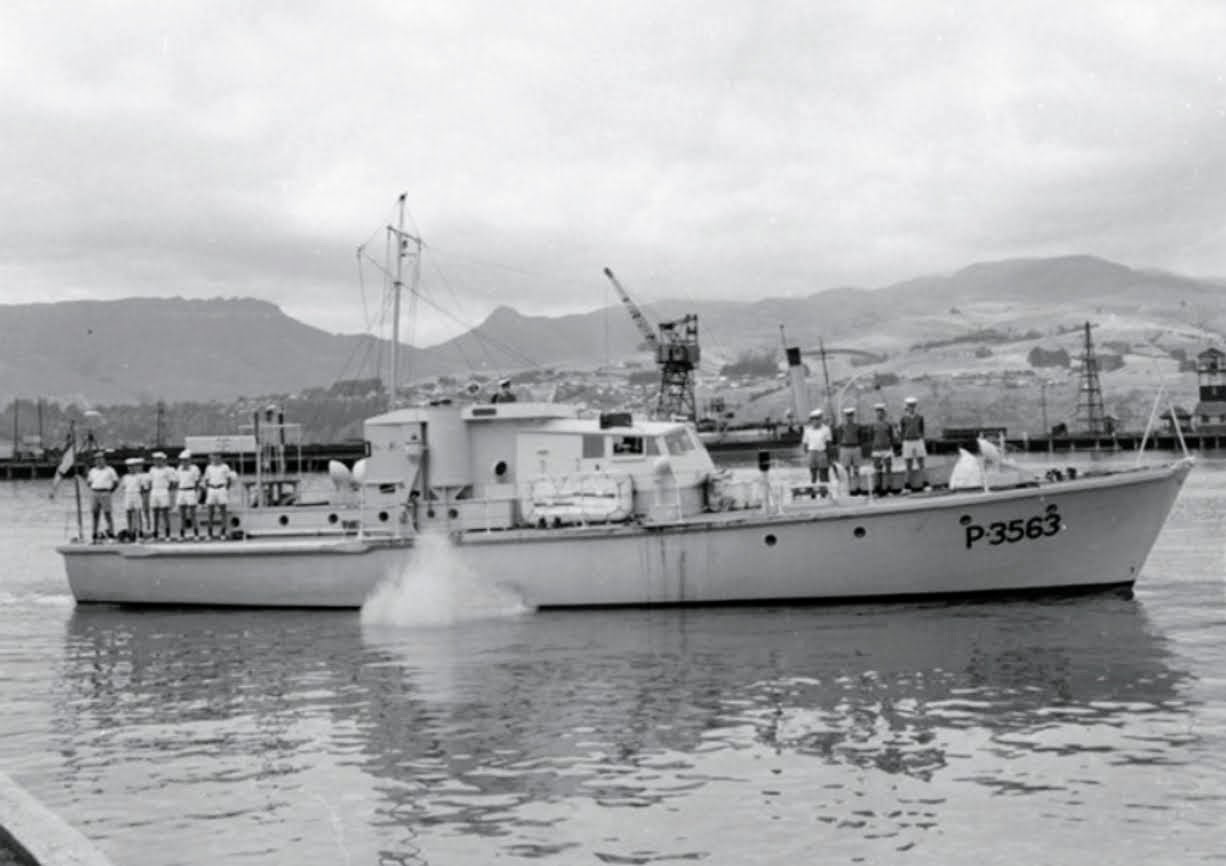
HMNZS Kuparu (Q1348)-(P3563)
HMNZS Kuparu (Q1348)-(P3563) refit

Tasman was renamed Wairangi and returned to her owners.[5] There was also an unmade officer’s motor boat used by the base.

In 1946 the HDML Q1438 was given the new pennant no. P3563. In January 1956 it was renamed Pegasus and in March 1968 after a refit was renamed Kuparu (Maori for John Dory).[6] It was converted for Volunteer Reserve use at the dockyard in late 1947, the first of the HDMLs in the planned programme of conversions. It was commissioned on 8 August 1948 for the Canterbury Division of the RNZNVR. It was shared with Tasman and used on the weekend by the reservists. Kuparu arrived for service on 16 August 1948. It was fitted with two single mount 20mm Oerlikons. It was also fitted for target towing for the 11th Coast Regiment, Royal New Zealand Artillery whose battery was based at Godley Head.[7]

Ship’s Badge:[8]

MottoServabo Fidem (I shall keep faith)

The original badge design was submitted by the Captain Superintendent of HMNZ Dockyard in early 1948. The Naval rejected the design, requesting that a 17th century Dutch ship be used. The badge was resubmitted in April 1948 and approved by the Naval Board despite some concerns raised by the College of Heralds. The badge was in use until the base closed in 1957. In 1976 when the training facility named HMNZS Tasman was established at HMNZS Philomel, a revised version of the badge was used.

Mutiny at HMNZS Tasman

In April 1947, the Naval Board’s response to the Philomel mutiny prompted further problems in the South Island. On the morning of 8 April seven ratings at Tasman, the naval base in Lyttelton, refused to go on duty and demanded that they be discharged on the same basis as the Philomel strikers.[9] .

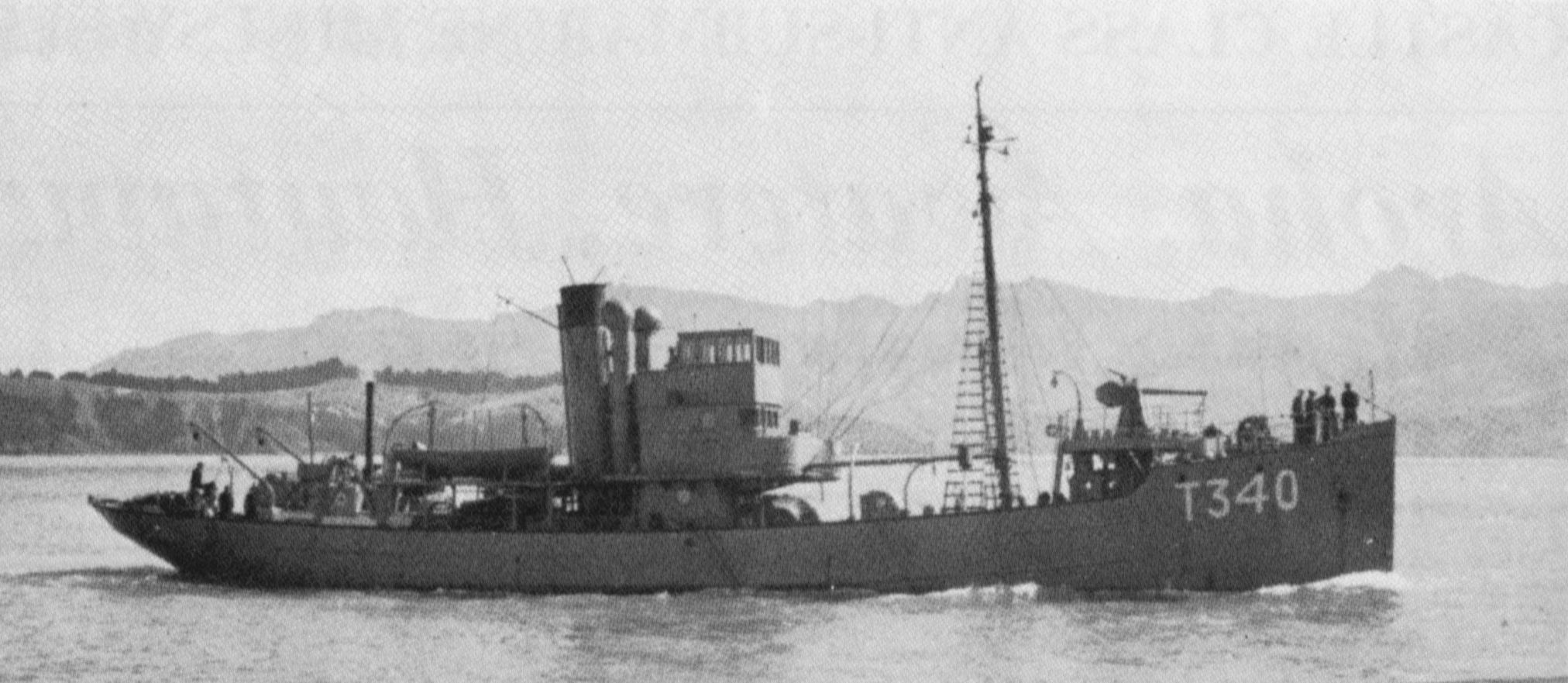
HMNZS Hautapu
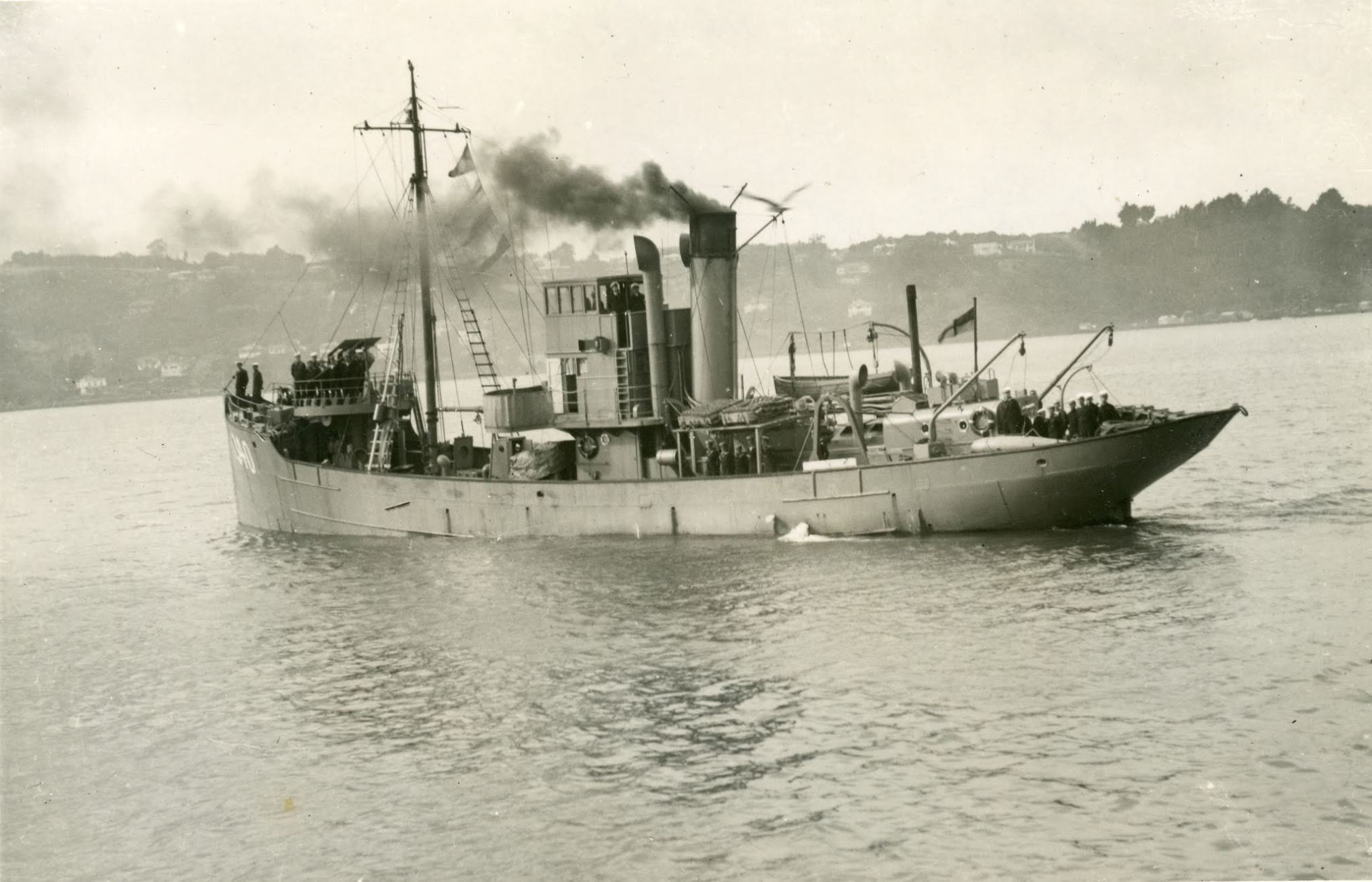
Hautapu docked at Lyttleton, HMNZS Tasman, either 1946 or 1947
HMNZS Hautapu

Eleven members of the HMNZS Hautapu’s crew then walked off the ship. These men were still absent when the ship sailed for Lyttelton later in the day.[10] There is clear evidence that the ratings at Tasman and Hautapu had acted in concert.[11] The Naval Board responded firmly to this unrest. Commander Davis-Goff, who was responsible for personnel matters, was sent to Lyttelton to deal with the disorder. He warned all the ratings at Tasman that men “committing mutinous conduct at this late stage, having had time to think things over, would be dealt with severely” and reminded them of their obligations under the oath of allegiance. Davis-Goff spoke to the men who were refusing to work and six of them then returned to duty. One of the ratings who had left the Hautapu re-joined her in Lyttelton, and arrest warrants were issued for the other ten men.[12]

The seven men involved in the disturbances at Tasman were convicted of taking part in a mutiny not accompanied by violence and were sentenced to 60 days detention with all but fourteen days of that term suspended. Ratings under 21 years of age only had to serve ten days. The majority of the mutineers from Hautapu were arrested by the police within a few days and were later convicted of taking part in a mutiny not accompanied by violence and of desertion. They were also sentenced to 60 days detention, but were required to serve on average about 24 days. Ratings under 21 years of age only had to serve eighteen days. Some men may also have lost good conduct badges.[13]

JCs Royal New Zealand Navy Ships and New Zealand Defence, Also other World Defence Updates

Ships and Defence News Past and Present

Skip to content ↓