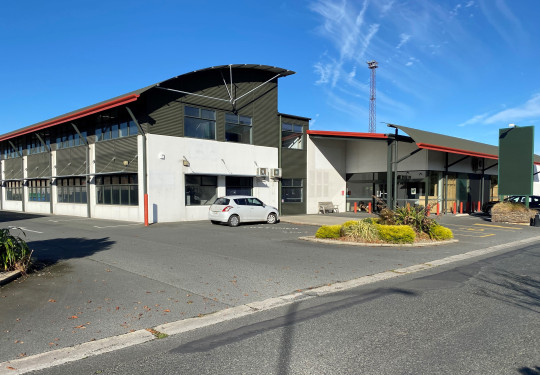
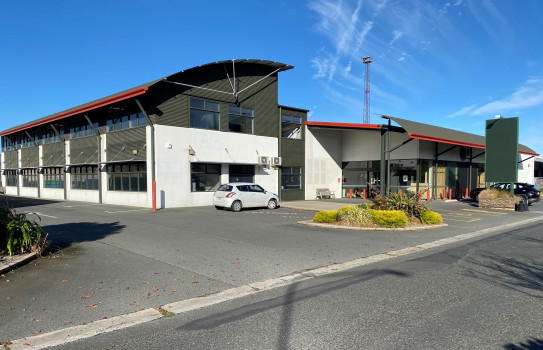
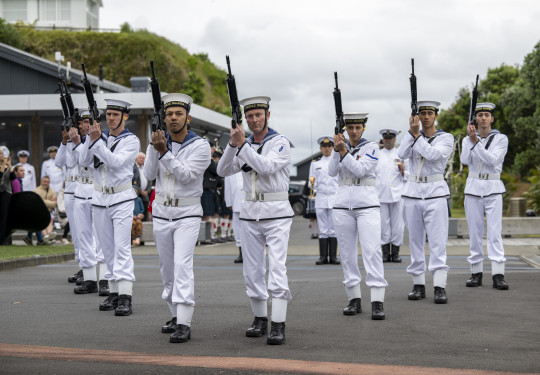
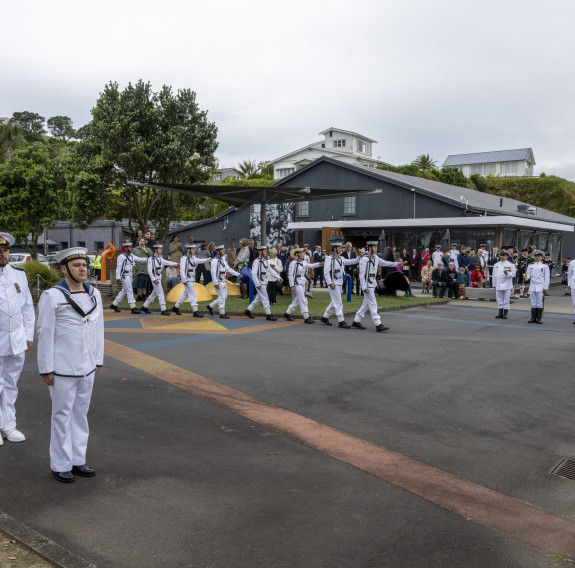
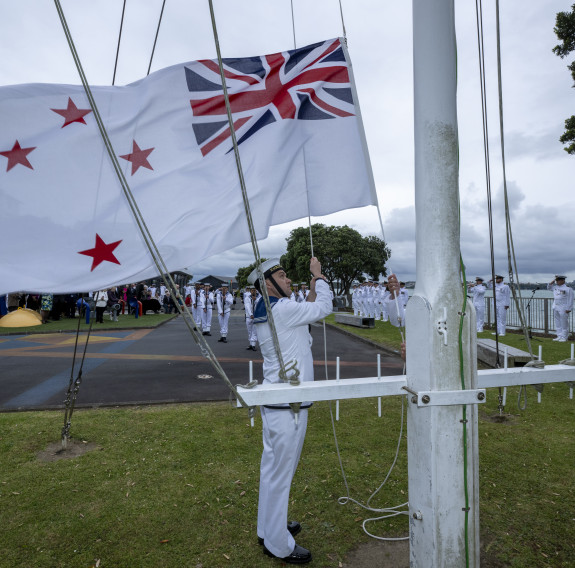
HMNZS Toroa is the Royal New Zealand Navy reserve unit located in Dunedin, New Zealand, at St Andrew Street, and is part of the Royal New Zealand Naval Volunteer Reserve.
Here’s a more detailed breakdown:
Location:HMNZS Toroa is based in Dunedin, specifically at St Andrew Street.
Type:It’s a Royal New Zealand Navy reserve unit, part of the Royal New Zealand Naval Volunteer Reserve.
History:The Otago Division of the Royal Navy Volunteer Reserve, which later became HMNZS Toroa, was established in 1928.
Relocation Plans:HMNZS Toroa, along with the Kensington Army Hall and the NZDF careers office, is part of a plan to relocate to a new facility at Cumberland St (previously Farmlands) in Dunedin.
New Facility:The new facility will combine the Dunedin-based military facilities into one building.
Purpose of New Facility:The new facility will include new offices, training areas, kitchen and dining facilities, military vehicle storage, historical storage and display, and a parade area.
Earthquake-prone:Both the HMNZS Toroa location and the Kensington Army Hall have been assessed as earthquake-prone, prompting the relocation.
Other Reserve Units:The Navy has four Reserve units based in different parts of Aotearoa: HMNZS Toroa (Dunedin), HMNZS Pegasus (Christchurch), HMNZS Olphert (Wellington), and HMNZS Ngapona (Auckland with a sub-branch in Tauranga).
NZDF consolidates Dunedin-based military facilities in one building The New Zealand Defence Force (NZDF) will move its three separate Dunedin-based facilities into one combined regional location.
21 July, 2023 Over the next 18 months, the Royal New Zealand Navy Reserve Unit, New Zealand Army Reserve Units based in Kensington Army Hall, and the Defence Careers office, will re-locate to a new Defence Facility on Cumberland Street (previously Farmlands). The two NZDF-owned properties – Kensington Army Hall in Bridgman Street and HMNZS Toroa in St Andrew Street – have both been assessed by Dunedin City Council as being earthquake-prone. The Vice Chief of the Defence Force, Air Vice-Marshal Tony Davies, said that while remedial work had been done in recent years, parts of the buildings had to be isolated from routine use to ensure staff safety. “Remedial actions have mitigated the risk associated with the buildings, but they were never intended to provide a long-term solution to the structural issues in buildings of this age,” he said.
The former Farmlands building on Cumberland Street is destined to become the home of three NZDF units which are currently in separate Dunedin locations The Kensington Army Hall was built in 1915, while the Otago Division of the Royal Navy Volunteer Reserve (later to be commissioned HMNZS Toroa) was established in 1928 and shared the Army Hall before moving to its current site in the central city in 1948. “Co-locating our various Dunedin facilities into an engineer-approved, fit-for-purpose building will not only provide a safe working environment but there will be real benefits that come from integrating our 150-plus Otago-based permanent and Reserve NZDF personnel into the one location,” Air Vice-Marshal Davies said. The NZDF took possession of the yet-to-be-named Cumberland Street building last month and work will now commence on the internal design, alteration and fit-out to meet each unit’s specific requirements. It is anticipated that this work will be complete in the latter part of next year with the potential for some units to be able to move in earlier than that. In line with government requirements, the vacated NZDF-owned buildings in Bridgman Street and St Andrews Street will be disposed of in accordance with the Public Works Act.
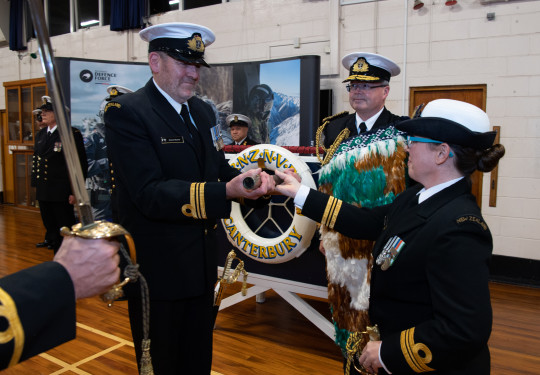
With a military career spanning almost 40 years Royal New Zealand Navy’s Lieutenant Commander (LTCDR) Grant Boore is relishing the opportunity as he takes over command of HMNZS Pegasus in Christchurch.
31 July, 2022
LTCDR Boore said he is looking forward to the challenge of leading the Naval Reserves in Christchurch, which he took over in late July from LTCDR Zoe Brangwin.
“I feel very honoured to be appointed to the role, and whilst it will be challenging, I am certain it will put the icing on the cake of a dedicated and enjoyable military career.
“My personal leadership style is focused on the wellbeing of my team. I am a firm believer that as a leader, if you surround yourself with good people and look after them accordingly you will be rewarded with dedication and success,” said LTCDR Boore.
LTCDR Boore joined the Royal New Zealand Navy in January 1979 at the age of 15 as an apprentice radio fitter, he rose through the ranks receiving his officer’s commission in 1993.
LTCDR Boore served aboard Her Majesty New Zealand Ships Otago, Taupo, Wellington, Waikato and Te Mana, as well as on shore at Tamaki, Philomel and Iriragi before leaving the Navy in 2005 to work for the Australian Department of Defence.
After returning to New Zealand in 2011 following the Christchurch Earthquakes he joined back up with the Naval Reserves in 2012, accepting a short term regular force engagement in Burnham in 2015 with the Youth Development Unit (South), before taking up his current civilian role in 2018 with the Department of Corrections.
LTCDR Boore said he hopes to continue the great results that have been achieved with the recent round of recruiting and training of the first batch of Naval Reserves.
“I also want to ensure that the specialist Maritime Trade Operations team at Pegasus remain as engaged as they have been over many recent exercises and training activities.
“The reserves have a lot more to offer than one might release, and should be considered as a center of excellence for many niche services and wider skills that are at the ready to provide support to a wide range of operations in the wider New Zealand Defence Force (NZDF),” he said.
The Navy Reserves that operate out of HMNZS Pegasus are one of two reserve units in the South Island and support activities from all over Canterbury to the West Coast, and up to Nelson and Marlborough.
“We are proud to support a number of regular force activities throughout the region including the regular provision of shift working staff to the Service Correctional Establishment at Burnham, the recent Managed Isolation and Quarantine facilities across New Zealand, and we can even offer specialist skills beyond those normally found in the NZDF.
“We also enjoy close relationships with local Government agencies including Civil Defence and local councils, and are always keen to support our stakeholders with personnel as required,” LTCDR Boore said.
In his day job LTCDR Boore is the Assistant Prison Director for the Department of Corrections and said that the skills he learnt during his service have been valuable for his current role.
“Corrections has a strong and enthusiastic veteran’s network and is very supportive to any member who has served in the armed forces, of any country.
“In turn, I try to offer back some skills that I have picked up during my NZDF service, particularly in regards to networking and the extensive leadership training I have received in my Navy career.”
He said he would like to acknowledge his managers and the Department of Corrections for their ongoing support of his continued service in the Naval Reserves.
“They understand that my service is of benefit to both the broader community, as well as Corrections and enjoy the benefits that many of the skills and experience I gain from the Reserves are of mutual benefits to both organisations.”
We have over 500 Naval Reservists who provide a valued, flexible workforce of skilled professionals. They serve to support the Navy’s operational capability in its maritime defence and security roles, as well as in times of natural and other disaster events both within New Zealand and overseas. Modern Reservists are a blended mix of personnel who have signed up for paid part-time service as an adjunct to their civilian careers or home life.
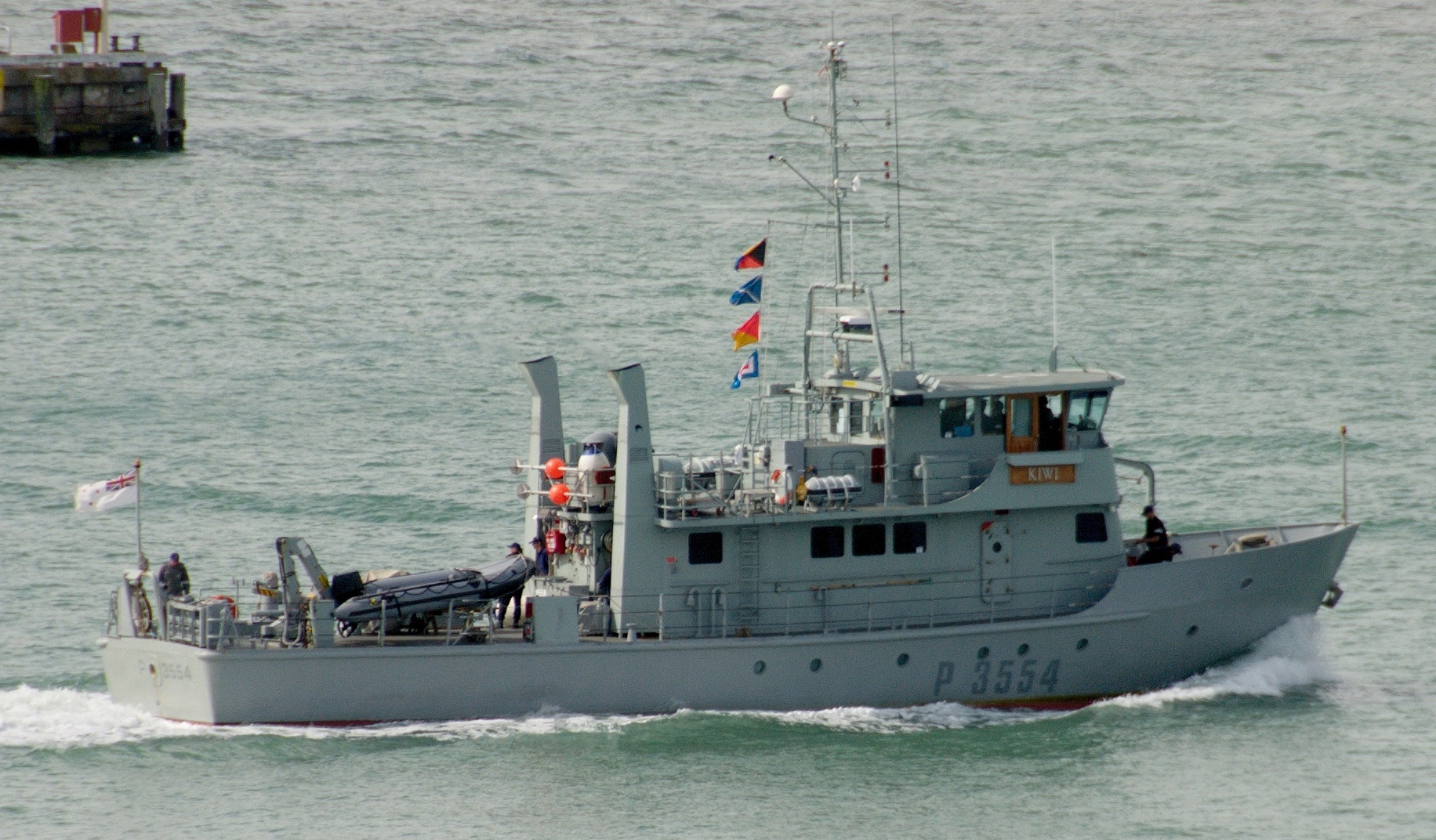
HMNZS Kiwi (P3554) was a Moa-class inshore patrol vessel of the Royal New Zealand Navy. It was commissioned in 1983 for the Naval Volunteer Reserve. Kiwi had been attached to the Christchurch division of the Naval Volunteer Reserve from her commissioning until relocating to Auckland in 2006. Kiwi, in company with Wakakura, carried out farewell manoeuvres on 29 November 2007, flying a paying-off pennant, in Waitemata Harbour prior to decommissioning on 11 December 2007.[1] Kiwi was the second ship of this name to serve in the Royal New Zealand Navy and is named after the national bird of New Zealand.
HMNZS Olphert is a functional military building that is relatively plain in style, but which benefits from the influence of the Moderne and Art Deco architectural styles. The building is notable for its strong horizontal lines, for its regular pattern of rectangular windows, and for its simple rectangular plan-form. It is typical and representative of the austere public buildings that were built in the post Great Depression/WWII era.
This building is of significant group value. The building is part of a group of military related structures on the corner of Buckle and Taranaki Streets. This is the only surviving portion of Mt Cook land still owned by the New Zealand defence forces.
This building has historic value due to its association with the Department of Defence as it became the headquarters of the Army’s Defence Transport Services sometime during World War Two and continued to be used by the army following the war. In the late 1970s the building was referred to as the Home Command Building and was used by the Defence Services Transport Pool. It is currently home to the naval reserve and the Wellington branch of the Ex-Royal Naval men’s Association continuing its connection with the military.
Charles Palmer was the driving force behind the formation of a volunteer reserve in New Zealand, and in 1925 the Auckland Division of the RNVR (NZ) was formed. It was followed by divisions formed in Wellington, Christchurch, and Dunedin in 1928. The Wellington Division of the RNVR (NZ) was formed on 12 March 1928. Commander Wybrants Olphert was posted as its first commanding officer. The new unit comprised of two officers and 120 ratings divided into two companies. Commander Olphert remained as commanding officer until 1938 when Captain F.E. Taylor replaced him.
The first home of the division was the top floor of the National Diary Association building on Thorndon Quay. In 1931, when the division expanded to 19 officers and 180 ratings, a new base was found on the the first floor of the Public Works Department workshop building on Hinemoa Street.
At this time, the volunteers were sorted into various branches for training. For example, the seaman branch received seamanship instruction, rifle and gun drill, rifle shooting, boat work, and rowing. Ratings who were promoted to Able Seamen progressed to either gunnery or minesweeping branches. Signalmen were given a short course in rifle drill and rope work, then trained in semaphore by mechanical arms and flags, Morse code by flag, lantern and sound. Sea training was carried out in the minesweeper HMS Wakakura whose bell is kept today by Olphert. The vessel was assigned to Wellington from October to December each year, as part of a rotation policy amongst the four divisions. Exercises in gunnery, minesweeping and seamanship were carried out in the Marlborough Sounds.
Second World War
The outbreak of war suspended Naval Reserve activity. Volunteers were called up for hostility only duty with the New Zealand Division of the Royal Navy, or sent to the Royal Navy. During the war over 50 percent of men serving in the Royal Navy were Volunteer Reserve. RNVR officers took command of 2,000 warships including 600 minesweepers, MTBs, MLs and trawlers. One of the most significant officers to come from the Wellington Division was Lieutenant Commander G.J. Macdonald. He had joined the RNVR (NZ) in 1938, and went overseas as an Able Seaman to the United Kingdom was part of the Scheme B recruitment scheme. He was commissioned into service with the Coastal Forces and commanded an MTB and finished the war in command of a flotilla of MTBs. For his services he was awarded a DSO and a DSC with two Bars. He is the most decorated New Zealand naval officer.
Lieutenant Peter Phipps joined the Canterbury Division but transferred to Wellington in 1939. He along with a number of RNVR (NZ) officers were sent to the United Kingdom to command minesweepers serving with the Coastal Forces. He was awarded the DSC for his services in minesweeping. In 1943, he was the commanding officer of the MS/ASW vessel HMNZS Moa, which sank the Japanese submarine I-1 alongside HMNZS Kiwi. He was awarded the Bar to his DSC and the US Navy Cross. Post war he commanded the shore establishment HMNZS Philomel, and was Executive Officer of HMNZS Bellona. He also commissioned HMNZS Royalist into RNZN service. He ended his career as the first Chief of Defence in 1966.
Sixteen Wellington RNVR men were lost in December 1941, while serving in HMS Neptune. Two other men were lost as gunners serving in the DEMS RMS Rotorua that was sunk in 1940. Thirty-one men from Wellington RNVR lost their lives serving during the war.
Post War
The Wellington Division of the Royal New Zealand Navy Volunteer Reserve was reformed in 1946. The first commanding officer was Captain F.E. Taylor who had been in command of the old RNVR formation in 1939. By the early 1950s the strength of the Division was 33 officers and 240 ratings. Captain Taylor remained as commanding officer until 1957. During this time, the cuff braid that distinguished VR officers was discontinued and standardised across all parts of the RNZN.
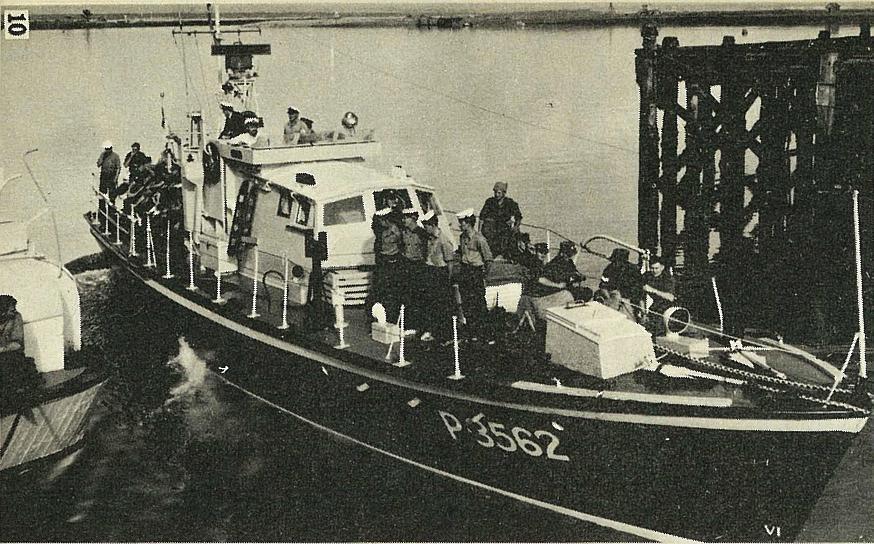
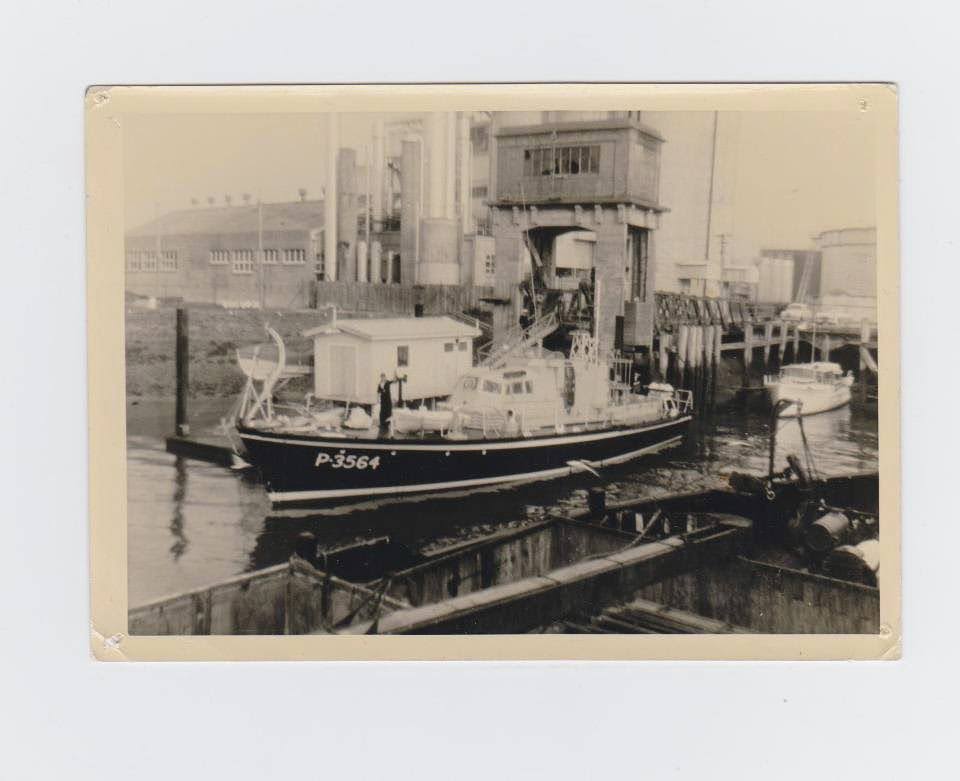
The introduction by the government of compulsory military training (CMT) saw the strength of the RNZNVR rise dramatically. Men who chose naval service were given fourteen weeks basic training at HMNZS Tamaki, then remained attached to their nearest Division for three years. Harbour Defence Motor Launch (HDML) P3562, which had served during the Second World War was attached to Olphert and was based at Shelly Bay. This vessel remained in service for over 24 years and was at sea an average of 100 days per year.
In 1958, compulsory military training was discontinued and the RNZNVR returned to a purely voluntary organisation with a reduction in numbers under training. In the 1960s, with the arrival of the new frigates a new training programme was set up for officers and ratings, based around service on the frigates and focused on gunnery and anti-submarine warfare. The role of the RNZNVR at this time was to train volunteers that would supplement the RNZN fleet.
In 1964, the Naval Reserve was brought under the command of Commodore Auckland after the disestablishment of the Naval Board. Following this step, men who joined the RNZNVR were allowed to join a branch based on their civilian occupation.
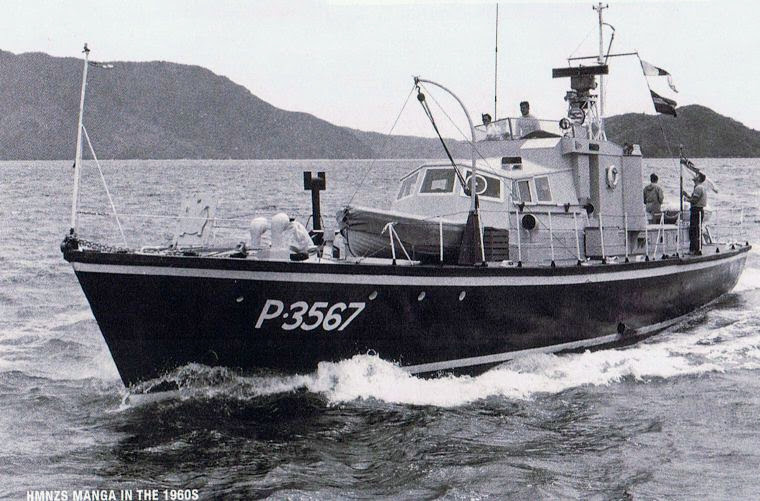
During this time, Harbour Defence Motor Launch P3562, known as Parore, was replaced by the SDML HMNZS Manga. Once a year the SDMLs from the RNZNVR would participate in a joint exercise that formed a valuable part of seamanship training for ratings and officers.
HMNZS Manga Q1185 Manga (P3567)
In 1968, Manga was involved in the rescue effort after the sinking of the inter-island ferry Wahine. The fleet of SDMLs was rotated between the divisions.
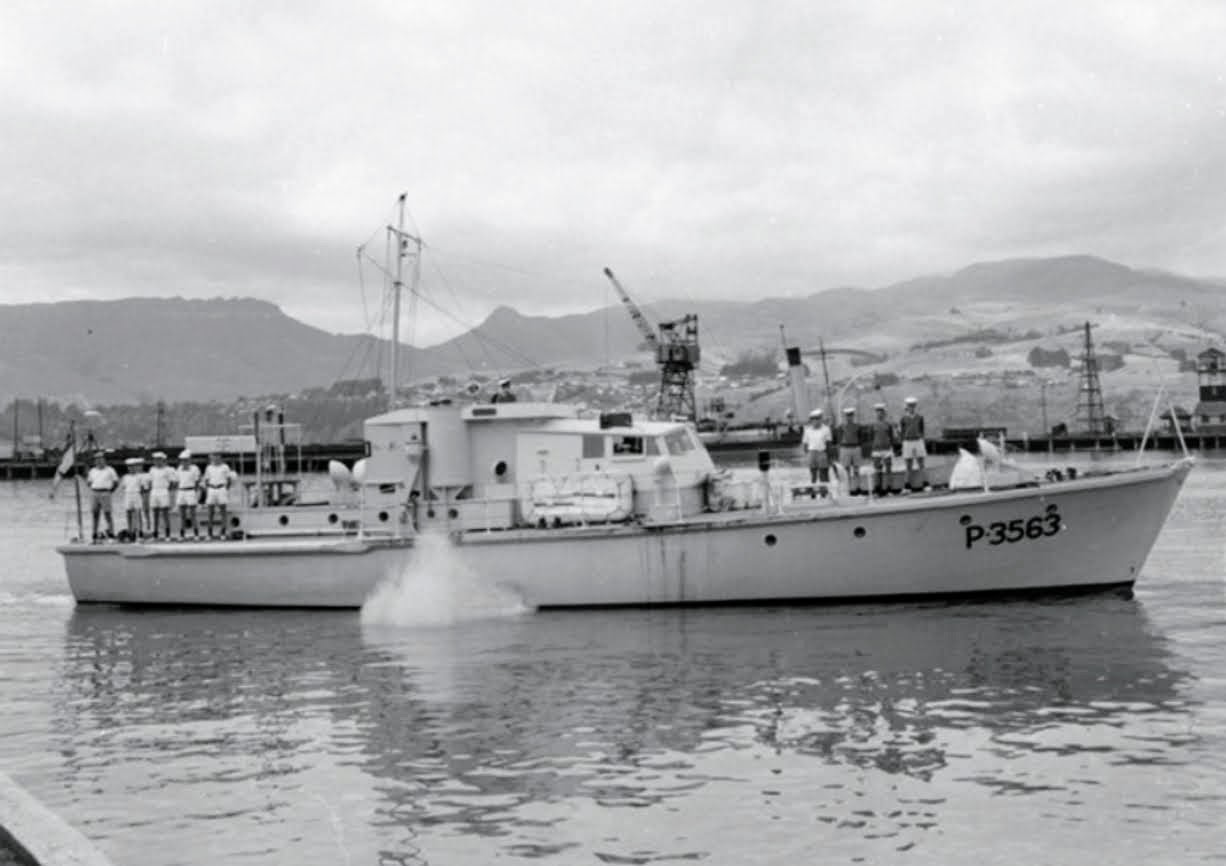
HMNZS Kuparu (Q1348)-(P3563)
HMNZS Kuparu was the last SDML to serve with the Division, and was decommissioned in 1984.
1970s – 1980s
In the 1970s pay restrictions were lifted, and the Wellington Division was able to give a good account of itself, despite the considerable scrutiny by the Ministry of Defence. In 1978, the RNZNVR was restructured so that the reservists were to be trained in handling small ships, and to serve in the administration of Naval Control of Shipping.
In the late 1970s and early 1980s the VR Officers and ratings worked well with the RNZN. With the addition of the four Lake-class patrol craft in 1975 to the fleet, this provided a good opportunity for sea time for the Volunteer Reserve as these vessels carried out fisheries patrols.
In 1985 four inshore patrol craft were commissioned into RNZN service. HMNZS Wakakura was assigned to Olphert.
HMNZS Wakakura
HMNZS Wakakura
Initially there were fisheries patrols but this was discontinued following government policy changes. But the new vessels allowed a return to fleet training exercises under the new Maritime Commander New Zealand (formerly Commodore Auckland). Wakakura had a greater range and better seakeeping abilities than the SDMLs and were good vessels to carry out a broad range of seamanship training. The usefulness of the vessel was demonstrated when Wakakura helped co-ordinate the rescue operation when the Russian cruise liner Mikhail Lermontov sank in the Marlborough Sounds in 1986.
1990s to Present
Olphert has continued to change with the times especially the introduction of women to sea service. Since 1989 when women began to train alongside men, there have been women volunteers. Along with the Naval Control of Shipping the 1990s saw the focus extended to include mine countermeasures for the seagoing branches. This has been included in the VR training programme.
McMillan.net.nz
HMNZS Wakakura was decommissioned in 2007 and presently Olphert does not have its own vessel. However with the introduction of the Project Protector patrol vessels there is again opportunity for sea training.
The Shore Establishment
The base at Hinemoa Street remained in operation until 1969. In 1970 the Ministry of Defence took over a lease of a Cadbury’s warehouse in Ghuznee Street. The ratings and officers of Olphert took six months to refurbish the building for use by the RNZNVR. This was only a temporary home as costs lead the RNZN to seek alternative quarters.
The reorganisation of the NZ Army left the Home Command Building in Buckle Street vacant, and the decision was made to relocate HMNZS Olphert to this building. The shift took place in 1978. Until 1986 the building was shared with the Defence Services Transport Pool. Again, the ratings and officers of Olphert put a lot of effort into refurbishing the building for naval use. On 31 May 2015, due to the expense of earthquake proofing the Buckle Street building, the decision was made to relocate the Wellington Division of the RNZNVR to a permanent home at 34 Waione Street, Petone. In this location the Wellington Division forms part of the Wellington Reserve Centre along with personnel from New Zealand Defence Force Recruitment.
Ship’s Badge:
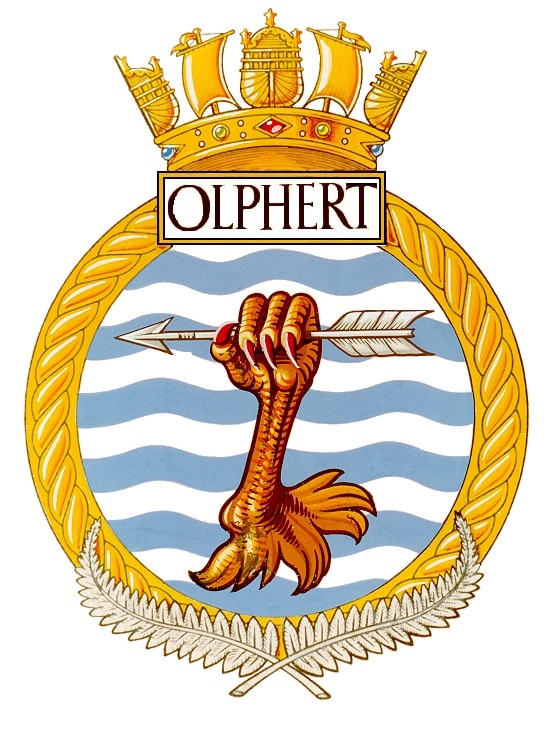
The badge was originally going to be a replication of the Olphert family crest which was a dove holding an olive branch with the motto Dum Spiro Spero (While I live, I hope). The design was submitted to the College of Heralds in London who rejected it, and came up with a falcon’s claw holding an arrow rising from the sea. This was accepted and established as the official badge. This was the first unit of the RNZN to be named after a New Zealander.
Wakakura was attached to the Wellington division of the Naval Volunteer Reserve from her commissioning until 2005, when she returned to the fleet base in Auckland.
Wakakura, in company with Kiwi, carried out farewell manoeuvres on 29 November 2007, flying a paying-off pennant, in Waitemata Harbour prior to decommissioning on 11 December 2007.[1]
Wakakura was the second ship of this name to serve in the New Zealand Navy. The first ship was the training minesweeper HMNZS Wakakura (T00) (1926–1947). Wakakura is a Māori word which could mean “precious canoe” or could mean “training boat”.
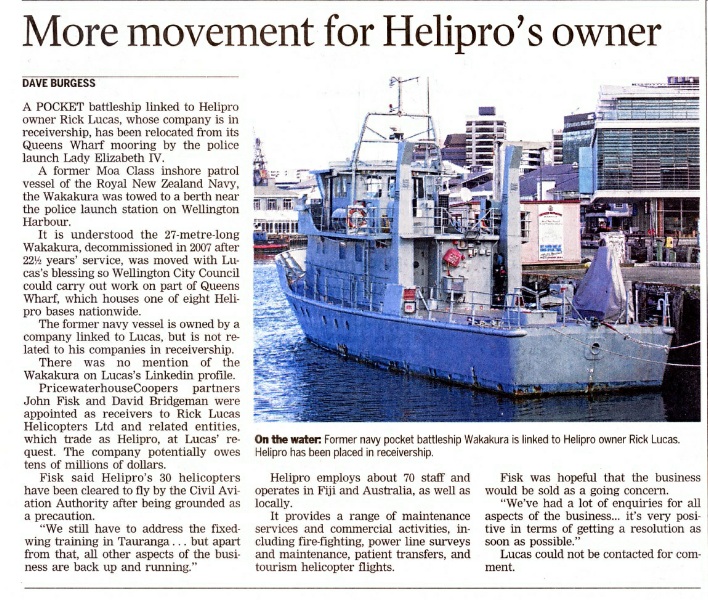
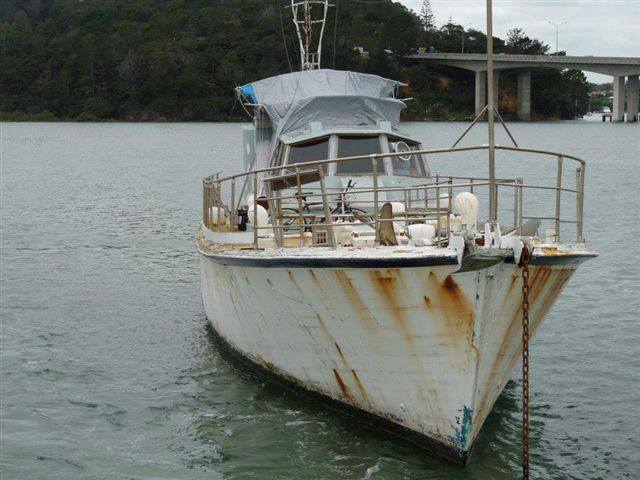
After decommissioning the Wakakura was put up for sale by tender.[2] The vessel was acquired by the owner of Helipro, Rick Lucas, under the Lucas Family Trust. With the receivership of Helipro in 2014, the vessel was sold in February 2015 to Jason and Clayton Knowles and moved from Queens Wharf Wellington to the Marlborough Sounds.[3] As of 2020 HMNZS Wakakura (P3555) remains tied to a jetty in Kaipapa Bay in the Marlborough Sounds at 41°13’36.5″S 174°04’37.2″E. In July, 2022, the ship was purchased by Maria Kuster and Sean Liam Ellis who own and operate Pure Salt; a charter company who operate the sister ship “Flightless“. M.V. Flightless is based in the coastal waters of Fiordland and Stewart Island. It is understood Wakakura will operate as a charter vessel for Pure Salt.
1967c HMNZS KOURA. This foto is a bit of history as all of this area has now gone. The ML is tied up at the HMNZS NGAPONA “Pontoon.” The whole area was were the vehicle ferries Auckland/Devonort used to tie-up, before the Harbour Bridge was built.
First HMNZS Ngapona (Q1194) an open day at Devonport Naval Base, New Zealand
Laid up 1945. Survey 1948-57. Sold 1957. Wrecked near Coromandel after grounding 11/57.
Grounded Coromandel 1957, broken up 1958
Second HMNZS Ngapona ex HMNZS Tamure (Q1193/P3555)
The H.M.N.Z.S. Tamure coming into berth at Port Lyttelton
HMNZS Tamure/Ngapona – Now located at a marine yard in Kopu, Thames being restored
Laid up 1945. Originally served with Fiji Naval Reserves to 1957 as HMS VITI. Renamed Ngapona (II) in 1958. Survey 1959-68, Auckland. Sold 3/73.
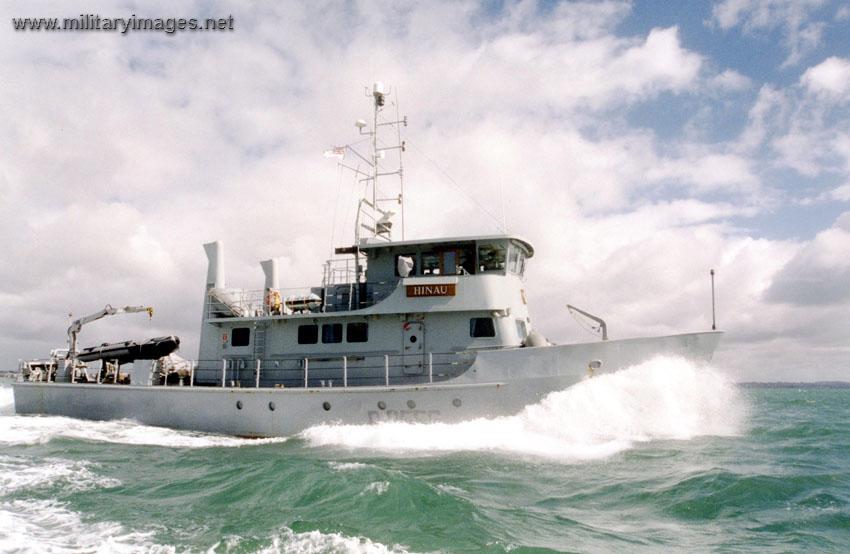
HMNZS Hinau was assigned to HMNZS Ngapona for reservists training
The Beginning
In October 1924, the New Zealand Division of the Royal Naval Volunteer Reserve was established, corresponding with the Royal Naval Volunteer Reserve in the United Kingdom. On 17 November 1924 Commander Middleton was appointed Commander of the RNVR(NZ), with rapid recruiting through 1925 using the Royal New Zealand Yacht Squadron as Headquarters.
The Division went on to provide a very large portion of New Zealand’s contribution to Royal Navy and later Royal New Zealand Navy personnel during World War II.
Recruitment for the NZ Division of the Royal Navy based at the Naval Base at Devonport was a struggle, contrasted with the rapid growth of the Auckland Reserve Division.
HMNZS Ngapona
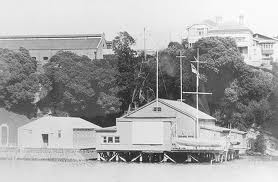
In May 1925, the first parade for the Royal Navy Volunteer Reserve (New Zealand) was held in Shed 14 (the potato storage shed) on the Central Wharf, now the Captain Cook wharf.
The first official duty was to form part of the Honour Guard for the United States Navy Battle Squadron, that was due to visit Auckland in August 1925. The Devonport Naval Base provided two cutters for boat drill. The sailing and pulling training were carried out from the Admiralty Steps in downtown Auckland, while the general seamanship training was carried out in the wharf building.
In 1926 Acting Lieutenant-Commander Charles Henry Tarr Palmer secured the Navy League’s headquarters in Simich’s Building, in what is currently the Downtown carpark, as a base for the newly formed unit parades. Due to the size, the 120 men of the unit were split into two 60-men parades, held on separate nights during the week. This set up would continue until the new headquarters building was opened at St Mary’s Bay. Annual parades would be held over at the Devonport Naval Base.
In November 1927, it was decided to form RNVR divisions in the other main centres. At this time the Auckland Division consisted of 36 officers and 175 ratings. Acting Lieutenant Commander Palmer was Second in Command of the Auckland Division. In May 1927, he took a leave of absence and visited Britain. He volunteered at his own expense to visit the RNVR headquarters and training establishments, to investigate methods of training and administration of volunteer reserves. This offer was accepted by the Navy Board.
When he returned to New Zealand, he produced a report for the Navy Board which advocated a training establishment on the waterfront. Palmer insisted that he be appointed as second-in-command of the Auckland Division, and a new headquarters for the division be built over the sea. The Commodore of the NZ Division of the Royal Navy advised Palmer that if he could obtain a supplementary grant from the government for a new building, he would authorise the construction and manning of a headquarters. Palmer would also be made second in command if he could successfully achieve this.
The Auckland Harbour Board offered what was an ideal site for the new headquarters at St Mary’s Bay. Palmer with assistance from the local Navy League, hosted Prime Minister J.G. Coates and the Defence Minister at the proposed site during a visit to Auckland. Palmer’s persistence and persuasion paid off and he was given a grant of £4,000 to build the headquarters.
The building was based on plans from the RNVR Division Headquarters at Hove, England which Palmer had inspected during his visit to Britain. He discussed this with the Public Works Department who would carry out the construction. He was assisted by regular officers and senior rates from the NZ Division at Devonport. Construction began in 1928, below what is still known today as ‘Jacob’s Ladder’ and it was completed in 1929. During this time, the name of the Division was changed from RNR (D) to the Auckland Division of the RNVR (NZ Division).
On Saturday 1 June,1929 the new headquarters was opened by the Governor-General Sir Charles Fergusson, and the men of the Auckland Division RNVR (NZ Division) marched in and paraded. By the 1930’s the base was a centre of a thriving social and sporting life for the reservists, and home to varied training activities. It also served as the headquarters in 1932, when reservists assisted with policing the Auckland Depression Riot.
Post-1945
The immediate priority after the Second World War was to refit the buildings from their wartime use to classrooms for naval training. In 1947, a Harbour Defence Motor Launch (HDML) was supplied by the War Asset Realisation Board for training purposes. The RNZN requested that the HDML be armed with two .50cal machineguns, one 20mm Oerlikon, and depth charges. The HDML was commissioned as the Ngapona in October 1950. The vessel was duly equipped but the armament was removed in 1955. The shore establishment and the HDML for a period shared the same name, causing some confusion. However, in 1967 the vessel in service was re-named HMNZS Tanmure.
In 1948, there was a major policy change instigated by the Government. The RNZNVR was created with four divisions based in Auckland, Wellington, Christchurch, and Dunedin. With the passing of the Military Training Act in 1949, they took responsibility for men who chose to do their Compulsory Military Training (CMT) in the Navy. One thousand nine hundred and ninety-two men went through this process until 1957.
Origin of the name:
In 1951 the four divisions were given the following names:
HMNZS Ngapona – Auckland
HMNZS Olphert – Wellington
HMNZS Pegasus – Christchurch
HMNZS Toroa – Dunedin
Ngapona comes from the Māori name for Rangitoto’s three summits – Ngā Pona-toru-a-Peretu or the three knuckles of Peretu.
1950s
In November 1950, a plaque was unveiled to commemorate the 44 RNVR [NZD] men who lost their lives during the Second World War.
This was a time of growth and development as men passed through for their CMT and the base was operating with satisfactory numbers of volunteers. Due to the influx of CMT personnel who chose to serve with the Navy, it became urgent to extend the buildings to cope with the training requirements. In 1950 there was speculation that the base would be moved. However, to accommodate the number of personnel, it was decided that training would be spread over three days each week.
In October 1951, a further £6,000 was authorised by the government to extend facilities for training including engineering and electrical workshops. In October 1952, a prefab building arrived from the UK for construction at the base, opening in 1953. This new building consisted of engineering, electrical workshops, sickbay, seamanship, TAS, supply & secretariat classrooms and a theatre. The main building was used for communications and gunnery training.
In July 1954, personnel were issued with cap tallies with the legend HMNZS Ngapona. By 1958, the expansion of Auckland city and development of the North Shore would have a direct impact on the base. Images of the base before the roadworks show the sea reaching to the dock located in front of the main building. This is where the northern motorway is now located.
The old wardroom and gun battery were lost during the construction of the motorway and the building itself had to be moved back several feet. The technical training building was moved behind the HQ building and connected by a covered walkway. In a deal between the RNZNVR and the Ministry of Works carparks and a parade ground were created during the building of the motorway.
1960s
By 1960 the buildings had been refurbished as part of the move with the construction of the motorway. In 1960 a new flagpole was raised on the grass plot. At this time there was a desire to have Ngapona reclassified as a naval establishment.
In April 1961, during the visit of Governor General Viscount Cobham and after the boisterous dinner in the mess, officers decided to fire a 21-gun salute in the early morning at 0245 hours. This naturally upset the neighbours living above the base and resulted in a number of complaints.
In 1963 a new pontoon wharf was towed over to St Mary’s Bay from the Birkenhead Wharf for use by the Naval Reserve. It enabled personnel to work on the Motor Launch without having to travel to HMNZS Philomel (Devonport Naval Base). The pontoon was finally disposed of in the 1980s.
In 1966, the Auckland Harbour Bridge was in the process of being extended. A suggestion was again made that Ngapona move. Over the next 24 years the suggestion was made a number of times, but the building and operation was left where it was. In 1967, reservists upgraded the building including creating a new canteen, new sick bay and upgrading the pontoon. At the same time, the removal and disposal of a large amount of obsolete equipment was organised.
1970 – 2000s
This period was a hard time for the RNZNVR as numbers fell off, but the base was kept in operation despite changes in governments and major political policy change in the 1980s, when New Zealand introduced anti-nuclear legislation.
Reservists in 1987 recovered the propeller from the WW2 minesweeper HMNZS Hinau, and had it mounted to the building. It stood as a memorial to the minesweeper and men of the reserve. Into the 1990s, Ngapona continued to be operate, but the RNZN was aware that it had a limited time to relocate the Auckland Division. In October 2005 Ngapona celebrated its 80th Anniversary in an event which focused on promoting the existence of the Naval Reserve in Auckland and encouraging the recruitment of more volunteer reservists.
Two years later in 2007, the RNZN ordered that the St Mary’s Bay site be closed down. Ngapona was relocated to HMNZS Philomel at Devonport into a building aptly named for Naval Reserve founder, Charles Palmer.
References:
John McEwan, Auckland Rockies: A History of Auckland’s Naval Reserves 1858-1995, Auckland: Pyramid Press, 1995, p. 118.
Charles Palmer Personal Record – Extract from the New Zealand Gazette No. 41, 17 June 1926.
Memo for the New Zealand High Commissioner in London from the Prime Minister’s Office dated 18 May 1927.
R.J McDougall, New Zealand Naval Vessels, Wellington: Government Printing Office, 1989, p. 94.
Grant Howard, The Navy in New Zealand: An Illustrated History, Wellington: Reed, 1981, p. 126.
Navy reserve unit celebrates 100 years
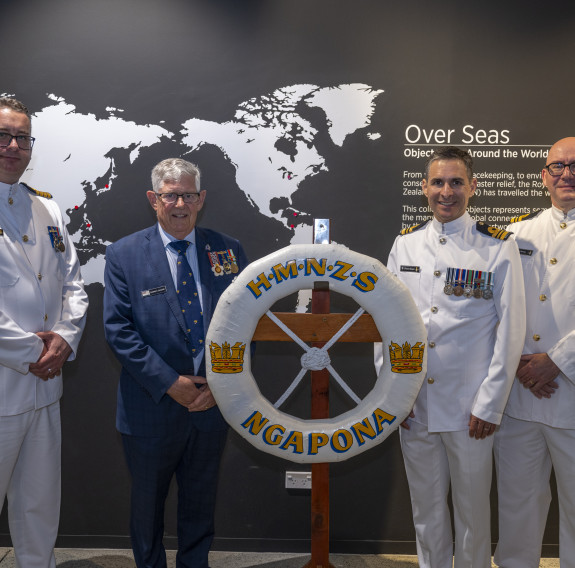
Reservists, colleagues and sailors past and present celebrated the centenary of Auckland-based reserve unit HMNZS Ngapona over November 22-24.
04 December, 2024
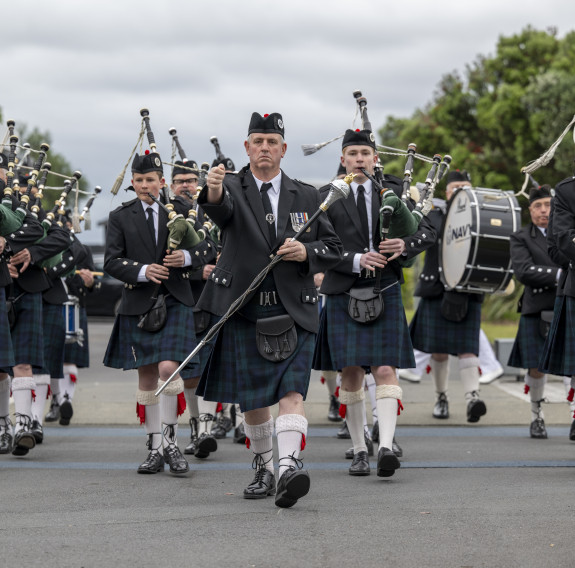
Events included a pōwhiri at Te Taua Moana, base tours, a Beat the Retreat ceremony and reception at the Navy Museum, and a memorial service at St Christopher’s Chapel.
Ngapona’s Commanding Officer Lieutenant Commander Chetan Sawyer said it was an “awesome” weekend, following on from Ngapona’s public-facing highlights of the Whangārei Maritime Festival in October.
“The whole weekend was amazing, but the combined service and ‘end of year function’ was a real highlight of the weekend,” he said. “Everyone was in a really good mood and there was some fantastic humour.”
A particular item of nostalgia was visits to ex-RNZN Harbour Defence Motor Launch (HDML) ‘Paea’, now in private ownership. Ngapona’s divisional coxswain Chief Petty Officer Combat System Specialist Shane Kennedy and relief coxswain Petty Officer Naval Policeman Mike ‘Buck’ Taylor helped crew the boat from Whangārei to a mooring in Bayswater, North Shore where it was made available for viewing.
Scroll to previous imageScroll to next image
According to the Museum of the Royal New Zealand Navy, the New Zealand Division of the Royal Naval Volunteer Reserve was established in October 1924, based in Auckland. It was renamed the Auckland Division in 1928, in keeping with the creation of Wellington, Christchurch and Dunedin Divisions.
In October 1941 all Divisions were renamed as Royal New Zealand Naval Volunteer Reserve. At this point the Divisions were not active; all personnel were mobilised as part of the war effort.
In November 1951, the Division was commissioned as a ship: HMNZS Ngapona. The ship’s name is taken from a Māori proverb relating to the three peaks of Rangitoto. The ship’s badge denotes the kaka, a native bird that was originally found on Rangitoto. The ship’s motto is “we serve together”.
Ngapona moved from its long-time position in St Mary’s Bay in 2007 and is now located in within Devonport Naval Base.
A popular souvenir for the centenary was Ngapona’s Centenary challenge coin. Ngapona’s own Lieutenant Commander Graeme ‘Frosty’ Frost designed the coin based on the ship’s crest. It quickly sold out.
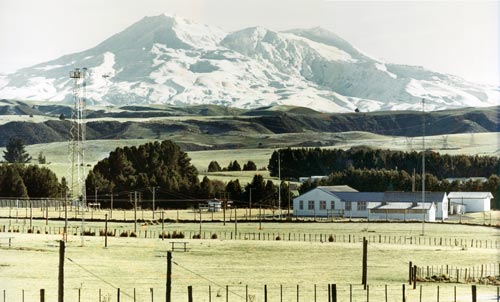
The Naval Communications Station Irirangi of the Royal New Zealand Navy, which is 2 km south of Waiouru and near the Waiouru Army Camp, was established in World War II (1943) as the Waiouru W/T (Wireless Telegraph) Station. Its location, in the middle of the North Island, put it far away from the sea.
The station was commissioned in July 1943, and at the peak period of the war had an establishment of about 150 personnel, of whom more than eighty were women, many from the Women’s Royal New Zealand Naval Service. Tens of thousands of code groups were handled each day, mostly for the British Pacific Fleet in Japanese waters. A dozen or more circuits were manned simultaneously and teleprinter land lines fed the signals to the Navy Office in Wellington.
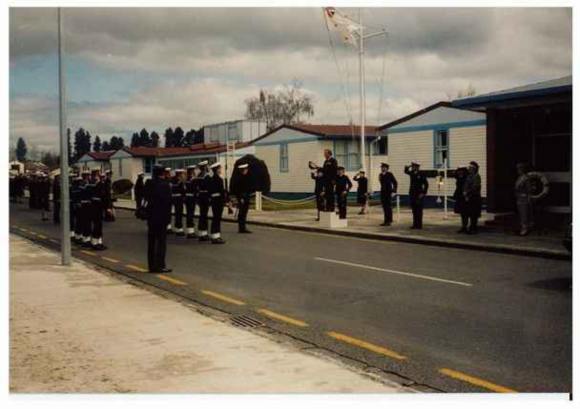
In 1951 the station was designated HMNZS Irirangi. (“Irirangi is a Māori-language word, meaning “spirit voice”.)
In the late 1980s the equipment was modernised, and in October 1991 a feasibility study into the remote controlling of all facilities from the Devonport Naval Base was completed. The Chief of Naval Staff issued a directive that “the remoting of Irirangi is to be implemented forthwith.”
Irirangi was decommissioned on 20 May 1993. The Government Communications Security Bureau (GCSB) is now responsible for signals intelligence, with a radio communications intercept station at Tangimoana and a satellite communications intercept station at Waihopai. The previous functions of Irirangi are now carried out by a small contingent of Naval maintenance staff.