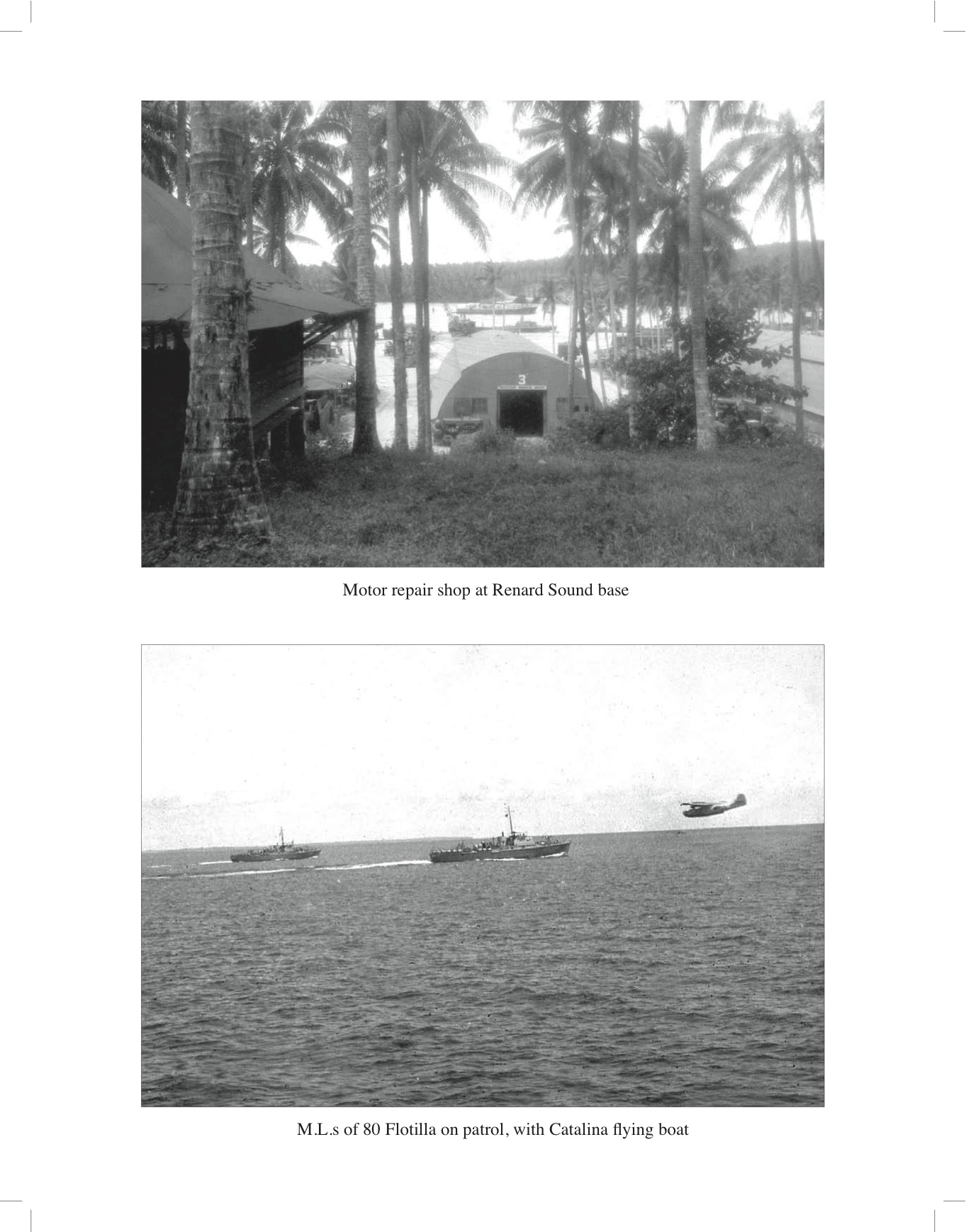
HMNZS Kahu (Q400) 1943-44 – Solomon Islands – Administrative base for Fairmile flotillas – she served under the operational control of COMSOPAC.
A forward base known as HMNZS Cook II had been established in February 1943 at Espiritu Santo (the largest island in the nation of Vanuatu) to handle pay accounts, mail, and other administration for the 25th Minesweeping Flotilla. The staff and equipment of the base were transferred to Tulagi (a small island, 5.5km by 1km, in the Solomon Islands) in September 1943. On arrival in the Solomon Islands staff were based at the HMNZS Cook II Shore Establishment on Tulagi Island for the first month. The base was then shifted to Renard Sound in the Russell Islands (located approximately 48km northwest from Guadalcanal) and renamed Kahu. For accounting and administrative purposes, ML400 was commissioned on the 1st of April 1944 as HMNZS Kahu. Staff were based in the Solomon Islands at Kahu until the 20th of October 1944, exactly one year since he joined ML411.
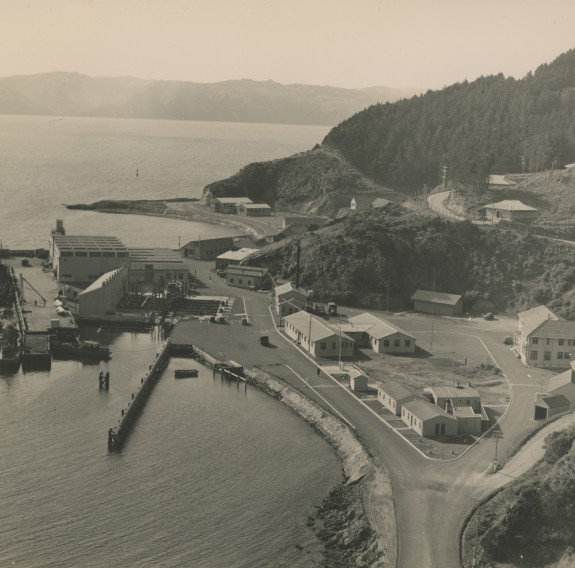
Wellington’s Shelly Bay was formally commissioned as HMNZS Cook on 1 June 1944. Three vessels were assigned to assist with anti-submarine netting maintenance and anti-submarine targeting.
03 March, 2023
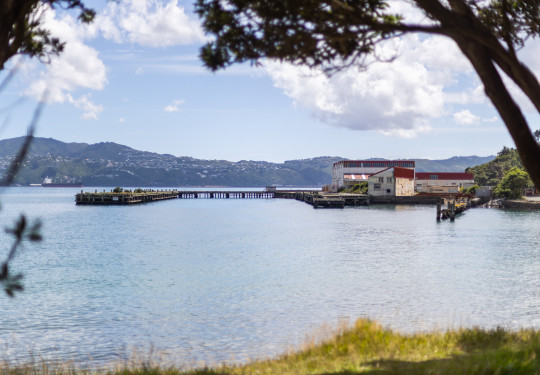
Since the former defence base at Shelly Bay on Wellington’s Miramar Peninsular (Te Motu Kairangi), was handed back to the government in 1995, the buildings and infrastructure had deteriorated dramatically while decisions were made on developing the site.
With work starting on a new housing development which will secure its future, we look back on its past as Wellington’s first line of defence during conflict.
Te Motu Kairangi was sold as part of the Wellington purchase to the New Zealand Company in 1839. The land was acquired by former Royal Navy officer, James Crawford, who named it Miramar (Spanish for ‘Sea View’).
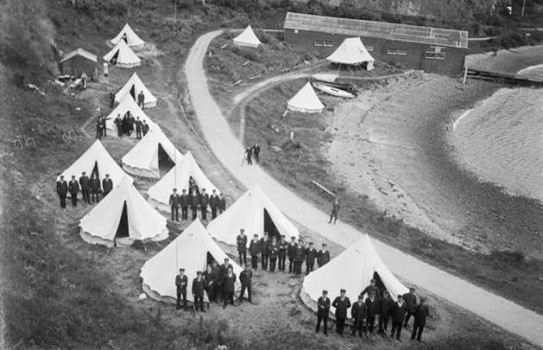
In response to fears about an invasion by an expanding Russian empire, the Crown requisitioned Shelly Bay in 1885 under the Public Works Act for use as an anti-submarine mine depot. It was this ‘Russian scare’ that led to the building of major coastal artillery fortifications to protect New Zealand’s cities.
Submarine and Torpedo Mining Corps, Shelly Bay 1899
In 1907, the Royal Navy took responsibility for Shelly Bay and any intended use. A new wharf and munitions stores were constructed but these had limited use during World War I or in the post war years.
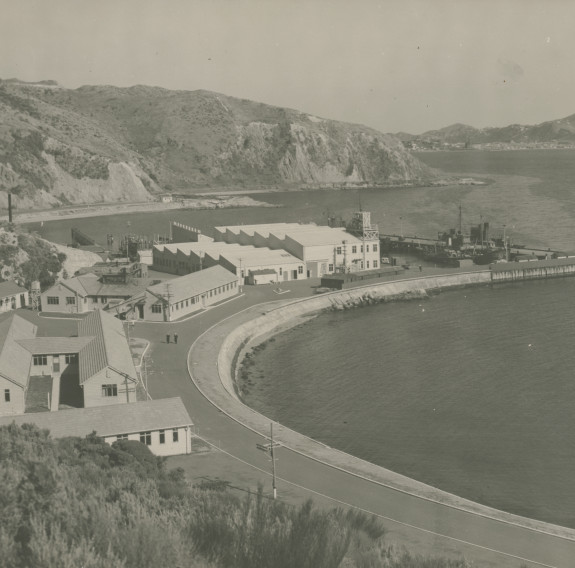
However, in 1941 with the establishment of the Royal New Zealand Navy (RNZN), ownership of the base was transferred to the RNZN. Following the attack on Pearl Harbor and Japan’s string of rapid strategic victories southward, along with the ongoing threat from German auxiliary raiders, Shelly Bay was expanded significantly with new accommodation, dining facilities, messes, workshops, slipways, a hospital and other infrastructure.
HMNZS Cook looking south 1944
HMNZS Cook looking north 1944Scroll to previous imageScroll to next image
Shelly Bay was formally commissioned as HMNZS Cook on 1 June 1944. Three vessels were assigned to assist with anti-submarine netting maintenance and anti-submarine targeting.
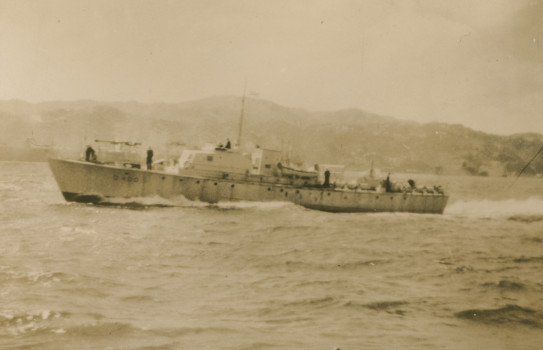
HMNZS Cook was also the maintenance depot for the four Fairmile coastal patrol vessels which were based at Clyde Quay in Wellington.
Fairmile Coastal Patrol Vessel Q400 in Wellington Harbour (in service 1942 – 1945).
A badge for HMNZS Cook was designed but was never used as the requirement for it was superseded by the transfer of the Base to the Royal New Zealand Air Force (RNZAF).
With the demobilisation of the RNZN after the war, HMNZS Cook ceased operations on 1 April 1946 and was decommissioned on 18 June 1946. The site was handed over to the RNZAF but the RNZN retained rights to use it as a naval base in case of emergency. The slipway facilities were leased to commercial operators. In the postwar period, RNZN patrol craft and survey vessels would tie up and refuel there.
Shelly Bay was used by the RNZAF for transit and permanent accommodation for NZDF personnel working in Wellington and there was also a motor transport group attached. The Base finally closed in 1995 and the New Zealand Defence Force handed the land back for disposal.
In 2009, the land and buildings were transferred to Taranaki Whānui ki Te Upoko o Te Ika as a part of a Treaty of Waitangi settlement.
Historic photos courtesy of National Museum of the Royal New Zealand Navy.
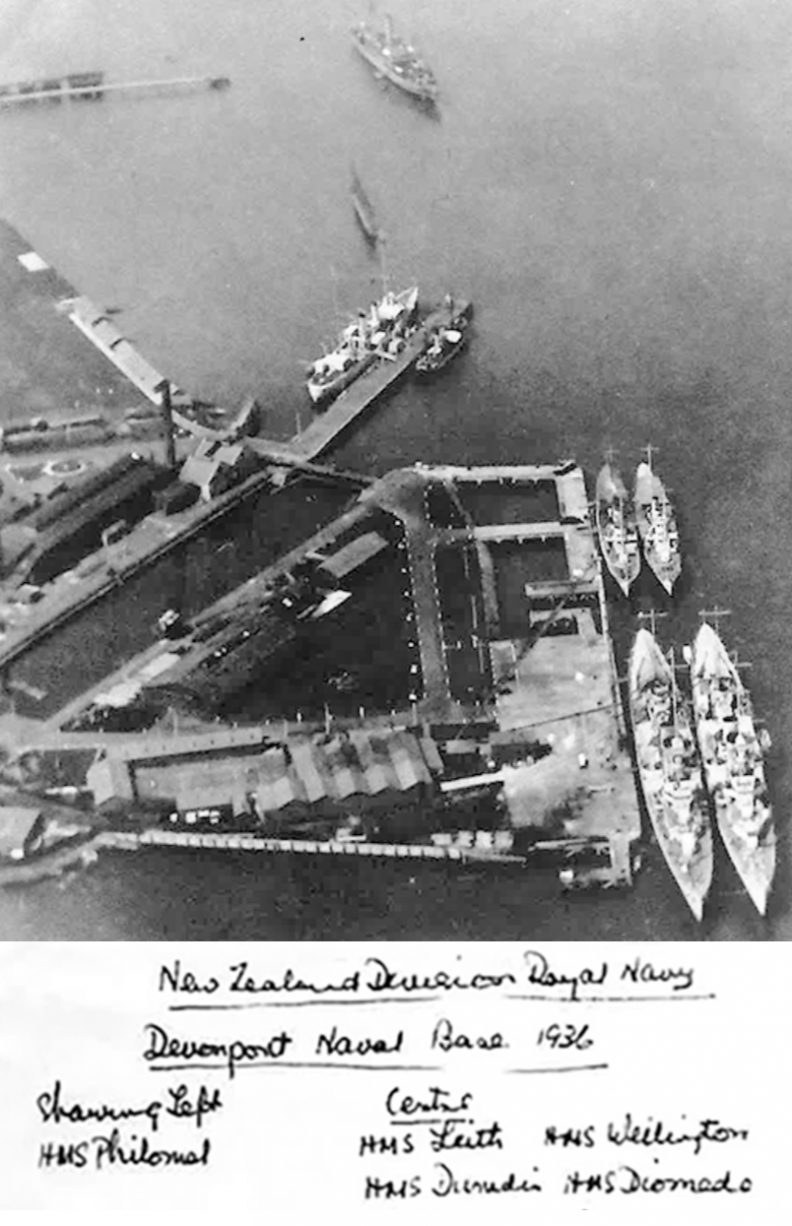
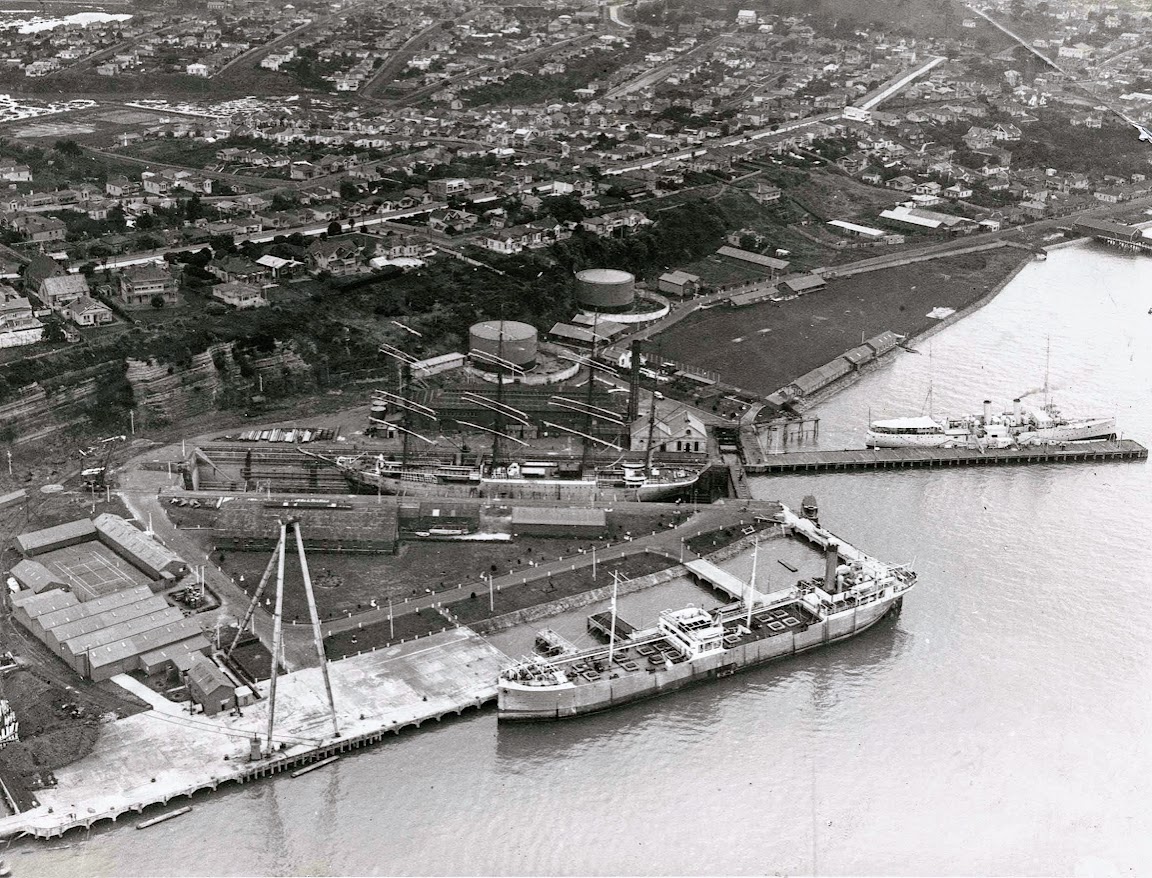
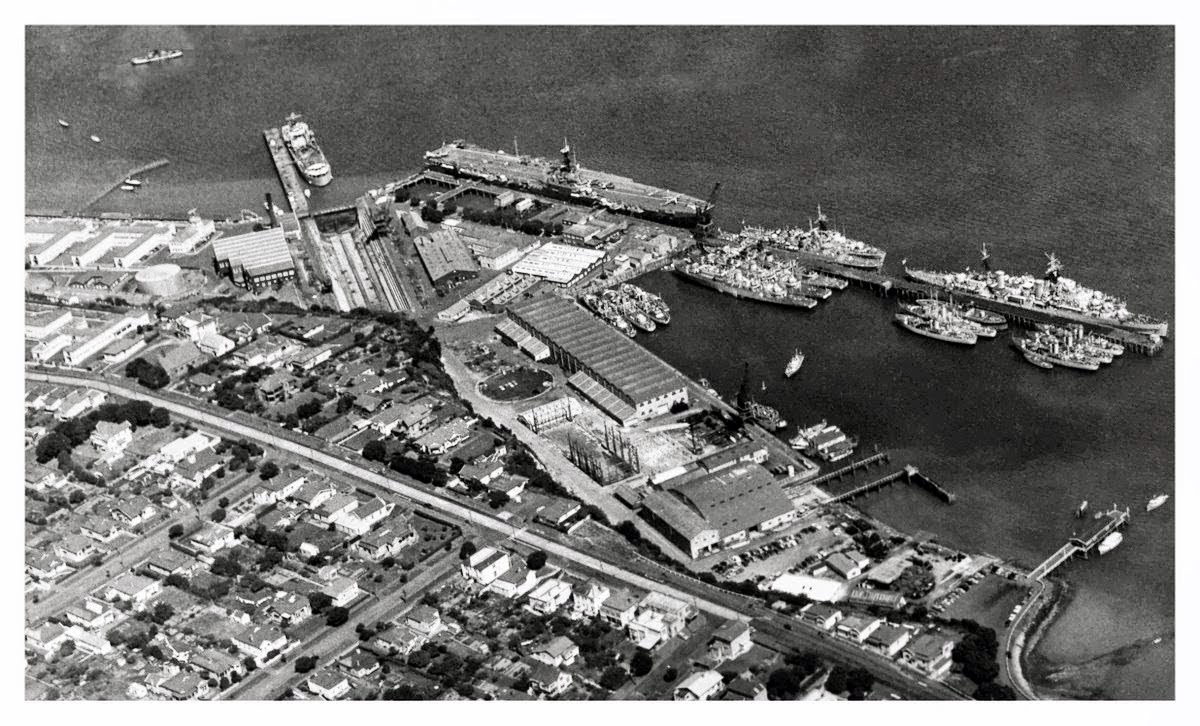
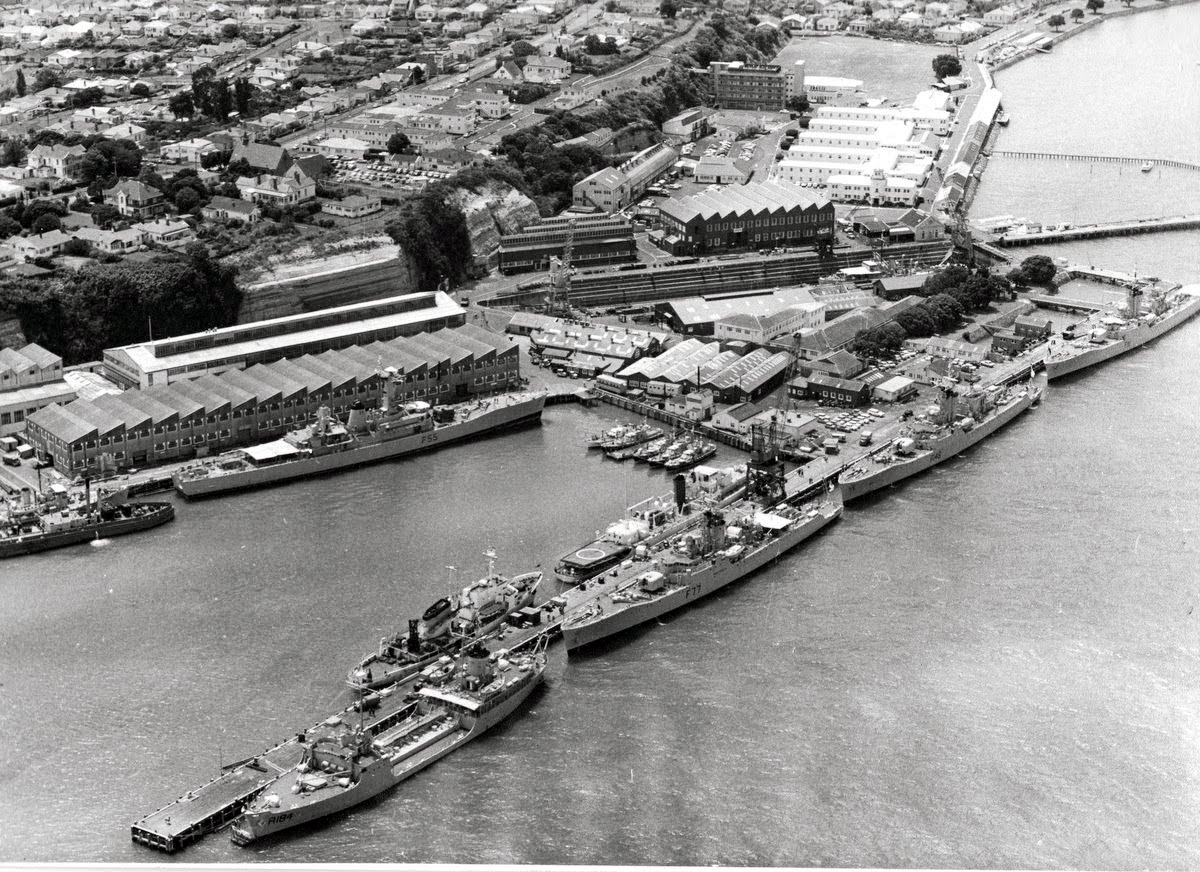
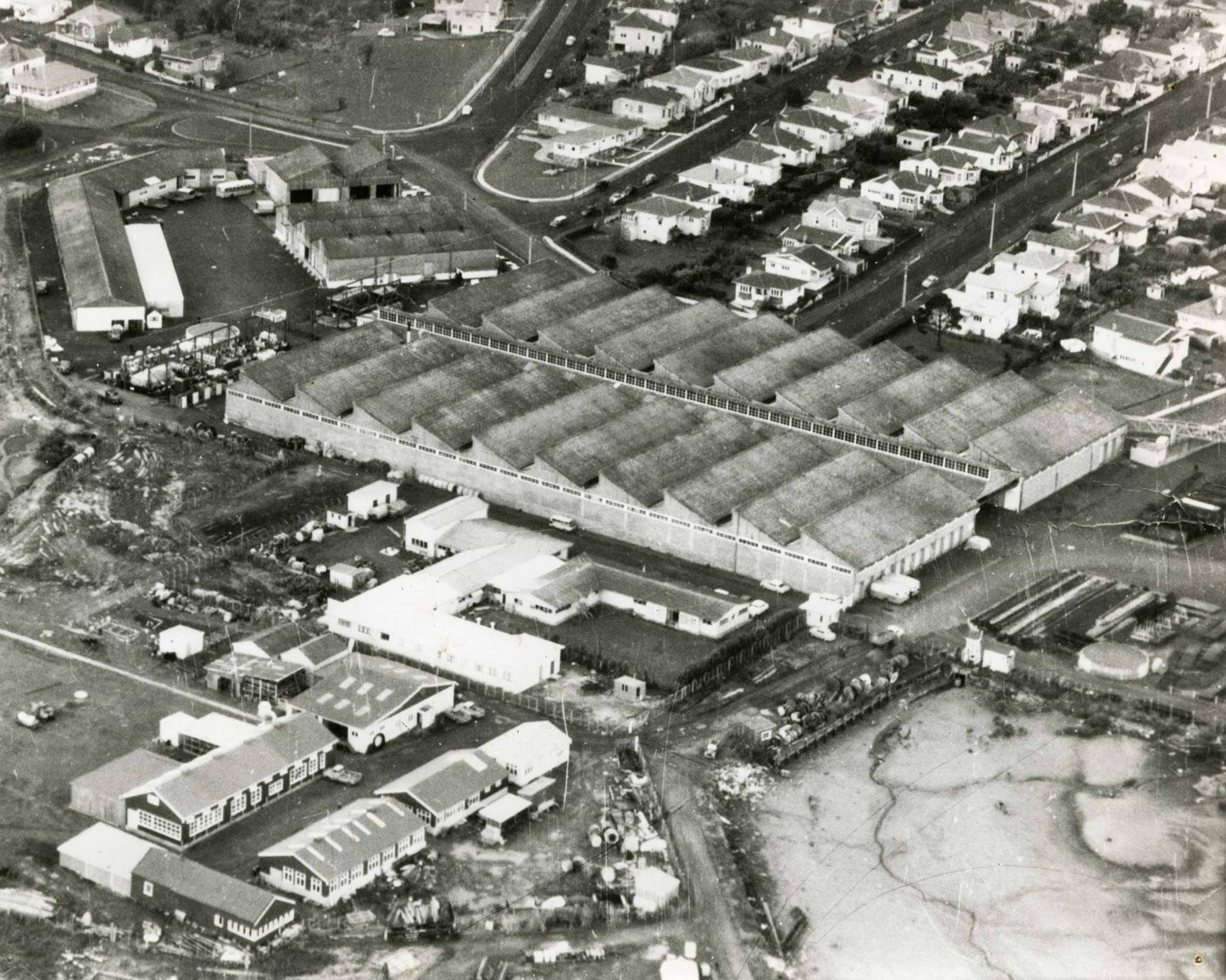
HMNZS Dockyard – 1930s HMS WELLINGTON arrived in Auckland in April 1935, joining three other warships on the New Zealand Station, HMS Leith, HMS Dunedin and HMS Diomede. The arrival of the Wellington brings the New Zealand division to full strength, as she replaces H.M.S. Laburnum, which left Auckland early this year for Singapore, where she is now a training ship. The Wellington and the Laburnum met at Singapore while the former vessel was en route to New Zealand.HMS Philomel at the Training Jetty and RFA Nucla (oiler) alongside. Unknown in dock.Devonport Naval Base, Auckland Possibly 1920’sHMNZS Dockyard 1957HMNZS Dockyard
HMNZ Dockyard – Naval Stores
The HMNZ Dockyard, managed by Babcock New Zealand Ltd, is the main naval repair and maintenance facility for the Royal New Zealand Navy, located at Devonport Naval Base in Auckland, and is analogous to HMNB Devonport or HMNB Portsmouth.
Here’s a more detailed breakdown:
Location:Devonport Naval Base, Auckland, New Zealand.
Function:A naval dockyard for the repair and maintenance of Royal New Zealand Navy ships.
Management:Managed by Babcock New Zealand Ltd on behalf of the Chief of Naval Staff through a commercial management agreement.
Nature:It’s not a commissioned ship, but rather a facility analogous to HMNB Devonport or HMNB Portsmouth.
Ships associated with the base:HMNZS Philomel (administration center), Fleet Support Organisation, Fleet Personnel and Training Organisation.
Other facilities at Devonport Naval Base:South Yard (where the fleet is based), North Yard (training, research, and supply depots), Officer Training School, Tamaki Leadership Centre, and Kauri Point (ammunition facility).
Notable ships:HMNZS Aotearoa (tanker and replenishment ship), HMNZS Manawanui (diving and hydrographic platform), HMNZS Canterbury (multi-role ship), HMNZS Te Kaha and HMNZS Te Mana (Anzac class frigates), HMNZS Wellington (Offshore Patrol Vessel).
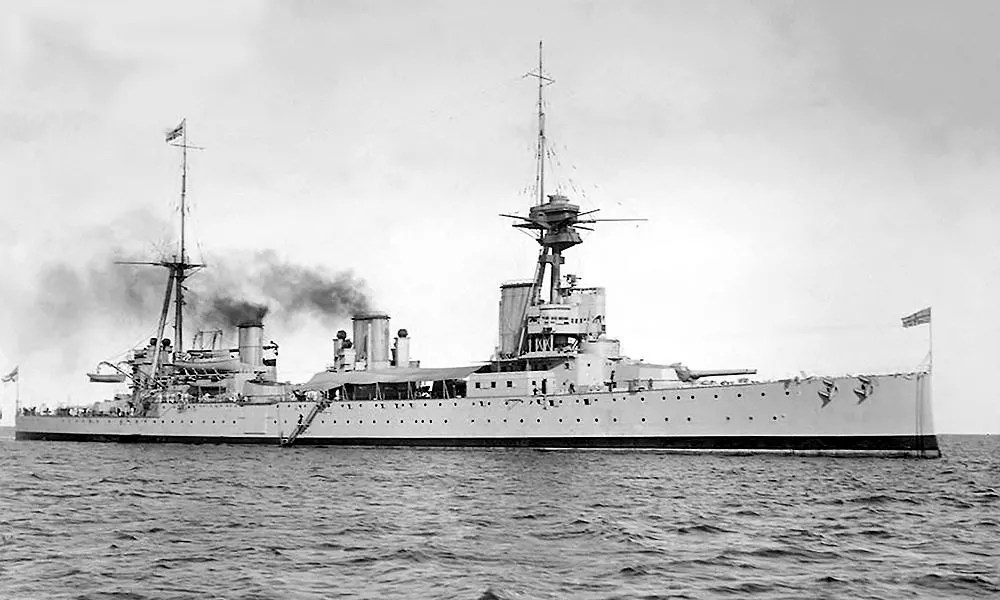
HMS New ZealandHMS New Zealand – A TurretHMS New Zealand
HMS New Zealand, Wellington
HMS NEW ZEALAND – mascot Pelorus Jack
HMS New Zealand in Wellington
HMS New Zealand – LYTTLETON
Capturefile: D:\glass neg raws\Allen C. Green Series\box 167\gr004537.tif CaptureSN: CC001681.067538 Software: Capture One PRO for WindowsHMS New Zealand
During 1913, New Zealand was sent on a ten-month tour of the British Dominions, with an emphasis on a visit to her namesake nation. She was back in British waters at the start of World War I, and operated as part of the Royal Navy’s Grand Fleet, in opposition to the German High Seas Fleet. During the war, the battlecruiser participated in all three of the major North Sea battles—Heligoland Bight, Dogger Bank, and Jutland—and was involved in the response to the inconclusive Raid on Scarborough, and the Second Battle of Heligoland Bight. New Zealand contributed to the destruction of two cruisers during her wartime service and was hit by enemy fire only once, sustaining no casualties; her status as a “lucky ship” was attributed by the crew to a Māori piupiu (warrior’s skirt) and hei-tiki (pendant) worn by the captain during battle. After the war, New Zealand was sent on a second world tour, this time to allow Admiral John Jellicoe to review the naval defences of the Dominions. In 1920, the battlecruiser was placed in reserve. She was broken up for scrap in 1922 in order to meet Britain’s tonnage limit in the disarmament provisions of the Washington Naval Treaty. https://en.wikipedia.org/wiki/HMS_New_Zealand_(1911)
Showing Flying Squadron at Wellington… 1870 Showing the Flying Squadron under Rear-Admiral Hornby at Wellington and the ships Rosario, Barossa, Endymion, Scylla, Liverpool (flag ship), Phoebe and Liffey.
The British Flying Squadron of 1869 leaving False Bay, Cape of Good Hope, showing Liverpool (1860), Rattlesnake (1861), Scylla (1856), Endymion (1865), Bristol (1861), Barrosa (1860), and Seringapatam (1819). Illustrated London News 1869
The first Flying Squadron was established in 1869. It was made up, at various times, of ten wooden ships with auxiliary steam power. The squadron sailed from Plymouth on 19 June 1869. It called at Madeira, South America, South Africa, Melbourne, Sydney, and Hobart in Australia, Auckland, Wellington, and Lyttleton in New Zealand, Japan, CanadaHawaii, and Bahia in Brazil, before returning to England on 15 November 1870.[2][3]
The Flying Squadron of 1869 under Rear-Admiral Hornby at Wellington, with ships Rosario, Barossa, Endymion, Scylla, Liverpool, Phoebe and Liffey.





_p015_FLYING_SQUADRON,_PLYMOUTH_SOUND,_JUNE,_1869.jpg)
_p177_TASMANIA,_RIVER_DERWENT._-_H.E._CHARLES_DUCANE_VISITING_THE_SQUADRON.jpg)
_p227_AUCKLAND_HARBOUR,_N.Z.jpg)
_p269_FLYING_SQUADRON,_ESQUIMALT_HARBOR.jpg)
_p283_FLYING_SQUADRON,_OFF_HONOLULU,_JUNE_1870.jpg)
_p307_ROUNDING_CAPE_HORN.jpg)