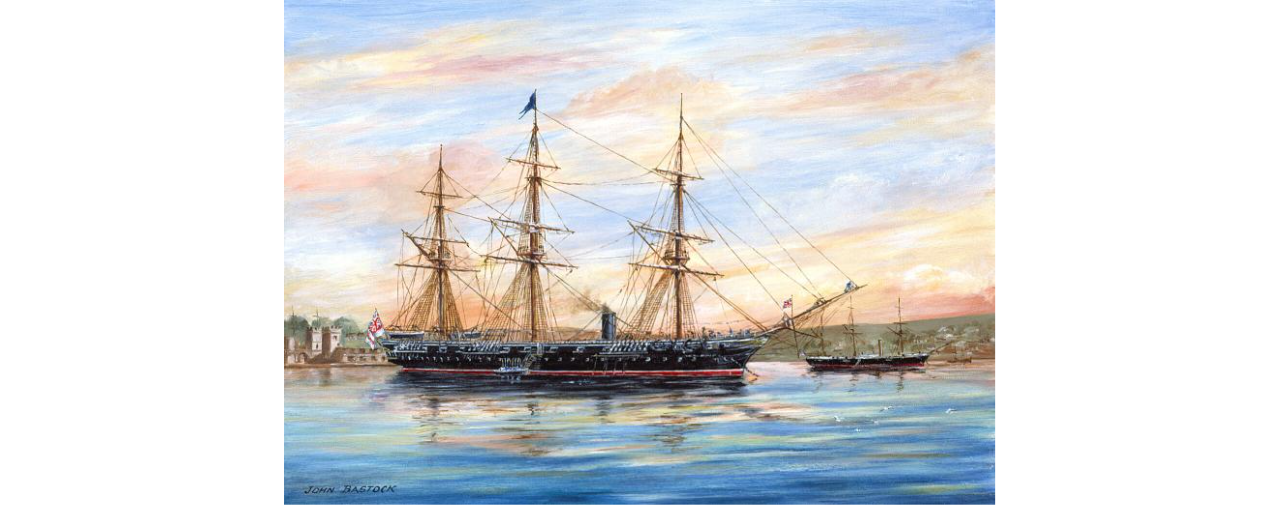
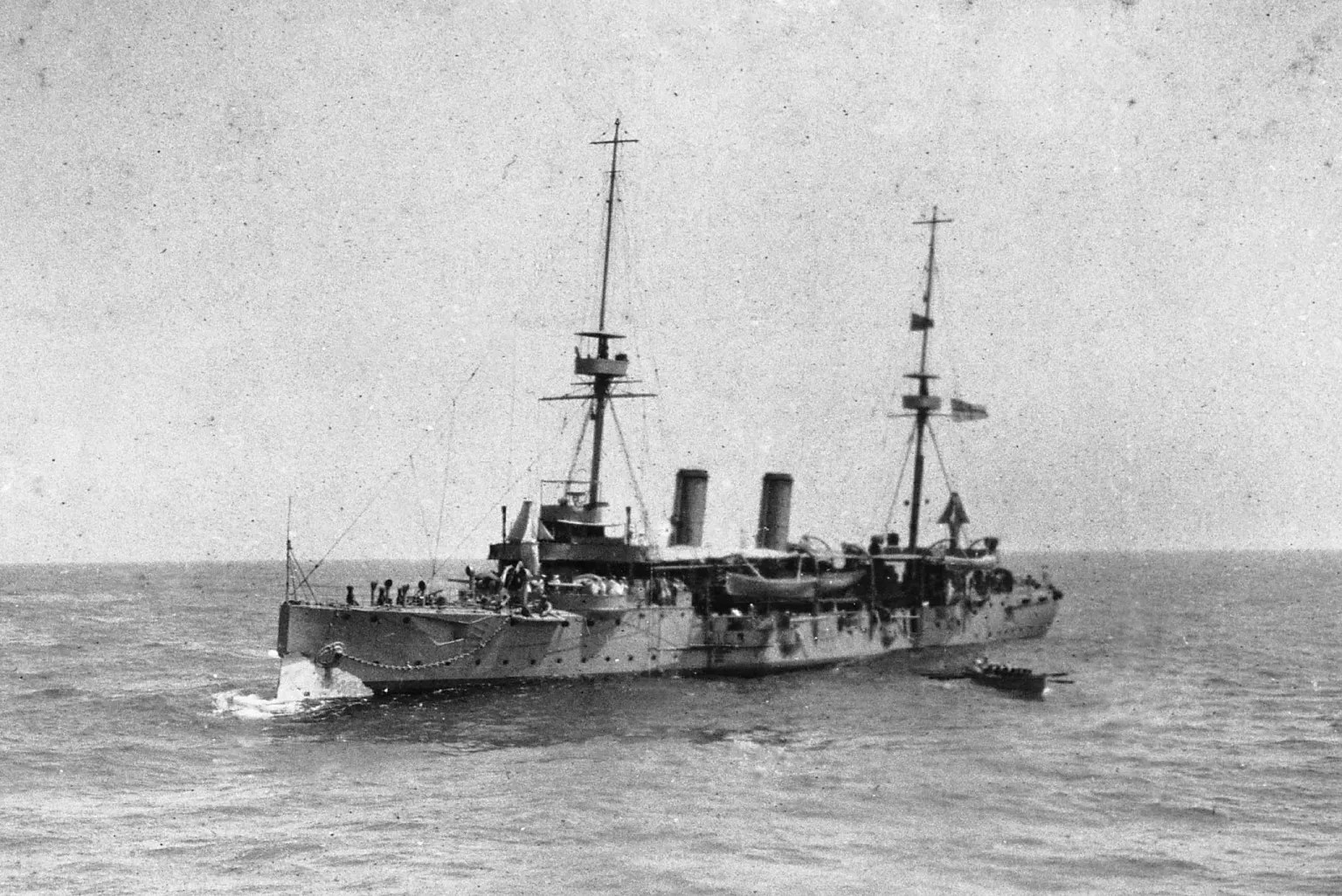
HMS Orpheus was a Jason-class Royal Navycorvette that served as the flagship of the Australian squadron. Orpheus sank off the west coast of Auckland, New Zealand on 7 February 1863: 189 crew out of the ship’s complement of 259 died in the disaster, making it the worst maritime tragedy to occur in New Zealand waters
From blowing up bridges to soldiers engaged in trench warfare, anti-tank javelin missiles and combat vehicles in full flight, Exercise Sangro is set to test Army’s range of capabilities and pack quite the punch.
25 March, 2025
“It’s the first time various units have come together for this kind of live fire exercise and at this scale in a while, so it’s incredibly important for us,” said Lieutenant Colonel Caleb Berry, Commanding Officer of the Queen Alexandra’s Mounted Rifled (QAMR) armoured regiment.
Over the course of the next week and a half, close to 200 soldiers of Ngāti Tūmatauenga, the New Zealand Army, will descend on the Argo Valley in the Waiouru Military Training Area, to conduct a series of high intensity exercises.
These will see elements of armour, infantry, artillery, engineers, signals and logistics from across the 1st (NZ) Brigade, operating as an integrated Combat Team.
“The combat team will be tasked to advance and clear a route with known enemy positions, as well as unknown enemy positions,” said Lieutenant Colonel Berry.
“They will come under fire from enemy positions and conduct either troop or combat team level quick and deliberate attacks.”
The exercise will test commanders’ abilities to make the right decisions under pressure in the midst of a very realistic scenario, and show the effectiveness of the NZ Army’s combat units as they attack, dominate and win various encounters.
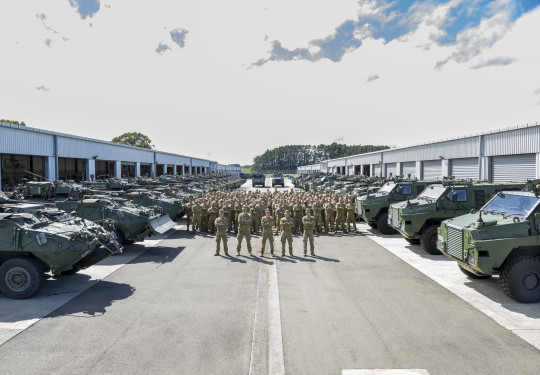
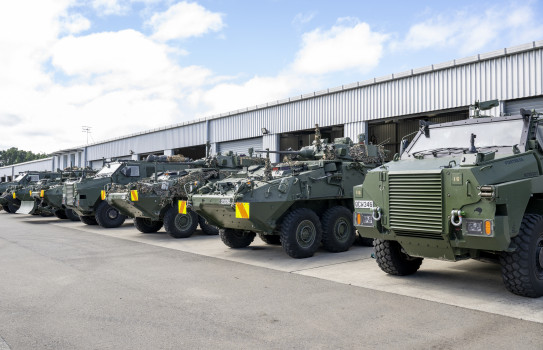
New Zealand Light Armoured Vehicles and Armoured Bushmaster Vehicles prepare to deploy to Waiouru for Exercise Sangro 25.
Beyond the Army’s combat capability, Exercise Sangro will also test our units’ agility when responding to fast-paced, evolving situations.
Included in the combat team are the latest protected vehicle in the NZ Army’s arsenal, the Bushmaster – an armoured vehicle that provides a high level of protection and mobility to soldiers.
“This exercise is crucial to our journey of bringing the Bushmaster up to full operational readiness.”
“Our soldiers have been training on them for just over a year, and so to have this real-world test scenario is a perfect test to see how they perform.”
The Bushmaster, which has a mounted machine gun for protection, will be supporting the NZ Army’s primary combat vehicle, the Light Armoured Vehicle (LAV), with its 25mm cannon capable of engaging with the enemy at ranges up to 2400m.
Exercise Sangro will ultimately conclude with the LAV Motorised Infantry capability being certified at the Combat Team level. This means it can integrate seamlessly within an Australian Battlegroup, on coalition warfighting operations.
“Our big exercises coming up later this year are Diamond Strike, with 7th Australian Brigade in June, and Talisman Sabre held in Australia in July, and the Combat Team that we’re testing here in Waiouru this week is the one that will be crossing the ditch in a couple of months – so getting this exercise right is crucial for our interoperability with Aussie counterparts, which plays a significant role in our shared focus on the security and stability of our wider region.”
Exercise Sangro will run from March 24 through to April 4.
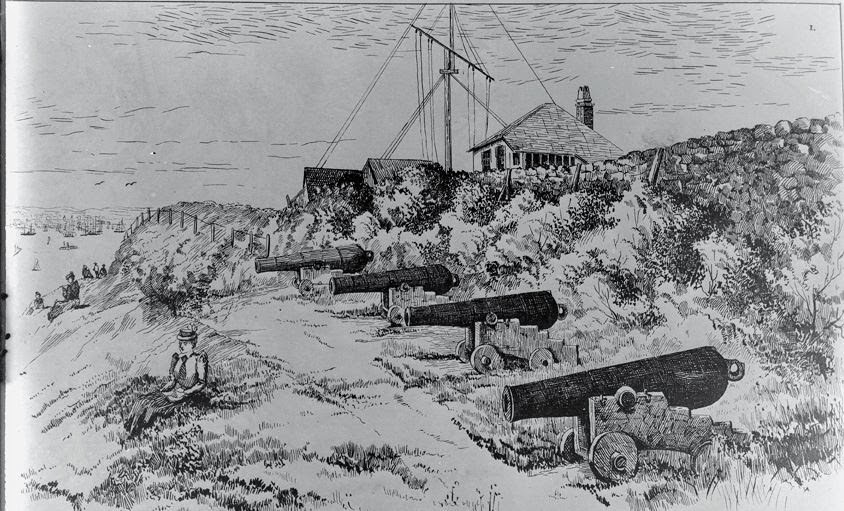
A drawing showing battery of 64 pounders rifled muzzle loaders on Mount Victoria, Devonport, arranged in the open as a result of the Russian scare of 1885-6. The last two were moved to Windsor Reserve in May 1911
Kahikatea Bay is named for the giant trees which once grew there, down to the shoreline. 📷Aerial view of RNZAF recreation camp in Curious Cove. Defence Department image The land was first offered for sale to settlers in 1859, and was probably bought then by Donald McCormick, who had arrived with his family from Scotland in 1855 and first settled in Maraetai (Tory Channel). Over the next few years he gradually acquired all the land between there and Karaka Point, which includes Kahikatea Bay. Once the McCormick family had built their homestead in Whatamango, they sold off their other blocks, first to someone claiming to be an English baronet called Sir Charles Forbes, thought to be a remittance man, and almost certainly a fraud. The McCormick’s also retained about one acre of land on the left hand side of the cove, on the flat, and built a substantial bach there in about 1957, which is now probably part of Kiwi ranch.1 By 1880 two men, Wachsmann and Bush, were on the Kahikatea land. Bush was drowned in a boating accident,2 and the land came on to the market in 1890. It was passed in, eventually going to the Landall family at the upset price of one penny an acre. Later, John Landall was also drowned from his boat,3 so there was an unlucky succession of owners. The first time the name Curious Cove appeared in the press was in 1905, when it was mentioned in the NZ Illustrated Magazine.4 It was not until motor launches came into use that the bay was accessible as a holiday destination.
Until the Second World War started it was used for club camps, and when the Americans entered the War they developed it as a potential convalescent base, but never actually used it. The RNZAF then took it over for use as a holiday and recreation site, until it was bought by A.C. Manning who advertised it in December 1945 as a ‘modern, well-equipped Holiday Camp.’ The land from there to Karaka Point was bought at the same time by Fred Musgrove for forestry. During the 1960s Curious Cove was the venue for the annual university students’ summer gathering, with a somewhat riotous reputation. Since then it has changed hands several times, but, still under the name of Kiwi Ranch, it continues to offer youth and family vacation opportunities. This story was first written by Loreen Brehaut for the Seaport Scene Picton paper
In 1914, she was loaned to New Zealand for service with what would later become the Royal New Zealand Navy. During the early stages of the First World War she performed convoy escort duties and then carried out operations in the Mediterranean against the Turks. She later conducted patrols in the Red Sea and Persian Gulf.
HMS Philomel berthing at the Ferry Wharf in Wellington 1917
Philomel was launched on 28 August 1890, and completed the following March.[1] After completing sea trials, she was commissioned in the Royal Navy on 10 November 1891. Commanded by Captain Charles Campbell, she was assigned to the Cape of Good Hope Station although fitting work and working up trials meant that Philomel did not arrive in South Africa until June 1892.[3]
For six years, Philomel served on station, intercepting slave traders along the coast of Africa. In 1896, she participated in the Anglo-Zanzibar War, during which rebels murdered the Sultan of Zanzibar and seized his palace. Along with the three gunboats and HMS St George, she bombarded the palace fortress and the only ship of the Zanzibar Navy, HHS Glasgow. This action lasted less than an hour and resulted in the routing of the rebels.[3] The following year, Philomel was transferred to the West Africa component of the Cape of Good Hope Station and participated in the Benin Expedition.[4]
A refit was completed in 1898 after which Philomel returned to Cape of Good Hope Station. She served throughout the Second Boer War. Some of her complement of 220 men served in the field with the Naval Brigade. Two of her 4.7-inch guns were disembarked and used in the Battle of Colenso. After the war, she returned to Devonport and was paid off on 22 March 1902.[4][5] She was laid up in the Firth of Forth for several years before a refit was carried out in 1907 at Haulbowline Dock in Ireland. During her tow to Ireland she went adrift for a night in the North Sea when the rope to the towing vessel, HMS Hampshire, broke.[1]
Philomel was recommissioned in February 1908 for service with the Mediterranean Fleet under the command of Captain John Seagrave. She provided assistance in the wake of the earthquake at Messina in Sicily. The following year she served with the East Indies Station, running patrols from Aden in the Persian Gulf for two years and served in operations off Somaliland, 1908–1910.[6]
Transfer to New Zealand
In 1913 the Admiralty agreed to lend Philomel to New Zealand as a seagoing training cruiser to form the nucleus of the newly established New Zealand Naval Forces, which was a new division of the Royal Navy. This was in response to the desire of the New Zealand Minister of Defence at the time, James Allen, who wanted to establish a local naval force which would co-operate with the fledgling Royal Australian Navy.[7]
Philomel was recommissioned in October 1913 in Singapore and later sailed for New Zealand to join HMAS Psyche and HMAS Pyramus, both Pelorus-class cruisers serving in New Zealand waters. Philomel was commissioned for New Zealand service on 15 July 1914, under the command of Captain Percival Hall-Thompson. Although mainly crewed by Englishmen, she was the country’s first warship.[1]
Captain P. Hall-Thompson, who commanded HMS Philomel for most of the First World War
Philomel was on a short shakedown voyage to Picton on 30 July 1914, prior to taking on its first complement of New Zealand cadets, when it was recalled to Wellington Harbour in anticipation of the outbreak of war. Largely crewed by personnel from the Royal Navy, volunteers were brought on board to bring the ship up to full strength and after stocking up with supplies, she departed for Auckland to await further instructions.[8] On 15 August 1914 she formed part of the ocean escort for the New Zealand forces that were dispatched to occupyGerman Samoa (now Samoa). The escort would have been unlikely to offer much resistance to the German cruisers SMS Scharnhorst and SMS Gneisenau that were known to be in the area. Fortunately, the convoy did not encounter the German ships. Philomel then steamed for the Kingdom of Tonga to deliver news of the hostilities with Imperial Germany before returning to New Zealand.[9]
By now the main body of the New Zealand Expeditionary Force, formed for service overseas, were ready to embark from Wellington on a convoy for the Middle East. Philomel escorted the convoy as far as Western Australia. Then, along with Pyramus, she sailed northeastwards for Singapore in search of the German cruiser SMS Emden, which was then carrying out raids in the Indian Ocean. The two ships, which would have been outgunned by the more modern Emden, had reached Christmas Island when they received news of Emden‘s sinking by HMAS Sydney. They arrived in Singapore on 12 November from where Philomel continued onto Port Said, escorting three French troopships.[10]
From late 1914, Philomel, needing maintenance and an update of equipment, was berthed at Malta and underwent an overhaul. This was completed by late January 1915 and she then started operations in the Mediterranean against the Turks.[11] On 8 February she landed an armed party in Southern Turkey where a large force of Turkish soldiers were encountered, resulting in three seamen being killed and three wounded. This action marked the first deaths in the war of New Zealanders serving with a New Zealand formation.[12]
Subsequently, Philomel was deployed in the Red Sea and in the Persian Gulf for much of the remainder of the year. In December 1915 she sailed to Bombay for maintenance work but was back in the Persian Gulf in January 1916,[13] continuing her patrolling. By the end of the year, her engines were giving trouble and her stern glands were worn out. A lengthy and costly refit was required and rather than incur this cost for a ship which was nearly at the end of her operational life, the Admiralty decided to give her to New Zealand and dispatched her home to be paid off. She duly arrived in Wellington Harbour in March 1917. A large portion of her Royal Navy crew were returned to England to be assigned to other berths.[14] Armament removed, Philomel was recommissioned as a depot ship in Wellington, supporting minesweeping operations until May 1919.[1]
Slaves rescued by HMS ‘Philomel’, April 1893, Many of the children received by the Universities Mission.
In March 1921, on the creation of the New Zealand Division of the Royal Navy, Philomel was recommissioned as a training base. She steamed from her berth at Wellington to the dockyard at the Devonport Naval Base in Auckland. Moored alongside the training jetty, she was operated as a training facility for new recruits to the naval service, under the command of a series of officers from the Royal Navy including, for nearly six months in 1923, CommanderAugustus AgarVC.[15] Training armament was installed and in 1925, her boilers and engines were removed to create more accommodation space. Further accommodation, in the form of wooden cabins, was later constructed on her deck. In October 1941, on the creation of the Royal New Zealand Navy, Philomel was recommissioned as the training base HMNZS Philomel.
HMNZS Q1186, HMNZS Paea Ex Q1184, HMNZS Tarapunga Ex Q1187 alongside HMS Philomel – the original Philomel and HMNZS Inchkeith on opposite side of jetty
Philomel was paid off and decommissioned on 17 January 1947 and her name transferred to the Devonport Naval Shore Establishment. On the day of her decommissioning, the New Zealand Naval Board sent a signal to Philomel which stated:
“…their regret at the passing from the service of the first of His Majesty’s New Zealand Ships, a ship that has meant so much to all who served in her. She goes as many good ships have gone before her, but when HMNZS Philomel’s colours are hauled down at sunset this evening, the tradition which she has established during her long career will live on in the depot to which she has given her name.”[16]
The hulk of Philomel was sold to Strongman Shipping Company, based in Coromandel. She was towed and deliberately ran aground in Coromandel harbour, near the wharf. After her fittings and parts were removed, she was towed out to sea and sunk in 100 fathoms near Cuvier Island on 6 August 1949, when sunk she was just 22 days shy of 59 years afloat. Much of the teak timber and some fittings went into a newly built coaster named Coromel, an amalgamation of Coromandel and Philomel.[1] Her crest is mounted to the gate of the Devonport Naval Base and her builders plate is on display in the William Sanders building which serves as the administrative Head Quarters of the shore establishment.[16] Additionally her mast has been used as a flag pole at HMNZS Tamaki and is now situated infront of the parade ground on the Jim Tichener Parade side of the base.