NZ Division of the Royal Navy/NZ Naval Forces. – HMS Veronica

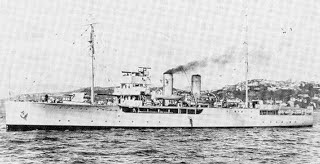
HMS Veronica was an Acacia-class sloop of the Royal Navy. She served during World War I. Post-war, she saw New Zealand service.

Construction[edit]

Veronica was built by Dunlop Bremner & CompanyPort GlasgowScotland. She was laid down in January 1915, launched on 27 May 1915, and completed in August 1915. The Acacia-class fleet sweeping sloops were adapted for escort work, minesweeping, and use as Q-ships.

Operational history[edit]

World War I[edit]

During her World War I service, Veronica was damaged in the Mediterranean Sea 45 nautical miles (83 km) northwest of AlexandriaEgypt (31°43′N 29°17′E), by the Imperial German Navy submarine SM UB-42 on 14 April 1917. Veronica was repaired and returned to service.[1]

New Zealand service[edit]

Veronica was in the New Zealand Division of the Royal Navy from 19 September 1920 to 24 February 1934, where she exercised with cruisers, toured New Zealand ports, took part in ceremonial occasions, and went on annual Pacific Island cruises. This was in conjunction with her sister ship Laburnum which was similar, but with small differences as they came from different commercial shipyards.

Hawke’s Bay earthquake[edit]

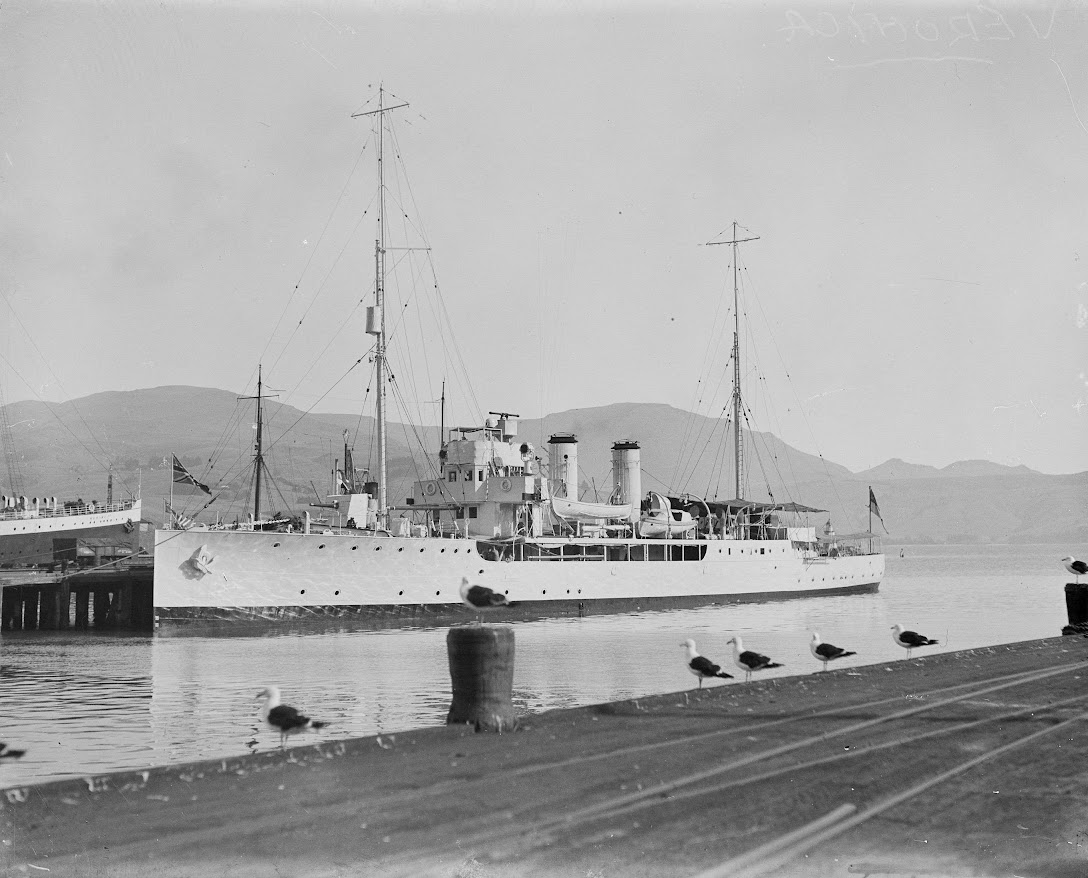
Veronica at the Wharf, 1931. Hawkes Bay Earthquake, Port Ahuriri

Veronica assisted survivors in the aftermath of the 1931 Hawke’s Bay earthquake in New Zealand. Having berthed in Port Ahuriri only three hours before the earthquake, she radioed Auckland for help, which was provided by the light cruisers Dunedin and Diomede. She was subsequently docked for inspection for possible bottom damage as the seabed had risen up under her.

Fate[edit]

Veronica left Auckland, New Zealand, on 24 February 1934 for paying off at ChathamEngland. She was sold on 22 February 1935 to John Cashmore Ltd, and broken up at NewportWales, in 1935.

Commemoration[edit]

The Veronica Sunbay in Napier

A memorial to HMS Veronica, the Veronica Sunbay (initially called the Veronica Sun Bay), was built in 1934 and dedicated in 1937 on Napier‘s Marine Parade, commemorating her efforts after the city’s 1931 earthquake. The beginning of the inscription reads:[2]

The Veronica Sun Bay Originally erected in 1934 to commemorate the Hawke’s Bay earthquake of 3rd February 1931. This memorial is named in honour of HMS Veronica and the outstanding service given by her officers and crew at the time of the disaster. Rebuilding of the Sun Bay was accomplished through the initiative and leadership of the Rotary Club of Napier and contributions from the citizens of Hawke’s Bay and the Napier City Council. This plaque was unveiled at the dedication of the rebuilt memorial. It took place on the Sixtieth Anniversary of the earthquake – 3rd February 1991.

The bell of HMS Veronica is held at Hawke’s Bay Museum, and rung at the New Year.

HMS Veronica was an Acacia-class sloop of the Royal Navy. She served during World War I. Post-war, she saw New Zealand service.
Construction[edit]

Veronica was built by Dunlop Bremner & CompanyPort GlasgowScotland. She was laid down in January 1915, launched on 27 May 1915, and completed in August 1915. The Acacia-class fleet sweeping sloops were adapted for escort work, minesweeping, and use as Q-ships.

Operational history[edit]

World War I[edit]

During her World War I service, Veronica was damaged in the Mediterranean Sea 45 nautical miles (83 km) northwest of AlexandriaEgypt (31°43′N 29°17′E), by the Imperial German Navy submarine SM UB-42 on 14 April 1917. Veronica was repaired and returned to service.[1]

New Zealand service[edit]

Veronica was in the New Zealand Division of the Royal Navy from 19 September 1920 to 24 February 1934, where she exercised with cruisers, toured New Zealand ports, took part in ceremonial occasions, and went on annual Pacific Island cruises. This was in conjunction with her sister ship Laburnum which was similar, but with small differences as they came from different commercial shipyards.

Hawke’s Bay earthquake[edit]

Veronica at the Wharf, 1931. Hawkes Bay Earthquake, Port Ahuriri

Veronica assisted survivors in the aftermath of the 1931 Hawke’s Bay earthquake in New Zealand. Having berthed in Port Ahuriri only three hours before the earthquake, she radioed Auckland for help, which was provided by the light cruisers Dunedin and Diomede. She was subsequently docked for inspection for possible bottom damage as the seabed had risen up under her.

Fate[edit]

Veronica left Auckland, New Zealand, on 24 February 1934 for paying off at ChathamEngland. She was sold on 22 February 1935 to John Cashmore Ltd, and broken up at NewportWales, in 1935.

Commemoration[edit]

The Veronica Sunbay in Napier

A memorial to HMS Veronica, the Veronica Sunbay (initially called the Veronica Sun Bay), was built in 1934 and dedicated in 1937 on Napier‘s Marine Parade, commemorating her efforts after the city’s 1931 earthquake. The beginning of the inscription reads:[2]

The Veronica Sun Bay Originally erected in 1934 to commemorate the Hawke’s Bay earthquake of 3rd February 1931. This memorial is named in honour of HMS Veronica and the outstanding service given by her officers and crew at the time of the disaster. Rebuilding of the Sun Bay was accomplished through the initiative and leadership of the Rotary Club of Napier and contributions from the citizens of Hawke’s Bay and the Napier City Council. This plaque was unveiled at the dedication of the rebuilt memorial. It took place on the Sixtieth Anniversary of the earthquake – 3rd February 1991.

The bell of HMS Veronica is held at Hawke’s Bay Museum, and rung at the New Year.

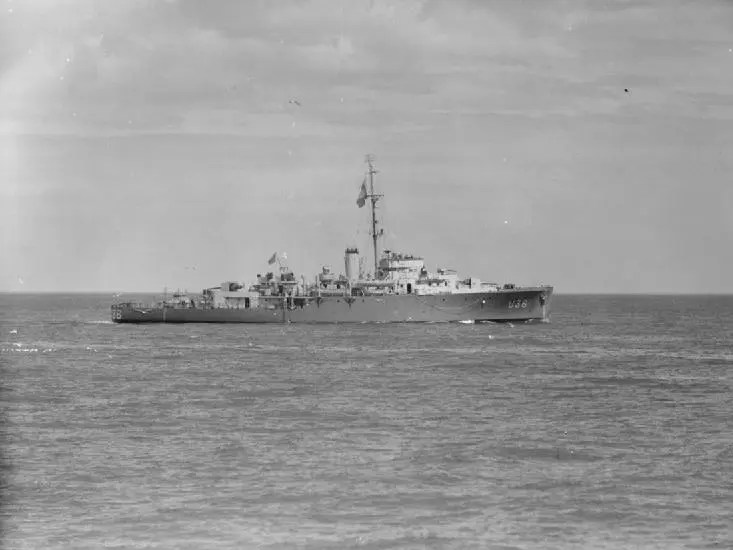
NZ Division of the Royal Navy/NZ Naval Forces. – HMS Leith

HMS Leith was a Grimsby-class sloop of the Royal Navy/NZ Div of RN that served in the Second World War

NZ Service – Leith was ordered on 1 November 1932 under the 1931 Programme. She was laid down at Devonport Dockyard on 6 February 1933, launched on 9 September 1933 and commissioned on 10 July 1934. She was initially assigned to the New Zealand Division of the Royal Navy, manned by the Chatham Port Division. Leith arrived at Auckland on 13 November 1934, and was deployed in the Pacific and locally in New Zealand waters.[1] She was recommissioned in December 1936 in order to continue to serve with the New Zealand Division and was again in July 1939. She had an active career in the Pacific, making numerous visits to Colonial possessions, and on one occasion taking Salote Tupou III, Queen of Tonga on a visit to outlying islands

HMS Leith Pae Koroki, Tauranga 1937.

The Pacific and return to the UK[edit]

The outbreak of the Second World War saw Leith still in the Pacific. In September 1939 she sailed to Singapore to carry out contraband control duty on the China Station. During the passage she called at Jervis BayAustraliaLeith was deployed at Penang to carry out contraband control, and also to carry out surveillance on enemy ships in Dutch East Indies ports.[1] She was recalled from these duties in November and was ordered to sail to the UK to carry out convoy defence duties in Home Waters. She sailed from Penang on 7 November, travelling via the Red Sea and the Mediterranean. She arrived at Gibraltar, where she was diverted to go to Freetown to join as an escort for an Atlantic convoy. She joined Convoy SL 14 at Freetown on 26 December, escorting it to the UK.[1] On arrival Leith was deployed to escort convoys. On 10 January she was diverted to join the sloops HMS Aberdeen and Bideford, and the destroyers VidetteWandererWarwick and Witch in escorting the inbound Convoy HG 14 into LiverpoolLeith was detached on 12 January and took passage for a refit at Penarth. The following day she was taken in hand by a commercial shipyard.[1]

Covering the Western Approaches[edit]

After the completion of the refit in February she was nominated to serve with the Western Approaches Command. She joined the command at Liverpool on 2 February. On 11 February she joined the outbound Convoy OG 18 with HMS Bideford, and the destroyers HMS Active and VersatileLeith and Bideford were detached on 17 February and joined the inbound Convoy HG 19, until 27 February. This pattern of convoy escort duties was followed throughout March to July. In July she was transferred to the Rosyth Escort Force for convoy defence in the North Western Approaches and North Sea.[1] She was soon withdrawn from operational service to attend to a fault in her No 1 Boiler. She was repaired at Belfast. After post-repair trials she resumed services with the Western Approaches Command on 12 August with the 41st Escort Group based at Liverpool. Here she covered the final stages of convoys between Gibraltar and Freetown.[1] On 28 August she picked up 27 survivors from the Finnish merchant Elle which had been sunk north-east of Ireland by German submarine U-101.[2]

Convoy SC 7[edit]

In October she deployed with the sloop HMS Folkestone and the Flower-class corvettes Bluebell and Heartsease for the defence of the Atlantic convoys during the journey to the dispersal point of the outward convoys and for the final stage of the passage of the inward convoys. On 13 October she joined the outbound Convoy OB 228 from Liverpool to its dispersal point. On 16 October U-93 attacked Leith. She sighted the submarine on the surface and forced her to submerge. Leith then carried out an unsuccessful search for her attacker with HMS Heartsease.[1] The escorts were detached from the convoy on 17 October and sailed to join the inbound Convoy SC 7. On 18 October she rescued 19 survivors from the Estonian merchant Nora which had been torpedoed and sunk on 13 October by U-103.[2] Together with the sloops HMS Scarborough and Fowey and the corvettes Bluebell and Heartsease they attempted unsuccessfully to fight off the wolf pack attacks of a number of U-boatsLeith rescued survivors from three torpedoed merchant ships including Assyrian and Soesterberg before joining the inbound Convoy HX 79 which had also come under heavy U-boat attack. Leith gathered up three merchant ships and brought them into port.[1]

The Atlantic convoys[edit]

She made a full transatlantic crossing and return in November, escorting an outbound and inbound convoy, before returning to her usual pattern in December, covering the Freetown and Gibraltar convoys. On 9 December she was part of the escort for convoy OG 47 on its way to Gibraltar. The convoy came under attack on 20 December by the Italian submarine Mocenigo, which sank the merchant Manchester General.[1] Leith was detached from the convoy on its arrival on 25 December and sailed with an inbound convoy to Liverpool on 29 December. On her arrival she returned covering the convoys through the Western Approaches throughout January to April 1941. On 17 April she began a refit at Avonmouth which lasted until May, when she was nominated for convoy defence based in Newfoundland.[1]Leith sailed to join the Newfoundland Escort Force based at St. John’s on 6 June. She deployed with them throughout July and into August. She returned in August to redeploy with the Western Approaches Command. On 20 August she deployed with the destroyers HMS Gurkha and Lance, and the corvette HMS Zinnia and the other corvettes of the 5th Escort Group in the defence of the outward Convoy OG 71, consisting of 21 ships from Liverpool on passage to Gibraltar.[1] The Norwegian destroyer HNoMS Bath had been sunk the previous day, along with three merchants. The convoy continued to be attacked after the reinforcements arrived, despite constant anti-submarine operations. HMS Zinnia and four other merchants were sunk on 22 August. The rest of the convoy arrived at Gibraltar on 25 August.[1] Leith returned to Liverpool in September, escorting Convoy HG 72.

The African coast[edit]

In October Leith was at Belfast, before joining the 43rd Escort Group for escort of convoys between UK and Freetown, being based at Londonderry Port. She spent the next couple of months escorting convoys before sailing on 28 November as an escort for a convoy to West Africa. She returned in January 1942 and from 17 January underwent repairs to her underwater equipment at Londonderry Port.[1] She returned to service on 31 January. Further escort duties took Leith along to African coast to Bathurst and back again. Her next major engagement came in August, when she was part of Convoy SL 119, consisting of 29 merchants. The convoy was detected and its position reported by U-214 on 25 August. The Wolf pack Blücher was ordered to carry out a concentrated attack. Leith carried out searches for U-boats and rescued the crew of the torpedoed merchant SS Zuiderkerk. After the arrival of the convoy, Leith underwent the replacement of her underwater dome for her sonar outfit at Greenock. After this was completed by October, she returned to Belfast.[1]

Refits and the English Channel[edit]

Also in October Leith was nominated to escort the military convoys for the allied landings in North Africa (Operation Torch). She escorted a stores convoy late in October and spent November and December escorting convoys through the western Mediterranean. She carried these duties out until March 1943 when she return with her group to the UK. 1943 and the first half of 1944 she spent on the Freetown route.[1] In August she returned to the Mediterranean, undergoing an extensive refit at Gibraltar in September owing to her deteriorated condition after an extended period in active service in the Atlantic. The refit lasted until December, and in January 1945 she returned to the UK and joined the 38th Escort Group based at Portsmouth. She escorted convoys through the English Channel in February and March, and in April escorted the Dutch minelayer Van der Zaan as she laid mines in the English Channel.[1] After VE Day in May Leith was nominated to be reduced to the reserve fleet. She sailed to Rosyth in June where she was paid off, and laid up the following month.[1]

Post war[edit]For other ships with the same name, see HDMS Galathea.

Leith was placed on the disposal list and sold in 1946 into merchant service.[1] She was renamed Byron, and later Friendship in 1948.[2] She was then acquired by the Royal Danish Navy in 1949 and renamed HDMS Galathea.[3] She undertook the second Galathea expedition, which circumnavigated the world in 1950–52 while doing deep sea oceanographic research, and was sold to be scrapped at Odense in 1955.

Collins discusses future of Navy after Gisborne’s ‘home ship’ Manawanui sinks

Gisborne Herald – 25 Mar, 2025 11:18 AM4 mins to read


SaveShare

HMNZS Manawanui in its home port of Gisborne. The vessel ran aground and sank off Samoa last year and will not be replaced by the Royal New Zealand Navy. Photo / Gisborne Heald

HMNZS Manawanui in its home port of Gisborne. The vessel ran aground and sank off Samoa last year and will not be replaced by the Royal New Zealand Navy. Photo / Gisborne Heald

Defence Minister Judith Collins says the Samoan Government is about to announce the fate of Gisborne’s home ship HMNZS Manawanui, which sank off Samoa’s coast in October.

But the vessel, which could be salvaged or left in the sea, will not be replaced by the Navy.

Collins was in Gisborne to meet local National Party members with the next general election about 18 months away.

Manawanui is Gisborne’s third home ship after the frigate HMNZ Blackpool, which served in the Royal New Zealand Navy from 1965 to 1971, and the hydrographic vessel HMNZS Resolution, which served in the Navy from 1997 to 2012. On the Blackpool’s last visit to Gisborne in 1971, past and present crew members gave $5000 to endow a scholarship to assist the education of a Gisborne boy or girl each year.

Manawanui, a 100m hydrographic and deep diving support vessel commissioned in 2019, was officially welcomed for the first time at Gisborne on November 27, 2020.

Advertisement

Advertise with NZME.

Advertisement

https://4dd807a76ddf555e277b43b7053c5140.safeframe.googlesyndication.com/safeframe/1-0-41/html/container.html

Advertise with NZME.

A Commission of Inquiry is due to be released shortly although an interim report attributes the Manawanui incident to a series of human errors when the ship’s autopilot was not disengaged when it should have been.

Royal New Zealand Navy divers surveying the area around HMNZS Manawanui on the southern coast of the Samoan island of Upolu where it sank in October. Photo / NZDF

Collins said it was up to the Navy to decide when another ship would have Gisborne as its home port.

The loss of the Manawanui, which currently is lying on its side under 30 metres of water, meant frigate HMNZS Otago would now have a crew.

Advertisement

https://4dd807a76ddf555e277b43b7053c5140.safeframe.googlesyndication.com/safeframe/1-0-41/html/container.html

Advertise with NZME.

Three navy vessels were in “care and custody”, which “essentially means being tied up because of a lack of crew”.

But the Otago was almost ready to return to sea.

“We’ll have a crew for it now (from Manawanui). It will be great to see Otago back at sea as a proper warship. Our people need to be deployed. They get to do what they want to do.”

Collins said there had been “a massive hollowing out of our defence work in the critical trades”.

That lack of defence staff had not been a long-term issue but happened “around Covid” under the previous Government.

The “massive” problem had basically been resolved. Attrition rates had fallen from about 15.5 to about 6.7%. The staffing issue was not about numbers, but the critical trades.

Collins said it would take billions of dollars to reach the much-discussed 2% level for defence expenditure. The current defence spend was close to 1%.

The Defence Force (NZDF) did not have enough people in uniform, able to be deployed, or enough equipment or “platforms” (such as vehicles or facilities used to deploy equipment or personnel).

Many platforms needed to be replaced — every navy ship, bar one, needed to be replaced by 2030. The Government had gone out for tender on replacements for the Boeing 757s.

Collins said she did not want to get into specifics, financial- or time-wise, about future defence spending. She would not do that until the Defence Capability Plan, which was before Cabinet, was released.

The plan will describe specific investments planned for major capabilities within the air, maritime, land and information systems for the next 15 years. Electronic warfare, including drones, will also be covered.

“It’s a lot of money and it needs to be spent.”

When asked if such increased defence spending would result in less spending elsewhere, Collins replied: “There’s no security without national security. Anyone who thinks that we can continue our lives doing nothing is mad”.

Asked about the possibility of having troops in Ukraine in the event of a peace settlement, Colins said discussions were ongoing with Britain and other countries about what could be done to support Ukraine. But it was premature “because we’re all waiting to see what happens”.

Since Collins spoke to the Gisborne Herald, the NZDF has announced proposed cuts of 374 civilian positions.

Collins told RNZ the job cuts were an operational matter for the NZDF.

“I trust the NZDF is ensuring taxpayer dollars are being spent to achieve maximum effect while prioritising military outputs.”

Defence minister Judith Collins and East Coast MP Dana Kirkpatrick in Gisborne last week. The minister was in the city to meet East Coast National Party members. When asked about recent polling which showed left-wing parties were more popular than the coalition Government parties, Collins replied: “Who do you know who was last polled? Polls don’t tend to mean much, I’m too busy. I’m going to get the country back on track.” Kirkpatrick said it was important to get a Cabinet minister like Collins into Gisborne to see what was happening and to meet local people. “Life is different here from the big cities. I say that all the time.”

https://www.nzherald.co.nz/gisborne-herald/news/collins-discusses-future-of-navy-after-gisbornes-home-ship-manawanui-sinks/FCAYFLQJZZFFBCLF3GLHHUSSTQ/#google_vignette

NZ Division of the Royal Navy/NZ Naval Forces. – HMS Laburnam

HMS Laburnum

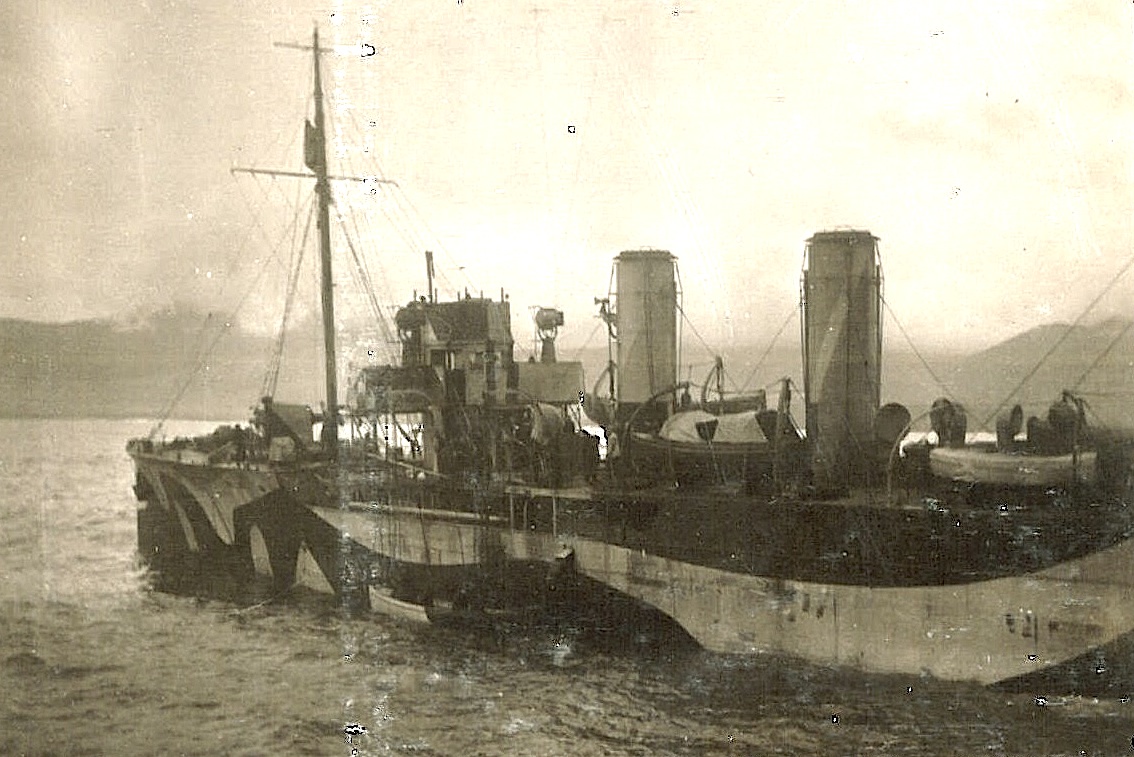
She was in the New Zealand Division of the Royal Navy from 11 March 1922 to 11 February 1935, where she exercised with cruisers, toured New Zealand ports, took part in ceremonial occasions, and went on annual Pacific Island cruises. This was in conjunction with her sister ship Veronica which was similar, but with small differences as they came from different commercial shipyards.

She left Auckland on 1 February 1935 for Singapore, where she was paid off to become a drill and training ship for the Straits Settlement Naval Volunteer Reserve.

HMS Laburnum was a Royal Navy Acacia-class sloop built by Charles Connell and CompanyScotstoun. She was scuttled during the fall of Singapore in 1942.

Construction

[edit]

She was laid down at the Scotstoun yard of Charles Connell and Company in February 1915, launched on 10 June 1915 and completed in August 1915.[1] The Acacia-class fleet sweeping sloops were adapted for escort work, minesweeping and as decoy warships.

Service history

[edit]

First World War

[edit]

Laburnum joined the First Sloop Flotilla on commissioning.[2] On 4 September 1915, the passenger liner Hesperian was torpedoed without warning by the German submarine U-20 southwest of Queenstown (now called Cobh) in the south of Ireland with the loss of 32 lives. Laburnum was one of several ships, also including the seaplane carrier Empress and the sloops Marigold and Veronica, to go to Hesperian‘s aid. Attempts to tow Hesperian to port failed, with the stricken liner sinking on 6 September.[3][4][5] The sinking of the Hesperian, which occurred despite an assurance to US President Woodrow Wilson from the German Chancellor Theobald von Bethmann Hollweg that no passenger liners would be sunk without warning, provoked protests from America that resulted in the submarine campaign against merchant shipping in British waters being suspended for several months.[6][7]

On 24 April 1916, the Easter Rising, an armed rebellion by Irish republicans against British rule, began. Laburnum was ordered to Galway to defend the port on 25 April, arriving there on 26 April. On hearing reports that a group of rebels were advancing on the port, the Captain of Laburnum ordered her to open fire, with 10 shells being fired in the direction of the rebels and at a road on the outskirts of the city. On 28 April, Laburnum escorted a transport carrying troops to Galway.[8]

On 8 February 1917, the German submarine U-81 torpedoed the passenger steamship Mantola 143 miles (230 km) WSW of Fastnet Rock, causing Mantola‘s crew to abandon ship. U-81 remained in the vicinity until chased away by Laburnum when she arrived on the scene 2+12 hours later. Laburnum rescued 176 survivors of Mantola‘s passengers and crew (seven crewmen had been killed by a capsizing lifeboat) and tried to tow the steamship by the stern, but was unable to make headway. Mantola sank on 9 February.[9][10][11] On 17 February 1917, the Q-ship Farnborough was torpedoed by the German submarine U-83, but after a “panic party” faked abandoning ship, U-83 surfaced near Farnborough and was sunk by shellfire from the Q-ship. Farnborough herself was badly damaged by the torpedo, and was taken into tow by Laburnum and the sloop Buttercup after the destroyer Narwhal had taken off most of Farnborough‘s crew. Farnborough was beached at Mill Cove.[12][13] On 25 February 1917 Laburnum was patrolling to the west of the Blasket Islands, off the west coast of Ireland, when she was ordered to meet up with and escort the liner Laconia which was Liverpool-bound from the United States. Uncertainty about Laconia‘s location delayed the rendezvous between the ships, with the result that Laconia was torpedoed by the German submarine U-50 before Laburnum could arrive on the scene. While Laburnum could not prevent Laconia sinking, she did manage to rescue 292 passengers and crew. Twelve passengers and crew were killed.[14]

Far East service

[edit]

She was in the New Zealand Division of the Royal Navy from 11 March 1922 to 11 February 1935, where she exercised with cruisers, toured New Zealand ports, took part in ceremonial occasions, and went on annual Pacific Island cruises. This was in conjunction with her sister ship Veronica which was similar, but with small differences as they came from different commercial shipyards.

She left Auckland on 1 February 1935 for Singapore, where she was paid off to become a drill and training ship for the Straits Settlement Naval Volunteer Reserve.

Drill ship at Singapore

[edit]

As drill ship, Laburnum was equipped with independent wireless equipment, and housed a number of naval offices including Captain, Auxiliary Vessels and Captain, Extended Defences Office. Laburnum had her engines removed shortly after her arrival in Singapore in order to augment her accommodation. Hence she could not be fully utilised when war broke out in the Far East. With the evacuation of PenangLaburnum also played host to the RNVR Penang Division, headed by Commander C C Alexander.

Fate

[edit]

Labernum was scuttled on 15 February 1942 when Singapore fell to Japanese forces. Her wreck was raised about 1946, and sunk off East Lagoon, Singapore, as part of an existing breakwater of old hulks, and finally removed and scrapped about 1967.

HMS Chatham

Background

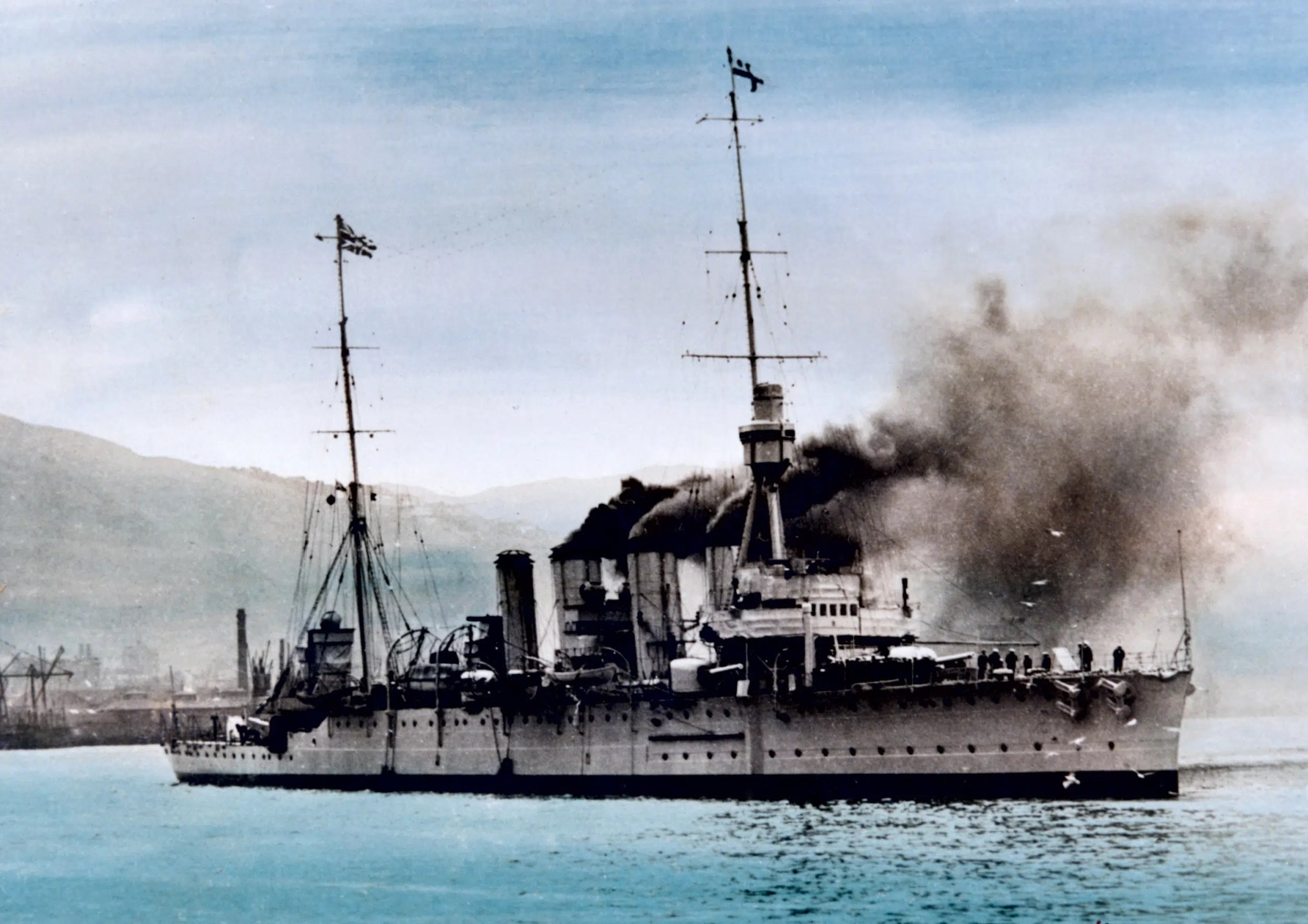
On 1 October 1920 HMS Chatham was commissioned into the New Zealand Naval Forces.

Chatham was the name ship of type of 2nd-class light cruiser and was first commissioned on 3 December 1912. There were six ships in the class, three built for the Royal Navy and another three for the Royal Australian navy. Chatham came to New Zealand almost by default, it having been agreed earlier, that a more modem ship, HMS Canterbury be loaned, but that ship was oil burning and in 1920 there were no facilities for oil fuelling in the country.

At the outbreak of WW I Chatham was part of the Light Cruiser Squadron based in the Mediterranean. After service in the Red Sea she discovered the whereabouts of the German cruiser Konigsberg, up the Rufiji River in November 1914 and sank that ship’s attendant colliers to prevent its escape. She also captured a German merchant ship at this time. In May 1915 Chatham was employed in the Dardanelles campaign and was remembered by many New Zealand soldiers for this service. From 1916-18 Chatham was flagship of the 301 Light Cruiser Squadron with the Grand Fleet but was damaged by a mine on 26 May 1916, so missed the Battle of Jutland. After the Armistice the ship was placed in reserve until recommissioned for New Zealand.

It had originally been decided that the ship would be primarily manned by the Royal Navy, with personnel on loan to New Zealand, but when it came to actually implementing this, the Royal Navy was unable to provide the necessary personnel. The difficulty was overcome by New Zealand offering short term engagements (three years), which was very attractive to currently serving Royal Navy ratings who were dissatisfied with their conditions of service but still had some years to serve. By this means 293 ratings were recruited, comprising a nucleus crew for Chatham and also Philomel, the balance was made up by Royal Navy Ratings on loan and would eventually be completed by New Zealand recruits. Chatham was also the Flagship of the Commodore Commanding the New Zealand Station, Commodore A.G. Hotham.

HMS Chatham was officially commissioned for New Zealand service on 1 October 1920. The ship sailed from Chatham on 18 October 1920 and came to New Zealand via the Azores, West Indies, the Panama Canal, Mexico, San Diego, Honolulu, Fanning Island, Pago Pago, Apia and Suva. In each of the more attractive ports there were desertions, a total of ten during the voyage. Chatham arrived in Auckland on 26 January 1921, being met by the Governor General, sailing again later that day, for Wellington, where it arrived on 28 January.

In Wellington the main task was to make Philomel seaworthy again and steam that ship to Auckland, so that the task of training new recruits could commence. Philomel had been alongside since its return from the Middle East in 1917 and was in a sad state. When Philomel was moved from her berth to the slipway, Chatham’s first casualty of the commission was found. A young rating, Michael Cronin had been absent without leave, the belief being that he had ‘run’, however when the ship was moved his body was disturbed and came to the surface. It was apparent that he had fallen into the harbour and drowned. Philomel recommissioned on 1 March and on 2 April the two ships sailed for Auckland, arriving there on the 5th.

Under Commander John Walsh, new recruits were entered into Philomel and training began in earnest. This freed Chatham to undertake other duties, although it remained undermanned for the remainder of its time in New Zealand. After a couple of weeks exercising in the Hauraki Gulf, the ship commenced its first New Zealand cruise in May, calling at seven ports before returning to Auckland at the end of June.

On completion of a short maintenance period and docking, Chatham sailed for a series of visits to Pacific Islands in July. Embarked as additional watchkeepers for this cruise were Lieutenant Commander David Boyle and Lieutenant Eric Rhodes, both recently retired from the Royal Navy. One of the more memorable events of this cruise was the visit to Lautoka in September, where the Commodore was presented with a ‘Tabua’ (whale’s tooth), a gift of great significance that is now in the Navy Museum. During the return passage to Auckland the ship spent three days at Raoul Island, taking on board the survivors of the Colombia River, which had been wrecked there on 5 September.

Having spent just over a month in Auckland Chatham went to Wellington where it remained for the rest of the year. The ship’s company, in addition to the routine maintenance of the ship, undertook their annual range course at Trentham. The year 1922 began with exercises in the Hauraki Gulf, followed by another New Zealand cruise, during which their Excellencies the Governor General and Lady Jellicoe embarked in the ship for a visit to the Chatham Islands. In the later part of the year another islands cruise was commenced, but was cut short by an outbreak of cerebrospinal meningitis on board and the ship spent a month in quarantine at Motuihe Island, the ship’s company living ashore while the four sick men remained on board.

1923 was very much a repeat of 1922, with a New Zealand cruise in the early part of the year and an island cruise in the later half. Two more tragedies occurred amongst the ship’s company when Stoker Doran was found dead on a railway line on New Years Day and Officer’s Cook Chinnery was found drowned on Devonport Beach in February. The ship was back in Wellington for the annual range course at Trentham in November, but went to Auckland for Christmas. At this time the ship had a good concert party and while in Wellington in November mounted a show which was attended by the Governor General.

After a short shakedown in the Hauraki Gulf Chatham sailed to Wellington before undertaking a short New Zealand cruise. While there a party of stokers went on a pleasure cruise on the harbour with a family group and friends. When the launch was returning about midnight, it collided with a ferry, throwing the passengers of the launch into the water. Two of the stokers rescued one of their shipmates and a Wellington girl. Two other girls were drowned.

Chatham returned to Wellington on 19 April and a few days later, the Royal Navy Special Service Squadron, led by the battlecruisers HMS Hood and Repulse arrived. Before they departed a regatta was held, in which the Chatham cutter crew won the Frobisher Cup. The Squadron arrived at Auckland on 9 May and on the following day the New Zealanders in the ship’s company transferred to HMS Dunedin, which had arrived with the Special Service Squadron. HMS Chatham went out of New Zealand service on 10 May 1924, without ceremony. The ship sailed from Auckland with the Special Service Squadron on 27 May taking with her the first 35 New Zealand ratings for advanced training in England. Chatham then became Flagship of the 4th Light Cruiser Squadron of the East Indies Fleet until November 1925, when it was finally paid off in England and was sold for scrap the following year.

Before leaving New Zealand service the ship’s company of Chatham made a permanent contribution to the country. From their own funds they presented the ‘Chatham Cup’ for Association Football, which is still the premier trophy for soccer in this country.

Battle Honours:

Barfleur 1692

Quiberon Bay 1759

Dardanelles 1915-16

Motto:

Loyal and true

Chatham:

The name of a town southeast of London.

During the First World War the badge of HMS Chatham, comprised the Arms of the town of Chatham, but no badge was officially registered post war, probably because at the time this was being done in the Royal Navy, the ship was then serving under the New Zealand Government.

Sometime later the Chatham Old Boys Association produced a lapel badge within the naval surround showing the detail from the shield of the Arms of the Borough of Chatham.  During 1958-59 the Naval Board were assembling a set of boats badges for the Board Room and sought an example of the badge of HMS Chatham The Admiralty advised that there had been no badge registered for the ship, but a coloured drawing of one was hanging in the cafeteria of HMNZ Dockyard, which had been present by Captain T.H.B. Shaw RN, in 1956 when he was Captain Superintendent of the Dockyard Little information could be ascertained about the origin of this thawing except that Captain Shaw is believed to have obtained the details from the UK.  In 1986 the Royal Navy allocated the name Chatham to a new ship and although based on the Arms of the Borough, a very different badge was designed and approved. The central device of the new badge comprises a trident and laurel wreath taken from the detail of one of the features.

Ship’s Details:

Class: Town-class light cruiser

Dimensions: 139m x 15m x 5m

Machinery: Coal-powered, 4 x shaft Parsons steam geared turbine – HP 25000 = 25.5 knots

Armament:

8 x 6-inch (152mm) guns in eight single mounts

1 x 3-inch (76mm) anti-aircraft gun

4 x 2-pdr guns single mounts

2 – 4 machineguns

2 x submerged 21-inch (533mm) torpedo tubes

Complement: 475

Built: HM Naval Chatham dockyard

Commissioned: November 1911

JCs Royal New Zealand Navy Ships and New Zealand Defence, Also other World Defence Updates

Ships and Defence News Past and Present

Skip to content ↓